Have Mess, Need Mercy

“But this I call to mind, and therefore I have hope:
The steadfast love of the Lord never ceases; his mercies never come to an end;

they are new every morning; great is your faithfulness”
Lamentations 3:21, 22

We all have mess.  I surely do.

When I was a young girl, my mom handed me the book, Old Yeller, and told me, “you’re going to cry when you read this.”

I didn’t.  It was a spiteful hardness, the determination that no matter how intensely sad the story became, I wouldn’t cry simply because she said I would.

This hasn’t changed much over time.  I can generally keep an open mind until someone tells me, “You WILL, you WON’T you CAN’T, you MUST, you HAVE to . . . ”  Anything that pushes me into a corner receives a (sometimes unwarranted) push back.

I have other stuff, too.  Like the fact that I ALWAYS get lost and the directions that make so much sense to everyone else on the planet become a jumbled mass of confusion to me.

I have an organized mind that sees the world in a perpetual outline with points I, II and II and subpoints A, B, and C, but I desperately need a personal secretary to keep me from losing papers and to clean through my desk and help me remember where I put my keys, the library book, the document, the super important thing that I absolutely cannot lose but have managed to misplace.

It doesn’t end there.  I’m a people-pleaser in daily need of encouragement and too easily crushed by constructive criticism.  I’m not always patient with failure, especially in myself, and even sometimes with my kids.  I have a problem with jealousy, not so much for “stuff,” but maybe for success or impact.

There’s more.  The longer I sit here typing away, the more mess I’ll probably discover.

And while in any and all of these areas God has been at work, digging out junk, sometimes with a gentle gloved hand and sometimes with a pick-axe, still there is mess.  There are days where it’s a little overwhelming. Or maybe a lot.

When my house is too disorderly, I can’t think, I can’t concentrate, my stress level rises.  It’s the same with my heart when I see the junk drawers overflowing or discover trash hiding in corners that I hadn’t noticed before.

How is there any room left for what is good and pure and lovely? 
How is there any possibility of inviting God in amongst junk? 
How can anyone feel welcomed and loved into this place of distracting trash?

Once when she was out driving, Ruth Graham noticed that a stretch of highway that had undergone road work for far too long was finally finished and reopened.  They had even posted a sign: “End of Construction.  Thanks for Your Patience.”

She wanted that message to be on her tombstone, a reminder that it’s only in heaven, at the feet of God and clothed in the forgiveness of Christ, that construction on our hearts and minds will be complete.

Until then, we need people–and God–to be patient with us.  Yes, we even need to be a little patient with ourselves.

God is able to transform us and make us new as long as we give over sin, faults, idols, foibles, weakness and failures to Him.  This is part of our salvation story, not a one-time dip in the cleansing blood of Christ’s sacrifice.  It’s the journey of our faith, the sanctification or making holy over time.

And it does take time.

This is what Paul promises, “And I am sure of this, that he who began a good work in you will bring it to completion at the day of Jesus Christ” (Philippians 1:6 ESV).

In the meantime, we have grace, precious grace, and the reminder that our mess is never too heavy to bring to God.

My own efforts are little more than attempts at self-control, self-direction, self-justification, self-perfection, self-reliance and self-confidence.

Then, SELF just becomes part of the mess that we lug to the feet of Jesus.

Ultimately, our own efforts fail.  Giving up completely hinders our relationship with God.  Wallowing in self-loathing means we reject His grace as insufficient to cover our sin.

All that’s left is to bring our mess to God and rejoice in His mercy.  Like the woman who poured out her tears and expensive perfume on Jesus’ feet, we find ourselves moved to passionate worship of and service for a God who has forgiven our many sins (Luke 7:47).

Paul wrote, “I urge you, brothers, in view of God’s mercy, to offer your bodies as living sacrifices, holy and pleasing to God” ( Romans 12:1).

We aren’t holy and pleasing sacrifices to God because we’re finished, perfected, construction complete.

Instead, we offer ourselves up, mess and all,  “in view of God’s mercy.”

His grace covers us, cleanses us and, in His compassion, He transforms us.  He’s big enough and gracious enough to tackle our mess until the day He decides that construction is complete and He takes us home.

Heather King is a wife, mom, Bible Study teacher, writer for www.myfrienddebbie.com and worship leader.  Most importantly, she is a Christ follower with a desire to help others apply the Bible to everyday life with all its mess, noise, and busyness.  To read more devotionals by Heather King, click here.

Remembering: Free to Dance

Free to Dance
Originally posted 09/19/2011

“It is for freedom that Christ has set us free. Stand firm, then, and do not let yourselves be burdened again by a yoke of slavery”
(Galatians 5:1).

My mom will still tell you I was the best little four-year-old ballerina in my class.  I knew every step in our recital routine perfectly.

Performance night arrived and I was decked out in my ballet outfit and felt super fancy with my parasol.

Stepping onto the stage, I glanced to my left and realized my teacher stood in the wings.  She mouthed the words, “Watch me” as our music began.

So, I watched her.  She stepped.  I stepped.  She twirled.  I twirled  She lifted her pretend parasol up.  I lifted up my prop, as well.

I thought it was odd that she was also frantically shaking her head no and making strange motions with her hands in between each move. Then I noticed that all the other girls were one step behind me and the teacher, and I was mortified on their behalf.

They were all doing it wrong! An entire stage full of tiny ballerinas, and I was the only one doing the routine correctly!  Could they not see the teacher shaking her head at them and telling them what to do?

Determined to obey the instructor, I dogmatically refused to match my steps to the other girls in my class.  After all, who was most likely to be right—the teacher or a dozen four-year-old girls?

What I didn’t realize was that the teacher had been one step ahead of the routine the whole time.  She was showing us the move that was coming next, not the step we were actually on.  So I, in all my stubbornness, had been one step ahead of the actual routine for the entire performance.

That, my friends, was the end of my very promising ballet career.

On the other hand, I’ve spent years of my life worrying about what the audience thinks of me and fearing what will happen if I make a mistake and mis-step.  Not that my ballet fiasco is to blame for that, but it’s there nonetheless.

It’s the very real straightjacket of people-pleasing.

In her book, Stumbling Into Grace, Lisa Harper writes, “Jesus provides freedom, regardless of what’s been cramping our stories” (p. 19).

I don’t know what restricts you or binds you or has you so tied up that you miss out on the glorious freedom that Christ brings, but worrying about what other people think of me—well, that’s been my personal prison for a long time.

And even those of you who boldly announce all the time that, “I don’t care what other people think of me,” may deep down in the depths of your tender soul do just that.  Maybe you desperately care about what other people think after all.

You want them to have a high opinion of you.  You want them to agree that the choices you’ve made as a woman, as a wife, as a mom are the right ones.  You want people to see you’re an awesome mom and you’re a great wife.  You want them to be blind to your mistakes. You want them to buy into the persona you’ve created for yourself—that you’ve got it all together, that you’re smart, strong, capable, and surely superwoman in the flesh.

And our great fear, the thing that just rips us to pieces—is what happens if people realize we are . . . . not perfect.

And the thought that even when we’re doing the right thing or doing our best, some people won’t approve . .  that’s devastating.

In Genesis 29, we read about a precious woman who longed with all her being to be good enough and to perform well enough to earn her husband’s love.

There wasn’t ever any doubt about it.  Jacob’s “love for Rachel was greater than his love for Leah” (Genesis 29:30).

My heart just breaks for the unloved Leah.  So did God’s.  “When the LORD saw that Leah was not loved, he enabled her to conceive” (Genesis 29:31) and in quick succession, she gives birth to three sons: Reuben, Simeon and Levi.

When each son was born, Leah revealed what was in her heart:

  • “Surely my husband will love me now” (verse 32)
  • “Because the LORD heard that I am not loved, he gave me this one too” (verse 33)
  • “Now at last my husband will become attached to me, because I have borne him three sons” (verse 34)

She was buying her husband’s affection with babies.  More particularly, the male sons that a man in Jacob’s time and culture prided himself on.  Rachel may have been loved, but she remained barren for many years while Leah delivered son after son.

Still, Leah never once was able to perform well enough to earn Jacob’s love.

Eventually something clicked in Leah’s heart.  After having four sons for a man who still didn’t love her, she finally declared at the birth of her fourth baby, “‘This time I will praise the LORD.‘ So she named him Judah. Then she stopped having children” (Genesis 29:35).

For one brief moment in her life, Leah threw off the crippling chains of trying to please a human being and flung her unhindered arms open wide in worship of God.

Because God cared for her immensely and unconditionally.  God thought she was beautiful.  God thought she was worthy of notice.  God lavished on her the gift of four healthy sons. 

And that, for the moment, was enough.

Is it enough for you to know that God loves you?  Is it enough to know that you are obeying His instructions?

We people-pleasers can’t often escape from the binding fear of what others think about us in one magical moment.  No, it’s a battle.  It’s an active choice we make over and over to make pleasing God our supreme life passion rather than allowing the expectations of others to bind us hand and foot.

Paul wrote, “It is for freedom that Christ has set us free. Stand firm, then, and do not let yourselves be burdened again by a yoke of slavery” (Galatians 5:1).

Christ offers you freedom.  Glorious freedom.  So, stand firm in that.  Stand confidently assured of your calling.  Dance to the song He has given you and perform only for Him.

*****************************************************************************************************

I’m excited to share with you one of my most favorite songs on the freedom that Christ brings.  I hope you are blessed by it.

Hear the song here: http://www.godtube.com/watch/?v=JM2C1MNU

Free by Ginny Owens

Turnin’ molehills into mountains,
Makin’ big deals out of small ones,
Bearing gifts as if they’re burdens,
This is how it’s been.
Fear of coming out of my shell,
Too many things I can’t do too well,
afraid I’ll try real hard, and I’ll fail–
This is how it’s been.
Till the day You pounded on my heart’s door,
And You shouted joyfully,
“You’re not a slave anymore!”

“You’re free to dance-
Forget about your two left feet
And you’re free to sing-even joyful noise is music to Me
You’re free to love,
‘Cause I’ve given you My love
and it’s made you free

My mind finds hard to believe
That You became humanity and changed the course of history,
Because You loved me so.
And my heart cannot understand
Why You’d accept me as I am,
But You say You’ve always had a plan,
And that’s all I need to know.
So when I am consumed by what the world will say,
it’s Then You’re singing to me, as You remove my chains-

Heather King is a wife, mom, Bible Study teacher, writer for www.myfrienddebbie.com and worship leader.  Most importantly, she is a Christ follower with a desire to help others apply the Bible to everyday life with all its mess, noise, and busyness.  To read more devotionals by Heather King, click here.

Copyright © 2012 Heather King

Weekend Walk, 06/02/2012

Hiding the Word:

It’s a season of celebration.

Our family is celebrating graduations and the end of the school year, ballet recitals, concerts, plays, birthdays, and the 50th wedding anniversary for my husbands’ parents.

So, on a bright and beautiful day like today, a morning of sunshine and cool breezes on the day after torrential downpour and tornadoes hit our area, it seems fitting to meditate on a Psalm of celebration.

Our verse for the week is:

But let all who take refuge in you rejoice;
    let them ever sing for joy,
and spread your protection over them,
    that those who love your name may exult in you.
For you bless the righteous, O Lord;
    you cover him with favor as with a shield (Psalm 5:11-12 ESV).

Last night after my daughters’ ballet recital, families hovered under umbrellas and still arrived soaking wet to their cars.  One man stayed long after most others had left, offering to walk people to their vehicles if they didn’t have an umbrella, holding his over their heads so they could escape some of the drenching.  

I can imagine God covering us with “favor as with a shield” in a similar way.  How it’s all about his grace and kindness to us. How it’s self-sacrificing.  How it offers us more perfect protection than any umbrella off the shelves of Wal-Mart.

Now that’s something to celebrate!

Weekend Rerun:

My Two Cents

Originally posted on May 9, 2011


With beach season approaching, I’ve been thinking . . . I’d like thinner legs.
While I’m placing orders, I’d also love to have wavy hair with no streaks of gray in it.
No glasses would be nice, too.
Yes, then I’d look really great . . . not at all like me, but great.

Fortunately, I don’t really like the beach, so I don’t dwell on these issues for long.  It’s dangerous really to look around at other people and compare ourselves to them, not just physically, but spiritually, too.  While I’m baring the deepest, darkest parts of my soul with you, I might as well honestly admit that I struggle with this at times.

For me, the trap comes primarily when I’m reading.  As a lover of words, I tend to fill every available minute with reading of some kind, even if it’s just five minutes while standing in a line.  And as I read, there are moments when I think, “If I could just change myself in this way or that way, I’d be better able to serve God.”

I don’t have the impact of this woman, the poetic mastery of language like another, the scholarly education like her, the testimony of this woman or the vast Scripture memorization like another . . . When it comes to spiritual matters, I confess I sometimes want to swap out parts of me for what looks better, not really out of jealousy or pride, but just because I long to give to God the best offering possible.

For most of us, our deep down motives are pure and true.  Out of a desire to worship and give glory, though, sometimes we glance to our sides at the offerings of others and feel we fall short.

What about you?  Have you ever looked around and wished you prayed like her, knew exactly what God called you to do like him, knew Scripture as well as she did, or had the same spiritual gift as a friend?

The eye in the Body of Christ wants to be the foot or the hand wants to be the mouth.  Imagine the Body of Christ as a Mr. Potato Head—now how silly would we look?  Unfortunately, when we eyes spend all our time trying to be feet, the Body of Christ is blind and clumsy, tripping all over itself.

“But in fact God has placed the parts in the body, every one of them, just as he wanted them to be. If they were all one part, where would the body be?  As it is, there are many parts, but one body” (1 Corinthians 12:18-20). 

Your gifting, your passion, your past, your experiences are all uniquely packaged together by God to form you and mold you into the vessel of His choosing.

And all He asks is that we raise our hands to release what He has already given to us:
the fullness of the talents He has bestowed
and the passions He has stirred up deep in the fires of our hearts
the issues that make us raise our voices as we step onto soapboxes
the service that we wake in the morning excited to perform
the experiences from our past that soften our hearts and make us tender to those hurting in our midst.

Our arms heavy-laden with all that we have received from Him, we then lift it all back up in worship.

We’re the only ones at times looking around to compare the gift we bring to the presents of the other worshipers.  God isn’t sifting through the gift table, shaking packages and estimating value or peeking at the cards looking for the names of the gift-bearers.

It’s just us—watching the gift table and shifting our gaze with embarrassment when another attendee brings in a cumbersome package wrapped in paper all silver and topped with a ribbon so fancy.  Then another lays on the table a gift bag filled to overflowing, tissue paper barely covering the treasures inside and we want to take our gift back.  It’s not enough.  Not for a King so worthy.  Not for a God we adore.

The widow in the temple, though, knew that true worship simply meant giving all that she had, sacrificially placing her “two very small copper coins, worth only a few cents” as an offering to God (Mark 12:42).

Others had given more, even ostentatiously so.  “Many rich people had thrown in large amounts” (Mark 12:41).  She could have watched from the corners of the temple in shame at the earthly value of what others gave and walked away clutching her cent pieces, confident that God would despise a gift so meager.

And yet, she didn’t.   And nor did He.

She gave.  He noticed.

He called His disciples over to learn from her.  Men who would eventually be asked to give up everything—even their very lives—-learning how to give sacrificially from a pauper widow almost lost in a crowd of those richer and more important than her.  All because she “put in everything” when she gave to God.

What two cents are you laying at the altar?  Your spiritual gift, your ministry, your service to your church, your sacrifice for your family, your care for another, your laying aside of personal dreams, your causes, your secret encouragement for a friend.  It’s being a hand when He made you to be a hand and being an eye when He asked you to be the eye in a body of Christ that is so dependent on every organ.

Your two cents is a gift precious to God; He only asks us to give what we ourselves have been given.

As I finish up today, I’m listening to Paul Baloche sing Offering.  I hope you take a moment to worship with me.

Offering
by Paul Baloche

I bring an offering of worship to my King
No one on earth deserves the praises that I sing
Jesus may You receive the honor that You’re due
O Lord I bring an offering to You
I bring an offering to You

**********************************************************************************************************

Heather King is a wife, mom, Bible Study teacher, writer for www.myfrienddebbie.com and worship leader.  Most importantly, she is a Christ follower with a desire to help others apply the Bible to everyday life with all its mess, noise, and busyness.  To read more devotionals by Heather King, click here.

Copyright © 2012 Heather King

Altars of Uncut Stones or the Beauty of Simple Obedience

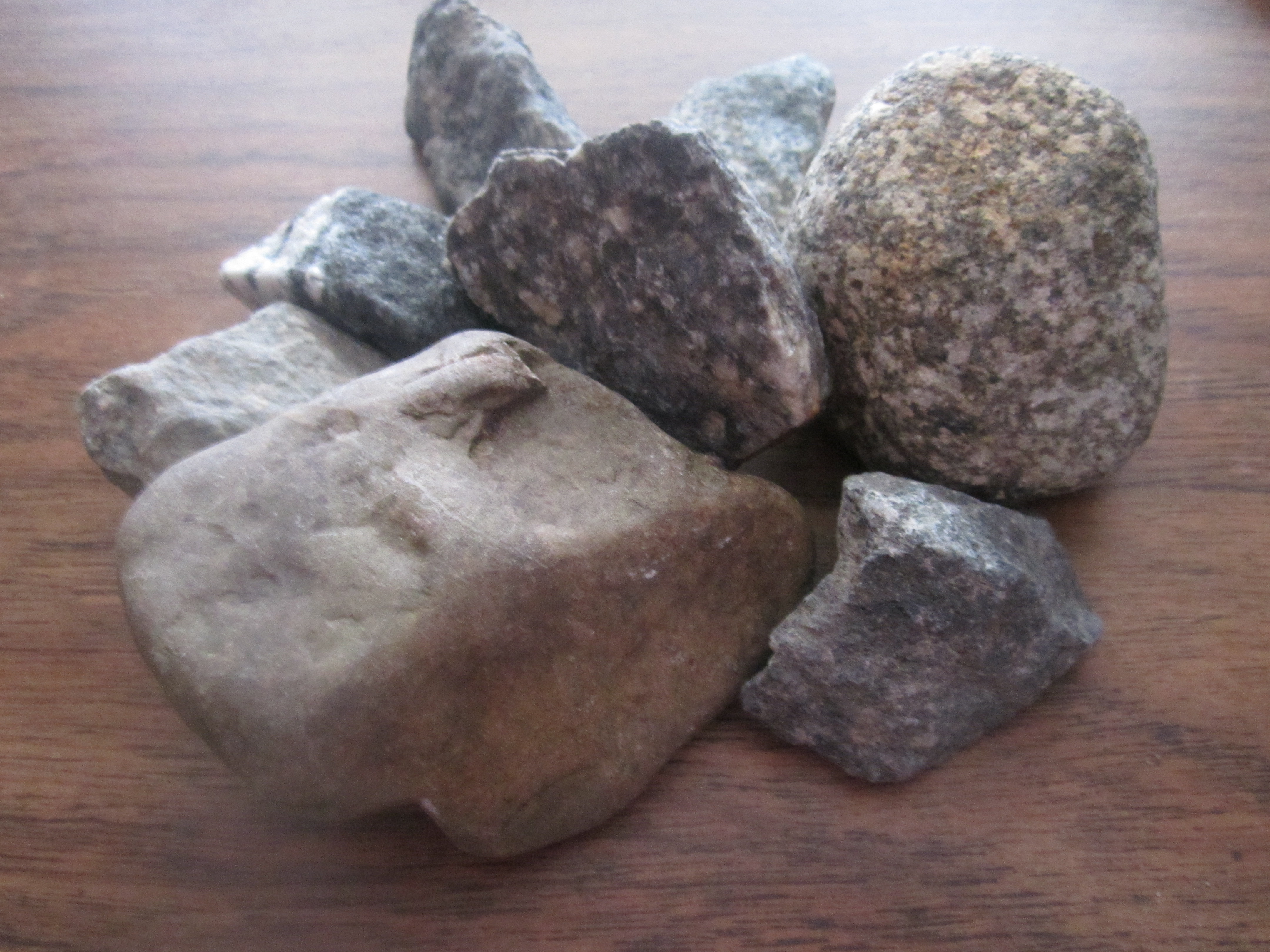
I picked up my daughter’s yellow spring jacket and felt weight, heaviness where it shouldn’t be.  Clearly she had stuffed her pocket at the park with her latest treasure.

Curious about her new discovery, I slipped my hand into her pocket and pulled out . . . a rock.  Two rocks actually, one for each pocket.

They weren’t gems, either.  No sparkles or beauty.  No monetary value.

They were plain ordinary gravel, no different than the layer of rock on my driveway.  In fact, the one crumbled into my fingers with the slightest pressure.

I sighed.  She had been toting home rocks for about two years now.  Everywhere we went, some pebbles, gravel, or smooth stones caught her attention and ended up in her pockets.

She has even tried to remove stones from the paths at Colonial Williamsburg and the zoo and once tried to carry a cement block away from the local museum where its grand function was to hold open the door.

I put my foot down about those.

But if it fits neatly into the pocket of her jacket, she’s likely to tuck it away where I can’t see and add it to her “rock collection.”  Perhaps she’ll even give it a name, which usually ends up being something like “Rocky” or another equally creative moniker.

I made the mistake of tossing “Rocky the First” back into our garden when I discovered it on her dresser.  She cried.  She searched the back garden for a glimpse of him and, finding him, carried Rocky right back inside.

To me, it was an ugly rock.  To her it was a treasured part of her collection, more like a pet than a simple object.

She’s not the only one who finds beauty in simple stones.  God loves them, too.

As they crossed over the Jordan River, the Israelites obeyed God’s instruction, picking up 12 stones from the river bed and lugging them up the embankment onto dry land.  God told them to use those stones to build an altar.

More specifically,

“an altar of stones.  You shall wield no iron tool on them; you shall build an altar to the Lord your God of uncut stones. And you shall offer burnt offerings on it to the Lord your God, and you shall sacrifice peace offerings and shall eat there, and you shall rejoice before the Lord your God” (Deut. 27:5-7 ESV)

Their peace offerings and sacrifices, their worship and rejoicing before the God who had carried them into the Promised Land, may have seemed more fit for an altar of finest gems.

Perhaps their greatest artisans could have finely cut diamonds, emeralds and rubies into an altar fit for worship of the Most High God.

Or, if God insisted on them using river rocks, at the very least they could have chiseled and carved until the altar looked like a marble statue, perhaps of angels or a depiction of the priests carrying the Ark of the Covenant, or of Joshua leading the people.

Yet, God was clear.  Stones, simple stones, uncut by any human tool, formed the altar fit for the offerings of His people.

Why did God even care about a detail so small?  According to Him, “If you make an altar of stone, you shall not build it of hewn stones, for if you wield your tool on it you profane it” (Exodus 20:25).

To God, human construction on the altar stones made them unholy and profane.

That’s because God knew the danger implicit in cut stones and man-made bricks.  The moment we begin to adorn altars with human effort is the moment we shift the focus off of the God we praise.  Instead, we admire the human talent that made the vessel or the human ability that cut the stone.

We become idolaters.  Our worship becomes profane.

This is what God accused the people of doing in Isaiah:

I spread out my hands all the day to a rebellious people, who walk in a way that is not good, following their own devices;a people who provoke me to my face continually, sacrificing in gardens and making offerings on bricks” (Isaiah 65:2-3 ESV).

Israel ignored God’s mandate and chose instead to offer their sacrifice among garden flowers.  They had rejected simple stones in favor of brick altars.

Israel wanted to worship God their own way and on their own terms.  His instructions seemed superfluous and unnecessary.  Their ideas seemed so much nicer, so much better, so superior, so much more religious than God’s request for pure and uncut praise.

In the same way, God sometimes overturns our expectations of adequate offerings and suitable worship.

He desires the simplicity of an obedient heart.

We think He needs more.  

So, we hold back our offerings until they are “fit” for Him.  We hide in the sanctuary pews until we have more to give.  We think other worshipers, who are more talented and more rehearsed, give gifts more worthy.

It isn’t, however, about being the best, most talented, or most qualified; it’s about being called.  Yours is the offering He desires.  It is because of your heart of obedience that He can be glorified in the sacrifices you bring.

There is beauty in the uncut stones of our worship.  It’s never about the show, never about our own talent or training; it’s not about looking good or fitting in, or processing our worship into acceptable forms—all human additions that shift focus off God and onto human ability.

Instead, it’s about responding to God in pure uncut adoration.

Heather King is a wife, mom, Bible Study teacher, writer for www.myfrienddebbie.com and worship leader.  Most importantly, she is a Christ follower with a desire to help others apply the Bible to everyday life with all its mess, noise, and busyness.  To read more devotionals by Heather King, click here.

Copyright © 2012 Heather King

The Sound of Silence

When I was pregnant with my very first daughter, my husband and I prayed the normal prayers of soon-to-be parents.  We asked God for her health, her character, her faith, and her future.

I threw in a prayer asking that she be a good eater and sleeper. The Bible says we can ask, right?

Then we bowed our heads together and prayed something truly bold. We asked that God would entrust us with a child who had something different than us—a talent, passion or personality trait that set her apart from her mom and dad.

After that prayer, we thought we’d give birth to an athletic superstar. I imagined soccer practices and track meets far into my future life as a mom.

God, however, rarely fits into the boxes we create for Him.

As she grew older, we realized that she was no sports prodigy.  Yet we’ve discovered many ways that she’s different from us—how she’s such a people person and how she spends hours on art projects and how she loves to be fancy.

Still, there’s one way God answered our prayer that I absolutely can’t miss.

God gave my daughter the heart of a dancer.

We don’t understand this.  I never in a million years expected to be a ballet mom.

My husband and I didn’t even slow dance at our own wedding, not because of some super-spiritual anti-dance philosophy.  It’s because we . . . . can’t. . . . dance.  At all.

Victoria, however, puts on a ballet performance at outdoor concerts along the beach and to the soundtrack of every movie we watch in our home.

She also dances at church.

That, my friends, is the rub.  The first time she pointed her toe and began stepping out of her pew to dance to the worship music at church, my palms grew sweaty with nervousness, which is kind of a problem when you’re the church pianist.

I know what Scripture says.

Let them praise his name with dancing,
making melody to him with tambourine and lyre!  Psalm 149:3

 Praise him with tambourine and dance;
praise him with strings and pipe!  Psalm 150:4

Still, while I agree that dancing is part of the Biblical description of worship, I wasn’t sure at first how I felt about my daughter being the dancer.

After all, this isn’t just a gentle swaying to the music.  She throws her head and her arms back and swirls, twirls, and pirouettes.  It’s total abandon and absolute passion.  She’s not ashamed or afraid to dance for God.

When we arrived home after her first praise dancing session, I chatted with her about it.  I hinted that it might be better to stand still and try to sing the songs, just like everybody else.

She stared at me for a moment.  Then she announced:

“The Bible says we should dance for God.
I’m dancing to make Him happy and Jesus likes it.
I think it makes Him smile when I dance.”

Alrighty then!

After being put in my place and given a Bible lesson by my five-year-old daughter, I really didn’t have anything else to say.

Most of the time, after all, silence is the only appropriate response to unmistakable truth.

This is difficult for me because I’m an excuse maker and a justifier.  If you tell me I shouldn’t have done that, I’ll give you 20 reasons why it was necessary.  I feel the need to explain myself all the time.

It’s the people-pleaser in me, hoping to convince others through my combative defensiveness that I was right, even when I was wrong.  Because I don’t want to be wrong, not ever.  I don’t want to mess up, not at any time.

Life would be so much easier for me if I was just perfect.

When God speaks truth to us, our response shouldn’t be excuses and explanations.  It should be the humble bowing of the head and the submissive silence of repentance.  Because we’re not perfect, not any of us.

Even the Pharisees knew that arguing with Jesus was impossible.  When He challenged them on issues of healing, the Sabbath, resurrection, and faith, “they were silent” (Mark 3:4, Luke 14:4).

Later on in the early church, Peter presented his case in favor of Gentile believers to the Jerusalem church elders.  When he finished reminding them of Scripture, his own personal testimony, and the evidence of faith they’d seen as Christianity spread, “they fell silent.  And they glorified God, saying, “Then to the Gentiles also God has granted repentance that leads to life” (Acts 11:18, ESV).

Then there’s Job.  For forty chapters, Job and his friends had debated about God, discussed, dialogued, and orated.  They had yapped and yapped.

Then God showed up.  He finally decided to speak up for Himself.  Job “answered the Lord and said: ‘Behold, I am of small account; what shall I answer You?  I lay my hand on my mouth.  I have spoken once, and I will not answer; twice, but I will proceed no further” (Job 40:3-5, ESV). 

The truth stings sometimes, I know it.  It requires that we admit mistakes and demands we take the often difficult steps to change.

But He’s a gracious and merciful God, who only speaks truth to us because He loves us.  So, instead of arguing with Him, let’s choose to place our hands over our mouths and bow our heads in silent obedience. Like Samuel, we say, “Speak, for your servant is listening” (1 Samuel 3:10, NIV).

Heather King is a wife, mom, Bible Study teacher, writer for www.myfrienddebbie.com and worship leader.  Most importantly, she is a Christ follower with a desire to help others apply the Bible to everyday life with all its mess, noise, and busyness.  To read more devotionals by Heather King, click here.

Copyright © 2012 Heather King

Christmas Devotions: A Birthday Encounter

“Having been warned in a dream not to go back to Herod, they returned to their country by another route”
(Matthew 2:12).

Seven.

My oldest daughter turns seven today.  She asked me to stop calling her “Baby girl” this week.  She seemed to think that seven year olds are too big for a nickname as embarrassingly babyish as that.

Birthdays never seem to be what my “Big girl” expects.  We take a birthday trip.  We do presents.  She shares in time with friends and family.  We sing to her.  She picks out her favorite cake (spice with cream cheese icing) and her favorite dinner (tacos or chicken and dumplings).  We celebrate her that day and she’s sheepish and sweet and content with the affection and attention.

But at night as she climbs back into bed now one year older than she was the night before, she wonders why she hasn’t grown six inches.  Why, if she’s now seven years old, is she still wearing some 6X clothing?

Somehow my girl thinks an annual encounter with a birthday candle should provide immediate change.  It’s a fairy dust *poof* over her head and she’s insta-bigger and more mature.

I can’t say how these things happen.  I remember so clearly the night nurse bringing my newborn into my room at 3 a.m. a year ago to the day.  She was screaming inconsolably.  Didn’t want to cuddle.  Didn’t want food.  Just needed to scream in protest for a bit.  I looked up at the nurse with the fear of a brand new mom and asked, “What should I do?”  She shook her head at me and said, “I don’t know!”  Then she walked out leaving me with Victoria, still screaming at the top of her lungs.

She was strong from the beginning.  Sure of herself, demanding of others.  Determined.  Sensitive and full of big emotions that just didn’t fit all bottled up and contained in a little body.

I remember her crawling, walking, talking, reading, dancing, and her first day of preschool and kindergarten and first grade.  Her love of horses, princesses, tea parties, arts and crafts, sparkles, and dancing and the mystery she is to me.

And yet, I can’t say when she grew up.  I can’t look at circles on the calendar and see the moment she was an infant and not a newborn.  The day I saw her as a toddler.  The moment she was a little girl.  Or how she became this big girl with long flowing blond hair and a tall, thin frame like a ballerina.

When does change happen?

When does change occur for us?

Surely we have that immediate moment of course redirection when we first choose to worship Jesus.  Paul describes it this way: “Therefore, if anyone is in Christ, the new creation has come:The old has gone, the new is here” (2 Corinthians 5:17).

One encounter with Jesus was enough to change the Magi’s travel plans also.

They had come from the east to Jerusalem and asked, “Where is the one who has been born king of the Jews?” (Matthew 2:1).

Their Messiah pursuit wasn’t popular.  It disturbed King Herod and “all Jerusalem with him” (Matthew 2:3).

Undeterred, the wise men followed the star and found the newborn Christ.  They were overjoyed, bowed down and worshiped him, presenting the gifts they had carefully toted along on their journey.

They met Jesus.  They saw the Messiah.  They encountered God in human flesh.

Then, “having been warned in a dream not to go back to Herod, they returned to their country by another route” (Matthew 2:12).

It was a practical decision for them.  To trick King Herod, they slipped quietly out of the country and avoided another meeting with this evil earthly king bent on Jesus’ destruction.

It’s spiritual for us.  We meet Jesus and then we can’t go back the same way we came.  We have to follow “another route.”

Nor is this a one-time course correction for us.  Just like my birthday girl who doesn’t magically morph into an older child at each birthday, so we change gradually.  There’s the initial moment of commitment to Christ, when we worship, bow down, and offer Him our hearts and lives.  We are a new creation.

Then there are seasons of growth spurts as God performs focused work on our character. Intense encounters with God cause us to drastically change course, when Scripture sears our heart, when a life lesson digs deep in our soul.  We have an unmistakable moment of revelation and heart remodeling.

At other times, the change is slow and daily as we shed layers and layers of flesh.  It’s so gradual we can’t always see it until someone sees the change in us.

They see how we react differently now.  How our words are seasoned with grace.  How people have become our primary heart motivation.  How our hearts are broken for the lost. They see that the faith we profess now impacts our motivation and activity.

It’s the change God is working in our hearts, just as Paul said: “And we all, who with unveiled faces contemplate the Lord’s glory, are being transformed into his image with ever-increasing glory, which comes from the Lord, who is the Spirit” (2 Corinthians 3:18).

But the ever-increasing transformation in us requires us to drop the veil from our faces and “contemplate the Lord’s glory.”  Like the Magi saw Jesus after their relentless, focused, studious search for Him, we have to seek God in order to see God.

That’s our task, to “look for God like the watchmen looks for the morning” (Psalm 130:6).  We search.  We find Him.  We adjust our course to follow Him.  That’s how change happens.

Heather King is a wife, mom, Bible Study teacher, writer for www.myfrienddebbie.com and worship leader.  Most importantly, she is a Christ follower with a desire to help others apply the Bible to everyday life with all its mess, noise, and busyness.  To read more devotionals by Heather King, click here.
Copyright © 2011 Heather King

Weekend Walk, 09/03/2011

I hated missing out on last week’s Weekend Walk and the opportunity to choose a verse to meditate on all week.  I hope you blazed ahead without me and chose a verse of your own.  If not, I’ll get us back on track today!

Hiding the Word:

At Women of Faith, my friend leaned over and pointed to a verse in her prayer journal that she had underlined.  It was perfect as we contemplated the imminent arrival of Hurricane Irene.  The day after the storm, I opened my devotional and found the exact same verse.  When God repeats Himself, I have learned to listen.  So, my verse for this week is simple and sweet:

Surely I am with you always, to the very end of the age.
Matthew 28:20

This week, I’m committed to contemplating the ever-constant presence of Christ in my life.  I want to be aware of Him rather than distant from Him.  I want to rely on Him rather than be independent.

Weekend Rerun:

Your Comforts Delight My Soul, Originally Posted 02/21/2011

Last night I had a terrible dream that I was preparing to lead worship—sitting at the piano all ready to go—when I saw my cell phone bill.  Obviously, in dreams it makes total sense that I’m checking my mail just before the music starts.  Anyway, I looked at that bill and it was $1,717. Then the music started and I couldn’t worship.  I couldn’t figure out what words to sing or what notes to play.  I was playing a different song than the congregation was singing.  It was a disaster.

Obviously, I woke up in a cold sweat from this dream (who wouldn’t be freaked out by a cell phone bill and public disaster like that) and couldn’t get back to sleep for a while.  I was anxious and worried about something that only existed in my dreamworld.

Today, as I was doing my devotions, I was reminded of how so much of my worry is about “fantasy situations”—the what if’s I stress over that never actually come true.  These anxious thoughts also always affect my worship.  It is just not possible to fret and praise at the same time.

In her book, Me, Myself and Lies, Jennifer Rothschild notes that the Old English and Old High German origins of our word “worry” mean “to strangle.”  Indeed, worry strangles us, choking out hope, joy, trust and, as it says in her book, “the life-giving truth that should be filling our thought closets” (p.23).

The Psalmist wrote, “Search me, O God, and know my heart; test me and know my anxious thoughts, See if there is any offensive way in me, and lead me in the way everlasting” (Psalm 139:23-24, NIV). I have always loved that verse and I copy it into my journal every time I read it in my devotional time.  Yet, it’s not something I find easy to do.

It’s difficult sometimes to hand over our thought lives to God.  Even though we know worry harms us and our relationship with God, we don’t want God to search our hearts and test our thoughts.  Somehow worrying makes us feel in control and we feel that handing over our anxieties means truly relinquishing any modicum of control we have in our lives.

Thomas Merton said, “Anxiety comes from strain, and strain is caused by too complete a dependence on ourselves.”  It’s true that when it’s broken down, worry essentially is a lack of trust or dependence on God.  We’re telling Him—“we know that Scripture promises us You will provide, You will comfort, You will bring peace, You will be our Advocate, but I’d rather just depend on my ability to fix my circumstances.  Thanks anyway, God”

Chris Tiegreen in Worship The King goes one step even farther than that.  He calls our fear “anti-worship.”  In his devotional, he writes:

But we who worship God cannot praise him with such insecurities.  Our fears are a form of anti-worship–a clear declaration that our God might not have promised us enough, or might not be able to follow through on what He has promised.  Yes, He will let us go through hard things, but never outside of His timing or beyond His protection. So worship Him.  And don’t worry about it.

Refusing to worry, fret, stress, fear and be anxious doesn’t come to us naturally.  It is a discipline of the heart and mind.  We must reject anxious thoughts, deny our emotions the opportunity to take over our lives, and fill up with the truth of God’s Word and His promises to us.

In Psalm 94:19 it says, “In the multitude of my anxieties within me, Your comforts delight my soul.” Take delight in His comfort today and consciously choose trust over fear.

In Kathryn Scott’s song, At the Foot of the Cross, she sings, “I lay every burden down at the foot of the cross.”  That’s the best place for those burdens to be—not on our back, but at His feet.

***************************************************************************************************

Heather King is a wife, mom, Bible Study teacher, writer for www.myfrienddebbie.com and worship leader.  Most importantly, she is a Christ follower with a desire to help others apply the Bible to everyday life with all its mess, noise, and busyness.  To read more devotionals by Heather King, click here.

Copyright © 2011 Heather King

A Giveaway and a Trophy!

Giveaway!

I promised in my weekend post that we’d celebrate reaching the 100th entry in this devotional blog and we’ll hit the big 100 on Friday!  Thanks so much to you for traveling on this journey with me.  I pray for you–even if I don’t know who you are or what you’re going through.  God knows all these things and I ask for His hand of blessing on you as you seek Him.

On to the giveaway!  I’m just over a month away from traveling to the Women of Faith conference in Washington, DC, so I’m going to give away some Women of Faith goodies.

The prizes:  The first person whose number is drawn will receive a brand new copy of Sheila Walsh’s book, Beautiful Things Happen When a Woman Trusts God.

I’m also giving away two brand new Women of Faith Worship CDs including songs they’ll be singing at this year’s conference.  These will go to the second and third numbers drawn.

To Enter:

Post a comment anywhere on this web site starting today and ending at midnight on Sunday, July 17th.  I’ll use random.org to randomly select the winners and I’ll announce their names in Monday’s post.

Today’s Devotional: Do I Get A Trophy?

The kids piled onto the stage for the practice before the big program.  At first, I arranged them like carefully planned chess pieces—tallest in the back, little ones up front.  Brothers not next to other brothers for fear of poking and other tomfoolery.  Eventually, though, the kids just kept coming and shifting around and they ended up in no particular order.

However it happened, in the very middle of the stage in the very front row was the most precious little boy you could imagine.  He sang.  With all his might, he sang.  You could hear his voice in any place in the sanctuary and those passing by the closed doors could hear him singing down the hall.  His sister poked him during each song and whispered to him, “Don’t be so loud!” Those watching us practice from the pews couldn’t help but smile as he made a “joyful noise.”

Then, the practice done, each child climbed down the steps of the stage and filed into the back room to wait for the actual program.  Except for this one singing boy.

He took hold of my hands and asked, “Ms. Heather, did I do a good job?”
“Oh, you did a great job. I love how you sang with all your heart.”
“So, do I get a trophy?”
“Well, I don’t have trophies, but I have candy!”

He seemed happy with the alternative and ran off with the other kids.

We Don’t Serve To Earn a Trophy

For most of the truly important things in life, we don’t get trophies.  Coaches hand them out for playing on a soccer team, but no woman polishes the brass trophy on her shelf for enduring labor and having a baby.  There’s no “stayed up all night with vomiting children” trophy.  No trophy for “visiting the nursing home without anyone else knowing you did it.”  No plaque for “spent hours on knees praying for wayward child.”

We don’t serve for awards that will hang on our wall or adorn our bookshelves.  Other than an occasional mug from our kids saying, “World’s best mom,” we go through our everyday acts of ministry without recognition.

Sometimes our motives twist and need readjusting.  Deep in our heart, we occasionally slip into acting out of a desire to be seen, noticed and praised.  Or we take on a task because it feels good to be needed and asked.  We fear that no one else could possibly do it, so we sign on the dotted line.

When others are looking, we sometimes put on the voice and physical appearance of “Super Christian,” and then snap at our family, grumble and complain, and gossip about others as we sink into the seats of our cars and drive from church to home.

Then there are those moments when we shove the dishes into the dishwasher and slam the pot down on the counter wishing that someone would recognize what we do.  It may not be Nobel prize worthy, but this is our life’s service we’re talking about!  This is self-sacrificing.  This is humbling.  This is always putting others first!

It’s not always articulated in our heart and mind that way. It’s not something we always admit or even recognize.  But our motives are distorted and we’ve begun to serve for trophies–polished brass rewards of attention, praise, personal pride and recognition from others.

Jesus warned: “Be careful not to practice your righteousness in front of others to be seen by them. If you do, you will have no reward from your Father in heaven” (Matthew 6:1).

We shouldn’t serve in any capacity to get a trophy.  If we do, we’re forfeiting heavenly reward, trading eternal glory for a temporary self-esteem boost.

But We Serve As If God Was Handing Out Trophies

Here’s the challenge, though.  With pure motives and sometimes hidden service, without seeking praise and recognition, we can still serve with all our heart as if we would get a trophy.

We don’t seek the prize, but we strive with all our might to be worthy of it.  Because even when we are invisible to everyone else, God sees us.

He sees you.  All of your effort, your service, your laying down of self, your sacrificial giving, your stepping out in faith, your steady faithfulness, your lack of sleep, your soul emptied out.

Just like my singing friend.  Fully knowing that he wouldn’t get a trophy, he still sang loudly and enthusiastically during the program.  He gave his best effort anyway and I’m positive that God was beaming at every word he sang.  God didn’t miss a single second of his heartfelt praise.

In the same way, we worship wholeheartedly, we serve menially, we act selflessly not for our own glory, but for the glory of God.

We pick up toys for the “Well done, my good and faithful servant.”  We work at our jobs not so we receive promotions, but so that our “light (will) shine before men, that they may see your good deeds and praise your Father in heaven” (Matthew 5:16).  We walk away from gossip.  We take a meal to the family who needs it.  We write the note of encouragement.  We pray for our friend.  We teach the Sunday School class year after year after year.  We rock the baby.

Because God sees and cares.

We sing with all our hearts not because some human being is going to hand us a physical trophy, but we’re singing for God, so that He will be pleased.  This is our worship, the offering we place before Him.  When we grow weary or frustrated, feeling annoyed or walked all over, pouring out our very soul for the sake of others, we do not give up and go through halfhearted motions of service.  Our motivation remains the same, to serve God, to bring Him glory, to give Him praise.

Because even when no one else notices, we know that God sees.

We remember what Paul wrote:

Do you not know that in a race all the runners run, but only one gets the prize? Run in such a way as to get the prize (1 Corinthians 9:24-27).

and

So let’s not allow ourselves to get fatigued doing good. At the right time we will harvest a good crop if we don’t give up, or quit. Right now, therefore, every time we get the chance, let us work for the benefit of all, starting with the people closest to us in the community of faith (Galatians 6:9-10 MSG).

For those who feel invisible at times, here’s a video from Nicole Johnson on The Invisible Woman.  I hope you are blessed by it as much as I was:

Heather King is a wife, mom, Bible Study teacher, writer for www.myfrienddebbie.com and worship leader.  Most importantly, she is a Christ follower with a desire to help others apply the Bible to everyday life with all its mess, noise, and busyness.  To read more devotionals by Heather King, click here.

Copyright © 2011 Heather King

VBS Lessons, Day One: God Made You

Every year at Vacation Bible School I watch as adults lead the excited children around the church from station to station, sing the songs (maybe we even do the accompanying motions), shout and laugh.  Do we also, though, compartmentalize? Do we box up the VBS messages and declare they are just for kids and not relevant for us?

But is there any message in Scripture that God delivers just for people under 18? We older and wiser ones sometimes make faith so complicated and fail to recognize or really consider the beautiful truths in these simple messages. So, this week, I’m thinking about VBS and what the lessons for children mean for you and me.  Our church is doing Group’s PandaMania VBS, so that’s what’s on my mind.

God Made You

“Thank you for making me so wonderfully complex”
Psalm 139:14

God made us.  What then should we do about that?

Do we nod our heads in complacent agreement? Do we go about our everyday lives with no realization, no recognition, no response to an act so incredible and a God so powerful? Have we forgotten the wonder of it all?

Sometimes we do just that.

But in this very moment, I pause.  “God made me.  God made you.”  That should elicit a response of unconfined, unhindered, from-the-bottom-of-my heart, I-don’t-care-what-anyone-else-thinks praise and thanksgiving.

So often we determine the mission and measure the success of VBS by how well we reached unchurched kids. That’s not necessarily a bad thing. Yet, VBS has power for churched kids, too.  For one week we encourage them to throw their hands up and sing out loud.  We tell them it’s not just okay, but it’s expected for you to be unashamed about worshiping.

It’s not that way all the time.  Truth be told, in normal church mode in some sanctuaries, not everyone looks excited about worshiping God. We so often grip our hands to our side and feel the eyes of others on us if we look too involved, raise our hands, close our eyes, sing loudly. For some of us, Sunday morning worship means feeling peer pressure and avoiding embarrassment rather than giving God the praise He deserves.

This isn’t about musical styles or song choices or volume or service order.  This isn’t about personal preferences.  This isn’t about one person judging another’s worship and determining a set formula for what praise looks like.  How you worship is between you and God and it may be different from day to day, song to song, moment to moment.

God Himself though has declared that “true worshipers will worship the Father in the Spirit and in truth, for they are the kind of worshipers the Father seeks. God is spirit, and his worshipers must worship in the Spirit and in truth” (John 4:23-24).

I can’t help but quote my favorite description of praise from David Crowder’s Praise Habit.  He writes:

We naturally understand praise . . . Kids just know how to enjoy things.  They give themselves fully to whatever has a hold on them.  Remember as children how we would fearlessly hold up our favorite toy and petition anyone who was in close proximity to behold it?  ‘Look, Mom, look!’

We instinctively knew what it was to praise something. It’s always been in us.  We were created for it. . . .But as adults we become self-conscious and awkward.  Something gets lost.  I think we do it to each other.  At some point, I hold the toy up exultantly and you comment that it looks ridiculous to hold the toy up in such a way. . . And we slowly chip away at each other’s protective coating of innocence until one day we wake up and notice we are naked and people are pointing.”

I’ve seen this happen. After a few months in Children’s Church, my oldest daughter told me that kids laughed at her when she sang and made her feel silly for raising her hands.

Do we adults do this same thing to each other?  Do we do it for the children who sit next to us in the pews all around the sanctuary?

Do they watch us and see what wholehearted worship and total unashamed glorifying God looks like?  Or do they instead see how peer pressure should control our behavior and even our relationship to God?

For boys, the pressure is even greater.  How often do they see men not just standing up when church music plays, but unashamedly praising God?  Our behavior mostly teaches boys that men don’t get emotional about worship, men don’t raise hands, men don’t sing out, men don’t look involved, men don’t close their eyes.

We forget David.  He fought bears and lions with his hands and as a young boy felled a giant with a slingshot while grown men in hardened armor cowered in their tents. He led armies and slew tens of thousands of the enemy Philistines.

He was the manliest of manly men and yet he also penned most of Psalms, the songs of praise to God.  He danced before the Lord and declared “I will celebrate before the LORD. I will become even more undignified than this”? (2 Samuel 6:21b-22a).  This warrior-king didn’t care what other people thought when he worshiped.

Later David Crowder also writes

My point is we are all fragile.  Somewhere along the way we abandoned abandon.  Or perhaps we gained things that need to be discarded. We have covered ourselves.  Someone pointed out that we were naked, and the clothing we have woven is bulky and pretentious.  It hinders our freedom of movement.  Expression with childlike spontaneity has become difficult.  It bares too much of us. . . .

What if we were so moved by who God is, what He’s done, what He will do, that praise, adoration, worship, whatever, continuously careened in our heads and pounded in our souls? . .. This is what we will do for eternity.  What makes us think our time on earth should be any different?  What keeps it from being so?”

Charles Spurgeon wrote, “When your heart is full of Christ, you want to sing.”  The response in Scripture is clear, when we consider that God has made us, made the universe, poured out His sacrificial love for us, given us the very breath of a new day and provided us with all that we need, we “sing to Him, sing praise to Him” (1 Chronicles 16:9).

  • We “sing psalms, hymns, and spiritual songs with gratitude in your hearts to God” (Colossians 3:16).
  • We “lift up (our) hands in the sanctuary and praise the LORD” (Psalm 134:2)
  • We “make a joyful noise unto the LORD, all the earth: make a loud noise, and rejoice, and sing praise” (Psalm 98:4).

David Crowder is right.  We will be singing praises to God for all eternity.  We will be surrounded by others doing the same at the throne of the Most High God and there won’t be anything in heaven to hold us back from giving “all that is in” us in worship to Him (Revelation 5:13).  No peer pressure.  No embarrassment.  No expectations.

I tell my daughters all the time—Don’t be embarrassed for singing.  Be embarrassed not to sing.  Don’t worry about what other people think.  Care about what God is thinking.

Can you do the same thing?  Can you put aside notions of dignity, feelings of embarrassment, worries about what other people will think and fix your eyes only on God?

This week, every time the kids hear me say, “God made you,” they are to respond immediately in a shout of worship, “Thank you, God!”  How will you also respond in thanksgiving?

**************************************************************************************

PandaMania VBS runs all this week (06/20 to 06/24) from 6:30 to 9 p.m. at Newington Baptist Church for ages 4 through 5th grade.  We hope to see you there!

For those at Newington who are interested in David Crowder’s book, Praise Habit, great news!  It’s in the church library!

Heather King is a wife, mom, Bible Study teacher, writer for www.myfrienddebbie.com and worship leader.  Most importantly, she is a Christ follower with a desire to help others apply the Bible to everyday life with all its mess, noise, and busyness.  To read more devotionals by Heather King, click here.

Momma Said There’d Be Days Like This, Part II

If you’ve been traveling with me on this devotional for journey for any amount of time, you’d know that I love God, my husband, my daughters, hot tea with lots of sugar, chocolate, and quiet times at my kitchen table.

This week started rough (but is getting better all the time!!), and two cups of strong, sweet, hot tea and several mini chocolate bars weren’t helping me through the day.  Despite repeated attempts to have the kind of quiet time with God I really enjoy, that wasn’t happening either.  I was interrupted or cut short on time or distracted or just incapable of understanding the words I read off the page (read paragraph, reread paragraph, sigh, drink tea, read paragraph again).

What I longed for was a God-encounter.  I was so thirsty for Him in the midst of stress and noise and I desperately held my cup out for Him to fill at the fountain of Living Water.  This time with Him that I adore and that helps me through my everyday seemed so elusive and unfulfilling, but it wasn’t for lack of trying.  It wasn’t until I stopped attempting to separate my time with God and simply sought Him as I traveled along that I felt His presence and heard the lessons He was sharing.

You can read Lesson 1: My Feelings Can’t Be the Boss of Me here.

Lesson 2: Worship God, Not The Habit

Jesus told His disciples, “Come away by yourselves to a secluded place and rest a while” (Mark 6:31).  He called them to the discipline of aloneness, quietness before God, spiritual retreating from the crowds and activity to spend focused time one-on-one with God.  Those are sacred times of purposeful seeking God’s face.

I have high expectations for those moments with my Savior and that is precious time to me, time that I guard fiercely.  That’s no easy task when you have young kids and a telephone and email and a to-do list!  Yet, it’s a battle worth waging in order to see Him, hear Him, feel Him, know Him.

Yesterday, though, I kept traveling to my kitchen table and pulling out my Bible and journal, my Bible study book, my devotionals and then sipping my cup of tea, but still walking away unfilled.  My cup was held out.  I had traveled to the Fountain.  I remained thirsty.  My cup did not overflow.

This week, I read in My Utmost for His Highest: “Watch how your Father will upset your schedule if you begin to worship your habit instead of what the habit symbolizes.  We say, ‘I can’t do that right now; this is my time alone with God.’  No, this is your time alone with your habit . . . The only supernatural life is the life the Lord Jesus lived, and He was at home with God anywhere.”

As I drove around town yesterday, frazzled and tired, that quote was prodding my heart and mind.  Oswald Chambers wasn’t advocating not spending time alone with God.  He wasn’t saying, “Forget trying to read your Bible and pray; it’s not important.”  It is important.  That time is necessary and life-giving.

Yet, it is also not a vending machine where I make an investment in time and pay the required amount (quiet time, study materials, journal, tea) and receive in return treats and goodies (peace, feeling close to God, receiving inspiration, having something great to write in my journal).  There’s that danger, always the danger, of making a god of something other than God.  I can worship the time I spend with God or I can worship God Himself.  The distinction is so fine, but also so necessary.

Jacob traveled to the same place twice in His journeys and met God there in powerful ways through visions and dreams and conversations with the Almighty Himself.  The first time, Jacob fled from His family home in order to avoid the homicidal wrath of his brother, Esau.  In the night, after a divine dream, Jacob “called the name of that place Bethel” or House of God.

Jacob returned to Bethel years later, after marrying and having children, having his named changed by God, traveling home to Canaan, reconciling with his brother, and settling again in the family land.  This time, though, “he built an altar there, and called the place El-bethel, because there God had revealed Himself to him when he fled from his brother” (Genesis 35:17). El-bethel means God of the House of God.

Did you notice the slight difference?

The first time, Jacob focused on the place, the things, the experience.  The second time, after years of experience and maturing, Jacob focused on God Himself.  Beth Moore in The Patriarchs wrote that sometimes we are tempted to “love loving God more than we actually love God.”

We love small group, Sunday School, the songs at church, the Christian radio station,  a devotional, our quiet times, a particular author that challenges us . . .  but are we followers of a Christian lifestyle or followers of Christ?  Do we love books by Christian authors more than we love the Bible?  Do we love our spiritual routines or the God those routines  are supposed to reveal to us?  Do we love the feeling of being close to God or God and God alone?

There are these life moments when God shakes us up in all of our comfort and complacency and takes away even something good for a time, so that we can worship God and not a spiritual habit.  He longs to meet with us during our quiet times and in our prayer closets.  He fills us up as we open up The Word and copy verses into our journals.

But, He’s there with us at the kitchen sink, too, willing to speak to our hearts as we wash the dishes.  He’s with us as we rock the baby in the night and while we pop on the chauffeur’s hat and hop into the minivan to drive children to activities all over town.  The distinction between a mundane task and a sacred moment is whether we’re listening to Him while performing it.  We should set aside focused time for our relationship with God, and yet we shouldn’t allow it to become formulaic or predictable, nor should it be a compartmentalized part of our life that fails to spill over into our chores and family life.  If we do, God will likely stir our hearts and mess with our plans—all to recenter our hearts on Him alone.

Are you hungry for a worshipful moment, just the simplicity of seeking after Him?  I’ve been singing along with Kathryn Scott the past few days and it’s lifting my heart!  I hope you spend some moments worshiping with her, too.


I’ve also added a page called Singing in My Car that has links to the songs I mention in the blog.  Check out the page and maybe find some songs that encourage you today!

************************************************************************************************

Heather King is a wife, mom, Bible Study teacher, writer for www.myfrienddebbie.com and worship leader.  Most importantly, she is a Christ follower with a desire to help others apply the Bible to everyday life with all its mess, noise, and busyness.  To read more devotionals by Heather King, click here.
Copyright © 2011 Heather King