Living In-Between, Part II

He had these red boots.

A missionary speaker at our church years ago told the story of being a boy growing up in Africa.  In the pile of shoes donated to the kids in his village, there was a pair of fabulous red boots and he loved them. They fit perfectly.  He felt like a super star when he wore them and he wore them everywhere.
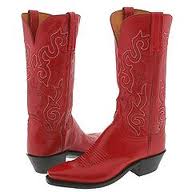
Over time, he had to push a little harder to get his heel down in the boots.  His toes began to pinch a little and then curl to squeeze into the shoe.  Instead of choosing to go out and play with his brothers, he’d decline, knowing that walking and running would hurt his feet.  But he didn’t want to admit the boots were too small.  He loved them too much to stop wearing them.

In “Living In-Between, Part I,” I wrote about the first pitfall of our transition times in life.  We tend to run ahead of God.  We want to skip over the waiting time or the training period in order to get right to the good stuff of God fulfilling and completing His work in us.

The second pitfall, though, is no less dangerous.  It’s holding onto the past when God tells us to move on.  It’s squeezing ourselves into too-small red boots, making ourselves uncomfortable and hampering our service to God.

The past holds us hostage to shame.

The apostle Paul wrote:

Brothers and sisters, I do not consider myself yet to have taken hold of it. But one thing I do: Forgetting what is behind and straining toward what is ahead, I press on toward the goal to win the prize for which God has called me heavenward in Christ Jesus (Philippians 3:13-14).

If anyone understood how the shame of the past could imprison you, it was Paul, once a murderer and persecutor of Christians and now a follower of Christ.

He knew you couldn’t just “forget” what happened in the past, but that you had to constantly engage in “forgetting.” This process is ongoing because Satan is forever picking up the clumsy club of shame and beating us over the head with it.

“God can’t use you,” he says.  “You messed up.  Don’t you remember your sin?  Your mistakes?  How you’re impure and worthless?”

Paul also wrote that “there is now no condemnation for those who are in Christ Jesus” (Romans 8:1).  We cling to that daily.  When Satan looms over us with shame, we banish him by purposefully forgetting what is behind and straining ahead to reach all that God’s grace has for us.

The past makes us comfortable with the known.

The missionary knew his red boots were fantastic, albeit ill-fitting. What if some new shoes didn’t measure up?

Some of us settle down so comfortably into the routines of life that we tremble at threats of change.  This is how the Pharisees felt as they were shaken from their roosts of power by an unexpected Savior.

Jesus announced:

“I am the bread of life.  Your ancestors ate the manna in the wilderness, and they died.  This is the bread that comes down from heaven, so that one may eat of it and not die.  I am the living bread that came down from heaven.  Whoever eats of this bread will live forever; and the bread that I will give for the life of the world is my flesh” (John 6:47-51).

He was offering people revolutionary sustenance—the Bread of eternal life.  They preferred to remember the manna in the wilderness. Not that manna was bad.  It was miraculous and sustaining and perfect provision from God at a necessary time.

Yet, manna was no more than a precursor of the ultimate heavenly provision—our Messiah and life-giver.

Are you choosing manna over the Bread of Life?  Have you declined what God is offering because you’re content with what He’s already given?

In A Year With Jesus, Eugene Peterson prayed, “I don’t want to live on the memory of old miracles, but experience fresh ones in faith.  Draw me into the fullness of this day’s grace in which you have new things to do in and through me” (p. 427).

Finally, the past reveals selfishness.

It was hard to do, but at last the little boy admitted the beautiful red boots didn’t fit him anymore.  What good were boots if you couldn’t wear them or walk with them? Reluctantly, he handed the boots down to his younger brother and stepped into some new shoes of his own.

And there’s the key for us.  How long had his brother been without the blessing of perfectly fantastic red boots all because his older brother couldn’t let them go?

Who are we hindering when we refuse to step down from ministries when God has told us to stop?  Who does He want to raise up, to train, to use, to call and to bless?

James wrote: ” But the wisdom that is from above is first pure, then peaceable, gentle, willing to yield, full of mercy and good fruits, without partiality and without hypocrisy” (James 3:17, NKJV).

Heavenly wisdom means we are willing to yield.  Sometimes that means we let others pass or we invite them into the steam of ministry traffic.  Sometimes it means slowing down and giving someone else a chance to jump in.

But, it depends on us to obey God peacefully, gently, with mercy and without hypocrisy when He tells us to stop hoarding the boots all to ourselves and to bless someone else with them instead.

We look forward to a new year full of new encounters with God.  Are you willing to go where He leads even if it means leaving some things behind?

Heather King is a wife, mom, Bible Study teacher, writer for www.myfrienddebbie.com and worship leader.  Most importantly, she is a Christ follower with a desire to help others apply the Bible to everyday life with all its mess, noise, and busyness.  To read more devotionals by Heather King, click here.

Copyright © 2011 Heather King

Living In Between, Part I

It’s a mess; that’s what it is.

It’s this awkward time when my daughter isn’t quite size 7, but not really still a 6x either.  Triple that for all three of my girls and imagine the wardrobe fallout.

They’re just in between.

The dresses are too short, the sleeves on the shirts ride up on their arms, but the next size of pants fit like clown clothes.

So, there’s this season where their wardrobe is a hodgepodge of sizes, a paradise for Goldilocks.  Some too small.  Some too big.  And hopefully enough that are “just right.”

And there are the disagreements about what fits and what doesn’t.  They swim into bulky dresses and shirts that slip off their thin shoulders just so they can wear something new.

Then these same girls cram themselves into shirts that crawl up above their belly button and pants that now look like capris because they don’t want to give up their favorite outfit.

It’s all about transition.  It’s a time of in-betweeness.  It’s uncomfortable.  Messy.  Awkward.  Ill-fitting.

It’s life.

So often we live in the in-between.
We’re preparing for a ministry we haven’t yet started.
We’re moving from job to job, home to home, ministry to ministry.
Our children somehow change from babies to toddlers to little kids to big kids to teens to adults and we can’t say when it happened.
We’re saying goodbye, but haven’t found a place to say hello.

Our transition pitfalls are the same as they are for my daughters and their fashion crises.

We want to leap ahead before we’re ready and end up tripping all over ourselves.

Or, we cram ourselves into comfortable situations that are now stretched to the max and busting the seams.  We resist change.  We linger in the past.  We’re trapped by shame or even nostalgia and we’ll miss out on the new in order to remain in the known.

Scripture is strangely silent about many transition times.

Take Paul.  After his dramatic conversion, he spent time learning how to be a disciple of Jesus Christ, putting aside his old life as a persecutor, but not yet leading the church or serving as a missionary to the Gentiles.

He was in between.

In Galatians, Paul tells us, “I did not go up to Jerusalem to see those who were apostles before I was, but I went into Arabia. Later I returned to Damascus.   Then after three years, I went up to Jerusalem to get acquainted with Cephas and stayed with him fifteen day” (Galatians 1:17-18). 

We can’t tell how long his training for ministry lasted.  He spent time alone in Arabia, away from the Jerusalem church.  Then he stayed in Damascus for three years.  Finally, he traveled to Jerusalem where he hung out with Peter for 15 days (Cephas).

So often we forget this time in Paul’s life.  We see him converted and then we see him as a radical missionary enduring shipwrecks and stonings and imprisonment. At least, that’s how it went on the flannel boards in our Sunday School classes all those years ago.

But his was no overnight preparation for ministry.  It took years of radical change for Saul to become Paul.

Surely Paul could have met Jesus on the road to Damascus, had his eyesight restored, and then high-tailed it to Jerusalem to present himself to James and the rest of the church leaders.  He could have declared, “Send me in, Coach!”

Yet, he would have been immature: full of enthusiasm, but little spiritual maturity.  He probably would have scared the Christians into hiding.  They likely thought he was faking his conversion in order to infiltrate the church and kill them all.

Paul also didn’t have a heart for the Gentiles yet.  Maybe that happened in Arabia when he realized that not many people there had even heard of Jesus Christ—and if Paul needed a Savior, well maybe they did, too.

Most of the time between Jesus’ birth and His public ministry is a blank also. We know He lived in Egypt as a child, but we know nothing about His time there.

Scripture only tells us about one event in Jesus’ childhood, when his parents left him during their pilgrimage to Jerusalem when he was 12 years old.  Traveling as a large group, they just assumed he was with others in their entourage.

Can’t you just hear his parents when they discovered his absence? “I thought he was with you!”  “Well, I thought he was with you!”

Jesus’ response to His parents when they found Him teaches us what to do when we’re in the in-between times of life.

  • He told his parents, “Didn’t you know I had to be in my Father’s house?” (Luke 2:49).  We need to be where God is.  Jesus wasn’t performing miracles or teaching on hillsides yet.  That was for the future.  Likewise, we can’t run ahead of God or lag behind His timing.  We need to be obedient to His plan for us right now.
  • During his transition time, “Jesus grew in wisdom and stature” (Luke 2:52).  Soak up everything you can learn while you wait.  Don’t twiddle your thumbs and assume this time is pointless. Dig deep in is Word.  Learn from others.  Wear your knees out in prayer.  Be a receptive student.
  • Be sensitive to others: Transition times aren’t just hard for us; they are difficult for others, too.  Some people won’t understand when you take a break from ministry.  Others may not support you in something new.  Some people will try to hold you back.  Others will push and nudge you ahead of God’s timing. After His parents found Him in the temple, Jesus “went down to Nazareth with them and was obedient to them” (Luke 2:51).  Obey God’s timing, but be gracious always and submissive to your leadership when possible.

In the in-between times, we look to God as our guide, we enjoy His presence and remain contented in His plan for us, just like the Psalmist wrote “You make known to me the path of life; in your presence there is fullness of joy; at your right hand are pleasures forevermore” (Psalm 16:11, ESV)

Heather King is a wife, mom, Bible Study teacher, writer for www.myfrienddebbie.com and worship leader.  Most importantly, she is a Christ follower with a desire to help others apply the Bible to everyday life with all its mess, noise, and busyness.  To read more devotionals by Heather King, click here.

Copyright © 2011 Heather King

Christmas Devotions: A Birthday Encounter

“Having been warned in a dream not to go back to Herod, they returned to their country by another route”
(Matthew 2:12).

Seven.

My oldest daughter turns seven today.  She asked me to stop calling her “Baby girl” this week.  She seemed to think that seven year olds are too big for a nickname as embarrassingly babyish as that.

Birthdays never seem to be what my “Big girl” expects.  We take a birthday trip.  We do presents.  She shares in time with friends and family.  We sing to her.  She picks out her favorite cake (spice with cream cheese icing) and her favorite dinner (tacos or chicken and dumplings).  We celebrate her that day and she’s sheepish and sweet and content with the affection and attention.

But at night as she climbs back into bed now one year older than she was the night before, she wonders why she hasn’t grown six inches.  Why, if she’s now seven years old, is she still wearing some 6X clothing?

Somehow my girl thinks an annual encounter with a birthday candle should provide immediate change.  It’s a fairy dust *poof* over her head and she’s insta-bigger and more mature.

I can’t say how these things happen.  I remember so clearly the night nurse bringing my newborn into my room at 3 a.m. a year ago to the day.  She was screaming inconsolably.  Didn’t want to cuddle.  Didn’t want food.  Just needed to scream in protest for a bit.  I looked up at the nurse with the fear of a brand new mom and asked, “What should I do?”  She shook her head at me and said, “I don’t know!”  Then she walked out leaving me with Victoria, still screaming at the top of her lungs.

She was strong from the beginning.  Sure of herself, demanding of others.  Determined.  Sensitive and full of big emotions that just didn’t fit all bottled up and contained in a little body.

I remember her crawling, walking, talking, reading, dancing, and her first day of preschool and kindergarten and first grade.  Her love of horses, princesses, tea parties, arts and crafts, sparkles, and dancing and the mystery she is to me.

And yet, I can’t say when she grew up.  I can’t look at circles on the calendar and see the moment she was an infant and not a newborn.  The day I saw her as a toddler.  The moment she was a little girl.  Or how she became this big girl with long flowing blond hair and a tall, thin frame like a ballerina.

When does change happen?

When does change occur for us?

Surely we have that immediate moment of course redirection when we first choose to worship Jesus.  Paul describes it this way: “Therefore, if anyone is in Christ, the new creation has come:The old has gone, the new is here” (2 Corinthians 5:17).

One encounter with Jesus was enough to change the Magi’s travel plans also.

They had come from the east to Jerusalem and asked, “Where is the one who has been born king of the Jews?” (Matthew 2:1).

Their Messiah pursuit wasn’t popular.  It disturbed King Herod and “all Jerusalem with him” (Matthew 2:3).

Undeterred, the wise men followed the star and found the newborn Christ.  They were overjoyed, bowed down and worshiped him, presenting the gifts they had carefully toted along on their journey.

They met Jesus.  They saw the Messiah.  They encountered God in human flesh.

Then, “having been warned in a dream not to go back to Herod, they returned to their country by another route” (Matthew 2:12).

It was a practical decision for them.  To trick King Herod, they slipped quietly out of the country and avoided another meeting with this evil earthly king bent on Jesus’ destruction.

It’s spiritual for us.  We meet Jesus and then we can’t go back the same way we came.  We have to follow “another route.”

Nor is this a one-time course correction for us.  Just like my birthday girl who doesn’t magically morph into an older child at each birthday, so we change gradually.  There’s the initial moment of commitment to Christ, when we worship, bow down, and offer Him our hearts and lives.  We are a new creation.

Then there are seasons of growth spurts as God performs focused work on our character. Intense encounters with God cause us to drastically change course, when Scripture sears our heart, when a life lesson digs deep in our soul.  We have an unmistakable moment of revelation and heart remodeling.

At other times, the change is slow and daily as we shed layers and layers of flesh.  It’s so gradual we can’t always see it until someone sees the change in us.

They see how we react differently now.  How our words are seasoned with grace.  How people have become our primary heart motivation.  How our hearts are broken for the lost. They see that the faith we profess now impacts our motivation and activity.

It’s the change God is working in our hearts, just as Paul said: “And we all, who with unveiled faces contemplate the Lord’s glory, are being transformed into his image with ever-increasing glory, which comes from the Lord, who is the Spirit” (2 Corinthians 3:18).

But the ever-increasing transformation in us requires us to drop the veil from our faces and “contemplate the Lord’s glory.”  Like the Magi saw Jesus after their relentless, focused, studious search for Him, we have to seek God in order to see God.

That’s our task, to “look for God like the watchmen looks for the morning” (Psalm 130:6).  We search.  We find Him.  We adjust our course to follow Him.  That’s how change happens.

Heather King is a wife, mom, Bible Study teacher, writer for www.myfrienddebbie.com and worship leader.  Most importantly, she is a Christ follower with a desire to help others apply the Bible to everyday life with all its mess, noise, and busyness.  To read more devotionals by Heather King, click here.

Copyright © 2011 Heather King

Christmas devotions: The Christmas Countdown

But when the set time had fully come, God sent his Son, born of a woman, born under the law, to redeem those under the law, that we might receive adoption to sonship (Galatians 4:4-5, NIV).

“Mom, how many days until Victoria’s birthday?”
Nine.

“How many days until we go see The Nutcracker?”
Five.

“Once we see The Nutcracker, how many more days will it be until Victoria’s birthday and then to Christmas?”
Four and Eight.

“How many days until my party at school?”
Three for Lauren, four for Victoria.

“How many days until our program?”
Four.

“How many days to Christmas?  Do you know how many hours that might be?”
Thirteen and go ask your dad.

Right now, my kids are living for the countdowns.  We’ve carefully examined the calendar, marking every upcoming event and charting out the wait-time from now until then.  The Advent calendar slowly moves us ever-closer to the big day when we peek under square number 25.

Still, every day they ask me to perform mental calculations rapidly and with precision.

Then they moan and groan as if five days of waiting is interminable and two weeks of patience too much to bear.

Inspired by all the anticipation, my oldest daughter asks, “How long until I’ll be thirteen?”

Now I’m the one moaning and groaning.

In some ways, I share all their excitement.  I can’t wait to see them open the special gifts I’ve chosen for them or enjoy special family time and build on the traditions they’re only just becoming old enough to appreciate.

Still, it’s made me realize how I struggle with the Christian walk because there so often aren’t any countdowns at all, not that I know of anyway.

How many days until You reveal Your will, Lord?

How many days until I know what this experience is for?

How long until You deliver me from this circumstance?

How much time must I wait for You to answer this prayer?

So much of my life seems to hang right now on uncertain hooks with undefined strength.  Perhaps you feel this way also–like you’re just dangling there, waiting for the “Go” sign, the signal, the map, or the plan.  And until then, you wait with anxious anticipation, always on guard, always watchful so that you don’t miss the moment when God says, “Now.”

The trouble is, we have no date on the calendar to circle in red as the day God will speak or the moment our time of waiting will end.  No certain time of revelation or definitive arrival date for answered prayers.

So, we keep up our focused vigil and continue doing what God has told us to do right now, trusting that He’ll reveal the next step to us clearly and in His perfect time.

That’s what the Israelites did for 400 years between the end of the Old Testament and the moment that John the Baptist first stepped out of the wilderness and began crying out for people to repent.

They waited.

They looked for the Messiah.

They prayed and searched His Word and obeyed (hopefully) what He had told them to do before.

In the Gospel of Mark, the very first words we have recorded from Jesus are “The time has come.” (Mark 1:15).

How appropriate.

Maybe the people of God weren’t able to countdown the days to the Messiah’s ministry on earth, but God could.  He knew the right moment all along and He didn’t rush His plan or sleep through the alarm.

When the time had come, Jesus was there.

Paul wrote in Galatians thatwhen the set time had fully come, God sent his Son, born of a woman, born under the law, to redeem those under the law, that we might receive adoption to sonship (Galatians 4:4-5, NIV).

And later in Titus:  God, who does not lie, promised before the beginning of time, and which now at his appointed season he has brought to light through the preaching entrusted to me by the command of God our Savior (Titus 1:2-3).

The writer of Hebrews tells us: But [that appointed time came] when Christ (the Messiah) appeared as a High Priest of the better things that have come and are to come (Hebrews 9:11 AMP).

The time between the promise and the fulfillment must have seemed impossible and unending.  Just as there were many who still fervently sought out the Messiah, still others probably had given up.  After hundreds of years without revelation from God, who could blame them?

And yet, at the appointed time, Jesus was born.

This was the promise for the prophets during all of those centuries of waiting:

 “For the vision is yet for the appointed time;
It hastens toward the goal and it will not fail.
Though it tarries, wait for it;
For it will certainly come, it will not delay (Habakkuk 2:3, NASB).

Notice that Habakkkuk says, “it will not delay.”

We might disagree.  For those tapping their foot in the waiting room, it certainly seemed like a delay.

Yet, not from God’s perspective.  He knew all along when the appointed time would come, and He wasn’t a moment too soon or a second too late.

He never is.  We can take heart that God knows exactly where we are in the countdown even when we don’t and we can rejoice with the Psalmist that “my times are in Your hands” (Psalm 31:15a).

Heather King is a wife, mom, Bible Study teacher, writer for www.myfrienddebbie.com and worship leader.  Most importantly, she is a Christ follower with a desire to help others apply the Bible to everyday life with all its mess, noise, and busyness.  To read more devotionals by Heather King, click here.

Copyright © 2011 Heather King


No Pain, No Gain: Part II

I’ve learned to take a mild Facebook hiatus from about January 1st until just about February 15th every year.

That’s because everyone’s New Years Resolution seems to involve fitness and they are all eager to share their chosen method of extreme weight loss.

I know better.  I always feel that making exercise an official “resolution” sets me up for failure every time.

Cynic that I am at times, I also admit that I just wait for the Facebook exercise updates to disappear after a few weeks and then we all return to a normal and pleasantly non-guilt-inducing state of indolence and inactivity.

If you’re a Facebook user, you likely know exactly what I mean.  It begins on the very first day of the year:

“I hit the gym at 6 a.m. today!”

“I ran 3 miles in the rain, uphill, did my Zumba class and swam 15 laps today. Spin class tonight”

“I’m training for the around-the-world marathon and made it to Switzerland in record time today.”

Okay, that last one was a bit of a stretch.  Still, you’ve probably read updates just like that.  Or, perhaps you’ve written them yourself.

Over time, all but the most ardent of exercise-lovers cease to post how many miles they ran that day or how many hours they spent at the gym or how much sleep they missed out on in order to run twelve miles.

Lesson Two: Transformation Takes Time

For most of us, lack of instant results sabotages our best health intentions.  As I wrote in No Pain, No Gain: Part I, we must remember that no one begins as an expert or starts perfectly.  No one achieves perfection at the moment of salvation or within a week of starting Bible study.

And yet, somehow we expect this of ourselves.  We step on the scale after a few days of exercising, blink our eyes in disappointment that we haven’t lost 50 pounds and dropped two dress sizes, and pack it all in.  Clearly, exercising to the point of not being able to walk isn’t working.

Then again, maybe you do drop off 5 pounds a day for a short time.  And then you plateau.  And the results don’t come as easily any more.  And you don’t think you’re making progress.

And you quit.

In our faith-walks, also, God is engaged in a life-long work of transforming us into His Son.  Sometimes we expect one week of consistent quiet times, one month of ministry, one Bible study session, or one afternoon of prayer to serve as the Bippity Boppity Boo of a fairy godmother, magically transforming us into princesses fit for a heavenly ball.

But there’s beauty in the imperfections that Christ perfects day by day.  There’s power in sharing our growth and progress with one another, in being vulnerable, open, and transparent about the mistakes we make and the God whose grace covers over them.

Lisa Harper wrote in Stumbling Into Grace:

“The older I get, the more convinced I am that admittedly flawed sinners are the most credible witnesses of Jesus, because people with scars can’t fake moral perfection.  It’s glaringly apparent we can’t save ourselves. . . .We prove how miraculous and restorative the love of God really is. . . . Please don’t listen to the enemy when he tries to convince you it’s time to wave a white flag.  To cry uncle.  To stop believing and talking about how good God is simply because you’ve made some bad mistakes.  Stand back up and keep walking in faith.  It’s okay if you’re a little wobbly”  (p. 189).

In Matthew 5:48, Jesus gave His perspective on how perfect we need to be: “Be perfect, therefore, as your heavenly Father is perfect” (NIV).

Wow!  That’s daunting.  Overwhelming.  Discouraging even.

Yet, Stephen Arterburn wrote that the Greek word for perfect is teleos, which means, “the goal, the consummation, the final purpose toward which we are moving.”  It “carries the sense of ‘complete,’ ‘mature,’ or ‘being at the proper stage at the proper time.”  He says:

What matters to God is the journey, not just the arrival at the goal. God’s concern is not that we’ve arrived but that we continue to face and travel in the right direction.  For his grace both empowers our obedience and forgives our failures.

Jesus gave us freedom to be less than perfect, but still asked us to be involved in the perfecting process. Be on the path to maturity, He said.  Be at the right stage of development; don’t lag behind by becoming a spiritual couch potato.

Paul said it this way: “train yourself to be godly.  For physical training is of some value, but godliness has value for all things, holding promise for both the present life and the life to come …Be diligent in these matters; give yourself wholly to them, so that everyone may see your progress” (1 Timothy 4:7b-8, 15, NIV). 

We are called to diligence and intense training in godliness, giving ourselves wholly over to maturing in Christ “so that everyone may see our progress.”

The point of our piecemeal progress and stumbling path to grace isn’t to show off our new look.  It’s to give glory to God.  It’s our testimony to others.  They look at us and marvel at the work God has done us and they seek God’s powerful involvement in their own lives as a result.  They want what we have.

We become the slim and toned chick on the exercise video who people want to look like.  They’ve seen the before and after pictures and think, “If God can do this in her life, think what He can do in mine!”

So, they’re willing to engage in some spiritual muscle-building, willing to walk around sore and stiff for a while, willing to skip out on what’s easy in order to do what’s hard—because they want God to transform them just as He transformed us.

Heather King is a wife, mom, Bible Study teacher, writer for www.myfrienddebbie.com and worship leader.  Most importantly, she is a Christ follower with a desire to help others apply the Bible to everyday life with all its mess, noise, and busyness.  To read more devotionals by Heather King, click here.

Copyright © 2011 Heather King

No Pain, No Gain: Part I

Two hours later and my legs still feel like Jello molds.  I’m wobbling around my house as if I couldn’t pass a sheriff’s breath test–not sore, just unstable.

I’m not a gym exerciser.  The idea of working out publicly terrifies me.  All those people running on their treadmills, biking effortlessly or using mystifying exercise equipment with bars and pulleys would get a quick self-esteem boost from my presence, I’m sure.

I, on the other hand, would be reminded that I don’t know what in the world I’m doing when it comes to fitness.

But we all want to be healthy, right?

And we all want to look as if we’re pros at this whole exercise thing, right?

So, I’m more of an exercise video kind of girl from the secluded privacy of my living room.  Either that, or I’d rather just eat less and skip the exercising all together (does that really work?)

Today, I popped in a video run by a perfectly toned ballet instructor, who tells me reassuringly that she danced for years with the Virginia Ballet and now runs her studio in California.

I want to look how she looks.

So, in moments, she had me performing plies and demi-plies and standing in first position and I pointed my toes and straightened my posture to match her.

For five minutes it was easy.  Ten minutes later, I considered limiting all future exercise attempts to nothing more coordinated or complicated than walking.  After all, I’ve been walking quite well for a few decades, so I am pretty sure I could master the basic moves.

All in all, I took from my morning exercise experience these things:

  • I do not look like the sculpted toothpick of a ballerina on the television screen nor can I move like her.
  • I may not be able to walk correctly for a week.
  • I may not have mastered the art of exercise still, but I took away a few spiritual lessons I could share with you instead.

Lesson One: It Wasn’t Always Easy for Them

This super-ballerina with the perfect shape could lift her leg sideways so that it was perpendicular with the rest her body.  She contorted herself without any evidence of pain or effort into a perfect letter T.  If I hadn’t seen it with my own eyes, I’d have sworn it was impossible for anyone not in the circus.

She made it look easy.

It wasn’t.

Sometimes we read Scripture and feel the frustration when we don’t look like the spiritual giants we find on the pages.  We’re not David or Moses, Elijah, John the Baptist or Paul.

We stumble.  We mess it up.  We make bad choices at times and struggle with sin always.

This morning, I read, “Everyone should be quick to listen, slow to speak and slow to become angry” (James 1:19). For a brief moment, I thought, “Sure, easy for him to say.”

But of course it wasn’t easy for James, the half-brother of Jesus, to curb his tongue and control his anger.

Years earlier, before Jesus’ public ministry had truly launched, his own family, including James, had mocked him, saying,

‘“Leave Galilee and go to Judea, so that your disciples there may see the works you do. No one who wants to become a public figure acts in secret. Since you are doing these things, show yourself to the world.’ For even his own brothers did not believe in him” (John 7:3-5).

Disciplining your tongue and emotions is no overnight accomplishment, not for James, who once used words to taunt Jesus, the long-awaited Messiah.  Not for Paul, not for Peter–and not for you or me.

I’m sure it wasn’t a cake-walk, either, for John the Baptist to be obedient to his call.  I always assumed he lived out in the desert all alone, wearing camel hair and eating honey and wild locusts because he was just a quirky kind of guy.  Maybe he enjoyed that diet.  Maybe he wanted to stand out from the crowd with his own personal style.  People eat odd things and wear “unique” outfits all the time.

Really, though, he wasn’t following a personal health regime or starting his own fashion trend.

John the Baptist was living a life of radical obedience. Surely he smelled the fish crackling over the campfires around the river many nights and longed for a delicious, fulfilling meal.  Certainly he caught the scent of fresh bread baking in the simple homes along the Jordan River and longed not just for a slice of bread, but perhaps a family with whom to share it.

But he kept to his diet of bugs and honey and a life of solitary confinement because of self-disciplined, self-sacrificing obedience.

Paul tells us: I discipline my body and make it my slave, so that, after I have preached to others, I myself will not be disqualified” (1 Corinthians 9:27, NASB).

That Barbie-look-a-like of a ballerina on my television screen did not perform plies, tendues, and releves fresh out of her mother’s womb.  She took lessons and invested years of intense practice and focused instruction to stand and move and bend with a dancer’s ease and grace.

Don’t give up on your spiritual walk just because the girl in your Bible Study class quotes Scripture like she wrote it herself, or the mom in your prayer group sounds like she prepared her prayers in advance with a poetry instructor, or the woman in front of you during worship service knows all the words to the songs and sings like she means every word.

Don’t be discouraged when you study the Top 40 Heroes of the Faith in Scripture and feel like you fall short.

They struggled.  They messed up.  They sinned. They repented.  They studied, learned from others, were disciplined by God, and humbly grew to maturity.  Never attaining perfection on this planet, they became instead usable vessels for God’s purposes.

We all begin this Spiritual journey imperfect and the very essence of our faith is that we all need a Savior.  So, don’t give up.  Keep exercising the muscles of belief, patience, faith, and self-discipline.

Heather King is a wife, mom, Bible Study teacher, writer for www.myfrienddebbie.com and worship leader.  Most importantly, she is a Christ follower with a desire to help others apply the Bible to everyday life with all its mess, noise, and busyness.  To read more devotionals by Heather King, click here.

Lessons from the Theater, Part Three

This week, I’m sharing devotional thoughts based on my time working on a community theater production of Hello, Dolly! and today is the last post in the series.

You can read Lessons from the Theater: Part One here.
You can read Lessons from the Theater: Part Two here.

Lesson Three: This is All His Story

Looking at that stage, you would have thought that there were 40 stars in the show.

From the excitement as the town awaited the arrival of Dolly herself  . . .

to Red cross nurses, Prohibition protestors, and cutthroat politicians vying for every vote as they walked the parade route  . . .

to the chaotic melee of ladies knocking rabblerousers over the head with their tiny handbags . . .

to the scowling and crying in a courtroom scene . . .

you couldn’t tell at a glance who was telling the main story and who was telling an aside in the performance of Hello, Dolly!.

My husband says that everyone on the stage has the job of telling their story.  Some get to have a name and some dialogue.  Others don’t.  But no character thinks, “My story isn’t the focus here, so I can just fill in background space.”

Instead, the actors use every available tool to tell what they are doing there, what happened to bring them to this place and what they think about it.

Every actor acts as if his character’s story is the main story.

For us, though, one of the incredibly hard lessons in life is that we aren’t the main story.  In fact, this story isn’t our story at all; it’s God’s.

Chris Tiegreen wrote:

All of our life is a struggle between self-centeredness and God-centeredness.  We know our lives are supposed to revolve around Him and His will, yet we have so many personal dreams and goals.

It’s not that our story doesn’t matter to God or that He views us as just “one of the crowd,” a random human in a sea of human need.  To God, each person matters.  Each of us is a treasure.  Each of us is beloved and worthy of sacrifice.

Our personal story always matters to Him.

The difference, though, is that sometimes we think we know how this story of ours should play out and we don’t consider all the other people whose lives connect, overlap, and intertwine with our own.

So, how do we balance knowing that God desires intense involvement in our lives and also knowing that He desires the same for every other person on the world stage with us?

We check our prayers.

Self-centeredness for me almost always shows up in my prayer life.  I think I know.  I certainly know what my problems are.  Truth be told, mostly I think I know the perfect solutions, as well.

So, I tell God, “Here’s what’s happening to me and it’s yucky.  I’m hurting.  I need you to answer my prayer and provide and here’s how You can do that.”

The other day as I prayed, I actually found myself giving God a three-step strategy for helping me.  “Here are three ways that You can answer this request, God.  I don’t care which you pick or maybe You do all three, but I’m just laying out the options for You as I see them.”

Just in case our infinite, omnipotent, omniscient Creator God was out of ideas and needed a little help from me.

Are you horrified by my brazenness?  Astounded at my ridiculous posturing as a deity in my own right?

You should be!

How can I confine God to my limited understanding of reality?  By thinking that this is my story and not His!  By forgetting that He is always the main event, He is always the hero, and He always knows my true need and the best answer to my requests.

Sure, you can pray for that job, at the expense of someone else who really needs it and who God designed for it.  Or you can pray for the perfect job God has designed for you.

You can pray for that specific spouse who you just know God wants you to marry.  Or you can pray God brings you the perfect husband or wife at just the right time.

You can pray that God blesses your ministry efforts here.  Or you can pray that God directs your steps to the ministry He has designed for you.

We bring to Him our problem.  We leave the solutions up to Him.  That’s how we yield our story to His and allow Him full reign over our life’s direction.

This is why Paul doesn’t write Romans 8:28 as a stand-alone thought.  Sure, he told us that, “in all things God works for the good of those who love Him, who have been called according to His purpose.”  It’s one of our favorite Scripture verses to quote to ourselves and to each other.

Yet, Paul had so much more to say about that in context.

The verses immediately before that say:

In the same way, the Spirit helps us in our weakness.  We do not know what we ought to pray for, but the Spirit himself intercedes for us through wordless groans.  And He who searches our hearts knows the mind of the Spirit, because the Spirit intercedes for God’s people in accordance with the will of God (Romans 8:26-27).

Then, yes, when we’ve allowed the Spirit to intercede for us according to God’s will, He works everything out for our good.

And not just for our good.  But for the good of the person to our left and the one to our right and even those so far off to the side of the stage we can’t even see them. He sees us all and knows the perfect plan that will work for our benefit and for His glory.  We just need to submit our story to His and allow Him to occupy center stage in our lives at all times and in every situation.

Heather King is a wife, mom, Bible Study teacher, writer for www.myfrienddebbie.com and worship leader.  Most importantly, she is a Christ follower with a desire to help others apply the Bible to everyday life with all its mess, noise, and busyness.  To read more devotionals by Heather King, click here.

Copyright © 2011 Heather King

Our Jesus Style

“Clothe yourselves with the Lord Jesus Christ, and do not think about how to gratify the desires of the flesh” (Romans 13:14, NIV).

The first time it happened, I thought I was going crazy.

I rifled through my two-year-old’s dresser and pulled out a new bright red Minnie Mouse t-shirt and some jeans.  Then I placed them in the pile with the other girls’ clothes for the day.

My toddler took one look at the red shirt on top, screamed “no,” grabbed it and went running through the house like she was heading for a touchdown.

I have three daughters.  I’ve faced wardrobe protests before.  There’s the “I only wear dresses, the frillier and sparklier the better” and the “I only wear pink and purple” child.

In the other extreme, we have regular Sunday morning meltdowns with my other daughter who “hates pretty” and refuses to put on a dress.  Oh how I mourn the closet full of hand-me-down dresses just hanging there unused!

So, seeing my two-year-old streak through the house with a red shirt didn’t phase me in the least.  I dressed my other kids and then hunted for my naked toddler.

But when I found her, the shirt was missing.  I looked around her, in the rooms she had been in, back in the dresser, and under the kitchen table (her usual hiding place).

Did I not just see her running with this shirt?  Did it disappear into thin air?  Had I finally completely lost my Mom mind?

Undaunted, I grabbed another shirt, pulled it on over her head and finished the morning dressing ritual and started washing dishes.  I took some crust from their breakfast toast over to the trashcan and dumped it in almost without looking.  Then I walked back to the trash with my used teabag and napkin and tossed those in, as well.

Walking away, though, I realized—I had seen red crumpled clothing in there.  The Minnie shirt was now covered in crumbs and splotches of tea, but I salvaged it and threw it into the washing machine.

Now I’m on to her.  I carry out the clothes in the morning.  The two-year-old’s disappear routinely.  I no longer hunt through the house for them.  I know they’re in the trash can.

My little one has developed a strong opinion about what she wears every day.

I wonder what would happen if we were as careful about the attitudes, beliefs, and heart conditions we clothe ourselves in every morning.  Maybe we should be that picky.

It’s a favorite metaphor of the apostles, reminding us to peel off the old clothes of flesh, lust and sin and to purposefully put on a brand new outfit everyday.  We are to clothe ourselves in Christ.

Paul described it this way:

But now you must also rid yourselves of all such things as these: anger, rage, malice, slander, and filthy language from your lips. Do not lie to each other, since you have taken off your old self with its practices  and have put on the new self, which is being renewed in knowledge in the image of its Creator . . .

 Therefore, as God’s chosen people, holy and dearly loved, clothe yourselves with compassion, kindness, humility, gentleness and patience. Bear with each other and forgive one another if any of you has a grievance against someone. Forgive as the Lord forgave you.  And over all these virtues put on love, which binds them all together in perfect unity (Colossians 3:8-14, NIV).

In other words, take it off, take it all off.  The anger, the bad attitude and grumpiness, the bad language, the lies.  All of those pesky remnants of our pre-Salvation self have to go.

And we stare at the closet and choose the new clothes we’ll wear each day with great care.  Clothes of compassion, kindness, gentleness, patience, forgiveness, and most of all love.

Add in to that mix the favorite outfit of Peter: “All of you, clothe yourselves with humility toward one another” (1 Peter 5:5)

The bottom line, for Paul is that we should “clothe yourselves with the Lord Jesus Christ, and do not think about how to gratify the desires of the flesh” (Romans 13:14, NIV).

Unfortunately, our old fleshly selves have a way of sneaking their way back into our closets.  We think we’ve restyled only to snap in anger during the morning rush.  How did that discarded sin find it’s way into our wardrobe again?  More importantly, how did we end up wearing it today?

Mostly, it happens accidentally.  We aren’t picky enough about the spiritual clothes we don every day.

If you’re like me, you spend the last few minutes of time in bed each morning thinking about what you’re going to wear and all the things you need to accomplish that day.  You’re planning it all out.

So, in those few moments before your feet hit the floor, plan the style of your heart.  Choose to wear Jesus each day.  Reject the clothing of your old self and instead pull on love and step into compassion.  Spice things up with a scarf of kindness and a jacket of forgiveness.  Wear your own favorite shoes of humility and gentleness.

It’s our Jesus style.  It’s what people should see when they glance our way—our Savior.  His pattern in our lives is unmistakable.

Heather King is a wife, mom, Bible Study teacher, writer for www.myfrienddebbie.com and worship leader.  Most importantly, she is a Christ follower with a desire to help others apply the Bible to everyday life with all its mess, noise, and busyness.  To read more devotionals by Heather King, click here.

Copyright © 2011 Heather King

I Know What You’re Talking About

Be strong and courageous. Do not be afraid or terrified because of them, for the LORD your God goes with you; he will never leave you nor forsake you.”
Deuteronomy 31:6

Sending my oldest daughter to first grade has been a daily exercise in navigating cutthroat competition.

It’s a compulsion.  An insatiable need to be the best, the smartest, the fastest, the first.

So, when choosing books at the end of the day, she stressed over whether anyone else had a higher reading level.

It was tragic when the girls in her reading group lost the spelling competition to the two boys.

There were the races at recess, how many beads they had earned for their Accelerated Reader necklaces in library, and who was on the highest level math timed test.

For weeks, I gave my daughter profound words of Momly wisdom.  “You don’t always have to be the best, babe.  You just have to try your hardest and that is always good enough.  Don’t worry about anyone else. You are smart and capable and you should be proud of what you can do and be thankful for the way God has made you.”

She would nod, hug me and then run off to play, seemingly receiving the full weight of my words.

But no matter how good my speeches were, they didn’t really change her–even the ones I felt could have been scripted into TV sitcom about a perfect mom in one of those heart-to-heart mother-daughter moments.

She still felt both compelled and destroyed by competition.

Then there was the day when I finally looked at her and said, “I get it. I know what it’s like.  I have spent most of my life feeling like I needed to be the best, the fastest, the smartest, the most capable, the most responsible, the kindest, and just generally the most perfect person there is.  And I am telling you now that doing your best is good enough and that you need to be comfortable as you.”

She looked back at me a little befuddled, as if it never occurred to her that maybe this neurotic need to be perfect was genetic.  And while her character didn’t change in a revolutionary moment, she seemed to listen more closely to what I had to say.

Because I have been there.  I have lived that.  I do actually know what I’m talking about.

In the same way, it comforts me somehow to know that when Jesus asks me to endure, to be patient, to withstand trials and suffering, to love my enemies, to speak truth, and to show love, that He knows what He’s talking about.

Eugene Peterson wrote:

“Lord Jesus Christ, how grateful I am that You have entered the arena of suffering and hurt and evil.  If all I had were words spoken from a quiet hillside, I would not have what I needed most — Your victory over the worst, Your presence in time of need.”

Jesus could have preached “Blessed are the merciful and the meek and the pure in heart” for His entire ministry.  Those messages would have been challenging and beautiful, but lacking in impact.

Thankfully, He didn’t stop there.  He showed mercy.  He displayed meekness, even choosing to intercede for those crucifying Him as He labored to breathe on the cross.  His heart remained pure, even as Satan tempted Him in the desert.

Jesus didn’t just say it; He lived it.

That’s why the writer of Hebrews reminds us that:

For this reason he had to be made like them, fully human in every way, in order that he might become a merciful and faithful high priest in service to God, and that he might make atonement for the sins of the people.  Because he himself suffered when he was tempted, he is able to help those who are being tempted (Hebrews 2:17-18).

How precious is Christ’s mercy for us!  He never stands poised from a throne of judgment, hurling down condemnation at us for messing it up sometimes or falling short of perfect every day.

He is a merciful High Priest, who bends down low and helps us overcome.

In the same way, Jesus asks us to do more than just make speeches at people and proclaim truth.  He asks us to live it and then share it.

Paul wrote:

Praise be to the God and Father of our Lord Jesus Christ, the Father of compassion and the God of all comfort,  who comforts us in all our troubles, so that we can comfort those in any trouble with the comfort we ourselves receive from God (1 Corinthians 1:3-4).

So, when we share with someone what it’s like to overcome the sin of gossip, it’s because we ourselves have been there and done that.

When we watch a stressed out young mom’s children, it’s because someone watched our little ones for us.

As we place our arm around the woman diagnosed with breast cancer, as we make a meal for a new widow, as we sip coffee across from the wife who’s husband says, “I don’t love you anymore,” we give to them the same comfort we received in our own lives.

Jesus asks us to live it and then share it.  That’s what He Himself has done for us.

What comfort has Christ given to you that you need to share with someone else?

Heather King is a wife, mom, Bible Study teacher, writer for www.myfrienddebbie.com and worship leader.  Most importantly, she is a Christ follower with a desire to help others apply the Bible to everyday life with all its mess, noise, and busyness.  To read more devotionals by Heather King, click here.

Why Did the Chicken Cross the Road?: Part I

And The Winner Is . . .

Thanks so much to the giveaway participants!  I counted up each comment on the blog, each Facebook share, each new blog follower and used random.org to calculate the winner.  And the winner is . . .  Lynn Holt!  Congratulations!   Lynn, I’ll contact you about your prize choice!

I appreciated every comment, share, and follower.  Thank you for walking on this devotional journey with me.  We may have been celebrating my 150th post on this blog, but really I learn so much from what you have to say.  I hope you all continue to share your thoughts and post comments!

Now on to today’s devotional . . . .

****************************************************

For those reading Lisa Harper’s book, Stumbling Into Grace, along with my small group, today’s devotional will match up with her eighth chapter: “The Bride Who Tripped Down the Aisle”

**********************************

“Therefore God, Your God, has anointed You with the oil of gladness more than Your companions”
Psalm 45:7

What kind of school does a ladder go to?
I don’t know. What kind of school does a ladder go to?
A High School!  Get it?  High . . . ladder.

It was the first joke my five-year-old daughter ever invented that made sense.  I was so proud!  At dinner that night, I made her tell it again to my husband.

We were mostly proud because for years we had endured the nonsensical joke creations of our two oldest daughters.  My six-year-old still thinks every single joke has to begin with knock, knock.

Knock, knock.
Who’s there?
Why did the chicken cross the road?

We’ve tried to explain joke construction and the basic tenets of verbal humor, but to no avail.  The thing is, to them it’s funny.  Even if we simply eke out polite fake laughter, they collapse into squeals of amusement at their own joke concoction.

We just don’t get it.

In the same way, we Christians should have a joy that people who don’t know Christ just don’t get.

This Good News that we have—that God Himself came to earth in human flesh, that He received the punishment we deserve for our sin, that He died in our place and rose again, offering us eternal life with Him in heaven . .. well, that really is good news.  It’s certainly something to get excited about again and again and again!

On Sunday mornings, I’ve been teaching Christmas songs to young children at church.  They are supposed to be angels delivering Jesus’ birth announcement to the shepherds.

At first, these pretend angels sang their song with little gusto or excitement.  They mumbled out the lyrics as if it were a painful exercise.  After weeks of reminding them that this was the greatest announcement the world has ever received, finally they sang with joy: “Hey!  Don’t be afraid.  I’ve got some great news.  Christ is born today in Bethlehem!”

The angel himself on Christmas night promised that “I bring you good news that will bring great joy to all people” (Luke 2:10).

Unfortunately, we become immune over time to the message’s impact.  We forget the joy.  We forget the wonder and excitement.

And when we imagine Jesus Himself healing people and teaching them, so often we picture Him as a melancholy savior, all staid, straight-laced and serious.

Surely, though, he must have smiled a bit as Nicodemus puzzled out the meaning of “born again.”

When Jesus deftly sidestepped the theological traps laid by the Pharisees and Sadducees, I imagine He did it with triumphant joy.

As He delivered the captivating and totally revolutionary Sermon on the Mount, Jesus could not have been a boring monotone preacher.  He held the crowd’s attention for two solid chapters worth of teaching in Matthew 5-7.  There must have been some joy there!

If Jesus never smiled, surely the children in Matthew 19 would have run away rather than willingly climbing onto His lap for a blessing.

Not that our life circumstances always make joy easy.  Sometimes we feel like our “cup runneth over” and sometimes we feel like our cup is all poured out.  What then?

Nehemiah faced a crowd of Israelites who felt too overcome by their sin, too full of repentant sorrow to feel joy. Yet he told them, “Don’t be dejected and sad, for the joy of the Lord is your strength” (Nehemiah 8:10).

At times, it’s difficult to experience joy, when we feel weak, out of control, confused, worried, uncertain, scared, or sad  . . . Yet, the joy of the Lord is where our strength lies.  Without joy in all circumstances, we can become paralyzed by weakness.

So, we rejoice together when we consider the Good News of the Gospel.  We rejoice in God’s presence, in His accessibility to us at all times, in His compassion, in His faithfulness and unfailing love.  We rejoice in the journey of our faith, knowing that wherever He takes us, He will always be there.

Still we have joy.  We determine to “always be full of joy in the Lord. I say it again—rejoice!” (Philippians 4:4, NLT)

Heather King is a wife, mom, Bible Study teacher, writer for www.myfrienddebbie.com and worship leader.  Most importantly, she is a Christ follower with a desire to help others apply the Bible to everyday life with all its mess, noise, and busyness.  To read more devotionals by Heather King, click here.

Copyright © 2011 Heather King