Now Recruiting Team Members: Job #2, “Camel Knees”

I don’t think I’m traumatized now because my PE teachers made me play dodgeball as a kid.

But it’s a miracle.

I was terrified of PE on dodgeball days.  Also on kickball days.  The worst moment of every year came when I walked into the gym and the PE teacher pointed to a rope dangling from the ceiling and told us to climb up.

I hated the gymnastics unit since I was the only girl on the planet incapable of doing cartwheels.  I’ve been hit with a softball, basketball, and hockey puck before.  In volleyball, I just prayed no one would serve in my direction.

I was a physical education disaster.

So, it’s little surprise that the other kids weren’t jumping all over themselves to pick me for their team.  It’s a cruel ritual of waiting for some person to have mercy on you and call out your name so you wouldn’t be the dreaded last.

In Part One of this series, I wrote about one kind of person who’d be the first pick on my spiritual dream team.  I’d want a Barnabas, an encourager.  He was a talent scout who could always spot the good in others and would stand up for them against naysayers.

He even had a cool nickname.  His real name was Joseph, but the apostles called him Barnabas or “Son of Encouragement” to show off the great spiritual gift God had given him.

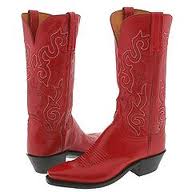
Now, for my second draft pick, I’d choose a guy with a nickname of his own: James, AKA “Camel Knees.”

Job Posting #2: James

  • Must be full of wisdom and good counsel, giving you sound, Godly advice whenever you need it straight from Scripture.
  • Must get down on his knees for you, continually lifting you up in prayer and being your greatest supporter before the throne of God.

James, the half-brother of Jesus, became the head of the Jerusalem church.  One thing is clear about him: He knew God’s Word through and through.

When Paul appeared before James and the Jerusalem council in Acts 15 to present his case for evangelism to the Gentiles, James immediately referred back to Old Testament prophecy (Acts 15:16-18).  He had the power of God’s Word at instant recall.  There was no lengthy pulling out of a concordance or searching through scrolls.

James had committed Scripture to memory and used it to inform his decisions and to give advice to those who needed it.

Clearly, this is a man who clocked significant time in the study of God’s Word and all that time in Scripture had convinced James of one thing.

Prayer Matters.

In her book, James: Mercy Triumphs, Beth Moore tells us the early church called him ‘Camel Knees’  “because he knelt and prayed so long that he developed thick calluses” (Beth Moore, James, p. 177).

James began his letter to the church with a call to faith-filled prayer: “If any of you lacks wisdom, you should ask God, who gives generously to all without finding fault, and it will be given to you. But when you ask, you must believe and not doubt, because the one who doubts is like a wave of the sea, blown and tossed by the wind.” (James 1:5-6).

He ends his book by coming full circle and exhorting the church once again to pray with great faith about all things:

“Is anyone among you in trouble? Let them pray . . .  Therefore confess your sins to each other and pray for each other so that you may be healed. The prayer of a righteous person is powerful and effective.  (James 5:13, 15-16).

If there’s anyone we need on our team, it’s someone passionately in love with God and His Word, who will consistently intercede on our behalf.

Not only do we need someone like that to support us, we need to be that support for someone else.

It may seem an insufficient offering for a hurting friend.  You want to rescue them, make them well, pay off their debts and fix their relationships. Sometimes God allows us to serve others in practical ways by fixing meals, watching children, cleaning a house, or visiting them in the hospital.

There are times, though, when all we can do is pray.

And we say it just like that—“All I can do is pray,”  as if praying isn’t of real value or impact

Yet, James reminds us that “The prayer of a righteous person is powerful and effective” (James 5:16, NIV).

We don’t just pray quick and general prayers of blessing, either.  “Bless him.  Bless her.  Bless them.  Bless this.  Bless that.”

Five minutes in prayer for a few folks in a small group didn’t give James callouses on his knees.

We drop to our knees and pray with intense faith.  The Holman Christian Standard Bible says “the urgent request of a righteous person is very powerful in its effect” (James 5:16, HCSB).  The NKJV translates this verse: “The effective, fervent prayer of a righteous man avails much.

We pray with urgency.  We make fervent requests before God.  As God brings people to mind, take the time to pray specifically and passionately for them because it will have a powerful impact on their circumstances.

And pray this prayer for yourself as you have need—ask God for a James in your life.  Ask that He give you a Scripture-knowing, Godly person who will consistently cover you in prayer.  As James himself says, if you’re in trouble, if you need wisdom, if you need forgiveness, if you need healing . . . pray and ask others to pray with you.  It will make a difference.

Want to read more on this topic?  Check out these posts:

Heather King is a wife, mom, Bible Study teacher, writer for www.myfrienddebbie.com and worship leader.  Most importantly, she is a Christ follower with a desire to help others apply the Bible to everyday life with all its mess, noise, and busyness.  To read more devotionals by Heather King, click here.

Copyright © 2011 Heather King

Now Recruiting Team Members: Job #1, Barnabas

Therefore encourage one another and build one another up, just as you are doing.
1 Thessalonians 5:11 (ESV)

We have the world’s largest dress-up collection.

Our closet holds two Rubbermaid containers full of tiaras, fairy wands and wings, long flowing dresses, and clickety-clacky high-heeled shoes.

But after my daughters choose their perfect outfits, they find themselves missing a piece in most of their fairy-tale games.

They can play Sleeping Beauty, but there’s no prince to wake her up.

They can play Cinderella, but there’s not much point in going to a ball if you have no dance partner.

They can play Snow White, but once she eats the poisoned apple, she’s a goner without a prince to rescue her.

With three girls in the family, we’ve got the princess roles pretty well covered, but we’re always missing the prince.  My oldest daughter always suggests what seems like the perfect solution, “Mom, if you just had a boy than he could play with us.”

Never mind that he won’t pop out of the womb and instantly be ready to ride over the hill and wake sleeping princesses.  Or that even if they waited until he was five years old, he might prefer playing Legos to wearing tights and a feather cap and dancing at balls.

My girls are missing a role.

It’s made me think about the roles we are sometimes missing in our own lives and ministries.  Maybe we all could do some recruiting for some open positions in our circle of friends.

Job posting #1: Barnabas

  • Must be willing to believe in you when no one else does.
  • Must always “have your back” and stand up for you against opposition.
  • Must know exactly the right encouraging words to say when you need it most.
  • Must be willing to work alongside you and give you friendship and practical help in whatever God calls you to do.

All applications will be considered.  Deadline for applying is as soon as you can! Equal opportunity employer.

Have you ever had one of those days when you just needed someone to put their arms around you and say, “You’re great.  You’re beautiful.  I believe in you.  What you do matters.  Don’t quit.  I’m with you all the way.”?

You need a Barnabas.

We all do, I suppose.

It’s hard for any of us to be strong and confident on the tough days when our hair doesn’t look right in the mirror and the ten outfits we try on make us look frumpy.  Oh, and of course a runway model stands next to us in line just to accentuate our plainness.

We tend all day to needs that seem so vital to the little people at our feet, but don’t ever seem to make it on the news.

We pour ourselves daily into ministries that don’t make a bestseller list or pack arenas and at times seem to make so little difference, no one would care if you quit.

We make ourselves vulnerable and put ourselves out there in obedience to God’s call and others come trampling all over our dreams with massive steel-toed boots of apathy or even outright opposition.

Yes, we surely need a Barnabas.

Paul certainly did.

Paul didn’t start out as a massively famous and successful missionary who penned the bulk of the New Testament.  He began as a devout Jewish man named Saul who was famous for his brutal persecution of the early church.

When he encountered the resurrected Jesus Christ on the road to Damascus and dramatically converted to Christianity, the disciples didn’t welcome him into the Christian fold with welcome arms either.

They were terrified of him, “not believing that he was a real disciple” (Acts 9:26).

The church thought Saul was a faker with a capital “F.”   Everyone except Barnabas, that is.

Luke writes, “But Barnabas took him (Saul) and brought him to the apostles.  He told them how Saul on his journey had seen the Lord” (Acts 9:27).

This was Barnabas’s great spiritual gift, encouraging others in their faith and bolstering their ministry.  In fact, his real name was Joseph, but the apostles nicknamed him Barnabas, “which means ‘son of encouragement'” (Acts 4:36).

It makes sense then that Barnabas would believe in Saul when no one else did.

He wasn’t just a source of encouragement for Saul.  In the early days of the church, the Gospel message was spreading, but only to Jews at first.  When some people crossed the line and started telling Gentiles about Jesus, the church leaders weren’t too sure that this was acceptable.

So, who did they send to visit with the Greek believers in Antioch?

Barnabas, of course.  Just like he did with Saul, he put aside prejudice and “he was glad and encouraged them all to remain true to the Lord with all their hearts.  He was a good man, full of the Holy Spirit and faith, and a great number of people were brought to the Lord” (Acts 11:23-24).

Barnabas was forever encouraging others, telling them “Don’t quit.  Don’t give up.  I see God at work in you.”

Even when others counted people out, he had the faith to see what God was doing in their lives.  Not only that, he put himself on the line in order to give the ministry of others a boost.

He didn’t just affirm God’s call on Saul’s life, he said, “I’ll come alongside and join you in your work.  I’ll travel with you.  I’ll endure hardship and persecution because I believe in the call God has placed on your heart.”

Without Barnabas, would we have Paul?  Would the Gospel have spread to Gentiles everywhere?  Would Paul’s New Testament epistles be written?

Maybe not.  It took someone with the gift of encouragement to help Saul reach the full potential of the Paul we know.

We all need a Barnabas.

And we all need to be a Barnabas for others.  Someone today needs you to be a Barnabas for them.  How will you be the encouragement they need?

Heather King is a wife, mom, Bible Study teacher, writer for www.myfrienddebbie.com and worship leader.  Most importantly, she is a Christ follower with a desire to help others apply the Bible to everyday life with all its mess, noise, and busyness.  To read more devotionals by Heather King, click here.

Why I Need Shoulder Pads

I’m thinking about bringing back shoulder pads.

That’s right, a return to a true 80’s style, massive well-defined shoulder pads to broaden even the leanest frame into a walking house.

This may help me, you see, because I’m discovering that my shoulders just aren’t big enough to carry it all.

During the Christmas break with my daughters, we played games, made cookies, went on trips and visited friends.  We relaxed.  We read.  We created art projects.

We also worked on character.

That wasn’t intentional, surely, and yet somehow when several of you are sick and you’re spending a quiet day at home, all day, all together in the same little space, some of the weaknesses in your soul start sticking out all over the place.

Someone was liable to be hurt.

So, we worked on some things.  How to show kindness to one another.  What the Golden Rule really means.  How people don’t always do what you want them to do and manipulation and threats aren’t really the answer.

Then we started back to school and suddenly we were cramming in homework, devotions, after-school activities and church programs back into the schedule.  We went a whole week with only one daughter practicing the piano one time and the math flash cards collected dust on the shelf.

My shoulders were bearing the heavy burden of caring for these girls and “training them up in the way they should go” and knowing that I was too weak for the job.

I had to be the perfect mom for them.  I had to catch every character weakness and fix it.  I had to identify every gift and develop it.  I had to promote every spiritual discipline and keep up with every concern of their heart.

And if I got it wrong or if I fell short, they wouldn’t be Christian enough, wouldn’t be equipped for life, wouldn’t be successful, wouldn’t serve the Lord with their gifts, wouldn’t have strong marriages . .

Suddenly, my shoulders were feeling pretty wimpy.

This isn’t just about moms and the responsibility we bear when God gives us these children.

It’s about feeling like your marriage depends entirely on you saying the right words and showing the right kindness, but if you mess up, adultery is inevitable and divorce a sure thing.

It’s feeling that the ministry can only work if you’re smart enough, creative enough, work hard enough and somehow have a super-connection with God that grants you favor, but if you fall short then no one will come or be blessed.

It’s thinking that if you just say the right magic combo of words, your friend will accept Christ, but if you forget a verse or stutter, they’re doomed for eternity.

We begin to feel like everything depends on us.

It doesn’t.  Praise God!

This doesn’t mean I go on a Mom Strike and cease all cleaning, homework-helping, and dinner-cooking.  As Oswald Chambers frequently wrote, we always give God “My Utmost for His Highest—my best for His glory.”

That’s our job, really, to offer our best sacrifice of service to God in every arena of our lives. We faithfully serve Him in all that we do.

But we leave the results up to Him.  That’s His job.

Moses did his part well.  We are told that he “was educated in all the wisdom of the Egyptians and was powerful in speech and action” (Acts 7:22). Still Pharaoh hardened his heart and refused to allow the Israelites to leave Egypt.

It was the same for Stephen, the first martyr of the church. As the enemies of the early church prepared to stone him, Stephen delivered a brilliant and articulate sermon, filled with knowledge and insight that was directed by the Holy Spirit.

Still, the members of the Sanhedrin “covered their ears and, yelling at the top of their voices, they all rushed at him, dragged him out of the city and began to stone him (Acts 7:57-58).

Had his speech fallen short?  Did he need a few more semesters of Public Speaking at the local community college before trying another sermon?

Of course not.  He gave his best.  He did all that God asked of him.  The note in my Bible says: “He had the gifts, the boldness, and the brilliance to be a powerful witness; yet even His witness would be rejected by the religious leaders.  Hearts are opened only by God, not by our gifts, boldness, or brilliance.”

This means that our best efforts are enough and that the offerings of obedience we bring to God are acceptable to Him.

We heed Paul’s encouragement that “whatever you do, do it heartily, as to the Lord and not to men (Colossians 3:23).  Then we leave the rest up to God.

We stop trying to carry burdens of responsibility and guilt on our own shoulders.  We trust God to use us according to His plan, to help us in in our weaknesses, to strengthen us for each new day and to shower us with grace when we need it.  After all, this never depends completely on us or rests fully on our shoulders; it’s always about Him.

Heather King is a wife, mom, Bible Study teacher, writer for www.myfrienddebbie.com and worship leader.  Most importantly, she is a Christ follower with a desire to help others apply the Bible to everyday life with all its mess, noise, and busyness.  To read more devotionals by Heather King, click here.

Copyright © 2011 Heather King

Weekend Walk, 01/07/2012: One Last Decoration

Hiding the Word

It was a sweet and thoughtful gift.  I loved it the moment I unwrapped it and hung it on my wall for the Christmas season. When I packed away every light, garland, ornament and stocking with the Christmas decorations, I made an important decision.

I’m not taking this one down.

So, I have a little bit of Christmas in my kitchen all year long.  It’s an angel hanging sweetly over a sign that says, “Rejoice.”

Rejoicing shouldn’t just be a Christmas past-time, but it’s easy to forget the command to rejoice when the new year begins and regular life pounds away at your joy.

In fact, it’s just too simple in general to focus on the negatives.  Within days of the new year, we had handled a broken dishwasher and I experienced my painting fiasco (you can read all about that here).  We had bills.  We had a full calendar.  We had annoyances.  We had hurts.

And I began to think, “Is this the new year, Lord?  Will 2012 just be miserable all the time?”

But He stopped me.

He reminded me that we’ve also had a great re-start for the girls back to school, answered prayers, unexpected gifts, dates with friends and family to look forward to, thoughtful notes of encouragement, bursts of warm weather, and more.

We had reason to rejoice.

Thus, my verse for this week is actually the beginning to a passage in Philippians 4 that I love:

Rejoice in the Lord always. I will say it again: Rejoice!  Let your gentleness be evident to all. The Lord is near.  Do not be anxious about anything, but in every situation, by prayer and petition, with thanksgiving, present your requests to God.  And the peace of God, which transcends all understanding, will guard your hearts and your minds in Christ Jesus (Philippians 4:4-7).

Weekend Rerun

Bad Dreams
Originally Published 03/02/2011

” The LORD will command His lovingkindness in the daytime, And in the night His song shall be with me—
A prayer to the God of my life.”
Psalm 42:8

The other night I was startled awake at 3 a.m. by a child’s nose touching my nose and two eyes staring intently into my sleeping face.  Then, in the loudest whisper possible, my daughter announced, “Mom, I had a bad dream!”

We can write nightmares off as a “kid thing,” but in the darkness, when we don’t have the busyness of the day to distract us, our fears can overpower us and our thoughts run wild.

In the daytime, I’m fairly good at “taking captive every thought to make it obedient to Christ” (2 Corinthians 10:5, NIV).  I know the Scriptures and God’s promises to provide for me, to care for me, to help me, to be with me.

But at night, my defenses are down.  So, it’s easy to lie awake pursuing “what if’s,” prepare speeches, imagine conversations, and make plans.

That’s why it’s not surprising to me that when Nicodemus came to Jesus to ask questions about his faith, “he came to Jesus at night” (John 3:2, NIV).  I know Nicodemus wanted to hide his interest in Jesus from the other Pharisees, but I also wonder if something else was at work.

Could it be that Nicodemus tossed and turned at night, wondering who this Jesus was?  Could it be that he couldn’t stop the questions and just wanted some answers?

I’ve been meditating this week on Mark 6:45-52.  In that passage, Jesus had sent the disciples away on a boat while he went off by Himself to pray.  It says: “Now when evening came, the boat was in the middle of the sea; and He was alone on the land.  Then He saw them straining at rowing, for the wind was against them.”

This is the second of two occasions where Jesus calmed the wind and waves for the disciples.  This time, the event is miraculous even before the storm is calmed—-because Jesus “saw them.” He saw them in the middle of the night, from the other side of the shore, even with the wind and waves at their worst.

He saw them in the darkness.

Not only did he see where they were on the sea, but he saw the horrible storm they were facing and he saw their every effort to overcome it.  “He saw them straining at rowing for the wind was against them.”

When things are dark for us—either literally at night when we’re tossing in bed unable to sleep or just in times when we can’t sense the Lord’s presence or light in our circumstances—He sees us.  He knows everything we are facing and all of our efforts to overcome.  He knows what thoughts steal our sleep.

For the disciples in that storm, Jesus’s presence alone brought them peace.  He walked to them on the water and comforted them, saying: “Do not be afraid.’  Then He went up into the boat to them, and the wind ceased” (verses 50 and 51).  It didn’t take magical formulas or even speaking to the storm.  Jesus was present with them, and the tempest ended.

It is the same with us.  No matter our storm or the darkness we face, we can have peace in His presence.  As the Psalmist wrote, “In peace I will lie down and sleep, for you alone, LORD, make me dwell in safety” (Psalm 4:8, NIV).

************************************************************************************************************

Heather King is a wife, mom, Bible Study teacher, writer for www.myfrienddebbie.com and worship leader.  Most importantly, she is a Christ follower with a desire to help others apply the Bible to everyday life with all its mess, noise, and busyness.  To read more devotionals by Heather King, click here.

Copyright © 2011 Heather King

The Paint Saga (or why my dining room is now chocolate)

Some women have a remarkably ability to scan through the hundreds of swatches on the paint displays at Wal-Mart or Home Depot and spot the perfect color for a room makeover.

Not me.  God chose not to give me that talent.

Knowing my handicap, when I decided to repaint the dining room (to cover over years of food stains from various children), I scanned the rainbow of choices every time I shopped at Wal-Mart for two months.

I grabbed up potential color samples and set them on my counter at home  As I walked by periodically, I’d hold a color up to the light, a wall, or the curtains and narrow the contenders down bit by bit.

I had a winner.  I bought the paint and began swathing it onto the walls.  My two-year-old “helped.”  Then I stepped back to survey my masterpiece.

It was okay.  Not quite what I hoped. More grey than brown.  But okay.

Finishing the whole first coat, I cleaned the house waiting for it to dry and glanced at the room from different angles and in different lights until I finally realized the truth.

This was a disastrous, horrible, ugly mess of a color.

In some lights it was a light brown like my morning tea. But in other lights, it was a hodgepodge of purpleish-greyish-brownish blah.

It took a second look, but now I knew this was a home decorating disaster.

Standing at the paint counter again, I told the poor guy assigned to work that day, “I don’t want grey-brown, orange-brown, red-brown or green-brown.  I want brown.  You know, brown.”

He motioned to the display of 1000 color choices and I shook my head at him.  “That’s too many choices,” I said.  “Show me the brown.”  He handed me one little strip of colors to limit my options.

I liked “Western Buffalo.”  My daughter liked “Mid-Autumn Acorn. ” Given my track-record of rotten taste in paint, I let my five-year old pick the color.

At home, I started painting again and I knew that this was another bad choice.  It looked splotchy and shiny and drab and dark all at the same time.  Not at all the rich chocolatey brown I wanted.

Yet, this was the color I had and I was sticking with it.  No way was I going back to the paint guy again.  He’d probably run away if he saw me.

Then the paint dried.  I replaced the clock and the pictures, hung the chimes and moved my books back onto the bookshelves.

I took a second look and realized . . . .I loved it.  It wasn’t what I planned or expected; it was a surprise of joy.

My daughter declared it was “yummy” and that it looked just like a chocolate bar.  I agree.  And who, more than me, could love a room that looks like chocolate?!

Second looks are sometimes what we need to discover the truth about situations.  We so often make snap judgments about people and life.  We think we know what’s going on.  We think we know what’s a disaster and what’s a blessing.

Baalam thought he knew what was happening to him, also.

In Numbers 22, we read that Baalam was a prophet-for-hire, a mercenary spiritualist whom you could pay to bless or curse others.  So, when an enemy king offered him money to curse the nation of Israel, Baalam hopped on his donkey and traveled to the job site.  It was all in a day’s work for him.

Then the donkey stopped and stubbornly refused to go any farther.  Baalam beat the animal with a stick and forced it back onto the road where it happened again and again.  Finally, the donkey laid down on the ground and refused to budge, no matter how much Baalam hit him.

Baalam thought he knew what was going on.  His donkey was being difficult, disobedient, stubborn and unruly.

Finally, “the LORD opened the donkey’s mouth, and it said to Balaam, ‘What have I done to you to make you beat me these three times?'” (Numbers 22:28).

It wasn’t the talking donkey that got his attention.  It was God.

It was then that “the LORD opened Balaam’s eyes, and he saw the angel of the LORD standing in the road with his sword drawn. So he bowed low and fell facedown” (Numbers 22:31). 

This wasn’t an arbitrary donkey.  This was the presence of God blocking Baalam’s way so that he would not curse Israel.

The Message says it this way:  Then God helped Balaam see what was going on” (Numbers 22:31).

We need God to help us see what is going on, too.

What looks like disaster may be for our benefit.  The person we judge may be the one to show us mercy.  We think we’re alone, and yet God is with us.  The darkest times may simply be the moments when we’re in the shadow of His wings (Psalm 63).

James wrote: “If any of you lacks wisdom, you should ask God, who gives generously to all without finding fault, and it will be given to you” (James 1:5).

We need to ask God for His perspective on all we face.  We need Him to give us a second look, this time with eyes open to all that God is doing, even if it isn’t what we expect or plan.

Heather King is a wife, mom, Bible Study teacher, writer for www.myfrienddebbie.com and worship leader.  Most importantly, she is a Christ follower with a desire to help others apply the Bible to everyday life with all its mess, noise, and busyness.  To read more devotionals by Heather King, click here.

Copyright © 2011 Heather King

A Plan to Be Better

I tucked my oldest girl into bed last night and she told me, “Today at school, Mrs. Davidson explained all about how people make plans to be better.  So I made a plan for the new year.”

I expected her to announce a strategy to get a dog or be a princess or learn pointe in ballet or be a famous artist–the true aspirations of her little heart.

Instead, she said, “I’m planning to get up in the morning early and get ready for school easier every day.  Did you make a plan to be better this year, mom?”

“I haven’t chosen a resolution,” I said.  “Do you have any suggestions?”

Without any hesitation or even time to take a breath, she said, “I think you should play more video games!”

Perhaps that translates to “Be a more fun mom and play with my kids more often.”  That’s certainly a resolution worth making!

David lived long before the time of New Year’s resolutions, fad diets, gym memberships, and self-help books.  Still, he wrote a psalm of “I wills” that translates into some worthy goals for all of us in 2012.

I will praise God more.

David began with this promise to God, “I will sing of your love and justice; to you, Lord, I will sing praise” (Psalm 101:1).  It’s a reminder to be grateful and to give testimony to others of God at work in your life.  Give thanks everyday.

I will strive for the blameless life.

David continued, “I will be careful to lead a blameless life .  . . I will conduct the affairs of my house with a blameless heart” (Psalm 101:2).

We can’t be perfect.  Every mom will lose it occasionally.  Every wife will mess up.  Every friend will forget. We all sin.

Yet, still we can “be careful,” as David says.  We can allow God to work on our hearts and clean out the dark and dusty places.  We can ask for His help controlling our tongue and our tempers.  We can pray that He will guide us as moms, wives, sisters and friends and help us become more godly every day.

I will guard my heart and mind.

We used to sing as kids, “Oh be careful little eyes what you see  . . .  be careful little ears what you hear . . . be careful little feet where you go”

David said it this way, “I will not look with approval on anything that is vile. I hate what faithless people do; I will have no part in it.  The perverse of heart shall be far from me;
I will have nothing to do with what is evil.” (Psalm 101:3-4).

Sometimes we excuse a little sin or shrug off feelings of discomfort about that show, or song, or movie, or book or relationship.

When God looked out on the sin-laden world during the time of Noah, He “regretted that he had made human beings on the earth, and his heart was deeply troubled” (Genesis 6:6, NIV).

The Message says it this way: “God was sorry that he had made the human race in the first place; it broke his heart.”

This year, consider making that your standard for what you see, what you hear, where you go and what you do.  Will this break the heart of God?

I will watch my words.

In his epistle, James wrote: “Brothers and sisters, do not slander one another” (James 4:11).

‘Slander’ sounds so harsh.  Perhaps we feel it’s okay to speak our minds or criticize when it’s the truth.

Not according to James.  Beth Moore notes in James: Mercy Triumphs: “the Greek word translated ‘slander’ in NIV also means ‘criticize’ (HCSB) and ‘speak against’ (NASB).

So, if it was said critically about another person, it was sin.  We need to be women with gracious tongues, not judgmental or critical ones.

David goes a step farther:  ” Whoever slanders their neighbor in secret, I will put to silence; whoever has haughty eyes and a proud heart, I will not tolerate” (Psalm 101:5).   Not only was he not going to speak slander, he wouldn’t even listen to it from others.

I will invest in Godly friendships

David finished off the Psalm with these words:

“My eyes will be on the faithful in the land, that they may dwell with me; the one whose walk is blameless will minister to me. No one who practices deceit will dwell in my house; no one who speaks falsely will stand in my presence. Every morning I will put to silence all the wicked in the land; I will cut off every evildoer from the city of the LORD” (Psalm 101:6-8).

This year, find ways to build into relationships with others who love God.  Join a small group.  Find a Christian mentor.  Choose someone to befriend who you can mentor in turn.  God never intended for us to walk this Christian life alone.

There you have it.  David’s “I will” list.

What has God placed on your heart for the new year?

Heather King is a wife, mom, Bible Study teacher, writer for www.myfrienddebbie.com and worship leader.  Most importantly, she is a Christ follower with a desire to help others apply the Bible to everyday life with all its mess, noise, and busyness.  To read more devotionals by Heather King, click here.

Copyright © 2011 Heather King

First Things First

A new year means excitement, fireworks and confetti, predictions and optimistic resolutions.  It’s people declaring, “It’s going to be a great year” and others just hoping that “2012 is better than 2011.”

If there’s anyone out there who is a little like me and perhaps just a little honest, maybe a new year also brings pangs of fear.

Just a bit.

I’m not generally comfortable with the unknown so when you survey a fresh calendar with 12 pages left to go and when you start penciling in dates and activities and you consider how many squares will be filled in later, it can be a little overwhelming.

What if something goes wrong?  What if 2012 isn’t so great?

On New Year’s Day, I picked up my Bible and read these words:

“First this: God created the Heavens and the Earth—all you see, all you don’t see.  Earth was a soup of nothingness, a bottomless emptiness, an inky blackness. God’s Spirit brooded like a bird above the watery abyss” (Genesis 1:1-2 MSG).

“First this.”  For years, I’ve read this verse in other translations and they all begin this way: “In the beginning.”

So, right here at the start of our year, let’s pause and consider what’s first.  What is God doing in our beginning?

Like a blank calendar, the world began “formless and empty” and that’s where fear can reside: in the inky blackness of uncertainty.  It’s not so much in “all you see,” but lurking much more definitely in “all you don’t see.”

But God saw.  He wasn’t surprised by the light, the waters, the land, the creatures or Adam and Eve.  He is the God who designs, plans, forms and creates “all you see, all you don’t see.”  When He said, “Let there be light,” surely He expected light!

Indeed, “the Spirit of God was hovering over the waters” (Genesis 1:1, NIV).  In the past, I considered this mystical perhaps, a hazy and heavy apparition hovering like a fog just above the unformed mass of earth.

But The Message says “God’s Spirit brooded like a bird above the watery abyss” and this is much more the picture here.

John Snyder wrote: “the Hebrew writer portrayed the Spirit of God as ‘hovering over’ the unformed and unruly mass, much like a mother bird fluttering over her brood.  The picture here is the very careful and loving attention God gives to His creation–protecting, shaping, and guiding its development.  In other words, there’s no room for chance or randomness.  Everything is under His control.”

God is in charge.  That’s the reminder here in the very first words of the Bible.  And He’s not an arbitrary ruler or a mysterious mystical force.  He’s loving and attentive.  He brings order out of chaos and light forth from darkness.

That’s what we can look forward to in 2012.  In all of the hectic chaos of our lives, in the disorder of our finances or relationships or jobs, in the shaky ground of ministry or health, in the shadowy uncertainty of all that lies ahead—God is in control, designing a plan for us that isn’t just okay or acceptable.

It’s good.

When God finished off His week of creating, “God saw all that he had made, and it was very good” (Genesis 1:31, NIV).

We should expect nothing less from a Good God who is present and active in our lives, just as He was from the first moments of our world.  Rest in that and dare to enjoy a new year.

Heather King is a wife, mom, Bible Study teacher, writer for www.myfrienddebbie.com and worship leader.  Most importantly, she is a Christ follower with a desire to help others apply the Bible to everyday life with all its mess, noise, and busyness.  To read more devotionals by Heather King, click here.

Copyright © 2011 Heather King

Living In-Between, Part II

He had these red boots.

A missionary speaker at our church years ago told the story of being a boy growing up in Africa.  In the pile of shoes donated to the kids in his village, there was a pair of fabulous red boots and he loved them. They fit perfectly.  He felt like a super star when he wore them and he wore them everywhere.


Over time, he had to push a little harder to get his heel down in the boots.  His toes began to pinch a little and then curl to squeeze into the shoe.  Instead of choosing to go out and play with his brothers, he’d decline, knowing that walking and running would hurt his feet.  But he didn’t want to admit the boots were too small.  He loved them too much to stop wearing them.

In “Living In-Between, Part I,” I wrote about the first pitfall of our transition times in life.  We tend to run ahead of God.  We want to skip over the waiting time or the training period in order to get right to the good stuff of God fulfilling and completing His work in us.

The second pitfall, though, is no less dangerous.  It’s holding onto the past when God tells us to move on.  It’s squeezing ourselves into too-small red boots, making ourselves uncomfortable and hampering our service to God.

The past holds us hostage to shame.

The apostle Paul wrote:

Brothers and sisters, I do not consider myself yet to have taken hold of it. But one thing I do: Forgetting what is behind and straining toward what is ahead, I press on toward the goal to win the prize for which God has called me heavenward in Christ Jesus (Philippians 3:13-14).

If anyone understood how the shame of the past could imprison you, it was Paul, once a murderer and persecutor of Christians and now a follower of Christ.

He knew you couldn’t just “forget” what happened in the past, but that you had to constantly engage in “forgetting.” This process is ongoing because Satan is forever picking up the clumsy club of shame and beating us over the head with it.

“God can’t use you,” he says.  “You messed up.  Don’t you remember your sin?  Your mistakes?  How you’re impure and worthless?”

Paul also wrote that “there is now no condemnation for those who are in Christ Jesus” (Romans 8:1).  We cling to that daily.  When Satan looms over us with shame, we banish him by purposefully forgetting what is behind and straining ahead to reach all that God’s grace has for us.

The past makes us comfortable with the known.

The missionary knew his red boots were fantastic, albeit ill-fitting. What if some new shoes didn’t measure up?

Some of us settle down so comfortably into the routines of life that we tremble at threats of change.  This is how the Pharisees felt as they were shaken from their roosts of power by an unexpected Savior.

Jesus announced:

“I am the bread of life.  Your ancestors ate the manna in the wilderness, and they died.  This is the bread that comes down from heaven, so that one may eat of it and not die.  I am the living bread that came down from heaven.  Whoever eats of this bread will live forever; and the bread that I will give for the life of the world is my flesh” (John 6:47-51).

He was offering people revolutionary sustenance—the Bread of eternal life.  They preferred to remember the manna in the wilderness. Not that manna was bad.  It was miraculous and sustaining and perfect provision from God at a necessary time.

Yet, manna was no more than a precursor of the ultimate heavenly provision—our Messiah and life-giver.

Are you choosing manna over the Bread of Life?  Have you declined what God is offering because you’re content with what He’s already given?

In A Year With Jesus, Eugene Peterson prayed, “I don’t want to live on the memory of old miracles, but experience fresh ones in faith.  Draw me into the fullness of this day’s grace in which you have new things to do in and through me” (p. 427).

Finally, the past reveals selfishness.

It was hard to do, but at last the little boy admitted the beautiful red boots didn’t fit him anymore.  What good were boots if you couldn’t wear them or walk with them? Reluctantly, he handed the boots down to his younger brother and stepped into some new shoes of his own.

And there’s the key for us.  How long had his brother been without the blessing of perfectly fantastic red boots all because his older brother couldn’t let them go?

Who are we hindering when we refuse to step down from ministries when God has told us to stop?  Who does He want to raise up, to train, to use, to call and to bless?

James wrote: ” But the wisdom that is from above is first pure, then peaceable, gentle, willing to yield, full of mercy and good fruits, without partiality and without hypocrisy” (James 3:17, NKJV).

Heavenly wisdom means we are willing to yield.  Sometimes that means we let others pass or we invite them into the steam of ministry traffic.  Sometimes it means slowing down and giving someone else a chance to jump in.

But, it depends on us to obey God peacefully, gently, with mercy and without hypocrisy when He tells us to stop hoarding the boots all to ourselves and to bless someone else with them instead.

We look forward to a new year full of new encounters with God.  Are you willing to go where He leads even if it means leaving some things behind?

Heather King is a wife, mom, Bible Study teacher, writer for www.myfrienddebbie.com and worship leader.  Most importantly, she is a Christ follower with a desire to help others apply the Bible to everyday life with all its mess, noise, and busyness.  To read more devotionals by Heather King, click here.

Copyright © 2011 Heather King

Christmas Devotions: A Letter to a Savior

“But Mary treasured up all these things and pondered them in her heart”
(Luke 2:19)

I was eleven and my Bible Study teacher gave our class a homework assignment for Christmas break.

Write a letter to God, she said.  Make it a prayer, a rededication, an offering of my own treasures, not the gold, frankincense, and myrrh of wise men, but the very finest gifts I could lay at the feet of a worthy God.

It was my Christmas gift to Him.  I wrote it out on Christmas Eve, folded it up, tied it with a ribbon and placed it under the Christmas tree.

Two decades later, I have twenty years of Christmas Eve letters to God.  It’s my most intimate and holy Christmas tradition. This Christmas Eve, I fingered the packet of letters and marveled at God’s gracious work in me.

One of my “rules” is no peeking at the letters on any day of the year other than Christmas Eve.  Yet, on that one night a year, I can glance back at twenty years of me drawing near to God just as He drew near to us on the first Christmas of all.

Usually by about February each year I can see clear answers to the prayers I scribbled out on the page just months before.

Like the year I prayed that God would help me overcome my need to be a people-pleaser.  Within two weeks I had actually managed to run into the deck on the back of my house with my car.

Kind of hard to see that as an answer to prayer at the time, but that’s one embarrassment that will humble you and break you of some people-pleasing!

Be careful what you pray for!

Other years, when crazy life events are happening just a few weeks into the new year, I wonder, “Did I pray for this somehow?!”

In some ways, this prayer letter is my moment to lay gifts before the King as the wise men did.  It’s my recommitment to serve Him in a new year and place at His feet the deepest desire of my heart to give Him praise.  I offer Him my very life, noting the places He is already at work in my character and asking Him for spiritual growth so I can bring Him glory.

Like the angels, though, I am also praising God and saying, “Glory to God in the highest heaven” (Luke 2:14), as I give thanks and specific praise for the blessings of the year drawing to a close.

Then, like the shepherds, I turn my attention away from the busyness of work and daily life to see what God is doing in the heavens.  I write my letter to God at night after my daughters are asleep, the dishes are done, the gifts are wrapped and under the tree. There, in near-darkness, illumined almost solely by Christmas lights, I pray and write.

I look away from the “sheep” in my care, lift my eyes and attune my heart to hear the announcement of good news, of promises for the future and the certainty of promises fulfilled.  I dwell not just on what God has done or what He is doing, but what He will do in the new year.  What burdens has He placed on my heart?  What directions has He asked me to travel?  What steps of obedience has He asked me to take?

Mostly though, my Christmas letter is a moment to be like Mary, who after the shepherds came “treasured up all these things and pondered them in her heart” (Luke 2:19).  In the same way, she “treasured all these things in her heart” even when Jesus as a young boy became separated from his parents during their pilgrimage to Jerusalem.

Sometimes God’s work in our lives needs times of reflection and stillness.  What He reveals to us as we sit at His feet isn’t always meant for public announcements or official New Year’s resolutions, or campaigns or church-wide programs.

Sometimes God asks us to ponder and treasure, to reflect, pray, and wait for the appointed time.

So, I ponder.  I ask for God’s perspective on my marriage, my kids, my ministry and job and heart and mind.

Instead of monopolizing my conversation with an oh-so-patient God, I ask for His input.  Before I ever begin to write, I flip through my prayer journal and track the themes I see there.

How at times everything I read seems to be about grace.  Or prayer.  Or allowing Him to bring light into dark places. Or believing God for the impossible.  Or how He is a God who restores.

I follow the clear path of what He has already been doing in my life and then I join Him there in that place.  Yes, Lord, I pray, be at work here.  I will join You.  I will be submissive and receptive to what You want to do in me.

It’s too late for you to sit in the stillness of a Christmas Eve and write your own letter this year, but the new year is just days away.  What a perfect time to begin a holy and intimate tradition of your own.  A letter to Your Savior.

What gifts do you have to lay before the King?  What songs of thanks can you sing in the night?  What do you see in the spiritual places when you shift your focus off the physical daily routine of life?  What has God been doing in you and teaching you that you need to ponder in your heart?

Heather King is a wife, mom, Bible Study teacher, writer for www.myfrienddebbie.com and worship leader.  Most importantly, she is a Christ follower with a desire to help others apply the Bible to everyday life with all its mess, noise, and busyness.  To read more devotionals by Heather King, click here.

Copyright © 2011 Heather King

Christmas Devotions: Easy Bake Faith

Last year during the week before her birthday, my oldest girl was asked one question repeatedly by friends and family alike.

What do you want for your birthday?

I grimaced every time I heard her answer, which was exactly the same for everyone who asked.

An Easy Bake Oven.

It was the one true desire of her little girl heart, an oven all her own to create delicious treats, host tea parties and open restaurants.

This mystified me.  I am a baking mom.  We often huddle around the kitchen table taking turns pouring ingredients from a recipe into a bowl, mixing and stirring, filling trays and pans and then licking spoons.  We’re the four musketeers of cooking, a team of kitchen queens.

Why, I asked my girl, did she need a mini oven of her own?  Why did we need to spend $6 on a mix that produced two sugar cookies of doubtful quality when we could bake dozens of scrumptious cookies for less money in our own regular oven?

My logic was impeccable, unanswerable, indisputable.

But the commercial conspiracy defeated me.  Any time the television was on, advertisements sang the praises of the Easy Bake Oven and she plead with me for the one gift that would please her little heart.

I couldn’t bring myself to buy the Easy Bake for her, but a sweet friend did. It made my daughter’s day and proudly assumed its place on our kitchen counter.

I know what you’re thinking.

How long before the precious Easy Bake Oven joined the rank of unused toys shoved in the closet?

Never.

She still loves her oven and is inspired to create with it as often as I give into the whining request to use it.

It still confuses me.  Yet, all I have to do is provide some safety supervision and guide the creating process.  She pours in her teaspoonful of water.  She eases the cookie tray into the oven.  She pushes it out the other side when the timer goes off.  Fortunately, she also eats the cookie since I consider them inedible.  Then she declares that it is in fact the best thing she’s ever eaten.

I try not to be offended.

So why does this Easy Bake Oven bring her so much joy?

It’s the independence of it.  The feeling that she made this cookie herself.  The power of self-determination and personal creation.

It’s the speed of it.  The longest amount of time is simply spent warming up the light bulb.  Mix in a little water, plop the batter on the tray, push the tray into the oven.  It’s a matter of minutes before her own personal cookie emerges fully cooked.

And who can blame her for loving this?  Aren’t we so often entranced by advertisements for the perfect “toy” that will bring us independence and speed?

In just two easy steps you can have fantastic creations just like this!  You can look like this!  You can make your own!

Anna and Simeon, though, knew that God mostly desires dependence and patience.

Simeon was “righteous and devout” (Luke 2:25) and he spent his life waiting for “the consolation of Israel”—the Messiah.  Even more amazing to me, is that “the Holy Spirit was on him” (Luke 2:25).

Pause there for a moment.  The Holy Spirit didn’t live in each and every Christian on the earth at that time—because Christians didn’t exist yet.  Jesus was still being rocked to sleep at night by a doting mother.

Yet, Simeon walked so closely with God that the Holy Spirit found a unique dwelling place in him and revealed that Simeon wouldn’t die without seeing the Messiah’s face.  Then, “moved by the Spirit, he went into the temple courts” (Luke 2:26).

Most of us would be honored by a special, intimate relationship with the Lord, but we might balk at surrendering all of our independence in order to receive the fulfillment of His promises to us.

Simeon did just that.  He moved into the temple and, as a result, was in exactly the right place at the right time when Mary and Joseph carried Jesus to Jerusalem to present Him to the Lord.

Anna, a prophetess, had moved into the temple also.  She had been a young widow after only seven years of marriage, but instead of remarrying and settling into the busy life of a wife and mom, she instead “never left the temple but worshiped night and day, fasting and praying” (Luke 2:37).

Anna surrendered everything in order to devote herself to her relationship with God.  And He blessed her willful dependence on Him.

She was there that day also when Jesus entered the temple for the first time.  Simeon lifted baby Jesus into his own arms and praised him and prophesied over him. Anna walked over to them just at that moment and “gave thanks to God and spoke about the child to all who were looking forward to the redemption of Jerusalem” (Luke 2:38).

Just like Anna and Simeon, we can devote ourselves to seeing God, but we can’t pursue our own independent, quick-solution agendas in order to achieve spiritual growth, answers to prayer, fulfilled promises, or the revelation of His will.

We can’t have Easy Bake faith.

Instead, we must abandon our own course and commit ourselves to a patient and passionate pursuit of Him.

That’s what Anna and Simeon did.  They didn’t run after every false Messiah that the world touted and promoted.  They fasted, prayed, and worshiped in the night and in the day for decades.  They made their relationship with God their highest priority and their only true desire and thus they saw God.

How is God urging you to be both dependent and patient in your faith for the new year?

Heather King is a wife, mom, Bible Study teacher, writer for www.myfrienddebbie.com and worship leader.  Most importantly, she is a Christ follower with a desire to help others apply the Bible to everyday life with all its mess, noise, and busyness.  To read more devotionals by Heather King, click here.