Living In-Between, Part II

He had these red boots.

A missionary speaker at our church years ago told the story of being a boy growing up in Africa.  In the pile of shoes donated to the kids in his village, there was a pair of fabulous red boots and he loved them. They fit perfectly.  He felt like a super star when he wore them and he wore them everywhere.
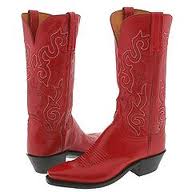
Over time, he had to push a little harder to get his heel down in the boots.  His toes began to pinch a little and then curl to squeeze into the shoe.  Instead of choosing to go out and play with his brothers, he’d decline, knowing that walking and running would hurt his feet.  But he didn’t want to admit the boots were too small.  He loved them too much to stop wearing them.

In “Living In-Between, Part I,” I wrote about the first pitfall of our transition times in life.  We tend to run ahead of God.  We want to skip over the waiting time or the training period in order to get right to the good stuff of God fulfilling and completing His work in us.

The second pitfall, though, is no less dangerous.  It’s holding onto the past when God tells us to move on.  It’s squeezing ourselves into too-small red boots, making ourselves uncomfortable and hampering our service to God.

The past holds us hostage to shame.

The apostle Paul wrote:

Brothers and sisters, I do not consider myself yet to have taken hold of it. But one thing I do: Forgetting what is behind and straining toward what is ahead, I press on toward the goal to win the prize for which God has called me heavenward in Christ Jesus (Philippians 3:13-14).

If anyone understood how the shame of the past could imprison you, it was Paul, once a murderer and persecutor of Christians and now a follower of Christ.

He knew you couldn’t just “forget” what happened in the past, but that you had to constantly engage in “forgetting.” This process is ongoing because Satan is forever picking up the clumsy club of shame and beating us over the head with it.

“God can’t use you,” he says.  “You messed up.  Don’t you remember your sin?  Your mistakes?  How you’re impure and worthless?”

Paul also wrote that “there is now no condemnation for those who are in Christ Jesus” (Romans 8:1).  We cling to that daily.  When Satan looms over us with shame, we banish him by purposefully forgetting what is behind and straining ahead to reach all that God’s grace has for us.

The past makes us comfortable with the known.

The missionary knew his red boots were fantastic, albeit ill-fitting. What if some new shoes didn’t measure up?

Some of us settle down so comfortably into the routines of life that we tremble at threats of change.  This is how the Pharisees felt as they were shaken from their roosts of power by an unexpected Savior.

Jesus announced:

“I am the bread of life.  Your ancestors ate the manna in the wilderness, and they died.  This is the bread that comes down from heaven, so that one may eat of it and not die.  I am the living bread that came down from heaven.  Whoever eats of this bread will live forever; and the bread that I will give for the life of the world is my flesh” (John 6:47-51).

He was offering people revolutionary sustenance—the Bread of eternal life.  They preferred to remember the manna in the wilderness. Not that manna was bad.  It was miraculous and sustaining and perfect provision from God at a necessary time.

Yet, manna was no more than a precursor of the ultimate heavenly provision—our Messiah and life-giver.

Are you choosing manna over the Bread of Life?  Have you declined what God is offering because you’re content with what He’s already given?

In A Year With Jesus, Eugene Peterson prayed, “I don’t want to live on the memory of old miracles, but experience fresh ones in faith.  Draw me into the fullness of this day’s grace in which you have new things to do in and through me” (p. 427).

Finally, the past reveals selfishness.

It was hard to do, but at last the little boy admitted the beautiful red boots didn’t fit him anymore.  What good were boots if you couldn’t wear them or walk with them? Reluctantly, he handed the boots down to his younger brother and stepped into some new shoes of his own.

And there’s the key for us.  How long had his brother been without the blessing of perfectly fantastic red boots all because his older brother couldn’t let them go?

Who are we hindering when we refuse to step down from ministries when God has told us to stop?  Who does He want to raise up, to train, to use, to call and to bless?

James wrote: ” But the wisdom that is from above is first pure, then peaceable, gentle, willing to yield, full of mercy and good fruits, without partiality and without hypocrisy” (James 3:17, NKJV).

Heavenly wisdom means we are willing to yield.  Sometimes that means we let others pass or we invite them into the steam of ministry traffic.  Sometimes it means slowing down and giving someone else a chance to jump in.

But, it depends on us to obey God peacefully, gently, with mercy and without hypocrisy when He tells us to stop hoarding the boots all to ourselves and to bless someone else with them instead.

We look forward to a new year full of new encounters with God.  Are you willing to go where He leads even if it means leaving some things behind?

Heather King is a wife, mom, Bible Study teacher, writer for www.myfrienddebbie.com and worship leader.  Most importantly, she is a Christ follower with a desire to help others apply the Bible to everyday life with all its mess, noise, and busyness.  To read more devotionals by Heather King, click here.

Copyright © 2011 Heather King

The Writing on the Wall

For those reading Lisa Harper’s book, Stumbling Into Grace, along with my small group, today’s devotional will match up with her sixth chapter: “Johnny Come Lately”

***********************************************************

 “There is no one on earth who does what is right all the time and never makes a mistake”
(Ecclesiastes 7:20, Good News Translation).

My two-year-old created a masterpiece with a purple marker and a piece of paper.

Then she made a masterpiece on my kitchen wall.

I caught her standing back to admire her mural, giggling with pride.

Walking her back to the paper, I reminded her where art belongs without yelling or even raising the volume of my voice a decibel.  She took one look at my stern face, listened to my firm “no” and burst into truly remorseful tears.

I scooped her up to hold her, but she ran out of the room and I found her lying face down on a pillow, pouring out heavy sobs of brokenness.

All because she had made a mistake and done something wrong.  All because she wasn’t perfect and because I had to correct her.

Surely we all can shrug our shoulders and say, “We all make mistakes sometimes.”  Some of us can even get theological about it and quote “For all have sinned and fall short of the glory of God” (Romans 3:23).

But then there is that moment when you need grace because it’s not “all” who sinned or “all” who made a mistake.

It’s you.

It’s me.

Please don’t tell me you missed that part of the blog where you discover I’m not perfect.  The part where I sin.  The part where I have a bad attitude sometimes.  The part where I make silly mistakes and stupid decisions and act like I’m in an I Love Lucy episode.

And every time I’m the one in need of grace, I react like my two-year-old—-run away, bury my face and sob.

Grace sounds so wonderful when you’re explaining it to someone else or extending it to another. But when you are the one who needs grace, oh, how painful it is sometimes

Grace addresses sin.  Forgiveness always requires a wrong.  Erasing always requires a mistake.  Strength always highlights weakness just like perfection always reveals imperfection.

Admitting that we need a Savior requires personalizing the message of redemptive grace.

Ecclesiastes 7:20 says, “There is no one on earth who does what is right all the time and never makes a mistake” (Good News Translation).

So, that means we’re doomed to imperfection sometimes?  Guaranteed to need forgiveness?  Certain of mistakes and assured of being wrong occasionally (or often)?

Yup, that’s us.  That’s you.  That’s me.

So, when we mess up, we can engage in the horrors of self-condemnation.  We can become weighed down by shame and guilt—

that we are a mess
that we’re stupid
that we’re an idiot
that we never do anything right
that we deserve whatever punishment we get
that God can’t ever use someone so broken

Or we can accept the gift extended to us by a God who specializes in forgiveness. As Emerson Eggerichs wrote, “Mistakes can’t be undone, but they can be forgiven.”

But how do we move on after a mistake?  How do we walk humbly, yet not live paralyzed by shame?  How do we serve gratefully rather than withdraw altogether, unworthy as we are? How do we let the past shape us and not destroy us?

David experienced this same struggle.  He was a godly king turned adulterer and murderer.  Faced with the magnitude of his sin, still he continued serving on the throne of Israel, still he wrote Psalms of praise to God.

It wasn’t easy.  In Psalm 51:3, he says, “For I know my transgressions, and my sin is always before me.”

But David acknowledged the need for grace, accepted forgiveness and moved forward in joy.

He brought to God the only acceptable sacrifice: “My sacrifice, O God, is a broken spirit; a broken and contrite heart you, God, will not despise” (Psalm 51:16-17).

God doesn’t desire our brokenness because He rejoices in our shame or needs our degradation.  He wants us to remember that He is God, not us.

We can begin to feel perfect, strong, capable, worthy in our own strength. But if we really are all those things, then who needs grace?  Who needs a savior?  Our worship and ministry can become tainted with self-exaltation. It becomes all about us and not at all about Him.

But when we accept grace, we acknowledge that we’re never worthy, not now, not ever.  Thomas Merton said,

“God is asking me, the unworthy, to forget my unworthiness and that of my brothers, and dare to advance in the love which has redeemed and renewed us all in God’s likeness.  And to laugh, after all, at the preposterous ideas of ‘worthiness.’ ~Thomas Merton~

Yes, we advance in His love.

We don’t need to be shamed by our sin, by our foolishness, by our scattered-brains and accident-prone clumsiness.  We should be humbled.  We are reminded that even though we are not perfect; He is.  Though we are not good enough; He is always sufficient.  Even though we are never worthy, He is worthy of all our praise.

And so we ask Him to forgive us.  We accept His grace.  And then we, like David, ask him to help us move on.

David prayed:

“Create in me a pure heart, O God, and renew a steadfast spirit within me.
Do not cast me from your presence or take your Holy Spirit from me.
Restore to me the joy of your salvation and grant me a willing spirit, to sustain me.   Then I will teach transgressors your ways, so that sinners will turn back to you”
(Psalm 51:10-13).

We pray as well, “Father, forgive us. Wash us clean.  We’re broken people, weak and mistake-prone.  Give us hearts that are confident not in our own strength, but in the power of your grace.  Restore our joy.  And allow us to minister to others even though we are unworthy.  We pray that others will want to know You because of the grace they see in our lives. In Jesus’ name, Amen.”

Heather King is a wife, mom, Bible Study teacher, writer for www.myfrienddebbie.com and worship leader.  Most importantly, she is a Christ follower with a desire to help others apply the Bible to everyday life with all its mess, noise, and busyness.  To read more devotionals by Heather King, click here.

Copyright © 2011 Heather King