Welcome to the Bible Study: Part One

For those of you signing on for the first day of our online Bible study, welcome!  For those who are regular blog subscribes but who are not doing the study with us, I hope there will still be some blessing for you in these weekly posts.  Be assured that I’ll still be doing the regular devotionals during the rest of the week.

Let me give you, in a way, a grand tour of this Bible Study of ours.

If you haven’t yet introduced yourself to the group, I hope you’ll take a moment to do so.  It will help us know who is in the group.  You can click here to visit the introduction page: Before Our Online Bible Study Begins.

I’ll begin each week with a brief thought/comment on the reading.  I’ll take you through a simple outline or walk-through of the chapters for that week.  Then I’ll pose some questions for you.

You can either read the book in advance and then read through my entire post in one sitting and answer all at the same time.
Or, you can start here in this space.  Read my intro.  Read some from the book.  Read some of my outline.  Read some more from the book, etc.  Then answer the questions, all at your own pace.

How you do it is up to you and your time and preferences.  This post today will be the longest I write because of these extra introductory instructions.

Every time I post for the Bible study, I will link the new post up on the Online Bible Study space on this web site.  You can easily access every old post from that page.  I hope that makes it easy for you to come back multiple times and do this study in pieces throughout each week or catch up if you get behind.

You can also find the schedule I plan to follow on the Online Bible Study page.

The only thing I ask is that as many of you share as possible your thoughts, comments, questions, and responses.  We want to hear from you.  I know some of you will be reading this book alongside us and you prefer not to chat in this space.  I understand and, again, there is no pressure here.  The more people who share, though, the more benefit we will get from this study.  It is your experiences, knowledge and testimony that we don’t want to miss.

Ready to get started?  I sure am!  Let’s go!

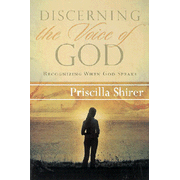
Discerning the Voice of God, Part I
(Intro and Chapters 1 and 2)

My Thoughts

If you called my family home during my teenage years and I answered the phone, you would have heard me say, “Hello, Mason residence.  This is Heather speaking.  May I help you?”

And you’d probably hang up the phone the first time you called for fear that you had mis-dialed an attorney’s office.

That’s how I answered the home phone for years.  It’s because we had a problem in my house—I sounded like my mom. There were a few accidents before my fancy phone answering ways.  People called and launched into a full conversation with my mom after my brief “hello,” while I scrambled to announce that they had the wrong person.

God doesn’t usually speak to us by first identifying Himself.  “Hello, this is heaven.  God speaking.  How may I help you?”

It just isn’t that simple, nor should it be because that would require very little intimacy or personal relationship.  Hearing, identifying and obeying the voice of God takes discernment, which Webster’s dictionary tells us is:  “Keenness of insight and judgment.”

As you read or have read the first part of this book, some of you may have books filled with underlines and highlights and you’re excited to learn more.  Others may be shrugging your shoulders thinking, “That’s all?  This is basic.”  And in some ways it is.  Discerning the voice of God is a basic foundational skill in our journey of faith.

But, do we ever get to the place where we stop growing in this area?  Isn’t there always more to learn?  Discernment is “keenness,” which says to me it is a sharpened skill developed over time.

That’s why I hope that you veterans of the faith will freely and honestly share about how you’ve grown to know God’s voice, so that we can learn from you.

We learn discernment through practice.  We talk with God so much, we listen so much, that His voice eventually becomes distinct from everything else we hear in our lives.  It is experience and sometimes mistakes that turn the basics written down in a book into a living, breathing reality of our faith.

Walking Through the Book:

The Intro:
I personally know a Bible-teaching, home-group leading Christian who does not believe that God speaks to us today.  He believes everything God has said and ever will say is written in the Bible.  More than that, he teaches it is pretentious and prideful of us to assume that God cares enough about our individual lives to have anything to say about them.

I loved that Priscilla Shirer answered this right from the beginning of her book.

On page 14, she reminds us that God is the same “yesterday, today, and forever” (Hebrews 13:8).  So, His pattern of speaking to prophets in the past continues with us today.

She also says that it is God’s voice—the fact that He was an active, involved, listening and responding kind of God—that set Him apart from the myriad of fake gods surrounding Israel.

I think Tozer’s quote on p. 17 (before chapter one begins) sums it up:

Those who do not believe God speaks specifically will simply ignore or explain away all the times when God does communicate with them.  However, those who spend each day in a profound awareness that God does speak are in a wonderful position to receive His word.

Amen!

Chapter One:

Here are the basics of preparing to hear God’s voice:

Come Expecting:  That’s what Habakkuk did.  He dared to ask God such difficult, pain-filled questions and then he waited for God’s response, fully expecting to hear.

Come As You Are:  I love the quote beginning on page 23: “God is gracious, and when we want to speak to Him, He invites us to come as we are – questioning, complaining, and confused.”  He then takes those questions and uses them as a way to reveal more of Himself to us.

Come Determined to Wait: Habakkuk made his complaint to God and then said, “I will stand at my watch and station myself on the ramparts; I will look to see what He will say to me, and what answer I am to give for this complaint” (Habakkuk 2:1).  He waited there patiently for God to answer and didn’t move until he heard God’s clear voice.

Come Believing: God didn’t foretell a fairy tale future for the prophet.  But, when Habakkuk heard God speak, he moved forward in belief—even in the difficult times.  He concluded with my favorite set of verses from the whole book:

Though the fig tree should not blossom and there be no fruit on the vines, though the yield of the olive should fail and the fields produce no food, though the flock should be cut off from the fold and there be no cattle in the stalls, yet I will exult in the Lord, I will rejoice in the God of my salvation (Habakkuk 3:17-18).

It was the sacrifice of praise.

Chapter Two:

Her emphasis in this chapter is on taking time to listen.  Praying in such a way that we don’t just talk to God, but we take time to hear from Him.  She outlines the disciplines of praying Spirit-guided prayers, meditating on God’s Word, and worship as the foundation that allows us to hear God’s voice.

Your Thoughts:

You can share anything you like in this space on the topic of listening and hearing from God.  Here are some specific questions I’d like to ask you:

  • Can you tell us about a time that you  clearly heard God speak?  How did you know it was Him ?
  • Do you have a favorite quote, verse or passage from the book that you want to share with us?
  • What discipline of the faith do you most struggle with?  Do you have any tips you’ve found that help you in this area?
  • What do you most want to learn about discerning the voice of God from this study?

You can post multiple times throughout the week as you read more and read what others have to say.  Please reply to one another and encourage those who have shared with your responses and answers.

You should see a little tiny check box at the very bottom of this page that says: Notify me of follow-up comments via email.  If you click that box, you should receive a notice when someone replies to this post and you won’t miss what others have to say.

I’m praying for you this morning as we begin this study, that God will make His voice clear to you and that you will be able to hear Him and then radically and passionately obey what He’s calling you to do.

~heather~

Heather King is a wife, mom, Bible Study teacher, writer for www.myfrienddebbie.com and worship leader.  Most importantly, she is a Christ follower with a desire to help others apply the Bible to everyday life with all its mess, noise, and busyness.  To read more devotionals by Heather King, click here.

Women Warriors, Part II

When I was about ten or 11, my mom marched me past the shelves of Sweet Valley Twins books in the teen section of the library and led me to the literary classics section with Shakespeare and Tolstoy and Jane Austen.  She waved her hands over the greats and said, “These.  You can read these.”  And I did.  I devoured them. I fell in love with them.  I studied them in college. I taught them to high schoolers.  To this day if you say Macbeth to me I’ll light up like a teenage girl in love and 15 minutes later you’ll emerge from a lecture on soliloquies.

Later, when I was 12 or 13, we visited my great-uncle Henry’s farm, something we did only infrequently.  He walked us around to see the cows in the fields and we took a tour of the old farm house with Aunt Mary and creaked along the floor boards from room to room.

Aunt Mary discovered that day that I was a bookworm.  So, in her enthusiasm to share her own love of reading with me, she handed me a pile of books that she had finished and was eager to pass along to someone else.

I thought I had received a great treasure that day!

And then I opened one book and learned what a Harlequin romance novel was.  She probably didn’t even realize how young I was and how those books weren’t really a good fit for me.

To this day, I don’t read romance novels.  Not the ones you can buy from the racks at the grocery story.  Not the Christian ones where the girl loves God and falls in love with a guy that loves God.  Not any.

Sure I have opinions on the matter.  I have principles guiding my decision that God has laid on my heart, all of the whys and wherefores that make that particular genre off-limits for me.

But, do I think the eleventh commandment is Thou Shalt Not Read Romance Novels?

Nope.

Do I think you are doomed for all time if you like a good clean Christian romance?

No way.

Maybe God has told you that other things are off-limits.  Something you eat, watch, read, or do that isn’t clearly wrong or covered under a Biblical commandment, but that God has personally convicted you about.

God has given us so much freedom and yet that doesn’t mean anything goes.  Paul wrote, “’I have the right to do anything,’ you say—but not everything is beneficial. ‘I have the right to do anything’—but not everything is constructive” (1 Corinthians 10:23).

This principle covers more than just what shows we watch on TV or what books line our bookshelves at home.  Some of us God has called to be stay-at-home moms and some to work outside the home. Some to have large families.  Some to be one-and-done. Some to adopt.  Some to home school.  Some to choose public schools.

What happens when I impose on you the calling God has given me?  Then we have explosive battles of criticism and condemnation.  We have legalism where we add mandates to Scripture and make everyone else obey the instructions God personally designed for us.

Oswald Chambers wrote: “At first, Jesus Christ through His Spirit has to restrain you from doing a great many things that may be perfectly right for everyone else but not right for you.  Yet, see that you don’t use your restrictions to criticize someone else.”

How then do we navigate these explosive relationships where even the most innocent remark or most God-directed decision becomes the atomic bomb in the next World War Women?

Allow for the Calling of Others

In Part One, I reminded you to Do What You Are Called to Do.

But, there’s another side to the story.  We also need to let others do what they are called to do.

What if we allowed for differences, not just in opinion, but in calling?  Not differences in doctrinal truth or the very clear mandates in Scripture, but differences in style, taste, gifting, personality, ability and weaknesses.

In Genesis 26:2, God told Isaac, “Do not go down to Egypt; live in the land where I tell you to live.”

Decades later, God said to Jacob, “Do not be afraid to go down to Egypt, for I will make you into a great nation there” (Genesis 46:3).

Don’t go to Egypt.  Do go to Egypt.

Does it seem like God can’t make up His mind?

But consider that Isaac and Jacob were different people, in different circumstances at different times.  God’s calling for each of them was uniquely appropriate.

What if Jacob had never traveled to Egypt because he felt that God’s command to Isaac must carry over to him, as well?  He would never have seen his long-lost son, Joseph, again.  No reconciliation.  No 400 years of the Israelites in Egypt.  No slavery—yes—-but also no deliverance.  It’s highly possible that Jacob and his remaining sons would have died off in obscurity as the result of famine.

Paul wrote, “If it is possible, as far as it depends on you, live at peace with everyone” (Romans 12:18).  Peaceful relationships in this world aren’t always possible and that’s the ugly truth of it all.

But, we need to do everything we can to cultivate peace even in disputed territories where landmines of personal opinion dot the fields.  Sometimes that means we stay-at-home moms need to go out of our way to encourage the working moms we know, to pray for them, to help them out if they need it and not to exclude them from our activities and friendships.

Sometimes that means letting petty jealousies and misinterpreted comments and too-sensitive feelings fall to the ground and instead choose—sometimes it’s a difficult choice—-but choose not to be offended.  Choose to put on thick skin.  Choose to let comments pass by unanswered.

Sometimes we need to keep some opinions to ourselves.  We must put down the protest signs and banners about issues that God doesn’t clearly address in Scripture.

If God has told you to go to Egypt, then go.  Pack up your bags and take the first plane out of here because you need to live in obedience to God.  But don’t condemn those who are boarding a different plane also in obedience to Him.

Heather King is a wife, mom, Bible Study teacher, writer for www.myfrienddebbie.com and worship leader.  Most importantly, she is a Christ follower with a desire to help others apply the Bible to everyday life with all its mess, noise, and busyness.  To read more devotionals by Heather King, click here.

Women Warriors, Part I

“Am I now trying to win the approval of human beings, or of God? Or am I trying to please people? If I were still trying to please people, I would not be a servant of Christ”
Galatians 1:10

“Tinkerbell or Princesses,” I asked my daughters as we stared at the 20 different tubes of children’s toothpaste on the shelves.

“Tinkerbell,” shouts my middle girl.

“Princesses,” shouts my oldest dressed all in pink with bows in her hair.

My baby makes a grab for the Little Einsteins tube on the shelf.

I toss the plain old children’s Crest toothpaste into the cart, noting that it is $1, Tinkerbell is more than $2 and princesses tops out at a whopping almost-$4.  It’s a conspiracy really.  Princess stuff always costs more.  What in the world are we teaching these little girls of ours about materialism and money and . . . .but I digress.

Slowly I’m learning a lesson over and over every day as three little faces flash disappointed glances back at me when I buy toothpaste and when I choose a show on television.

You can’t please everyone all the time.

I want to make everybody happy so desperately.  If I could tiptoe through life with everyone always agreeing with me, that’s what I’d do.

But it’s impossible.  If you go to Wal-Mart with more than 1.5 children, you’ll likely hear the opinions of strangers on your family planning skills.

If you stay at home with your kids, you’ll probably read how you wasted all of the money spent on your education. If you dress up and head out the door every day for work, you’ll probably feel condemned by the moms wearing jeans and flip-flops and toting their kids to the library for story time on a weekday morning.

If you pull out the school books at your kitchen table for your kids each day, moms will hint at the damage you’re doing by not socializing your children enough. If you watch your child step onto a school bus each morning with her back pack and packed lunch, you’ll be reminded that you aren’t protecting your children from worldly indoctrination.

Women Warriors.  That’s what many of us become.  Mama Bears defending our choices against the criticism of others.  We get backed into corners and our claws extend.  So, we spend much of our time engaged in battles, aligning with others on our “side” and slinging weighted insults at the “enemy.”

Let’s face it.  Too much of the time, we women are cruel to other women.

And it’s worse on the Internet.  We sit anonymously behind our computers and hurl our opinions at others.  Throwing around scientific evidence, philosophical arguments, medical findings, and —-yes, even Scripture—we offer proof of why we are right and others are wrong.

So, what’s a girl to do?  How do you make the right choices for you and your family and not feel the need to defend yourself every time you sense the critical stares of random shoppers or read an article railing against the choices you have made?

For starters, we walk in the assurance of our calling.

Do What You Are Called to Do

When the teenage shepherd boy, David, stood in front of King Saul, he boldly announced that he would fight the bellowing giant even though the battle-trained fighting men were cowering in their tents. At first, Saul declared it was impossible.  A wimpy little kid was no match for the expert warrior with size on his side.

But, David prevailed and Saul agreed to let him fight Goliath, with one condition.  David had to wear Saul’s armor.

Saul thought he was helping David out.

Then Saul dressed David in his own tunic. He put a coat of armor on him and a bronze helmet on his head. David fastened on his sword over the tunic and tried walking around, because he was not used to them. (1 Samuel 17:38-39).

How often do we try to sling our own personal tunics over the shoulders of other women, assuming that all they need is our advice, our method, our choices, our plans?  We tell them (or imply) that if they want to be good wives, good moms, good Christian women, then they must do it our way and with the tools we ourselves have found useful.

But, the call God has given you is a poor fit for another woman.

In the same way, Saul’s armor confined David’s movements and made him easy prey for Goliath’s attack.

“I cannot go in these,” he said to Saul, “because I am not used to them.” So he took them off.   Then he took his staff in his hand, chose five smooth stones from the stream, put them in the pouch of his shepherd’s bag and, with his sling in his hand, approached the Philistine (1 Samuel 17:39-40).

David had the assurance of his calling.  He knew what God told him to do and how he was supposed to do it.  So, he declined to wear the armor of another and stood against Goliath bare-shouldered instead, hurling a stone in a slingshot over his head, and killing the giant as a result.  He vanquished the enemy that day because he listened to God and not anyone else, even a well-meaning, older, wiser and more experienced king.

When you feel yourself in an Incredible Hulk-like transformation, from reasonable woman to claws-extended She-Mama in defense of your life and family and personal choices, breathe deeply and ask:

  • Am I doing what I know God has called me to do?
  • Is it possible that she, although doing something differently than me, could also be doing what God has called her to do?
  • Can I let her obey God without feeling personally criticized by her every decision and action?
  • Do I really need to defend myself against implied (or stated) criticism?  Or can I instead let it go, choosing to walk confidently in my own calling and not worry about anyone else’s opinion?
  • If I’m doing what I’m supposed to do and she’s doing what she’s supposed to do, then is this war between us necessary?

What has God called you to do?  Whatever it is, do it.  People will disagree with you.  People will criticize you.  People won’t understand.

Sometimes you may need to defend yourself, but there are so many times when we can choose to ignore the snide remarks and disapproving glares, because we know that we are doing what God wants us to do.  And that really should be all that matters.

Heather King is a wife, mom, Bible Study teacher, writer for www.myfrienddebbie.com and worship leader.  Most importantly, she is a Christ follower with a desire to help others apply the Bible to everyday life with all its mess, noise, and busyness.  To read more devotionals by Heather King, click here.

Eyewitness to Murder

The tongue has the power of life and death, and those who love it will eat its fruit.
Proverbs 18:21

I was an eyewitness to a murder at Wal-Mart.  Not just one.  Many.  In the baby section.  Among the girls’ clothes.  Along the aisles of frozen foods.  Standing in line.  Two of them in the parking lot.

And not just at Wal-Mart.  Wherever I went on Friday, I witnessed the battering of husbands to wives, wives to husbands and parents to their children.

It was murder by words.

Sure, I lose it with my kids sometimes.  My tongue sharpens when we’re in a hurry and I’ve asked for shoes to be on feet four, now five times, and still my children play with their toys in their socks.

Sometimes I lose it when I can’t find something I need.  I fly through the house frantically shuffling papers, opening and shutting doors, shoving things aside and my kids tag behind me wanting to chat.

And then there’s pestering.  The guilt-inducing nag, nag, nagging attempts to wear me down.  Why haven’t I sewn a rag doll for her yet?  It’s been a long time since she asked me.  She clearly sees me sitting down (for the first time in 12 hours) and shouldn’t I now be able to whip out just one more project for her, because clearly I am not doing enough?

But at Wal-Mart that day I didn’t see a slightly tired and exasperated mom juggling shopping list, coupons, and three kids who touched everything, talked about everything and argued about everything.

No, it was a mom screaming at her preteen daughter about outfits.  It was a father mocking his son in the parking lot, bringing the boy to the point of humiliated tears.

I didn’t see a husband and wife disagreeing about detergent or the dinner menu for the week.  It was a wife snidely joking about her husband to a crowd and a husband screaming in anger into a cell phone.

And I was sick over it all.  The kind of sick you feel when you witness violence and you just want to intervene and rescue and make the world better.

Jesus came to bring abundant and overwhelming grace through His sacrificial death on the cross.  But, He did something else, too.  He reset standards.  He told people that good isn’t good enough.  Do more than avoid adultery, He said, don’t even throw lustful glances at a woman who is not your wife.

Do more than just avoid murder, “I tell you that anyone who is angry with a brother or sister will be subject to judgment.  Again, anyone who says to a brother or sister, ‘Raca,’ (fool) is answerable to the court.  And anyone who says, ‘You fool!’ will be in danger of the fire of hell” (Matthew 5:21-22).

He said our tongues are murder weapons.

John echoed this again later, writing: “Anyone who hates a brother or sister is a murderer, and you know that no murderer has eternal life residing in him” (1 John 3:15).

Still, we do it.  We call each other names.  We gossip.  We slander.  We quibble and argue in a public show of disunity and disrespect.  We talk about our husbands behind their backs.

We make jokes that humiliate.  Proverbs 26:18-19 says, “Like a maniac shooting
flaming arrows of death is one who deceives their neighbor and says, “I was only joking!”

Isn’t that what people find funny now?  We put others down and then say, “Just kidding!”  As if that makes it better.  As if that erases the damage already done by our words.

Maybe that’s not you.  Maybe you don’t do that.

But, do you ever find yourself “sharing opinions” about others, perhaps even about your friends, commenting on their parenting decisions, their career choices, their clothes, their money, their ministry?  Do you feel it necessary to share your thoughts about everything?  To rise to every occasion with a verbal slap of a sword in a duel of opinions?  To criticize and judge and judge and criticize?

James wrote: “Everyone should be quick to listen, slow to speak, and slow to become angry, for man’s anger does not bring about the righteous life that God desires”  (James 1:19-20).  How often do we skip right over listening and instead jump right to the speaking part?

God held Ezekiel to the highest standard imaginable when it came to his tongue:

“I will make your tongue stick to the roof of your mouth so that you will be silent and unable to rebuke them, for they are a rebellious people. But when I speak to you, I will open your mouth and you shall say to them, ‘This is what the Sovereign LORD says.’ ” (Ezekiel 3:26-27).

God essentially glued Ezekiel’s tongue to the roof of his mouth.  The only time Ezekiel could talk was when he was saying what God wanted him to say.

What if that became the standard we used to decide when to talk and when to keep our opinions quietly tucked away in our brains rather than spewing out of our mouths?  What if we asked, is this something God Himself wants me to say?  Maybe we could give ourselves a little grace and just ask, “Is this something God would approve of me saying?”

Either way, I know I don’t meet that standard 100%.  I wonder if any of us do.

My mom had all of us kids memorize Ephesians 4:29 when we were little.  We’d bicker or start name-calling and she’d intervene and ask us to quote this verse:  “Do not let any unwholesome talk come out of your mouths, but only what is helpful for building others up according to their needs, that it may benefit those who listen.”

No unwholesome talk.  Nothing hurtful.  Nothing weighted down with criticism and oozing with judgment.

Instead, we ask, “Is what I am saying right now helpful?  Will it encourage someone else and build them up?  Will it be of benefit to anyone listening?”

If not, then they are words best left unsaid.  Because words are powerful.  They are life and death weaponry in our arsenal.  We speak words of hope and people remember them for years, thriving on encouragement and being renewed by praise.  We speak words of criticism and people remember them for years, dying a slow death from the poison of language.

How can your words bring life and not death to others today?

Heather King is a wife, mom, Bible Study teacher, writer for www.myfrienddebbie.com and worship leader.  Most importantly, she is a Christ follower with a desire to help others apply the Bible to everyday life with all its mess, noise, and busyness.  To read more devotionals by Heather King, click here.

Copyright © 2011 Heather King

VBS Lessons, Day Four: God loves you, no matter what

This week I’m going through the lessons of Group’s PandaMania VBS and considering how they apply to more than just kids!

God Loves You, No Matter What
Lead me along the path of everlasting life
Psalm 139:24

After a conversation with a friend this week, I recalled the first time I had to turn over my green card on the classroom behavior chart and leave the yellow card on top.  I was in third grade and had forgotten my math homework.  The teacher asked us to hand it in and I quickly zipped open my backpack to grab up my finished paper.  Only it wasn’t there.  So, I pushed things around gently and then more energetically.  I scrambled through the papers and then yanked everything out.  Slowly I realized my paper wasn’t in there.  I had nothing to turn in.

So, I had to shuffle over to the behavior bulletin board and take my punishment.  A yellow card for Heather.  Bright yellow so everyone in the class could see I messed up.  I forgot.  I was careless and irresponsible.

Embarrassed, I slinked back to my desk and slumped down hoping to become invisible in my chair.  My face was burning red hot, the kind of shame that makes your ears sear into the sides of your head.

But, when I sheepishly glanced at the bulletin board the next morning, I saw a green card next to my name again.  It was a new day and with it came a rush of joy that the mistakes of yesterday could be so simply erased and forgotten.

It was the astonishing grace of a fresh start.

That’s what Christ did for us.  Raising us up from the dead.  Taking our place on the cross and erasing the record of our wrongs so that we could stand before the Most Holy God and look . . . holy and pure.

He saw you and me as worth saving even when we were splattered with the mud of sins and caked in the foul dirt of this world. “But God demonstrates his own love for us in this: While we were still sinners, Christ died for us” (Romans 5:8).

So, what should we do with this amazing grace?

I know what I do most of the time—forget it, take it for granted, or, even worse, nullify it by trying to be perfect.  I begin to live in a spiritual world of musts, shoulds, do’s, don’ts, shalls and shall nots.

The Psalmist wrote, “If you, Lord, kept a record of sins, O Lord, who could stand?  But with you there is forgiveness; therefore, You are feared” (Psalm 130:3-4).

Yes, we would be pounded into the ground if we carried the weight of our sins on our wimpy shoulders.  We couldn’t stand in His presence much less crawl face to the ground before His throne.

But.

But with Him there is forgiveness.  Praise God!

The Psalmist ends that thought with, “Therefore, You are feared.”  Not the fright of might, though.  Not the run and hide kind of fear.  Not obeying God to escape His wrath.  Not surrendering to Him in order to earn His love.

The Old Testament Bible Knowledge Commentary says this is the fear of “worship and obedience.  The Scriptures state that many results come from fearing the Lord; the most notable is that the person keeps himself from sin.”

In January of this year, I felt the heavy nudging of the Holy Spirit asking me two questions, one of which was, “Are you ready for where I want to take you next?”  The God who loved me passionately was asking me to walk in worship and obedience—holy fear in response to abundant grace.

“That depends,” I answered.  “Where are we going?  How long will it take?  What is the expense-to-benefit ratio?”

It sounds mercenary, but those are the questions that rumbled around in my head and heart for weeks.  Was it safer to stay where I was?  Was safer necessarily better?

His question sounds so simple and easy when we belt out “I surrender all” in a church service.  Then there’s that moment when God takes you up on your offer and asks you to surrender your plans for the future, your comfort, your life, and you wonder how much “all” actually is.

And then I felt it, the pull of performance and the tug on my heart to just do what God wants so He’ll love me, so I won’t let Him down, so I can live up to what a Bible Study girl should do.  It was a works-based response of duty rather than the bride’s response of affection to the overwhelming passion and love of her Groom.

So I waited to answer God.  I waited until I truly believed that God would love me no matter what.  That the choices I make here may affect God’s plans for me, may affect my impact on others, may affect how I am blessed, but they will never affect His unconditional and unending love.  Only then, in the light of so much grace, knowing that I answered Him out of love and not duty, I bashfully answered, “I do.”  I do want to go with You.  I do want whatever you desire for me.

Why do we obey Him?  Why do we whisper “I do” when He asks us to surrender?  Why do we choose the difficult right over the much easier wrong?

So He will love us?  No—because He loves us.  That’s what we are learning at VBS tonight—-God loves us, no matter what.

We ask Him to “lead me along the path of everlasting life”  because there’s no other place where we can walk next to Him, our tiny palm nestled inside His nail-scarred hand (Psalm 139:24).

Heather King is a wife, mom, Bible Study teacher, writer for www.myfrienddebbie.com and worship leader.  Most importantly, she is a Christ follower with a desire to help others apply the Bible to everyday life with all its mess, noise, and busyness.  To read more devotionals by Heather King, click here.

VBS Lessons, Day Two: God Listens To You

This week I’m going through the lessons of Group’s PandaMania VBS and considering how they apply to more than just kids!

God Listens To You
“You know what I am going to say even before I say it”
Psalm 139:4

Last week, I quietly explained to my oldest daughter that even though people are friendly and strangers ask her questions, doesn’t mean they always have time for her entire life story.  Perhaps not everyone can listen to everything she has to say.

She replied, “But I just like to talk and I have a whole lot to talk about.”

Thus, when a friendly cashier asks how old my kids are, they give an unabridged biography as an answer.

And when the lady cutting their hair asks where they go to school, the girls launch into a weekly schedule that lists off all their normal activities and then give an infomercial about their preschool and kindergarten.

My PandaMania VBS leader materials for Day Two say:

Kids can tell you exactly what it’s like to be ignored or unheard.  They know what it feels like to talk to a busy parent or teacher, who responds with a distracted “mm-hmm.” They’ve been that hand, waving in the air, that didn’t get called on to share an answer.  And even when someone is tuned in, kids may not have the words to express what they’re feeling.   . . . God not only hears our voice . . .God hears our heart!

There’s a powerful promise buried in this simple lesson—God Listens to You.  Just like my kids may sometimes feel like I’m not listening closely enough, there are times when I feel as if God has gone deaf or, even worse, is choosing to ignore me.

Last week, a prayer request came through my email and I prayed: “Please don’t turn away from this request; please don’t hide your face from us.  Please hear what we are asking of You and deliver them.  Don’t be deaf to our pleas, not this time.”

I’m not alone in this prayer.

David asked, “Hear my prayer, O God; listen to the words of my mouth” (Psalm 54:2) and “To you, LORD, I call; you are my Rock, do not turn a deaf ear to me. For if you remain silent, I will be like those who go down to the pit” (Psalm 28:1).  Asaph prayed the same:  “God, do not remain silent; do not turn a deaf ear, do not stand aloof, O God” (Psalm 83:1).

Have you prayed this before?  The request of attention, the desire for God’s ear, that He would really hear the petitions you bring so passionately before the throne?  With particular fervency sometimes we say, “I know I pray things all the time, God, but I need you to really pay attention to what I’m asking right now.  This one matters more than normal!”

The promise we are teaching the VBS kids this week is that God always hears us, not just what we say, but even when we don’t know how to pray within the confines of words.  Even when the desires of our heart are too bulky to be smashed into syllables and sounds and long “before a word is on my tongue, you, LORD, know it completely” (Psalm 139:4)

God doesn’t tune us out as we pray or ignore the outpourings of our heart.  Psalm 10:17 says, “Lord, you have heard the desire of the humble; You will strengthen their hearts.  You will listen carefully.”

He hears what we pray.  He hears our heart’s cry even when words escape us.  During the tough times, heaven may seem silent and our prayers may seem to bounce against a ceiling rather than land at God’s feet.

Regardless of how you feel, though, you can trust in an attentive God who hears the prayers we offer on our knees, the whispers as we lie in bed at night, the tears as we fall in despair in His presence.  God listens to you.

We know this because God doesn’t change.  From beginning to end, from person to person, our God is consistent in His character.  So, just as He threw down fire from heaven in response to Elijah’s prayer, so He hears and responds to our cries for help.

In 1 Kings 18, Elijah challenged the 450 prophets of Baal and the 400 prophets of Asherah not just to a test of their gods’ power, but also of their gods’ ability to hear them.  He declared, “Then you call on the name of your god, and I will call on the name of the LORD. The god who answers by fire—he is God” (1 Kings 18:24).

God’s character–the things that sets Him apart–isn’t just that He is able to deliver us; it’s that He truly hears our cries for deliverance.

And so the prophets of Baal danced and shouted. At noon Elijah began to taunt them. “Shout louder!” he said. “Surely he is a god! Perhaps he is deep in thought, or busy, or traveling. Maybe he is sleeping and must be awakened.”  So they shouted louder and slashed themselves with swords and spears, as was their custom, until their blood flowed.  Midday passed, and they continued their frantic prophesying until the time for the evening sacrifice. But there was no response, no one answered, no one paid attention (1 Kings 18:27-29).

Their god was silent.  Their god was deaf.  Their god was unimpressed by their passion and unresponsive to their cries.

Not our God.

Elijah sloshed water all over the altar so it was running down over the soaking wet sacrifice and spilling onto the ground below.  He prayed, “‘Answer me, LORD, answer me, so these people will know that you, LORD, are God, and that you are turning their hearts back again.’  Then the fire of the LORD fell and burned up the sacrifice, the wood, the stones and the soil, and also licked up the water in the trench.  When all the people saw this, they fell prostrate and cried, ‘The LORD—he is God! The LORD—he is God!'” (1 Kings 18:37-39).

Answer me, God, for the display of Your glory!  So that everyone watching my life and these circumstances can see and declare, “The Lord—He is God!  The Lord–He is God!”

The song we will sing tonight at VBS says, “God knows every word before you even say it; He hears every prayer before you even pray it.  So let Him hear you now.  So let Him hear you shout!  He knows you.  He loves you.  God is listening.”

Be assured of that today and rest in that promise.  Remember that what defines God is that He is alive and active, powerfully able, and mercifully responsive to us.

Heather King is a wife, mom, Bible Study teacher, writer for www.myfrienddebbie.com and worship leader.  Most importantly, she is a Christ follower with a desire to help others apply the Bible to everyday life with all its mess, noise, and busyness.  To read more devotionals by Heather King, click here.

Copyright © 2011 Heather King

VBS Lessons, Day One: God Made You

Every year at Vacation Bible School I watch as adults lead the excited children around the church from station to station, sing the songs (maybe we even do the accompanying motions), shout and laugh.  Do we also, though, compartmentalize? Do we box up the VBS messages and declare they are just for kids and not relevant for us?

But is there any message in Scripture that God delivers just for people under 18? We older and wiser ones sometimes make faith so complicated and fail to recognize or really consider the beautiful truths in these simple messages. So, this week, I’m thinking about VBS and what the lessons for children mean for you and me.  Our church is doing Group’s PandaMania VBS, so that’s what’s on my mind.

God Made You

“Thank you for making me so wonderfully complex”
Psalm 139:14

God made us.  What then should we do about that?

Do we nod our heads in complacent agreement? Do we go about our everyday lives with no realization, no recognition, no response to an act so incredible and a God so powerful? Have we forgotten the wonder of it all?

Sometimes we do just that.

But in this very moment, I pause.  “God made me.  God made you.”  That should elicit a response of unconfined, unhindered, from-the-bottom-of-my heart, I-don’t-care-what-anyone-else-thinks praise and thanksgiving.

So often we determine the mission and measure the success of VBS by how well we reached unchurched kids. That’s not necessarily a bad thing. Yet, VBS has power for churched kids, too.  For one week we encourage them to throw their hands up and sing out loud.  We tell them it’s not just okay, but it’s expected for you to be unashamed about worshiping.

It’s not that way all the time.  Truth be told, in normal church mode in some sanctuaries, not everyone looks excited about worshiping God. We so often grip our hands to our side and feel the eyes of others on us if we look too involved, raise our hands, close our eyes, sing loudly. For some of us, Sunday morning worship means feeling peer pressure and avoiding embarrassment rather than giving God the praise He deserves.

This isn’t about musical styles or song choices or volume or service order.  This isn’t about personal preferences.  This isn’t about one person judging another’s worship and determining a set formula for what praise looks like.  How you worship is between you and God and it may be different from day to day, song to song, moment to moment.

God Himself though has declared that “true worshipers will worship the Father in the Spirit and in truth, for they are the kind of worshipers the Father seeks. God is spirit, and his worshipers must worship in the Spirit and in truth” (John 4:23-24).

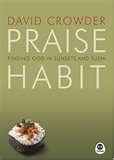
I can’t help but quote my favorite description of praise from David Crowder’s Praise Habit.  He writes:

We naturally understand praise . . . Kids just know how to enjoy things.  They give themselves fully to whatever has a hold on them.  Remember as children how we would fearlessly hold up our favorite toy and petition anyone who was in close proximity to behold it?  ‘Look, Mom, look!’

We instinctively knew what it was to praise something. It’s always been in us.  We were created for it. . . .But as adults we become self-conscious and awkward.  Something gets lost.  I think we do it to each other.  At some point, I hold the toy up exultantly and you comment that it looks ridiculous to hold the toy up in such a way. . . And we slowly chip away at each other’s protective coating of innocence until one day we wake up and notice we are naked and people are pointing.”

I’ve seen this happen. After a few months in Children’s Church, my oldest daughter told me that kids laughed at her when she sang and made her feel silly for raising her hands.

Do we adults do this same thing to each other?  Do we do it for the children who sit next to us in the pews all around the sanctuary?

Do they watch us and see what wholehearted worship and total unashamed glorifying God looks like?  Or do they instead see how peer pressure should control our behavior and even our relationship to God?

For boys, the pressure is even greater.  How often do they see men not just standing up when church music plays, but unashamedly praising God?  Our behavior mostly teaches boys that men don’t get emotional about worship, men don’t raise hands, men don’t sing out, men don’t look involved, men don’t close their eyes.

We forget David.  He fought bears and lions with his hands and as a young boy felled a giant with a slingshot while grown men in hardened armor cowered in their tents. He led armies and slew tens of thousands of the enemy Philistines.

He was the manliest of manly men and yet he also penned most of Psalms, the songs of praise to God.  He danced before the Lord and declared “I will celebrate before the LORD. I will become even more undignified than this”? (2 Samuel 6:21b-22a).  This warrior-king didn’t care what other people thought when he worshiped.

Later David Crowder also writes

My point is we are all fragile.  Somewhere along the way we abandoned abandon.  Or perhaps we gained things that need to be discarded. We have covered ourselves.  Someone pointed out that we were naked, and the clothing we have woven is bulky and pretentious.  It hinders our freedom of movement.  Expression with childlike spontaneity has become difficult.  It bares too much of us. . . .

What if we were so moved by who God is, what He’s done, what He will do, that praise, adoration, worship, whatever, continuously careened in our heads and pounded in our souls? . .. This is what we will do for eternity.  What makes us think our time on earth should be any different?  What keeps it from being so?”

Charles Spurgeon wrote, “When your heart is full of Christ, you want to sing.”  The response in Scripture is clear, when we consider that God has made us, made the universe, poured out His sacrificial love for us, given us the very breath of a new day and provided us with all that we need, we “sing to Him, sing praise to Him” (1 Chronicles 16:9).

  • We “sing psalms, hymns, and spiritual songs with gratitude in your hearts to God” (Colossians 3:16).
  • We “lift up (our) hands in the sanctuary and praise the LORD” (Psalm 134:2)
  • We “make a joyful noise unto the LORD, all the earth: make a loud noise, and rejoice, and sing praise” (Psalm 98:4).

David Crowder is right.  We will be singing praises to God for all eternity.  We will be surrounded by others doing the same at the throne of the Most High God and there won’t be anything in heaven to hold us back from giving “all that is in” us in worship to Him (Revelation 5:13).  No peer pressure.  No embarrassment.  No expectations.

I tell my daughters all the time—Don’t be embarrassed for singing.  Be embarrassed not to sing.  Don’t worry about what other people think.  Care about what God is thinking.

Can you do the same thing?  Can you put aside notions of dignity, feelings of embarrassment, worries about what other people will think and fix your eyes only on God?

This week, every time the kids hear me say, “God made you,” they are to respond immediately in a shout of worship, “Thank you, God!”  How will you also respond in thanksgiving?

**************************************************************************************

PandaMania VBS runs all this week (06/20 to 06/24) from 6:30 to 9 p.m. at Newington Baptist Church for ages 4 through 5th grade.  We hope to see you there!

For those at Newington who are interested in David Crowder’s book, Praise Habit, great news!  It’s in the church library!

Heather King is a wife, mom, Bible Study teacher, writer for www.myfrienddebbie.com and worship leader.  Most importantly, she is a Christ follower with a desire to help others apply the Bible to everyday life with all its mess, noise, and busyness.  To read more devotionals by Heather King, click here.
Take Heart, Daughter

Jesus turned and saw her. “Take heart, daughter,'” he said, “your faith has healed you”
(Matthew 9:22).

My daughters believe their daddy is a superhero with an amazing super power.  He can fix anything.  For years, they have brought me broken toys and pages ripped from books and announced that it was okay because “Daddy could fix it!”  They stand amazed as he pops wheels back on plastic strollers, adjusts the height of swings, and, even more impressive, repairs our broken dishwasher.

Then there was the day that my daughter, then just two years old, came to me, her hands outstretched and holding a DVD split completely into two separate pieces.  Her tiny fingers gripped something totally irreparable.

“Oh, baby,” I said, “It’s broken.  Really broken.”

“It’s okay,” she announced with confident faith, “Daddy can fix it.”

“Most of the time, sweetie, but not this one time,” I whispered.

We’ve all experienced the limited fix-it abilities of others and ourselves.  We can apply glue to relationships and duct tape to careers, we can piece together finances and snap hopes and dreams back into place after countless cracks and rips.

But then there’s the day—we’ve all had those moments—-when we grip in our fingers something irreparable.  No amount of gluing, taping, splicing, snapping, tying, pinning or sewing can undo the damage, fix the broken or resurrect the dead.  Not this time.

So, we bring what is diseased and dead to the God who has power over life and death. My commentary says: “Life in this world will be better if it is lived by a power beyond this world, the power of the resurrected, ascended, glorified Christ.”   We live in resurrection power when we trust Him even in the midst of impossible, overwhelming, hopeless circumstances.  We hold up to Him a mess of shattered pieces and declare, “Abba, Father, My Daddy can fix this.”

Because we know He healed what no one could heal.  Because we know He created a universe, a planet, and life with the power of His Words.  Because we know He even conquered death and overcame the grave.

Just like the woman who had bled for 12 years pushed through a crowd so she could touch Christ’s cloak.  For twelve years, she had been walking dead.  Her sickness made her unclean and cut off from community life, from marriage relationships, and from the ability to worship in the temple.  She shouldn’t have been in the crowd, wasn’t allowed to have contact with people for fear she would spread her uncleanness to them.  Her very presence there was risky.  Anyone could have condemned and publicly shamed her.

My husband reminds me that her story is one of salvation.  Her healing foreshadowed the cross as she transferred years of uncleanness and impurity onto Him with one touch.  He absorbed her uncleanness.  She now, for the first time in 12 years, was made clean, purified, holy, new—–once she was lost, but now she was found.  Then she made public confession when she, “knowing what had happened to her, came and fell at his feet and, trembling with fear, told him the whole truth.” (Mark 5:32-33).  Yes, the whole ugly truth of it all.

Our own redemption stories all echo hers.  Christ miraculously fixes what is unfixable.  He assumes our guilt so that we may receive forgiveness.

There’s something else, here, though, something about her faith that I need to learn.

Her healing didn’t happen by accident, an unexpected brushing against Jesus in the middle of a mob.  No, she had to decide to push through the crowd; she had to choose to reach out a shaking hand to grab the dusty hem of His robe.

So, it is with us.  We could stand on the outskirts of faith, not truly trusting God to heal and redeem us, but we would remain broken. Maybe we feel insignificant, maybe our problem doesn’t seem big enough or maybe it even appears too big for God to handle.  Regardless, until we bring the pieces to the throne and lay them at His feet, we cannot expect healing.

This reaching out for Jesus wasn’t just bold, it was also full of hope when things seemed hopeless.  “She had suffered a great deal under the care of many doctors and had spent all she had, yet instead of getting better she grew worse” (Mark 5:26).  Doctor after doctor, remedy after remedy, year after year, medical bill after medical bill, all leaving her now destitute, hopeless, and still bleeding.

But then our compassionate Savior reassured and comforted her, not just fixing a physical problem, but speaking peace into her fearful heart: “Jesus turned and saw her. ‘Take heart, daughter,’ he said, ‘your faith has healed you’” (Matthew 9:22).

There’s a message for you also in the broken places.  God asks you to “take heart, daughter.” Don’t despair.  Don’t give up hope.  Bring your burdens to Him.

What is it about her faith that healed her? She believed so much more than that He was a medicine man with some effective healing aura.

She believed He could give her new life.
She believed He could remove her impurity and make her clean again.
She believed He would not condemn her for approaching Him in all of her dirty unholiness.
She believed she could come to Him just as she was.
She believed He could bring hope to the hopeless.

Her faith made her well.

Then, she gave testimony to what He had done and announced to the crowd of onlookers that Christ had healed her.

Are you facing brokenness or losing hope? “Take heart, daughter,” and trust Him with the impossible.

And when He has delivered you, fall at His feet in worship and give testimony to His grace. Tell “the whole truth” about what God has done for you.

If you have not received the answer yet, pray for that testimony.  Pray for the glory of His name.

Pray that you will be like the captives brought back to Zion, “who were like men who dreamed.  Our mouths were filled with laughter, our tongues with songs of joy.  Then it was said among the nations, ‘The Lord has done great things for us, and we are filled with joy” (Psalm 126-13).

Lord, fill us with laughter, fill us with joy in these circumstances.  Allow us to declare, “The Lord has done great things for us.”  Give us a testimony for Your glory, so that we can be a walking display of Your healing, resurrecting power and Your deeply compassionate mercy and love.

“God can do anything, you know—far more than you could ever imagine or guess or request in your wildest dreams! He does it not by pushing us around but by working within us, his Spirit deeply and gently within us” (Ephesians 3:20, MSG).

Heather King is a wife, mom, Bible Study teacher, writer for www.myfrienddebbie.com and worship leader.  Most importantly, she is a Christ follower with a desire to help others apply the Bible to everyday life with all its mess, noise, and busyness.  To read more devotionals by Heather King, click here.

Copyright © 2011 Heather King

Christian Blog Topsites

Reading Together

I posted a new announcement about the book for our online summer book discussion.  I hope you are planning on participating!  Please take the time to click on “Reading Together” to find out more.

Live Long and Forget or Prosper

Not long ago, I wrote these words in a message to a friend, “Middle school was an absolute nightmare for me.”

Oh, it so was.  I had great friends; it wasn’t peer pressure or mean girls that made it so miserable.  Yet, those were difficult years for lots of reasons all piled together forming one mountain of middle school angst.

Most of the time, I forget those preteen emotions.  They have little presence in the workings of my everyday mind and heart.  Yet, just occasionally I am reminded of them.  Although it takes some purposeful recollecting, and although the pictures are unclear, almost as if they happened to someone else—yes, I do still remember.

Joseph knew more than most of us about enduring hard times and living through moments he’d rather forget.  Narrowly escaping being murdered by his brothers, he had instead been sold into slavery, falsely accused of rape, tossed into prison and left there—not for days or weeks, but years and years.

Time passed and Joseph was freed, even elevated to power in a whirlwind of activity.  Now second in the land, lesser only than Pharaoh, he married and had two sons.  The names he chose for them have made me pause.

Before the years of famine came, two sons were born to Joseph by Asenath daughter of Potiphera, priest of On. Joseph named his firstborn Manasseh and said, “It is because God has made me forget all my trouble and all my father’s household.” The second son he named Ephraim and said, “It is because God has made me fruitful in the land of my suffering.”   Genesis 41: 50-52

Manasseh, God has made me forget.  In some ways, through the sheer distance of time, we cannot remember the details of the past clearly.  Sometimes that’s God’s grace, that our past of pain grows hazy in the light of present blessing. 

Yet, do we ever forget, truly forget, all our trouble?  Did Joseph?

Surely he was now in a foreign land, an adult and no longer a teenage braggart annoying his brothers. No more following sheep in a field; now he managed a world power.  His life seemed totally broken off from the long-ago upbringing by a doting father. The coat of many colors probably wouldn’t have fit over his frame any longer.

But did he forget?  Truly forget?

Not by the way he reacted to his brothers’ sudden appearance in Egypt, begging for food in the midst of famine.  Not as he spotted their faces in the crowd of travelers.  Not as he invited them to a personal audience.  Not as he conspired to see his younger brother and father once again.  Not as he returned their silver.  Not as he fled the room to cry in privacy after talking with them all once again.

Is it not so much that he forgot, but instead that he learned and grew, matured and transformed?  Through trouble, God had refined him.

Not Manasseh.  Not forgetting.  But Ephraim.  Being made fruitful in the land of my suffering

It seems so much less about a past wiped clean from memory and so much more about allowing God to work “for the good of those who love him, who have been called according to his purpose” (Romans 8:28), even during those moments and seasons and years we would prefer to forget.

It is the treasure of God’s presence while in darkness, the discovery of fruitful grace in a barren land, the finding of fresh water for a parched soul.

So it was for Joseph’s brothers, who dug down deep into the sacks of grain they carried back from Egypt.  Suddenly their hands felt not wheat, but silver.  Secretly, Joseph had placed treasure in each bag.

Beth Moore in The Patriarchs wrote:

“In the midst of His unfolding plan, He’d buried treasures for them to unearth at times they least expected.  Do you feel in deep peril?  At great risk?  Your God has given you treasure.  Search for it.” 

We can stand at life’s blackboard and erase and erase and erase in attempts to forget.  Oh, could we just forget how we felt in that moment, how we went through that trial, how we hurt, how we cried, how we were afraid, how we were broken.

But we would miss the treasure hidden there.

When you find yourself in famine, dig deep for the treasure of God.  Perhaps God in His grace will cover over pain with forgetfulness, replacing memories of hurt with the blessing of intimacy in His presence. Yet, even more precious than forgetting is allowing Him to make you fruitful in the land of your suffering. 

Heather King is a wife, mom, Bible Study teacher, writer for www.myfrienddebbie.com and worship leader.  Most importantly, she is a Christ follower with a desire to help others apply the Bible to everyday life with all its mess, noise, and busyness.  To read more devotionals by Heather King, click here.

Copyright © 2011 Heather King