The Big Anniversary Giveaway!!! and “I Needed That”

Today, is a day of celebration for us!!  It is the one-year anniversary of this devotional blog.  You can even read the original post here, The Reluctant Blogger, written on 02/10/2011.

Can you believe it’s been a year?

An anniversary like that seems like the perfect chance for a giveaway to me!!!  It’s also a great time to say, “Thank you!”  Thank you for the many, many emails and notes and even gifts you’ve given me this past year to encourage me to keep this blog going and not give up.  I’ve gotten special surprise hugs in stores and beautiful emails in my inbox on some tough days.

You bless me all the time.  Thank you!

My friend, Rita Taylor, has made this fabulous necklace and bracelet set for the giveaway. Isn’t she incredible?!  If you’re interested in seeing more of her creations, check out her Etsy page here: http://www.etsy.com/people/bigmomma4542

A huge thanks also to Ana Isabel for the photos showcasing Rita’s jewelry designs!

Also, to celebrate the new series of Devotions from My Garden, I’m going to give away a gardening gift basket with some spring-time goodies for you!

So, that’s two great gifts up for grabs!!

Here’s how it works.  Every time you do one of these things, you are entered to win one of the two prizes:

  • Comment on any page in the blog or on the Facebook post from now until next Friday at noon.
  • Become a follower of the blog (Go to the Homepage and enter your email address in the box to the right).
  • Share this page on Facebook and then leave me a comment on this page telling me you did.

Easy peasy!  I’ll pick a winner in one week—on Friday, 02/17, at noon and then post the winner announcements to the blog that day.

Now, onto today’s devotional!

**********************************************************************************************************

My middle daughter had the middle child blues.

Over Christmas break, my older girls and I discovered a new-to-us series of books by Daisy Meadows about fairies.  There was a fairy named after every girl on basically the whole planet and a book about any possible interest or hobby she may have.

Poppy the Piano Fairy
Samantha the Swimming Fairy
Cara the Camp Fairy
Ally the Dolphin Fairy
Heather the Violet Fairy
Stacey the Soccer Fairy

We practically did a jig in the middle of the library when we discovered a book named after my oldest daughter, Victoria the Violin Fairy.

And then we scanned the shelves for a book for my middle daughter.  Lauren the Lollipop Fairy?  Lauren the Lilac Fairy?  Lauren the Crazy Fairy with a Wacky Sense of Humor and a Love of Stories?

Nothing.

Mia, Juliet, Holly, Kate, Helena.  A hundred girls’ names on that shelf and yet no Lauren.

It was the total middle-child disaster.  How come Victoria has a book named after her, but I don’t have one named after me?

She cried.  I tried to console and comfort.  I searched Google and Amazon for any book named after a girl named Lauren and failed.

Then I gave up and hoped her five-year-old heart wouldn’t suffer permanent damage landing her in a pyschiatrist’s office some day.

Almost two months later, I was driving in my car and praying for a gift of grace.

My husband and I were preparing for some upcoming medical testing for him.  Finally, after wrestling with God and throwing a few “righteous” tantrums, I prayed with submission.  “Thy will be done” and “thank You for the assurance that You’ll be with us in all things.”

The day before the testing, I drove around town, running errands with my two-year-old strapped into her car seat behind me.  I was praying and trying not to cry so I wouldn’t walk into stores and the library with red eyes and streaking mascara.

Dear Lord, we’ve submitted to Your will in this.  We’ve asked You to be glorified.  I’m not fighting You or Your plan for us, even if it’s hard and even if I don’t like it. But I’m asking for some extravagant grace and mercy today.

Then I made a request—that God would protect the hearts of my children.  They are so blessed by their Daddy.  By his faith and example of Godliness.  By his Christian leadership in our home and church.  By his firm, but loving discipline.  By his prayers for them every night and the crazy rides to bed he gives them—on his head, on his back, carrying them upside down, flying them through the air.

Lord, please take care of my daughters if their Daddy is sick.

The library was my next stop.  I checked my face in the mirror to examine it for signs of red, splotchy tears.  It wasn’t great, but oh well.  Who needs to look like a super model at the public library?  (Not that I ever look like a super model!)

We had participated in a book exchange program at the start of the year, bringing in books we no longer wanted and then picking out new ones in February.  Today was the big day we could choose new books, so splotchy face or not, we were going in.

My two-year-old and I jumped right into the goodies.  I glanced at the stacks on the tables and in the piles.  Then, in a box on the floor I glimpsed the wings of a fairy on a book cover and picked it up.

I expected a fairy named Abigail or Ava or Gabriella.

Instead, I held in my hands Lauren the Puppy Fairy.

I did another little jig in the library.  They must be quite accustomed to my praise dancing by now!

I rejoiced, not just because I found a book named after my middle daughter that I didn’t think existed on this earth.

I rejoiced because God gave me the grace I needed at the exact moment of my need.  It was a reminder to me that my daughters’ hearts are in His hands.  He cares about them enough to let me find a second-hand book with one of their names on it at a library exchange program.

Surely He will care for their every need, walk them through every hurt, and show them the fullness of God’s great love and compassion for them.

The day before I had copied this verse into my journal:

“Let us therefore come boldly to the throne of grace, that we may obtain mercy and find grace to help in time of need” (Hebrews 4:16).

Do you realize what a promise is in this verse?

It means God invites us into His presence. We aren’t unwelcome intruders there.

We don’t have to crawl in with our face to the ground either, waiting for condemnation or banishment.  He says we can come “boldly to the throne of grace,” knowing that we will be received.

Then, God promises to extend to us the very mercy and grace we desperately need exactly when we need it.

I didn’t find Lauren the Puppy Fairy a month ago or a week ago.  If I had, it would have been fun, but it wouldn’t have shown me God’s incredible grace.

No, within moments of my prayer for my daughters, I reached into a box and found a sign of God’s grace and mercy for me and my family.

That’s the promise for you, as well: He will give you the grace you need when you need it most.  Don’t be afraid to ask Him for it.

Heather King is a wife, mom, Bible Study teacher, writer for www.myfrienddebbie.com and worship leader.  Most importantly, she is a Christ follower with a desire to help others apply the Bible to everyday life with all its mess, noise, and busyness.  To read more devotionals by Heather King, click here.

Copyright © 2012 Heather King


Devotions from My Garden: Tomato Plant Prayers


Last week, my daughters and I spent a picture-perfect day outside planting in the garden.  As I pushed the dirt around each  of our tomato plants, I whispered a little prayer for God to bless it and let it grow strong and healthy to produce much fruit and to be protected from weather and pests (those nasty huge green worms that appear every year) and also to be protected from my ineptitude (I’m no expert gardener).

My daughter giggled at me.  “Why are you praying over a tomato plant, mom?”

I stopped to think.  Why was I praying over a tomato plant?  Earlier that very day, I had prayed for the names listed in my prayer journal.  For job decisions.  For financial help.  For needed housing.  For strength while caregiving.  For a broken marriage.  For children growing up with instability.  For a small girl with cancer.

Now, here I was just hours later, asking the God of the Universe to care about my tiny garden.  Did it seem presumptuous of me, selfish perhaps to think that the small things that mattered to me, mattered to God, as well?

Yet, I looked up into my daughter’s face and said, “God cares about us.  He cares about every little thing, so it’s okay for us to pray about all that is on our mind and heart, not just the big stuff.”

I believe that.  Sometimes we see God as too wrapped up in world affairs, global weather patterns, and hospital rooms to have time for the daily thoughts and concerns we face each day.  Somehow we think we’d just be wasting his time, taking His attention from those who really need His intervention if we prayed about “silly” little things.

Satan has great success defeating the prayer lives of Christians by making prayer seem so complicated.

He tells us prayer is hard and it has to be done a certain way and for a certain length of time.
He tells us we don’t pray as well as other Christians we know.  He tells us we are lacking and we fall short.
He tells us God doesn’t care about our concerns and needs because they are too insignificant for God’s notice.

So, with all of that pressure and the feeling that we simply can’t measure up, we sometimes don’t pray at all.

And yet, Scripture tells us to “pray continually” (1 Thes. 5:17).  It’s not that we need to quit our jobs and devote ourselves to on-our-knees intercession all day, every day.  It’s that our every thought and emotion can be turned over to God in prayer, living in continual conversation with a listening and caring God.

I am reminded that the Psalmist told me to “cast your cares on the Lord and He will sustain you; he will never let the righteous be shaken” (Psalm 55:22) and Peter told us to “cast all your anxiety on Him because He cares for you” (1 Peter 5:7).  Cast all my anxiety—-not just the big life-altering problems, but everything that puzzles my heart and occupies my thoughts.

In a world where we are constantly reminded of need and hurt, when wars and revolutions are started everyday, when tornadoes and tsunamis wipe out homes and countries, when our email boxes fill up with prayer requests for the homeless and the sick, it may seem so foolish to lay at God’s feet the little things like tomato plants.

And yet, Isaiah 63:9 says, “In all their distress, He too was distressed, and the angel of His presence saved them.  In His love and mercy He redeemed them; He lifted them up and carried them all the days of old.”

Isaiah here is writing about how God carried Israel in the past.  During all those days in the wilderness between Egypt and Canaan He delivered them from Pharaoh’s mighty army, He carried them across the Red Sea on dry ground, He gave them the Ten Commandments, but He also made sure they had food and water to drink and led them to an oasis to refresh them when they were weary.  He cared about every event and every need—big or small—that mattered to them.

About a week after I had knelt in the dirt to pray over my tomato plant, my daughter and I sat next to each other talking about a birthday party she was going to the next day.  I looked up the directions on the computer and realized that this family lived exactly in the middle of the hardest hit area of tornado damage from the storms a week before.

My daughter announced, “Well, my friend says that she could hear the storm and it went right by her, but they were okay.  I guess God knew she was having a birthday party and didn’t want it to be ruined by her house being broken.”

Sweet innocent faith!  I had told her that God cares about every little thing, and she believed it.  If He cares about tomato plants, why not a birthday party?  And why not the worries on your mind?  Your decisions, your financial needs, your relationship problems, your job choices, your shopping list, your schedule for the day, whether your kids behave in the store (I have prayed that prayer many times).

Isn’t it one of those miraculous aspects of God’s nature that He cares about the big and small, the world events and the personal concerns, the global crises and the daily struggles?

More Devotions from My Garden:

Heather King is a wife, mom, Bible Study teacher, writer for www.myfrienddebbie.com and worship leader.  Most importantly, she is a Christ follower with a desire to help others apply the Bible to everyday life with all its mess, noise, and busyness.  To read more devotionals by Heather King, click here.

Copyright © 2012 Heather King

Weekend Walk, 02/04/2012: A Verse on Peace

Hiding the Word:

Have you ever had to wait for an answer?  The call-back after a job interview or your score on an exam or a followup visit with a doctor?

Then you probably know this first hand: Waiting stinks.

There are too many what-ifs to plague your mind.  Too many hypothetical situations and combat strategies to develop for every potential battle.  Too many worst-case scenarios to play out mentally.

I’ve spent the last week practicing everything I’ve learned or written about when it comes to overcoming worry and paralyzing fear, mostly because of the horrors of waiting.

I don’t always get it right.  I’m fearful much of the time.  But, I’m trying to replace every anxious thought with a Scripture verse, usually one of the ones we’ve memorized in the past few months.

This is war.  Fear is my enemy.  God’s Word my weapon.

It’s a reminder to me that this matters.  Choosing a verse a week to meditate on and memorize makes a difference in my life.  I hope it does for you, as well.  If you’ve let the habit fall by the wayside, I encourage you to start fresh this week.

As I continue to fight fear with God’s Word, I’m meditating once again on a verse about peace.  I hope you’ll join me in memorizing it.

Peace I leave with you; my peace I give to you. Not as the world gives do I give to you. Let not your hearts be troubled, neither let them be afraid (John 14:27).

Weekend Rerun:

Take Heart, Daughter

Jesus turned and saw her. “Take heart, daughter,'” he said, “your faith has healed you”
(Matthew 9:22).

My daughters believe their daddy is a superhero with an amazing super power.  He can fix anything.  For years, they have brought me broken toys and pages ripped from books and announced that it was okay because “Daddy could fix it!”  They stand amazed as he pops wheels back on plastic strollers, adjusts the height of swings, and, even more impressive, repairs our broken dishwasher.

Then there was the day that my daughter, then just two years old, came to me, her hands outstretched and holding a DVD split completely into two separate pieces.  Her tiny fingers gripped something totally irreparable.

“Oh, baby,” I said, “It’s broken.  Really broken.”

“It’s okay,” she announced with confident faith, “Daddy can fix it.”

“Most of the time, sweetie, but not this one time,” I whispered.

We’ve all experienced the limited fix-it abilities of others and ourselves.  We can apply glue to relationships and duct tape to careers, we can piece together finances and snap hopes and dreams back into place after countless cracks and rips.

But then there’s the day—we’ve all had those moments—-when we grip in our fingers something irreparable.  No amount of gluing, taping, splicing, snapping, tying, pinning or sewing can undo the damage, fix the broken or resurrect the dead.  Not this time.

So, we bring what is diseased and dead to the God who has power over life and death. My commentary says: “Life in this world will be better if it is lived by a power beyond this world, the power of the resurrected, ascended, glorified Christ.”   We live in resurrection power when we trust Him even in the midst of impossible, overwhelming, hopeless circumstances.  We hold up to Him a mess of shattered pieces and declare, “Abba, Father, My Daddy can fix this.”

Because we know He healed what no one could heal.  Because we know He created a universe, a planet, and life with the power of His Words.  Because we know He even conquered death and overcame the grave.

Just like the woman who had bled for 12 years pushed through a crowd so she could touch Christ’s cloak.  For twelve years, she had been walking dead.  Her sickness made her unclean and cut off from community life, from marriage relationships, and from the ability to worship in the temple.  She shouldn’t have been in the crowd, wasn’t allowed to have contact with people for fear she would spread her uncleanness to them.  Her very presence there was risky.  Anyone could have condemned and publicly shamed her.

My husband reminds me that her story is one of salvation.  Her healing foreshadowed the cross as she transferred years of uncleanness and impurity onto Him with one touch.  He absorbed her uncleanness.  She now, for the first time in 12 years, was made clean, purified, holy, new—–once she was lost, but now she was found.  Then she made public confession when she, “knowing what had happened to her, came and fell at his feet and, trembling with fear, told him the whole truth.” (Mark 5:32-33).  Yes, the whole ugly truth of it all.

Our own redemption stories all echo hers.  Christ miraculously fixes what is unfixable.  He assumes our guilt so that we may receive forgiveness.

There’s something else, here, though, something about her faith that I need to learn.

Her healing didn’t happen by accident, an unexpected brushing against Jesus in the middle of a mob.  No, she had to decide to push through the crowd; she had to choose to reach out a shaking hand to grab the dusty hem of His robe.

So, it is with us.  We could stand on the outskirts of faith, not truly trusting God to heal and redeem us, but we would remain broken. Maybe we feel insignificant, maybe our problem doesn’t seem big enough or maybe it even appears too big for God to handle.  Regardless, until we bring the pieces to the throne and lay them at His feet, we cannot expect healing.

This reaching out for Jesus wasn’t just bold, it was also full of hope when things seemed hopeless.  “She had suffered a great deal under the care of many doctors and had spent all she had, yet instead of getting better she grew worse” (Mark 5:26).  Doctor after doctor, remedy after remedy, year after year, medical bill after medical bill, all leaving her now destitute, hopeless, and still bleeding.

But then our compassionate Savior reassured and comforted her, not just fixing a physical problem, but speaking peace into her fearful heart: “Jesus turned and saw her. ‘Take heart, daughter,’ he said, ‘your faith has healed you’” (Matthew 9:22).

There’s a message for you also in the broken places.  God asks you to “take heart, daughter.” Don’t despair.  Don’t give up hope.  Bring your burdens to Him.

What is it about her faith that healed her? She believed so much more than that He was a medicine man with some effective healing aura.

She believed He could give her new life.
She believed He could remove her impurity and make her clean again.
She believed He would not condemn her for approaching Him in all of her dirty unholiness.
She believed she could come to Him just as she was.
She believed He could bring hope to the hopeless.

Her faith made her well.

Then, she gave testimony to what He had done and announced to the crowd of onlookers that Christ had healed her.

Are you facing brokenness or losing hope? “Take heart, daughter,” and trust Him with the impossible.

And when He has delivered you, fall at His feet in worship and give testimony to His grace. Tell “the whole truth” about what God has done for you.

If you have not received the answer yet, pray for that testimony.  Pray for the glory of His name.

Pray that you will be like the captives brought back to Zion, “who were like men who dreamed.  Our mouths were filled with laughter, our tongues with songs of joy.  Then it was said among the nations, ‘The Lord has done great things for us, and we are filled with joy” (Psalm 126-13).

Lord, fill us with laughter, fill us with joy in these circumstances.  Allow us to declare, “The Lord has done great things for us.”  Give us a testimony for Your glory, so that we can be a walking display of Your healing, resurrecting power and Your deeply compassionate mercy and love.

“God can do anything, you know—far more than you could ever imagine or guess or request in your wildest dreams! He does it not by pushing us around but by working within us, his Spirit deeply and gently within us” (Ephesians 3:20, MSG).

Heather King is a wife, mom, Bible Study teacher, writer for www.myfrienddebbie.com and worship leader.  Most importantly, she is a Christ follower with a desire to help others apply the Bible to everyday life with all its mess, noise, and busyness.  To read more devotionals by Heather King, click here.

Copyright © 2012 Heather King

Christian Blog Topsites

Shout! A Little Bit Louder Now, Part II

It seems like such a simple test, but it’s more complicated than you might expect.

My daughter sat up in the bed in the doctor’s office for her annual checkup.  She had already stepped on the scale, stood up straight and tall, and read the eye chart.  Now it was time for the hearing test.

The nurse held the contraption into her ear and gave instructions.  “Raise your hand when you hear the beeps.”

I know, however, from years of experience that it isn’t so easy. We’ve been through this before.

There was the time she thought that meant raise your hand when the beeps begin and keep holding it up for the whole test.

So, I say, “Now, raise your hand when you hear a beep and then put it back down again so you can raise it up when you hear the next beep. You need to raise up and down, up and down.”

There was the time that she raised her hand just two or three times for the whole test and the nurse said, “Did you hear all those beeps?”

“Yes,” my daughter answered, “but some of them were quiet.”

So, I say, “Raise your hand every single time you hear a beep, even if some are loud and some are quiet.”

Unfortunately, the whole time my oldest daughter is listening intently to beeps, my youngest two girls are trying to tell stories, sing songs, fight with each other, play peekaboo, and any other number of extremely noisy and distracting past-times.

How’s a girl to hear a quiet beep in the middle of all that noise?

Yes, the hearing test sounds so simple and always ends up so very complicated.

In Part I, I talked about how we feel sometimes like we need a microphone to broadcast our cries to heaven so God can hear us.

But, today I’m thinking about our own spiritual hearing tests and how hard it is at times to hear what God is saying.

Sometimes it’s the noisy roar of circumstances that makes God’s voice so difficult to distinguish.

That’s what had the Israelites failing their spiritual hearing exam.

Initially, when Moses appeared back in Egypt with God’s promises of hope and deliverance, “the people believed; and when they heard that the Lord had visited the people of Israel and that He had seen their affliction, they bowed their heads and worshiped” (Exodus 4:31, ESV).

Then Pharaoh hardened his heart again and again.  Life got harder before deliverance came.

So when Moses reassured them of God’s promise, “they did not listen to Moses, because of their broken spirit and harsh slavery” (Exodus 6:9).

They weren’t even listening to God’s messenger any more.  They were listening to bricks and mortar, to an earthly king, to slavemasters and work orders.

God spoke hope and all they heard was hopelessness.  God spoke peace and all they heard was dread and fear.

Then there are the times that we hear voices, many voices—on the radio, from our friends, in our devotions, in sermons, in books and in conversation.  Which is God’s?  How can we discern the sound of His beep among the confusing mess of beeping in our ears?

How do we know what God is saying?

Paul wrote, “Faith comes by hearing and hearing by the word of God” (Romans 10:17).

Whether it’s the message of salvation to a lost world or a message of peace to a hurting believer, we hear God when we are in His Word.

We always go back to the Bible.  We always rely on Scripture to discern truth.

That’s what happened when Paul arrived in the city of Berea to teach the Gospel: “Now the Berean Jews were of more noble character than those in Thessalonica, for they received the message with great eagerness and examined the Scriptures every day to see if what Paul said was true” (Acts 17:11).

Notice they “examined the Scriptures every day.”  The ability to discern truth doesn’t come from a random romp through the Bible every few months.

Discernment develops when we spend consistent time in God’s Word.  Discernment happens when we know His character and the sound of His voice from what He has done and said over thousands of years.  Discernment comes when we can lay every message beside the pages of Scripture and tell when they align and when they don’t.

Elisabeth Elliot wrote:

The Bible is God’s message to everybody.  We deceive ourselves if we claim to want to hear His voice but neglect the primary channel through which it comes.  We must read His Word.  We must obey it.  We must live it, which means rereading it throughout our lives.

We live noisy lives in a noisy world.  It’s a confusing mess at times and an overwhelming cacophony in other moments.

But we know that God’s “word is truth” (John 17:17) and that “The word of the Lord holds true, and everything He does is worthy of our trust” (Psalm 33:4).

Whether we’re sifting through the sounds of circumstances or sorting through information overload, we can always trust Scripture to speak to the truth of God’s character and will.

You can read more devotionals on this topic here:

Heather King is a wife, mom, Bible Study teacher, writer for www.myfrienddebbie.com and worship leader.  Most importantly, she is a Christ follower with a desire to help others apply the Bible to everyday life with all its mess, noise, and busyness.  To read more devotionals by Heather King, click here.

Copyright © 2012 Heather King

Shout! A Little Bit Louder Now: Part I

She didn’t believe I could hear her.  At the very least, I wasn’t paying attention and most certainly didn’t understand.

I was multitasking.  My two-year-old sat on my lap while I played the piano and sang at worship team practice.  For the most part, she sat patient and still during each of the songs.  Every few minutes, she gave in to temptation and touched a piano key or two.  Mostly, though, she simply sat and watched.

But then she began very quietly whispering in my face, “Paci.  I want paci.”

I didn’t have her pacifier and wasn’t sure where it was.  Besides that, I was pounding out chords on the piano and singing harmony all while whispering back to her, “Wait one minute.  I’ll find it in a moment.”

Since I didn’t immediately pop a pacifier into her mouth, she decided that I hadn’t heard her.  So, she said it louder.  And again, even louder.  “Paci!  I want paci!!”

Still singing, still playing the piano, I looked her in the eye and said, “I know what you want.  I’ll look in a minute.”

This was not acceptable to her.

At this point, she did the one thing a two-year-old who wants her pacifier could possibly do to make herself heard over all the music.  She grabbed my microphone with her hands, placed her mouth right up to it, and said in her loudest announcer voice (who knew two-year-olds possessed such a thing?): “Paci.  I want paci.”

That was an attention-grabber.

Have you ever felt like you needed a microphone to broadcast your prayers to heaven?
That God wasn’t aware of you, couldn’t hear you, wasn’t paying attention, and didn’t understand what you were going through?
That there was so much ambient noise, He couldn’t possibly hear the cries of your heart?

If anyone had reason to feel overlooked, ignored, unheard and unnoticed, it was the Israelite nation as they sweated and groaned their way through hundreds of years of slavery in Egypt.

And it’s clear that they weren’t silent sufferers.  Instead, “the people of Israel groaned because of their slavery and cried out for help” (Exodus 2:23).

More important than the fact that they were crying out, though, is the fact that God was listening—even before they realized He was paying attention.

And God heard their groaning, and God remembered his covenant with Abraham, with Isaac, and with Jacob. God saw the people of Israel—and God knew.   (Exodus 2:24-25, ESV).

I love how the Message breaks this thought down:

God listened to their groanings.
God remembered his covenant with Abraham, with Isaac, and with Jacob.
God saw what was going on with Israel.
God understood (Exodus 2:24-25, MSG).

God listened.  God remembered.  God saw.  God understood.

Oh, sometimes we believe pieces of God’s character hold true.  God may hear us pray, but He surely forgets His promises to us.

Or maybe He is faithful to keep His promises  . . . but only when He is looking in our direction.  Otherwise, we escape His notice.

Or maybe He hears our prayers and sees our situation, but doesn’t understand how desperate it really is and how hopeless we really are.

Yet, God’s character is no piecemeal buffet.  It’s not changeable or uncertain.  It’s not full of holes from the pieces proved false over time.

So, we can hold fast to this same truth as we groan in our own need, whether it be the annoyance of a daily stress, the repentance over a habitual sin, or the hardest of life’s challenges.

God hears us.  God remembers His promises to us.  God sees us.  God understands.

And then He rescues.

His response to the cries of the enslaved nation was to call Moses to be their deliverer.  Remember, though, that He had already placed every part of this plan into action over 40 years before.

He had rescued Moses from the murderous rampage of Pharaoh, who had every Hebrew baby boy killed at birth.

He had trained Moses as a prince of Egypt, schooled him in all of the sciences and rhetoric a leader of a nation might need.

He had watched over Moses as a refugee in the wilderness for decades.

And now, he called Moses up to active duty and sent him back to Egypt with a message for the hard-hearted Pharaoh, “Let my people go.”

God had been active for years before Israel ever saw the answer to their cries.

Just as the Psalmist wrote: “Even before a word is on my tongue, behold, O LORD, you know it altogether” (Psalm 139:4, ESV).  Yes, the Lord hears our cries before they ever form on our lips and He knows our needs before we ever kneel before Him.

Because we know He hears, remembers, sees and understands, we can also declare with King David:

Now I know that the Lord saves His anointed; He will answer him from his holy heaven with the saving might of His right hand” (Psalm 20:6, ESV).

God’s love for us and compassion for His people is all the microphone we need to broadcast our cries to heaven and to receive salvation from His mighty hand.

You can read more devotionals on this topic here:

Heather King is a wife, mom, Bible Study teacher, writer for www.myfrienddebbie.com and worship leader.  Most importantly, she is a Christ follower with a desire to help others apply the Bible to everyday life with all its mess, noise, and busyness.  To read more devotionals by Heather King, click here.

Copyright © 2012 Heather King

A Penny for Your Video Game

He said he was selling his Wii for a penny.

She believed him.

A little boy in my daughter’s class announced on Friday that he had decided to peddle his $150 video game system for the bargain of a lifetime.  One cent and it was yours.

On Monday morning, I tousled my daughter’s hair as she slept and told her it was time to wake up and get ready for school.

“I’ll get up if you give me a penny,” she announced.

I thought she had been dreaming and was still half-asleep.

Three attempts to get her moving into the morning routine failed.  I finally discovered her reaching for her piggy bank to find her own coins.

Then the truth came out.  She had set her hopes on that one-cent treasure.  Her Daddy carried her to the couch and held her as she cried from disappointment when we told her the ugly truth.

That sometimes people don’t say what they mean.  Sometimes they make up stories.  Sometimes they talk without thinking—and certainly without asking their parents.  Sometimes they make promises and don’t keep them.

We’ve all felt the painful dashing of hopes and the shocking let-down of reality.  Whether it’s disappointment in ourselves or other people or disillusionment with God, it’s reason enough for a long cry on someone’s shoulder.

Sometimes it’s because we’ve been tricked.  Satan has duped us into settling for less than God’s best.  We’ve fallen prey to false advertising and empty promises.  We’ve trusted in people and, unfortunately, people aren’t always trustworthy.

The nation of Israel learned this lesson the hard way.

God specifically told them not to make treaties with the surrounding nations as they entered the Promised Land.  They were to conquer each territory completely.

The people of Gibeon knew that Israel was headed in their direction and they had heard how Israel had destroyed Jericho and Ai, so “they resorted to a ruse.”

They sent a delegation out to Joshua.  These men were dressed in rags and patches with broken sandals and dirty faces.  Their wineskins had cracked and been mended.  They even remembered to stash some moldy bread among the supplies.

Then, they told a lie: “We have come from a distant country; make a treaty with us” (Joshua 9:6).

Our bread was warm and fresh when we started this journey.  Our clothes were brand new when we set out.  See the proof.  Believe what we are telling you.

Scripture tells us, “The Israelites sampled their provisions but did not inquire of the LORD.  Then Joshua made a treaty of peace with them to let them live (Joshua 9:14-15).

Three days later, Joshua found out who the Gibeonites really were.  They weren’t strangers from a distant land.  They were neighbors.  And they had tricked Israel into disobeying a direct commandment from God.

This commandment was for their benefit and protection.  God knew that Israel wouldn’t stay true to Him if they were surrounded by nations who worshiped false gods.   By the time of the Judges, “the Israelites did evil in the eyes of the LORD and served the Baals.  They forsook the LORD, the God of their ancestors, who had brought them out of Egypt. They followed and worshiped various gods of the peoples around them” (Judges 2:11-13).

The Israelites settled for less than God’s plan, all because they hadn’t inquired of the Lord.  They hadn’t asked for His input, discernment or insight.  Instead, they trusted in fake promises and had been disappointed in the result.

Have people let you down?  Have you trusted their promises only to discover lies and tricks?  Have you made poor decisions because false advertising made it all sound so good?

Remember to bring God into the midst of your every decision.  Inquire of the Lord before signing treaties and shaking hands in agreement.  There’s no need to rush or settle for what the world offers; be willing to wait for God’s best. 

Perhaps, though your disappointment isn’t with other people.  Maybe it’s with God.

Maybe you did trust in Him, waited for His best to come and yet you haven’t seen the answer to prayer . . .still.  Maybe you stood up for Him and don’t feel like He defended you.  Maybe you thought the Christian life meant perpetual blessing and prosperity, but your bank account, the doctor’s office, and your relationships aren’t the fairy tale life you imagined.

What then?  What do you do when you’re disillusioned with God?

Tell Him about it. Cry at His feet.  Tell Him how you’re heartbroken and hurting.  Mary and Martha weren’t afraid to tell Jesus, “If you had been here, my brother wouldn’t have died.”  They poured out all their pain and didn’t hold anything back.

We can be honest with God.

Then, keep praying.  Keep waiting.  Don’t ever give up on God.  He invites us into prayer with perseverance.  Pressing in before the throne, we keep “asking, seeking and knocking.”

He may not answer you in the way you expect.  He may not answer you as quickly as you’d like.  But He is committed to faithfulness, true to His promises and He cares for you.

You can read more devotionals about this topic here:

Heather King is a wife, mom, Bible Study teacher, writer for www.myfrienddebbie.com and worship leader.  Most importantly, she is a Christ follower with a desire to help others apply the Bible to everyday life with all its mess, noise, and busyness.  To read more devotionals by Heather King, click here.

Copyright © 2012 Heather King

Let There Be Light

She stood by my bed at midnight.  Holding her Bumblebee Pillow Pet in one hand, she dragged her pink and purple quilt behind her.

I fumbled for my glasses and reached out a hand to stroke her hair.

“Mom,” she cried, “it’s too dark.”

I walked with my daughter back to her room and realized that the one light we always keep on had been turned off accidentally.  Our house was truly black.

It’s as if my girl has an internal light-sensory device.  As soon as she sensed darkness, she had awoken and plodded across the house half-asleep in order to regain light.

Have you ever grown aware of darkness? 
Have you woken up to a sun-bright day, but still feel the heaviness of the unknown? 
Have you felt pommeled by Satan, test and trial after test and trial, and you lose hope of the brightness of the future? 
Have you ever felt overwhelmed by shadows, gloom, fear and worry?

We’re like plants, always growing toward a source of light, reaching up and over obstacles until we bask in the warm, nourishing rays of the sun.

We can do this with God because He is a light-bringer.  He is always shining brightness into our dark places.

God “divided the light from the darkness” at creation (Genesis 1:4) and declared that it was good.  It was His first act as Creator in a formless void of a world.

And when God sent us a Savior, He declared that Jesus was “the true Light which gives light to every man coming into the world” (John 1:7-9).  This is what the prophet Isaiah had promised: “The people who walked in darkness have seen a great light; Those who dwelt in the land of the shadow of death, Upon them a light has shined” (Isaiah 9:2).

What does this mean for us?  What does a God who forms light out of darkness and a Savior who brings light to the world mean for our lives now?

It means we can trust Him to shine on the steps we need to take, to reveal His will, and to be present in our darkest moments.  David rejoiced: “For you are my lamp, O Lord; the Lord shall enlighten my darkness” (2 Samuel 22:29).  In the Psalms, David also wrote:
“For You will light my lamp; The LORD my God will enlighten my darkness (Psalm 18:28).

God is just like the one light we leave on in my house after we’ve flicked off the other switches.  He is our Lamp at all times and in all places.
Even so, we all have moments when we can’t see the light, can’t feel its warmth, can’t identify its glow.  We’re in the shadows and we know it.  What then?

David also wrote : “Yea, though I walk through the valley of the shadow of death, I will fear no evil; For You are with me; Your rod and Your staff, they comfort me” (Psalm 23:4).

He is with us in the shadows and He will walk us on out of there.  We need not fear.

In the same way, my daughter stopped crying the moment I grabbed her hand at midnight and guided her back to her room.  She was calmed by my presence even before I turned on the lamp and tucked her back into bed.

God is with us in the dark places.  He knows and sees us there.  Not only that, we can ask Him to reveal to us the treasures hidden in the shadows.

Isaiah tells us:  “I will give you the treasures of darkness and And hidden riches of secret places, That you may know that I, the LORD, Who call you by your name, Am the God of Israel” (Isaiah 45:3).

Daniel similarly wrote: “He reveals deep and secret things; He knows what is in the darkness, And light dwells with Him” (Daniel 2:22).

Maybe there’s great treasure hidden in your darkness right now.  Perhaps God longs to share with you secret things that are covered over in shadow, lessons we can’t learn in perpetual sunshine and a knowledge of Him that we can only discover in the valley.

Why is darkness so frightening to us?  Is it because we can’t see where we’re going?  Is it because we don’t know what’s hidden in the shadows?  Is it because we can’t tell who is next to us?

Whatever our fears, whoever “walks in darkness and has no light” can “trust in the name of the Lord and rely upon His God” (Isaiah 50:10).  We can be certain of His presence.  We can trust Him to shine brightly when we need to see.  We can count on Him to see through darkness and reveal to us the secrets and treasures of the deep places.

So, reach for God’s light today, just like the plant on the windowsill bending toward the sun.  In the middle of your darkness, your sadness or despair, your gloom or hopeless state and all the shadows of the unknown, stretch out until you are warmed by His presence and in awe of His glory.

For more thoughts on this topic, you can read these other devotionals:

Heather King is a wife, mom, Bible Study teacher, writer for www.myfrienddebbie.com and worship leader.  Most importantly, she is a Christ follower with a desire to help others apply the Bible to everyday life with all its mess, noise, and busyness.  To read more devotionals by Heather King, click here.

Copyright © 2011 Heather King

The Paint Saga (or why my dining room is now chocolate)

Some women have a remarkably ability to scan through the hundreds of swatches on the paint displays at Wal-Mart or Home Depot and spot the perfect color for a room makeover.

Not me.  God chose not to give me that talent.

Knowing my handicap, when I decided to repaint the dining room (to cover over years of food stains from various children), I scanned the rainbow of choices every time I shopped at Wal-Mart for two months.

I grabbed up potential color samples and set them on my counter at home  As I walked by periodically, I’d hold a color up to the light, a wall, or the curtains and narrow the contenders down bit by bit.

I had a winner.  I bought the paint and began swathing it onto the walls.  My two-year-old “helped.”  Then I stepped back to survey my masterpiece.

It was okay.  Not quite what I hoped. More grey than brown.  But okay.

Finishing the whole first coat, I cleaned the house waiting for it to dry and glanced at the room from different angles and in different lights until I finally realized the truth.

This was a disastrous, horrible, ugly mess of a color.

In some lights it was a light brown like my morning tea. But in other lights, it was a hodgepodge of purpleish-greyish-brownish blah.

It took a second look, but now I knew this was a home decorating disaster.

Standing at the paint counter again, I told the poor guy assigned to work that day, “I don’t want grey-brown, orange-brown, red-brown or green-brown.  I want brown.  You know, brown.”

He motioned to the display of 1000 color choices and I shook my head at him.  “That’s too many choices,” I said.  “Show me the brown.”  He handed me one little strip of colors to limit my options.

I liked “Western Buffalo.”  My daughter liked “Mid-Autumn Acorn. ” Given my track-record of rotten taste in paint, I let my five-year old pick the color.

At home, I started painting again and I knew that this was another bad choice.  It looked splotchy and shiny and drab and dark all at the same time.  Not at all the rich chocolatey brown I wanted.

Yet, this was the color I had and I was sticking with it.  No way was I going back to the paint guy again.  He’d probably run away if he saw me.

Then the paint dried.  I replaced the clock and the pictures, hung the chimes and moved my books back onto the bookshelves.

I took a second look and realized . . . .I loved it.  It wasn’t what I planned or expected; it was a surprise of joy.

My daughter declared it was “yummy” and that it looked just like a chocolate bar.  I agree.  And who, more than me, could love a room that looks like chocolate?!

Second looks are sometimes what we need to discover the truth about situations.  We so often make snap judgments about people and life.  We think we know what’s going on.  We think we know what’s a disaster and what’s a blessing.

Baalam thought he knew what was happening to him, also.

In Numbers 22, we read that Baalam was a prophet-for-hire, a mercenary spiritualist whom you could pay to bless or curse others.  So, when an enemy king offered him money to curse the nation of Israel, Baalam hopped on his donkey and traveled to the job site.  It was all in a day’s work for him.

Then the donkey stopped and stubbornly refused to go any farther.  Baalam beat the animal with a stick and forced it back onto the road where it happened again and again.  Finally, the donkey laid down on the ground and refused to budge, no matter how much Baalam hit him.

Baalam thought he knew what was going on.  His donkey was being difficult, disobedient, stubborn and unruly.

Finally, “the LORD opened the donkey’s mouth, and it said to Balaam, ‘What have I done to you to make you beat me these three times?'” (Numbers 22:28).

It wasn’t the talking donkey that got his attention.  It was God.

It was then that “the LORD opened Balaam’s eyes, and he saw the angel of the LORD standing in the road with his sword drawn. So he bowed low and fell facedown” (Numbers 22:31). 

This wasn’t an arbitrary donkey.  This was the presence of God blocking Baalam’s way so that he would not curse Israel.

The Message says it this way:  Then God helped Balaam see what was going on” (Numbers 22:31).

We need God to help us see what is going on, too.

What looks like disaster may be for our benefit.  The person we judge may be the one to show us mercy.  We think we’re alone, and yet God is with us.  The darkest times may simply be the moments when we’re in the shadow of His wings (Psalm 63).

James wrote: “If any of you lacks wisdom, you should ask God, who gives generously to all without finding fault, and it will be given to you” (James 1:5).

We need to ask God for His perspective on all we face.  We need Him to give us a second look, this time with eyes open to all that God is doing, even if it isn’t what we expect or plan.

Heather King is a wife, mom, Bible Study teacher, writer for www.myfrienddebbie.com and worship leader.  Most importantly, she is a Christ follower with a desire to help others apply the Bible to everyday life with all its mess, noise, and busyness.  To read more devotionals by Heather King, click here.

Copyright © 2011 Heather King

Living In-Between, Part II

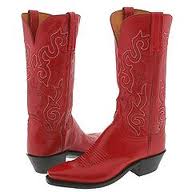
He had these red boots.

A missionary speaker at our church years ago told the story of being a boy growing up in Africa.  In the pile of shoes donated to the kids in his village, there was a pair of fabulous red boots and he loved them. They fit perfectly.  He felt like a super star when he wore them and he wore them everywhere.

Over time, he had to push a little harder to get his heel down in the boots.  His toes began to pinch a little and then curl to squeeze into the shoe.  Instead of choosing to go out and play with his brothers, he’d decline, knowing that walking and running would hurt his feet.  But he didn’t want to admit the boots were too small.  He loved them too much to stop wearing them.

In “Living In-Between, Part I,” I wrote about the first pitfall of our transition times in life.  We tend to run ahead of God.  We want to skip over the waiting time or the training period in order to get right to the good stuff of God fulfilling and completing His work in us.

The second pitfall, though, is no less dangerous.  It’s holding onto the past when God tells us to move on.  It’s squeezing ourselves into too-small red boots, making ourselves uncomfortable and hampering our service to God.

The past holds us hostage to shame.

The apostle Paul wrote:

Brothers and sisters, I do not consider myself yet to have taken hold of it. But one thing I do: Forgetting what is behind and straining toward what is ahead, I press on toward the goal to win the prize for which God has called me heavenward in Christ Jesus (Philippians 3:13-14).

If anyone understood how the shame of the past could imprison you, it was Paul, once a murderer and persecutor of Christians and now a follower of Christ.

He knew you couldn’t just “forget” what happened in the past, but that you had to constantly engage in “forgetting.” This process is ongoing because Satan is forever picking up the clumsy club of shame and beating us over the head with it.

“God can’t use you,” he says.  “You messed up.  Don’t you remember your sin?  Your mistakes?  How you’re impure and worthless?”

Paul also wrote that “there is now no condemnation for those who are in Christ Jesus” (Romans 8:1).  We cling to that daily.  When Satan looms over us with shame, we banish him by purposefully forgetting what is behind and straining ahead to reach all that God’s grace has for us.

The past makes us comfortable with the known.

The missionary knew his red boots were fantastic, albeit ill-fitting. What if some new shoes didn’t measure up?

Some of us settle down so comfortably into the routines of life that we tremble at threats of change.  This is how the Pharisees felt as they were shaken from their roosts of power by an unexpected Savior.

Jesus announced:

“I am the bread of life.  Your ancestors ate the manna in the wilderness, and they died.  This is the bread that comes down from heaven, so that one may eat of it and not die.  I am the living bread that came down from heaven.  Whoever eats of this bread will live forever; and the bread that I will give for the life of the world is my flesh” (John 6:47-51).

He was offering people revolutionary sustenance—the Bread of eternal life.  They preferred to remember the manna in the wilderness. Not that manna was bad.  It was miraculous and sustaining and perfect provision from God at a necessary time.

Yet, manna was no more than a precursor of the ultimate heavenly provision—our Messiah and life-giver.

Are you choosing manna over the Bread of Life?  Have you declined what God is offering because you’re content with what He’s already given?

In A Year With Jesus, Eugene Peterson prayed, “I don’t want to live on the memory of old miracles, but experience fresh ones in faith.  Draw me into the fullness of this day’s grace in which you have new things to do in and through me” (p. 427).

Finally, the past reveals selfishness.

It was hard to do, but at last the little boy admitted the beautiful red boots didn’t fit him anymore.  What good were boots if you couldn’t wear them or walk with them? Reluctantly, he handed the boots down to his younger brother and stepped into some new shoes of his own.

And there’s the key for us.  How long had his brother been without the blessing of perfectly fantastic red boots all because his older brother couldn’t let them go?

Who are we hindering when we refuse to step down from ministries when God has told us to stop?  Who does He want to raise up, to train, to use, to call and to bless?

James wrote: ” But the wisdom that is from above is first pure, then peaceable, gentle, willing to yield, full of mercy and good fruits, without partiality and without hypocrisy” (James 3:17, NKJV).

Heavenly wisdom means we are willing to yield.  Sometimes that means we let others pass or we invite them into the steam of ministry traffic.  Sometimes it means slowing down and giving someone else a chance to jump in.

But, it depends on us to obey God peacefully, gently, with mercy and without hypocrisy when He tells us to stop hoarding the boots all to ourselves and to bless someone else with them instead.

We look forward to a new year full of new encounters with God.  Are you willing to go where He leads even if it means leaving some things behind?

Heather King is a wife, mom, Bible Study teacher, writer for www.myfrienddebbie.com and worship leader.  Most importantly, she is a Christ follower with a desire to help others apply the Bible to everyday life with all its mess, noise, and busyness.  To read more devotionals by Heather King, click here.

Copyright © 2011 Heather King

Living In Between, Part I

It’s a mess; that’s what it is.

It’s this awkward time when my daughter isn’t quite size 7, but not really still a 6x either.  Triple that for all three of my girls and imagine the wardrobe fallout.

They’re just in between.

The dresses are too short, the sleeves on the shirts ride up on their arms, but the next size of pants fit like clown clothes.

So, there’s this season where their wardrobe is a hodgepodge of sizes, a paradise for Goldilocks.  Some too small.  Some too big.  And hopefully enough that are “just right.”

And there are the disagreements about what fits and what doesn’t.  They swim into bulky dresses and shirts that slip off their thin shoulders just so they can wear something new.

Then these same girls cram themselves into shirts that crawl up above their belly button and pants that now look like capris because they don’t want to give up their favorite outfit.

It’s all about transition.  It’s a time of in-betweeness.  It’s uncomfortable.  Messy.  Awkward.  Ill-fitting.

It’s life.

So often we live in the in-between.
We’re preparing for a ministry we haven’t yet started.
We’re moving from job to job, home to home, ministry to ministry.
Our children somehow change from babies to toddlers to little kids to big kids to teens to adults and we can’t say when it happened.
We’re saying goodbye, but haven’t found a place to say hello.

Our transition pitfalls are the same as they are for my daughters and their fashion crises.

We want to leap ahead before we’re ready and end up tripping all over ourselves.

Or, we cram ourselves into comfortable situations that are now stretched to the max and busting the seams.  We resist change.  We linger in the past.  We’re trapped by shame or even nostalgia and we’ll miss out on the new in order to remain in the known.

Scripture is strangely silent about many transition times.

Take Paul.  After his dramatic conversion, he spent time learning how to be a disciple of Jesus Christ, putting aside his old life as a persecutor, but not yet leading the church or serving as a missionary to the Gentiles.

He was in between.

In Galatians, Paul tells us, “I did not go up to Jerusalem to see those who were apostles before I was, but I went into Arabia. Later I returned to Damascus.   Then after three years, I went up to Jerusalem to get acquainted with Cephas and stayed with him fifteen day” (Galatians 1:17-18). 

We can’t tell how long his training for ministry lasted.  He spent time alone in Arabia, away from the Jerusalem church.  Then he stayed in Damascus for three years.  Finally, he traveled to Jerusalem where he hung out with Peter for 15 days (Cephas).

So often we forget this time in Paul’s life.  We see him converted and then we see him as a radical missionary enduring shipwrecks and stonings and imprisonment. At least, that’s how it went on the flannel boards in our Sunday School classes all those years ago.

But his was no overnight preparation for ministry.  It took years of radical change for Saul to become Paul.

Surely Paul could have met Jesus on the road to Damascus, had his eyesight restored, and then high-tailed it to Jerusalem to present himself to James and the rest of the church leaders.  He could have declared, “Send me in, Coach!”

Yet, he would have been immature: full of enthusiasm, but little spiritual maturity.  He probably would have scared the Christians into hiding.  They likely thought he was faking his conversion in order to infiltrate the church and kill them all.

Paul also didn’t have a heart for the Gentiles yet.  Maybe that happened in Arabia when he realized that not many people there had even heard of Jesus Christ—and if Paul needed a Savior, well maybe they did, too.

Most of the time between Jesus’ birth and His public ministry is a blank also. We know He lived in Egypt as a child, but we know nothing about His time there.

Scripture only tells us about one event in Jesus’ childhood, when his parents left him during their pilgrimage to Jerusalem when he was 12 years old.  Traveling as a large group, they just assumed he was with others in their entourage.

Can’t you just hear his parents when they discovered his absence? “I thought he was with you!”  “Well, I thought he was with you!”

Jesus’ response to His parents when they found Him teaches us what to do when we’re in the in-between times of life.

  • He told his parents, “Didn’t you know I had to be in my Father’s house?” (Luke 2:49).  We need to be where God is.  Jesus wasn’t performing miracles or teaching on hillsides yet.  That was for the future.  Likewise, we can’t run ahead of God or lag behind His timing.  We need to be obedient to His plan for us right now.
  • During his transition time, “Jesus grew in wisdom and stature” (Luke 2:52).  Soak up everything you can learn while you wait.  Don’t twiddle your thumbs and assume this time is pointless. Dig deep in is Word.  Learn from others.  Wear your knees out in prayer.  Be a receptive student.
  • Be sensitive to others: Transition times aren’t just hard for us; they are difficult for others, too.  Some people won’t understand when you take a break from ministry.  Others may not support you in something new.  Some people will try to hold you back.  Others will push and nudge you ahead of God’s timing. After His parents found Him in the temple, Jesus “went down to Nazareth with them and was obedient to them” (Luke 2:51).  Obey God’s timing, but be gracious always and submissive to your leadership when possible.

In the in-between times, we look to God as our guide, we enjoy His presence and remain contented in His plan for us, just like the Psalmist wrote “You make known to me the path of life; in your presence there is fullness of joy; at your right hand are pleasures forevermore” (Psalm 16:11, ESV)

Heather King is a wife, mom, Bible Study teacher, writer for www.myfrienddebbie.com and worship leader.  Most importantly, she is a Christ follower with a desire to help others apply the Bible to everyday life with all its mess, noise, and busyness.  To read more devotionals by Heather King, click here.

Copyright © 2011 Heather King