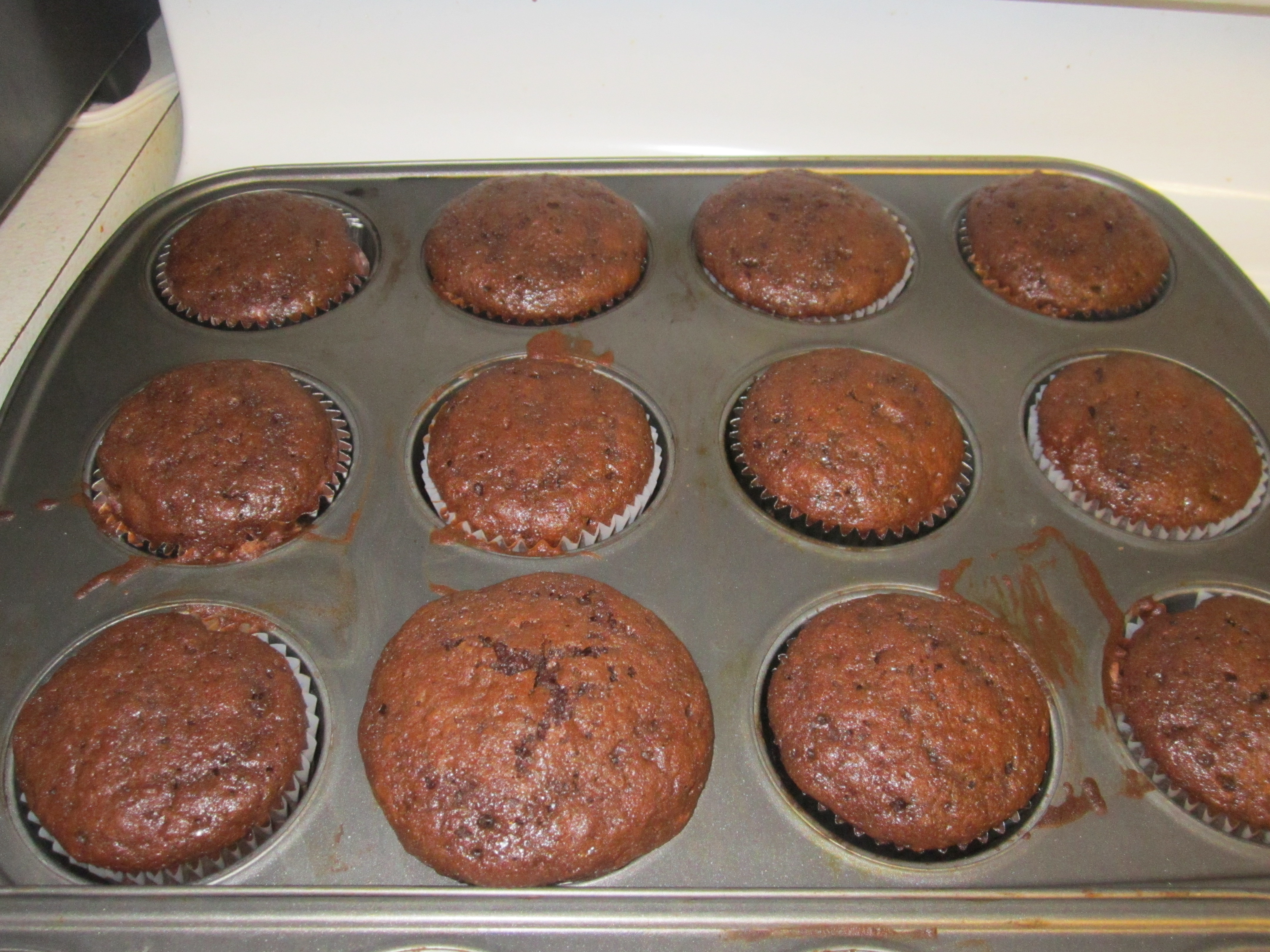
Weekend Rerun: Becoming a Zucchini Farmer

Last year, I had an abundance of zucchini in our garden.  This year, I’m overwhelmed by jalapeno peppers!   Here’s a weekend rerun devotional all about what to do with abundance.

Weekend Rerun:

Becoming a Zucchini Farmer
Originally posted on July 7, 2011

I’ve found my calling, my true gift and talent—growing zucchini.  So, I’m contemplating a new life as a zucchini farmer.

When we planned this mini-garden of ours, my daughters announced that they must grow and eat their own food.

Not knowing how well we could produce food we actually eat like tomatoes and cucumbers, I planted two spindly little zucchini sprouts in the garden.

I’d seen many fellow church-goers hand out this cucumber-wannabe to worshipers leaving the sanctuary.  “Would you like some?  Please, take it home!  We’re drowning in the stuff.”  So, I thought this must be one sure-fire vegetable to grow in our garden in case our other plants didn’t do well.

I didn’t expect that much success, just a guaranteed one or two veggies that my daughters could pose with in pictures and be proud about growing.

Then this one plant grew to monumental proportions and began producing mammoth zucchini.  I frantically began asking everyone I met, “How do you actually eat this stuff?”  Because we didn’t eat it, not often anyway.  I had no recipes for zucchini and whenever anyone said, “zucchini bread,” I stared at this zucchini the size of my daughter’s torso and wondered how that gets mixed up in a way appropriate for the bread pan.

This zucchini overload has me asking one question—what’s the point? What’s the point of having abundance if you don’t use it?  Sitting in my refrigerator or on my counter looking green and huge, this zucchini is pointless.  It is designed and intended for nourishment. Unused, it will rot and go to waste.

My question extends out to issues of faith.  What’s the point of spiritual gifts buried deep and hidden away?  God gives them to us, perhaps we even cultivate and harvest them. Then we let them sit unused.  Or perhaps we grow mystery vegetables in our garden, never actually identifying them.  Yes, we have gifts, but not knowing what they are, we simply pick the fruit, place it on the counter and toss into the garbage the rotten results over time.

While building the tabernacle, Moses instructed the Israelites: “Come, all of you who are skilled craftsmen, having special talents, and construct what God has commanded us” (Exodus 35:10 TLB).  That remains God’s desire—we apply our talents to God’s service, to the building of His ministry, His dwelling place, and His body.

Then there is also knowledge and discipleship.  What’s the point of study without application and life change?

There’s danger in notes and study and knowledge if our focus is on learning and not on our Savior.  Danger that knowledge itself will actually become our god.  Danger that we’ll fill our heads full of fascinating facts and never once experience life-change in the down and dirty areas of our heart and life.

What we study must become what we do.

Paul wrote to the Colossians, a church that had fallen into the danger zone, pursuing knowledge and learning to the exclusion of God:

See to it that no one takes you captive through hollow and deceptive philosophy, which depends on human tradition and the elemental spiritual forces of this world rather than on Christ (Colossians 2:8).

They had become so excited about gaining knowledge, they had failed to filter what they were “learning.”  Not every book you read that quotes Scripture is actually scriptural.  It takes discernment rooted in God’s Word to determine the difference.

In his letter to Timothy, Paul declared that people had devoted

“themselves to myths and endless genealogies.  Such things promote controversial speculations rather than advancing God’s work—which is by faith. The goal of this command is love, which comes from a pure heart and a good conscience and a sincere faith. Some have departed from these and have turned to meaningless talk. They want to be teachers of the law, but they do not know what they are talking about or what they so confidently affirm  (1 Timothy 1:3-7).

So, what’s the point?  When we’ve written down the original Greek of a word in Scripture and we’ve taken notes on our favorite preacher’s sermon, when we’ve copied whole devotionals into our journal and highlighted our book . . . then what?

We grow.  We know God rather than just know ABOUT God.  That’s the point.  Paul prayed for the Colossians that God would “fill you with the knowledge of His will through all the wisdom and understanding that the Spirit gives” (Colossians 1:9).

If we’re reading without changing, listening without growing, learning without transformation, then it’s pointless abundance–a garden full of unusable fruit gone to waste as it rots on the vine.

Heather King is a wife, mom, Bible Study teacher, writer for www.myfrienddebbie.com and worship leader.  Most importantly, she is a Christ follower with a desire to help others apply the Bible to everyday life with all its mess, noise, and busyness.  To read more devotionals by Heather King, click here.

Copyright © 2012 Heather King

Weekend Walk, 07/28/2012: Olympic Dreams

Hiding the Word:

Last night I watched the opening ceremonies for the Olympics for the first time in my life.

Yes, I did say, “in my life.”

Shocked?

We let our daughters stay up a little later than normal and watched the London extravaganza as a family, which meant I watched for two minutes and then explained for a few seconds what was happening on the TV screen.

We didn’t need network commentators.  We had our own running commentary/question and answer time right in our living room.

When I first mentioned the Olympics to my older daughter she declared without a second’s pause, “I want to be in the Olympics!” as if it’s little more than signing up for a relay race at a Fourth of July picnic.  I tried explaining repeatedly that these are the best athletes in the world, but I still don’t think she fully understands.

So we had the same conversation we had when she announced that the girl who got many lead roles in community theater productions was “lucky.”

Yes, there’s talent, but not really luck.  Mostly there’s hard work, discipline, training, starting small and reaching goals and then setting new goals.  It involves daily sacrifices of what you’d rather be doing, what everyone else is doing, what is more fun and seems temporarily more satisfying.

Sometimes we similarly assume that someone with a deeper relationship with God is “lucky.”  She’s not as busy as we are.  She doesn’t like TV as much or is more of a reader naturally so Bible study isn’t such hard work.  Her life isn’t as crazy and stressful.

It’s a myth.

Wherever you have depth of Bible study and prayer and intimacy with God, you have discipline and sacrifice, yes daily sacrifice for the sake of what matters eternally.

Here’s a Scripture verse to meditate on all this week, reminding us that while physical feats of strength and skill at the Olympics are laudable, we are all told to train for godliness.

Have nothing to do with irreverent, silly myths. Rather train yourself for godliness; for while bodily training is of some value, godliness is of value in every way, as it holds promise for the present life and also for the life to come”
(1 Timothy 4:7-8)

Heather King is a wife, mom, Bible Study teacher, writer for www.myfrienddebbie.com and worship leader. Most importantly, she is a Christ follower with a desire to help others apply the Bible to everyday life with all its mess, noise, and busyness. To read more devotionals by Heather King, click here.

Copyright © 2012 Heather King

Rigging Candy Land

Trust God from the bottom of your heart;
   don’t try to figure out everything on your own.
Listen for God’s voice in everything you do, everywhere you go;
   he’s the one who will keep you on track.
Don’t assume that you know it all
(Proverbs 3:5-6 MSG).

When my kids were younger, I used to rig the Candy Land cards.

Not so they could win, you understand, because I don’t believe in just letting a child win at games.

I simply hated the cruelty of the setback.  The thing about Candy Land is that you could be two rainbow-colored squares away from the magic candy castle and then draw the card for the Gingerbread Man.

At first, this seems harmless enough.  Who doesn’t want the Gingerbread Man?  Then you realize that it’s just evil fate and lessons in the futility of life sugar-coated and handed to your three-year-old child.

That’s because the Gingerbread Man is all the way back at the beginning of the game.

So, you have to watch this sweetly innocent toddler who was an inch away from cheering in victory move her red Candy Land piece all the way back to a position of certain defeat.

Sometimes life seems just as sadly confusing with unexpected twists and turns and a few disappointments and setbacks.

Yet, surely these are lessons best learned when you’re a little older and wiser?

My solution was simple.  As I shuffled the cards before setting up the game, I made sure the dreaded Gingerbread Man and the peppermint stick guy and sometimes even the gumdrop were in the front of the stack.

Thus, anyone who drew one of those cards would never have to fall back more than a few squares.

Sometimes I wish God would rig the cards every once in a while so life never involved steps backwards or feeling stuck in place (on something less soothingly delicious as a licorice stick).

While He’s at it, wouldn’t it be nice if He gave the game board a big yank and straightened the path?  No more zigzags across the board.  Geometry tells us the shortest distance between two points is a straight line.  How about a straight line, God?

Yes, it’s true, sometimes the directions God takes us and the interruptions, setbacks, and seemingly pointless diversions we experience just don’t make sense.

In her book Nehemiah: A Heart that Can Break, Kelly Minter shared: “…I have a friend who regularly says to me, ‘Lean not Gal!’  As in, ‘Lean not on your own understanding, but all your ways acknowledge Him, ‘Gal!'” (p. 97).

I love this.  I certainly have the tendency to lean on my own understanding and raise a ruckus of discontentment when God leads me in unexpected directions.

Jonah also needed someone to tell him, “Lean not, Guy!” when he, a highly successful, well-respected prophet of encouragement to God’s holy people got God’s disturbing message: Go preach repentance to an enemy nation that has persecuted and killed your neighbors and family friends.

The disciples similarly needed a “lean not” reminder when Jesus told them they were going up to Jerusalem where He would be persecuted, imprisoned and crucified.

In the same way, Paul challenged his friends and followers to “lean not” when he traveled to Jerusalem, despite being warned that he would be placed in chains and taken captive there (Acts 21).

Jonah, the famous runaway, tried to avoid the path that didn’t make sense.

What if he had succeeded? Nineveh would have missed out on experiencing what “many historians cite …as the greatest revival in human history” (Priscilla Shirer, Jonah, p. 114).

In fact:

When Jonah chose to walk in obedience to the word of the Lord, the result was a harvest of amazing fruit he’d probably never seen coming.  Not just one community in the city or even a handful of the city’s important people believed in God.  Every citizen of Nineveh, from the greatest to the least, immediately believed.  Conviction was so complete that even the animals were made to participate in the government-mandated fast.  ‘Even the great Apostle Paul never experienced anything comparable to what Jonah saw.  Paul never saw an entire city turn to God'” (Shirer, p. 118-119).

Yes, and without Jesus’ journey to the cross, we would not have the resurrection or a plan for salvation.

And if Paul chose the easier road away from Jerusalem, he would never have preached about Christ in Rome—even to Caesar himself (Acts 28).

It’s frightening not to know exactly where we’re going.  It’s terrifying not to know what will happen when we get there.

It’s disappointing when God asks you:
to step aside
to stop
to walk away
to turn around
to go back
to take a break
to cease activity
and to put aside our own plans and visions and understanding of how this crazy life should work out and make sense.

Yet, even when we spend some time standing still or making the disheartening trip apparently backwards, we can trust that God has a plan—a better plan (yes, even better than the magical candy castle!) and maybe a surprising plan (to us, not to Him)—as long as we obey.

Heather King is a wife, mom, Bible Study teacher, writer for www.myfrienddebbie.com and worship leader.  Most importantly, she is a Christ follower with a desire to help others apply the Bible to everyday life with all its mess, noise, and busyness.  To read more devotionals by Heather King, click here.

Dumbo Always Makes Me Cry

Dumbo gets me ever time.  It’s the one Disney movie I remember bawling at as a kid. I haven’t gotten over it either, not after all these years.

Once one of my girls found a storybook at the library about Dumbo.  She checked it out and then climbed up in my lap at home so I could read it to her. At first it was easy.  Baby elephant with big ears . . . Blah blah blah . . .

Everyone makes fun of him, mocking and taunting (sniffle, sniffle).

The mommy tries to defend him and they lock her up.  Dumbo gets dragged away from her, their trunks locked in embrace until the last possible second . . .

Someone please pass the tissues!  I just can’t do this story without tears.

In fact, it’s hard for me to do this story at all.  I sent the book back to the library ahead of time and I can’t bring myself to watch the movie.  My response is always so intense.

Sure it’s a cartoon elephant who ultimately flies and makes friends, but it’s still a child hurt by the cruelty of others and taken away from his mama!

In Scripture, we see people reacting even more intensely than how I snatch at tissues at the slightest Dumbo provocation.  Not because of a fictional scenario, though.

They are hearing God’s Word.

Eighteen-year-old Josiah, for example, was king of Judah when a member of his court went to the temple to perform some administrative tasks.  There he met the High Priest, who announced that he “happened” to have found the Book of the Law.

So, the royal secretary read it and then read it aloud to King Josiah:

“When the king heard what was written in the book, God’s Revelation, he ripped his robes in dismay. And then he called for Hilkiah the priest, Ahikam son of Shaphan, Acbor son of Micaiah, Shaphan the royal secretary, and Asaiah the king’s personal aide. He ordered them all: “Go and pray to God for me and for this people—for all Judah! Find out what we must do in response to what is written in this book that has just been found!” (2 Kings 22:11-13 MSG).

Josiah knew that God’s Word requires a response.

In the same way, when the exiles returned to Jerusalem and stood inside the rebuilt walls of the city, Ezra the High Priest read the Book of the Law of Moses to everyone.  Men and women and kids old enough to understood stood from morning until lunch time listening to him read Scripture aloud.

Just God’s Word.  And nothing else.  For hours and hours.

They didn’t yawn, tune it out, roll their eyes, poke their neighbor, or skip attending so they could do chores or kick back with the latest release of ancient Middle-eastern epic poetry.

Instead, “Ezra blessed the Lord, the great God, and all the people answered, ‘Amen, Amen,’ lifting up their hands. And they bowed their heads and worshiped the Lord with their faces to the ground” (Nehemiah 8:5-6).

At first, the people were filled with remorse and driven to repent.  Yet, Nehemiah (their governor) and the Levites (their priests) encouraged them to celebrate instead: “And all the people went their way to eat and drink and to send portions and to make great rejoicing, because they had understood the words that were declared to them” (Nehemiah 8:12 ESV).

Their response to Scripture was emotional and intense.

There was true repentance and grief over how their sins had broken the heart of God.

There was a hunger for more and the willingness to stay as long as it took to hear what God had to say.

There was passionate worship with shouts of “Amen” and bowing low to the ground in awe of Mighty God.

There was joy and celebration because “they had understood the words that were declared to them.”

 How do you respond to God’s Word?

If we pick it up and read it with unemotional disinterest or with a bored and distracted mind we are missing it!

We are missing out on all the power of Scripture to revolutionize our hearts and minds, driving us to repentance, inciting us to intensely passionate worship and filling us with the kind of joy that makes us want to tell everyone what we’ve learned.

Scripture can’t be a mandatory item on our to-do list or an occasional emotional pick-me-up we drag off the shelves and dust off anytime life gets hard.

It’s got to be life and breath and food and drink to us because it holds God’s very own words, so active and relevant in our lives!  As you read, pray and ask God, “How do you want me to respond to this?”

Maybe you’ll need some of my tissues or maybe you’ll dance, but either way you’ll be giving God’s Word the response it deserves.

Heather King is a wife, mom, Bible Study teacher, writer for www.myfrienddebbie.com and worship leader.  Most importantly, she is a Christ follower with a desire to help others apply the Bible to everyday life with all its mess, noise, and busyness.  To read more devotionals by Heather King, click here.

Copyright © 2012 Heather King

God and Cupcake Sprinkles

I was sorting cupcake sprinkles . . .by hand.

Really.

I removed all of the pinks from the mix and took out some of the oranges and yellows, too.  The color combination needed to be mostly blue, white, and green with some hints of yellow and orange.

But you can’t buy a sprinkle mix like that at Wal-Mart, so I bought the colorful star-shaped sprinkles and sorted them by hand.

And I thought, “God loves me enough to do this.”

Let me explain.

My baby girl turned three years old yesterday.  For weeks, my older daughters and I had enthusiastically reminded her that her birthday was coming soon.

We pestered her with questions.  What do you want for your birthday?  How old will you be?  What do you want on your birthday cake?

Then she made her declaration.  She wanted Octonauts presents and an Octonauts birthday cake.

Now for the uninitiated among you, the people who don’t live and breathe and move children’s television programming: The Octonauts is originally a British children’s show about undersea explorers and the oceanic animals they discover and assist.  It’s only recently appeared on American television.

That means that if we lived in the United Kingdom, we’d have no problem popping out to the local party store for supplies.  But here in the good old U.S. of A. the store shelves aren’t exactly stocked with Octonauts toys and party favors.

So, I did what any reasonable mom might do.  I walked my daughter down the party aisle at Wal-Mart and showed her the many wonderful birthday decorations there were available in America.  Mickey Mouse.  Princesses.  Fairies.  Strawberry Shortcake (my favorite).

She settled on Mickey Mouse and we headed home with a relieved Momma in the driver’s seat.  Yet, less than a week later, she made another announcement.  Mickey Mouse didn’t cut it.  She did in fact want Octonauts.

I had tried to convince her to accept less than her heart’s desire.

What’s a mom like me to do: A non-crafty, not particularly creative, cake decorating failure of a mom?

I’ll tell you what.

We took our Play-Doh ocean animal cutters, washed them well, and used them to cut sugar cookies in the shape of lobsters, dolphins and starfish for her friends at church.

We had yellow cake mix already at home, but she asked for chocolate.  So, we made chocolate cupcakes.

I printed out pictures of the Octonauts and created our own cupcake toppers.

I bought the aforementioned color mix of sprinkles and then pulled out the unwanted ones so the color combination could be perfect.

I waited in line at Wal-Mart to have a bag of Octonauts colored balloons blown up (three year old birthdays must involve balloons) only to have the lady at the desk tell me, “We no longer do balloons.  There’s a national helium shortage.”

Really?  A national helium shortage is going to stop me from giving my girl balloons?  Not hardly.  I bought the helium balloon kit for $20 so we could inflate them ourselves (with helium to spare for family birthdays for a year or two).

Then we put it all together.  A family dinner of the birthday girl’s choice.  Singing happy birthday, blowing out the candle, balloons, chocolate cupcakes with Octonauts toppers and sprinkles all to celebrate my baby. 

(Although, why she needed chocolate cake when all she did was lick off the icing is beyond me.)

So, why?  Perhaps she’ll never remember her third birthday and maybe over time her interest in ocean animals will fade.

But she’ll remember being loved.  And I do love her.  I’m crazy, head-over-heels, over-the-top, absolutely in love with this sweet gift from God.

Matthew 7:11 tells us:

“If you then, who are evil, know how to give good gifts to your children, how much more will your Father who is in heaven give good things to those who ask him!”

This verse never becomes more real to me than when I’m picking out good gifts for my daughters.

God loves you enough to pick through sprinkles for you and to find a way to defeat a national helium shortage.  He’s a God of attentive, detailed affection for each of his beloved children.

We may assume that coincidence, chance, luck, good fortune, Mother Nature, friends and family, a congenial boss or even our own effort and ability are responsible for the blessings and benefits we experience.  That’s not true.

All the gifts we receive, tied in bows and placed into our hands with joy, come from a God who is crazy, over-the-top, head-over-heels, absolutely in love with us.

“Every good gift and every perfect gift is from above, coming down from the Father of lights with whom there is no variation or shadow due to change” (James 1:17). 

This week, let’s be aware of the many ways God showers us with good gifts, even the smallest reminders of His providential care, and remember to give thanks.

You can read other devotionals on this topic here:

Heather King is a wife, mom, Bible Study teacher, writer for www.myfrienddebbie.com and worship leader. Most importantly, she is a Christ follower with a desire to help others apply the Bible to everyday life with all its mess, noise, and busyness. To read more devotionals by Heather King, click here.

Copyright © 2012 Heather King
Weekend Rerun: Blessings in Sticky Keys

Originally posted on June 10, 2011

“For You make him to be blessed and a blessing forever; You make him exceedingly glad with the joy of Your presence.”
Psalm 21: 6

I have a piano.
I have young children.
I’m trusting you can fill in blanks, use your imagination, put two and two together and figure out what all that means.

A few months ago, I sat down to play a song and noticed a key was sticking.  By the second page of music, the key wasn’t sticking anymore; it was downright stuck. Beautiful notes . . . beautiful notes . . . beautiful notes . . . thunk.

This has made my musical life difficult.

Then, there are the piano lessons for these young daughters of mine.  The offending key is not one of the mostly unnecessary ivories on the end of the keyboard.  Oh no; it is an oh-so-necessary note for any song not in C position.

So, I pulled out method book upon method book, recital books, beaten up and falling apart books covered in pencil marks from when I first learned to play.  My daughter played every single song in C position I owned on this overstuffed musical shelf of mine.  All this to avoid the offending key.

Finally, I broke down and called about repairs.  I held my breath waiting to hear how much this fix-it job would cost and then I heard the magic word: Free.

Free I tell you!!  The manufacturer recalled the keyboard on this piano because of sticky keys.  And so I danced around my living room and gave thanks to God for this blessing.  This tiny kiss from God and sweet reminder that He cares not just about the heavy burdens I carry, but also the daily annoyances and petty frustrations.

It’s a moment of visibility, the clear and unmistakable hand of God even when we are busy and rushed and overwhelmed.  It’s a flash of His glory amidst darkness, making us breathless with the beautiful and captivating mercy of it all.

But, then there are the not-so-visible blessings.  The ones we must squint to see or perhaps can only be seen in flashbacks.  While we’re in the pit and trapped in the mire, God’s hand is invisible, His blessings unclear. 

Yet, when God has lifted us up, washed us clean, taken our hand and led us forward on the journey, we can then throw a glance at the past and see the shadows of grace and blessing that we missed before.

Sometimes we know a blessing when we see it; sometimes we don’t.

Genesis 49 tells a story of blessing.  Aged Jacob calls his 11 sons to his side to tell them “what will happen . . . in days to come” (Genesis 49:1).  One by one, Jacob blesses each son.

Some of those words are obvious blessings.  Like for Judah: “The scepter will not depart from Judah, nor the ruler’s staff from between his feet” (Genesis 49:10).

And for Zebulun: “will live by the seashore and become a haven for ships; his border will extend toward Sidon (Genesis 49:13).

And for Joseph: “Your father’s blessings are greater than the blessings of the ancient mountains, than the bounty of the age-old hills. Let all these rest on the head of Joseph, on the brow of the prince among his brothers(Genesis 49:26).

Then there are other prophecies for other sons.  Commentator Bruce Waltke called these “antiblessings.”

Like for Reuben: “Turbulent as the waters, you will no longer excel” (Genesis 49:4).  And for Simeon and Levi: “Cursed be their anger, so fierce, and their fury, so cruel! I will scatter them in Jacob and disperse them in Israel” (Genesis 49:7).

Antiblessings.  Maybe they even sound like curses from a dying father to his sons.  And yet blessings they are called.

Have you ever walked through something that seemed like a curse, only to find later it was truly a blessing?

Bruce Waltke explained:

In terms of the nation’s destiny these antiblessings are a blessing.  By demoting Reuben for his turbulence and uncontrolled sex drive, Jacob saves Israel from reckless leadership. Likewise, by cursing the cruelty of Simeon and Levi, he restricts their cruel rashness from dominating.

Beth Moore in The Patriarchs says, “We might call these blessings of restriction. . . .Both what we receive and what we don’t receive can constitute blessings for us and those around us.  God is all-wise.  He blesses us as surely by what He does not grant as what He does.

I have received these blessings that are only visible in memory.

At 13, I decided where I would go to college.  I worked.  I saved my money.  Years passed and I reluctantly applied to other schools along with this college, fully believing those extra applications were simply a waste of time and money.  I only toured my dream school.  I auditioned for the piano teacher of my choice.  I sought out a mentor in the Theory and Composition Department.  I went to the open house.

And then, I couldn’t go.  It was a resounding, clear “No” in the most nearly audible voice I have ever heard from God.

It seemed like a curse.  He didn’t give me the “desire of my heart.”  I was depressed, lost, confused, broken.  Listlessly, I started classes at the one college I simply did not want to attend.

And I grew.  I changed my major.  I met my husband.  My career path altered.

Abundant blessings grew out of the antiblessing.

Has God told you, “No?”  Has He delayed in giving you what you’ve asked for?  Have you been buried in circumstances that seem like curses?

Maybe that’s what you’re living through now or maybe it’s what you’ve experienced in the past. Either way, it may be hard to see a purpose or plan in all of this.

Allow God to peel back the layers of hurt and frustration and reveal underneath all of that the blessing that’s so hard to see.  Ask Him to open your eyes to see His grace at work even in heartache and loss.  It’s there, my friend, the blessing, though hidden perhaps, is there.  “Salvation belongs to the Lord; May Your blessing be upon Your people” (Psalm 3: 8)

Heather King is a wife, mom, Bible Study teacher, writer for www.myfrienddebbie.com and worship leader.  Most importantly, she is a Christ follower with a desire to help others apply the Bible to everyday life with all its mess, noise, and busyness.  To read more devotionals by Heather King, click here.

Weekend Walk, 07/21/2012: Grace Gifts

My older daughters just walked out the door to swim lessons while my toddler and I are here at home.   I can hear her singing in the other room as I sit and type about this week’s verse.

My daughters and I have been talking often about finding “their thing,” their God-given gifts and talents, the set-apart uniqueness that God lovingly placed in their hearts and minds even before birth.

Is it ballet?  Is it art?  Piano, singing or some other musical instrument (my one daughter wants to play the tuba)?  Is it swimming or soccer?

Hence the swim lessons and ballet classes.  It’s why I sit next to them on the piano going over notes and fingering.  It’s why I’m still waiting to hear from one girl whether she’s signing up for ballet in the fall or holding out for spring soccer.

With one daughter, the problem isn’t what—it’s how much.  She’s artsy and crafty, a lover of stage performances.  She wants to play the piano and the flute, sing, act, get her pointe shoes in ballet, excel at school, and be an artist.

It’s my middle girl that I check in on often.  I don’t want her doing activities just because her older sister is doing them.  She needs to find her own way, her own passion and joy, and then work hard to develop skill.  She CAN do many things, but what is it that stirs her soul?

We were alone a few days ago and she announced from the back of the minivan (where it seems most of our conversations take place), “I know what I can really do, Mom. I can make people laugh.  I think I could be a magician when I grow up and tell jokes and funny stores to make people laugh during my show.”

Hmmmm.  How do you nurture a gift like that?

It’s still a process of discovery.  After all, they’re little still, and we’re searching and figuring out what treasure God has placed in them.

And this is a treasure hunt for all of us.  1 Peter tells us that we have all received a gift from God.  He didn’t skip over you when handing out presents from his spiritual gift and talent bag.

We have a responsibility, though, to use these gifts to serve others.  No hoarding them or hiding them or using them only for our own benefit or glory.  God’s goal is to unite us in service to one another.

Not only that, but we are “stewards of God’s grace.”  That means when people look around and wonder where God’s grace exists, if it exists at all, they should see it in us—in the spiritual gifts He has given us and our faithful service to use them.

That’s what your crafty, artistic flare is.  Or your creativity.  Your musical talent or your compassion.  Your generous spirit of hospitality or your athletic discipline.  Your wisdom.

The gifts God has given you are deposits of grace in a world desperately impoverished.  So, let’s meditate on this verse for the week and ask God to help us be faithful stewards of His grace, in whatever form He has given it to us.

Each of you should use whatever gift you have received to serve others, as faithful stewards of God’s grace in its various forms
(1 Peter 4:10 NIV).

Heather King is a wife, mom, Bible Study teacher, writer for www.myfrienddebbie.com and worship leader.  Most importantly, she is a Christ follower with a desire to help others apply the Bible to everyday life with all its mess, noise, and busyness.  To read more devotionals by Heather King, click here.

Copyright © 2012 Heather King

Where Does it Hurt?

The man collapsed in front of our house.

We didn’t know at first, but it was an unusually cool day in early summer and our windows were open.  We didn’t hear him fall off his bike, hit the ground, or cry out in pain.

What we heard was a voice asking, “Sir, are you okay?”

Hearing that, I glanced out the window and saw the stranger sprawled across the road, his feet still hooked onto his bicycle.  Rain had just started to fall, so I grabbed a jacket, umbrellas, and a blanket and joined the Good Samaritans who had stopped to help.

We did what we could: called 911, covered him to protect from the chill and held the umbrella to block the light rain.

Mostly, though, we tried our best to rouse him.  Did a car hit you?  Do you feel pain?  What’s your name?  How can we help?

Where does it hurt?

That’s the question we returned to so often.  Other than some scrapes on the hand and a small cut to the head, nothing was obvious.  No matter what we asked, how often we asked or how loudly we raised our voices, though, he remained unresponsive.

The chief arrived in his truck with lights flickering.  He placed his hands on the man’s shoulder and picked right up where we left off, “Sir, what’s your name?  Where does it hurt?  Can you tell me what’s wrong?”

Still, there was no response.  So, they loaded him into an ambulance and carried him off to the hospital.

Sometimes when we feel broken and hurting, it’s easy to identify the source of the pain.

We’re hurting because of a broken relationship, death, abuse, job loss, financial crisis, ministry struggles . . .  A physician could hold up an x-ray of our life and instantly reveal the brokenness.  It would light up on the screen showing the exact location with a line of fracture showing how far and how deep.

Maybe we’d even have a therapeutic solution at the ready to make the brokenness heal over time.  A bandage here, a cast there, a medicine or treatment . . . and then we would be whole again.

But there are times when we just hurt.  We feel inexplicable sadness.  We know we are broken, but the x-rays remain unclear about where or how.  Or, perhaps instead of showing a clear-cut fracture, they reveal shattered fragments in a hopeless messy state.

We ask each other all the time, “How are you?” and mostly we say, “fine” or “good” in an off-handed way.

What would happen, though, if one of us said, “I’m sad and I don’t even know why.  I’m feeling broken, tender, easily bruised.  My eyes fill with tears at the slightest provocation.  I’m like an endless source of emotion, just spilling all over the place and I don’t know how to turn off the spout or clean up the mess”?

That would be a conversation stopper.

There’s beauty in a God, though, who knows when “I’m fine” really means we’re not. We can’t fake it with Him.

Nor is our brokenness a mystery.  Maybe we ourselves don’t even understand our sadness, but He does.

When God first met with Hagar, the servant of Abraham and Sarah, as she ran into the wilderness after being abused, He asked her, “Hagar, servant of Sarai, where have you come from and where are you going?” (Genesis 16:8).

Then He paused for her answer, and she had a reply at the ready.  “I’m running away from my mistress.” Simple as that.  Clear and precise brokenness and He ministered to her, giving her promises for her future and instructing her to return home.

Yet, when she desperately fled into the wilderness a second time years later, God asked, “What troubles you Hagar?”

Without a second of pause  . . . without her answer . . . without her breaking into tears and pouring out a confusing response of hurt and pain that just couldn’t explain it all, God kept talking, “Fear not, for God has heard the voice of the boy where he is” (Genesis 21:17).

He asked because He cared.  Yet, knowing her crisis and her pain, He already had a ministry of provision and comfort for her at the ready without even needing for her to explain it all.

When you face this brokenness too hard to explain or describe, remember that you can bring it to him without a word.  He knows.  He cares.  And He is working to comfort and restore you.

“O Lord, you have searched me and known me!
You know when I sit down and when I rise up;
you discern my thoughts from afar.
You search out my path and my lying down
and are acquainted with all my ways.
even before a word is on my tongue,
behold, O Lord, you know it altogether.
You hem me in, behind and before,
and lay your hand upon me.
Such knowledge is too wonderful for me;
it is high; I cannot attain it
(Psalm 139:1-6)

Heather King is a wife, mom, Bible Study teacher, writer for www.myfrienddebbie.com and worship leader. Most importantly, she is a Christ follower with a desire to help others apply the Bible to everyday life with all its mess, noise, and busyness. To read more devotionals by Heather King, click here.

Copyright © 2012 Heather King

A Matter of Opinion

I looked ridiculous.

Standing on my deck in sopping wet, raggedy clothes, barefoot with no makeup and my hair still not fully dry from my shower, I sprayed down a bunch of blankets and clothes with my garden hose.

There I stood, essentially watering my laundry.

Of course, I had a reason for this apparent foolishness.  It was laundry and cleaning day (so who dresses nicely and fixes their hair and makeup for that?)  Part way through the morning, it occurred to me that my laundry was taking an unusually long time in the washing machine.

As in, it was just cycling round and round without ever draining the water and spinning the clothes.

So, I pulled every last piece of laundry out and hauled it to the deck.  Water pooled all over my floor, soaking my socks and shoes, so I stripped them off and plopped them by the back door.  After I had yanked out every last blanket and sock, I bailed out the washing machine by hand, first in buckets and eventually with a tiny plastic cup.

Feeling like I had at least rescued my clothes, it then occurred to me that everything I had placed out in the sun to dry had been immersed in soapy detergent water all morning.  So, before it all dried, I needed to rinse it clean.

With the hose.

Of course.

What else to do . . . drag it all back in the house, flooding every room in the process, so that I could rinse everything out in the shower only to haul it all back outside?

So, I improvised.

After a minute or two of standing there with the hose spraying water on my laundry, I glanced down at myself.  I felt like a sponge that could have been wrung out and probably didn’t look much better.

Then it occurred to me how embarrassing it would be if someone saw me out there, looking ragged and wet and watering my laundry instead of my veggies and flowers.

But then I shrugged it off because it didn’t really matter what anyone thought of me.  The fact was that I had done what needed to be done.

And isn’t that the important thing?  .

Unfortunately, not to me, not all the time.  It’s not so simple for me to shrug off the opinions of others.  I so easily become a marionette in their hands, moving, acting, doing . . . every time they yank a string and make a request. When they criticize, I change.

Yes, I could be a charter member of People Pleasers Anonymous.

The opinion of others becomes god to me, more important than God’s own thoughts about who I am and what He wants me to do.

In the end, though, God’s opinion about us is all that matters.

Throughout the books of 1 and 2 Kings, God tells exactly what He thought about each particular ruler, ultimately determining whether a king was good (like David) or evil (like Ahab).

About Hezekiah, we read: “And he did what was right in the eyes of the Lord, according to all that David his father had done” (2 Kings 18:3 ESV). 

“In the eyes of the Lord . . . “

The Message says it this way, “In God’s opinion he was a good king; he kept to the standards of his ancestor David (2 Kings 18:3 MSG).

“In God’s opinion . . . “

When we feel the heavy weight of criticism and disapproval from others, when they try to slip into seats of control and force us to move this way or that, then we can stop and ask:

What is God’s opinion about me and what I should do?

Hezekiah was a “good king.”  Abraham was the friend of God (James 2:23). David was a man after God’s own heart (Acts 13:22). Mary was “beautiful with God’s beauty,
   Beautiful inside and out!” (Luke 1:28 MSG).

The bride in Song of Solomon declares that her brothers ridiculed her and sent her out to the fields to labor.  She begs the king, “Do not gaze at me because I am dark” (Song of Solomon 1:6).  That was the opinion of others.

But the king looks at his love and declares, “You are altogether beautiful, my love; there is no flaw in you” (Song of Solomon 4:7).

And his opinion is what mattered.

It’s God’s thoughts about us that should guide our decisions and help us put one foot solidly down on the ground after another, moving in the confident assurance that we are pleasing to Him.

Surely that’s what I desire.  Don’t you?  I don’t want to make it to heaven and say, “Look at all the people who thought I did a good job and whose requests I followed and whose criticism made me change. I pleased them”

No, I want to please God.

I want to be beautiful inside and out, beautiful with God’s beauty, altogether beautiful for Him.

Heather King is a wife, mom, Bible Study teacher, writer for www.myfrienddebbie.com and worship leader.  Most importantly, she is a Christ follower with a desire to help others apply the Bible to everyday life with all its mess, noise, and busyness.  To read more devotionals by Heather King, click here.

The Big Clean

Originally posted as Quiet Time With a Mop and a Bucket, Lesson 1
on June 6, 2011

Today, I did the “Big Clean.”  Some of you may wash behind your refrigerator and stove every time you sweep the kitchen floor, but since that doesn’t happen here at my house, I occasionally have to do this super scrub-down.  

Normally, I would sit down at this computer to write and share with you from my time spent studying the Bible.

But, today, I have primarily spent my quiet time with a scrub brush in hand, squeezing into corners on my hands and knees and sponging up the bucket of water that my baby girl has spilled onto the floor while “helping.”

I’ve cleaned and prayed, cleaned and thought, cleaned and worshiped, and this is what I have brought to our time together today—-lessons from a quiet time with a bucket and mop.

Lesson 1: You Are Not the Only One

I walked into my daughters’ room and spotted a tiny blob of jelly on one of her dresser drawers (was that jelly or some other mystery purple substance?).

I washed all the walls down in my home with a wet rag and felt mystified by the unidentifiable splatters.  It could be a game show—Name That Mess!  Is it cat hair, dust, marker, crayon, pencil, food, or drink?

I rescued a dozen stuffed animals from the prison under my daughters’ bed, collected up about 20 missing hair clips and ponytail holders and returned five books to their appropriate shelves.

And I thought, “I’m the only one.”

That’s right—the only woman whose kids leave behind remnants of food and sticky fingerprints as they move from room to room in the house.  I’m the only one who has a bag of socks to be matched and paired.  I’m the only one who has dirty baseboards and mystery marks on the walls.

I’m the only one.  And if every other woman keeps her home spotless and I do not, that makes me a failure.

But then the epiphany moment—what if I think I’m the only one because I only see the homes of others after they’ve just cleaned and not while they are still covered in the messyness of family life?

After all, if someone visited my home right this second (before my children have a chance to make more mess), they’d think, “She has it all together.  She does all of these things and keeps her home spotless.  I’m a failure for not being like her.”

Yet, if someone visited me this morning before I had washed the jelly off the dresser (yes, I definitely think  it must have been jelly), they would be thinking, “She’s a mess.  I’m a mess.  That means I’m normal.  I’m not the only one.  Other people don’t have it all together while I struggle with the daily juggling of life.  We’re all imperfect together.”

And they’d be right.

In life, we have a tendency only to share with people the areas of our heart, mind, experience and attitudes that have been through the “Big Clean.”  So, it’s easy for us all to look outwardly perfect and yet inside be feeling like a disastrous mess.

This is one of the things I love about the apostle Paul, though: his willingness to share from his struggles as much as from his strengths.  He wrote:

Therefore, in order to keep me from becoming conceited, I was given a thorn in my flesh, a messenger of Satan, to torment me.  Three times I pleaded with the Lord to take it away from me.  But he said to me, “My grace is sufficient for you, for my power is made perfect in weakness.” Therefore I will boast all the more gladly about my weaknesses, so that Christ’s power may rest on me.   That is why, for Christ’s sake, I delight in weaknesses, in insults, in hardships, in persecutions, in difficulties. For when I am weak, then I am strong.  (2 Corinthians 12:7-10).

Paul told others that he had problems, that he wasn’t perfect, that he had been the chief of sinners and that it was only God’s grace that saved him and now allowed him to preach the gospel to those who had never heard it.

More than that, he boasted in his weakness because it allowed God to shine through

He let people see his life in the messy places so that they could marvel at God’s grace and rejoice in the fellowship of journeying to Christ together.  That’s one of the greatest encouragements we can give one another, the message that we’re not alone, but that we all are in need of Christ’s redemptive and purifying work.

Other lessons from Quiet Time with a Mop and a Bucket:

Heather King is a wife, mom, Bible Study teacher, writer for www.myfrienddebbie.com and worship leader.  Most importantly, she is a Christ follower with a desire to help others apply the Bible to everyday life with all its mess, noise, and busyness.  To read more devotionals by Heather King, click here.

Copyright © 2012 Heather King