We Can Never Know What It’s Really Like

love does not envy

The regimental surgeon made us squirm as he held up what looked like medieval torture devices, but were really medical tools used in the Revolutionary War.

A farmer’s wife rolled a slightly wrinkled potato in a barrel of sand, lifted the lid to a jar of pickled eggs, and ran her hand through the dried fruit and beans she had prepared.

The cloth maker laid wool and linen socks out to dry after dipping them in a natural yellow dye of onion skin.IMG_3442
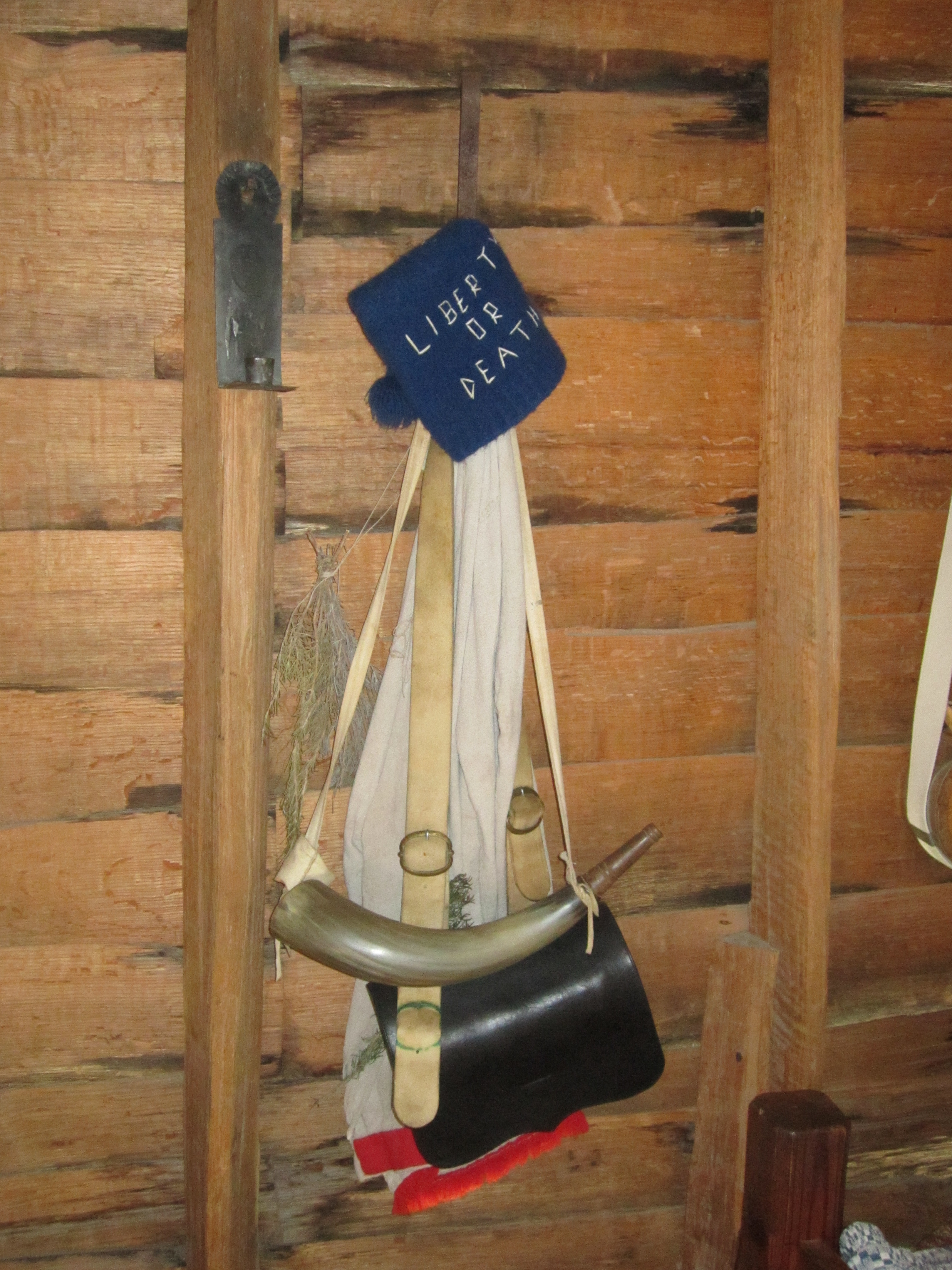
At the encampment, the soldiers drilled us on firing a cannon before shouting out, “make ready” and signaling us all to cover our ears for the blast.

This summer we’ve toured two of the three major historic sites in our area, asked all the usual questions about 17th and 18th century life, and chatted about whether we would want to live before refrigeration, air conditioning, indoor plumbing, voting rights for women, the abolition of slavery, the discovery of antibiotics, and the creation of Wal-Mart and Target.

We think not.

But we happily visit to see how people lived in other times without experiencing extreme levels of discomfort ourselves.

Sure, we might be losing ten pounds a day sweating in the middle of July while listening to the interpreters talk about cooking in clay ovens and fighting the British army.

But, we’re wearing short sleeves and shorts and we retreat to air conditioning as soon as the tour ends.

And really, aren’t we always prevented from fully experiencing life as another person?

We might glance over someone’s life, making judgments and assumptions from a safe distance, but we’ll never fully know what it feels like to be her.

It’s a lesson that trips me into pits of envy and shocks me into disappointment over and over again.

Women I’ve thought were perfect, the ones I envied, had the houses, the marriages, the kids, the finances, the vacations, the looks and style I wanted–everything just exactly right–these same women shouldered burdens I couldn’t see and carried weights I couldn’t comprehend.

I made my assumptions based on superficial evidence and my envy grew based on inaccurate and unfair comparisons between what her life appeared to be and what I knew my life was.

Yet, inevitably the façade collapses.  The truth is no one’s life is perfect.  Too often the closed doors of her pristine home concealed struggles and strife no one expected or knew existed.

If we’re ever to overcome envy, we have to stop being duped by projected images and pretend lives.

Instead, we choose contentment in our own real lives with our real husbands in our real homes with our real kids.

Because the endless comparisons cost us contentment, rob us of peace, and steal our joy.

Kay Warren writes:

Joy is the settled assurance that God is in control of all the details of my life, the quiet confidence that ultimately everything is going to be all right and the determined choice to praise God in all things (Choose Joy)

In a similar way, George Fox wrote this prayer:

Grant us, O Lord, the blessing of those whose minds are stayed on You, so that we may be kept in perfect peace: a peace which cannot be broken.  Let not our minds rest upon any creature, but only in the Creator; not upon goods, things, houses, lands, inventions of vanities, or foolish fashions, lest, our peace being broken, we become cross and brittle and given over to envy.  From all such, deliver us, O God, and grant us Your peace  (Yours is the Day, Lord; Yours is the Night, 42).

We choose peace when we discipline our mind to be content with what God has given us. 

More than this.  We don’t just accept the gifts God gives; we are grateful for them.  We find ways to give thanks even when it’s hard.

We redirect our mind whenever we focus on what we don’t have and choose instead to praise God for what He’s done and how He’s blessed us.

Proverbs tells us:

“A tranquil heart is life to the body, but jealousy is rottenness to the bones” (Proverbs 14:30 HCSB).

Envy can eat us up like cancer, destroying us from the inside out.  It’s crippling, devastating, and, if left untreated, all-consuming.

But that tranquil heart is a heart at peace, content with God’s gifts, certain that God uniquely designed you for these blessings and this life.

Yes, His gifts to us are good.

It’s a heart quietly and purposefully thankful for what is real rather than fooled into wanting imagined perfections, fictional ideals, faulty perceptions, and mistaken judgments.

Contentment requires getting real and getting grateful, recognizing that we don’t need perfection in order to have joy; we just need Jesus.

Originally published 7/19/2013

Giving Thanks Despite the Pain

psalm 9-1

It all started like this:

One can of those Pillsbury rolls, the kind where you have to pop the seal and you jump 2 feet in the air in surprise when you open them. .

Plus:

One bare foot.

Plus:

One sleepy mom on a Sunday morning.

Equals:

A can of Pillsbury cinnamon rolls slamming down onto that bare foot causing that sleepy mom a great deal of pain.

I limped around most of Sunday and finally eased my foot out of my shoe Sunday evening (after finally giving up on the pain just going away.)

My big toe was swollen and green (yes, green).

Nice.  I guess I broke my toe or something along those medical lines.

And, when you move around doing a lot of stuff (as a mom with four kids does), it turns out you kind of need your big toe not to be throbbing with excruciating pain.

Who knew?

I’ve been celebrating the tiny stages of recovery this week. Sure, my foot has changed a few colors, but it hurts less.

Yesterday I could move my toe and wear a regular pair of shoes again.

But now, since I’ve been walking funny for four days, I’ve noticed aches in my leg and other toes.

They are a reminder that something isn’t doing it’s job in my body and other parts are compensating.

This tiny bit of brokenness, this irritating ache has me aware.

I’m aware of my toe’s value, of everything I’ve taken for granted and all that it normally does for me.

I’m aware of what I actually need to do and what I can let go of for a while until I’m walking again without the limp.

And, I’m aware of tiny graces and the mercies I might otherwise overlook.

I remember the moment I realized my toe wasn’t going to simply sting for a few minutes and then feel better.

“Great,” I thought, “I have to do Children’s Church today!  Tomorrow, I start a week with a whole lot of driving and times when I’ll be working with kids and moving all around.  This is really bad timing.”

That’s true, of course.  My week would have been easier without a foot injury.

But I’ve been okay.

Sometimes we can work ourselves up into despair.  The one thing we pray won’t happen (of course) happens. We can’t ever see it getting better.  The timing is awful.  The provision is scarce.

And all that might very well be true.

Even then, though, even in the worst…or the uncomfortable, the painful, the unwanted, the heartbreaking, and the disappointing. He can transform the “worst thing” into a “God thing” with whispers of His grace, hints of His love, and reminders of His presence.

It’s like getting a thank you card just when you felt overlooked.

Or your two-year-old son not having a tantrum during that important meeting even though he missed his nap today.

It’s getting unexpected provision when you felt overwhelmed by one extra expense too many this month.

It’s God’s comfort and strength as you mourn.

It’s making it through the week with an aching toe and it all working out just fine even when you didn’t think it could.

I’ve been praying so much this year–for others, for my family–for big miracles, for visible deliverance, for undeniable healing, for rescue and provision.

But I also want to be aware of the daily blessings, the brushes with grace, the tender mercies.

I want to remember the way God sometimes doesn’t deliver me from difficult circumstances or disappointment or hurt.  But He does deliver me through. 

The Psalmist wrote:

I will give thanks to the Lord with my whole heart;
    I will recount all of your wonderful deeds.” (Psalm 9:1 ESV)

ALL His wonderful deeds–not just the grand ones.

Timothy Keller says,

“We must discern God’s ‘wonderful deeds’ in our lives, a phrase that can refer to dramatic miracles like the parting of the Red Sea. However, we must also learn to see the more subtle ways God comforts us just when we were ready to give up, or brings the right friend or book or line of thinking into our lives just when we needed it” (The Songs of Jesus).

God didn’t keep that cinnamon roll can from hitting my toe.  He didn’t miraculously heal my foot after I’d hurt it.

Those would have been wonderful.

But He’s helping me make it through, and that’s wonderful, too.

He’s changing my focus from the worst, the disappointment, the hurt and the stress to His comfort and help just when I need it.

And I give Him thanks with all my heart.

Breathing In When You’re Running out of Breath

zechariah4-6.jpg

She holds the marshmallow too close to the blue flame and it ignites.  Then she blows with one puff of her cheeks and giggles at the sight of her charred and blackened puff of sugar on a stick.

I tease her that she burns them on purpose and she confesses as much: “I like them crispy.”

We’ve huddled around the tiny Sterno burner set in the middle of our kitchen table with long forks poked through marshmallows to roast them and make S’mores, a favorite treat.

On a night when we have time, when we miraculously aren’t scarfing down dinner and rushing into the car for an evening of dance and church and the like, we enjoy roasting marshmallows over the flame.

Not living on a campground, however, we use the Sterno instead.

When we’ve each charred our marshmallow and smashed it down on the milk chocolate with the two graham crackers, I smother the flame with the lid, blocking the fire from the necessary oxygen for burning and thriving.

And it dies.

Just sputters right out, so simply, so quickly, so inevitably… suffocation through lack of breath.

How breathless I’ve been, I think as the flame fades.

The running, the pace, the schedule.

The remembering: appointments, pick-up times, forms, and camps, and stuff–lots and lots of stuff every time we load into the van to head out the door..

And I try not to forget the words I’ve stuck to my fridge:  Love is patient.

Or forget that people matter most and how to love and give to them and make them the priority.

I’m remembering that, too.

It’s beauty day in and day out, watching these children grow, loving on them, learning from them.  This is the blessing that makes me pause and whisper thanks to God.

It’s beauty to minister, beauty to serve, beauty to love others with God’s love and to give generously to them just as He has given generous heaps of mercy and grace to me.

Beauty takes sacrifice, though, it takes giving and giving and giving, and sometimes we have intense seasons of pouring out, those times when we’re on-the-go or fulfilling need.

Maybe it’s caregiving.

Maybe it’s those first weeks with a newborn.

Maybe it’s just a week of summer day camp!

In these seasons, I remember that running breathless too long suffocates, cutting off the oxygen I need to survive.

I can do it.  But I can’t do it long and I can’t do it forever.

And also this:  Fueling our flames with our own resources, running our own self-provided fuel, means we will run out eventually.

We’ll suffocate and burn out just like that flame I snuffed after we roasted marshmallows.

So we need a greater source.

The prophet Zechariah teaches me this truth.  He has a vision—-“a solid gold lampstand with a bowl at the top and seven lamps on it, with seven channels to the lamps. Also there are two olive trees by it, one on the right of the bowl and the other on its left” (Zechariah 4:1-6).

Zechariah didn’t understand at first what it all meant, and an angel has to explain:

“This is the word of the Lord to Zerubbabel: ‘Not by might nor by power, but by my Spirit,’ says the Lord Almighty (Zechariah 4:6).

The olive trees gave the oil to a bowl that poured out to the seven lamps.

So the lamps themselves weren’t the source.  They depended on something greater and purer.

So do we.  We need this Holy Spirit fuel, the fire He brings, the light that lasts.


This is the grace we need on days when we’re running tired and on weeks when we’re giving and giving and in seasons when we’re breathless.

You and I don’t have to be enough on our own.

We don’t have to keep ourselves going, keep up the pace, keep things together.

We aren’t the source and the world doesn’t depend on us or rest all heavy and cumbersome on our wimpy shoulders.

We seek the oil of His Spirit poured into us.

He is our Strength, our fuel that keeps on going and doesn’t run dry or sputter out or suffocate and die.

Not by my might (I’m so weak and helpless really).

Not by power (I tire easily and can’t keep all this together).

But by His Spirit.

Oh yes, Lord, fill us anew with Your Spirit.

Originally posted September 20, 2013

The Hope We Need When We Feel Like Giving Up

psalm 40-2

I hear my son singing his favorite song after I put him to bed for naptime.

Singing himself to sleep…isn’t that the sweetest?

But he’s not singing “Jesus Loves Me” or “Twinkle, Twinkle Little Star.”

He’s not even singing “The Ladybug Picnic” (our personal favorite) or “Head, Shoulders, Knees and Toes.”

No, at the top of his lungs, he is crooning out:

“Bob, the Quitter.  Can He pix it?  Bob, the Quitter.  Yes, he pix it!” (he’s still working on the ‘f’ sound for ‘fix.)

This is not how the song goes.

This summer, my daughters have been making up parodies of the theme songs to preschool TV shows. They’ve tackled all the big ones: Elmo, Little Einsteins, Blue’s Clues, Wonder Pets.

And now this: Bob, the Builder.

Unfortunately, my son has adopted their parody of good old construction site Bob and instead of singing “Bob, the Builder….” he now sings “Bob, the Quitter” every single time.

My daughters are now under strict orders not to sing any of their parodies within his hearing in case they ruin yet another song for him.

And, whenever my son breaks into this now-ruined tune, I try to sing it the right way, emphasizing “Builder” with great force so he’ll hear me and make the correction.

So far, this has failed.  Bob the Quitter it remains.

My boy has dug in his heels on this one, which of course makes this parody even funnier.

He refuses to quit singing a song about a “quitter” who apparently can indeed fix things despite his propensity for giving up!

It boggles the mind.

Still, while I admire my son’s tenacity and willingness to hang on tight, I’m sure at some point he’ll correct his little ditty and sing with just as much heart: “Bob, the Builder, Can he fix it?  Bob the Builder, yes he can!”

And I’ll rejoice because, not only will the lyrics finally be correct, he’ll get the whole point of the song in the first place:

Don’t quit.  Don’t give up.

Don’t get bogged down by the problem; keep your eyes fixed on the goal and the finish and the completed work.

After all, that’s what we all need at times, the reminder to just keep going.

When we’re broken and overwhelmed, weary and ready to give up, maybe we can’t tackle everything before us.

But this next thing, this next calling, this next task, that we can do with God’s help.

One more step. One more day.

One more prayer even when you haven’t seen results.

One more act of obedience to God even if it feels overlooked or unappreciated.

One more choice to be faithful despite the unfaithfulness of others or to act with integrity even when others fail.

God knows what it is we truly need in the moments when we want to quit, what we need to hang on one tiny step at a time.

When Paul was imprisoned in Jerusalem and the forces against him seemed overwhelming, look what God did for him:

The following night the Lord stood by him and said, “Take courage, for as you have testified to the facts about me in Jerusalem, so you must testify also in Rome” (Acts 23:11 ESV). 

“Take courage.”

That’s what the Lord told Paul.

Why?  Because it wasn’t over yet.  There was more to come.  Paul didn’t need to worry because God promised there was more to this story.

God didn’t tell Paul everything, but he did show the next step was Rome.

And, this is what I pray when I feel like throwing up my hands to concede defeat,

“God, help me remember there is more to this story. Give me courage.  Help me hold on until you finish this work.”

Even more than that, I remember the Psalmist who said:

I waited patiently for the Lord;
    he inclined to me and heard my cry.
He drew me up from the pit of destruction,
    out of the miry bog,
and set my feet upon a rock,
    making my steps secure.
He put a new song in my mouth,
    a song of praise to our God.
Many will see and fear,
    and put their trust in the Lord (Psalm 40:1-3).

I ask God for the “new song” only He can give.

Then I set my heart on that future, for the day when the pit will be behind me and I’ll be standing on the steadiness of a rock.  My feet won’t be shaky.  The ground beneath me will be strong.

And I’ll sing a “new song…of praise to our God.”

For all of us who feel like laying down and giving up, may we ask God today for a new vision, a new song, and the hope we need to just keep going each new day.


Praying about trucks and Zimbabwe

1peter1

“Trucks.  Something, something, something…..  Amen.”

My two-year-old son has been joining in with family prayer time at night.

He squeezes his eyes shut as a prerequisite to his prayer and then launches into it with gusto.

He always prays about trucks.  Always.

The rest of the prayer may alter each night, longer or shorter as he feels inspired.

But he always begins with “trucks” and ends with “amen.”

Then my son picks which person in the family prays next, calling out our names one at a time and then squeezing his eyes shut again as we take our turn.

He’s exercising these first baby steps of faith, these first moments of giving God his heart and sharing with his heavenly Father what’s on his mind (which is apparently trucks every single day).

Sure, it’s as cute as can be and every night as he finishes praying, my daughters announce, “how adorable.”

But it’s also challenging to me.

Because sometimes in the wearying discouragement that batters my heart after my own unanswered prayers, I don’t always feel like praying anymore.

There are honest moments when it feels like, “what’s the point?” and “does this make any difference?”

And there are times when I feel the bitter sting of anger because if God is going to do whatever He chooses anyway, why have I fasted and why have I planted myself face down on the floor and why I have petitioned Him in the very darkest moments in the middle of the night?

Yet, here is my son.

He doesn’t understand the mystery of why we do this, gather in the living room each night and take turns shutting our eyes, talking for a few seconds and stop with “Amen.”

For now, he mimics what we do without meaning or understanding, but he will grow over time.  He will hopefully learn and slowly the prayers will become true petitions to a God he personally chooses to worship and to know.


My youngest daughter takes her turn in the family prayer time.  She tells God everything, all that is in her heart and all that she hopes for those around her.

We’ve been spending time this summer doing a family devotional and prayer activity through Focus on the Family that has us praying for a different country every night.

So she asks God to help leaders in Zimbabwe and families in Australia and the poor in Ethiopia.  She keeps it simple and direct, but she believes, truly believes, that her prayer offered up before bedtime touches God’s heart and makes a difference for people she cannot meet, see, or know.

What faith.

What astonishing, incredible faith.

And it comes from my two-year-old who just wants God to know that he loves trucks.

And from my six-year-old who isn’t afraid to “go big” and ask God to change the world.

I’ve had a six-month stretch of prayerful intensity, of spiritual battles and deep intercession for those in crisis.

I’ve been disappointed with some of God’s answers, for the places He’s chosen not to heal and the miracles He’s chosen not to give, and the conclusions to some of these trials.

But I take heart as I watch my children pray because faith grows. It’s not static or stuck.  It begins small perhaps or maybe it shrinks down in difficult seasons.

Even small faith has impact, though.

Even small faith is a seed that grows.

Jesus told His followers:

“If you had faith like a grain of mustard seed, you could say to this mulberry tree, ‘Be uprooted and planted in the sea,’ and it would obey you.” Luke 17:6 ESV

At first, I feel overwhelmed.  I haven’t been effectively telling trees to go jump into the ocean lately, so what does that say about my faith?

What’s wrong with me?

But in her book, The Gospel of Mark, Lisa Harper reminds us that:

tiny faith can bring about giant results…when our faith wanes and seems as small as a mustard seed, we still don’t have to live like chickens.

In seasons where our faith is sickly and weakened by battle fatigue, we can just keep coming to Him and bringing our tiny seed of faith.

Keep coming to Him with brokenness and disappointment.

Keep coming to Him on days we feel filled with mighty mountain-moving faith and the days when we battle doubts and our prayers seem to bounce off the proverbial ceiling.

We just keep coming.


Only when we persevere and keep coming will our faith-seed grow again, shooting up signs of life, sprouting up with renewed strength, blooming and bearing fruit.


Right After the Parade

Psalm 147-6

My oldest girl was in first grade when she saw the parade for the first time.

It was the biggest news she shared with me on the last day of school, like it was the best thing she’d ever seen–better than the circus, better than her favorite movie.

There’s a tradition at our elementary school and she witnessed it for the first time that year.  On the last day, the fifth graders take their “final lap” around the school.

They play celebratory music on the school intercom system, and all the younger classes line the hallways as spectators.

Then the younger grades cheer as the fifth graders go by, and they high-five the new elementary graduates.

Every year since then, my daughter has stood in that hallway and celebrated the fifth graders with the best of them.  She knew one day, it’d be her time for the fifth grade parade.

This year was her year.

Parents don’t get to witness the “final lap” for the fifth graders.  After all, the hallways are packed already with cheering students and the parading graduates.

But, even though I didn’t see my daughter enjoy this moment, I tear up every time I think of it.

I saw parents all over the gym dabbing away tears during the promotion ceremony.  I didn’t cry then, but thinking about the parade makes me all emotional.

This is what my girl had been waiting for all these years.

I love how after all their hard work, these fifth graders say goodbye to the school that invested so much in them all this time.

And I love how the younger students come home inspired.  One day, they think, they’ll be the ones in the hallway parade.  They’ll hear the applause.  They’ll reach out for high-fives.  They’ll be honored for their success.

Before the fifth grade class enjoyed their final lap of victory, though, they sat in the gym wearing their nicest clothes and they listened to the principal’s final words of wisdom.

She said, “Be humble.

Work hard.  Accomplish a lot.

But always humbly take the time to cheer for others around you.”

She said exactly what’s in my heart, the very message I want my daughter to hear, and I dare to hope that these fifth grade grads tuck those words away and remember them.

Just in those moments when we feel like we know the most or we’ve accomplished the most or we’ve reached the top, that’s the best time to remember the beauty and the power of humility.

Maybe it’s age that impresses this on me.  After all, the older I get, the more I know that I don’t know.

In fact, I wish I knew at 14 all the things I didn’t really know.

Or maybe it’s motherhood.  Maybe the moments I mess up make me tender about failure, make me compassionate, make me realize that we’re all in this together and none of us is perfect and cheering each other on is the best thing we can do for our fellow moms.

Scripture tells that God:

saves the humble (Psalm 18:27)
leads the humble (Psalm 25:9)
teaches the humble (Psalm 25:9)
lifts up the humble (Psalm 147:6)
and gives grace to the humble (1 Peter 5:5).

No doubt about it, God’s heart is for the humble.

He wants us listening and teachable.  He wants us others-focused and self-sacrificing.

In The Blessing of Humility, Jerry Bridges writes:

“The apostle Paul wrote his first letter to the Corinthians about AD 54. In it he referred to himself as the “least of the apostles” (1 Corinthians 15:9). In AD 62, in his letter to the Ephesians , he considered himself as the “very least of all the saints” (that is—all believers—Ephesians 3:8). In about AD 63-64, in his first letter to Timothy, he referred to himself as the foremost of sinners (1 Timothy 1:5)—Paul was growing in humility

Paul could have been proud of all he’d accomplished for God.  Year after year, he had more spiritual markers to add to his apostolic resume and more reason to boast.

So, he could have been growing in pride all those years.

Instead, he grew in humility.

The more he knew, the more he knew what he didn’t know.

The more he did, the more he remembered what Christ had done for him.

This is the heart I long for and this is the heart I desire for my children.  Even in the moments of their greatest accomplishments, when they’ve marched in the parade and listened to the cheers, may they cultivate a humble heart, which:

…listens instead of always demanding to speak.

….allows for differences and recognizes that “my way” doesn’t always mean “the only way.”

…accepts correction without defensiveness.

…receives counsel.

…cheers for others

…says, “I’m sorry” when they’ve messed up.

May we grow in humility like this.

The One Thing I Need to do as a Mom

lamentations2-19

I prayed for this.

This girl of mine brought home stories from kindergarten about this friend and that friend and her BFFFL (Best Friend Forever For Life) and what top-secret info they had shared with her on the playground.

She learned words I didn’t want her to know.  She learned attitudes.  She learned meanness.  She learned insults.   She learned that when you spell S-E-X you should whisper.  She learned far more than a five-year-old needed to know.

I visited her classroom and passed out snacks for a class party, listening into the conversation at her little table….

The kids interrogated me about why I wouldn’t let my daughter watch certain shows on TV.  I felt like I was in a courtroom and this group of kindergarteners were trying to break me down under cross-examination.

By her second grade year, I finally spilled it out as a prayer request in my small group.  My girl was fiercely loyal to friends who were tripping up her heart, and she just followed along after them like a blind sheep following another blind sheep off a cliff.

Dear Jesus, please help my girl choose good friends who are kind and who will spur her on to excellence, who will help her make good choices and encourage her to be her best, and who won’t lead her away from you.

Now I watch her playing with her friends, and I gush out gratitude because God so graciously answered my prayers for my girl.

She has gathered around her the nicest group of quirky, funny, playful, kind, encouraging, creative, sweet, and thoughtful girls, and each one of them is a reminder that God hears our prayers for our children.

He had built that shelter around her heart when she most needed it.

And I am thankful.

Sometimes it’s wearying, to keep praying when we don’t see the answer and to persevere on our knees when we don’t see results.  Praying isn’t an insta-fix or a quick solution.

And some days I’m overwhelmed with my failings and failures as a mom.

I get caught up in what I didn’t do.  I beat myself up over what I forgot.  I stress over what fell by the wayside.  I feel like it’s never enough and I should have done more.  I said the wrong thing.  I stepped in when I should have let my child handle it….or I didn’t step in when they needed me to handle it.  I regret a decision and I wish I could take back what I said.

But what I need to know—-what moms need to know—-is this:

What matters most as a mom is time on our knees for our children.

We don’t have to get wrapped up in programs, extras, Pinterest-activities, decorations, household management strategies, and developmental milestones.

We don’t have to compare ourselves to any other mom or our kids to any other kids.

We care for their needs.  We love them.  We encourage their hearts, and sometimes we also stress and fret ourselves into a blubbering mess over our kids.

Yet, we can trust God to care for our children. He knows them and He loves them even more than we do.

So, the best we can do for them is give them to Him.

I read the Psalms of David often, and pray through them, but I notice this one emptiness in his prayer life…..I don’t see him pray for his kids.

Mary prayed for Jesus.

Zechariah prayed for John the Baptist.

Abraham blessed Isaac.

Jacob prayed over his sons and his grandsons.

But David?

In Facing Your Giants, Max Lucado writes:

Aside from the prayer he offered for Bathsheba’s baby, Scripture gives no indication that he ever prayed for his family. He prayed about the Philistines, interceded for his warriors.  He offered prayers for Jonathan, his friend, and for Saul, his archrival.  But as far as his family was concerned, it’s as if they never existed.”

David gave his kids a kingdom.  He gave them power and financial success.

Maybe he should have given them the gift of a praying parent.

This is the gift I hope to give my children:

Arise, cry out in the night, as the watches of the night begin; pour out your heart like water in the presence of the Lord. Lift up your hands to him for the lives of your children, who faint from hunger at every street corner (Lamentations 2:19 NIV)

Originally published April 22, 2015

What We Need is a Way Through the Impossible


isaiah 43

My son wrestles with two large toy trucks on our way into the orthodontist.  He’s determined to carry them both inside himself.

One falls to the ground.  He stoops to pick it up and as he grabs hold of the digging arm on the one truck, the other crashes down next to it.

But oh, Mommy cannot help carry these trucks.  I offer.  Really I do.  I even finally grip onto that yellow bulldozer as a sign that he didn’t need to handle both trucks at once.

Instead of letting go, my son silently holds on tighter and lifts that heavy machine out of my grasp.

These trucks are his treasures.  He is not letting go.

Finally, after several crashes to the pavement, the trucks arrive in the dental office where they make paths through blocks, scale the sides of chairs and roll across railings.

At home later, they do what big trucks should do.  They push tiny objects off the living room table and onto the floor.  They blaze trails through toys and flatten ground.

As an infant, my son learned the names of these vehicles as some of his earliest vocabulary:  “Truck.  Car.  Digger.”  Now, he speaks with infinite more expertise:  “Bulldozer, Dump Truck, Excavator, Crane, Cement Mixer, Delivery Van.”

If it’s big and makes noise, he loves it and knows what it’s called.

I don’t know what it is about these trucks that hold this little man’s attention so, but I know why suddenly, after a lifetime of not caring much about them, I find myself newly impressed.

They make ways.

They flatten obstacles.

They clear paths.

And maybe that appeals to me because I need some “ways” right about now.

I need some impossibilities cleared, some unlikely provisions, delivered, and some mountains moved.

Maybe you do, too?

We can look at circumstances: at bank accounts and how the numbers don’t add up, at agendas and jam-packed calendars, at job expectations and the number of hours in a day.

We can see that and think ,”There’s just no way.”

No way for hope.  No way for rescue.  No way for there to be enough.  No way for the good and the beautiful to come out of this rotten mess.

But here’s the good news: We serve a God who makes ways.

He parts waters so his people can walk straight across a sea  on dry ground.

He leads the nation through the wilderness and all its enemies.

He strikes down evil kings and raises up righteous ones, He rescues His people from annihilation over and over again.

The prophet Isaiah reminded his people that the Lord

... is the one who made a road through the sea
    and a path through rough waters.
17 He is the one who defeated the chariots and horses
    and the mighty armies.
They fell together and will never rise again.
    They were destroyed as a flame is put out.
18 The Lord says, “Forget what happened before,
    and do not think about the past.
19 Look at the new thing I am going to do.
    It is already happening. Don’t you see it?
I will make a road in the desert
    and rivers in the dry land. (Isaiah 43:16-19 NCV).

No way out of the mess you’re in?

No problem.  Not for our way-making God, the One who makes paths through the desert and springs up rivers from the dust.

Today, I read once again about the biggest impossibility of all.

Romans 3:20 tells us:

no one can be made right with God by following the law. The law only shows us our sin.

There’s the obstacle of our sin, that huge mounding imperfection blocking us from right-standing with God.

We can’t be good enough. Not ever.

So, what’s a sin-prone girl like me to do?  Try anyway?  Steep myself in rules, have-to’s, must-do’s, traditions, and legalism?

Or maybe give up?  Throw in the towel?  Just do whatever I want because I can’t ever attain that perfection?

Yet, Paul says in the very next verse:

21 But God has a way to make people right with him without the law, and he has now shown us that way which the law and the prophets told us about. 22 God makes people right with himself through their faith in Jesus Christ (Romans 3:21-22 NCV).

God has a way.

He bulldozes over the problem of sin.  He plows through the strictures of the law and he lifts into place the weighty foundation of grace in the form of a cross.

And if He can do that, if He can make this astoundingly miraculous path to forgiveness and grace even when I didn’t deserve such rescue, I know I can trust Him in my every impossibility, my every hopeless situation, my every closed door, my every mountain of a problem.

He can make a way.


When I Don’t Get My Way

isaiah 30.jpg.PNG

My one girl gets grumpy.

I arrive to pick her up at the end of an activity and I find her huddled on the floor, back turned to the crowd, face hidden on her knees.  Or maybe she’s hiding under a table or in the back of a bathroom stall.

She’s not screaming or crying, but she’s definitely pouting.

With arms crossed, with feet stomping, with loud harumphs for emphasis at the end of her sentences, she tells me the crisis: Others disagreed, someone else wanted the same thing, another person got to go first, that person got something better.

But this is the bottom line: She didn’t get her way.

And now, she’s grumpy.

I understand.  I can be grumpy when I don’t get my way, too, wanting to sit out and let everybody know that I disagree with the decision and I’m sure not happy about it.

Another of my girls argues her case when she doesn’t get her way.  She argues….and argues….and argues her point until you’re knocked over by the powerful wave of her emotions and opinions.

And I understand this.  When I don’t get my way, I want to form protest marches and fight, fight, fight, too!  Instantly I think of who I can rally to “my side” and how I can convince others that my way is the right way, the best way, the only way.

Maybe if I just give the best speech, argue the best (or loudest, or longest, or most convincingly), use the best evidence and form the largest coalition I’ll win the day after all.

And my youngest girl simply cries over disappointment, not a temperamental tantrum on the scale of the hurricane tantrums we’ve seen in this family.  More like the desperately sad wail of a child who realizes the world doesn’t revolve around her…doesn’t always do what she wants or turn out the way she expects.

That’s a lesson that always stings and I’ve mourned myself with frustrated hurt that the world doesn’t bend to my whim or orbit around my convenience or comfort.

I don’t always get my way.

And, selfish creature that I am, I sometimes react all ugly.

But while faith allows us to stand up for what is right and to speak truth in love, it demands something else.

Faith means trusting God even when things don’t go our way, when plans don’t work out, when others make decisions we disagree with, when life isn’t perfect or even when life is hard and obstacles loom large and hope doesn’t come easy.

Believing in God’s providential care isn’t faith until we’re blinded by circumstances and still choose to trust.

Hebrews 11:1 tells us this:

Now faith is the assurance of things hoped for, the conviction of things not seen.

Faith: That’s when we can’t see the end, can’t see how God could possibly work this out for our blessing and benefit, can’t imagine what God could possibly do to make this better much less make this the best.

But we trust Him anyway.

Faith means resting in the knowledge of God’s power over everything we face, even when our senses and circumstances tell us that people are in control, not God.

It seems like others have control of over us, a committee, a judge, a boss, a leader…but faith declares that it’s God, always God, only God who directs our lives.

God is my Good Shepherd, trustworthy, wise, caring, knowing, powerful.  I read the familiar promises:

God, my Shepherd!  I don’t need a thing.
You have bedded me down in lush meadows,
you find me quiet pools to drink from.
True to your word,
you let me catch my breath
and send me in the right direction.
Even when the way goes through Death Valley,
I’m not afraid
when you walk by my side (Psalm 23 MSG).

Yes, God my Shepherd leads me to places of rest and sustenance, providing what I need, sending me in the right direction, walking by my side even in the shadowy depths of the valley.

And my response can be fighting or pouting…but all my grumpiness, my protesting, my tears reveal where I’m not trusting God’s ability to control the tiniest detail of my life.

Isaiah tells me,

In repentance and rest is your salvation
in quietness and trust is your strength…  (Isaiah 30:15)

Enough of the ugly reactions, the crisis, the conflict.  Better to seek my God—-what now, Lord?  What is your will here in this place?  What will you have me do and how would You have me respond?

My salvation is in repentance and rest.

My strength is in quietness and trust.

I choose Faith.

Originally posted August 16, 2013

The Place You Don’t Want to Be

deuteronomy 31-8

One little dog was shaking, just trembling all over while her owner held her tight.

Another larger dog tugged and tugged on his leash back towards the exit. When the veterinary assistant came to walk the fella to the back, he shuffled backwards trying to escape.

Our own cat was settled in his carrier where he had tucked himself into a ball in the farthest back corner.

Every time I glanced inside the cat carrier, he darted his eyes around nervously and then mewed at me.

I think he was saying, “I don’t want to be here.”

Welcome to the crowd, buddy.  Nobody wanted to be there that day.

Of course, our vet’s office staff is wonderfully friendly and everyone there is gentle and considerate.  They patiently waited with animals and carried little trembling puppies back cooing at them all the way, “It’s all right, little guy.  This will be over in no time.”

And, of course, the vet is where these animals all needed to be that day.  It was for their own good and their own benefit.

Still, none of them came bounding into the waiting room all excited to hang out with the doctor.

The staff called my cat’s name and I toted him into the clinic and set him on the exam table.   The vet checked him all over and the whole time, my cat kept trying to climb back into the safety of the carrier.  He was persistent.  I’ve never seen him want to get in there before, but right at that moment, it’s the one place he wanted to be.

He wanted to feel safe.  He wanted the known.

I felt like saying, “I hear ya, buddy.”

Maybe we all know exactly what it’s like to be where we don’t want to be.

We can philosophize and speak truth to ourselves, knowing that God only sends us where He goes with us.

And He only takes us places that are for our own good.

That’s true, of course, but it’s nonetheless bewildering to end up where you don’t want to be and never intended to go.

When the apostle Paul boarded a ship headed for Rome in Acts 27, he knew the sailing would be difficult.

The timing was bad.  The crew had delayed too long.  The winds were against them.  The port was unfavorable for a winter stay, but continuing on their journey could be disastrous.

Paul tried to tell them not to sail ahead, but they didn’t listen to him.

So, where’d the ship end up?

Not in Rome. Not right away at least.

Instead, just as Paul predicted, they ended up shipwrecked on the island of Malta with the total loss of their vessel and cargo.

This wasn’t Paul’s destination or plan. He knew God wanted him in Rome.  He planned to head to Rome.

But here he was in Malta instead.

We’ve likely been to Malta before also.

Not the physical place, of course, but in Find Your Brave, author Holly Wagner describes Malta as the place you didn’t plan on being and that wasn’t on your map or itinerary or agenda.

It’s still being single long after you thought you’d be married or mourning a miscarriage after the joy of a positive pregnancy test.

It’s unexpected unemployment or a failed business or a rejection letter.

It’s a prodigal child or a broken marriage or a job you just hate instead of the one you wanted.

It’s cancer.

It’s that place of waiting, still waiting, always waiting even though you thought the promise would be fulfilled long ago.

For Paul, Malta was the place where people ended up because they didn’t listen to wise advice and made poor decisions.

Even there, though, when it was their own fault, God was at work, allowing Paul to perform miracles and be a witness to the natives and the ship’s crew.

God redeemed the disaster and restored the journey.

And ultimately, Paul still ended up in Rome, but his time in Malta wasn’t a waste.

That’s the key for me: When I find myself in Malta, I can engage right there.  I don’t need to fret about getting to Rome.  God can take me where He wants me to go in His perfect timing.

For now, I can be fully present in Malta.

Wherever God has brought you, you can be all there.

God is never surprised by our location or unable to use our circumstances.

Even if we don’t know how we got here, God knows.
Even if we don’t want to be here, God can use it.
Even if we don’t know how to get out of here, God does.

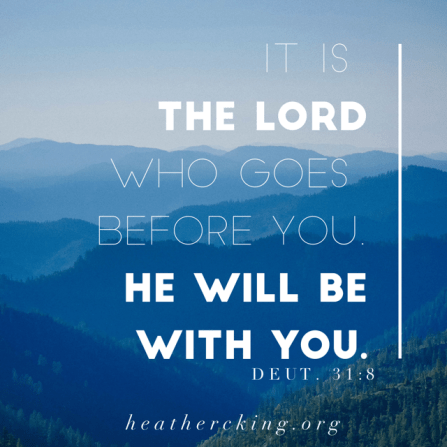
And even if we feel abandoned in this place, God is always with us and always at work.