Weekend Walk, 08/11/2012: Devotions From My Garden: Beautiful Attraction

We enjoyed a special visit with grandparents this week and they brought with them gifts, as is the way of grandparents.  One of our surprise presents were two tiny plants that they grew from seeds.

They are butterfly plants.  I looked them up online and saw into our future.  They bloom with brightly colored purple, pink and blue flowers.

And they attract butterflies.

This, of course, is the most exciting kind of plant we can grow in our garden that blooms right outside my daughters’ bedroom window.

Pink, purple and blue . . . and a butterfly magnet?

That has “King girls” written all over it.

I’ll be transplanting these tiny green plants into the garden this weekend and then we’ll watch and wait for the day that the first butterfly visits our flowers.

Of course, these aren’t the only kinds of plants that have a peculiar attractive quality.  Some flowers catch the eye of hummingbirds and the shoots of dill and parsley in our garden are the diet-of-choice for the Easter black swallowtail.

In the same way, we as Christians are to have an attractive quality about us that draws people to stop a while, turn aside, glance our way and choose to linger in our presence and know our Savior.

But if we’ve let our life plants wither and die, grow scrawny and unattractive, or deprive them of the necessary nutrients for our fruit of the spirit to bloom, then we’ll fail to attract others to Jesus.  Even worse, we might repel them.

So, this week, I’m meditating on a verse that reminds me to be a sweet scent of Christ in the world, a reminder to others who meet me and know me of God’s love:

“By this all people will know that you are my disciples, if you have love for one another” (John 13:35 ESV).

More Devotions From My Garden:

Heather King is a wife, mom, Bible Study teacher, writer for www.myfrienddebbie.com and worship leader.  Most importantly, she is a Christ follower with a desire to help others apply the Bible to everyday life with all its mess, noise, and busyness.  To read more devotionals by Heather King, click here.

Copyright © 2012 Heather King

Once in a Lifetime

“The soul is nurtured by beauty.  What food is to the body . . . pleasing images are to the soul” (Thomas Moore, Care of the Soul)

I grew up not far outside of Washington, DC.  At the time, a $5 Metro fare and a 20 minute train ride opened up a world of free museums and monuments.

I could easily Metro in just to see one exhibit at the Folger Shakespeare Library or spend a day slowly walking the halls of the National Gallery of Art or meandering through the presidential portraits in the National Portrait Gallery.

We could day-trip in for the Cherry Blossom Festival exactly when the cherry trees around the Jefferson Memorial were in full bloom.

And I did all those things.

Everything was simply so accessible, so convenient, so inexpensive, and perfect for someone like me who finds these experiences to be spiritual and a refreshing deep breath for my soul.

Our Creator God designed beauty and placed in human hearts the longing to create beauty ourselves.  So, I worship God amidst art and architecture.

Yes, I had access to a spiritual retreat with little effort or cost and I didn’t even know it.

Then in middle school, we watched an episode of one of our favorite shows, Saved By the Bell.  The show’s heartthrob, Zack, desperately wanted to win a contest with a fabulous grand prize— a week-long trip to Washington, DC.

This was unimpressive to me.

Who chooses a grand prize that is just 20 minutes away from my house?  Why not Disney World?  Hawaii?  London?

Of course, we don’t often appreciate what we have, not until it’s gone anyway.

Now, I live just far enough away for a trip to DC to be inconvenient and easily deterred by a busy life and tired children.  A week-long trip to the city would be fabulous!

When we live close to something, when it’s easy, when it’s inexpensive and effortless, it’s easy to overlook it’s value, becoming complacent and unappreciative.

That’s true about time in God’s presence, too.

For us, being with God is as simple as a one-sentence prayer while driving or singing praise songs while washing dishes.  When I’m worried, I pray about 100 times a day over one particular problem.

But it used to be far more complicated and rare than that.  In Luke 1, a priest named Zechariah was chosen by lottery to burn incense in the temple.

He won the grand prize.

Priests were the only ones who could perform this job, the only ones allowed beyond the outer area into the holy places before God Most High.

Even Zechariah, who God declares was “righteous in the sight of God, observing all the Lord’s commands and decrees blamelessly” (Luke 1:6) would only burn incense before the Lord once in his entire life.

One chance to be in God’s Holy presence.
One opportunity to stand before Almighty.
One moment of intimate communion with Him.

Beth Moore writes:

“The responsibility of the priest on duty was to offer a corporate prayer.  Furthermore, the priest’s intercession for the nation undoubtedly included a petition for the Messiah, Israel’s promised Deliverer and King” (Jesus, the One and Only, p. 4)

Zechariah prayed for the nation, prayed for a Messiah, and maybe, just maybe took his one and only chance before God and prayed for his own family’s brokenness.

He and his wife Elizabeth were childless and “very old” (Luke 1:7).  Their dreams for a family seemed hopeless now.

But an angel appeared in that private moment between God and this aging priest.  The angel said, “Do not be afraid, Zechariah; your prayer has been heard.” (Luke 7:12).

Which prayer?  The one for the nation?  For the Messiah?  For himself?

Yes to all of them.

He and Elizabeth became parents to John the Baptist, the forerunner of the Messiah, the hope of the nation.

One powerful moment in the Lord’s presence brought Zechariah the answer to all he had sought for so long.

If we only had one brief opportunity to be in God’s presence, how would we act and what would we do?  How would we worship and what would we request?

David knew exactly what he desired:

One thing I ask from the Lord,
this only do I seek:
that I may dwell in the house of the Lord
all the days of my life,
to gaze on the beauty of the Lord
and to seek him in his temple (Psalm 27:4).

God’s presence was his “one thing,” the deep longing in his heart.

Praise God that because of Jesus we aren’t limited to one single moment in God’s presence!

We have access to the throne of grace at all times and anywhere we go.  We have the Holy Spirit dwelling in us, communing, comforting, counseling, teaching, convicting and bringing peace.

But let’s not let easy access breed complacency.  Let’s treat our times with God as precious as they really are, remembering that it is only because of Christ that we can come before God at all.  Let’s thank Him for the that.

Heather King is a wife, mom, Bible Study teacher, writer for www.myfrienddebbie.com and worship leader.  Most importantly, she is a Christ follower with a desire to help others apply the Bible to everyday life with all its mess, noise, and busyness.  To read more devotionals by Heather King, click here.

Copyright © 2012 Heather King

Abracadabra: The Magical Mom Trick

He made rabbits appear out of nowhere.  He seemed to read minds.  He pulled colorful bouncy balls out from behind children’s ears.

The magician at our local library amazed my kids, particularly my middle daughter who checked out four books on magic that day and altered her future career plans.

“I want to be a magician who tells jokes,” she declared.

Today, I am feeling a little like a magician without the recognition and the jokes.  No fabulously mysterious cape, no collapsible magic wand hiding a bouquet of flowers, no long flowing sleeves to stash cards and colorful scarves, and no top hat from which bunnies appear.  My Mom-attire is much less impressive.

And yet, every year at about this time, I perform a seemingly magical feat that defies all explanation, a trick that doesn’t necessarily astonish audiences, but probably should.

I set the family calendar for the new school year.

Astonished? Amazed? Flabbergasted? Speechless?

Maybe you should be.

Or maybe you’ve been waving your own Mom magic wand over the calendar and performing your own special trick for years.  You deserve a round of applause, too.

Even those of you without kids or with grown children can easily find your calendar as overstuffed as ours.

Of course, there are things outside of my control, like the school schedule and when ballet classes are offered.  So, I wait for official announcements and postings, hoping God performs the necessary miracle to make it all fit just right.

Then I sit down and scan the mess.

There are non-negotiable activities that instantly earn a place on the weekly agenda.

There are the things I believe God has asked me to do this year, which I choose to obey.

There are requests from my kids like, “Please will you pick us up from school each day so we don’t have to take a 45-minute bus ride to our home, which is only 7 minutes from the school.”

There are the “Oh please, mommy . . . .” activities like gymnastics, soccer, swimming lessons, 4H, Girl Scouts, fencing (yes, fencing), art and sewing classes.  This we carefully narrow down, allowing each child one activity at a time.

Then there are the 50 other possibilities that are wonderful and good: The Bible studies, prayer meetings, committees, volunteering, and classes I’d do.

When we think we’ve made it all fit, unexpected birthday parties and get-togethers, after school activities, and events squeeze into the corners of Saturdays and evenings.

Of course, it’s all good.  And maybe, just maybe, if I don’t let my kids take swim lessons every time they are offered my daughter won’t make it to the 2024 Olympics.  That would obviously be the world’s loss.

But today, as I was reading in 1 Corinthians, I was reminded of the one thing that sometimes gets nudged out of our lives by the incessant activity we magically jam, cram, and squeeze into our calendars until they burst.

Paul wrote:

“If I speak in the tongues of men and of angels, but have not love, I am a noisy gong or a clanging cymbal. And if I have prophetic powers, and understand all mysteries and all knowledge, and if I have all faith, so as to remove mountains, but have not love, I am nothing.  If I give away all I have, and if I deliver up my body to be burned, but have not love, I gain nothing” (1 Corinthians 13:1-3 ESV).

Even if we invest our time in everything good and noble, we might be mis-managing our calendars.

Ultimately, speaking God’s language, knowing God’s Word, giving away to the poor, and sacrificing our very lives are all worthy, but even they are utterly meaningless if we don’t do them in love.

So then, what about committee meetings and weekly groups and gymnastics lessons?

Yes, meaningless without love.

Thus, I’ve been praying this year about leaving room for God’s love in our family calendar.

We’ll do what is necessary, what God has asked us to do, and we’ll love our children by allowing them to (within reason) develop gifts and talents God has given them.

And then I’ll refuse to feel guilty for declining to do every other good thing that comes my way.

I want to leave some breathing room for taking meals to the sick and for hospital visits.   Nights off as a family so I can enjoy my kids’ character, not just their hobbies.  Time in my day for last-minute ministry opportunities and helping a friend.

I want the freedom to love others without it destroying a to-do list or rigid schedule.  I don’t want official “ministry” to prevent me from ministering to those in need.

After all, in the end, Paul tells us that “the greatest of these is love” (1 Cor. 13:13). Love doesn’t require magic, but it does require time.

How do you manage your busy calendar and decide what to do and what not to do?

Heather King is a wife, mom, Bible Study teacher, writer for www.myfrienddebbie.com and worship leader.  Most importantly, she is a Christ follower with a desire to help others apply the Bible to everyday life with all its mess, noise, and busyness.  To read more devotionals by Heather King, click here.

Weekend Rerun: Packing Up The Tiara

Originally posted on August 5, 2011

There I sat, cuddling my oldest daughter as she sobbed disappointed tears into her pillow.  Sitting in the minivan that night as we drove home, she had suddenly realized that God wasn’t going to make her a fairy tale princess when she grows up.

Her little life dream had been dashed.

After her sad announcement, my husband tried to shout back persuasive logic to her from the front seat, explaining that princesses don’t really live such great lives.  They can’t choose where to go, what to eat, how to dress, or even who to marry.

Somehow the lack of freedom was overshadowed by Disney ballgowns, glass slippers and tiaras.  And so after the pajamas were on, the teeth brushed, the prayers prayed, there we sat in her bed and she cried and we talked about feeling disappointed.

How life doesn’t always turn out the way we expect.
How sometimes we can’t have what we really want.
How movies and fairy tales rarely represent the reality of life.
How it’s hard to trust God when He tells us, “no,” but that we need to leave our future in His hands.
How our job is to work hard to develop the gifts He’s given and His job is to direct and guide our service.

No matter how you chat and philosophize sometimes, though, disappointment hurts.  For a while, we can hope that despite all odds, God is going to miraculously give us what our hearts desire.

But it doesn’t always happen that way and that’s the truth.

Sometimes God says, “no.”  He may do it so gently and with grace, and it’s not because He hates us or wants to see us sob ugly tears on our pillows.

In most cases, He does it for the same reason I tell my child “no” she can’t wear her favorite skirt that is now too short for her, “no” she can’t have cookies and milk at 5:30 p.m. as I’m dishing up dinner on the table, “no” she can’t watch that movie even if her friends have all seen it, “no” she can’t have a cellphone and laptop for first grade.  “No” is for people we love enough to protect.

Then there are other cases where the “no” is so He can be glorified and our faith refined.  In Beth Moore’s study, Daniel, she notes that there are always three scenarios:

  • God delivers us from the fire.
  • God delivers us through the fire.
  • God delivers us by the fire into His arms.

For the three men who refused to bow down to the towering image of King Nebuchadnezzar, there was no question of whether God could keep them out of the furnace that was blazing in front of them.  They declared:

If we are thrown into the blazing furnace, the God we serve is able to deliver us from it, and he will deliver us from Your Majesty’s hand.  But even if he does not, we want you to know, Your Majesty, that we will not serve your gods or worship the image of gold you have set up.

They had to go through the fire, but Christ showed up in all His magnificent glory and walked them right on out of there.  God said, “no, I won’t deliver you from the fire, but I’ll take you through.”

For others of you, God has said, “no” and it’s not clear why.  Maybe we’ll never know the reason this side of eternity.  You can’t see how this is protection.  You can’t see how He is being glorified.  Maybe it’s disappointing, this waiting for the healing or rescue that doesn’t ever seem to come.

Have you ever wondered how Stephen did it, the first martyr in the church, the first one to take stand up for Christ to the death?  Were he and his friends disappointed that God didn’t rescue him from the riotous Sanhedrin?  Were they waiting for the earth to open up and swallow the mob now raising their stones in murderous rage?

How disappointed and confused did they feel as God didn’t deliver Stephen from or through the onslaught of rocks, but instead delivered him home to heaven?  There was no last-minute rescue or miraculous intervention.

Acts 7:6-7 says:

At that point they went wild, a rioting mob of catcalls and whistles and invective. But Stephen, full of the Holy Spirit, hardly noticed—he only had eyes for God, whom he saw in all his glory with Jesus standing at his side. He said, “Oh! I see heaven wide open and the Son of Man standing at God’s side!” (MSG).

Stephen “hardly noticed” the deafening noise of those about to kill him because “he only had eyes for God.”

Whatever disappointments we face, a fairy tale dream that never came true, a furnace God asks us to walk through, a definitive “no” instead of miraculous intervention, we are victorious by “fixing our eyes on Jesus, the pioneer and perfecter of faith” (Hebrews 12:2).  Just like Stephen.  Just like Jesus Himself looked to His Father as He suffered painfully on the cross for our sake.

We’re not looking at the enemy, the storm or the overwhelming circumstances.  We’re not looking at the hoped-for miracle or the anticipated rescue.  We’re looking at Jesus “standing at God’s side,” knowing that even when God chooses not to give us what we want or hope for, He never leaves nor forsakes us (Hebrews 13:5).

Heather King is a wife, mom, Bible Study teacher, writer for www.myfrienddebbie.com and worship leader.  Most importantly, she is a Christ follower with a desire to help others apply the Bible to everyday life with all its mess, noise, and busyness.  To read more devotionals by Heather King, click here.

Copyright © 2012 Heather King

Don’t Leave Me

She doesn’t want to be left behind.

My older daughters and I have rehearsals almost every night now for their upcoming big performance in a community theater show.

My youngest little one, though, could stay at home with Daddy, playing games, watching her favorite cartoons, reading books, and being tickled.  She could even snuggle into bed on time, a definite plus in my book.

She, however, is ever-watchful of signs that her sisters and I would leave without her.  Because I’m slightly neurotic, I start slowly packing bags and laying out clothes hours before we need to leave.

She sees me put their shoes by the door and shouts, “I wanna come wif you” and frantically hunts for her own sandals.

I assure her that our departure is still hours away.  But then she sees me pack the bag for the night and declares again, “I wanna come wif you!”  Then she clambers into my arms, snuggles down into my chest and whimpers, “Don’t leave me, Mommy.”

No way am I shutting the door on her now.  She’s absolutely coming with us.

We have a way, don’t we, of pleading with God just like that?  “Don’t leave me.  Don’t abandon me here.  Don’t forsake me.”

We needn’t worry.  He is, after all, Emmanuel, God With Us.  His desire for relationship with us motivated His journey to a Bethlehem stable and His trek to the cross.  Our God will never leave us nor forsake us (Hebrews 13:5).

Instead, we are the ones who leave.  We wander, we run away, we linger too long after He’s called us to move on.

We’re the one wayward sheep leaving the fold or the prodigal sprinting from home with a wad full of blessing.

Yet, not only does God neither leave us nor forsake us, Scripture tells us that Our Shepherd will “leave the ninety-nine on the hills and go to look for the one that wandered off” (Matthew 18:12).

So for those of you who are lost and afraid, far from the Shepherd, alone and missing the companionship of your flock, know that God is actively searching for you and will carry you home on His shoulders.

For the prodigals who eventually landed in a life of pig-slop and shame, know that your Heavenly Father is running toward you with joy when you choose to return.

Maybe you’re like me, though, who shamefacedly admits that parables of lost sheep and prodigals are sometimes more mysterious than comforting.

I’ve always pictured the 99 obedient sheep left behind so the Shepherd can traipse across the countryside hunting down the one disobedient sheep and I’ve thought, “that’s not fair.”  After all, He will “leave the ninety-nine on the hills” so He can look for the lost sheep.  Now we’re the ones left behind, missing out on the Shepherd’s affection and guidance.

And I’m more the grumpy brother than the prodigal, frustrated that while I’ve been responsibly laboring in the fields my brother’s been squandering on pleasure and extravagance.  That’s just not fair.

And I’m right. It’s not “fair,” of course, but that’s the beautiful thing about it.  The Gospel isn’t meant to be fair in the sense that we get what we deserve.

For all of us, prodigals and older brothers, runaway sheep and obedient followers, our story is that God heaped grace on us that we could never merit or earn.

In her book, God Loves Broken People: And Those Who Pretend They’re Not, Sheila Walsh reminds us that our God is an ever-present, omniscient shepherd, not one with earthly limitations on time and space.  While He’s passionately pursuing the runaway, He’s also actively caring for the 99 who still need his guidance and protection.

That’s our God, the Shepherd who cares attentively for all of us.

And maybe Tim Keller is right when he says that the story of the prodigal son isn’t really targeted at “‘wayward sinners’ but religious people who do everything the Bible requires.”

It’s the reminder that even when we don’t feel like we’ve run away, we can still be steeped in bad attitudes, misplaced motivations, judgment, and religious pride.  We’re so convinced of our own “merit,” we’ve forgotten how extravagant God’s grace is for us—and how others have need of such grace.

After all, if we truly remembered that, we’d be helping to hang the streamers for the prodigal’s Welcome Home party.  And we’d be overjoyed to see the wayward sheep carried home again.  That’s because at some point, God has pursued, carried and rejoiced over all of us.

That’s His passion and heart—to be with all of us without fail or interruption.  If that’s our God’s heart, it should be what pushes blood through our veins, as well: the desire that every seeker is found, every wanderer recovered, and every child brought home.

Caedmon’s Call sang these lyrics in Long Line of Leavers.  They are on my mind today.

I come from a long line of leavers
Out of the garden gate with an apple in their hands
I expect and I believe
You’re gonna run out of love
You’re gonna give me the shove
‘Cause that’s the thing that lovers do
Then there’s you

You’re the only one
Who knows my secrets
You’re the only one
Still you’re the only one
Who never leaves
And I wake up to this mystery

Heather King is a wife, mom, Bible Study teacher, writer for www.myfrienddebbie.com and worship leader.  Most importantly, she is a Christ follower with a desire to help others apply the Bible to everyday life with all its mess, noise, and busyness.  To read more devotionals by Heather King, click here.

Copyright © 2012 Heather King

The Meaning of Life

My oldest daughter wants to be a ballet-dancing scientist and teacher (not a science teacher, mind you, a scientist and a teacher who also does ballet on the weekends).

My middle daughter wants to be a magician who also tells jokes (thanks to the program we saw at our public library this summer by a very funny magician-entertainer).

I can’t even count how many possible careers I once considered to be the definitive answer to, “What do you want to be when you grow up?”  Pastor, college professor, librarian, pianist, lawyer, editor, teacher.  Any and all of them were on the list at some point.

Most of them probably still are on the list if I’m being truthful.

The thing about life is that so often we’re looking for that one overarching purpose.  What were we made for?  What did God put us on the earth to do?

And if our answer is at all ordinary or seemingly unsubstantial, it seems like not enough.  Our hunt for that one grand design continues.

We ravage books on anything that will help us find the neon sign of God’s will for our lives.

To me, though, the ultimate end of such books is sometimes disillusionment.  Inevitably, the author discovers through miraculous circumstances that he’s meant to be a missionary to Africa or she is meant to lead an international ministry to the “least of these.”

Meanwhile, you may be reading this blog in between diaper changes and laundry cycles.  Or maybe you’re munching away on your lunch at your desk with papers to file on the left and accounts to enter on the right.

So, what does this mean exactly?  Does God only have a purpose for some of us and the rest are just fodder for the world economy or babysitters for the next generation?  Are we “ordinary folks” the rejects God decided He couldn’t use for any truly meaningful life purpose?

Or does God have some top-secret design for our lives and we just haven’t performed the correct magical ritual to unlock it–the five simple steps to discovering our purpose?

Of course, there’s a very real way to miss out on God’s plans for you.   If we aren’t willing to obey what He says, we will not be in His will.

Yet, there are those of us who have prayed heartfelt confessions of submission so many times and we’re still searching for the plan.

Honestly, as a teenager I was baffled at how some prophets responded to God’s call. God said, “Go” and so many of them (Moses, Jeremiah, Gideon, Barak) answered, “I’m too young.  I can’t.  Send someone else.”

Now, if God said to me, “Go,” I was sure I’d be the “Here am I, send me” kind of girl.  I’d be like an audience member picked to be on The Price is Right, screaming my head off all the way to the stage in wild excitement.

But there are times when it feels like our names just aren’t being called.  Others take the stage and are commissioned.  We clap for them and listen even harder for our turn.

Have you been there?

Perhaps, though, we need to stop searching for one sole purpose like there’s only one point to our life.  The truth is, God has a plan for you and that plan involves here and now and not just tomorrow.

Colossians 1:16b tells us, “all things were created through him and for him” (ESV)

Chris Tiegreen writes:

“If you have ever struggled to find meaning in your life, consider this amazing truth: You were created for Jesus.  You weren’t created incidentally as a by-product of the rest of creation.  You were specifically designed for Him.  You are a bride, handpicked for the Bridegroom; or an adopted son, chosen specifically by His Father” (Worship the King, p. 104).

God created us for Him.  More specifically, Scripture says:  “Everyone who is called by My Name, whom I have created for my glory; I have formed him, yes, I have made him” (Isaiah 43:7)

Why are you here?  What’s your grand purpose?  What’s God’s plan for your life?

To give Him glory.

Today that might mean dishes, diaper changes and laundry—with a cheerful heart, fully invested in the physical, emotional, and spiritual well-being of the children God has specifically placed in your care.

Today it might mean praying for a coworker in the next cubicle over.  It might mean quitting one job and starting on another.  It might mean mentoring a younger woman or meeting with your neighbor for coffee.

God doesn’t just have a plan for your life: He has a plan for your every day.  Don’t become so focused on the grand design that you miss the beautiful, God-ordained moments of ministry He brings across your path today and tomorrow and the next day.

Heather King is a wife, mom, Bible Study teacher, writer for www.myfrienddebbie.com and worship leader.  Most importantly, she is a Christ follower with a desire to help others apply the Bible to everyday life with all its mess, noise, and busyness.  To read more devotionals by Heather King, click here.

I Don’t Know

I remember the day when I walked among the stacks of books for the first time.

It wasn’t my first time in a library, of course.  I was “a regular” at our local public library.  As a teen, I had logged volunteer hours shelving the books in the children’s department and had become a mini-expert.  I knew exactly how much space we needed for our Berenstain Bears collection and for the rows of Dr. Seuss.

Eventually, I graduated to having my own back room in the library where seasonal books were kept in storage to be rotated out through the year.  It was my own personal responsibility to put away Christmas and pull out the books for New Year’s Day.

Yes, by the time I graduated from high school, the library was a comfortable place that I could navigate with ease.  I had long since exhausted the classics aisle, toting books home every time I clocked out of a volunteering session.

Then there was the day I strolled into the Undergraduate Library at the University of Maryland (UM) for the first time.  (Yes, Undergraduate Library, as opposed to the Graduate Library, the Art Library, the Music Library and others.)

Everything about UM was overwhelming.  There were as many students on the college roll as there are people in the county where I now live.  The buildings shot up floors upon floors and I had to ride a shuttle bus to the center of campus and still hike 15 minutes to my first class of the day.

I had a panic attack the first time I ate lunch in the dining hall during the noon rush.

Considering how large everything was, I should have been prepared for the size of the library.  I wasn’t.  I walked in and sucked in my breath.

I had one thought. Just one.

“I don’t know anything.”

(For those parents of teens who believe they know everything, let me encourage you.  A trip to a university library might be in order.)

You just can’t stand there surrounded by multiple floors of huge volumes and endless aisles of more books than you thought any author ever published and then books about those books, and books about the books about the books and think, “I know everything.”

Instead, you have the concrete physical proof that of all there is to know in the world, you actually know very little.

Sometimes life has its way of humbling you in the same way.  You may think you have a good grasp on God’s character and an intimate knowledge of His Word.  You may think you’re savvy to the ways of the world and an expert on life.

Yet, at some point you have to admit, “I don’t know.”

I don’t know why this happened this way.  I don’t know what God is doing.  I don’t know what the next step is or what’s in the future.  I don’t know how to help her or guide him.  I don’t know how to be the best wife, mom, sister, daughter, friend.

Maybe that’s when we’re closest to getting it right anyway.  Admitting that we don’t know allows us to trust God for the answers.  Humbly confessing our limited understanding frees us from slavery to independence so we can freely depend on our all-knowing God.

As Job sat among his friends listening to them debate philosophical questions of righteousness and God and sin and punishment, he must have realized the limits of human understanding.  It was simply inexplicable why God allowed his kids to die, his property destroyed, and his own body ravaged by painful disease.

And that was a better answer to the crisis than giving speeches from a makeshift podium and sounding like you had God all figured out and jammed into a manageable box.

At least that’s what God said. When He spoke, He pelted Job with questions:

“Where were you when I laid the foundation of the earth?”
“Who determined its measurements?”
“Who set the limits of the sea?”
“Have you decided when morning should begin and told the sun when to rise?”
“Have you seen the bottom of the ocean?”
“Do you know where light and dark begin and end?”  (Job 38).

What can we say other than, “I don’t know?”

That doesn’t mean we don’t study God and pray to know His ways.  We delve deep in His Word and ask Him for wisdom and understanding.
But at the end of each day, we keep it all in perspective.  No matter how much we know, we don’t really know.  We cannot begin to understand as God understands.
Ultimately, the one truth we need is:
“Know that the Lord, he is God!  It is he who made us, and we are his; we are his people, and the sheep of his pasture (Psalm 100:3 ESV).
We don’t know; but we know God does.  That is enough.

Heather King is a wife, mom, Bible Study teacher, writer for www.myfrienddebbie.com and worship leader.  Most importantly, she is a Christ follower with a desire to help others apply the Bible to everyday life with all its mess, noise, and busyness.  To read more devotionals by Heather King, click here.

Weekend Rerun: Becoming a Zucchini Farmer

Last year, I had an abundance of zucchini in our garden.  This year, I’m overwhelmed by jalapeno peppers!   Here’s a weekend rerun devotional all about what to do with abundance.

Weekend Rerun:

Becoming a Zucchini Farmer
Originally posted on July 7, 2011

I’ve found my calling, my true gift and talent—growing zucchini.  So, I’m contemplating a new life as a zucchini farmer.

When we planned this mini-garden of ours, my daughters announced that they must grow and eat their own food.

Not knowing how well we could produce food we actually eat like tomatoes and cucumbers, I planted two spindly little zucchini sprouts in the garden.

I’d seen many fellow church-goers hand out this cucumber-wannabe to worshipers leaving the sanctuary.  “Would you like some?  Please, take it home!  We’re drowning in the stuff.”  So, I thought this must be one sure-fire vegetable to grow in our garden in case our other plants didn’t do well.

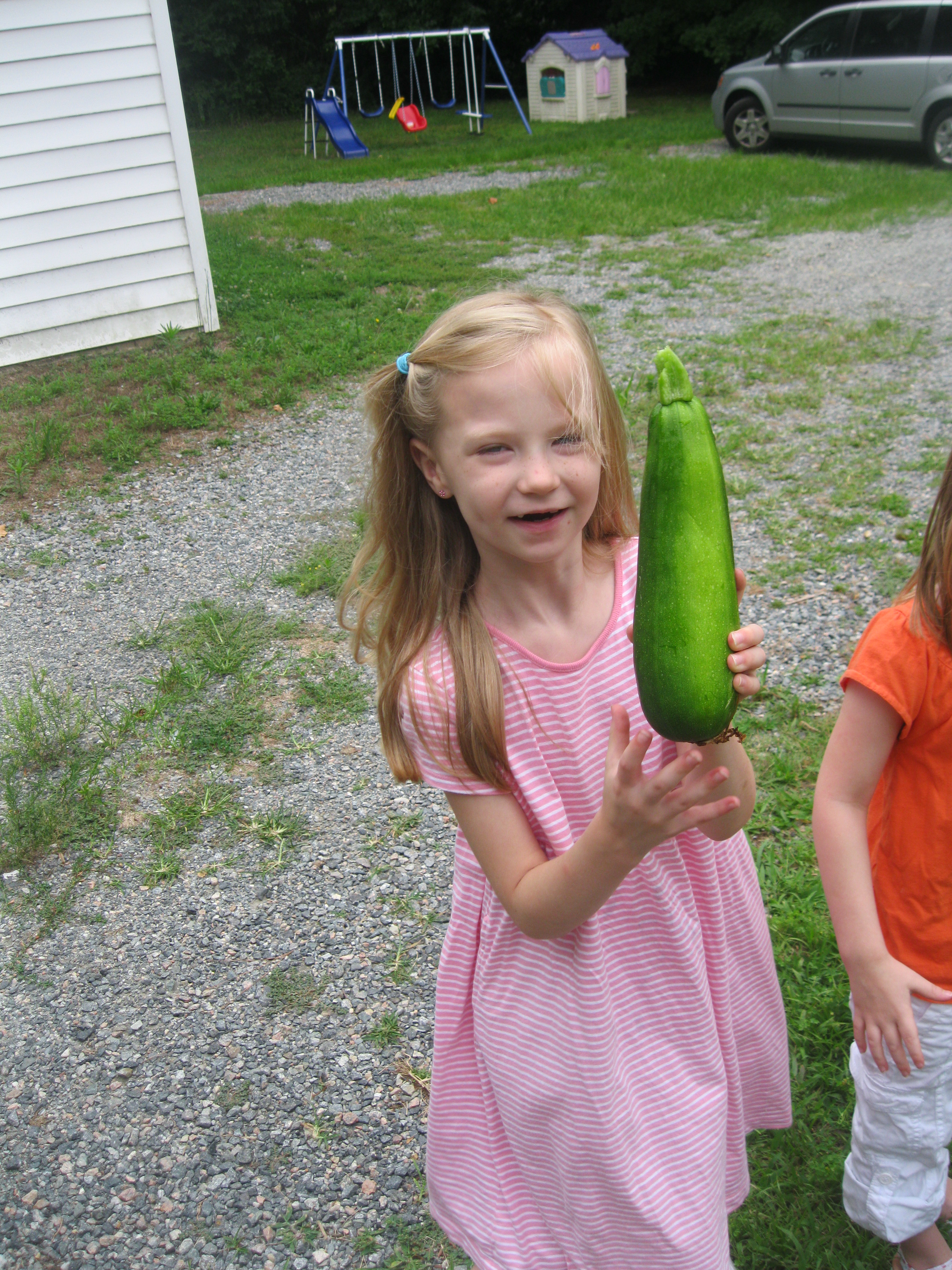
I didn’t expect that much success, just a guaranteed one or two veggies that my daughters could pose with in pictures and be proud about growing.

Then this one plant grew to monumental proportions and began producing mammoth zucchini.  I frantically began asking everyone I met, “How do you actually eat this stuff?”  Because we didn’t eat it, not often anyway.  I had no recipes for zucchini and whenever anyone said, “zucchini bread,” I stared at this zucchini the size of my daughter’s torso and wondered how that gets mixed up in a way appropriate for the bread pan.

This zucchini overload has me asking one question—what’s the point? What’s the point of having abundance if you don’t use it?  Sitting in my refrigerator or on my counter looking green and huge, this zucchini is pointless.  It is designed and intended for nourishment. Unused, it will rot and go to waste.

My question extends out to issues of faith.  What’s the point of spiritual gifts buried deep and hidden away?  God gives them to us, perhaps we even cultivate and harvest them. Then we let them sit unused.  Or perhaps we grow mystery vegetables in our garden, never actually identifying them.  Yes, we have gifts, but not knowing what they are, we simply pick the fruit, place it on the counter and toss into the garbage the rotten results over time.

While building the tabernacle, Moses instructed the Israelites: “Come, all of you who are skilled craftsmen, having special talents, and construct what God has commanded us” (Exodus 35:10 TLB).  That remains God’s desire—we apply our talents to God’s service, to the building of His ministry, His dwelling place, and His body.

Then there is also knowledge and discipleship.  What’s the point of study without application and life change?

There’s danger in notes and study and knowledge if our focus is on learning and not on our Savior.  Danger that knowledge itself will actually become our god.  Danger that we’ll fill our heads full of fascinating facts and never once experience life-change in the down and dirty areas of our heart and life.

What we study must become what we do.

Paul wrote to the Colossians, a church that had fallen into the danger zone, pursuing knowledge and learning to the exclusion of God:

See to it that no one takes you captive through hollow and deceptive philosophy, which depends on human tradition and the elemental spiritual forces of this world rather than on Christ (Colossians 2:8).

They had become so excited about gaining knowledge, they had failed to filter what they were “learning.”  Not every book you read that quotes Scripture is actually scriptural.  It takes discernment rooted in God’s Word to determine the difference.

In his letter to Timothy, Paul declared that people had devoted

“themselves to myths and endless genealogies.  Such things promote controversial speculations rather than advancing God’s work—which is by faith. The goal of this command is love, which comes from a pure heart and a good conscience and a sincere faith. Some have departed from these and have turned to meaningless talk. They want to be teachers of the law, but they do not know what they are talking about or what they so confidently affirm  (1 Timothy 1:3-7).

So, what’s the point?  When we’ve written down the original Greek of a word in Scripture and we’ve taken notes on our favorite preacher’s sermon, when we’ve copied whole devotionals into our journal and highlighted our book . . . then what?

We grow.  We know God rather than just know ABOUT God.  That’s the point.  Paul prayed for the Colossians that God would “fill you with the knowledge of His will through all the wisdom and understanding that the Spirit gives” (Colossians 1:9).

If we’re reading without changing, listening without growing, learning without transformation, then it’s pointless abundance–a garden full of unusable fruit gone to waste as it rots on the vine.

Heather King is a wife, mom, Bible Study teacher, writer for www.myfrienddebbie.com and worship leader.  Most importantly, she is a Christ follower with a desire to help others apply the Bible to everyday life with all its mess, noise, and busyness.  To read more devotionals by Heather King, click here.

Copyright © 2012 Heather King

Rigging Candy Land

Trust God from the bottom of your heart;
   don’t try to figure out everything on your own.
Listen for God’s voice in everything you do, everywhere you go;
   he’s the one who will keep you on track.
Don’t assume that you know it all
(Proverbs 3:5-6 MSG).

When my kids were younger, I used to rig the Candy Land cards.

Not so they could win, you understand, because I don’t believe in just letting a child win at games.

I simply hated the cruelty of the setback.  The thing about Candy Land is that you could be two rainbow-colored squares away from the magic candy castle and then draw the card for the Gingerbread Man.

At first, this seems harmless enough.  Who doesn’t want the Gingerbread Man?  Then you realize that it’s just evil fate and lessons in the futility of life sugar-coated and handed to your three-year-old child.

That’s because the Gingerbread Man is all the way back at the beginning of the game.

So, you have to watch this sweetly innocent toddler who was an inch away from cheering in victory move her red Candy Land piece all the way back to a position of certain defeat.

Sometimes life seems just as sadly confusing with unexpected twists and turns and a few disappointments and setbacks.

Yet, surely these are lessons best learned when you’re a little older and wiser?

My solution was simple.  As I shuffled the cards before setting up the game, I made sure the dreaded Gingerbread Man and the peppermint stick guy and sometimes even the gumdrop were in the front of the stack.

Thus, anyone who drew one of those cards would never have to fall back more than a few squares.

Sometimes I wish God would rig the cards every once in a while so life never involved steps backwards or feeling stuck in place (on something less soothingly delicious as a licorice stick).

While He’s at it, wouldn’t it be nice if He gave the game board a big yank and straightened the path?  No more zigzags across the board.  Geometry tells us the shortest distance between two points is a straight line.  How about a straight line, God?

Yes, it’s true, sometimes the directions God takes us and the interruptions, setbacks, and seemingly pointless diversions we experience just don’t make sense.

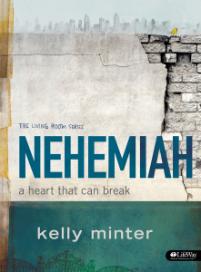
In her book Nehemiah: A Heart that Can Break, Kelly Minter shared: “…I have a friend who regularly says to me, ‘Lean not Gal!’  As in, ‘Lean not on your own understanding, but all your ways acknowledge Him, ‘Gal!'” (p. 97).

I love this.  I certainly have the tendency to lean on my own understanding and raise a ruckus of discontentment when God leads me in unexpected directions.

Jonah also needed someone to tell him, “Lean not, Guy!” when he, a highly successful, well-respected prophet of encouragement to God’s holy people got God’s disturbing message: Go preach repentance to an enemy nation that has persecuted and killed your neighbors and family friends.

The disciples similarly needed a “lean not” reminder when Jesus told them they were going up to Jerusalem where He would be persecuted, imprisoned and crucified.

In the same way, Paul challenged his friends and followers to “lean not” when he traveled to Jerusalem, despite being warned that he would be placed in chains and taken captive there (Acts 21).

Jonah, the famous runaway, tried to avoid the path that didn’t make sense.

What if he had succeeded? Nineveh would have missed out on experiencing what “many historians cite …as the greatest revival in human history” (Priscilla Shirer, Jonah, p. 114).

In fact:

When Jonah chose to walk in obedience to the word of the Lord, the result was a harvest of amazing fruit he’d probably never seen coming.  Not just one community in the city or even a handful of the city’s important people believed in God.  Every citizen of Nineveh, from the greatest to the least, immediately believed.  Conviction was so complete that even the animals were made to participate in the government-mandated fast.  ‘Even the great Apostle Paul never experienced anything comparable to what Jonah saw.  Paul never saw an entire city turn to God'” (Shirer, p. 118-119).

Yes, and without Jesus’ journey to the cross, we would not have the resurrection or a plan for salvation.

And if Paul chose the easier road away from Jerusalem, he would never have preached about Christ in Rome—even to Caesar himself (Acts 28).

It’s frightening not to know exactly where we’re going.  It’s terrifying not to know what will happen when we get there.

It’s disappointing when God asks you:
to step aside
to stop
to walk away
to turn around
to go back
to take a break
to cease activity
and to put aside our own plans and visions and understanding of how this crazy life should work out and make sense.

Yet, even when we spend some time standing still or making the disheartening trip apparently backwards, we can trust that God has a plan—a better plan (yes, even better than the magical candy castle!) and maybe a surprising plan (to us, not to Him)—as long as we obey.

Heather King is a wife, mom, Bible Study teacher, writer for www.myfrienddebbie.com and worship leader.  Most importantly, she is a Christ follower with a desire to help others apply the Bible to everyday life with all its mess, noise, and busyness.  To read more devotionals by Heather King, click here.

Dumbo Always Makes Me Cry

Dumbo gets me ever time.  It’s the one Disney movie I remember bawling at as a kid. I haven’t gotten over it either, not after all these years.

Once one of my girls found a storybook at the library about Dumbo.  She checked it out and then climbed up in my lap at home so I could read it to her. At first it was easy.  Baby elephant with big ears . . . Blah blah blah . . .

Everyone makes fun of him, mocking and taunting (sniffle, sniffle).

The mommy tries to defend him and they lock her up.  Dumbo gets dragged away from her, their trunks locked in embrace until the last possible second . . .

Someone please pass the tissues!  I just can’t do this story without tears.

In fact, it’s hard for me to do this story at all.  I sent the book back to the library ahead of time and I can’t bring myself to watch the movie.  My response is always so intense.

Sure it’s a cartoon elephant who ultimately flies and makes friends, but it’s still a child hurt by the cruelty of others and taken away from his mama!

In Scripture, we see people reacting even more intensely than how I snatch at tissues at the slightest Dumbo provocation.  Not because of a fictional scenario, though.

They are hearing God’s Word.

Eighteen-year-old Josiah, for example, was king of Judah when a member of his court went to the temple to perform some administrative tasks.  There he met the High Priest, who announced that he “happened” to have found the Book of the Law.

So, the royal secretary read it and then read it aloud to King Josiah:

“When the king heard what was written in the book, God’s Revelation, he ripped his robes in dismay. And then he called for Hilkiah the priest, Ahikam son of Shaphan, Acbor son of Micaiah, Shaphan the royal secretary, and Asaiah the king’s personal aide. He ordered them all: “Go and pray to God for me and for this people—for all Judah! Find out what we must do in response to what is written in this book that has just been found!” (2 Kings 22:11-13 MSG).

Josiah knew that God’s Word requires a response.

In the same way, when the exiles returned to Jerusalem and stood inside the rebuilt walls of the city, Ezra the High Priest read the Book of the Law of Moses to everyone.  Men and women and kids old enough to understood stood from morning until lunch time listening to him read Scripture aloud.

Just God’s Word.  And nothing else.  For hours and hours.

They didn’t yawn, tune it out, roll their eyes, poke their neighbor, or skip attending so they could do chores or kick back with the latest release of ancient Middle-eastern epic poetry.

Instead, “Ezra blessed the Lord, the great God, and all the people answered, ‘Amen, Amen,’ lifting up their hands. And they bowed their heads and worshiped the Lord with their faces to the ground” (Nehemiah 8:5-6).

At first, the people were filled with remorse and driven to repent.  Yet, Nehemiah (their governor) and the Levites (their priests) encouraged them to celebrate instead: “And all the people went their way to eat and drink and to send portions and to make great rejoicing, because they had understood the words that were declared to them” (Nehemiah 8:12 ESV).

Their response to Scripture was emotional and intense.

There was true repentance and grief over how their sins had broken the heart of God.

There was a hunger for more and the willingness to stay as long as it took to hear what God had to say.

There was passionate worship with shouts of “Amen” and bowing low to the ground in awe of Mighty God.

There was joy and celebration because “they had understood the words that were declared to them.”

 How do you respond to God’s Word?

If we pick it up and read it with unemotional disinterest or with a bored and distracted mind we are missing it!

We are missing out on all the power of Scripture to revolutionize our hearts and minds, driving us to repentance, inciting us to intensely passionate worship and filling us with the kind of joy that makes us want to tell everyone what we’ve learned.

Scripture can’t be a mandatory item on our to-do list or an occasional emotional pick-me-up we drag off the shelves and dust off anytime life gets hard.

It’s got to be life and breath and food and drink to us because it holds God’s very own words, so active and relevant in our lives!  As you read, pray and ask God, “How do you want me to respond to this?”

Maybe you’ll need some of my tissues or maybe you’ll dance, but either way you’ll be giving God’s Word the response it deserves.

Heather King is a wife, mom, Bible Study teacher, writer for www.myfrienddebbie.com and worship leader.  Most importantly, she is a Christ follower with a desire to help others apply the Bible to everyday life with all its mess, noise, and busyness.  To read more devotionals by Heather King, click here.

Copyright © 2012 Heather King