Weekend Walk: 12/31/2011

Hiding the Word:

What to pray?  What to say?  It’s the final day of 2011 and somehow that heightens the importance of the verse we choose to meditate on this week.  It’s like setting the tone for the new year and there are so many powerful verses to choose from!

I just finished reading Billy Graham’s book, Nearing Home: Life, Faith and Finishing Well (click here for my book review).  It reminded me of the days when I worked in an estate planning law firm.  Most of our clients were seniors coming in to plan for their future.

We had clients like the lady who owned a bakery and always brought in trays of goodies when she visited our office.

We had clients like the wealthy grumpus of a couple who cut their son out of their will because he married someone they didn’t like.

I remember thinking then that I needed to choose what I would be like as I aged.  Did I want to be sweet and giving?  Did I want to be cranky and unforgiving?

If I left the end-result to chance, who knows how I’d turn out!  Yet, if I prayerfully asked God to form my character and guide my steps, I had hope for my future.

Isn’t that a little like a new year?  Instead of asking God for all the things we want Him to do for us in 2012 or all the things we want to get from Him, what if we instead invited Him to work on our hearts and transform us?

So, my verse for this week is a prayer to start the year:

Let the words of my mouth and the meditation of my heart
         Be acceptable in Your sight,
         O LORD, my strength and my Redeemer
(Psalm 19:14).

What are you praying that God will do in your heart and life in the new year?

Weekend Rerun:

They Will See God
Originally published 03/25/2011

Look to the LORD and his strength; seek his face always.
Psalm 105:4, NIV

A few weeks ago, I waited in the line of moms and dads who were picking up their children from our church nursery.  I could see inside the room where my daughter was playing, but she couldn’t yet see me.  As the parents before me went into the room, my baby started craning her neck to see if she could find me in the crowd.  She looked up as each new adult entered the room and kept searching every face to see if it was mine.

Then she saw me.  I watched her face change from searching . . . searching . . . searching . . . to pure joy at finding Mom!!   She beamed.  She ran to me.  She practically knocked me over with her embrace.

Really, there are few moments as a mom more precious than seeing a little person so excited just to see your face.  To know that you are so very loved by someone sweet and innocent, even though you aren’t perfect or even the best.

That moment with my daughter made me think of how I should passionately and intently seek after God, for intimacy with Him and time in His presence, and for opportunities to give Him heartfelt adoration and praise and to show I love Him.  After all, He is perfect and the best!

I want to see God.  I want to do whatever it takes to have a closer relationship with Him.  Just like David, I can say, “My heart says of you, ‘Seek his face!’  Your face, LORD, I will seek” (Psalm 27:8, NIV).

Sometimes all it takes to see God is persistently pursuing His presence.  Jeremiah 29:13 says, “You will seek me and find me when you seek me with all your heart” (NIV).  Also in Psalm 27,  David said, “I remain confident of this: I will see the goodness of the Lord in the land of the living.  Wait for the Lord; be strong and take heart and wait for the Lord” (Psalm 27:13-14, NIV).

My daughter kept searching the crowd of parents in the church nursery and ultimately she did see me.  I came at the appointed time.  She was not abandoned and left alone.  All that she had to do was wait and not give up.

Don’t stop searching for God’s face in the midst of your busy life, your family stresses, your ministry concerns, your health crisis, your financial struggles, your job disappointments, your heart-wrenching fears.  Keep seeking with all Your heart.  You will see God.

But, actively seek.  Sometimes we wonder why we aren’t seeing God’s presence in our lives, but we are relegating Him to 10 minutes of our day as we skim through a devotional.  Or we think that listening to a sermon and some Christian radio counts as connecting with God.  Be willing to give God your time sacrificially.  Invite Him into every part of your day and immerse yourself in His Word so that you know Him more fully.

There are other times, though, that finding God takes more than just pursuing His presence.  Matthew 5:8 tells us, “Blessed are the pure in heart, for they will see God” (NIV).  Seeking God also means pursuing purity.

Earlier this week, I took a day off from writing.  It was partly out of necessity because the day was so hectic with appointments, work, family and ministry.  But, it was also because I needed a time out.  Someone did something in total innocence that frustrated me.  It wounded my ridiculous pride and I reacted with some pouting and whining and, yes, I admit–a private little tantrum.

It was sin and I knew it.  I needed some time to get right with God.

As much as I could, I spent the afternoon in God’s Word, letting Him sift my heart, reveal the sin and deal with it.   I seem to have these pitfalls, these consistent sins that trip me up, hindering and entangling me (Hebrews 12:1).  Do you have some of those—-lessons that you need to learn over and over and over and you wonder if you’ll ever get it right?

Unfortunately, these sins separate me from God and obscure His face.

Fortunately—or more accurately— amazingly, God extends abundant mercy and compassion when we confess our sins to Him and ask Him to make us clean. We are promised that “if we confess our sins, he is faithful and just and will forgive us our sins and purify us from all unrighteousness” (1 John 1:9, NIV).

That day, I prayed through Psalm 51, which was David’s Psalm of repentance.  He had committed adultery with Bathsheba and then had her husband killed to hide the sin after she became pregnant.  Adultery.  Murder.  It seems like a lot for God to forgive, and yet God’s grace is big enough for any sin we lay at His feet.  Like David, I prayed, “Create in me a pure heart, O God, and renew a steadfast spirit within me” (Psalm 51:10, NIV). I want a steadfast spirit, not my roller coaster reactions when I feel hurt or wronged.

Paul wrote, “Since we have these promises, dear friends, let us purify ourselves from everything that contaminates body and spirit, perfecting holiness out of reverence for God” (2 Corinthians 7:1, NIV).   Purity of heart isn’t something we stumble on accidentally.  It’s not a spiritual gift that God gives to some people and not to others.  Instead, it means confessing sin and also actively pursuing purity and “perfecting holiness.”  It means asking Him to dig deep in my heart to root out the ugly sins that have such a deep hold on me, even when it hurts, even though it embarrasses me to face up to what’s really lurking in my soul.

It’s worth it– Seeing God’s face and knowing that–not only am I lighting up at finding Him in the crowd, but that He’s grinning at the sight of me washed clean and anticipating His presence.  I want a pure heart so that I can see God.  I don’t want to miss out on His presence, His peace, or His activity in my life.

Are you willing to do whatever it takes to see God?  Right now, that might just be holding on to hope with all your might.  Pursue His presence and keep waiting with expectation for God to show up in all His glory.  Do not give up.   Or, it might mean getting on your knees and asking Him to cleanse your heart and forgive you.  Then, with a pure heart, you will see God.

*******************************************************************************************************

Heather King is a wife, mom, Bible Study teacher, writer for www.myfrienddebbie.com and worship leader.  Most importantly, she is a Christ follower with a desire to help others apply the Bible to everyday life with all its mess, noise, and busyness.  To read more devotionals by Heather King, click here.

Copyright © 2011 Heather King
Living In-Between, Part II

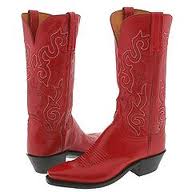
He had these red boots.

A missionary speaker at our church years ago told the story of being a boy growing up in Africa.  In the pile of shoes donated to the kids in his village, there was a pair of fabulous red boots and he loved them. They fit perfectly.  He felt like a super star when he wore them and he wore them everywhere.

Over time, he had to push a little harder to get his heel down in the boots.  His toes began to pinch a little and then curl to squeeze into the shoe.  Instead of choosing to go out and play with his brothers, he’d decline, knowing that walking and running would hurt his feet.  But he didn’t want to admit the boots were too small.  He loved them too much to stop wearing them.

In “Living In-Between, Part I,” I wrote about the first pitfall of our transition times in life.  We tend to run ahead of God.  We want to skip over the waiting time or the training period in order to get right to the good stuff of God fulfilling and completing His work in us.

The second pitfall, though, is no less dangerous.  It’s holding onto the past when God tells us to move on.  It’s squeezing ourselves into too-small red boots, making ourselves uncomfortable and hampering our service to God.

The past holds us hostage to shame.

The apostle Paul wrote:

Brothers and sisters, I do not consider myself yet to have taken hold of it. But one thing I do: Forgetting what is behind and straining toward what is ahead, I press on toward the goal to win the prize for which God has called me heavenward in Christ Jesus (Philippians 3:13-14).

If anyone understood how the shame of the past could imprison you, it was Paul, once a murderer and persecutor of Christians and now a follower of Christ.

He knew you couldn’t just “forget” what happened in the past, but that you had to constantly engage in “forgetting.” This process is ongoing because Satan is forever picking up the clumsy club of shame and beating us over the head with it.

“God can’t use you,” he says.  “You messed up.  Don’t you remember your sin?  Your mistakes?  How you’re impure and worthless?”

Paul also wrote that “there is now no condemnation for those who are in Christ Jesus” (Romans 8:1).  We cling to that daily.  When Satan looms over us with shame, we banish him by purposefully forgetting what is behind and straining ahead to reach all that God’s grace has for us.

The past makes us comfortable with the known.

The missionary knew his red boots were fantastic, albeit ill-fitting. What if some new shoes didn’t measure up?

Some of us settle down so comfortably into the routines of life that we tremble at threats of change.  This is how the Pharisees felt as they were shaken from their roosts of power by an unexpected Savior.

Jesus announced:

“I am the bread of life.  Your ancestors ate the manna in the wilderness, and they died.  This is the bread that comes down from heaven, so that one may eat of it and not die.  I am the living bread that came down from heaven.  Whoever eats of this bread will live forever; and the bread that I will give for the life of the world is my flesh” (John 6:47-51).

He was offering people revolutionary sustenance—the Bread of eternal life.  They preferred to remember the manna in the wilderness. Not that manna was bad.  It was miraculous and sustaining and perfect provision from God at a necessary time.

Yet, manna was no more than a precursor of the ultimate heavenly provision—our Messiah and life-giver.

Are you choosing manna over the Bread of Life?  Have you declined what God is offering because you’re content with what He’s already given?

In A Year With Jesus, Eugene Peterson prayed, “I don’t want to live on the memory of old miracles, but experience fresh ones in faith.  Draw me into the fullness of this day’s grace in which you have new things to do in and through me” (p. 427).

Finally, the past reveals selfishness.

It was hard to do, but at last the little boy admitted the beautiful red boots didn’t fit him anymore.  What good were boots if you couldn’t wear them or walk with them? Reluctantly, he handed the boots down to his younger brother and stepped into some new shoes of his own.

And there’s the key for us.  How long had his brother been without the blessing of perfectly fantastic red boots all because his older brother couldn’t let them go?

Who are we hindering when we refuse to step down from ministries when God has told us to stop?  Who does He want to raise up, to train, to use, to call and to bless?

James wrote: ” But the wisdom that is from above is first pure, then peaceable, gentle, willing to yield, full of mercy and good fruits, without partiality and without hypocrisy” (James 3:17, NKJV).

Heavenly wisdom means we are willing to yield.  Sometimes that means we let others pass or we invite them into the steam of ministry traffic.  Sometimes it means slowing down and giving someone else a chance to jump in.

But, it depends on us to obey God peacefully, gently, with mercy and without hypocrisy when He tells us to stop hoarding the boots all to ourselves and to bless someone else with them instead.

We look forward to a new year full of new encounters with God.  Are you willing to go where He leads even if it means leaving some things behind?

Heather King is a wife, mom, Bible Study teacher, writer for www.myfrienddebbie.com and worship leader.  Most importantly, she is a Christ follower with a desire to help others apply the Bible to everyday life with all its mess, noise, and busyness.  To read more devotionals by Heather King, click here.

Copyright © 2011 Heather King

Living In Between, Part I

It’s a mess; that’s what it is.

It’s this awkward time when my daughter isn’t quite size 7, but not really still a 6x either.  Triple that for all three of my girls and imagine the wardrobe fallout.

They’re just in between.

The dresses are too short, the sleeves on the shirts ride up on their arms, but the next size of pants fit like clown clothes.

So, there’s this season where their wardrobe is a hodgepodge of sizes, a paradise for Goldilocks.  Some too small.  Some too big.  And hopefully enough that are “just right.”

And there are the disagreements about what fits and what doesn’t.  They swim into bulky dresses and shirts that slip off their thin shoulders just so they can wear something new.

Then these same girls cram themselves into shirts that crawl up above their belly button and pants that now look like capris because they don’t want to give up their favorite outfit.

It’s all about transition.  It’s a time of in-betweeness.  It’s uncomfortable.  Messy.  Awkward.  Ill-fitting.

It’s life.

So often we live in the in-between.
We’re preparing for a ministry we haven’t yet started.
We’re moving from job to job, home to home, ministry to ministry.
Our children somehow change from babies to toddlers to little kids to big kids to teens to adults and we can’t say when it happened.
We’re saying goodbye, but haven’t found a place to say hello.

Our transition pitfalls are the same as they are for my daughters and their fashion crises.

We want to leap ahead before we’re ready and end up tripping all over ourselves.

Or, we cram ourselves into comfortable situations that are now stretched to the max and busting the seams.  We resist change.  We linger in the past.  We’re trapped by shame or even nostalgia and we’ll miss out on the new in order to remain in the known.

Scripture is strangely silent about many transition times.

Take Paul.  After his dramatic conversion, he spent time learning how to be a disciple of Jesus Christ, putting aside his old life as a persecutor, but not yet leading the church or serving as a missionary to the Gentiles.

He was in between.

In Galatians, Paul tells us, “I did not go up to Jerusalem to see those who were apostles before I was, but I went into Arabia. Later I returned to Damascus.   Then after three years, I went up to Jerusalem to get acquainted with Cephas and stayed with him fifteen day” (Galatians 1:17-18). 

We can’t tell how long his training for ministry lasted.  He spent time alone in Arabia, away from the Jerusalem church.  Then he stayed in Damascus for three years.  Finally, he traveled to Jerusalem where he hung out with Peter for 15 days (Cephas).

So often we forget this time in Paul’s life.  We see him converted and then we see him as a radical missionary enduring shipwrecks and stonings and imprisonment. At least, that’s how it went on the flannel boards in our Sunday School classes all those years ago.

But his was no overnight preparation for ministry.  It took years of radical change for Saul to become Paul.

Surely Paul could have met Jesus on the road to Damascus, had his eyesight restored, and then high-tailed it to Jerusalem to present himself to James and the rest of the church leaders.  He could have declared, “Send me in, Coach!”

Yet, he would have been immature: full of enthusiasm, but little spiritual maturity.  He probably would have scared the Christians into hiding.  They likely thought he was faking his conversion in order to infiltrate the church and kill them all.

Paul also didn’t have a heart for the Gentiles yet.  Maybe that happened in Arabia when he realized that not many people there had even heard of Jesus Christ—and if Paul needed a Savior, well maybe they did, too.

Most of the time between Jesus’ birth and His public ministry is a blank also. We know He lived in Egypt as a child, but we know nothing about His time there.

Scripture only tells us about one event in Jesus’ childhood, when his parents left him during their pilgrimage to Jerusalem when he was 12 years old.  Traveling as a large group, they just assumed he was with others in their entourage.

Can’t you just hear his parents when they discovered his absence? “I thought he was with you!”  “Well, I thought he was with you!”

Jesus’ response to His parents when they found Him teaches us what to do when we’re in the in-between times of life.

  • He told his parents, “Didn’t you know I had to be in my Father’s house?” (Luke 2:49).  We need to be where God is.  Jesus wasn’t performing miracles or teaching on hillsides yet.  That was for the future.  Likewise, we can’t run ahead of God or lag behind His timing.  We need to be obedient to His plan for us right now.
  • During his transition time, “Jesus grew in wisdom and stature” (Luke 2:52).  Soak up everything you can learn while you wait.  Don’t twiddle your thumbs and assume this time is pointless. Dig deep in is Word.  Learn from others.  Wear your knees out in prayer.  Be a receptive student.
  • Be sensitive to others: Transition times aren’t just hard for us; they are difficult for others, too.  Some people won’t understand when you take a break from ministry.  Others may not support you in something new.  Some people will try to hold you back.  Others will push and nudge you ahead of God’s timing. After His parents found Him in the temple, Jesus “went down to Nazareth with them and was obedient to them” (Luke 2:51).  Obey God’s timing, but be gracious always and submissive to your leadership when possible.

In the in-between times, we look to God as our guide, we enjoy His presence and remain contented in His plan for us, just like the Psalmist wrote “You make known to me the path of life; in your presence there is fullness of joy; at your right hand are pleasures forevermore” (Psalm 16:11, ESV)

Heather King is a wife, mom, Bible Study teacher, writer for www.myfrienddebbie.com and worship leader.  Most importantly, she is a Christ follower with a desire to help others apply the Bible to everyday life with all its mess, noise, and busyness.  To read more devotionals by Heather King, click here.

Copyright © 2011 Heather King

Christmas Devotions: A Letter to a Savior

“But Mary treasured up all these things and pondered them in her heart”
(Luke 2:19)

I was eleven and my Bible Study teacher gave our class a homework assignment for Christmas break.

Write a letter to God, she said.  Make it a prayer, a rededication, an offering of my own treasures, not the gold, frankincense, and myrrh of wise men, but the very finest gifts I could lay at the feet of a worthy God.

It was my Christmas gift to Him.  I wrote it out on Christmas Eve, folded it up, tied it with a ribbon and placed it under the Christmas tree.

Two decades later, I have twenty years of Christmas Eve letters to God.  It’s my most intimate and holy Christmas tradition. This Christmas Eve, I fingered the packet of letters and marveled at God’s gracious work in me.

One of my “rules” is no peeking at the letters on any day of the year other than Christmas Eve.  Yet, on that one night a year, I can glance back at twenty years of me drawing near to God just as He drew near to us on the first Christmas of all.

Usually by about February each year I can see clear answers to the prayers I scribbled out on the page just months before.

Like the year I prayed that God would help me overcome my need to be a people-pleaser.  Within two weeks I had actually managed to run into the deck on the back of my house with my car.

Kind of hard to see that as an answer to prayer at the time, but that’s one embarrassment that will humble you and break you of some people-pleasing!

Be careful what you pray for!

Other years, when crazy life events are happening just a few weeks into the new year, I wonder, “Did I pray for this somehow?!”

In some ways, this prayer letter is my moment to lay gifts before the King as the wise men did.  It’s my recommitment to serve Him in a new year and place at His feet the deepest desire of my heart to give Him praise.  I offer Him my very life, noting the places He is already at work in my character and asking Him for spiritual growth so I can bring Him glory.

Like the angels, though, I am also praising God and saying, “Glory to God in the highest heaven” (Luke 2:14), as I give thanks and specific praise for the blessings of the year drawing to a close.

Then, like the shepherds, I turn my attention away from the busyness of work and daily life to see what God is doing in the heavens.  I write my letter to God at night after my daughters are asleep, the dishes are done, the gifts are wrapped and under the tree. There, in near-darkness, illumined almost solely by Christmas lights, I pray and write.

I look away from the “sheep” in my care, lift my eyes and attune my heart to hear the announcement of good news, of promises for the future and the certainty of promises fulfilled.  I dwell not just on what God has done or what He is doing, but what He will do in the new year.  What burdens has He placed on my heart?  What directions has He asked me to travel?  What steps of obedience has He asked me to take?

Mostly though, my Christmas letter is a moment to be like Mary, who after the shepherds came “treasured up all these things and pondered them in her heart” (Luke 2:19).  In the same way, she “treasured all these things in her heart” even when Jesus as a young boy became separated from his parents during their pilgrimage to Jerusalem.

Sometimes God’s work in our lives needs times of reflection and stillness.  What He reveals to us as we sit at His feet isn’t always meant for public announcements or official New Year’s resolutions, or campaigns or church-wide programs.

Sometimes God asks us to ponder and treasure, to reflect, pray, and wait for the appointed time.

So, I ponder.  I ask for God’s perspective on my marriage, my kids, my ministry and job and heart and mind.

Instead of monopolizing my conversation with an oh-so-patient God, I ask for His input.  Before I ever begin to write, I flip through my prayer journal and track the themes I see there.

How at times everything I read seems to be about grace.  Or prayer.  Or allowing Him to bring light into dark places. Or believing God for the impossible.  Or how He is a God who restores.

I follow the clear path of what He has already been doing in my life and then I join Him there in that place.  Yes, Lord, I pray, be at work here.  I will join You.  I will be submissive and receptive to what You want to do in me.

It’s too late for you to sit in the stillness of a Christmas Eve and write your own letter this year, but the new year is just days away.  What a perfect time to begin a holy and intimate tradition of your own.  A letter to Your Savior.

What gifts do you have to lay before the King?  What songs of thanks can you sing in the night?  What do you see in the spiritual places when you shift your focus off the physical daily routine of life?  What has God been doing in you and teaching you that you need to ponder in your heart?

Heather King is a wife, mom, Bible Study teacher, writer for www.myfrienddebbie.com and worship leader.  Most importantly, she is a Christ follower with a desire to help others apply the Bible to everyday life with all its mess, noise, and busyness.  To read more devotionals by Heather King, click here.

Copyright © 2011 Heather King

Christmas Devotions: Easy Bake Faith

Last year during the week before her birthday, my oldest girl was asked one question repeatedly by friends and family alike.

What do you want for your birthday?

I grimaced every time I heard her answer, which was exactly the same for everyone who asked.

An Easy Bake Oven.

It was the one true desire of her little girl heart, an oven all her own to create delicious treats, host tea parties and open restaurants.

This mystified me.  I am a baking mom.  We often huddle around the kitchen table taking turns pouring ingredients from a recipe into a bowl, mixing and stirring, filling trays and pans and then licking spoons.  We’re the four musketeers of cooking, a team of kitchen queens.

Why, I asked my girl, did she need a mini oven of her own?  Why did we need to spend $6 on a mix that produced two sugar cookies of doubtful quality when we could bake dozens of scrumptious cookies for less money in our own regular oven?

My logic was impeccable, unanswerable, indisputable.

But the commercial conspiracy defeated me.  Any time the television was on, advertisements sang the praises of the Easy Bake Oven and she plead with me for the one gift that would please her little heart.

I couldn’t bring myself to buy the Easy Bake for her, but a sweet friend did. It made my daughter’s day and proudly assumed its place on our kitchen counter.

I know what you’re thinking.

How long before the precious Easy Bake Oven joined the rank of unused toys shoved in the closet?

Never.

She still loves her oven and is inspired to create with it as often as I give into the whining request to use it.

It still confuses me.  Yet, all I have to do is provide some safety supervision and guide the creating process.  She pours in her teaspoonful of water.  She eases the cookie tray into the oven.  She pushes it out the other side when the timer goes off.  Fortunately, she also eats the cookie since I consider them inedible.  Then she declares that it is in fact the best thing she’s ever eaten.

I try not to be offended.

So why does this Easy Bake Oven bring her so much joy?

It’s the independence of it.  The feeling that she made this cookie herself.  The power of self-determination and personal creation.

It’s the speed of it.  The longest amount of time is simply spent warming up the light bulb.  Mix in a little water, plop the batter on the tray, push the tray into the oven.  It’s a matter of minutes before her own personal cookie emerges fully cooked.

And who can blame her for loving this?  Aren’t we so often entranced by advertisements for the perfect “toy” that will bring us independence and speed?

In just two easy steps you can have fantastic creations just like this!  You can look like this!  You can make your own!

Anna and Simeon, though, knew that God mostly desires dependence and patience.

Simeon was “righteous and devout” (Luke 2:25) and he spent his life waiting for “the consolation of Israel”—the Messiah.  Even more amazing to me, is that “the Holy Spirit was on him” (Luke 2:25).

Pause there for a moment.  The Holy Spirit didn’t live in each and every Christian on the earth at that time—because Christians didn’t exist yet.  Jesus was still being rocked to sleep at night by a doting mother.

Yet, Simeon walked so closely with God that the Holy Spirit found a unique dwelling place in him and revealed that Simeon wouldn’t die without seeing the Messiah’s face.  Then, “moved by the Spirit, he went into the temple courts” (Luke 2:26).

Most of us would be honored by a special, intimate relationship with the Lord, but we might balk at surrendering all of our independence in order to receive the fulfillment of His promises to us.

Simeon did just that.  He moved into the temple and, as a result, was in exactly the right place at the right time when Mary and Joseph carried Jesus to Jerusalem to present Him to the Lord.

Anna, a prophetess, had moved into the temple also.  She had been a young widow after only seven years of marriage, but instead of remarrying and settling into the busy life of a wife and mom, she instead “never left the temple but worshiped night and day, fasting and praying” (Luke 2:37).

Anna surrendered everything in order to devote herself to her relationship with God.  And He blessed her willful dependence on Him.

She was there that day also when Jesus entered the temple for the first time.  Simeon lifted baby Jesus into his own arms and praised him and prophesied over him. Anna walked over to them just at that moment and “gave thanks to God and spoke about the child to all who were looking forward to the redemption of Jerusalem” (Luke 2:38).

Just like Anna and Simeon, we can devote ourselves to seeing God, but we can’t pursue our own independent, quick-solution agendas in order to achieve spiritual growth, answers to prayer, fulfilled promises, or the revelation of His will.

We can’t have Easy Bake faith.

Instead, we must abandon our own course and commit ourselves to a patient and passionate pursuit of Him.

That’s what Anna and Simeon did.  They didn’t run after every false Messiah that the world touted and promoted.  They fasted, prayed, and worshiped in the night and in the day for decades.  They made their relationship with God their highest priority and their only true desire and thus they saw God.

How is God urging you to be both dependent and patient in your faith for the new year?

Heather King is a wife, mom, Bible Study teacher, writer for www.myfrienddebbie.com and worship leader.  Most importantly, she is a Christ follower with a desire to help others apply the Bible to everyday life with all its mess, noise, and busyness.  To read more devotionals by Heather King, click here.

Christmas Devotions: A Birthday Encounter

“Having been warned in a dream not to go back to Herod, they returned to their country by another route”
(Matthew 2:12).

Seven.

My oldest daughter turns seven today.  She asked me to stop calling her “Baby girl” this week.  She seemed to think that seven year olds are too big for a nickname as embarrassingly babyish as that.

Birthdays never seem to be what my “Big girl” expects.  We take a birthday trip.  We do presents.  She shares in time with friends and family.  We sing to her.  She picks out her favorite cake (spice with cream cheese icing) and her favorite dinner (tacos or chicken and dumplings).  We celebrate her that day and she’s sheepish and sweet and content with the affection and attention.

But at night as she climbs back into bed now one year older than she was the night before, she wonders why she hasn’t grown six inches.  Why, if she’s now seven years old, is she still wearing some 6X clothing?

Somehow my girl thinks an annual encounter with a birthday candle should provide immediate change.  It’s a fairy dust *poof* over her head and she’s insta-bigger and more mature.

I can’t say how these things happen.  I remember so clearly the night nurse bringing my newborn into my room at 3 a.m. a year ago to the day.  She was screaming inconsolably.  Didn’t want to cuddle.  Didn’t want food.  Just needed to scream in protest for a bit.  I looked up at the nurse with the fear of a brand new mom and asked, “What should I do?”  She shook her head at me and said, “I don’t know!”  Then she walked out leaving me with Victoria, still screaming at the top of her lungs.

She was strong from the beginning.  Sure of herself, demanding of others.  Determined.  Sensitive and full of big emotions that just didn’t fit all bottled up and contained in a little body.

I remember her crawling, walking, talking, reading, dancing, and her first day of preschool and kindergarten and first grade.  Her love of horses, princesses, tea parties, arts and crafts, sparkles, and dancing and the mystery she is to me.

And yet, I can’t say when she grew up.  I can’t look at circles on the calendar and see the moment she was an infant and not a newborn.  The day I saw her as a toddler.  The moment she was a little girl.  Or how she became this big girl with long flowing blond hair and a tall, thin frame like a ballerina.

When does change happen?

When does change occur for us?

Surely we have that immediate moment of course redirection when we first choose to worship Jesus.  Paul describes it this way: “Therefore, if anyone is in Christ, the new creation has come:The old has gone, the new is here” (2 Corinthians 5:17).

One encounter with Jesus was enough to change the Magi’s travel plans also.

They had come from the east to Jerusalem and asked, “Where is the one who has been born king of the Jews?” (Matthew 2:1).

Their Messiah pursuit wasn’t popular.  It disturbed King Herod and “all Jerusalem with him” (Matthew 2:3).

Undeterred, the wise men followed the star and found the newborn Christ.  They were overjoyed, bowed down and worshiped him, presenting the gifts they had carefully toted along on their journey.

They met Jesus.  They saw the Messiah.  They encountered God in human flesh.

Then, “having been warned in a dream not to go back to Herod, they returned to their country by another route” (Matthew 2:12).

It was a practical decision for them.  To trick King Herod, they slipped quietly out of the country and avoided another meeting with this evil earthly king bent on Jesus’ destruction.

It’s spiritual for us.  We meet Jesus and then we can’t go back the same way we came.  We have to follow “another route.”

Nor is this a one-time course correction for us.  Just like my birthday girl who doesn’t magically morph into an older child at each birthday, so we change gradually.  There’s the initial moment of commitment to Christ, when we worship, bow down, and offer Him our hearts and lives.  We are a new creation.

Then there are seasons of growth spurts as God performs focused work on our character. Intense encounters with God cause us to drastically change course, when Scripture sears our heart, when a life lesson digs deep in our soul.  We have an unmistakable moment of revelation and heart remodeling.

At other times, the change is slow and daily as we shed layers and layers of flesh.  It’s so gradual we can’t always see it until someone sees the change in us.

They see how we react differently now.  How our words are seasoned with grace.  How people have become our primary heart motivation.  How our hearts are broken for the lost. They see that the faith we profess now impacts our motivation and activity.

It’s the change God is working in our hearts, just as Paul said: “And we all, who with unveiled faces contemplate the Lord’s glory, are being transformed into his image with ever-increasing glory, which comes from the Lord, who is the Spirit” (2 Corinthians 3:18).

But the ever-increasing transformation in us requires us to drop the veil from our faces and “contemplate the Lord’s glory.”  Like the Magi saw Jesus after their relentless, focused, studious search for Him, we have to seek God in order to see God.

That’s our task, to “look for God like the watchmen looks for the morning” (Psalm 130:6).  We search.  We find Him.  We adjust our course to follow Him.  That’s how change happens.

Heather King is a wife, mom, Bible Study teacher, writer for www.myfrienddebbie.com and worship leader.  Most importantly, she is a Christ follower with a desire to help others apply the Bible to everyday life with all its mess, noise, and busyness.  To read more devotionals by Heather King, click here.

Copyright © 2011 Heather King

Christmas Devotions: The Neon Sign

Maps just aren’t enough for me.  I need some curious combination of maps plus highly specific step-by-step directions plus landmarks to get me anywhere.

I’m a hopeless case of lostness, the kind of girl who gets turned around in parking lots and shopping malls.  My life would be far simpler if my destinations were always marked with large neon red signs flashing, “This is it!  Turn here!!”

The prophet Isaiah knew that some day we would all see the flashing neon sign saying, “This is the Savior, the Messiah, the Christ.” He said:  “In that day they will say, ‘Surely this is our God; we trusted in him, and he saved us. This is the LORD, we trusted in him; let us rejoice and be glad in his salvation’” (Isaiah 25:9).

Indeed a day will come when “every knee should bow, in heaven and on earth and under the earth” at the very mention of Jesus’ name (Philippians 2:10).

We’re not there yet.  Many believe; many do not.

Even John the Baptist had a moment of questioning.

Years before, he had so confidently announced to a crowd around the Jordan River that Jesus was the Messiah, the Lamb of God who would take away the sins of the world.

But when John sat in prison, awaiting execution at the hands of a vengeful king and his devious wife, he sent his own disciples to Jesus with a question, “Are you the one who is to come, or should we expect someone else?” (Luke 7:20).

Scripture tells us:

At that very time Jesus cured many who had diseases, sicknesses and evil spirits, and gave sight to many who were blind.  So he replied to the messengers, “Go back and report to John what you have seen and heard: The blind receive sight, the lame walk, those who have leprosy are cleansed, the deaf hear, the dead are raised, and the good news is proclaimed to the poor”  (Luke 7:21-23).

How could John know that Jesus was indeed the Savior?  Because of what He had done.  Jesus’ presence had made a difference.

Jesus’ answer to John’s question was a landmark.  It was the neon sign John needed to be comforted and reassured.  Yes, Jesus was the Messiah that Isaiah had foretold would come:

The Spirit of the Sovereign LORD is on me, because the LORD has anointed me to proclaim good news to the poor.
He has sent me to bind up the brokenhearted, to proclaim freedom for the captives and release from darkness for the prisoners, to proclaim the year of the LORD’s favor and the day of vengeance of our God, to comfort all who mourn, and provide for those who grieve in Zion—to bestow on them a crown of beauty instead of ashes, the oil of joy instead of mourning, and a garment of praise instead of a spirit of despair (Isaiah 61:1-3).

He wasn’t a Messiah who came just to be, to exist, to occupy earthly space for a time and then fulfill a checklist of requirements before returning to a heavenly throne.  He wasn’t punching some divine time clock and then zooming out the door at quitting time.

Isaiah had promised and Jesus fulfilled.  He came to kneel in the dirt, to touch lepers and heal them, to eat with sinners and to extend a hand of grace to a woman about to be stoned for adultery.  He challenged the legalism of the religious elite, called simple fishermen and tax collectors to be His closest followers, and told a crowd of listeners that the meek, the peacemakers, and the poor in spirit are the ones who will see God and inherit the earth.

And He came to die.  Not the painless and peaceful slipping away after a long life and a fulfilled old age.  He died the gross and horridly painful death of crucifixion and felt the full separation from God His Father as this perfect Lamb assumed all of the sins of mankind  . . . ever.

He lived. He died.  He rose again.  All because He loved us.  Because He loved you.  You and me, sinners steeped in sin, deserve a punishment that He endured on our behalf.  He did it because on our own, our goodness and morality could never achieve the perfection needed to enter into heaven.  We just can’t be good enough.

So, we head for destruction until the one day it gets personal for us.  It’s not just the angels and the shepherds, Mary and Joseph, and wise men from the East who bow down low and proclaim, “We have our savior.”

It’s us.

And we know it’s true because Jesus’ presence in our lives makes a difference.  At salvation and beyond, our encounters with Him change us.  His revolutionary impact on our hearts and minds transforms us bit by bit into His reflection.

In our Christmas cantata this year, we sing: “A Child has come to change the world forever.”  So He did.  So He does.  He changed the world, but has He changed your world?  We can shout it out, “We are saved!  We are saved!  We are saved!”  We can rejoice that our Savior has come.  We can proclaim the Good News to those around us.

But then we can’t remain stagnant.  Instead, we submit our lives to the Lordship of this Savior and allow Him to change us, totally and without reservation, because Jesus’ presence in our lives should still be making a difference.

Heather King is a wife, mom, Bible Study teacher, writer for www.myfrienddebbie.com and worship leader.  Most importantly, she is a Christ follower with a desire to help others apply the Bible to everyday life with all its mess, noise, and busyness.  To read more devotionals by Heather King, click here.

Copyright © 2011 Heather King

Weekend Walk: 12/17/2011–Christmas devotional and memory verse

Mary.

She’s been on my mind this week as I wrap presents, plan to see The Nutcracker, listen to Christmas tunes, bake cookies and prepare fruit trays for class Christmas parties. She’s all wrapped up in the middle of this Christmas story.

I’ve been thinking about her even more when I complain to God about what He’s doing in my life (or sometimes not doing), or when I prepare my end-of-the-year prayer list for God and realize how much it’s beginning to sound like a Dear Santa letter.

Mary received the greatest blessing from God without asking or seeking, just by walking in obedience and purity of heart in her everyday life.

Mary’s on my mind because the angel called her, “you who are highly favored!” and told her, “The Lord is with you” (Luke 1:28, NIV 1984).

So often, I feel thoroughly humbled and honored that God gave me the care of my three precious daughters. Imagine how Mary felt to be asked to mother the Messiah.

She had found favor with God.  Isn’t that what we desire?  Not the accolades or rewards.  Certainly God isn’t looking for another Savior’s mom.  We do, however, long to please God and to bring Him joy.  I want Him to peer into the deepest parts of my heart and rejoice in what He finds there, just as He did with a teenage girl named Mary long ago.

I love Mary’s sweet innocence as she stood amazed that she would miraculously be with child.  Yet, the angel assured her, “nothing is impossible with God” and that was enough for her to believe (Luke 1:37).

If God wanted to stir up miraculous and impossible events in my life, I’d question and wonder, doubt, try hard to believe, believe for a moment, then feel incredulous again.  It’d be a see-saw of faith and doubt.

But Mary believed the promise.  “Nothing is impossible with God.”  I want to believe that God can do the impossible this year.

Then there’s Mary’s submission to all that God wanted to do in her life.  What the angel was asking wasn’t easy.  We think of the honor of being mother to the Promised Messiah, and yet it was entangled with pregnancy, labor, loss of a girlish figure, potential conflict with her betrothed, and societal shame.

It was messy and hard and disruptive.

Sometimes that’s what God asks us to do, skip out on the easy and step up to the difficult.  Mary was willing .Am I?  Are you?

My memory verse for this week shows her heart:

“I am the Lord’s servant,” Mary answered. “May it be to me as you have said.” Then the angel left her (Luke 1:38)

I’ll be praying this week for a Mary heart in preparation for Christmas and for a new year.

Heather King is a wife, mom, Bible Study teacher, writer for www.myfrienddebbie.com and worship leader.  Most importantly, she is a Christ follower with a desire to help others apply the Bible to everyday life with all its mess, noise, and busyness.  To read more devotionals by Heather King, click here.

Copyright © 2011 Heather King

Christmas Devotions: Always Expect the Unexpected

My schedule is a delicate balance.

There’s a shopping day.  A scrub the bathrooms and the floors day.  Laundry days (one doesn’t cut it!).  Make bread day.  Ballet day.  Volunteer day.  Eat lunch with the kids at school day. Writing day.  Bible Study prep day.  Prayer meeting day.  Homework day and library day.

It’s an intricate design that took effort and some trial and error to develop, but by October it all settled into a perfect rhythm.

Then December arrived and stomped all over my perfectly balanced schedule like a giant through a flower bed.

Suddenly, my calendar has arrows swapping events in my week, items written in ink now crossed out and rewritten on different days and at different times.

Oh yeah, can you fit in a class party?  And a holiday concert?  Could you make gifts for teachers and stop by the Christmas get-together?  Mom, what are we doing for my birthday?  Can we have an extra cantata practice?

Onto the calendar it goes.  I’ve begun color-coding the items. Red is for the really super important things that I absolutely cannot forget, but am certain I’m going to miss.  I add dark circles around those also.  And some stars and exclamation marks.  You can’t go wrong with stars.

Now my calendar has become illegible.  So, I switch to the daily agenda plus master to-do list that spans the next two weeks.

Add in the meal plan for family dinners up through Christmas and the shopping list that I had to restart the day after I just went to the grocery store and the planning is complete.

How euphoric it would be to keep the schedule in balance at all times!  For the expected activities to happen on the assigned days.

No doing laundry on shopping day.  No extra trip to the store when it is supposed to be writing day.  No third trip to the school on a day I’ve scheduled for cleaning house.

It would all be so expected.  So perfectly planned.  So in control.

That’s the problem, though, isn’t it?  I have a certain capacity for juggling and as long as I’m tossing around the same few balls, I’m a fairly competent performer.

But when God tosses an unexpected ball into my rhythm and routine, I’m liable to drop them all on the ground.

To a certain extent, I need to practice the “no” and guard the schedule.  Keep it simple.  Don’t try to do too much.  Don’t over-commit.

At other times, though, the schedule just is what it is.  The lesson isn’t about eliminating activity.  It’s about allowing God to shuffle our expectations and disrupt our plans so that we remember how much we need Him.

It’s His reminder that we can’t always package up our days with decorated wrapping paper and a shiny bow, oh so neat and perfect.  Life is messy at times.  Chaotic in some moments.  Fairly unexpected so many days.

The one constant is Him and even He has a way of surprising us. I think somehow it’s appropriate that December is the month when my calendar is left in tatters and all my perfect plans are shattered.  It’s a reminder that God has a way of shaking us up, mystifying us, and going far beyond our imagination.

Like the fact that the Savior of us all, the long-awaited Messiah, entered this world as a baby.

In Nativity scenes, we usually see the pristine image of well-groomed stable animals, fresh hay, perfect baby wrapped in bright white cloth.  Mary is already back to her pre-pregnancy weight and looking like she didn’t just labor and give birth.

But God chose to come to this earth the messy way.  It was childbirth.  It was pain.  It was blood.  It wasn’t even in the sterile white setting of a hospital, but all smelly and oppressive like the barn it was.

In our Christmas cantata this year, we sing a lullaby to this infant Lord: “Sleep on, sleep on in heavenly peace.  Sleep on, sleep on, our newborn King.  So tender and mild, sleep on little Child.  The day soon will come when You will save the world.”

A newborn, a little Child came to save the world.

The Light of the World entered in darkness, while nocturnal shepherds were keeping the night-watch over their sheep.

The King of kings arrived in a stable.

The Eternal God, the Word who in the beginning was “with God, and the Word was God.  He was with God in the beginning”—lay in a manger with baby dimples and the red skin of a newborn (John 1:1).

Have you settled into a routine and rut with God?  Have you figured Him all out?  Have you gotten comfortable with what you can do and with what you believe He can do?  Have you scheduled Him and assigned Him portions of your life?

Don’t be too sure!

Just when we figure everything out and fit everything in, God often will interrupt and amaze, befudddle and change your direction.

As Paul writes: “God can do anything, you know—far more than you could ever imagine or guess or request in your wildest dreams! He does it not by pushing us around but by working within us, his Spirit deeply and gently within us.  Glory to God in the church! Glory to God in the Messiah, in Jesus! Glory down all the generations! Glory through all millennia! Oh, yes” (Ephesians 3:20-21, MSG)

Heather King is a wife, mom, Bible Study teacher, writer for www.myfrienddebbie.com and worship leader.  Most importantly, she is a Christ follower with a desire to help others apply the Bible to everyday life with all its mess, noise, and busyness.  To read more devotionals by Heather King, click here.

Copyright © 2011 Heather King

Christmas devotions: The Christmas Countdown

But when the set time had fully come, God sent his Son, born of a woman, born under the law, to redeem those under the law, that we might receive adoption to sonship (Galatians 4:4-5, NIV).

“Mom, how many days until Victoria’s birthday?”
Nine.

“How many days until we go see The Nutcracker?”
Five.

“Once we see The Nutcracker, how many more days will it be until Victoria’s birthday and then to Christmas?”
Four and Eight.

“How many days until my party at school?”
Three for Lauren, four for Victoria.

“How many days until our program?”
Four.

“How many days to Christmas?  Do you know how many hours that might be?”
Thirteen and go ask your dad.

Right now, my kids are living for the countdowns.  We’ve carefully examined the calendar, marking every upcoming event and charting out the wait-time from now until then.  The Advent calendar slowly moves us ever-closer to the big day when we peek under square number 25.

Still, every day they ask me to perform mental calculations rapidly and with precision.

Then they moan and groan as if five days of waiting is interminable and two weeks of patience too much to bear.

Inspired by all the anticipation, my oldest daughter asks, “How long until I’ll be thirteen?”

Now I’m the one moaning and groaning.

In some ways, I share all their excitement.  I can’t wait to see them open the special gifts I’ve chosen for them or enjoy special family time and build on the traditions they’re only just becoming old enough to appreciate.

Still, it’s made me realize how I struggle with the Christian walk because there so often aren’t any countdowns at all, not that I know of anyway.

How many days until You reveal Your will, Lord?

How many days until I know what this experience is for?

How long until You deliver me from this circumstance?

How much time must I wait for You to answer this prayer?

So much of my life seems to hang right now on uncertain hooks with undefined strength.  Perhaps you feel this way also–like you’re just dangling there, waiting for the “Go” sign, the signal, the map, or the plan.  And until then, you wait with anxious anticipation, always on guard, always watchful so that you don’t miss the moment when God says, “Now.”

The trouble is, we have no date on the calendar to circle in red as the day God will speak or the moment our time of waiting will end.  No certain time of revelation or definitive arrival date for answered prayers.

So, we keep up our focused vigil and continue doing what God has told us to do right now, trusting that He’ll reveal the next step to us clearly and in His perfect time.

That’s what the Israelites did for 400 years between the end of the Old Testament and the moment that John the Baptist first stepped out of the wilderness and began crying out for people to repent.

They waited.

They looked for the Messiah.

They prayed and searched His Word and obeyed (hopefully) what He had told them to do before.

In the Gospel of Mark, the very first words we have recorded from Jesus are “The time has come.” (Mark 1:15).

How appropriate.

Maybe the people of God weren’t able to countdown the days to the Messiah’s ministry on earth, but God could.  He knew the right moment all along and He didn’t rush His plan or sleep through the alarm.

When the time had come, Jesus was there.

Paul wrote in Galatians thatwhen the set time had fully come, God sent his Son, born of a woman, born under the law, to redeem those under the law, that we might receive adoption to sonship (Galatians 4:4-5, NIV).

And later in Titus:  God, who does not lie, promised before the beginning of time, and which now at his appointed season he has brought to light through the preaching entrusted to me by the command of God our Savior (Titus 1:2-3).

The writer of Hebrews tells us: But [that appointed time came] when Christ (the Messiah) appeared as a High Priest of the better things that have come and are to come (Hebrews 9:11 AMP).

The time between the promise and the fulfillment must have seemed impossible and unending.  Just as there were many who still fervently sought out the Messiah, still others probably had given up.  After hundreds of years without revelation from God, who could blame them?

And yet, at the appointed time, Jesus was born.

This was the promise for the prophets during all of those centuries of waiting:

 “For the vision is yet for the appointed time;
It hastens toward the goal and it will not fail.
Though it tarries, wait for it;
For it will certainly come, it will not delay (Habakkuk 2:3, NASB).

Notice that Habakkkuk says, “it will not delay.”

We might disagree.  For those tapping their foot in the waiting room, it certainly seemed like a delay.

Yet, not from God’s perspective.  He knew all along when the appointed time would come, and He wasn’t a moment too soon or a second too late.

He never is.  We can take heart that God knows exactly where we are in the countdown even when we don’t and we can rejoice with the Psalmist that “my times are in Your hands” (Psalm 31:15a).

Heather King is a wife, mom, Bible Study teacher, writer for www.myfrienddebbie.com and worship leader.  Most importantly, she is a Christ follower with a desire to help others apply the Bible to everyday life with all its mess, noise, and busyness.  To read more devotionals by Heather King, click here.

Copyright © 2011 Heather King