Fear of Blank Calendars and A New Year’s Verse

Afraid.

That’s how I feel.  Maybe it’s pessimism or a sort of realistic pragmatism, but pulling out that blank calendar for the new year, all those empty spaces soon to be filled to overflowing with notes, events, appointments, due dates, and reminders, makes me nervous in an awkward and embarrassed kind of way.  It’s the kind of fear that you want to hide and cover over with nervous giggles and by abruptly changing the subject.

I’m no believer in superstition, and yet I battle this one mysterious fear-mongering belief that if the first few weeks of the new year begin poorly, I’m in for doom and dismay for the next twelve months.

Like the year I threw up on New Year’s Eve as a teenager.  Even I knew that seemed like a bad omen.

Truth be told, I don’t look at that empty dayplanner with excitement and anticipation about all the unknowns in the coming year.  I don’t like surprises and the unexpected makes me nervous.  I’d rather see the pages filled out in advance so I can brace myself for the ride with all its twists, turns, high rises and low points.

I guess I’d be a failure as a mountain climber or an adventurer of any kind.  I’d never really look forward to what’s over the next peak or around the next bend in the road.  Instead, I’d likely be trekking backwards, always back.  Even if the ground were difficult, at least it’d be familiar.

It’s a foolish thing really, this fear of mine coming so soon after Christmas.  The consistent message of the Christmas story, heard in the prophecies of Isaiah, the announcements of the angels, the pronouncements of Almighty God, is “Do not be afraid.”

All year I flip open my Bible to these words, returning again and again to take comfort in the promise of an angel to a virgin and the host of heaven to shepherds keeping a night-watch in the fields.  God with us.  Fear Not.  Do not be afraid.  Emmanuel has come.

And then I sit just days after Christmas staring at this white-paged calendar, worrying and fretting anxiously, preparing for the worst instead of expecting the best.

How quickly I forget the promise and stumble into this now-familiar pit.

And I need to stop.

I don’t want to be a backwards-traveler, confined by foolish superstitions and held captive by the sin—yes, sin—of fear and worry, refusing to trust my Almighty God who carries the the whole world in His palms and who loves me so passionately and lavishly that He’d sacrifice His Son to spend eternity with me.

It’s uncomfortable at first, awkward like a baby stumbling through those first few steps.  Maybe it’s even unnatural, me learning slow to walk by faith, letting go of the comforts of the known within my white-knuckled grasp.

So I’m choosing this week to meditate on a verse that reminds me to be excited about the new work of God in my life, the blessings and beauty He has in store for the year ahead.  I’m reminded to take joy in the promise of a new year in His presence and in His care.

Forget the former things;
    do not dwell on the past.
See, I am doing a new thing!
    Now it springs up; do you not perceive it?
I am making a way in the wilderness
    and streams in the wasteland
(Isaiah 43:18-19).

Weekend Rerun: The Best Laid Plans of Mice and Moms

In just over a week, all three of my kids will be heading back to school.  Yes, all three!  My baby girl is starting preschool this year. 

So, in the days ahead, I’ll be sharing some new thoughts and re-running some of my past posts about school and life and all the lessons therein.  I hope you enjoy!
********************************************************************************

The Best Laid Plans of Mice and Moms

Originally posted on September 1, 2011

“Father, if you are willing, take this cup from me; yet not my will, but yours be done.”
Luke 22:42

I’m a mom who likes to think she knows best for her kids.  So, with all my “Mom-Knows-Best” skills, I signed up my middle girl for our church’s private kindergarten the week that registration opened.

For months I prayed the kindergarten class would reach the necessary enrollment.  I stressed and worried and spilled over all my freaked out mother concern to anyone with a listening ear about how my daughter’s life would be destroyed at five years old if they cancelled the class.

Slowly, I transformed my prayers.  I whispered what started as an uncertain and half-hearted, “Not my will, but yours be done.”  Over time, I began to actually mean what I prayed.  It was a radical shift for me and not a holy place I often reach in this always-in-control life of mine.

Then I picked up the ringing phone and heard the official news. No kindergarten due to low enrollment.

Off I sped to the local public school and registered my little girl in a building and system that seemed too big and unknown.

And I prayed, “Not my will, but yours be done.”

Then began the stress over her teacher.

I prayed for that one special teacher who would connect with my daughter and make her first year of elementary school as exciting and engaging as possible and who would expertly work with her strengths and weaknesses.

We walked into the classroom on open house.  I wasn’t sure what to think and my child did what I had feared all along—she fell back into herself and shut down in an instant.  (Followup note: We ended up loving this teacher.  God answered my every prayer for Lauren).

In that moment, I was ready to do anything—unregister her, ask for a move to a different class.  Right away, I prepared to step in and assume control from a God who seemed to be messing this all up.

Then I asked myself–-Had I not prayed all along for the best possible teacher and environment for my daughter?  Could I trust my God to know what is best for my precious girl? Could I place her in His hands?

I whispered in my daughter’s ear as we sat in that kindergarten classroom, “Lauren, I have prayed for you every day that God would give you the right school and the right teacher.  He has brought you here so we will trust it’s going to be perfect and wonderful.”

And I silently prayed, “Not my will, but yours be done.”

We so often model our prayers on The Lord’s Prayer, the “our Father who art in heaven” that Jesus taught to the disciples.  And so we should.

That prayer with its “Thy will be done on earth as it is in heaven” echoes Jesus’ own words.  We can thus imitate the very prayer of our Savior Himself as He bowed low in Gethsemane, submitting His own desires to the perfect plan of the Father.  “Not my will, but yours be done,” He prayed that night.

It’s unlikely that you are struggling with the same issue as me.  Maybe your kids are grown and married.  Maybe you’re single.  Maybe you’re still rocking an infant at night.

Even so, perhaps you and I are in the same place.  We, with all our knowledge and expertise, think we have formed a perfect plan and then God intervenes.  He declines to give us what we want.

He tells us “no.”

Maybe you, like me, are less likely to react with the submission of Jesus and instead throw temper tantrums like Jonah.

The prophet Jonah had a plan, too.  He had a successful prophetic ministry to the Hebrew people.  Yes, Jonah had a good thing going and his plans for his life probably included retiring after a fulfilling career as the voice of good news to his own nation.

Then God commissioned him to be an evangelist to a pagan nation that had long been the brutal enemy of the Hebrews.

You likely know the story.  He ran away from God, spent three days in a fish’s belly, and then after being vomited up on shore, finally obeyed God.

To a pagan nation, he preached coming judgment and they repented.  Even the king donned sackcloth and ashes.  It was one of the largest revivals in history—a whole nation turning to God in the course of one day.

Did Jonah rejoice?  Did he give praise?

Jonah 4:1 says, “but it displeased Jonah exceedingly, and he became angry.”

We could get angry, you and I, when things don’t go our way.  We could stomp away from God’s plan and cross our arms in defiance.  We could run, fast and hard, jumping onto the first ship out of this place.  We could obey, but with an attitude.

Or we could pray, “Not my will, but yours be done,” and trust that our Heavenly Father knows best.  We could remember His promise to work “for the good of those who love him, who have been called according to his purpose” (Romans 8:28).

*****************************************************************************************

Live in my area and want to pray for your kids’ school year?  Everyone is invited to are invited to Newington Baptist Church on Tuesday, September 4th at 10:30 a.m. for First Pray–a time of encouragement and prayer for our kids, their teachers, principals, and school staff.  Won’t you join us? 

For working moms, you can email me your child’s name, grade, school and homeroom teacher and we’ll pray for them, as well: heatherking@cox.net

Heather King is a wife, mom, Bible Study teacher, writer for www.myfrienddebbie.com and worship leader.  Most importantly, she is a Christ follower with a desire to help others apply the Bible to everyday life with all its mess, noise, and busyness.  To read more devotionals by Heather King, click here.

VBS Lessons: No Matter What Happens

All week long I’m thinking about the Bible points for our Vacation Bible School and what they mean for adults.  This week will be a mix of some old and some new as I share these lessons.

Tonight at Sky VBS! (Group Publishing), we’re learning: No Matter What Happens…Trust God!

*********************************************************************************

“I am convinced that nothing can ever separate us from God’s love”
Romans 8:38

There are times when I take prayer requests at the close of a meeting almost reluctantly, not because I don‘t care or because I don‘t want to pray.  It’s just that the requests seem so big and I feel the heaviness of them.

That perpetual litany of need, of cancer; mystery illnesses; the death of babies, husbands–and marriages; lost jobs and shattered finances seems like darkness with light, pain without hope.

I feel an affinity for the disciples in the three dark days between the cross and the resurrection, a silent understanding of their pain.  In “Valleys Fill First,” Caedmon’s Call sang: “It’s like that long Saturday between your death and the rising day, when no one wrote a word and wondered is this the end.”

Yes, that was the terror of looking at the cross and standing at a grave and thinking it was all over.

Days after riding through the streets of Jerusalem cheered by the crowd, Jesus had been captured, put on trial, crucified, and shut up in an impenetrable tomb, leaving the disciples overwhelmed, confused, and without hope.  They questioned everything they had seen, heard, and believed about Jesus just days before.

Then, they had confessed Him as Messiah.
Now, their Messiah was dead.

Then, they had seen Him raise Lazarus and others from the dead.
Now, His own death seemed unconquerable.

They had been catapulted into darkness and all of God’s promises and even their personal testimonies were called into question.

In the dark places, we too forget.  Surrounded by pain and despair, we allow circumstances to determine our view of God.  The physical “reality” of death, sickness, financial insecurity, and broken relationships tells us God isn’t loving, God won’t provide, God isn’t at work on our behalf.

When faced with tough circumstances, David also asked God some tough questions: “Will the Lord reject forever?  Will He never show His favor again?  Has His unfailing love vanished forever?  Has His promise failed for all time?  Has God forgotten to be merciful?  Has He in anger withheld His compassion?”  (Psalm 77:7-9, NIV).

Ultimately, though, David fought against these doubts by returning to what He knew was truth: “I will remember the deeds of the LORD; yes, I will remember your miracles of long ago.  I will meditate on all your works and consider all your mighty deeds.” (Psalm 77:11-12, NIV). 

In the same way, we remember who our God is.  No matter what happens, we trust God.

Because He is a Creator, who can bring forth something altogether new out of nothingness.

Because He has Resurrection Power, the ability to take what is utterly dead and bring new life.

Christ’s resurrection gave the disciples new hope, real hope, true absolute belief and confirmation that their faith was more than a fairy tale, whim, emotional crutch or delusion.

So often, we use “hope” to mean little more than “good luck” or “best wishes.”  We give a friend a hug and say, “I hope you have a good day” or pat them on the back and say, “I hope you get that job you want” or “I hope your treatments work.”

We might as well be calling “heads” as we toss a coin.

Instead, because of Christ’s resurrection we have real hope for eternity.  We can have full, confident assurance in what Titus 2:13 calls “the blessed hope–the glorious appearing of our great God and Savior, Jesus Christ” (NIV).  

Because of the Resurrection, we also have hope in the present.  After all, nothing is too big for a God who has power over life and death.  Jesus proved that no matter how bleak our physical reality looks and how much our five senses tell us God is not in control, He is still Lord and He can do all things.

Fortunately, our hope is in His strength and not our own.  It’s too much for us to carry around the weight of our problems and our dead circumstances.  We’re not creators. We don’t have resurrection power.  A world that relies solely on us is a hopeless place indeed.

Yet, no matter how dark our circumstances, even when we are in the closed tomb with every sign of death, we can have hope in Christ.

God, who conquered death and the grave, is working on your behalf in the here and now and also in preparation for our eternity with Him.

Instead of struggling to handle things on our own, we need to do something that is sometimes far more difficult–yield.  Cry out to Him that this weight is more than you can handle, allow Him to carry the load, and have renewed hope in God’s ability to care for you no matter how insurmountable the circumstances appear.

Would you like to hear the Caedmon’s Call song, Valleys Fill First?  Click here to follow the link or play it directly from the blog:

Heather King is a wife, mom, Bible Study teacher, writer for www.myfrienddebbie.com and worship leader.  Most importantly, she is a Christ follower with a desire to help others apply the Bible to everyday life with all its mess, noise, and busyness.  To read more devotionals by Heather King, click here.

Copyright © 2012 Heather King

I’ll Wait For the 7:30

Today, I am tired.

And it shows.  Words seem tricky and hard to maneuver, elusive and even a little mocking as they play hide and seek in my mind.  This morning with my kids, I would snap my fingers and squint my eyes trying to think—“What’s that word . .  what’s that word again . . oh, yeah, shoes.  Yes, put your shoes on.”

The trouble started just a few weeks ago when my toddler appeared by my bedside at 6:00 a.m. and announced it was morning and time to get up for the day.

Now, many of you are routinely early risers and prefer waking in the darkness and sipping hot coffee leisurely over your devotions before heading out for your morning commute.

At our house, however, morning begins at 7:00 a.m. So, when my early riser appeared another morning at 5:45, I mumbled, “It’s still night time.”

“No, it’s morning,” she answered and pointed out the window to the few glimmers of sunlight visible through the blinds.

Unwilling to give in, I explained, “You really need more sleep.”

With a simple, “I’m awake,” she bounced out of my room ready for cheerful activity while I shuffled behind her like a zombie.

What my toddler doesn’t understand is that waking me too early in the day ultimately short-changes her.  I’m a happier, more cheerful, more productive, more energetic, more playful mommy when we all agree to sleep until 7 a.m.

Impatience typically has a way of short-changing all of us.  We miss out on God’s best because we’re not willing to wait for it, settling instead for whatever barely acceptable option presents itself.

Or, while we wait we make it clear that we hate this.  We hate the unknown of it all, the required patience, the uncertainty, the lack of control, and the destruction of our own agenda.  We whine.  We nag.  We grumble and complain.  We envy others who already have that ministry, that relationship, that job, that child, that clear direction, that future.

It’s as if we pop up to the throne at 5:45 and announce, “It’s time!  I’m awake. Let’s get going.”  God’s plan, however, is to present us with His 7:30 best.

In 1 Samuel 8, the people of Israel wanted something from God. Following the leadership of Moses and Joshua, a series of judges had led the nation and delivered them from the perpetual persecution of the Philistines and other surrounding enemies.

This era of judges ended with Samuel the prophet, who led the people to rededicate themselves to God.  When he tried to pass the baton of authority to his sons, however, the people quickly complained:  “Behold, you are old and your sons do not walk in your ways. Now appoint for us a king to judge us like all the nations” (1 Samuel 8:5 ESV).

The people didn’t trust God’s ability to choose their rulers and they were no longer willing to wait for Gideons and Samsons and Deborahs to deliver them, to direct them spiritually, to lead them into battle or to arbitrate their disagreements.

They wanted what other nations had—-assured succession and an inherited throne.  Not only that, they wanted it at 5:45 and they weren’t willing to wait until 7:30.

In her book, A Heart Like His, Beth Moore writes:

“God had already planned a king for the people.  Their lack of patience was to cost them dearly.  If they had waited for the Lord’s choice instead of demanding their way, how different might the story have been?” (pp. 32-33).

God’s design for a Messianic line and for an eternal kingship to emerge from the tribe of Judah and through the house of David required the king of God’s choosing at the time of God’s choosing.

Instead, the people wanted a king and they wanted one NOW. So they settled for Saul.

Then, years later, unwilling to wait for Samuel to offer a promised sacrifice on the eve of battle—full of as much impatience as the nation that had demanded a king in the first place--Saul did the unthinkable.  He, a king and not an anointed priest, sacrificed to God.  That cost him his reign.

Thus, Samuel traveled to a man named Jesse’s house and anointed a ruddy and handsome young shepherd to be God’s chosen king.  Indeed:

He chose David his servant
and took him from the sheepfolds;
from following the nursing ewes he brought him
    to shepherd Jacob his people,
Israel his inheritance.
With upright heart he shepherded them
and guided them with his skillful hand (Psalm 78:70-72).

God wanted a shepherd to shepherd His people, just as He later chose fishermen to become fishers of men. 

That was God’s best.

God’s best was a man who would write:

For God alone my soul waits in silence;
from him comes my salvation (Psalm 62:1, ESV).

The Message version says:

God, the one and only— I’ll wait as long as he says.
Everything I need comes from him,
so why not?
He’s solid rock under my feet,
breathing room for my soul (Psalm 62:1-2, MSG).

Unlike the impatient nation of Israel demanding a king like other nations had …
Unlike Saul impatiently giving up on the tardy Samuel and offering a sacrifice on his own …

David waited for God, waited in silence, waited as long as God saidIf we want God’s very best for us, we must do the same.

You can read more devotionals on this topic here:

Heather King is a wife, mom, Bible Study teacher, writer for www.myfrienddebbie.com and worship leader. Most importantly, she is a Christ follower with a desire to help others apply the Bible to everyday life with all its mess, noise, and busyness. To read more devotionals by Heather King, click here.

Copyright © 2012 Heather King


Devotions from My Garden: Seed Identification

The Lord answered, “I will be with you”
Judges 6:16a

She stands under 3 feet tall, this baby girl of mine.  With one hand tossed up to her hip, she stomps her feet on the ground twice, three times perhaps for emphasis, and screams, “Never Again!!!” in a voice that commands attention, if not respect.  If she’s really upset, she might even engage in some finger wagging.

My husband and I stifle grins at the sight of her: two years old and she could command an army.

When she was born, my mother-in-law was away on a missions trip to an Indian reservation out in the Dakotas.  We made the call announcing our youngest daughter’s birth just in time to reach Grammy before she left for her missions work that day.

As any proud Grammy would, she shared the news with her roommate that baby Catherine had arrived.

Hearing the name we’d given our daughter, the woman declared, “Oh, a woman of authority.”

It’s something I’ve pondered as I watched my baby–so assured of her own mind—turn into a toddler—set on sharing her mind. I can see the hints of leadership, yes, even authority crammed into the body and soul of a toddler.  Tucking away memories, impressions, and glimpses at her developing character, I feel a little like Jesus’ momma, Mary, who treasured things up in her heart.

My Catherine reminds me so often of the seeds we planted in pots on our deck this year.  They appear so small and yet inside an explosive force lies dormant, ready to break out of its shell and grow and grow and grow . . . and hopefully produce much fruit.

Holding that ordinary seed in our hands, we can’t begin to imagine the potential for beauty and nourishment within once it receives proper care and tending.  The only hint we have of the future is the picture on the package and sometimes even then we’re surprised.

When we planted this year, we set aside one long planter for carrots and excitedly covered over about 20 seeds with 1/4 inch of dirt.  Within a few days, shoots of green appeared, but strangely enough, they didn’t look like carrots.  In fact, they looked identical to the radish sprouts now growing up in other pots.

I think perhaps my daughters got a little ambitious with the radish seeds and planted them in places I didn’t expect.

Sometimes we look at people or ourselves and see plain, brown, ordinary, small, and insignificant specks.  Mystery seeds.  If we’re particularly imaginative, we might even think we see the potential for carrots, only to learn later that God really designed us to be radishes.  Surprise!

Ultimately, God sees what we cannot.  He recognizes all our potential for growth.  He sees beyond our insufficiency and the trappings of our untrained immaturity and chooses circumstances, people, and training that will nurture, prune, and tend us into fruitful vines.

This is what God did for Gideon.  In a time when the nation of Israel was oppressed by the Midianites and foundering without a king or judge to lead them, God raised up a teenager to save his people.

Scripture tells us:

The angel of the Lord came and sat down under the oak in Ophrah that belonged to Joash the Abiezrite, where his son Gideon was threshing wheat in a winepress to keep it from the Midianites. When the angel of the Lord appeared to Gideon, he said, “The Lord is with you, mighty warrior. ”  (Judges 6:11-12).

Mighty Warrior?  Who could the Lord be talking about?  Surely not this youth doing chores for his dad!  We read later that Gideon destroyed his dad’s altars to the false gods, Baal and Asherah, so Gideon wasn’t even a child of a faithful and righteous man.

Even Gideon thought God meant someone else, answering, “Pardon me, my lord,” Gideon replied, “but how can I save Israel? My clan is the weakest in Manasseh, and I am the least in my family”  (Judges 6:15).

He said, “I’m a nobody from a nothing family.  I’m no Mighty Warrior.  You’ve got the wrong guy.”

We may think he was right as Gideon puts God to the test repeatedly, asking for signs and reassurances of God’s command (Judges 6).  Then on the eve of the battle, Gideon still feels afraid and God offers him further comfort and confirmation by allowing Gideon to overhear the enemy and how assured they were of defeat (Judges 7).

In fact, even when the battle is over, won with only 300 Israelite soldiers against an overwhelming Midianite army, it still seems odd that God could call Gideon “Mighty Warrior.”   After all, there’s no question at all who was the Mighty One.  The battle was the Lord’s; Gideon was just yielded and usable.

The truth for Gideon and the truth for us is that God looks at us and sees beyond all of our failings and fears.  Not only that, but He’s also not limited by our skills and talents.  He doesn’t see the potential of what we can do on our own; He sees the potential of who we are with Him.

With God, Gideon was indeed a mighty warrior.  That’s why when Gideon asked how any of this would be possible, “The Lord answered, ‘I will be with you” (Judges 6:16).

That is the promise He has for us–His presence, His help, His guidance, His reassurance when we are afraid.  All He requires from us is trusting obedience and the willingness to embrace His plans and His designs for our future.

More Devotions From My Garden:

Heather King is a wife, mom, Bible Study teacher, writer for www.myfrienddebbie.com and worship leader.  Most importantly, she is a Christ follower with a desire to help others apply the Bible to everyday life with all its mess, noise, and busyness.  To read more devotionals by Heather King, click here.

Copyright © 2012 Heather King

Remembering: Even If He Does Not


Originally posted on February 20, 2011


Today, the sermon at our church was on miracles and how God uses them to bring glory to Himself and to grow faith in us.  It is always exciting to recount what God has done and give testimony, both Biblical and current, to His might and majesty.

But, today was a hard day for me to talk about miracles.  I’ve been praying for two years for a sweet baby girl, born terribly premature.  She’s fought so hard for so long, receiving a liver transplant, undergoing open heart surgery, and more.  Yesterday, though, I got the phone call saying she had passed away in the night.

Yes, it’s a hard day to think about miracles.

It’s not that I think this was too much for God or that He didn’t love this little girl enough to give her another miracle in her already miraculous life.

The hard thing for me is that I’m a question-asker.  In any room at any time, I am usually the one asking the most questions.  I am willing, sometimes even with people I hardly know, to ask them far more than the superficial sanctioned small-talk.  I’m not a “How are you doing?  Where do you live?  How’s the weather been?” kind of person.

Thus, as I’m praying for the family of this tiny girl, I’m bold enough to ask God some tough questions.  It’s at times like these I’m thankful that He is such a big God, that He allows us to lift our pain-filled faces up to His, look straight into His eyes, and ask Him, “Lord, why?  What are you doing in this situation?”

When one of Jesus’s closest friends fell sick, his sisters, Mary and Martha, sent word to Jesus, “Lord, the one you love is sick” (John 11:3, NIV).  Surprisingly, Jesus didn’t rush to their home to heal Lazarus.  In fact, by the time Jesus arrived, Martha greeted him along the path:  “Lord,” Martha said to Jesus, “if you had been here, my brother would not have died.”  Then Mary went out, fell at His feet and said exactly the same thing,  “Lord, if you had been here, my brother would not have died” (John 11:21, 32, NIV). Some of the bystanders even bluntly asked, “Could not he who opened the eyes of the blind man have kept this man from dying?” (Luke 11:37, NIV).

These sisters didn’t hide their confusion and hurt and Jesus didn’t rebuke them for confronting Him.  In this case, Jesus quickly answered their questions.  He called Lazarus up from the tomb and displayed His power over life and death.  He asked a question in return ,“Did I not tell you that if you believe, you will see the glory of God?” (John 11:40, NIV).

The prophet, Habakkuk, wasn’t like most of the other Old Testament prophets, who delivered messages from God.  Instead, much of what Habakkuk wrote is full of questions for God, just as Mary and Martha asked questions of Jesus. In his brief book, Habakkuk asked:

  • How long, LORD, must I call for help, but you do not listen? Or cry out to you, “Violence!” but you do not save?  Why do you make me look at injustice? Why do you tolerate wrongdoing? (Habakkuk 1:2-3)
  • Why then do you tolerate the treacherous? Why are you silent while the wicked swallow up those more righteous than themselves? (Habakkuk 1:13)

After presenting a chapter-long list of complaints to God, Habakkuk says, “I will stand at my watch and station myself on the ramparts; I will look to see what he will say to me, and what answer I am to give to this complaint” (Habakkuk 2:1).  And God answered Him.

For us, sometimes it does become clear why God chooses to answer “no” or “wait” to our heartfelt pleas for a miracle.  I can look back now and see how God used my husband’s job loss and temporary unemployment not just for God’s glory, but ultimately for our blessing and benefit.  What seemed like harm, was actually salvation for us!

In other cases, though, our questions remain unanswered this side of heaven.

When the three Hebrew men, Shadrach, Meshach and Abednego refused to bow down to and worship King Nebuchadnezzar, they faced instant death in the fiery furnace.  The king offered them one last chance to deny their faith and worship him instead.  To this, they replied:

“King Nebuchadnezzar, we do not need to defend ourselves before you in this matter. If we are thrown into the blazing furnace, the God we serve is able to deliver us from it, and he will deliver us from Your Majesty’s hand.  But even if he does not, we want you to know, Your Majesty, that we will not serve your gods or worship the image of gold you have set up.”

What faith!  The miracles aren’t what we should be seeking; we should be seeking God and hoping for whatever brings Him glory.  If He rescues us, then we praise Him.  Even if God doesn’t give us the miracle we’re looking for or provide for us in the way we expect, we can, like the three men in the fiery furnace, still worship God alone.  We can trust His hand.  We can know that somehow He will be glorified even in our tragedies.

When God answered Habakkuk’s tough questions, the prophet was moved to write what my Bible notes is a “hymn of faith” (Habakkuk 3:17-19, NIV).  It’s one of my favorites:

Though the fig tree does not bud
and there are no grapes on the vines,
though the olive crop fails
and the fields produce no food,
though there are no sheep in the pen
and no cattle in the stalls,
yet I will rejoice in the LORD,
I will be joyful in God my Savior.

The Sovereign LORD is my strength;
he makes my feet like the feet of a deer,
he enables me to tread on the heights.

Habakkuk says, “Even when we’re starving and we have no hope of a harvest, we’ll choose to praise God.”  The Message translates verse 18 as: “Counting on God’s Rule to prevail, I take heart and gain strength.” It’s when we walk through the hard times with God, counting on His rule to prevail, pouring out our questions to Him and learning to trust Him, that He gives us the toughened, sure “feet of deer” and trains us how to “tread on the heights.”

******************************************************************************************************

Heather King is a wife, mom, Bible Study teacher, writer for www.myfrienddebbie.com and worship leader.  Most importantly, she is a Christ follower with a desire to help others apply the Bible to everyday life with all its mess, noise, and busyness.  To read more devotionals by Heather King, click here.

Copyright © 2012 Heather King

Devotions From My Garden: May the God of Hope

Today, I’m sharing with you another devotion from last spring to go with this year’s series Devotions From My Garden.  Enjoy!

*********************************************************************************

“May the God of hope fill you with all joy and peace as you trust in him, so that you may overflow with hope by the power of the Holy Spirit
Romans 15:13, NIV

Today, I walked close enough to my front garden to catch the strong perfume of hyacinth carried by the wind.  It was delicious and relaxing and full of hope.  Those early spring flowers remind me that spring and new life are coming and maybe even here!  That after months of dormancy, a seed buried deep within the frozen ground is now beautiful, colorful, fragrant and abundant.  They remind me that our God is the Creator—able to make something truly wonderful out of nothingness.

And all of these things give me hope.

It means that I am never trapped or stuck in the relentlessness of my everyday because God brings abundant new life and seasons of blessing.  His mercies “are new every morning” (Lamentations 3:23, NIV).

It means all of my time in the wildernesses of my faith when I saw no visible evidence of God’s plan for me were not wasted.  He has cultivated my heart and brought to life a beautiful “planting of the LORD for the display of his splendor” (Isaiah 61:3b, NIV).

It means that even when I am in an impossible situation, God, who created everything out of nothing, can create a rescue for me.

All day today, I’ve been meditating on and unpacking the truths in a verse that similarly brings me hope: “May the God of hope fill you with all joy and peace as you trust in him, so that you may overflow with hope by the power of the Holy Spirit” (Romans 15:13, NIV).

May the God of Hope: Our God is a God of hope.  Even when we feel that there is no rescue for us and no way out, we can trust in Him to save us.  We are never stuck, abandoned, lost or beyond His reach because our God “is able to do immeasurably more than all we ask or imagine, according to his power that is at work within us” (Ephesians 3:20-21, NIV).  When circumstances are at their most impossible, we have hope because “nothing will be impossible with God” (Luke 1:37, NIV).

Fill you with all joy and peace: Because we have hope, we can walk through disaster with joy and peace.  In the book of Nehemiah, Ezra reads the book of the law to the people for the first time in years. They had returned from exile away from their temple and homeland and now faced the long process of rebuilding.  The people wept with remorse over lost time and out of true regret for turning away from God, but Nehemiah and Ezra reminded them that “the joy of the LORD is your strength” (Nehemiah 8:10, NIV).

As you trust in Him:  My joy and peace come from my connection to God.  They aren’t fake or self-motivated.  I can’t wake up in the morning and determine in and of myself that “I’m going to be at peace today” or “today, I’m going to be joyful.”  Instead, I ask God to please fill me with joy and peace and to help me stay connected with Him every moment of that day, so that I don’t begin to replace joy and peace with discontent, worry, or shame.  God can keep me filled up only as I trust in Him.  When I trust in others, in circumstances or in myself, I will be disappointed and my faith shaken.  Instead, we must “trust in the LORD with all your heart and do not lean on your own understanding” (Proverbs 3:5).

So that you may overflow with hope: God doesn’t just fill us up for our benefit, but so that we can overflow for others.  He places us in community with other Christians so that we can journey together, encouraging one another and bringing hope to others when they need it.  He places us in the world so that we can offer hope to those who are hopeless.

Like the hyacinth in my garden, we are to let Christ manifest “through us the sweet aroma of the knowledge of Him in every place.  For we are a fragrance of Christ to God among those who are being saved and those who are perishing” (2 Corinthians 2:14-15, NASB).  We are like Christ in a perfume bottle!

By the power of the Holy Spirit: It is the Holy Spirit at work deep within us that allows us to be filled up to overflowing.  As Christians, the Holy Spirit is within us, constantly at work in our heart, and present as we face every life circumstance.  There is nothing in this life that we ever face alone and so we have hope, joy and peace.

I am always amazed by Paul and his prayers for others.  Most of the time when I pray for people, I ask God to meet their need, give them a job, heal their sickness, provide for their finances, direct their steps . . . it is always specific and practical.  These prayers are important and necessary, but I shouldn’t stop there.  The vast majority of Paul’s prayers for the churches in his letters were for spiritual blessings.  This verse in Romans 15:13 is just one example, in which he prays for hope, joy and peace and the power of the Holy Spirit at work in their lives.

So, today, I am taking my cue from Paul and praying for you:
Father God, I pray now for those reading this devotional.  Please let your Holy Spirit be at work in their lives, filling them to the point of overflowing with hope, joy and peace.  Help them know that whatever they are facing in life can be entrusted to You and that nothing at all is impossible with You, our Creator God.  You bring beauty and life out of darkness and dormancy.  Give them an excitement about Your work in their lives.  Help them live in joyful anticipation of what You are going to do next.
Amen.

More Devotions from My Garden:

  • Breaking Ground
  • Tomato Plant Prayers

    Heather King is a wife, mom, Bible Study teacher, writer for www.myfrienddebbie.com and worship leader.  Most importantly, she is a Christ follower with a desire to help others apply the Bible to everyday life with all its mess, noise, and busyness.  To read more devotionals by Heather King, click here.

    Copyright © 2012 Heather King

Devotions from My Garden: Tomato Plant Prayers


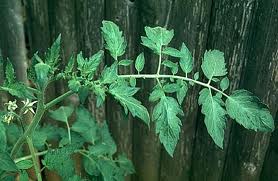
Last week, my daughters and I spent a picture-perfect day outside planting in the garden.  As I pushed the dirt around each  of our tomato plants, I whispered a little prayer for God to bless it and let it grow strong and healthy to produce much fruit and to be protected from weather and pests (those nasty huge green worms that appear every year) and also to be protected from my ineptitude (I’m no expert gardener).
My daughter giggled at me.  “Why are you praying over a tomato plant, mom?”

I stopped to think.  Why was I praying over a tomato plant?  Earlier that very day, I had prayed for the names listed in my prayer journal.  For job decisions.  For financial help.  For needed housing.  For strength while caregiving.  For a broken marriage.  For children growing up with instability.  For a small girl with cancer.

Now, here I was just hours later, asking the God of the Universe to care about my tiny garden.  Did it seem presumptuous of me, selfish perhaps to think that the small things that mattered to me, mattered to God, as well?

Yet, I looked up into my daughter’s face and said, “God cares about us.  He cares about every little thing, so it’s okay for us to pray about all that is on our mind and heart, not just the big stuff.”

I believe that.  Sometimes we see God as too wrapped up in world affairs, global weather patterns, and hospital rooms to have time for the daily thoughts and concerns we face each day.  Somehow we think we’d just be wasting his time, taking His attention from those who really need His intervention if we prayed about “silly” little things.

Satan has great success defeating the prayer lives of Christians by making prayer seem so complicated.

He tells us prayer is hard and it has to be done a certain way and for a certain length of time.
He tells us we don’t pray as well as other Christians we know.  He tells us we are lacking and we fall short.
He tells us God doesn’t care about our concerns and needs because they are too insignificant for God’s notice.

So, with all of that pressure and the feeling that we simply can’t measure up, we sometimes don’t pray at all.

And yet, Scripture tells us to “pray continually” (1 Thes. 5:17).  It’s not that we need to quit our jobs and devote ourselves to on-our-knees intercession all day, every day.  It’s that our every thought and emotion can be turned over to God in prayer, living in continual conversation with a listening and caring God.

I am reminded that the Psalmist told me to “cast your cares on the Lord and He will sustain you; he will never let the righteous be shaken” (Psalm 55:22) and Peter told us to “cast all your anxiety on Him because He cares for you” (1 Peter 5:7).  Cast all my anxiety—-not just the big life-altering problems, but everything that puzzles my heart and occupies my thoughts.

In a world where we are constantly reminded of need and hurt, when wars and revolutions are started everyday, when tornadoes and tsunamis wipe out homes and countries, when our email boxes fill up with prayer requests for the homeless and the sick, it may seem so foolish to lay at God’s feet the little things like tomato plants.

And yet, Isaiah 63:9 says, “In all their distress, He too was distressed, and the angel of His presence saved them.  In His love and mercy He redeemed them; He lifted them up and carried them all the days of old.”

Isaiah here is writing about how God carried Israel in the past.  During all those days in the wilderness between Egypt and Canaan He delivered them from Pharaoh’s mighty army, He carried them across the Red Sea on dry ground, He gave them the Ten Commandments, but He also made sure they had food and water to drink and led them to an oasis to refresh them when they were weary.  He cared about every event and every need—big or small—that mattered to them.

About a week after I had knelt in the dirt to pray over my tomato plant, my daughter and I sat next to each other talking about a birthday party she was going to the next day.  I looked up the directions on the computer and realized that this family lived exactly in the middle of the hardest hit area of tornado damage from the storms a week before.

My daughter announced, “Well, my friend says that she could hear the storm and it went right by her, but they were okay.  I guess God knew she was having a birthday party and didn’t want it to be ruined by her house being broken.”

Sweet innocent faith!  I had told her that God cares about every little thing, and she believed it.  If He cares about tomato plants, why not a birthday party?  And why not the worries on your mind?  Your decisions, your financial needs, your relationship problems, your job choices, your shopping list, your schedule for the day, whether your kids behave in the store (I have prayed that prayer many times).

Isn’t it one of those miraculous aspects of God’s nature that He cares about the big and small, the world events and the personal concerns, the global crises and the daily struggles?

More Devotions from My Garden:

Heather King is a wife, mom, Bible Study teacher, writer for www.myfrienddebbie.com and worship leader.  Most importantly, she is a Christ follower with a desire to help others apply the Bible to everyday life with all its mess, noise, and busyness.  To read more devotionals by Heather King, click here.

Copyright © 2012 Heather King

Let There Be Light

She stood by my bed at midnight.  Holding her Bumblebee Pillow Pet in one hand, she dragged her pink and purple quilt behind her.

I fumbled for my glasses and reached out a hand to stroke her hair.

“Mom,” she cried, “it’s too dark.”

I walked with my daughter back to her room and realized that the one light we always keep on had been turned off accidentally.  Our house was truly black.

It’s as if my girl has an internal light-sensory device.  As soon as she sensed darkness, she had awoken and plodded across the house half-asleep in order to regain light.

Have you ever grown aware of darkness? 
Have you woken up to a sun-bright day, but still feel the heaviness of the unknown? 
Have you felt pommeled by Satan, test and trial after test and trial, and you lose hope of the brightness of the future? 
Have you ever felt overwhelmed by shadows, gloom, fear and worry?

We’re like plants, always growing toward a source of light, reaching up and over obstacles until we bask in the warm, nourishing rays of the sun.

We can do this with God because He is a light-bringer.  He is always shining brightness into our dark places.

God “divided the light from the darkness” at creation (Genesis 1:4) and declared that it was good.  It was His first act as Creator in a formless void of a world.

And when God sent us a Savior, He declared that Jesus was “the true Light which gives light to every man coming into the world” (John 1:7-9).  This is what the prophet Isaiah had promised: “The people who walked in darkness have seen a great light; Those who dwelt in the land of the shadow of death, Upon them a light has shined” (Isaiah 9:2).

What does this mean for us?  What does a God who forms light out of darkness and a Savior who brings light to the world mean for our lives now?

It means we can trust Him to shine on the steps we need to take, to reveal His will, and to be present in our darkest moments.  David rejoiced: “For you are my lamp, O Lord; the Lord shall enlighten my darkness” (2 Samuel 22:29).  In the Psalms, David also wrote:
“For You will light my lamp; The LORD my God will enlighten my darkness (Psalm 18:28).

God is just like the one light we leave on in my house after we’ve flicked off the other switches.  He is our Lamp at all times and in all places.

Even so, we all have moments when we can’t see the light, can’t feel its warmth, can’t identify its glow.  We’re in the shadows and we know it.  What then?

David also wrote : “Yea, though I walk through the valley of the shadow of death, I will fear no evil; For You are with me; Your rod and Your staff, they comfort me” (Psalm 23:4).

He is with us in the shadows and He will walk us on out of there.  We need not fear.

In the same way, my daughter stopped crying the moment I grabbed her hand at midnight and guided her back to her room.  She was calmed by my presence even before I turned on the lamp and tucked her back into bed.

God is with us in the dark places.  He knows and sees us there.  Not only that, we can ask Him to reveal to us the treasures hidden in the shadows.

Isaiah tells us:  “I will give you the treasures of darkness and And hidden riches of secret places, That you may know that I, the LORD, Who call you by your name, Am the God of Israel” (Isaiah 45:3).

Daniel similarly wrote: “He reveals deep and secret things; He knows what is in the darkness, And light dwells with Him” (Daniel 2:22).

Maybe there’s great treasure hidden in your darkness right now.  Perhaps God longs to share with you secret things that are covered over in shadow, lessons we can’t learn in perpetual sunshine and a knowledge of Him that we can only discover in the valley.

Why is darkness so frightening to us?  Is it because we can’t see where we’re going?  Is it because we don’t know what’s hidden in the shadows?  Is it because we can’t tell who is next to us?

Whatever our fears, whoever “walks in darkness and has no light” can “trust in the name of the Lord and rely upon His God” (Isaiah 50:10).  We can be certain of His presence.  We can trust Him to shine brightly when we need to see.  We can count on Him to see through darkness and reveal to us the secrets and treasures of the deep places.

So, reach for God’s light today, just like the plant on the windowsill bending toward the sun.  In the middle of your darkness, your sadness or despair, your gloom or hopeless state and all the shadows of the unknown, stretch out until you are warmed by His presence and in awe of His glory.

For more thoughts on this topic, you can read these other devotionals:

Heather King is a wife, mom, Bible Study teacher, writer for www.myfrienddebbie.com and worship leader.  Most importantly, she is a Christ follower with a desire to help others apply the Bible to everyday life with all its mess, noise, and busyness.  To read more devotionals by Heather King, click here.

Copyright © 2011 Heather King

First Things First

A new year means excitement, fireworks and confetti, predictions and optimistic resolutions.  It’s people declaring, “It’s going to be a great year” and others just hoping that “2012 is better than 2011.”

If there’s anyone out there who is a little like me and perhaps just a little honest, maybe a new year also brings pangs of fear.

Just a bit.

I’m not generally comfortable with the unknown so when you survey a fresh calendar with 12 pages left to go and when you start penciling in dates and activities and you consider how many squares will be filled in later, it can be a little overwhelming.

What if something goes wrong?  What if 2012 isn’t so great?

On New Year’s Day, I picked up my Bible and read these words:

“First this: God created the Heavens and the Earth—all you see, all you don’t see.  Earth was a soup of nothingness, a bottomless emptiness, an inky blackness. God’s Spirit brooded like a bird above the watery abyss” (Genesis 1:1-2 MSG).

“First this.”  For years, I’ve read this verse in other translations and they all begin this way: “In the beginning.”

So, right here at the start of our year, let’s pause and consider what’s first.  What is God doing in our beginning?

Like a blank calendar, the world began “formless and empty” and that’s where fear can reside: in the inky blackness of uncertainty.  It’s not so much in “all you see,” but lurking much more definitely in “all you don’t see.”

But God saw.  He wasn’t surprised by the light, the waters, the land, the creatures or Adam and Eve.  He is the God who designs, plans, forms and creates “all you see, all you don’t see.”  When He said, “Let there be light,” surely He expected light!

Indeed, “the Spirit of God was hovering over the waters” (Genesis 1:1, NIV).  In the past, I considered this mystical perhaps, a hazy and heavy apparition hovering like a fog just above the unformed mass of earth.

But The Message says “God’s Spirit brooded like a bird above the watery abyss” and this is much more the picture here.

John Snyder wrote: “the Hebrew writer portrayed the Spirit of God as ‘hovering over’ the unformed and unruly mass, much like a mother bird fluttering over her brood.  The picture here is the very careful and loving attention God gives to His creation–protecting, shaping, and guiding its development.  In other words, there’s no room for chance or randomness.  Everything is under His control.”

God is in charge.  That’s the reminder here in the very first words of the Bible.  And He’s not an arbitrary ruler or a mysterious mystical force.  He’s loving and attentive.  He brings order out of chaos and light forth from darkness.

That’s what we can look forward to in 2012.  In all of the hectic chaos of our lives, in the disorder of our finances or relationships or jobs, in the shaky ground of ministry or health, in the shadowy uncertainty of all that lies ahead—God is in control, designing a plan for us that isn’t just okay or acceptable.

It’s good.

When God finished off His week of creating, “God saw all that he had made, and it was very good” (Genesis 1:31, NIV).

We should expect nothing less from a Good God who is present and active in our lives, just as He was from the first moments of our world.  Rest in that and dare to enjoy a new year.

Heather King is a wife, mom, Bible Study teacher, writer for www.myfrienddebbie.com and worship leader.  Most importantly, she is a Christ follower with a desire to help others apply the Bible to everyday life with all its mess, noise, and busyness.  To read more devotionals by Heather King, click here.

Copyright © 2011 Heather King