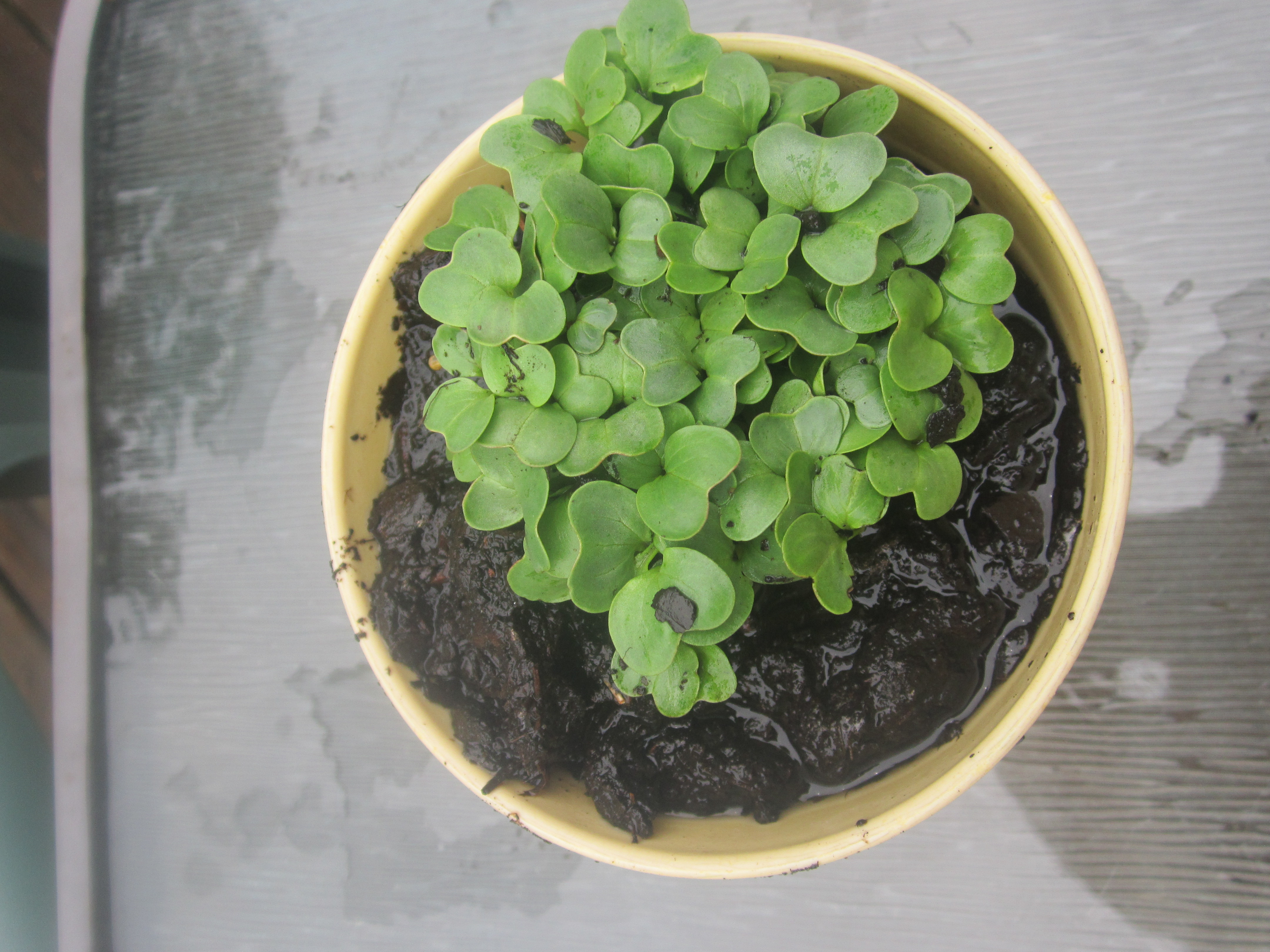
Weekend Walk, 06/23/2012

Hiding the Word:

Last night, our kids colored their last craft, ran around the gym for the last game, and tasted their last snack of Vacation Bible School.  All week long, we taught the kids to trust God . . . no matter what.

Whoever they are . . .
However they feel . . .
Even when people hurt them . . .
Even when bad things happen . .  .
And anywhere they go . . .
Trust God

Sounds so simple.  Sounds so childlike.  Sounds so easy.

But of course we know the truth.  Most of us need the constant reminder, encouragement and challenge to trust Him.  We need a perpetual bright red string tied around our finger.

So, this week I’m choosing to meditate on a verse that speaks truth about that trust.

It’s not based on anything I do or whatever I muster up in my own strength.  We trust God because of His steadfast, unfailing, loyal, everlasting covenant love for us.

But I have trusted in your steadfast love;
    my heart shall rejoice in your salvation (Psalm 13:5)

Weekend Rerun:

After a week of lessons on Group’s Sky VBS!, I’m reminded of the lessons I wrote last year on the Group PandaMania VBS.  This was one of my favorites that week:

God Loves You, No Matter What
Originally posted June 23, 2011

After a conversation with a friend this week, I recalled the first time I had to turn over my green card on the classroom behavior chart and leave the yellow card on top.  I was in third grade and had forgotten my math homework.  The teacher asked us to hand it in and I quickly zipped open my backpack to grab up my finished paper.

Only it wasn’t there.  So, I pushed things around gently and then more energetically.  I scrambled through the papers and then yanked everything out.  Slowly I realized my paper wasn’t in there.  I had nothing to turn in.

So, I had to shuffle over to the behavior bulletin board and take my punishment.  A yellow card for Heather.  Bright yellow so everyone in the class could see I messed up.  I forgot.  I was careless and irresponsible.

Embarrassed, I slinked back to my desk and slumped down hoping to become invisible in my chair.  My face was burning red hot, the kind of shame that makes your ears sear into the sides of your head.

But, when I sheepishly glanced at the bulletin board the next morning, I saw a green card next to my name again.  It was a new day and with it came a rush of joy that the mistakes of yesterday could be so simply erased and forgotten.

It was the astonishing grace of a fresh start.

That’s what Christ did for us.  Raising us up from the dead.  Taking our place on the cross and erasing the record of our wrongs so that we could stand before the Most Holy God and look . . . holy and pure.

He saw you and me as worth saving even when we were splattered with the mud of sins and caked in the foul dirt of this world. “But God demonstrates his own love for us in this: While we were still sinners, Christ died for us” (Romans 5:8).

So, what should we do with this amazing grace?

I know what I do most of the time—forget it, take it for granted, or, even worse, nullify it by trying to be perfect.  I begin to live in a spiritual world of musts, shoulds, do’s, don’ts, shalls and shall nots.

The Psalmist wrote, “If you, Lord, kept a record of sins, O Lord, who could stand?  But with you there is forgiveness; therefore, You are feared” (Psalm 130:3-4).

Yes, we would be pounded into the ground if we carried the weight of our sins on our wimpy shoulders.  We couldn’t stand in His presence much less crawl face to the ground before His throne.

But.

But with Him there is forgiveness.  Praise God!

The Psalmist ends that thought with, “Therefore, You are feared.”  Not the fright of might, though.  Not the run and hide kind of fear.  Not obeying God to escape His wrath.  Not surrendering to Him in order to earn His love.

The Old Testament Bible Knowledge Commentary says this is the fear of “worship and obedience.  The Scriptures state that many results come from fearing the Lord; the most notable is that the person keeps himself from sin.”

In January of this year, I felt the heavy nudging of the Holy Spirit asking me two questions, one of which was, “Are you ready for where I want to take you next?”  The God who loved me passionately was asking me to walk in worship and obedience—holy fear in response to abundant grace.

“That depends,” I answered.  “Where are we going?  How long will it take?  What is the expense-to-benefit ratio?”

It sounds mercenary, but those are the questions that rumbled around in my head and heart for weeks.  Was it safer to stay where I was?  Was safer necessarily better?

His question sounds so simple and easy when we belt out “I surrender all” in a church service.  Then there’s that moment when God takes you up on your offer and asks you to surrender your plans for the future, your comfort, your life, and you wonder how much “all” actually is.

And then I felt it, the pull of performance and the tug on my heart to just do what God wants so He’ll love me, so I won’t let Him down, so I can live up to what a Bible Study girl should do.  It was a works-based response of duty rather than the bride’s response of affection to the overwhelming passion and love of her Groom.

So I waited to answer God.  I waited until I truly believed that God would love me no matter what.  That the choices I make here may affect God’s plans for me, may affect my impact on others, may affect how I am blessed, but they will never affect His unconditional and unending love.

Only then, in the light of so much grace, knowing that I answered Him out of love and not duty, I bashfully answered, “I do.”  I do want to go with You.  I do want whatever you desire for me.

Why do we obey Him?  Why do we whisper “I do” when He asks us to surrender?  Why do we choose the difficult right over the much easier wrong?

So He will love us?  No—because He loves us. 

We ask Him to “lead me along the path of everlasting life”  because there’s no other place where we can walk next to Him, our tiny palm nestled inside His nail-scarred hand (Psalm 139:24).

Heather King is a wife, mom, Bible Study teacher, writer for www.myfrienddebbie.com and worship leader.  Most importantly, she is a Christ follower with a desire to help others apply the Bible to everyday life with all its mess, noise, and busyness.  To read more devotionals by Heather King, click here.

VBS Lessons: No Matter What People Do

All week long I’m thinking about the Bible points for our Vacation Bible School and what they mean for adults.  This week will be a mix of some old and some new as I share these lessons.

Tonight at Sky VBS! (Group Publishing), we’re learning: No Matter What People Do…Trust God!

****************************************************************************

In high school, Carl didn’t score touchdowns like the sports star Norman.  Instead, Carl served as the sports manager for the team—close to the action, but never quite getting the glory.

One day in the locker room, Norman played a teenage prank on Carl and then they went their separate ways.  Norman played football and studied education in college, earning his master’s degree and returning to the high school to teach and coach for over 30 years.

Carl took a different path.  More than 50 years after that initial locker room prank, Carl showed up at Norman’s house and shot him with a pistol.  At 73 years old, Carl is now starting a life term in prison.

Not exactly the best way to spend your retirement years.

I read this new story last week and it troubled me in a deep-down unshakeable way.  It’s partly because the story dismisses that teenage prank.  Of course, it couldn’t possibly be worth killing someone over 50 years after the fact.  Of course it makes no sense to murder a 70-year old man for something he did in high school.

Yet, bullying, teasing, and publicly embarrassing others seem to be the signature traits of our society and they aren’t easily shrugged off, even by the strongest and most confident among us.  It’s a reminder to us all how how lives can be destroyed by what we say and do.

The story, though, also illustrates something else.  It shows how what people do to us usually determines our character far more than it impacts theirs.

Carl—the 73-year-old killer over a high school grudge—lived an embittered life, entangled in jealousy and unforgiveness.  Norman lived a full life that sounded successful and happy.

We have a similar choice when people intend evil for us.  Like Joseph staring across an Egyptian banqueting table at the brothers who sold him into slavery decades before, we must choose what to do with our offenders.

The Lord’s Prayer instructs us clearly: “forgive us our trespasses as we forgive those who trespass against us.”

If you look at most modern translations of this passage, they read something like: “And forgive us our debts, as we also have forgiven our debtors” (Matthew 6:12 HCSB).

That’s because we perceive wrongs against us as a debt that someone needs to pay.  Someone owe us because they took something from us–our innocence, our purity, our dignity, our job, our financial security, our husband, our self-esteem . ..

Pretty soon we’re wrapped up in unforgiveness and anger so tight that our whole life is hindered.  We’re tripping all over ourselves when we try to get anywhere.

In his book, Enemies of the Heart, Andy Stanley reminds us that the only way to break free from the snare of anger and unforgiveness is to cancel the debt.

We need to forgive.  Why?  Because we’ve been forgiven.

Stanley writes:

In the shadow of my hurt, forgiveness feels like a decision to reward my enemy.  But in the shadow of the cross, forgiveness is merely a gift from one undeserving soul to another (129).

Jesus Himself, tortured and crucified by a jeering mob when he had done nothing at all to deserve it, still looked down from the cross and prayed: “Father, forgive them, for they do not know what they are doing” (Luke 23:34).

In “You Want Me To Pray What?” I wrote:

“In the same way, Stephen, the first Christian martyr, prayed, “Lord, do not hold this sin against them” just as the final stones pelted his body and killed him (Acts 7:59).

Have you considered who Stephen was praying for in that moment?  One of the men standing by the coat rack cheering on the crowd was Saul—later the apostle Paul.

Stephen asked for God to forgive his persecutors and shortly afterward this same Saul sat on a roadside blinded by Jesus Christ himself, experiencing repentance and conversion.

Satan fully intends to tangle us up in bitterness and jealousy.  He wants to defeat our ministry and make us thoroughly unusable because we’re so riled up and distracted by dissension and arguments.

He just doesn’t know what to do when we pray shockingly humble prayers on behalf of others, particularly our enemies.  There’s power there.”

No matter what people do to us, we can trust God to use it for His glory and to help us through.  More than that, we can ask him to help us forgive so we can move forward in freedom and blessing, no longer hindered by the bitter entanglements of our past.

Heather King is a wife, mom, Bible Study teacher, writer for www.myfrienddebbie.com and worship leader. Most importantly, she is a Christ follower with a desire to help others apply the Bible to everyday life with all its mess, noise, and busyness. To read more devotionals by Heather King, click here.

Copyright © 2012 Heather King

Weekend Walk, 06/16/2012: Happy Father’s Day

Hiding the Word:

Happy Father’s Day weekend!

One of the things my husband and I have learned (and perhaps are still learning) in this whole parenting life is that each of our daughters is a unique original.  Her gifts, talents and weaknesses don’t mimic her sisters’.

They don’t respond to the same discipline strategies either.

With our youngest, we’ve discovered that even the slightest remonstrance, a serious look and the word no, can catapult her into deep sobs.  She’s just that sensitive.

The other night, she was perky and giggly at bedtime instead of the tired and obedient toddler we’d prefer to see at 8:00 or 9:00 or even 9:30 at night.  Even her older sisters complained.

My husband called her out of the room and she emerged with a sheepish grin.  He looked her in the eye and practically whispered the words, “It’s time to sleep.  You need to go into your bed quietly. No more playing around or talking.”

She bawled.  It was perhaps the most tragically despairing cry I’ve ever heard.  So, he scooped her up and hugged her, stroked her hair and promised that he loved her, but that she needed to obey. Slowly, she progressed from sobs to sniffles to calm and toddled off to her bed . . . laid down quietly . . . and went to sleep.

Aren’t you thankful that God our Father has compassion on us, knowing exactly the grace, the guidance, the blessing, the provision, and the discipline we need?

Here’s a Father’s Day verse to meditate on this week that reminds us of God our Father’s abounding love for us:

‘As a father has compassion on his children, so the LORD has compassion on those who fear him” (Psalm 103:13 NIV)

Weekend Rerun:

The Writing on The Wall
Originally posted on October 5, 2011

 ”There is no one on earth who does what is right all the time and never makes a mistake”
(Ecclesiastes 7:20, Good News Translation).

My two-year-old created a masterpiece with a purple marker and a piece of paper.

Then she made a masterpiece on my kitchen wall.

I caught her standing back to admire her mural, giggling with pride.

Walking her back to the paper, I reminded her where art belongs without yelling or even raising the volume of my voice a decibel.  She took one look at my stern face, listened to my firm “no” and burst into truly remorseful tears.

I scooped her up to hold her, but she ran out of the room and I found her lying face down on a pillow, pouring out heavy sobs of brokenness.

All because she had made a mistake and done something wrong.  All because she wasn’t perfect and because I had to correct her.

Surely we all can shrug our shoulders and say, “We all make mistakes sometimes.”  Some of us can even get theological about it and quote “For all have sinned and fall short of the glory of God” (Romans 3:23).

But then there is that moment when you need grace because it’s not “all” who sinned or “all” who made a mistake.

It’s you.

It’s me.

Please don’t tell me you missed that part of the blog where you discover I’m not perfect.  The part where I sin.  The part where I have a bad attitude sometimes.  The part where I make silly mistakes and stupid decisions and act like I’m in an I Love Lucy episode.

And every time I’m the one in need of grace, I react like my two-year-old—-run away, bury my face and sob.

Grace sounds so wonderful when you’re explaining it to someone else or extending it to another. But when you are the one who needs grace, oh, how painful it is sometimes

Grace addresses sin.  Forgiveness always requires a wrong.  Erasing always requires a mistake.  Strength always highlights weakness just like perfection always reveals imperfection.

Admitting that we need a Savior requires personalizing the message of redemptive grace.

Ecclesiastes 7:20 says, “There is no one on earth who does what is right all the time and never makes a mistake” (Good News Translation).

So, that means we’re doomed to imperfection sometimes?  Guaranteed to need forgiveness?  Certain of mistakes and assured of being wrong occasionally (or often)?

Yup, that’s us.  That’s you.  That’s me.

So, when we mess up, we can engage in the horrors of self-condemnation.  We can become weighed down by shame and guilt—

that we are a mess
that we’re stupid
that we’re an idiot
that we never do anything right
that we deserve whatever punishment we get
that God can’t ever use someone so broken

Or we can accept the gift extended to us by a God who specializes in forgiveness. As Emerson Eggerichs wrote, “Mistakes can’t be undone, but they can be forgiven.”

But how do we move on after a mistake?  How do we walk humbly, yet not live paralyzed by shame?  How do we serve gratefully rather than withdraw altogether, unworthy as we are? How do we let the past shape us and not destroy us?

David experienced this same struggle.  He was a godly king turned adulterer and murderer.  Faced with the magnitude of his sin, still he continued serving on the throne of Israel, still he wrote Psalms of praise to God.

It wasn’t easy.  In Psalm 51:3, he says, “For I know my transgressions, and my sin is always before me.”

But David acknowledged the need for grace, accepted forgiveness and moved forward in joy.

He brought to God the only acceptable sacrifice: “My sacrifice, O God, is a broken spirit; a broken and contrite heart you, God, will not despise” (Psalm 51:16-17).

God doesn’t desire our brokenness because He rejoices in our shame or needs our degradation.  He wants us to remember that He is God, not us.

We can begin to feel perfect, strong, capable, worthy in our own strength. But if we really are all those things, then who needs grace?  Who needs a savior?  Our worship and ministry can become tainted with self-exaltation. It becomes all about us and not at all about Him.

But when we accept grace, we acknowledge that we’re never worthy, not now, not ever.  Thomas Merton said,

“God is asking me, the unworthy, to forget my unworthiness and that of my brothers, and dare to advance in the love which has redeemed and renewed us all in God’s likeness.  And to laugh, after all, at the preposterous ideas of ‘worthiness.’ ~Thomas Merton~

Yes, we advance in His love.

We don’t need to be shamed by our sin, by our foolishness, by our scattered-brains and accident-prone clumsiness.  We should be humbled.  We are reminded that even though we are not perfect; He is.  Though we are not good enough; He is always sufficient.  Even though we are never worthy, He is worthy of all our praise.

And so we ask Him to forgive us.  We accept His grace.  And then we, like David, ask him to help us move on.

David prayed:

“Create in me a pure heart, O God, and renew a steadfast spirit within me.
Do not cast me from your presence or take your Holy Spirit from me.
Restore to me the joy of your salvation and grant me a willing spirit, to sustain me.   Then I will teach transgressors your ways, so that sinners will turn back to you”
(Psalm 51:10-13).

We pray this as well.

Heather King is a wife, mom, Bible Study teacher, writer for www.myfrienddebbie.com and worship leader.  Most importantly, she is a Christ follower with a desire to help others apply the Bible to everyday life with all its mess, noise, and busyness.  To read more devotionals by Heather King, click here.

Copyright © 2012 Heather King

I’m Sorry: Lessons in the Art of Apologizing

As a girl, I think I read Lucy Maud Montgomery’s whole Anne of Green Gables series at least ten times.  My friends and I used to watch the movies together and even gave each other nicknames from the story.  To this day, my friend still writes notes addressed to me as “Anne” that are signed, “Diana.”

There’s a moment in the movie when Gilbert pleads for Anne’s forgiveness and says, “I’m sorry” in his Canadian accent with a puppy-dog look in his eyes.  That always sent us into giggles, a whole room full of middle school girls just tickled to pieces by his apology.

I can’t say for sure why the story of Anne has been on my mind so much lately or why I’ve been dying to watch the movies again after more than a decade.  But maybe it’s because of Gilbert’s, “I’m sorry” and the fact that those are words we’ve been hearing and saying around my house a lot lately.

Now that my baby girl is two-and-a-half, we’ve been trying to teach her the principles of personal responsibility and forgiveness. She’ll stomp her way out of her bedroom with her arms crossed tightly across her chest and her eyebrows crinkled in anger.  Then she’ll tattle.  “Lauren jumped and hit me on my arm.  Victoria dropped her book and it hit me on the head.”

Usually, it’s all just an accident, a mishap resulting from too much silliness at bedtime.

Whatever the circumstance, purposeful hurt, accident, or misunderstanding, my toddler feels the need to receive justice and isn’t in the mood to give grace.

So, we make a big deal out of demonstrating a proper apology to her.  The offender looks her in the eye and says very clearly, “I’m sorry for . . . ” and then hugs her to seal the reconciliation, which she normally rejects.  She’d prefer to feel angry for a while.

The goal, ultimately, is to teach her that when she pushes others or knocks over her sister’s Lego tower or messes up their projects, she needs to say, “I”m sorry” in just that same way.

We’re still working on that part.

This is all a matter of grace. It’s learning that sometimes we mess up and hurt others and we need to own up to that.  There are few things more humbling—and downright hard—then saying, “That was my fault.  I was wrong.  I’m sorry.”

Yet, grace is much easier to give when we’ve been the recipient of grace ourselves.  Likewise, it’s a little bit easier to apologize when we realize we aren’t the only ones who make mistakes sometimes.

It’s all a matter of remembering what’s been done for us already.

God makes this point throughout Scripture, reminding the nation of Israel often to remember where they came from, what they’d been through, and how God had rescued them.  That national memory needed to impact how they treated others, particularly the poor, oppressed, and weakest among them.

God said:

“You shall not wrong a sojourner or oppress him, for you were sojourners in the land of Egypt” (Exodus 22:21).

“You shall treat the stranger who sojourns with you as the native among you, and you shall love him as yourself, for you were strangers in the land of Egypt: I am the Lord your God” (Leviticus 19:34).

“You shall remember that you were a slave in the land of Egypt, and the Lord your God redeemed you; therefore I command you this today”
(Deuteronomy 15:15)

“Love the sojourner, therefore, for you were sojourners in the land of Egypt
(Deuteronomy 10:19).

God reminded them all the time that they were slaves in Egypt, toiling hopelessly with no freedom or self-determination.  Their sons were murdered at birth.  Their worship hindered.  For 400 years, they had been the oppressed people.

Then God rescued them and blessed them.  He led them to the Promised Land and gave them victory.

So, remember, He said, to treat foreigners, the poor, widows, and orphans well by blessing them and loving them.  Why?  Because that used to be you.

It’s no surprise, then, that Paul picks up a similar theme in the New Testament, this time reminding new believers to forgive others because Christ had delivered them and forgiven them in the same way.

Paul wrote:

Be kind to one another, tenderhearted, forgiving one another, as God in Christ forgave you” (Ephesians 4:32).

and

bearing with one another and, if one has a complaint against another, forgiving each other; as the Lord has forgiven you, so you also must forgive
(Colossians 3:13).

The nation of Israel had no excuse for treating foreigners poorly, because they had spent centuries being mistreated as foreign slaves in Egypt.

In the same way, we who were once slaves to sin, who have been forgiven, who Christ died for so graciously, have no excuse for not forgiving others.  God overlooked the fact that we didn’t deserve it.  He put aside the issue of whether some would even accept it, and He chose to give grace any way.  So must we.

We model apologizing and forgiveness for my two-year-old, hoping that she’ll learn these principles of grace.  That’s a modeling job we all should be taking on in our homes, at our jobs, with our friends, in our ministries, and in the community.  We show others that we’ve received grace, so we give grace.  We forgive, just as God in Christ forgave us.

Heather King is a wife, mom, Bible Study teacher, writer for www.myfrienddebbie.com and worship leader.  Most importantly, she is a Christ follower with a desire to help others apply the Bible to everyday life with all its mess, noise, and busyness.  To read more devotionals by Heather King, click here.

Copyright © 2012 Heather King

It’s A Dirty Job, But Somebody’s Got to Do it

It was as exciting as Christmas morning.

Our girls had been asking us for a Wii since last summer.  So, when a friend from church said he was selling his used Wii system, we knew this was too good an opportunity to pass up.

We surprised our daughters with it as a way to celebrate the end to their school year and my husband explained to the girls how proud we were of their hard work and their many achievements.

The girls jumped around the living room squealing and hugging us.  My oldest announced, “I just can’t stop thanking you enough!”

Giving good gifts to our children brings me incredible joy—to see them so excited, so grateful, so delighted to have the desire of their little hearts placed into their hands.  Matthew 7:11 tells us, “If you then, who are evil, know how to give good gifts to your children, how much more will your Father who is in heaven give good things to those who ask him!”

If giving the perfect gift excites me, I can only imagine those moments of divine anticipation as God prepares to bless us.  Does He laugh as we dance around the room, full of thanks and praise?  Does He hug us as we humbly bow, so aware that we don’t deserve His gracious blessings?  Does He wipe away the tears of overwhelming gratitude?

We enjoyed just a taste of that pleasure as our girls popped in the first game and began to play.

Then the whining began when they couldn’t make their guy jump high enough after just one try.  The frustration kicked in when they didn’t know how to move their hand to make their bowling ball slide just the right way down the electronic alley. There were angry grunts and declarations that, “it’s too hard.”

Even worse, when the girls played a game together, there was the inevitable struggle over winning and losing graciously.  Apparently, kids are not innately “good sports.”  At first the winner was kind and encouraging; the loser begrudging and complaining.  Then the winner gloated.  The loser started declaring, “it’s not fair.”  It was war.

Overall, the girls still love this gift and they are getting better at it all the time.  As parents, though, there were some moments when we weren’t so sure this was such a good idea.  Our gift seemed to be bringing out the worst in them.

But the reality of parenting is that it’s a messy job.  And I’m not talking about potty training, dirty diapers and sickness.

We could shuffle along on the outskirts of our kids’ character and life would be pretty easy.  If we closed our eyes to their weaknesses and ignored their mistakes, this would all be more “fun.”

We’d be failures, though.

Sometimes we have to put on the big muddy rubber boots and wade into the mess in order to pull out the gunk that is sin and human nature and weakness.

We have to buy one toy and insist our kids learn to share.  We have to play games and teach losers how to lose and winners how to win.  We have to look in the face of a defeated child and remind her that the best things in life are worth working hard for and that giving up simply ensures failure.

It’s a dirty job, but someone’s got to do it—and that someone is us.

In the same way, the circumstances God gives us, the jobs He calls us to, the ministries He lays in our hand, the responsibilities He entrusts us with and the relationships He places in our lives often bring out the worst in us. They certainly do for me.  There are times that I am shocked and embarrassed when all my “uglies come out” (to quote Lysa TerKeurst).

God’s not surprised, though.  Our heavenly Father never shirks His parental job and uses these opportunities to deal with the sin that is bubbling to the surface of our hearts.

This is why “iron sharpens iron, and one man sharpens another” (Proverbs 27:17).  God uses conflict to mature us.

This is why we should “count it all joy, my brothers,when you meet trials of various kinds, for you know that the testing of your faith produces steadfastness.And let steadfastness have its full effect, that you may be perfect and complete, lacking in nothing” (James 1:2-3).  Trials mold our character and make us more like Christ.

Spoiled children that we often are, we might think God always needs to give us the gift we so desire, the blessing we’ve been longing for, and the success we see others enjoying.  Yet, we’d never grow, never mature, never get one tiny bit closer to Jesus in a life free of conflict and trouble.

Proverbs 30:12 says, “Don’t imagine yourself to be quite presentable when you haven’t had a bath in weeks” (MSG).

We might at times do just that, walking around without any awareness of our own mess.  Then something like a Wii brings out the worst in us.  We want to give up.  We fight with our brother or sister.  We whine about how hard it is and how unfair.

Sometimes that’s a good thing–as long as we’re willing to let God scrub at us for a while and deal with the sin that surfaces.  Then we can enjoy the gifts He’s given fully and completely and He can laugh with us in delight and bless us with His favor.  It’s a dirty job and He’s just the One to do it.

You can read more devotionals on this topic here:

Heather King is a wife, mom, Bible Study teacher, writer for www.myfrienddebbie.com and worship leader.  Most importantly, she is a Christ follower with a desire to help others apply the Bible to everyday life with all its mess, noise, and busyness.  To read more devotionals by Heather King, click here.

Copyright © 2012 Heather King

The Paint Saga, Part II: Is that the color I picked?

 But if we walk in the light, as he is in the light, we have fellowship with one another, and the blood of Jesus his Son cleanses us from all sin  (1 John 1:7).

Something didn’t look right.

This year, I embarked on an extreme painting project in order to cover over nearly eight years of child debris speckled on the walls of our home with some fresh paint.

I began in the dining room.  You can read all about that color-choosing nightmare here: The Paint Saga (Or why my dining room is now chocolate).

Fresh off the eventual success of turning my dining room into a chocolate bar, I decided to paint the kitchen.  This time, though, knowing I’d probably make a disastrous color choice if left to my own devices, I enlisted help from a trusted source–namely, my mom.

I handed her a pile of about 10 green color swatches.  Showing her the color I had picked, she picked another.

The lady at the paint store oohed and aahed over the cheerful green-as-grass color mixed up in the paint can.  In fact, it inspired her to paint her bathroom in the same color.  This, I was certain, guaranteed success.  I carried the paint home confidently, tucked my toddler into bed for naptime, and began covering every wall in my kitchen with “dillweed.”

All seemed to be going well.  The paint was fresh, clean, cheerful, and on most of the walls, it was what I wanted.

But I hadn’t considered the light.  There’s something tricky about the lighting in our home, something that makes paint look one color on one wall and a totally different (neon lime green) color on another wall.

My husband arrived home to my surprise paint job and asked me if I liked it.  Did I like it?  Well, I liked it when the lights in the kitchen were off and I liked it on the walls farthest away from the window.

But right there in that one corner of the kitchen, I felt like I needed to pop on some sun glasses to combat the glare.

The problem isn’t the paint so much as the unevenness of the light on the paint.  So, I’ve spent about two weeks trying to work in the dark of the kitchen as often as possible.  With the lights off, the lime green effect is muted and hidden and I begin to think, “It’s not so bad!” Then, when I finally concede blindness and begrudgingly flick on the lights, I shield my eyes and ask, “How long can I live with this?”

Are there areas of your life where you feel pleasantly cozy in the dark, but when the lights shine in, you feel embarrassed by the glaringly obvious wrong?

Or are you astonished and bitterly hurt at times by the hidden darkness surrounding the deeds of others as you try your best to live in the light?

Scripture assures us that:

Nothing is covered up that will not be revealed, or hidden that will not be known. Therefore whatever you have said in the dark shall be heard in the light, and what you have whispered in private rooms shall be proclaimed on the housetops (Luke 12:2-3).

When I’m speechless at the machinations of others, when I’m disgusted by the secretive shams and the deeds performed in dark corners and shadowy alleyways, when there’s sneaking around and avoiding authority, I pray.

I ask God to “shine His light on all the deeds done in darkness so that nothing remains unrevealed.”

This isn’t just about justice or seeing misbehaviors punished.  It’s about redemption and repentance because until the light shines in, sin can remain untouched and happy while slinking around in the dark.

Unfortunately, it seems at times like sin gets ahead, like underhanded deeds succeed and good people trying to live in “all that is good and right and true” sometimes get trampled on as darkness flourishes. Sometimes the good guys lose and the bad guys dance in triumph.

Yet, the assurance that God’s light will reveal truth is our hope, assurance and comfort.  We can rest in that and pray for it.

If we do, though, we must be prepared for the inevitable shining of the light on our own lives.  We can’t just point accusatory fingers at others without first asking God to assess us.  In Ephesians, Paul challenged the church to:

Walk as children of light (for the fruit of light is found in all that is good and right and true), and try to discern what is pleasing to the Lord. Take no part in the unfruitful works of darkness, but instead expose them. For it is shameful even to speak of the things that they do in secret” (Ephesians 5:8-12).

I tell my daughters all the time, “Everyone makes mistakes” and so we do.  But when we’re intent on burying the mistakes and returning to them, we’re no longer trying “to discern what is pleasing to the Lord.”  We’ve become more comfortable in darkness and when we prefer shadows to sunrise, we know we’ve got a sin problem.

Oswald Chambers wrote: “The secret of all spiritual understanding is to walk in the light–not the light of our convictions, or of our theories, but the light of God” (p. 18, Studies in the Sermon on the Mount).

If we’re letting our feelings or gut or impressions or opinions guide us, we’re bound to live under an uneven light source.  But the light of God is consistent, bright, and revealing.  There’s no uncertainty or confusion with Him. Life in the light brings true freedom and joy.

Heather King is a wife, mom, Bible Study teacher, writer for www.myfrienddebbie.com and worship leader.  Most importantly, she is a Christ follower with a desire to help others apply the Bible to everyday life with all its mess, noise, and busyness.  To read more devotionals by Heather King, click here.

Copyright © 2012 Heather King

Devotions From My Garden: It’s Crowded In Here

My daughters and I reached a compromise.

I announced that I didn’t want to grow a vegetable garden this year.  It was too much work for too little result.  It didn’t save money.  It started out fun in April and ended up a horrible, rotten, ugly chore by the middle of July.  Various ravenous insects destroyed and devoured my plants.

Their response was unanimous.  “But Ma—awm.  We like to grow our own food.”

So we narrowed down the lists of vegetables we would grow and planted a container garden on our deck.

On one of the warmest and sunniest days in April, we filled large wooden crates with garden soil, vegetable food and the tiny plants of tomatoes, cucumbers and peppers we had chosen.  Then we dropped the carrot seeds into the dirt, following exact directions on how far down to push them and how far apart they needed to be spaced.

Mostly we worked together, but after a while my daughters disappeared to work on their own project. They held out the result to me with pride.  It was a small planter with dirt in it.

“We planted radishes,” they announced, “all by ourselves.”

I shrugged.  The radish seeds were leftovers from last year.  It seemed unlikely they’d grow.  Yet, the girls faithfully watered that pot for days and surprisingly they were rewarded by the first hints of green.

A day later, the pot was crowded by infant radishes.  The girls must have dumped 20 seeds all into the same tiny space in the miniature pot.

It was going to be really crowded in there.

Unfortunately, even though it is hard and a little sad, we now have to make some tough choices.  If all the radish plants remain in that pot, none of them will grow correctly.  Some of them have to come on out of there.

Sometimes our lives are just as crowded as that tiny radish pot.  Every single seedling may have potential for beauty, growth, and produce, but nothing can grow when they are all shoved into the small space of one simple life and the restriction of 24-hour days.

Even though it’s hard and a little sad, there are times when some things have got to go so that other areas of your life can grow to their full potential.

It’s not always a mystery when choosing what to toss.

When Jesus walked into the temple and saw the vendors hocking their wares–doves for sacrifices and loans for people needing money for their offering–He responded immediately.  It didn’t take a second’s thought for Jesus to overturn their tables and chase the mercenaries out of the holy space of the temple courtyard.

He threw out sin, contaminated worship, and the profanation of the holy.

As soon as Jesus cleared the place, the blind and the lame came to him at the temple, and he healed them” (Matthew 21:14).

The only reason they could seek healing in the temple, the only reason there was room for the blind and lame to worship, was because Jesus had thrown out the tainted and unholy.

The Message emphasizes this when it says, “Now there was room for the blind and crippled to get in.”

Until Jesus cleaned house, there hadn’t even been room in the temple for those who needed God the most.

Will we allow Jesus to overturn the tables in our heart where sin and the unholy have set up shop?  Will we clear out the trash and the disgusting, so that we have room to come to Jesus—and to bring others along who need Him the most?

Of course, it’s not always so easy to tell what has to go in our lives.  We have a million choices of how to invest our time, energy, talents, and money, and all of them could be good.  We could lead hundreds of crusades against a world of evil.

But if we crowd out our lives with too much that is good, nothing will grow as it should.

Jesus Himself exhibited the kind of focus we need, to hone in on our purpose and refuse to be distracted by every demand and need.

During His ministry, mobs of people sought out Jesus for healing.  He lived in a world of need, need, and more need, and He frequently healed those who sought out His help.

But He didn’t heal everyone.

In fact, when the crowds grew too large and people sought Him out for healing alone, He moved onto another town or He escaped the crowds in order to pray alone on a mountain or by the sea.

Healing was fine.  Miracles were part of His ministry.  But it was not His main purpose for coming and He never wanted that to be the focus of His presence.  Instead, He had come to “seek and to save the lost” (Luke 19:10) and “to save the world” (John 3:17).

Maybe it’s time for you to pull out some of the extra radishes from your pot.  The first ones to go are easy—yank out the sprouts of sin, the unholy habits and the remnants of the flesh life.

Then prayerfully ask God to help you focus.  What seedlings should you tend and invest in until you harvest their potential?  What seedlings need to be set aside so that other areas of your life can grow?

Determine to live an uncrowded life, a flourishing, growing, fruitful life of produce and harvest, made possible by intentional focus and the pursuit of purity in your life and worship.

More Devotions From My Garden:

Heather King is a wife, mom, Bible Study teacher, writer for www.myfrienddebbie.com and worship leader.  Most importantly, she is a Christ follower with a desire to help others apply the Bible to everyday life with all its mess, noise, and busyness.  To read more devotionals by Heather King, click here.

Copyright © 2012 Heather King

Weekend Walk, 04/07/2012

Hiding the Word:

Last night, our family sat at the Good Friday service at church.  We sang hymns about the cross. We read Isaiah 52-53.  My girls nailed papers with their sins written on them to a wooden cross in the front of the church sanctuary with the help of their Daddy and their grandparents.

We remembered the cross and the sacrifice Jesus made there.

Afterward, when we had arrived home, stripped off our jackets and plopped down our belongings, we glanced at our five caterpillars in a cup.  In our short absence, two of them had climbed to the top and tipped themselves upside down.

It’s time.  They know exactly when to spin the silk and form the chrysalis, just as they will know when to emerge as butterflies.

We are waiting with expectation now.  We know the end of their story and it doesn’t stop with upside down caterpillars or bugs entombed in the cocoon of their own design.  New life is the beginning that starts with the end.

In the same way, knowing as we do that Jesus didn’t stay in the tomb, we celebrate Good Friday with hopeful expectation–because Sunday is coming.  His resurrection day is near.

Jesus’ close friends and family, however, hadn’t understood His messages to them.  They didn’t fully expect His death.  They didn’t look forward with hopeful anticipation for His resurrection.  They got it all wrong.

Don’t we get it all wrong so much of the time?  Don’t we expect God to act a certain way, and when He doesn’t, we lose hope?  We grow weary and depressed, perhaps even angry.

We look at circumstances and we pronounce death over them.  We think surely this is over.  Surely nothing can be done.

Jesus defied all of our plans and expectations through His death and resurrection, providing the perfect way of salvation for the entirety of mankind.  He continues to do that today.  When He declares that the time is at hand, He can speak life into every circumstance and situation, and His plan is perfect.

Our verse for the week:

“O death, where is your victory?
    O death, where is your sting?”
The sting of death is sin, and the power of sin is the law. But thanks be to God, who gives us the victory through our Lord Jesus Christ
(1 Corinthians 15:55-56).

You can listen to Matt Maher’s song, Christ is Risen, by clicking on this link or viewing the video from the blog:  http://youtu.be/IExdrZGQVeI

Weekend Rerun:

Surprise!
Originally posted July 27, 2011

All day long people were singing at her.  Smiling and singing.  They tickled her belly, kissed her cheek, hugged her, and said two magic words that she didn’t even understand, “Happy Birthday!”

At first, my now-two-year-old reacted to all this attention with nothing more than a puzzled expression.  By the afternoon of her second birthday, she smiled a sweetly confused grin when we scooped her up for birthday hugs and kisses.  After dinner, she enjoyed the visit from her grandparents, but it wasn’t until I brought out the birthday cupcakes and we sang to her that she really began to understand that this special day was about her.

As soon as I lit the candle, she knew what to do.  She started blowing at the air while I still stood across the room with her birthday cupcake in my hands.  And then after she was covered in icing and Mickey Mouse-shaped sprinkles, I brought out wrapped presents and gift bags.

Her face said it all.  “For me?”  She unwrapped each gift and immediately played with it, read the book, put the puzzle pieces in place, and fed the baby doll.

My little one had been surprised by joy.

How I love that age when the simple fact of a birthday is enough to bring laughter and excitement.  My older daughters now anticipate their big days all year long.  Within a week of turning six, my eldest began telling people she was, “Almost seven.”  I’ve heard all their big plans for birthday parties (despite being told that we’re skipping this year), and yet they plan anyway.

But for my baby girl, there was no anticipation.  She had no idea we were planning for her joy.  She was oblivious to me stashing presents in the closet.  She had no clue I wrapped them during her nap the day before the big day.  She did know that I made cupcakes (she has a sixth sense for finding cupcakes), but she didn’t see me decorate them or pop two candles onto the top of the one just for her.

During those final days before her birthday, her sisters and I were the excited ones.  We looked forward to showering her with special treats and signs of love, even more because we knew she wouldn’t be expecting it.

Matthew 7:11 says, “If you, then, though you are evil, know how to give good gifts to your children, how much more will your Father in heaven give good gifts to those who ask him!”

When we’re feeling broken, just emptied out or filled with fear . . . when we look ahead to an uncertain future, not even knowing what tomorrow will look like for us . . . when we’ve been attacked into the ground, pounded on by trials and Satan and circumstances and one bad event after another . . .

. . . then we remember that God is at work in invisible ways, even when we cannot see His hand, His activity, or His plans.  He gives us the good gifts of salvation, His Holy Spirit, His peace, yes.  But even more, He pours out on us surprises of joy, presents of grace in the unexpected places, an oasis in the midst of our wilderness, and a shooting star of hope across a midnight black expanse of our future.

Angela Thomas in her book Do You Know Who I Am? wrote:

“there is always a hidden work of God.  When you think that God is distant or that maybe God has turned against you, I want you to remember that in the unseen God is plotting for your joy.  He is planning the redemption of your brokenness.”  Angela Thomas

Does it tickle you to think of God in heaven wrapping presents for you, sending down cupcakes with sprinkles just for you–when you least expect it and on a day that seems so ordinary or worse, filled with despair?

That’s what He did for Mary Magdalene, sitting at the tomb of her dead Savior, weeping for the loss of Him and the seeming loss of all He had promised.  In her sorrow, she had traveled to the tomb while it was still dark.  Perhaps she couldn’t sleep, so throwing back her blankets she had simply gotten up and started walking to the place of His burial.

But the stone was gone.  The tomb empty.  She called for the disciples and they searched through scraps of linen for any answer to the mystery of the missing Savior.

There was despair and confusion and hurt.  There was anger and defensiveness about grave robbers and defilers. It was a day that had started out bad enough and was quickly getting worse by the second.

Mary didn’t see Jesus “plotting for her joy.”  He had been at work in the hidden places, descending into hell and snatching the keys of death out of Satan’s hands.  He had risen on that third day and exited the tomb already, but she hadn’t seen any of that.

While God planned her surprise, she: “stood outside the tomb crying” (John 20:11).

It’s not until she sees Jesus herself—not even then, not even when she talks with Him, but only when He calls her by name—that she realizes the victory before her, the amazing miracle of resurrection.

The angels asked her why she was crying.  Jesus Himself asked the reason for her tears.  She cried because the brokenness was all she knew and the evidence of loss and grief was overbearingly present.  An empty tomb, grave clothes in a pile, Savior’s body gone.  That’s what she saw.

Isn’t that what we sometimes see, too?  We see here and now.  Bills due.  Relationships broken.  Uncertainty about the next day and the next.  Unanswered questions.  Danger for our kids.  Loss and mourning.  Difficult ministry.

We see the grave.

God sees the resurrection.

He’s your Father who loves you, who knows how to give you good gifts and is wrapping presents for you, rejoicing “over you with singing” (Zeph. 3:17), and working “for the good of those who love him, who have been called according to his purpose”” (Rom. 8:28).

Heather King is a wife, mom, Bible Study teacher, writer for www.myfrienddebbie.com and worship leader.  Most importantly, she is a Christ follower with a desire to help others apply the Bible to everyday life with all its mess, noise, and busyness.  To read more devotionals by Heather King, click here.

Copyright © 2012 Heather King

Please Break My Heart . . . Really and Truly

It’s the drill, the sound if it screeching unnaturally close to your face.

Plus there’s the inescapable smell of sterilized tools and latex gloves.

There’s the tooth-shaped clock on the wall and the charts portraying healthy and not-so-healthy gums hanging here and there.

It’s the dentist’s office and I don’t love the place, but I had to be there for a filling—easy and routine, my dentist tells me.  He asks me how I’m doing today.  “Nervous,” I confess with a conversational giggle.

Still, I like him.  He’s pleasant and efficient.  His degrees and certifications adorn the walls, assuring me that he knows what to do.  He’s the kind of doctor I prefer, one who explains to you what’s going on and assumes you’re intelligent enough to understand.

So, he glances at my chart and sees the note written in large letters, “Needs extra anesthetic.”

He asks me about it and I tell him the gruesome story of another dentist starting to drill and me feeling it.  I tried to fake it and pretend like I was numb just for the sake of expediency, but my flinches and the pain in my eyes apparently gave me away.

When you’re numb, you ironically can’t help but feel it.  You feel that your face is heavy and your speech difficult.  They ask you to rinse and it takes effort.  It’s a simple filling and yet here I sit at my computer five hours later, feeling the last remaining bit of numbness around my mouth.  I’m a poster child for the old Bill Cosby standup routine about a dental patient.

Numbness takes time to fade, but thankfully it eventually does.  Truly, I’m grateful for the fact that two shots of medicine helped me not to feel the dentist’s drill.  It’s a comfort of the modern age that I’m happy to enjoy.

Yet, as I sit in the chair waiting for the drilling to start, I wonder if I’ve grown too numb in other areas of my life.  Unfortunately, the numbness of our hearts and minds doesn’t fade away as assuredly as a dentist’s shot.

I’ve been listening to a song by Hillsong called Hosanna and then for the first time today, I actually paid attention to the final lyrics:

Break my heart for what breaks Yours
Everything I am for Your Kingdom’s cause
As I walk from earth into
Eternity

Similarly, the World Vision founder, Bob Pierce, famously prayed, “Let my heart be broken by the things that break the heart of God.”

So I wonder, is my heart too numb?  Has it become an unfeeling organ?  Or, if I feel God’s broken heart, do I just cry for a moment and then resume life as normal, patching up momentary sorrow with practicalities and emotional distance?

What actually breaks the heart of God anyway?

Surely it’s our sin, our breaking faith with God and causing Him disappointment and sadness (Numbers 5:6, Hosea 11:8b).

The Bible tells us King David was a man after God’s own heart. How so?  Was it his faith in God and his bravery against a giant?  Was it his heart of worship?  Or perhaps instead that after devastating sin of adultery and murder, David’s heart broke before God, hating his sin and desiring restoration and forgiveness (Psalm 51).

Are you grieved over your sin and the times you’ve broken faith with God?  Do you shake it off with excuses and acceptance, compromising because it’s “normal” and just “who you are?”  Or do you humbly bow at His feet and ask for His help and His forgiveness?  Do you hate your sin enough to do whatever it takes to change?

Of course it’s the lost, the “sheep not having a shepherd,” who stirred Jesus’ heart to compassion and self-sacrifice (Mark 6:34). 

Are you broken-hearted over those who do not know Jesus and moved to compassion and boldness by their presence in the world and in your community?

Then there are the hurting and needy.  When Israel complained that God didn’t seem overly impressed by their fasting rituals and legalistic religiosity, God told them exactly what kind of fasting He desired: freeing the oppressed, sharing bread with the hungry, caring for the homeless (Isaiah 58:6-7).

James agreed when he wrote, “Religion that is pure and undefiled before God, the Father, is this: to visit orphans and widows in their affliction, and to keep oneself unstained from the world” (James 1:27, ESV).
Is your heart broken by the orphaned, the widowed, the hungry, and the oppressed?  Do you do more than shed a tear at an Internet video and actually advocate for those who need a voice? 
We have a God whose heart is broken over sin, over unbelief, over the hurting, oppressed, defenseless and hungry.

What about our hearts?
It’s a strange thing, this spiritual numbness.  While a shot at the dentist’s office fades over time, our hearts respond in opposite ways to hurt.  We may begin compassionate and then grow numb from forgetfulness.  We may grieve over sin at first and then slowly grow accustomed to it.
Instead of needing extra doses of anesthetic, we must go to God continually and ask for more of His broken heart.
To listen to Hillsong’s Hosanna, you can click the link here or watch the video posted below on the blog:

Heather King is a wife, mom, Bible Study teacher, writer for www.myfrienddebbie.com and worship leader.  Most importantly, she is a Christ follower with a desire to help others apply the Bible to everyday life with all its mess, noise, and busyness.  To read more devotionals by Heather King, click here.

Copyright © 2012 Heather King

A Plan to Be Better

I tucked my oldest girl into bed last night and she told me, “Today at school, Mrs. Davidson explained all about how people make plans to be better.  So I made a plan for the new year.”

I expected her to announce a strategy to get a dog or be a princess or learn pointe in ballet or be a famous artist–the true aspirations of her little heart.

Instead, she said, “I’m planning to get up in the morning early and get ready for school easier every day.  Did you make a plan to be better this year, mom?”

“I haven’t chosen a resolution,” I said.  “Do you have any suggestions?”

Without any hesitation or even time to take a breath, she said, “I think you should play more video games!”

Perhaps that translates to “Be a more fun mom and play with my kids more often.”  That’s certainly a resolution worth making!

David lived long before the time of New Year’s resolutions, fad diets, gym memberships, and self-help books.  Still, he wrote a psalm of “I wills” that translates into some worthy goals for all of us in 2012.

I will praise God more.

David began with this promise to God, “I will sing of your love and justice; to you, Lord, I will sing praise” (Psalm 101:1).  It’s a reminder to be grateful and to give testimony to others of God at work in your life.  Give thanks everyday.

I will strive for the blameless life.

David continued, “I will be careful to lead a blameless life .  . . I will conduct the affairs of my house with a blameless heart” (Psalm 101:2).

We can’t be perfect.  Every mom will lose it occasionally.  Every wife will mess up.  Every friend will forget. We all sin.

Yet, still we can “be careful,” as David says.  We can allow God to work on our hearts and clean out the dark and dusty places.  We can ask for His help controlling our tongue and our tempers.  We can pray that He will guide us as moms, wives, sisters and friends and help us become more godly every day.

I will guard my heart and mind.

We used to sing as kids, “Oh be careful little eyes what you see  . . .  be careful little ears what you hear . . . be careful little feet where you go”

David said it this way, “I will not look with approval on anything that is vile. I hate what faithless people do; I will have no part in it.  The perverse of heart shall be far from me;
I will have nothing to do with what is evil.” (Psalm 101:3-4).

Sometimes we excuse a little sin or shrug off feelings of discomfort about that show, or song, or movie, or book or relationship.

When God looked out on the sin-laden world during the time of Noah, He “regretted that he had made human beings on the earth, and his heart was deeply troubled” (Genesis 6:6, NIV).

The Message says it this way: “God was sorry that he had made the human race in the first place; it broke his heart.”

This year, consider making that your standard for what you see, what you hear, where you go and what you do.  Will this break the heart of God?

I will watch my words.

In his epistle, James wrote: “Brothers and sisters, do not slander one another” (James 4:11).

‘Slander’ sounds so harsh.  Perhaps we feel it’s okay to speak our minds or criticize when it’s the truth.

Not according to James.  Beth Moore notes in James: Mercy Triumphs: “the Greek word translated ‘slander’ in NIV also means ‘criticize’ (HCSB) and ‘speak against’ (NASB).

So, if it was said critically about another person, it was sin.  We need to be women with gracious tongues, not judgmental or critical ones.

David goes a step farther:  ” Whoever slanders their neighbor in secret, I will put to silence; whoever has haughty eyes and a proud heart, I will not tolerate” (Psalm 101:5).   Not only was he not going to speak slander, he wouldn’t even listen to it from others.

I will invest in Godly friendships

David finished off the Psalm with these words:

“My eyes will be on the faithful in the land, that they may dwell with me; the one whose walk is blameless will minister to me. No one who practices deceit will dwell in my house; no one who speaks falsely will stand in my presence. Every morning I will put to silence all the wicked in the land; I will cut off every evildoer from the city of the LORD” (Psalm 101:6-8).

This year, find ways to build into relationships with others who love God.  Join a small group.  Find a Christian mentor.  Choose someone to befriend who you can mentor in turn.  God never intended for us to walk this Christian life alone.

There you have it.  David’s “I will” list.

What has God placed on your heart for the new year?

Heather King is a wife, mom, Bible Study teacher, writer for www.myfrienddebbie.com and worship leader.  Most importantly, she is a Christ follower with a desire to help others apply the Bible to everyday life with all its mess, noise, and busyness.  To read more devotionals by Heather King, click here.

Copyright © 2011 Heather King