The Prodigal Returns

Our prodigal finally tiptoed through our backdoor at 2 a.m. last night.

We’ve had our orange cat for about 11 years now.  I picked him out of a litter of tiny strays at the Humane Society when we lived in New Jersey.  He was strikingly beautiful with swirls of white in his fur.

And he was terrified of us and the world.

When people visited us, our other more-friendly goliath of a black cat would greet them at the door, and our orange skittish feline would hide away for safety.002

Since he had lived outside as a newborn before he was taken to the Humane Society, what he knew was the outdoors.  For years, he would stomp all over my potted plants to push their leaves down and then sleep on the soil.

At some point, this Scaredy-Cat, who is supposed to stay inside, got a taste of the outdoors again.  At first, it was little excursions out the back door.  Then longer jaunts into the wooded area behind our house.

On Wednesday night, he ran out in the evening, after it had already grown dark and bitterly cold.  It was the first day of spring and we’d been watching bursts of snow showers all day.

So, we went into “recovery” mode.  I opened the back door and made a loud production of pouring food into his food dish.  My husband searched the yard and called his name.  We left the door cracked open all night and put his cat bed out on the deck.

And we prayed.

But he didn’t come home.  Not all that night.  Not all the next day, even though I abandoned chores to trek through the woods calling his name and spent the rest of the day peering out the back windows watching for him to shoot up the stairs of the deck.

…Not even after I started to suggest to my daughters that maybe he wasn’t coming home and they invented adventure stories about how he made a new friend or went to kitty preschool or visited the cat doctor.

…Not after we bowed our heads as a family and each daughter and parent prayed that Oliver would come home.

At 2 a.m., though, I woke abruptly and fought the urge to roll back over and go back to sleep.  I fumbled for my glasses and plodded in bare feet to the back door, expecting to see an empty deck.

Instead, I saw our orange cat nibbling at the food we’d left for him. He lifted his face to look at me as if nothing had ever happened, and when I opened up the door, he just tiptoed inside nonchalantly like it was no big deal whatsoever.

All that time he was gallivanting through the woods or maybe hunkered down somewhere trying to keep warm, I thought and prayed about this cat.  Every time I walked outside, pulled my coat up close and felt the chill deep down in my bones, I thought about him.

And I’m not sure I ever really understood Jesus’ passionate, intense, and committed pursuit of the lost and the prodigals until now.

I was worried about a cat.

He’s concerned about people He loves enough to die for.

Sure, I read the parables in Luke 15.  The Lost Coin.  The Lost Sheep.  The Lost Son (there’s that prodigal).

I thought I knew–Yes, “the Son of Man has come to seek and to save the lost” (Luke 19:10 HCSB).

But I really didn’t understand.  Not the way that they would linger on His mind or how He’d put aside other agendas to pursue them or that He’d keep searching long after most of us would lose all hope.

He leaves the 99 sheep, to wander the hillside looking for the one stray.

He runs full speed toward the prodigal returning home and welcomes him in, celebrating rather than chastising.

And that woman who lost the one silver coin—I’ve been there.  Turning on all the lights.  Sweeping the whole house.  Scripture says she would “search carefully until she finds it” (Luke 15:8).  I don’t know what “carefully” looks like for her, but it sounds so methodical and orderly.

My searches look more like frantic overturning of dresser drawers, tossing things out of closets, sweeping papers off of desks and rumbling through junk all while whispering desperate prayers that God would just help this crazy woman find this oh-so-important-thing already!

I lose that for people too much of the time, that willingness to keep on relentlessly praying for the lost and the fervent intercession for and seeking out of the prodigals.

I struggle to confess–it’s ugly, but true—I think I felt more worry over my runaway cat and more desperation about finding missing pieces of paper than over the wayward and hurting around me.

And that needs to change.

Do you need to re-commit to praying for lost loved ones or loving the prodigals you know?

Heather King is a wife, mom, Bible Study teacher, writer and worship leader.  Most importantly, she is a Christ follower with a desire to help others apply the Bible to everyday life with all its mess, noise, and busyness.  Her upcoming book, Ask Me Anything, Lord: Opening Our Hearts to God’s Questions, will be released in the Fall of 2013!  To read more devotionals by Heather King, click here.

Copyright © 2013 Heather King

Glowing

Originally posted on January 11, 2012

When they saw the courage of Peter and John and realized that they were unschooled, ordinary men, they were astonished and they took note that these men had been with Jesus” (Acts 4:13)

I think I must have a sign on me when I shop at Wal-Mart.  It says, “I don’t work here, but I can help you.”

I don’t mind really.  There’s something satisfying about knowing the aisle for laundry soap and the one for body soap and that they are about a mile walk away from one another.  Or that there’s tape in hardware and different tape in stationery.

Perhaps it’s that I usually shop with at least one of my kids.  Strangers probably see me and think, “She has children. I bet she’s in here ALL the time.  I’ll ask her where to find stuff.”

It seemed natural enough until I realized just how familiar I was with the Wal-Mart after trekking there more times than I’d like to admit every week for almost eight years.

I glanced down at my shopping list one day and discovered I had automatically organized it by quadrants of the store.  Every item was listed in the order I would find it on my usual route.

Now that’s a lot of time in Wal-Mart.

The time we spend anywhere shows up in our lives.  We can’t hide our influences or interests or the habits and relationships that take up the most space on our calendar. Our conversation is flavored, our mannerisms influenced, our choices altered by the way we spend our days.

It was the same for the disciples.

After Jesus’s death, resurrection and ascension to heaven, these Christ-followers became quite the trouble-makers.  They preached sermons and performed miracles all in the name of Jesus, to the dismay of the Sanhedrin or religious leaders, who thought that a dead Jesus was a problem solved.

When Peter and John were arrested and stood before the Sanhedrin, Peter—the guy arrested for giving sermons about Jesus— decided to give another sermon about Jesus.

Bold, huh?

He spoke the bottom line truth: “Salvation is found in no one else, for there is no other name under heaven given to mankind by which we must be saved” (Acts 4:12).

Was this a fisherman talking?  Was this the guy who had denied Jesus three times, now preaching salvation through the crucified Jesus to a group of men who could crucify him, too?

The Sanhedrin wondered the same thing: “When they saw the courage of Peter and John and realized that they were unschooled, ordinary men, they were astonished and they took note that these men had been with Jesus” (Acts 4:13)

You couldn’t miss the miraculous change in them. “These men had been with Jesus.”  And it showed.

It should be that evident in our lives also.  Our time praying and meditating on His Word should cause a life-revolution.  People should see us and think, “I bet she knows where to find hope, joy and peace.”  They should witness the changes in us over time and think, “Clearly she’s been with the Lord.”

For Peter and John, this brought life change—spiritual insight and boldness.

For Moses, time with God impacted Him physically.  All those days in the presence of God’s glory on the mountain made his face glow–literally.  And he couldn’t cover it up with some Covergirl face powder.  Even Mary Kay couldn’t do the trick.

It was so distracting to see this glow-in-the-dark face and how it faded over time, that Moses began wearing a veil to hide it.

Paul tells us that we glow like that, too, when we’ve been with God.

Yet, he also tells us that unlike Moses, there’s no reason for us to hide the glow of glory that comes from God’s presence.  In 2 Corinthians Paul writes:

And we all, who with unveiled faces contemplate the Lord’s glory, are being transformed into His image with ever-increasing glory, which comes from the Lord, who is the Spirit (2 Corinthians 3:18).

Unlike Moses, our faces are unveiled so that all can see the transformation God works in us over time, making us ever more like His Son.  This change only happens, though, when we’ve been with Jesus.

People will be able to tell where we’re spending our time, what’s occupying our thoughts, and what our priorities are.  If it’s not God, that will show up on our faces and in our lives, too.

But I want my face to glow with God’s glory.  I want my life to be a like a sign that says, “This girl has been with Jesus.”

Just like Peter and John.   Just like Moses.  Just like Paul.  When we spend time with Christ our life will glow as we reflect Him.

Heather King is a wife, mom, Bible Study teacher, writer and worship leader.  Most importantly, she is a Christ follower with a desire to help others apply the Bible to everyday life with all its mess, noise, and busyness.  Her upcoming book, Ask Me Anything, Lord: Opening Our Hearts to God’s Questions, will be released in the Fall of 2013!  To read more devotionals by Heather King, click here.

Copyright © 2013 Heather King

Weekend Walk, 1/12/2013: Take My Picture

“Take my picture, Mommy!  Take my picture!”

In the middle of Sunday morning chaos, pulling on stockings, buttoning dresses, clipping 006on bows and tying on ribbons, my three-year-old twirled in her dress and posed for a Kodak moment.

And I clicked the camera.

I don’t ever remember being this way, so eager to say, “Cheese.”  I’ve always been the one declining photos, offering to hold the camera, tossing into the trash any pictures of me I don’t like.

But when I’m out and about with my daughters (or even just running around the house frantically trying to get four females ready for Sunday morning church service)… they want to stop and take pictures.  Lots and lots of pictures.  Not of the scenery.  Of them.

It takes us three times as long to walk down the Main Street of our town and probably twice as much time on location on our family “field trips.”  But I don’t mind.

I love that they feel beautiful enough to want to pose.

There was a day I stepped into the bathroom to put away a stray toothbrush, and I caught one of my girls watching herself in the mirror.  She smoothed her hair and glanced up at her reflection, pleased with what she saw.

How beautiful is the girl who feels beautiful in her own skin.

This rare gift, how do you teach it?  How do you help them keep it for life?

Somehow, most of us grow out of it.  We glance in the mirror and critique the image or sigh in frustration.  We step on the scale and slander ourselves with our thoughts.  We pose for that picture and know we won’t be happy with it later, not with the smile or the hair or the wrinkles or the chin or ….

Even my husband, in the early days of falling in love, would sit across me from the table and I could feel him watching.  I didn’t know where to look.  I was uncomfortable in his gaze.  What imperfections would he see in me if he looked too closely or watched too long?

Later today, I’ll take my seat at a piano and offer up the music for a wedding ceremony.  There will be a moment at that wedding when the soloist will sing, “How Beautiful the radiant bride who waits for her Groom with His light in her eyes” (How Beautiful, Twila Paris).

The beauty of the bride isn’t so much the hairdresser and the hair spray, the makeup, the gown.

It’s that she walks down that aisle feeling loved.  In a moment, she knows she is wanted, precious, and she radiates the joy.

And it’s beautiful how she loves him.  So we, thinking of another, run out of time to be so self-analyzing, so self-criticizing, so self-condemning—so “self.”

It’s a verse for meditating on all week, with a reminder of how beauty is looking to God–our Groom–thinking of Him and less of me.  Beauty is caring for others.  Beauty isn’t feeling shame, but feeling redeemed, feeling precious, feeling loved.

“Those who look to him are radiant;
    their faces are never covered with shame” (Psalm 34:5).

Heather King is a wife, mom, Bible Study teacher, writer and worship leader.  Most importantly, she is a Christ follower with a desire to help others apply the Bible to everyday life with all its mess, noise, and busyness.  Her upcoming book, Ask Me Anything, Lord: Opening Our Hearts to God’s Questions, will be released in the Fall of 2013!  To read more devotionals by Heather King, click here.

Copyright © 2013 Heather King

Naming, Name Changes, and Being Made New

Her name suits her.

She asks us about it all the time and we’ve told her the story over and over.

Why is she named Victoria Eileen and what does it mean anyway?

You’re named after your grandmothers, we tell her, Godly women who are strong in their faith. We prayed over our first baby, prayed about naming her just right— a name that was clearly feminine and clearly strong, a name for an overcomer, a fighter, a stand-up-for-what-is-right kind of woman of God.

Victoria—“Victorious One.”

It fits this feisty little person, the perfect name from the first day I held her in my arms in the hospital and she screamed and screamed, trying desperately hard in her newborn way of making her needs known. She befuddled nurses and her first-time momma.

Yet, submitted to God, believing in Jesus, with His Spirit in her, she’s a mighty force to be reckoned with underneath her princess exterior of swirly skirts and long blonde hair.

When she asks us about her name, we tell her the whole story of what it means, and why we picked it and what we hope it says about her future and her character.

I can’t imagine how that conversation went in Hosea’s house.

God told the prophet Hosea to marry a “promiscuous woman.”  His marriage was to be a living testimony of how the long-suffering God remained faithful to His people Israel, despite their ongoing adultery with foreign gods and idols.

That sounds hard enough.  Yet, in obedience, he married Gomer, a frequent runaway lover.

Then God told Hosea to have children with this faithless wife.

When she had a daughter, God told them to name her “Lo-Ruhamah (which means “not loved”), for I will no longer show love to Israel, that I should at all forgive them” (Hosea 1:6 NIV).

Then she had a son and God said, “Call him Lo-Ammi (which means “not my people”), for you are not my people, and I am not your God” (Hosea 1:9 NIV)

The Message translates these names as “No-Mercy” and “Nobody.”

Every time moms in the marketplace cooed over these precious babies and asked, “What’s the baby’s name?” the answer came back as a label and message from God.

No-Mercy.

Nobody.

Have you ever felt labeled and even condemned by your name, your heritage, a nickname, a curse, the hurtful words of others that you can’t seem to erase from memory?

Has your past held you captive?

Surely these two children could relate to your pain.

But the beautiful thing about Jesus is that He doesn’t leave us untouched by His presence.  He’s a Creator God, making things new, making US new.

He changes us and renames us, giving us a new identity in Him.  Paul tells us:

Therefore, if anyone is in Christ, the new creation has come:The old has gone, the new is here! (2 Corinthians 5:17 NIV).

In Hosea 2:1, God tells the prophet:

Say of your brothers, ‘My people,’ and of your sisters, ‘My loved one.’

Or as the Message says:“Rename your brothers ‘God’s Somebody.’  Rename your sisters ‘All Mercy.’”

Eugene Peterson asks: Under what circumstances have you seen “No Mercy” turned into “All Mercy?”  How about “Nobody” changed to “God’s Somebody?”

That’s our story, yours and mine!  Our story of redemption and transformation, how we’re shedding who we used to be and stepping into new clothes of righteousness—new names, new lives.

Hosea’s kids probably had to fight for their new identity.  Townsfolk likely slipped up time after time.  “No-Mercy,” they’d say, and she’d reply, “That’s not my name anymore!  Haven’t you heard the good news?  My name is “All Mercy” now.  God changed it!”

And her brother, “Nobody,” likely had to correct friends and neighbors and the school teacher who always treated him like a fool: “God says I’m no longer, “Nobody!”  I’m “God’s Somebody” now!”

God says that about you, too.  He says, “You’re mine.  I’ve given you my name and called you my child.  You are a sign of my mercy, you are loved, you are important to me.”

Yet, just like Hosea’s poor children, who likely had to stand up for their name change time and time and time again . . . so we must continually refuse Satan the prerogative of defining us by our past.

Instead, those names from our past, those identities are just part of our testimony now, a reminder of how God redeems, renews, and recreates, how He makes “beautiful things out of us.”

Heather King is a wife, mom, Bible Study teacher, writer for www.myfrienddebbie.com and worship leader.  Most importantly, she is a Christ follower with a desire to help others apply the Bible to everyday life with all its mess, noise, and busyness.  Her upcoming book, Ask Me Anything, Lord: Opening Our Hearts to God’s Questions, will be released in the Fall of 2013!  To read more devotionals by Heather King, click here.

Copyright © 2012 Heather King

Passionate Pursuit

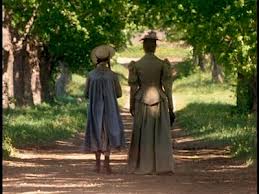
The other night, I poured myself a cup of hot tea, kicked off my shoes, picked up my knitting and settled deep into the sofa to relax with a movie.  Something about fall reminds me of the scenes in Anne of Green Gables as she strolls along the tree-shaded pathways and the leaves reflect the changing seasons.

So, I put in the DVD of the Anne of Green Gables sequel and watched one of my favorite stories play out on my television once again.

As I sipped my tea, I realized that what seems so romantically endearing and compelling about her love story with the straight-talking Gilbert Blythe is his willingness to pursue her.  He may have fallen in love with her in grade school when she broke her slate over his head after he called her “Carrots,” yet he waited for her.

And waited.

And waited.

He cheered her on and encouraged her success, asked her to marry him, was rejected, waited some more, got sick and nearly died, and asked again.

Maybe that’s the great romance we’ve all dreamt of or longed for as school girls or teens or even grown women.

And even while part of me wants to scream at Anne through the television to drop all of her “high-faluting’ mumbo jumbo” and just realize already that love is right there in front of her, part of me is entranced.

It’s true in all my favorite stories, every book I own with its cover falling off and the pages worn from me turning down the corners for want of a bookmark: Anne of Green Gables, Pride and Prejudice, Emma . . .

In each story, the theme is the same.  The girl remains comfortably clueless that a man is in love with her, but he is captivated by her beauty and strength of character, her wit, her capacity to change and grow . . . and he pursues her relentlessly until she finally discovers she loves him in return.

In her book Captivating, Stasi Eldredge says:

“We desire to possess a beauty that is worth pursuing, worth fighting for, a beauty that is core to who we truly are. We want beauty that can be seen; beauty that can be felt; beauty that affects others; a beauty all our own to unveil.”

Perhaps many of us do long for a beauty that captivates—-a beauty worth pursuing. Like Anne or Elizabeth or Emma, we want to know that we are worth noticing, worth waiting for, worth sacrificing for, worth fighting for . . . just worthy.

So that when the world beats us down with reminders of standards we can’t meet and the girl next door makes us feel ugly and clumsy with her model-like beauty and when we’re run-down from dishes and laundry and carpools and mess . .  .we still feel that message deep down that we are captivating and we are loved.

Yet, no matter how lovely we may be, with the God-beauty of our character inside where it counts or with sparkling, head-turning physical beauty, we aren’t always pursued.  We don’t, after all, live in a historical romance novel or in Jane Austen’s world of matchmaking and marriages.

It just doesn’t always turn out that way.

And yet pursuit is always part of our Great Romance.

Psalm 45:11 says,

Let the king be enthralled by your beauty;
    honor him, for he is your lord.

God doesn’t have to romance or woo us.  He could remain distant and unmoved.  Surely the beauty He sees in us isn’t really so worthy of His attention and He could toss out a marriage proposal and conclude with, “take it or leave it.”

Yet, He bends low and tenderly calls, He watches as we trample after worldly enticements and then calls us back time after time.

Like Hosea relentlessly chasing after his wife, the wayward Gomer, so God says:

“Therefore I am now going to allure her;
    I will lead her into the wilderness
    and speak tenderly to her.

And more than any of that, God Himself laid aside the glories of heaven to walk among us, to live for us, to die for us, and to make a way for us to spend eternity with Him.

That’s love.  That’s pursuit in the most wildly passionate and extravagant way, more than any bouquet of flowers or poetic marriage proposal.

Stasi Eldredge reminds us that:

“The story of your life is also the story of the long and passionate pursuit of your heart by the One who knows you best and loves you most”

Remember today that, while you may not be perfect or totally worthy, still God loves you and is enthralled with the beauty He created in you.

Heather King is a wife, mom, Bible Study teacher, writer and worship leader.  Most importantly, she is a Christ follower with a desire to help others apply the Bible to everyday life with all its mess, noise, and busyness.  Her upcoming book, Ask Me Anything, Lord: Opening Our Hearts to God’s Questions, will be released in the Fall of 2013!  To read more devotionals by Heather King, click here.

Copyright © 2012 Heather King

Weekend Rerun: I’m Not A Boy!

I’m not a boy.
I’m not a good dancer.  I’m not easily offended.  I’m not a blonde or a red-head.
I’m not tall.
I’m not artistic.  I’m not quick to cry.
I’m not usually a fan of “chick flicks.”
I’m not much of a TV watcher.
I’m not from a small family.
I’m not a quick decision maker.
I’m not an extrovert.  I’m not athletic.  I’m not fond of “outside.”

We all define ourselves by lists of “I ams” and “I am nots.”

“Are you a Christian?”
I am.

“Are you fond of sports?”
I am not.

Is it any wonder that God has a list, too?  His “ams” and “am nots” through Scripture establish His character and give us reliable assurances in times of trouble.

We rest in safety because we know He is “I AM.”

It’s the most powerful declaration of God’s identity in Scripture, when He tells Moses His name: “I AM WHO I AM . . .This is my name forever, the name you shall call me from generation to generation” (Exodus 3:14, 15).

My Bible notes that His name could also be read as: “I WILL BE WHAT I WILL BE.”

He is I AM and I WILL BE.  He is eternal.  He has existed before our human history began and He has walked through the entirety of our time on this planet and will still remain forever.

So, we can trust Him.  We can place in His capable hands all that frightens us because He knows where we have come from and where we are headed.

It’s more than that.  He tells us:

  • “I AM with you” (Genesis 26:24).
  • “I AM God Almighty” (Genesis 35:11).
  • “I AM the LORD, who heals you” (Exodus 15:26).
  • “I AM the LORD your God” (Exodus 16:12).
  • “I, the LORD your God, am holy” (Leviticus 19:2).
  • “For I AM the LORD your God, the Holy One of Israel, your Savior” (Isaiah 43:3).
  • “I AM the LORD, and there is no other; apart from me there is no God” (Isaiah 45:5).
  • “I AM the LORD your God, who teaches you what is best for you, who directs you in the way you should go.” (Isaiah 48:17).
  • “I AM the LORD your God, who stirs up the sea so that its waves roar—the Lord Almighty is His name” (Isaiah 51:15).

Can you read through this list of what God says about Himself, His “I ams” and not be in awe, not be filled with the desire to worship, not be comforted?

He is with you, there in the places of hurt and despair.  He heals you.  He is holy.  He is your Savior, pulling you out of the pit and redeeming you through the blood of His Son.  He is the only God.  He directs our steps.  He is Lord Almighty, in control of all creation, including the circumstances you find yourself in.

Praise God!

He doesn’t stop there, though.  He also has “am nots.”  Just as powerful, these are declarations of His dominion over all the fake gods that vie for our worship.

In Daniel 2:11, the magicians and advisers of King Nebuchadnezzar whine that no one can possibly tell the king what he dreamt except the gods, and “they do not live among humans.”

Not our God.  He made His dwelling among His people, directing them to “make a sanctuary for me, and I will dwell among them” (Exodus 25:8).  He abandoned the glories of heaven and “The Word became flesh and made his dwelling among us” (John 1:14).

He can say, “I am not distant from you.”

In Psalm 135:15-18, the Psalmist writes:

The idols of the nations are silver and gold, made by the hands of men.  They have mouths, but cannot speak; eyes, but they cannot see; they have ears, but cannot hear nor is the breath in their mouths.

Not our God.

Our God is the Shepherd who speaks to His sheep (John 10:27).  He is the God who sees us (Genesis 16:13) and hears our voices when we call to Him (Psalm 5:3).

He can say, “I am not ignorant of your need .”

And our God “is not human, that he should lie, not a human being, that he should change his mind. Does he speak and then not act? Does he promise and not fulfill?” (Numbers 23:19).

Colin Urquhart wrote, “God is the God of promise.  He keeps His word even when that seems impossible.”

He can say, “I am not a promise-breaker.”

It may feel difficult at times to believe in God’s nearness, responsiveness, concern, love and faithfulness because we are immersed in a pit of circumstances that blocks our view of Him.  And yet, He tells us all the things He is and all the things He is not and it is that Scriptural assurance of His character to which we cling.

We can rest in safety knowing that He is I AM.  We can rest in safety knowing all that He is not.

Heather King is a wife, mom, Bible Study teacher, writer for www.myfrienddebbie.com and worship leader.  Most importantly, she is a Christ follower with a desire to help others apply the Bible to everyday life with all its mess, noise, and busyness.  Her upcoming book, Ask Me Anything, Lord: Opening Our Hearts to God’s Questions, will be released in the Fall of 2013!  To read more devotionals by Heather King, click here.

Copyright © 2012 Heather King

How is a Christian like an Oompa Loompa?

The curtain rose and fell for the last time.  The makeup went on and the makeup came off (mostly–there are still streaks of orange along my daughter’s hairline).  Costumes were handed in and tucked away for future shows. A crew of folks broke down the set and put the pieces into storage.

My kids finished their summer-long project yesterday, an all-youth production of Willy Wonka Jr. sponsored by our local community theater group.  They auditioned the Sunday after school ended, rehearsed every week, and performed this weekend.

Now it’s time to kick back and enjoy a few weeks of rehearsal-free summer before school starts again.

Each night before the show, we arrived two hours early so the kids could climb into costumes and sit still for makeup.  This was a particularly involved process because my middle girl was an Oompa Loompa.

The Oompa Loompas are Willy Wonka’s devoted candy factory workers.  Refugees from a horrible land, they’ve come to live and work in his factory as loyal servants of their eccentric chocolate-making master.

Transforming into an Oompa Loompa is quite a task.  It’s more than just colorful shirts, socks and some overalls with curiously expansive hips.

There’s also a bright green wig covered in curls.

And there’s orange makeup–bright orange.

For these six through nine-year-olds, this was a matter of acting, putting on the outward appearance of another.

In the tradition of Lewis Carroll-like riddles, though, I’ve been wondering: How is a Christian like an Oompa Loompa? (Yes, I know Lewis Carroll wrote Alice in Wonderland, not Charlie and the Chocolate Factory.  What can I say?  I’ve got children’s fantasy on the brain . . . )

Peter wrote this description to the church:

But you are not like that, for you are a chosen people. You are royal priests, a holy nation, God’s very own possession. As a result, you can show others the goodness of God, for he called you out of the darkness into his wonderful light” (1 Peter 2:9 NLT).

The Oompa Loompas are peculiar.  They are “strange creatures,” unmistakably different from the kids and parents who visit Willy Wonka’s factory.

We also are supposed to be “not like that,” not like the world, not able to blend in with the crowd. God has changed us from the inside-out and people should notice the unique qualities of God’s love and righteousness about us.

I never once saw an Oompa Loompa hit the gym for an exercise routine targeted at reducing his hip-size.  They didn’t climb onto stilts to increase their height.  None of them hid in the bathroom for an hour to dye their hair and they didn’t even try to pass their orange skin off as suntan.

They were comfortable being weird.

Sometimes we’re not.  We’re too often trying to hide, transform, pretend, and deny the presence of Christ in us.

There’s freedom, though, in unashamedly being who God called us to be, in raising our hands in worship with abandon, in standing up for what is right with conviction, and not fearing the disapproving looks of those around us.

We’re supposed to be weird, too.

The Oompa Loompas were also refugees.  Willy Wonka had pulled them out of a land of fear and disaster and offered them a place of peace.

We’ve similarly been lifted up out of pits and carried to safety.  We are God’s “chosen people” and His “very own possession,” who no longer inhabit a hopeless world, facing inevitable death without the promise of a future.  He has “called us out of the darkness into his wonderful light.”

So, we respond as the Oompa Loompas did; we cheerfully and faithfully serve our Master.

He has saved us!  We are rescued and redeemed!

It’s a little thing, then, to show gratitude and loyalty and to obey Him in every little thing.  We work, we love, we give, we minister, we sacrifice, we share, we worship because we are refugees brought to safety by a Savior who loves us.

The Oompa Loompas are also message-bearers.  As each Golden Ticket winner inevitably fails, falling to the temptations of  immediate satisfaction, selfishness, and greed, the Oompa Loompas take the stage. They clean up the mess.  They solve the problem.

They sing their song.

We also “show others the goodness of God,” sometimes by fixing problems and tending to needs, silently ministering grace.

Sometimes we “speak the truth in love” (Ephesians 4:15), reminding others that God has a plan, purpose, and design.  We speak truth and wisdom in a world that desperately needs both, but we do it with love, covered over with grace, never out of judgment or pompous self-righteousness.

The Christian life is a call to be different, to be saved, to be devoted, to be messengers of God’s goodness, all without having to wear a green wig or apply orange makeup.

Heather King is a wife, mom, Bible Study teacher, writer for www.myfrienddebbie.com and worship leader.  Most importantly, she is a Christ follower with a desire to help others apply the Bible to everyday life with all its mess, noise, and busyness.  To read more devotionals by Heather King, click here.

Copyright © 2012 Heather King

Weekend Walk, 06/23/2012

Hiding the Word:

Last night, our kids colored their last craft, ran around the gym for the last game, and tasted their last snack of Vacation Bible School.  All week long, we taught the kids to trust God . . . no matter what.

Whoever they are . . .
However they feel . . .
Even when people hurt them . . .
Even when bad things happen . .  .
And anywhere they go . . .
Trust God

Sounds so simple.  Sounds so childlike.  Sounds so easy.

But of course we know the truth.  Most of us need the constant reminder, encouragement and challenge to trust Him.  We need a perpetual bright red string tied around our finger.

So, this week I’m choosing to meditate on a verse that speaks truth about that trust.

It’s not based on anything I do or whatever I muster up in my own strength.  We trust God because of His steadfast, unfailing, loyal, everlasting covenant love for us.

But I have trusted in your steadfast love;
    my heart shall rejoice in your salvation (Psalm 13:5)

Weekend Rerun:

After a week of lessons on Group’s Sky VBS!, I’m reminded of the lessons I wrote last year on the Group PandaMania VBS.  This was one of my favorites that week:

God Loves You, No Matter What
Originally posted June 23, 2011

After a conversation with a friend this week, I recalled the first time I had to turn over my green card on the classroom behavior chart and leave the yellow card on top.  I was in third grade and had forgotten my math homework.  The teacher asked us to hand it in and I quickly zipped open my backpack to grab up my finished paper.

Only it wasn’t there.  So, I pushed things around gently and then more energetically.  I scrambled through the papers and then yanked everything out.  Slowly I realized my paper wasn’t in there.  I had nothing to turn in.

So, I had to shuffle over to the behavior bulletin board and take my punishment.  A yellow card for Heather.  Bright yellow so everyone in the class could see I messed up.  I forgot.  I was careless and irresponsible.

Embarrassed, I slinked back to my desk and slumped down hoping to become invisible in my chair.  My face was burning red hot, the kind of shame that makes your ears sear into the sides of your head.

But, when I sheepishly glanced at the bulletin board the next morning, I saw a green card next to my name again.  It was a new day and with it came a rush of joy that the mistakes of yesterday could be so simply erased and forgotten.

It was the astonishing grace of a fresh start.

That’s what Christ did for us.  Raising us up from the dead.  Taking our place on the cross and erasing the record of our wrongs so that we could stand before the Most Holy God and look . . . holy and pure.

He saw you and me as worth saving even when we were splattered with the mud of sins and caked in the foul dirt of this world. “But God demonstrates his own love for us in this: While we were still sinners, Christ died for us” (Romans 5:8).

So, what should we do with this amazing grace?

I know what I do most of the time—forget it, take it for granted, or, even worse, nullify it by trying to be perfect.  I begin to live in a spiritual world of musts, shoulds, do’s, don’ts, shalls and shall nots.

The Psalmist wrote, “If you, Lord, kept a record of sins, O Lord, who could stand?  But with you there is forgiveness; therefore, You are feared” (Psalm 130:3-4).

Yes, we would be pounded into the ground if we carried the weight of our sins on our wimpy shoulders.  We couldn’t stand in His presence much less crawl face to the ground before His throne.

But.

But with Him there is forgiveness.  Praise God!

The Psalmist ends that thought with, “Therefore, You are feared.”  Not the fright of might, though.  Not the run and hide kind of fear.  Not obeying God to escape His wrath.  Not surrendering to Him in order to earn His love.

The Old Testament Bible Knowledge Commentary says this is the fear of “worship and obedience.  The Scriptures state that many results come from fearing the Lord; the most notable is that the person keeps himself from sin.”

In January of this year, I felt the heavy nudging of the Holy Spirit asking me two questions, one of which was, “Are you ready for where I want to take you next?”  The God who loved me passionately was asking me to walk in worship and obedience—holy fear in response to abundant grace.

“That depends,” I answered.  “Where are we going?  How long will it take?  What is the expense-to-benefit ratio?”

It sounds mercenary, but those are the questions that rumbled around in my head and heart for weeks.  Was it safer to stay where I was?  Was safer necessarily better?

His question sounds so simple and easy when we belt out “I surrender all” in a church service.  Then there’s that moment when God takes you up on your offer and asks you to surrender your plans for the future, your comfort, your life, and you wonder how much “all” actually is.

And then I felt it, the pull of performance and the tug on my heart to just do what God wants so He’ll love me, so I won’t let Him down, so I can live up to what a Bible Study girl should do.  It was a works-based response of duty rather than the bride’s response of affection to the overwhelming passion and love of her Groom.

So I waited to answer God.  I waited until I truly believed that God would love me no matter what.  That the choices I make here may affect God’s plans for me, may affect my impact on others, may affect how I am blessed, but they will never affect His unconditional and unending love.

Only then, in the light of so much grace, knowing that I answered Him out of love and not duty, I bashfully answered, “I do.”  I do want to go with You.  I do want whatever you desire for me.

Why do we obey Him?  Why do we whisper “I do” when He asks us to surrender?  Why do we choose the difficult right over the much easier wrong?

So He will love us?  No—because He loves us. 

We ask Him to “lead me along the path of everlasting life”  because there’s no other place where we can walk next to Him, our tiny palm nestled inside His nail-scarred hand (Psalm 139:24).

Heather King is a wife, mom, Bible Study teacher, writer for www.myfrienddebbie.com and worship leader.  Most importantly, she is a Christ follower with a desire to help others apply the Bible to everyday life with all its mess, noise, and busyness.  To read more devotionals by Heather King, click here.

VBS Lessons: No Matter Who You Are

Every year at Vacation Bible School I watch as adults lead the excited children around the church from station to station, sing the songs (maybe we even do the accompanying motions), shout and laugh.  Do we also, though, compartmentalize? Do we box up the VBS messages and declare they are just for kids and not relevant for us?

But is there any message in Scripture that God delivers just for people under 18? We older and wiser ones sometimes make faith so complicated and fail to recognize or really consider the beautiful truths in these simple messages. So, this week, I’m thinking about VBS and what the lessons for children mean for you and me.  Our church is doing Group’s Sky VBS, so that’s what I’ll be sharing about here.

************************************************************************************************

No Matter Who You Are….Trust God

I’m easily duped.

I view another person’s life from afar:

Big house, family vacations, nice cars: Finances are solid.

Posts on Facebook about a husband bringing home flowers and how often he cleans up the house, makes dinner and does bath night with the kids: Their marriage is strong and the husband is divinity in human flesh who puts all mere mortal husbands to shame.

Reports of kids’ school achievements, activity accomplishments and cute parenting stories about bedtime prayers and how much they love Jesus: They are perfect parents.

Then their life implodes.  The marriage crumbles seemingly overnight with pain that’s been ripping away the threads of their home for years.  They teeter on the cliff’s edge of bankruptcy and foreclosure or fall right on over into a financial pit.  Their kids rebel.  They disappear from church.  Perhaps they seek solace in suicide.

And we all are catapulted into shock.  We just didn’t know.

It’s true that a life without Jesus can’t be truly fruitful and that “a good tree doesn’t produce bad fruit; on the other hand, a bad tree doesn’t produce good fruit” (Luke 6:43).

Sometimes, though, we’re terribly accomplished counterfeiters, building a facade of happy perfection that belies the truth of what happens in the hidden places of our lives . . . . our marriages . .. our homes . . . our families . . . even more pointedly our hearts.  Maybe it’s just wax fruit that we’ve been surreptitiously tossing onto our branches all these years, but it looked so real.

It’s just impossible to know sometimes what goes on behind the closed doors of another person’s life.

But we try.  In the same way, we might quickly glance at a person’s clothes, makeup or hair and decide whether or not they love Jesus or whether or not they are close to salvation.

Maybe we’re the ones making judgments about others or maybe we’re the ones playing pretend.

God can give us a spiritual discernment to help us see truth in these situations, but often times we finite-minded humans only have what we see–the outward appearance–to help us form judgments and make our minds up about people.

To quote from my favorite movie, The Philadelphia Story, though, “The time to make your mind up about people is never.”

Consider how God’s story would change if He was fooled by outward appearances as we often are:

He would have overlooked the prostitute Rahab as a potential savior for the Israelite spies.

He would never have chosen the teenage shepherd boy, David, to rule Israel.

Jesus would have selected pharisees and teachers of the law to be his disciples instead of a tax collector, a bunch of burly fisherman, and a guy so prone to doubt it became part of his name, good old Doubting Thomas.

A raging bull of a man bent on the destruction of the New Testament church would never have become the apostle to the gentiles, the great advocate for salvation by grace alone, and the predominant writer of the New Testament

And when a centurion burst through the mob surrounding Jesus and asked this miraculous healer to save his ailing servant, Jesus would have turned in disgust.  This Roman soldier was an enemy.  A Gentile.  An occupier.  Instead, Jesus, amazed by his faith, heals the ailing servant with a simple command.

Scripture confirms that “people judge by the outward appearance, but the Lord looks at the heart” (1 Samuel 16:7, NLT).  Aren’t you thankful for that?

King David shared this same wisdom with his son Solomon: “the Lord searches every heart and understands every motive behind the thoughts(1 Chronicles 28:9).  In Hebrews, we read that “Nothing in all creation is hidden from God’s sight. Everything is uncovered and laid bare before the eyes of him to whom we must give account” (Hebrews 4:13).

God always knows our motivations and the condition of our heart.  He’s not duped as I am by the Kodak moment snapshots of our lives, where the makeup is perfect, the hair in place, the smiles just right.

He sees all the photos we rejected, not just the one we framed on the wall for all to see.

Yes, God knows the truth about us all—and the truth that God sees ever so clearly—-is that we all need a Savior.

And He is there ready to receive us, whether we’re joyful or broken with sorrow, whether our marriages are strong or crumbling, whether we live in massive new homes or tumbledown shacks, whether we’re church girls from way back or partyers who’ve discovered the emptiness of indulgence.

No matter who you are . . . trust God.

He doesn’t require us to have it all together before we stroll into His presence cocky and self-assured.  He accepts us crawling in on our knees seeking grace, sweet grace, unmerited and undeserved salvation.

Then He lifts our heads up so we can gaze on His glory, covers us with forgiveness, redeems us and makes us new, uses us for His kingdom purposes, and invites us continually into His presence, where we don’t need to pretend or hide any more.

And He reminds us that others need to know this grace-giving Savior, too, not just those who look broken and needy, but even those who seem to have it all together.  No matter who we are, we all need a Savior.

Heather King is a wife, mom, Bible Study teacher, writer for www.myfrienddebbie.com and worship leader.  Most importantly, she is a Christ follower with a desire to help others apply the Bible to everyday life with all its mess, noise, and busyness.  To read more devotionals by Heather King, click here.

Devotions From My Garden: It’s Crowded In Here

My daughters and I reached a compromise.

I announced that I didn’t want to grow a vegetable garden this year.  It was too much work for too little result.  It didn’t save money.  It started out fun in April and ended up a horrible, rotten, ugly chore by the middle of July.  Various ravenous insects destroyed and devoured my plants.

Their response was unanimous.  “But Ma—awm.  We like to grow our own food.”

So we narrowed down the lists of vegetables we would grow and planted a container garden on our deck.

On one of the warmest and sunniest days in April, we filled large wooden crates with garden soil, vegetable food and the tiny plants of tomatoes, cucumbers and peppers we had chosen.  Then we dropped the carrot seeds into the dirt, following exact directions on how far down to push them and how far apart they needed to be spaced.

Mostly we worked together, but after a while my daughters disappeared to work on their own project. They held out the result to me with pride.  It was a small planter with dirt in it.

“We planted radishes,” they announced, “all by ourselves.”

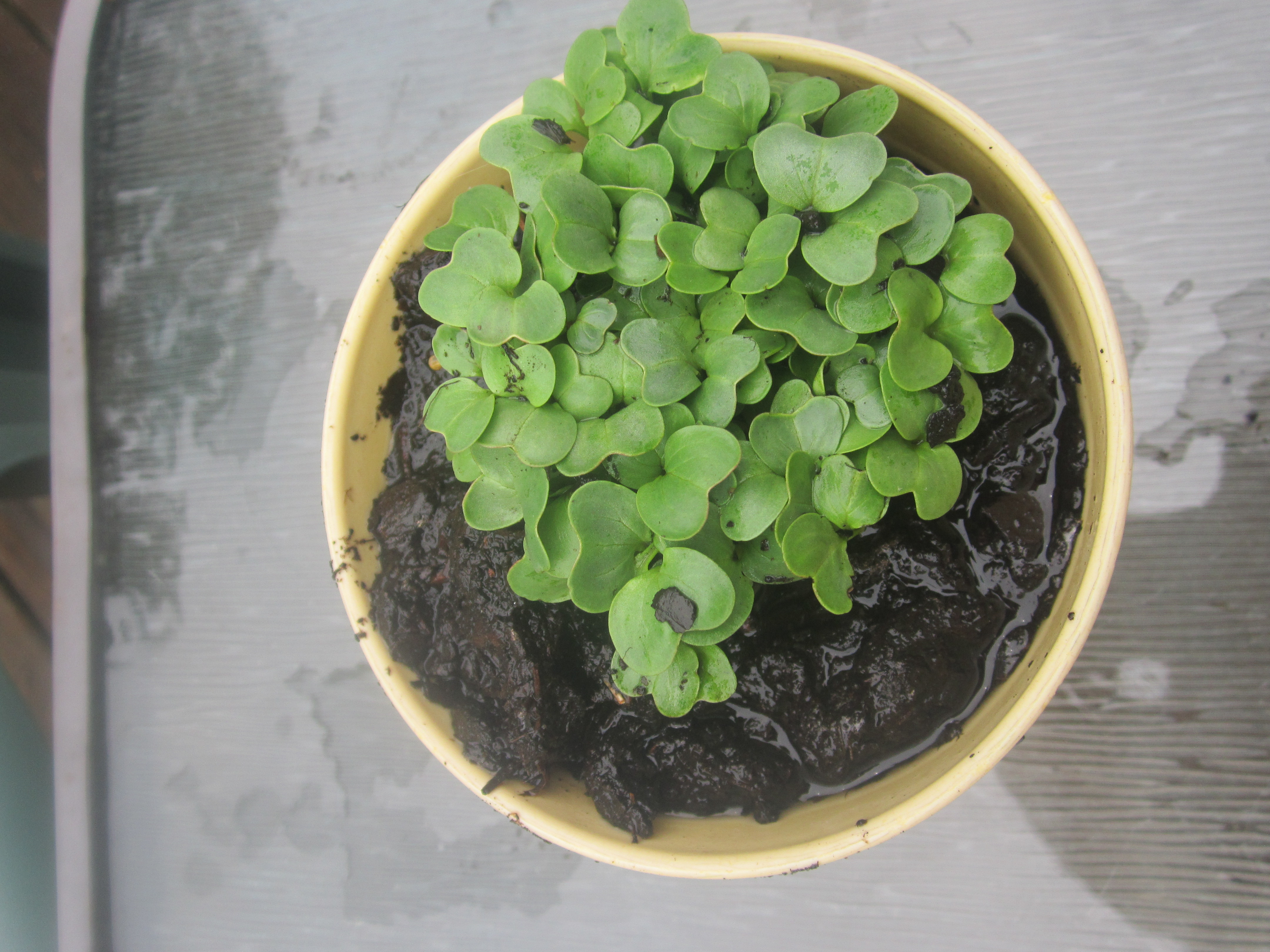
I shrugged.  The radish seeds were leftovers from last year.  It seemed unlikely they’d grow.  Yet, the girls faithfully watered that pot for days and surprisingly they were rewarded by the first hints of green.

A day later, the pot was crowded by infant radishes.  The girls must have dumped 20 seeds all into the same tiny space in the miniature pot.

It was going to be really crowded in there.

Unfortunately, even though it is hard and a little sad, we now have to make some tough choices.  If all the radish plants remain in that pot, none of them will grow correctly.  Some of them have to come on out of there.

Sometimes our lives are just as crowded as that tiny radish pot.  Every single seedling may have potential for beauty, growth, and produce, but nothing can grow when they are all shoved into the small space of one simple life and the restriction of 24-hour days.

Even though it’s hard and a little sad, there are times when some things have got to go so that other areas of your life can grow to their full potential.

It’s not always a mystery when choosing what to toss.

When Jesus walked into the temple and saw the vendors hocking their wares–doves for sacrifices and loans for people needing money for their offering–He responded immediately.  It didn’t take a second’s thought for Jesus to overturn their tables and chase the mercenaries out of the holy space of the temple courtyard.

He threw out sin, contaminated worship, and the profanation of the holy.

As soon as Jesus cleared the place, the blind and the lame came to him at the temple, and he healed them” (Matthew 21:14).

The only reason they could seek healing in the temple, the only reason there was room for the blind and lame to worship, was because Jesus had thrown out the tainted and unholy.

The Message emphasizes this when it says, “Now there was room for the blind and crippled to get in.”

Until Jesus cleaned house, there hadn’t even been room in the temple for those who needed God the most.

Will we allow Jesus to overturn the tables in our heart where sin and the unholy have set up shop?  Will we clear out the trash and the disgusting, so that we have room to come to Jesus—and to bring others along who need Him the most?

Of course, it’s not always so easy to tell what has to go in our lives.  We have a million choices of how to invest our time, energy, talents, and money, and all of them could be good.  We could lead hundreds of crusades against a world of evil.

But if we crowd out our lives with too much that is good, nothing will grow as it should.

Jesus Himself exhibited the kind of focus we need, to hone in on our purpose and refuse to be distracted by every demand and need.

During His ministry, mobs of people sought out Jesus for healing.  He lived in a world of need, need, and more need, and He frequently healed those who sought out His help.

But He didn’t heal everyone.

In fact, when the crowds grew too large and people sought Him out for healing alone, He moved onto another town or He escaped the crowds in order to pray alone on a mountain or by the sea.

Healing was fine.  Miracles were part of His ministry.  But it was not His main purpose for coming and He never wanted that to be the focus of His presence.  Instead, He had come to “seek and to save the lost” (Luke 19:10) and “to save the world” (John 3:17).

Maybe it’s time for you to pull out some of the extra radishes from your pot.  The first ones to go are easy—yank out the sprouts of sin, the unholy habits and the remnants of the flesh life.

Then prayerfully ask God to help you focus.  What seedlings should you tend and invest in until you harvest their potential?  What seedlings need to be set aside so that other areas of your life can grow?

Determine to live an uncrowded life, a flourishing, growing, fruitful life of produce and harvest, made possible by intentional focus and the pursuit of purity in your life and worship.

More Devotions From My Garden:

Heather King is a wife, mom, Bible Study teacher, writer for www.myfrienddebbie.com and worship leader.  Most importantly, she is a Christ follower with a desire to help others apply the Bible to everyday life with all its mess, noise, and busyness.  To read more devotionals by Heather King, click here.

Copyright © 2012 Heather King