Dandelions are out; Tulips are in

A confession.

Until we put our house up for sale last year, I can’t say that dandelions ever bothered me very much.

So they were weeds.   So others didn’t like them.   So what?

I barely noticed them.  When the grass got cut, the dandelions got chopped down, too, and that seemed like enough.

When I wanted someone to buy our house, though,  I suddenly felt motivated to keep  my yard weed-free.

That’s when the war started. and I’ve brought the battle from the old house to the new, only this time I refuse to give up any territory.

These dandelions have overrun yards all over my new neighborhood, but not my yard.  Not this time.

I  pop those dandelions out by the root every time I take a walk or get the mail or just  head out the door to  the minivan.

But while I’m warring against the dandelions, I’m also choosing to fight for something else.

The whole time I’m digging out weeds, I’m cultivating tulips, watching over them like a mom does a newborn baby.  I marvel at every single hint of growth. I point out the first sprouts of green to my kids, and I wait expectantly for the first blooms  to appear.

In my old house, I planted tulips nearly every fall because I love their vibrant colors. They didn’t grow, though.  In the 13 years we lived in that house, I probably only had tulips bloom two of those years.

They were eaten. That’s why.   Apparently tulip bulbs are a high-class delicacy to voles, who tunneled all through the yard and snacked on my plants through the winter.

I’m determined, though–determined to keep the dandelions out and determined to keep the tulips in.  So I clicked my way through Google searches to find some tulip- growing remedies.   Then I headed out to the garden with a bag of crushed oyster shells and containers of garlic powder and  chili powder.  I mixed that fragrant little concoction up and dumped  it into the holes before I dropped the tulip bulbs in the soil.

The garden smelled like garlic for at least a week.

Now,  it’s spring. The tulips are about to bloom and I finally see the results of all that effort.

I have fought against and I have fought for.

Maybe that’s what I need to know spiritually, too.  That battling against is fine and well and good, but it’s incomplete if we aren’t also cultivating what is beautiful and right and enduring in its place.

James wrote:

16 For where there is envy and selfish ambition, there is disorder and every evil practice. 17 But the wisdom from above is first pure, then peace-loving, gentle, compliant, full of mercy and good fruits, unwavering, without pretense.18 And the fruit of righteousness is sown in peace by those who cultivate peace (James 3:16-18 CSB). 

We dig out envy, pride, and evil.  We grow peace, gentleness, and mercy.

Paul told the Galatians:

 Now the works of the flesh are obvious: sexual immorality, moral impurity, promiscuity, 20 idolatry, sorcery, hatreds, strife, jealousy,outbursts of anger, selfish ambitions, dissensions, factions, 21 envy,drunkenness, carousing, and anything similar (Galatians 5:19-21 CSB). 

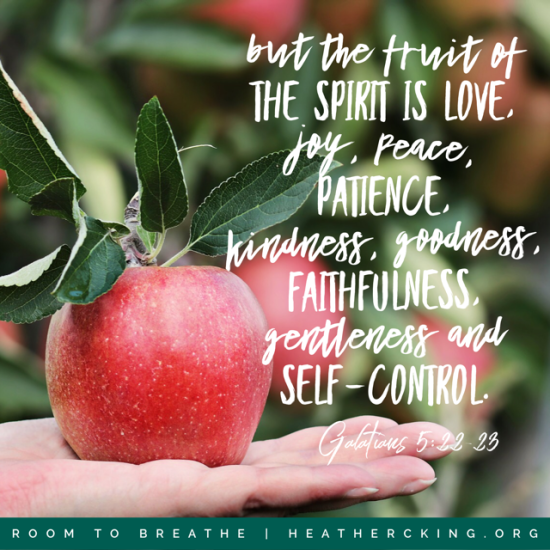
But that’s not the end.  It’s not enough to be rid of the flesh or pull out the sin; we need the Spirit to do a new work within us, and the fruit of the Spirit is:

love, joy, peace, patience, kindness,goodness, faithfulness, gentleness, and self-control (Galatians 5:22-23 CSB). 

I can deal with sin, take it seriously, talk about sin, focus on sin, try to conquer sin, determine not to sin, read about sin, listen to preachers preach about sin, recognize my sin, and constantly declare that I’m a sinner.

But I’m still missing out.  James moves past that.  Paul moves past that.

It’s fruitfulness they describe and it’s fruitfulness I really want.   I want more than a yard without dandelions.  I want the beauty of the tulips.

And that doesn’t happen if I’m focused on myself, my own efforts,  my own failures.   Fruitfulness requires abiding in Christ, lifting my eyes from my self to my Savior.

That’s when my life begins to bear fruit, His supernatural peace, not just the absence of worry, but a heart that loves peace and pursues peace with others.

That’s when He helps me to love even when it’s hard.  That’s when He grows gentleness, mercy, kindness, and goodness within me.   That’s when I have an abiding joy that isn’t determined by circumstances.   This is the Spirit’s work.

No branch can bear fruit by itself; it must remain in the vine. Neither can you bear fruit unless you remain in me.“I am the vine; you are the branches. If you remain in me and I in you, you will bear much fruit; apart from me you can do nothing (John 15:4-5 NIV).


Bible Verses about Hospitality

  • Leviticus 19:34 ESV
    You shall treat the stranger who sojourns with you as the native among you, and you shall love him as yourself, for you were strangers in the land of Egypt: I am the Lord your God.
  • Job 31:32 ESV
    (the sojourner has not lodged in the street;
        I have opened my doors to the traveler),
  • Isaiah 58:6-7 ESV
    “Is not this the fast that I choose:
        to loose the bonds of wickedness,
        to undo the straps of the yoke,
    to let the oppressed[a] go free,
        and to break every yoke?
    Is it not to share your bread with the hungry
        and bring the homeless poor into your house;
    when you see the naked, to cover him,
        and not to hide yourself from your own flesh?
  • Matthew 10:42-44 ESV
    And whoever gives one of these little ones even a cup of cold water because he is a disciple, truly, I say to you, he will by no means lose his reward.”
  • Matthew 25:40 ESV
     And the King will answer them, ‘Truly, I say to you, as you did it to one of the least of these my brothers, you did it to me.’
  • Luke 10:38 ESV
     Now as they went on their way, Jesus[a] entered a village. And a woman named Martha welcomed him into her house.
  • Luke 14:13 ESV
    But when you give a feast, invite the poor, the crippled, the lame, the blind
  • Romans 12:13 ESV
    Contribute to the needs of the saints and seek to show hospitality.
  • Galatians 6:10 ESV
    So then, as we have opportunity, let us do good to everyone, and especially to those who are of the household of faith.
  • Titus 1:7-8 ESV
    For an overseer, as God’s steward, must be above reproach. He must not be arrogant or quick-tempered or a drunkard or violent or greedy for gain, but hospitable, a lover of good, self-controlled, upright, holy, and disciplined.
  • Hebrews 13:2 ESV
    Do not neglect to show hospitality to strangers, for thereby some have entertained angels unawares.
  • 1 Peter 4:9 ESV
    Show hospitality to one another without grumbling.
  • 3 John 1:5-8
    Beloved, it is a faithful thing you do in all your efforts for these brothers, strangers as they are, who testified to your love before the church. You will do well to send them on their journey in a manner worthy of God. For they have gone out for the sake of the name, accepting nothing from the Gentiles. Therefore we ought to support people like these, that we may be fellow workers for the truth.

Doing Small Things for the People Near to Us

colossians-3-8b

In the Sunday morning rush, we have eaten and dressed.  We have brushed teeth and brushed hair.  We have found missing shoes and sent children one by one into their room to collect their Bibles.

When they were younger, my kids needed help with every… little…thing in the morning routine. Now, at least, I am primarily keeper of the clock and pourer of the milk for those too little to do so without spilling.

Finally, with all the children fed and clothed, I retreat to my bedroom for my own prep time.   I’m brushing my own teeth while hunting in the closet for my other shoe and watching the clock out of the corner of my eye.

Time’s up.  We head out the door to load up the minivan.

That’s when I see the two freshly filled water bottles on the counter.

One is my husband’s.

The other is mine.

This is his Sunday morning gift to me.  Almost every week while I’m showering and dressing, my husband retrieves my near-empty plastic bottle from my nightstand and he fills it up with fresh water while he is filling up his own.

It’s the tiniest act of kindness, and yet it means a great deal.

This is a little self-sacrificial thoughtfulness, a gesture of remembering and of noticing my need, an offer of help without even asking.

I feel loved and cared for.

Yes, by this simple thing, the refilling of water, I am refreshed with love.

There are other acts of kindness, of course, and hopefully they go both ways.  Me serving him.  Him serving me.  Secretly filled gas tanks.  A milkshake after a long day.  Trash taken out.  Cards hidden.  Lunches made.

Love thrives on the simplest, most daily acts of consideration and thoughtfulness.  That’s because it’s far more natural to slip, slip, slip into forgetting, and selfishness, and taking for granted.

I wait until we arrive at church, and then I halt our dash into the brick building with four kids in tow for just a moment to say, “Thanks.  Thanks for filling my water bottle.”

Because kindness deserves noticing.  Kindness deserves gratitude.

In Acts 9, widows crowded around Peter to tell him of their sorrow.  Their dear friend, Tabitha (also known as Dorcas), had died, and they missed her.

Scripture says she was “full of good works and acts of charity”  (Acts 9:36 ESV).  The widows “stood beside him (Peter) weeping and showing tunics and other garments that Dorcas made while she was with them” (verse 39).

Maybe it seemed like such a small thing when she was alive:  A garment here, a tunic there.  Dorcas spent time sewing and then gave her gifts to the widows, the poorest around her.  She didn’t give millions of dollars.  She didn’t run a charity house for the destitute or organize a worldwide effort against poverty.

Tabitha did small things for the people near to her.  She served God in the way that she could.

Her kindness was her legacy.  It was the evidence the widows offered to Peter for why he should raise her from the dead—and that’s the miracle that happened that day.

Robert Morgan wrote:

The little things we do are bigger than the great things we do; and how wonderful to learn the importance of the sacred ordinary (All to Jesus).

I read this morning about a family’s wild jaunt of a day filled with random acts of kindness.  They carried flowers to nursing home residents and paid for strangers’ groceries and left dollars on the dollar store shelves.

They had the best time spreading kindness like a million tiny seeds all over their small town and then letting it grow and bloom into kindness in others.

What a glorious thing.

But I’m reminded today that random acts of kindness aren’t just for strangers or neighbors.  Too often we forget the “random acts of kindness” we can offer within our own families.

Maybe for some of us, bitterness, anger, and hurt over ingratitude make kindness feel like an impossible challenge, a chasm we just can’t cross.  But that is when the kindness is the hardest sacrifice we could offer.

This is the offering we give.  We take the time to notice a need.  We make an effort to reach outside of ourselves to help another.  We put aside our agenda in order to love people first and foremost.

Along the way, we rediscover how truly kind God is to us even when we ourselves didn’t deserve it:

But when the goodness and loving kindness of God our Savior appeared he saved us, not because of works done by us in righteousness, but according to his own mercy, by the washing of regeneration and renewal of the Holy Spirit (Titus 3:4-5 ESV).

The Kindness of Strangers

love-is-kind

By the time I made it to the checkout line at Wal-Mart that day, I was a bit frazzled.

The shopping with children while sticking to a budget and using coupons and planning meals for the week on the fly had done me in.

I ran the gauntlet, that candy-displaying aisle that also comes fully equipped with toy cameras, play cell phones, matchbox cars, and other wonderful overly expensive nothing toys that every child “must” have!

Finally, I was done.  Groceries in the cart.  Coupons handed over.  Total amount deducted from my checking account.

Freedom!!

We made it to the van.  My kids piled in.  I loaded every last grocery bag into the back and slammed the door shut.

Then I realized I had left my wallet inside.

Because that’s what tired, frazzled, totally stressed and generally scatterbrained women do.  We leave our personal identification and all access to our financial lives sitting around the Wal-Mart.

I re-opened the van door and started unbuckling my confused children so we could go back inside and hunt for the missing wallet when I heard him: The man who saved my day.

He ran over to me holding my wallet outstretched.  “The cashier let me run it out to you,” he explained.

In A Streetcar Named Desire, the character Blanche DuBois frequently says, “I have always depended on the kindness of strangers.”

Don’t we all?  At some time or another, haven’t we all depended on the kindness of somebody, whether stranger or friend?  They’ve saved us from a rotten day and might as well wear a cape and some tights because it’s as good as being rescued by a superhero.

But, here’s the catch, showing kindness always involves at least a little inconvenience.

My kind stranger abandoned his own cart of groceries and delayed his day to run out to a parking lot and find the crazy woman who can’t keep track of her things.

Too often we don’t make the choice he did.  Instead, we choose convenience over service and comfort over love for our neighbor.

We’re busy. We’re tired. We have important ministry commitments that keep us from  ministering to an individual in need. We hope another will offer help.

And that’s how we can miss the point.

Just like the disciples did in Matthew 19:

“When Jesus had finished saying these things, he left Galilee and went into the region of Judea to the other side of the Jordan. Large crowds followed him, and he healed them there”(Matthew 19:1-2).

They were accustomed to Jesus drawing a crowd so this was business as usual. Everywhere He went, a mob of searching, needy people followed.

It must have been thrilling to be a disciple of this Rabbi—to see His Spiritual power, His draw, to think perhaps He was the Messiah they had long waited for.

And He didn’t just attract a crowd of needy paupers or country-folk.  Oh no.  Where Jesus traveled, so did the powerful elite to examine and cross-examine this religious phenomenon.  So it was on this day “some Pharisees came to test him” (Matthew 19:3).

The disciples were the closest people on earth to a superstar with mass appeal and the attention of big-shots.

But then some parents did the unthinkable.

They “brought little children to Jesus for him to place his hands on them and pray for them.  But the disciples rebuked them” (Matthew 19:13).

Jesus loved the little children.  That’s what we see, say and sing about this passage.  And yes, that’s there.

But there’s something else here, too.

It’s not just that He stops for children, but that He stops at all. 

To the disciples, these families and kids were time-wasters.  Jesus had crowds to attend to, miracles to perform, Pharisees to spar with.

If anyone in the world was too busy for the little, it was Jesus.

But Jesus took time for kindness.

He accepted a little inconvenience in order to show love to the small, undervalued and overlooked because “love is patient; love is kind” (1 Corinthians 13:4).

Sometimes in that Good Samaritan story in Luke 10, we’re the priest and the Levite, so busy with important tasks maybe we’re too busy to show kindness to the people who lie along the road we’re traveling.


Could we choose to change?

Could we choose to turn aside?  To take the time? To value people over schedules and agendas?  To sacrifice for others?

Could we choose kindness?

After all, it hardly mattered if the Samaritan arrived late at his destination.  He had helped the hurting and that had far more significance.

The kindness was worth the inconvenience.  It always is.


Originally published 9/12/2011

Letting Go of the Agenda and Choosing to Love

1 john 4-11.PNG

It happened in the middle of what I call, “The Great Cold of 2014.”

All four of my kids were sick, including my youngest who was still a baby at the time.

I let one of my daughters sleep in late to make up for a near-sleepless night thanks to the stuffy nose.

At about 5 a.m., this daughter had shone a flashlight in my face and tearfully announced that she hadn’t slept all night and she’d never get any sleep so she’d fall asleep at school and never make it to ballet…..and the world was just absolutely going to end!

I’m not the most compassionate nurse of a mom anyway.  Seeing as how that was about the bazillionth time a child had woken me up in that one night, I had to muster some grace for the end of this night shift. I had spent most of my night slathering on Vicks, refilling water bottles, rocking a baby and fetching more tissues.

So I went through the motions one more time:

Walk the child back to bed.

Vicks—rub, rub, rub.

Hand tissues.

Hand plastic bag for placing used tissues inside instead of dumping them on the floor next to your bed (please and thank you). 

Refill water bottle.

Speak truth: The world is not about to end. If you cry, you will feel worse.  You have not been awake all night; I have and I can assure you that you were asleep for some of it.

Place hand on child’s head, smooth back hair, reassure her that she does not have a fever, and pray for her to sleep.  Dear God, please let her sleep.

Make it back to the bed in time to fall asleep before the next child wakes up an hour later.

So, that morning, I woke her up late.  “Twenty minutes until you need to be outside waiting for the bus.”

Here’s breakfast.

Here are clothes.

Here are tissues.

Lunchbox in backpack.  Book in backpack.  Zip it up!

Brush your teeth and I’ll brush your hair while you do that.  Saves time.

But then I paused in the rushed rhythm of this morning blitz and looked at her in the mirror.  She was still crying and was a mess of red-faced blotchy miserableness.

I could push her out that door to meet the bus.

I’m a workaholic.  I’d said it to her already that morning, “No fever.  No throwing up.  This is just a cold. You’ll feel better in an hour.”

But something in me stopped the stampede of my pushy, workaholic, drill sergeant self all over the tender heart of this beloved girl.

I heard it: this strong voice telling me to just stop right there and Love her.

The day before, I had read this in Pathway to Purpose:

“It is a cure for an affliction may of us have, which my friend calls destination disease. That great phrase describes being more concerned about getting to our destination than in finding delight on the journey. Learning to love causes us to linger in the company of others and find enjoyment and companionship along the way” (Katie Brazelton).

Learning to love isn’t just a begrudging necessity of this Christian life, a small blip in the journey on to bigger and better purposes and plans.

Loving others is Christ’s command.

My command is this: Love each other as I have loved you. (John 15:12 NIV).

Loving others is what we’re here to do.  It is the great purpose.  It is the great design.

Am I too busy pushing my agenda in this moment to show God’s love and grace?

Katie Brazelton writes this in Pathway to Purpose also:

“Love, then, is spending ourselves, investing ourselves, in the daily and eternal well-being of others” (pp. 64-65).

I could have pushed that daughter out the door to the school bus and she’d have survived the day.

But that wouldn’t be loving her, not at that time and not in that way. This child not a hookie-playing, school-skipping, excuse-making kid. She’s a good girl and a diligent student who was sick, got too little sleep, and felt rotten.

I love her and I wanted her to know that I love her.pathwaytopurpose

So, I sent two kids out to the bus instead of three.

I wrote a note to her teacher.  I made her a cup of tea.

An hour later, she felt a bit better.  She still had a cold, but she said she was ready to go to school.

I drove her in, and she said it to me twice on the way, “Thanks for taking care of me, mom.”

Don’t we all need love like that at times, the kind that gives space and grace, the kind that chooses tenderness over toughness?

Originally published September 12, 2014


Our Jesus Style

colossians 3-8b

My son screams in the morning when I take off his fire truck pajamas and put on his dinosaur shirt.

Does he want the shirt with the train?  The dump truck and excavator?  The monkey?

No. What he really wants is to stay in his fire truck pajamas all day.

At the end of the day, though, long after I’ve wrestled him into actual clothes, he screams again when I try to take off his dinosaur shirt and put back on the fire truck pajamas.

Now he wants to wear the dinosaur to bed.

Toddler wardrobe wars.

I’ve done this four times with four kids.

I had the daughter who went several years of her life only wearing dresses and skirts and never ever wearing pants.

I had the daughter who only wore pink and purple and didn’t like any other colors, but who also still refuses to wear dresses or skirts.

Then there was my compliant child.  She would say, ‘no’ and take off running when I held up a shirt she didn’t like.

When I found this half-naked toddler in the house, the shirt would be completely missing and she’d appear innocent.

I searched her room, the dresser, every hiding place without result.  No shirt.

Then I went to throw something away and saw it peeking out of the trash can.

She skipped the tantrums and went right for putting clothes she didn’t like in the garbage.

I wonder what would happen if we were as careful about the attitudes, beliefs, and heart conditions we clothe ourselves in every morning.  Maybe we should be that picky.

It’s a favorite metaphor of the apostles, reminding us to peel off the old clothes of flesh, lust and sin and to purposefully put on a brand new outfit everyday.

We are to clothe ourselves in Christ.

Paul described it this way:

But now you must also rid yourselves of all such things as these: anger, rage, malice, slander, and filthy language from your lips. Do not lie to each other, since you have taken off your old self with its practices  and have put on the new self, which is being renewed in knowledge in the image of its Creator . . .

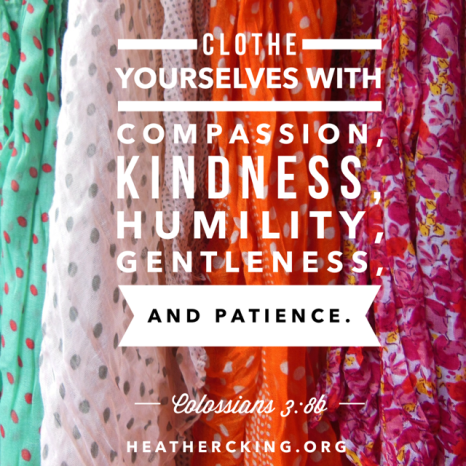
 Therefore, as God’s chosen people, holy and dearly loved, clothe yourselves with compassion, kindness, humility, gentleness and patience. Bear with each other and forgive one another if any of you has a grievance against someone. Forgive as the Lord forgave you.  And over all these virtues put on love, which binds them all together in perfect unity (Colossians 3:8-14, NIV).

In other words, take it off, take it all off: The anger, the bad attitude and grumpiness, the bad language, the lies.  All of those pesky remnants of our pre-salvation self have to go.

We stare at the closet and choose the new clothes we’ll wear each day with great care, pulling on clothes of compassion, kindness, gentleness, patience, forgiveness, and most of all love.

Add in to that mix the favorite outfit of Peter:

“All of you, clothe yourselves with humility toward one another” (1 Peter 5:5)

The bottom line, for Paul is that we should, “clothe yourselves with the Lord Jesus Christ, and do not think about how to gratify the desires of the flesh” (Romans 13:14, NIV).

Unfortunately, our old fleshly selves have a way of sneaking their way back into our closets.

We think we’ve restyled only to snap in anger during the morning rush.

How did that discarded sin find it’s way into our wardrobe again?  More importantly, how did we end up wearing it today?

We aren’t picky enough about the spiritual clothes we don every day.  When we’re not paying attention and when we’re not being careful, we find we’re  wearing the dirty rags of old habits and familiar sins.

We have to make the conscious choice, the prayerful choice, the one where we ask Christ to robe us in His righteousness.

We can choose to wear Jesus each day.

Reject the clothing of the old self and instead pull on love and step into compassion.  Spice things up with a scarf of kindness and a jacket of forgiveness.  Wear our own favorite shoes of humility and gentleness.

It’s our Jesus style, it’s Christ shining through us, making HIs presence in our lives unmistakable.

Originally posted November 8, 2011

Dear Daughter, Remember that Nightmare About Divorce?

Dear daughter,

Remember that morning when I found you slipping quietly out of the bathroom into a corner of the house all alone?

I stopped that mad rush of cereal pouring, hair brushing, and shoe finding to smooth down your wild morning hair and ask if you were okay.marriage

Those tears, the loud kind that burst uncontrollably out of your soul, they shook your whole body and I couldn’t understand what you were saying because those words stuck right in your throat.

A nightmare.

I rocked you just as if you were still my baby girl (even if your head touches my shoulders now).

What was it about? 

I expect monsters, fire, death or even a bad grade on a test.

But you tell me one….slow….word….at a time: I dreamed you…..and……dad……got……divorced.

You stun me.  We hadn’t fought.  There was no tension in the home.  No need to fear.

Hadn’t you watched us hug and kiss goodbye every morning?  Hadn’t you seen me stop cooking that dinner and setting that table every evening to hug your dad and welcome him home for the night?

Why are you afraid?

But it wasn’t really about us at all.  It’s about a scary world where marriages don’t often last and your friends split their time between dad’s house and mom’s house.  It’s about a friend telling you, “My dad doesn’t love my mom anymore.  He doesn’t love any of us.”

And even the safe place seems like shaky ground.

I tell you the truth.romans5

How we are happily married and being together even now is joy.

I tell you how seriously we take that vow we made when we said, “I will love you forever” and slipped those rings onto our fingers.

Sure, we meant romance love and feeling love, but we also meant committed love, covenant love, I-will-make-our-marriage-a-priority love.

Divorce smashes the lives of good people, Christian people, godly women and honorable men.  It’s real and ugly and I don’t want to sugarcoat the danger.

Sometimes even the best wife who has done everything right walks that hard road of aloneness and betrayal.

But I want you to know this, too.  There were decisions I made as a teenage girl, as a single young woman, that made this marriage I have beautiful–not perfect perhaps, but lovely—from the start.

I want you to hear this wisdom: sometimes a good marriage starts when you’re 13 and that first boy asks you to the school dance.   Remember this:

1. Do what God has called you to do—Don’t worry about boys, love, dating, or marriage.  Focus on Jesus.  Grow beautiful and strong in Him.  Go to the college that’s right for you, not the one a boyfriend attends.  Fulfill your calling and your potential.  Don’t look for love; let God bring it to you.

2. Wait for God’s best—That first boy who asks you out isn’t necessarily “the one.”  You are beautiful, smart, funny, strong, kind….Boys might swarm around you; don’t be swayed.  I saved myself body, soul, and mind for the one man who was God’s best for me and your dad is totally worth it.

3. Make sure He’s in love with Jesus—Attending church twice a year, saying you love God but couldn’t be bothered with discipleship or Bible-reading or Christian service?  That’s not loving Jesus.  That’s calling yourself a Christian without the fruit.  If you want to respect your husband as a spiritual leader, he needs to show that leadership before the wedding day.

4. Fall in love with your eyes wide open—You won’t find a perfect man.  No person is perfect and no marriage is perfect either.  Know what his flaws are in advance and be committed with a plan to love him, not change him.romans12

5. Ask hard questions–Some couples marry without talking about kids, career plans, church, or money. Ask the hard questions before marriage.  Don’t just shrug your shoulders and figure love will carry all.  Love dies on battlefields like those all the time.

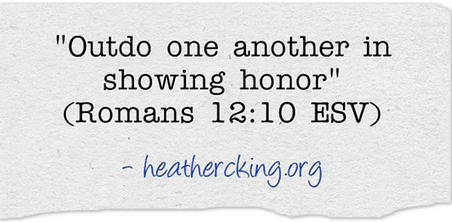
6. Give and Receive Respect–If he annoys you with stupid jokes, doesn’t understand or care about what you have to say, can’t hold a job, loses his temper easily, or embarrasses you in public now, he sure will later.  Marry someone it’s easy to respect and be proud of.  And, make sure he treats you as the precious gift from God that you are, valuing your opinion, not dominating you or devaluing you.  Paul wrote to “Outdo one another in showing honor” (Romans 12:10 ESV).  Make that your goal because kindness always matters. It matters when you’re dating, when you’re first married, and when you’ve been married 20 years.  Give respect and kindness; expect respect and kindness

7.  Build the friendship–That friendship you develop before marriage is what you should cultivate every year after “I do.”  So when the kids are grown and gone, the freshness of young love fades, and your body ages and changes, you’ll still be best friends.

Marriage can be beautiful and holy, a sacred place where God transforms us to be more like Christ, where joy grows, selfless and sacrificial love blooms, and you help each other produce fruit as individuals and as one together.

This was my prayer for my own marriage on my wedding day.  This is what I pray for you and I’m starting now:

 For because of our faith, he has brought us into this place of highest privilege where we now stand, and we confidently and joyfully look forward to actually becoming all that God has had in mind for us to be (Romans 5:2 The Living Bible).

Love,
Mom.

Heather King is a wife, mom, Bible Study teacher, writer and worship leader.  Most importantly, she is a Christ follower with a desire to help others apply the Bible to everyday life with all its mess, noise, and busyness.  Her book, Ask Me Anything, Lord: Opening Our Hearts to God’s Questions, is available now!  To read more devotionals by Heather King, click here.

Copyright © 2014 Heather King

Our Jesus Style

“Clothe yourselves with the Lord Jesus Christ, and do not think about how to gratify the desires of the flesh” (Romans 13:14, NIV).

The first time it happened, I thought I was going crazy.

I rifled through my two-year-old’s dresser and pulled out a new bright red Minnie Mouse t-shirt and some jeans.  Then I placed them in the pile with the other girls’ clothes for the day.

My toddler took one look at the red shirt on top, screamed “no,” grabbed it and went running through the house like she was heading for a touchdown.

I have three daughters.  I’ve faced wardrobe protests before.  There’s the “I only wear dresses, the frillier and sparklier the better” and the “I only wear pink and purple” child.

In the other extreme, we have regular Sunday morning meltdowns with my other daughter who “hates pretty” and refuses to put on a dress.  Oh how I mourn the closet full of hand-me-down dresses just hanging there unused!

So, seeing my two-year-old streak through the house with a red shirt didn’t phase me in the least.  I dressed my other kids and then hunted for my naked toddler.

But when I found her, the shirt was missing.  I looked around her, in the rooms she had been in, back in the dresser, and under the kitchen table (her usual hiding place).

Did I not just see her running with this shirt?  Did it disappear into thin air?  Had I finally completely lost my Mom mind?

Undaunted, I grabbed another shirt, pulled it on over her head and finished the morning dressing ritual and started washing dishes.  I took some crust from their breakfast toast over to the trashcan and dumped it in almost without looking.  Then I walked back to the trash with my used teabag and napkin and tossed those in, as well.

Walking away, though, I realized—I had seen red crumpled clothing in there.  The Minnie shirt was now covered in crumbs and splotches of tea, but I salvaged it and threw it into the washing machine.

Now I’m on to her.  I carry out the clothes in the morning.  The two-year-old’s disappear routinely.  I no longer hunt through the house for them.  I know they’re in the trash can.

My little one has developed a strong opinion about what she wears every day.

I wonder what would happen if we were as careful about the attitudes, beliefs, and heart conditions we clothe ourselves in every morning.  Maybe we should be that picky.

It’s a favorite metaphor of the apostles, reminding us to peel off the old clothes of flesh, lust and sin and to purposefully put on a brand new outfit everyday.  We are to clothe ourselves in Christ.

Paul described it this way:

But now you must also rid yourselves of all such things as these: anger, rage, malice, slander, and filthy language from your lips. Do not lie to each other, since you have taken off your old self with its practices  and have put on the new self, which is being renewed in knowledge in the image of its Creator . . .

 Therefore, as God’s chosen people, holy and dearly loved, clothe yourselves with compassion, kindness, humility, gentleness and patience. Bear with each other and forgive one another if any of you has a grievance against someone. Forgive as the Lord forgave you.  And over all these virtues put on love, which binds them all together in perfect unity (Colossians 3:8-14, NIV).

In other words, take it off, take it all off.  The anger, the bad attitude and grumpiness, the bad language, the lies.  All of those pesky remnants of our pre-Salvation self have to go.

And we stare at the closet and choose the new clothes we’ll wear each day with great care.  Clothes of compassion, kindness, gentleness, patience, forgiveness, and most of all love.

Add in to that mix the favorite outfit of Peter: “All of you, clothe yourselves with humility toward one another” (1 Peter 5:5)

The bottom line, for Paul is that we should “clothe yourselves with the Lord Jesus Christ, and do not think about how to gratify the desires of the flesh” (Romans 13:14, NIV).

Unfortunately, our old fleshly selves have a way of sneaking their way back into our closets.  We think we’ve restyled only to snap in anger during the morning rush.  How did that discarded sin find it’s way into our wardrobe again?  More importantly, how did we end up wearing it today?

Mostly, it happens accidentally.  We aren’t picky enough about the spiritual clothes we don every day.

If you’re like me, you spend the last few minutes of time in bed each morning thinking about what you’re going to wear and all the things you need to accomplish that day.  You’re planning it all out.

So, in those few moments before your feet hit the floor, plan the style of your heart.  Choose to wear Jesus each day.  Reject the clothing of your old self and instead pull on love and step into compassion.  Spice things up with a scarf of kindness and a jacket of forgiveness.  Wear your own favorite shoes of humility and gentleness.

It’s our Jesus style.  It’s what people should see when they glance our way—our Savior.  His pattern in our lives is unmistakable.

Heather King is a wife, mom, Bible Study teacher, writer for www.myfrienddebbie.com and worship leader.  Most importantly, she is a Christ follower with a desire to help others apply the Bible to everyday life with all its mess, noise, and busyness.  To read more devotionals by Heather King, click here.

Copyright © 2011 Heather King

The Kindness of Strangers

I’m so excited to be restarting my small-group tomorrow after a summer hiatus!  Thanks to those of you who participated in the Online Bible Study and whose input blessed me so much.

My small-group is kicking off the year by reading Lisa Harper’s book, Stumbling Into Grace: Confessions of a Sometimes Spiritually Clumsy Woman.  If you can’t join us for Bible Study together, you can still read along with your own copy of the book.  I’ll be using it to guide some of my posts in the weeks ahead and hope you’ll be encouraged by it.

Now on to today’s devotional:

****************************************************************************************************

“‘Love the Lord your God with all your heart and with all your soul and with all your strength and with all your mind’ and, ‘Love your neighbor as yourself'”
Luke 10:27

By the time I made it to the checkout line at Wal-Mart that day, I was a bit frazzled.  The shopping with children while sticking to a budget and using coupons and planning meals for the week on the fly had done me in.  I ran the gauntlet, which any mom knows is the candy aisle that also now comes fully equipped with toy cameras and play cell phones and lip gloss and shiny and wonderful overly expensive nothing toys that every child must have or she will simply die!

Finally, I was done.  Groceries in the cart.  Coupons handed over.  Total amount deducted from my checking account.

Freedom!!

We made it to the van.  My kids piled in.  I loaded every last grocery bag into the back and slammed the door shut.

Then I realized that I had left my wallet inside.

Because that’s what tired, frazzled, totally stressed and generally scatterbrained women do.  We leave our personal identification and all access to our financial lives sitting around the Wal-Mart.

I re-opened the van door and started unbuckling my confused children so we could go back inside and hunt for the missing wallet when I heard him.

The man who saved my day.

He ran over to me holding my wallet outstretched.  “The cashier let me run it out to you,” he explained.

In A Streetcar Named Desire, the character Blanche DuBois frequently says, “I have always depended on the kindness of strangers.”

Don’t we all?  At some time or another, haven’t we all depended on the kindness of somebody, whether stranger or friend?  They’ve saved us from a rotten day and might as well wear a cape and some tights because it’s as good as being rescued by a superhero.

But, here’s the catch, showing kindness always involves at least a little inconvenience.

My kind stranger abandoned his own cart of groceries and delayed his day to run out to a parking lot and find the crazy woman who can’t keep track of her things.

Too often we don’t make the choice he did.  Instead, we choose convenience over service and comfort over love for our neighbor.

We’re busy. We’re tired. We have important ministry commitments that keep us from  ministering to an individual in need. We hope another will offer help.

We miss it.  We miss the point.

Just like the disciples did in Matthew 19.  You see they had grown accustomed to Jesus’ usual ministry pattern.  That day didn’t seem any different: “When Jesus had finished saying these things, he left Galilee and went into the region of Judea to the other side of the Jordan. Large crowds followed him, and he healed them there” (Matthew 19:1-2).

Jesus drew a crowd.  Everywhere He went, so did a mob of searching people and those in need. They pressed in for healing and he performed amazing miracles for the people gathered there.

It must have been thrilling to be a disciple of this Rabbi—to see His Spiritual power, His draw, to think perhaps He was the Messiah they had waited for all this time.

And He didn’t just attract a crowd of needy paupers or country-folk.  Oh no.  Where Jesus traveled, so did the powerful elite to examine and cross-examine this religious phenomenon.  So it was on this day as “some Pharisees came to test him” (Matthew 19:3).

Can you imagine this picture?  The disciples are the closest people on earth at the moment to a superstar and they must have felt like a little stardust had fallen on their own faces.  Jesus had mass appeal and the attention of big-shots.

But then some parents did the unthinkable.  They “brought little children to Jesus for him to place his hands on them and pray for them.  But the disciples rebuked them” (Matthew 19:13).

We normally read this passage and praise Jesus’ love for children specifically, and certainly that’s there.  He instructs His followers to “Let the little children come to me, and do not hinder them, for the kingdom of heaven belongs to such as these” (Matthew 19:15).

But there’s something else here, too.  It’s not just that He stops for children, but that He stops at all.  You see, to the disciples, these families with their kids weren’t important enough to have a moment of Jesus’ time.  He had crowds to attend to, the sick to miraculously heal, and the Pharisees to spar with verbally.  If anyone in the world was too busy, it was Jesus.

But He took the time for kindness.  He didn’t ignore them in the name of ministry impact.  He accepted a little inconvenience in order to show love because “love is patient; love is kind” (1 Corinthians 13:4).

And He did it for the least of these.  How often have we been like the disciples, running interference instead . . . making sure that those who come to Christ are worthy enough of His attention?  We forget that He came for all.  He died for each of us.

More to the point sometimes, we make sure those coming to Christ are worthy enough of our attention.

We pass by the dying man on the side of the road just like the priest and the Levite in Luke 10 because we are busy with important tasks, even sometimes too busy in the service of God to serve the people He’s placed along the road we’re traveling.

Could we instead live a Samaritan life, valuing the lives of others, even strangers sometimes, over our schedule and agenda?

Would it matter the next day if the Samaritan had arrived late at his destination?  Probably not.  But it would always matter that he saved a man’s life.  The kindness was worth the inconvenience.  It always is.

Heather King is a wife, mom, Bible Study teacher, writer for www.myfrienddebbie.com and worship leader.  Most importantly, she is a Christ follower with a desire to help others apply the Bible to everyday life with all its mess, noise, and busyness.  To read more devotionals by Heather King, click here.