Mom Guilt, Part I

If you, then, though you are evil, know how to give good gifts to your children, how much more will your Father in heaven give good gifts to those who ask him!”
(Matthew 7:11)

Mom Guilt.

That’s what had me standing in the Christmas lights aisle at Wal-Mart two days after Thanksgiving.  I squinted and stared at the options before me.  Icicle lights.  Blue, green, or red lights.  Sparkly, flashing lights with 12 different settings.  Heavy duty lights.  Mini lights.

Then there were clips and clasps of every variety to attach the perfect lights to your house.  Did I need these things?  Wasn’t there a way to hang lights sans gadgets and gizmos?

I grabbed plain white mini lights from the shelf, thinking my first attempt at decorating the outside of our home should be simple.  “Start small,” I thought.

For years, my oldest daughter had begged me to decorate the outside of our home for Christmas.  This year, her pleading had reached a new level of intensity.

She took one look at the homes with Christmas lights already gleaming in mid-November (insert looks of disgust here!!!) and whined from the back of our minivan, “Mom . . . . . . . .Everyone’s house is so beautiful for Christmas and ours is just DULL.”

I threw angry glances at the decorated houses as we sped by.  Even if they didn’t know I was mad at them, at least I felt better getting the feeling off my chest.

Still, I get it.  I remember being a kid and pestering my dad to hang Christmas lights on our home for years.  I remember taking the lights tour in the family van and oohing and aahing over the decorations and thinking it’d be great to add a little Christmas flare to the outside of our house.

So, there I was buying lights from Wal-Mart.  And there I was starting simple, stringing them up the steps to my home and around the door frame.  And there was my daughter exclaiming how beautiful it was.

She actually had asked for one of those giant blow-up Snow Globes for the front yard along with a massive Frosty the Snowman and maybe some lighted reindeer figurines.

But there are limits.  Mom guilt only gets you so far.

When I’m praying, I wonder how many of my requests to God make it to His throne room sounding like the high-pitched whine of pouring on “God guilt.”

“God, all my friends have their careers all set and know what they want to do with their lives, but I’m floundering around waiting for some direction here!”

“God, You thought everyone else deserved a husband to love them and tell them they’re beautiful.  What’s the deal with me still being single?”

“God, how come everybody else is financially secure and has a savings plan and we’re struggling paycheck to paycheck and never truly making it?”

Lesson One: God’s Gifts Always Show His Love

God doesn’t bless us or rescue us out of guilt, though.  Not now.  Not in the past.  Not ever.  He’s not guilted into love and He wasn’t guilted into the cross.

Deep down, me stringing lights across the front steps of my house wasn’t truly about guilt either.  It was about love.

My daughter had made a request.  Not a ridiculous one, all motivated by greed or pride or selfishness.  It was the simple desire of a child’s heart.

And I love her.

So, I gave in.  I spent less than $10 for some lights and garland and took a tiny piece of my time and gave her the desire of her heart.

I can’t always give her everything she wants.  She can’t have every toy or outfit or trip her friends have.  She can’t do every activity she wants to do.  Nor would that be good for her anyway.

Still, I give her what I can when I can because I love this beautiful daughter of mine.  I love to see her react with joy, love to see her know she’s loved, love to show her that I listen to what she says.

God loves you.

He loves to see you react with joy.  He loves to see you when you know you’re loved.  He loves to show you that He listens to what you say.

God’s intention is always relational, though.  He isn’t just dishing out answers to prayer requests like some sort of holy vending machine.

The Psalmist tells us, “Take delight in the LORD, and he will give you the desires of your heart” (Psalm 37:4).

Take delight in your relationship with Him.  Linger in His presence.  Make Him your first priority.  Allow Him to re-arrange the furniture of your heart and match your desires with His.

And when you begin to feel the frantic panic of need, remember that God tells you “do not worry about your life.”  Not about having food or drink.  Not about having clothes to wear.  He watches over the birds of the air and the flowers in the field and He values us so much more than them.  He surely can handle our every need.

So, keep your focus relational.  “Seek first his kingdom and his righteousness, and all these things will be given to you as well” (Matthew 6:33).

Then when He pours out blessing on you, when He loads your arms full of good gifts, when He grants the simplest petitions of your heart—even the whimsical longings you are too embarrassed to actually ask for—accept it as a reminder of His love.  He wasn’t coerced or guilted into giving you amazing grace.

Heather King is a wife, mom, Bible Study teacher, writer for www.myfrienddebbie.com and worship leader.  Most importantly, she is a Christ follower with a desire to help others apply the Bible to everyday life with all its mess, noise, and busyness.  To read more devotionals by Heather King, click here.

Copyright © 2011 Heather King

Keeping It Simple and Sweet

“In my anguish I cried to the Lord and He answered me by setting me free”
(Psalm 118:5).

I grew up in a family of five kids.  Life at our house was rowdy, busy, loud and fun.  We were always joking.  We were forever playing games.

Like canasta

Now, canasta was “the family game.”  Sure, we plowed through rounds of Monopoly or Yahtzee, Scrabble, Othello or Clue pretty frequently, too.  Playing canasta, though, was like an initiation rite for us.  Friends and boyfriends or girlfriends all gathered around the table at some point and we began the canasta lessons

Okay, so first we are going to tell you about points.  You see the goal is to reach 5000 points before anyone else.  So, Jokers are worth 50.  Got that?  And Aces and 2’s are 20 points.  Now, Jokers and 2’s are wild cards, but everything else is a natural card.  Cards 8 and higher are worth 10 points and anything less than that is worth 5 points.  Except for 3’s, you see, because red 3’s are special.  If you get one of those, you have to put it down right away on your board and you get 100 points for that at the end of the hand and you get another card to replace it.  Unless you don’t put anything else on the board the whole round in which case the red 3 counts against you.  Got it?  Okay, so now let’s talk about how to freeze the deck . . .

It was dizzying really, trying to explain this game to a newcomer.

Sometimes, it may feel like it’s just as complicated to explain the gospel of grace.

It’s not because grace is so convoluted or hard to understand.  It’s us.  We tangle the web until it’s a jumble of mis-explanations and unnecessary additions.

But Jesus said we should have faith like a child and that means that God’s Good News, the Gospel, is simple enough for a child to understand.

Last night, I listened to my oldest daughter recite her memory verse for church.  Romans 6:23: “For the wages of sin is death, but the gift of God is eternal life in Christ Jesus our Lord.”

We broke the verse down and chatted about it.  And as complicated as it may have sounded at first, the message was simple.

We sin and so we’ve earned death.  But because of Jesus, God gave us eternal life.

That’s the whole salvation message right there.  Simple.  Straightforward.  And easy enough for my child to understand during a simple evening chat on our living room sofa.

She learned the verse that summed up Jesus’ entire purpose for coming to this earth: “The Father has sent his Son to be the Savior of the world” (1 John 4:14).  And she can tell you in one quick verse how we accept the gift of eternal life: “Believe in the Lord Jesus, and you will be saved” (Acts 16:31).

So, why do we make it so difficult?  Why do we add in requirements and make judgements?  Why do we create hierarchies of sin and levels of righteousness?  Why do we create rituals and blessings that hinge on extra expectations?

That’s what the Pharisees did.  They tried to trip Jesus up with complicated questions about the after-life and regulations about the Sabbath and whose sin was to blame for a man’s blindness.  They delighted in the complexity of the law and rejected the simplicity of grace.

In the same way, we ourselves stumble into being spiritual lawmakers at times.  But we are always doomed to failure in that system of rules and regulations and hoops to jump through.  We become chained, trapped and imprisoned by the law.

Paul called it slavery.  He said it was a “yoke of bondage” that we accept even though “Christ has made us free” (Galatians 5:4).

Free.  Free from condemnation.  Free from perpetually feeling less than.  Free from always having to perform to earn approval, salvation, and nearness to God.  Free from the oppressiveness of perfection.

That’s not to say that God lacks depth or that it’s enough to skirt the surface of the Bible, dwelling in a shallow and superficial understanding of our faith.  Just because the gospel that God has crafted is simple, doesn’t mean God is.

Even Paul, the accomplished Jewish scholar and rhetorical expert, admitted sometimes God was just too much for him to fathom.  He exclaimed, “Oh, the depth of the riches of the wisdom and knowledge of God! How unsearchable his judgments, and his paths beyond tracing out! (Romans 11:33).

And so we plunge the depths of God’s Word, rolling up our sleeves and becoming students of the Bible, not to earn religious accolades, but to know Him.  We want to worship Him in “spirit and an in truth.”  We want to love Him not just with our heart and soul, but with our mind also.

But at the end of the day, we need to be able to explain grace to a child, partly so we can maintain our own focus.

When I was an English teacher, I occasionally marked students’ papers with K.I.S.S.—Keep It Simple and Sweet.  That’s what our God did for us.  He knew our propensity to miss the point because we’re ensnared in confusion, so He kept grace simple.  He placed the freedom of the gospel within easy grasp.

If we’re making it difficult, if we’re expecting perfection, if we’re demanding impossible standards and if we’re imposing obstacles to salvation, we’re missing just how simple and sweet God’s grace really is.

Heather King is a wife, mom, Bible Study teacher, writer for www.myfrienddebbie.com and worship leader.  Most importantly, she is a Christ follower with a desire to help others apply the Bible to everyday life with all its mess, noise, and busyness.  To read more devotionals by Heather King, click here.

Copyright © 2011 Heather King

The Writing on the Wall

For those reading Lisa Harper’s book, Stumbling Into Grace, along with my small group, today’s devotional will match up with her sixth chapter: “Johnny Come Lately”

***********************************************************

 “There is no one on earth who does what is right all the time and never makes a mistake”
(Ecclesiastes 7:20, Good News Translation).

My two-year-old created a masterpiece with a purple marker and a piece of paper.

Then she made a masterpiece on my kitchen wall.

I caught her standing back to admire her mural, giggling with pride.

Walking her back to the paper, I reminded her where art belongs without yelling or even raising the volume of my voice a decibel.  She took one look at my stern face, listened to my firm “no” and burst into truly remorseful tears.

I scooped her up to hold her, but she ran out of the room and I found her lying face down on a pillow, pouring out heavy sobs of brokenness.

All because she had made a mistake and done something wrong.  All because she wasn’t perfect and because I had to correct her.

Surely we all can shrug our shoulders and say, “We all make mistakes sometimes.”  Some of us can even get theological about it and quote “For all have sinned and fall short of the glory of God” (Romans 3:23).

But then there is that moment when you need grace because it’s not “all” who sinned or “all” who made a mistake.

It’s you.

It’s me.

Please don’t tell me you missed that part of the blog where you discover I’m not perfect.  The part where I sin.  The part where I have a bad attitude sometimes.  The part where I make silly mistakes and stupid decisions and act like I’m in an I Love Lucy episode.

And every time I’m the one in need of grace, I react like my two-year-old—-run away, bury my face and sob.

Grace sounds so wonderful when you’re explaining it to someone else or extending it to another. But when you are the one who needs grace, oh, how painful it is sometimes

Grace addresses sin.  Forgiveness always requires a wrong.  Erasing always requires a mistake.  Strength always highlights weakness just like perfection always reveals imperfection.

Admitting that we need a Savior requires personalizing the message of redemptive grace.

Ecclesiastes 7:20 says, “There is no one on earth who does what is right all the time and never makes a mistake” (Good News Translation).

So, that means we’re doomed to imperfection sometimes?  Guaranteed to need forgiveness?  Certain of mistakes and assured of being wrong occasionally (or often)?

Yup, that’s us.  That’s you.  That’s me.

So, when we mess up, we can engage in the horrors of self-condemnation.  We can become weighed down by shame and guilt—

that we are a mess
that we’re stupid
that we’re an idiot
that we never do anything right
that we deserve whatever punishment we get
that God can’t ever use someone so broken

Or we can accept the gift extended to us by a God who specializes in forgiveness. As Emerson Eggerichs wrote, “Mistakes can’t be undone, but they can be forgiven.”

But how do we move on after a mistake?  How do we walk humbly, yet not live paralyzed by shame?  How do we serve gratefully rather than withdraw altogether, unworthy as we are? How do we let the past shape us and not destroy us?

David experienced this same struggle.  He was a godly king turned adulterer and murderer.  Faced with the magnitude of his sin, still he continued serving on the throne of Israel, still he wrote Psalms of praise to God.

It wasn’t easy.  In Psalm 51:3, he says, “For I know my transgressions, and my sin is always before me.”

But David acknowledged the need for grace, accepted forgiveness and moved forward in joy.

He brought to God the only acceptable sacrifice: “My sacrifice, O God, is a broken spirit; a broken and contrite heart you, God, will not despise” (Psalm 51:16-17).

God doesn’t desire our brokenness because He rejoices in our shame or needs our degradation.  He wants us to remember that He is God, not us.

We can begin to feel perfect, strong, capable, worthy in our own strength. But if we really are all those things, then who needs grace?  Who needs a savior?  Our worship and ministry can become tainted with self-exaltation. It becomes all about us and not at all about Him.

But when we accept grace, we acknowledge that we’re never worthy, not now, not ever.  Thomas Merton said,

“God is asking me, the unworthy, to forget my unworthiness and that of my brothers, and dare to advance in the love which has redeemed and renewed us all in God’s likeness.  And to laugh, after all, at the preposterous ideas of ‘worthiness.’ ~Thomas Merton~

Yes, we advance in His love.

We don’t need to be shamed by our sin, by our foolishness, by our scattered-brains and accident-prone clumsiness.  We should be humbled.  We are reminded that even though we are not perfect; He is.  Though we are not good enough; He is always sufficient.  Even though we are never worthy, He is worthy of all our praise.

And so we ask Him to forgive us.  We accept His grace.  And then we, like David, ask him to help us move on.

David prayed:

“Create in me a pure heart, O God, and renew a steadfast spirit within me.
Do not cast me from your presence or take your Holy Spirit from me.
Restore to me the joy of your salvation and grant me a willing spirit, to sustain me.   Then I will teach transgressors your ways, so that sinners will turn back to you”
(Psalm 51:10-13).

We pray as well, “Father, forgive us. Wash us clean.  We’re broken people, weak and mistake-prone.  Give us hearts that are confident not in our own strength, but in the power of your grace.  Restore our joy.  And allow us to minister to others even though we are unworthy.  We pray that others will want to know You because of the grace they see in our lives. In Jesus’ name, Amen.”

Heather King is a wife, mom, Bible Study teacher, writer for www.myfrienddebbie.com and worship leader.  Most importantly, she is a Christ follower with a desire to help others apply the Bible to everyday life with all its mess, noise, and busyness.  To read more devotionals by Heather King, click here.

Copyright © 2011 Heather King

Weekend Walk, 10/01/2011

Hiding the Word:

This morning, grace is on my mind.  And I just can’t possibly pick one verse on grace to meditate on this week because two are nudging at my heart.

 Three times I pleaded with the Lord about this, that it should leave me. But he said to me, “My grace is sufficient for you, for my power is made perfect in weakness.” Therefore I will boast all the more gladly of my weaknesses, so that the power of Christ may rest upon me.
2 Corinthians 12:8-9

 Let us then with confidence draw near to the throne of grace, that we may receive mercy and find grace to help in time of need.
Hebrews 4:16

Somehow, I’ve always quoted Hebrews 4:16 as a verse about why we can go before God’s throne and ask Him for anything.  It’s why we don’t have to filter our prayers or be afraid to share with Him what’s on our heart.

But, I’m noticing today that the verse is really all about grace.  Because we need it.  Because He gives it in abundance.

It reminds me of Esther as she prepared to go before King Xerxes without being summoned.  She knew that he could lower his scepter and accept her presence.  Or he could be filled with anger at her presumption and have her killed on the spot.  Fortunately, he extended mercy and heard her petition with favor.

We don’t live with the uncertainty Esther did.  It’s not, “Maybe God will be angry with me for approaching Him or maybe He’ll extend the scepter to me and welcome my presence.”  For us, the throne we approach is always a throne of grace and in our times of need, we can always find mercy there.

Weekend Rerun:

May the God of Hope, originally published 03/18/2011

With fall in the air on this first day of October, I thought it would be fun to remember another beautiful day at the start of spring

“May the God of hope fill you with all joy and peace as you trust in him, so that you may overflow with hope by the power of the Holy Spirit
Romans 15:13, NIV

Today, I walked close enough to my front garden to catch the strong perfume of hyacinth carried by the wind.  It was delicious and relaxing and full of hope.  Those early spring flowers remind me that spring and new life are coming and maybe even here!  That after months of dormancy, a seed buried deep within the frozen ground is now beautiful, colorful, fragrant and abundant.  They remind me that our God is the Creator—able to make something truly wonderful out of nothingness.

And all of these things give me hope. 

It means that I am never trapped or stuck in the relentlessness of my everyday because God brings abundant new life and seasons of blessing.  His mercies “are new every morning” (Lamentations 3:23, NIV).

It means all of my time in the wildernesses of my faith when I saw no visible evidence of God’s plan for me were not wasted.  He has cultivated my heart and brought to life a beautiful “planting of the LORD for the display of his splendor” (Isaiah 61:3b, NIV).

It means that even when I am in an impossible situation, God, who created everything out of nothing, can create a rescue for me.

All day today, I’ve been meditating on and unpacking the truths in a verse that similarly brings me hope: “May the God of hope fill you with all joy and peace as you trust in him, so that you may overflow with hope by the power of the Holy Spirit” (Romans 15:13, NIV).

May the God of Hope: Our God is a God of hope.  Even when we feel that there is no rescue for us and no way out, we can trust in Him to save us.  We are never stuck, abandoned, lost or beyond His reach because our God “is able to do immeasurably more than all we ask or imagine, according to his power that is at work within us” (Ephesians 3:20-21, NIV).  When circumstances are at their most impossible, we have hope because “nothing will be impossible with God” (Luke 1:37, NIV).

Fill you with all joy and peace: Because we have hope, we can walk through disaster with joy and peace.  In the book of Nehemiah, Ezra reads the book of the law to the people for the first time in years. They had returned from exile away from their temple and homeland and now faced the long process of rebuilding.  The people wept with remorse over lost time and out of true regret for turning away from God, but Nehemiah and Ezra reminded them that “the joy of the LORD is your strength” (Nehemiah 8:10, NIV).

As you trust in Him:  My joy and peace come from my connection to God.  They aren’t fake or self-motivated.  I can’t wake up in the morning and determine in and of myself that “I’m going to be at peace today” or “today, I’m going to be joyful.”  Instead, I ask God to please fill me with joy and peace and to help me stay connected with Him every moment of that day, so that I don’t begin to replace joy and peace with discontent, worry, or shame.  God can keep me filled up only as I trust in Him.  When I trust in others, in circumstances or in myself, I will be disappointed and my faith shaken.  Instead, we must “trust in the LORD with all your heart and do not lean on your own understanding” (Proverbs 3:5).

So that you may overflow with hope: God doesn’t just fill us up for our benefit, but so that we can overflow for others.  He places us in community with other Christians so that we can journey together, encouraging one another and bringing hope to others when they need it.  He places us in the world so that we can offer hope to those who are hopeless.

Like the hyacinth in my garden, we are to let Christ manifest “through us the sweet aroma of the knowledge of Him in every place.  For we are a fragrance of Christ to God among those who are being saved and those who are perishing” (2 Corinthians 2:14-15, NASB).  We are like Christ in a perfume bottle!

By the power of the Holy Spirit: It is the Holy Spirit at work deep within us that allows us to be filled up to overflowing.  As Christians, the Holy Spirit is within us, constantly at work in our heart, and present as we face every life circumstance.  There is nothing in this life that we ever face alone and so we have hope, joy and peace.

I am always amazed by Paul and his prayers for others.  Most of the time when I pray for people, I ask God to meet their need, give them a job, heal their sickness, provide for their finances, direct their steps . . . it is always specific and practical.  These prayers are important and necessary, but I shouldn’t stop there.  The vast majority of Paul’s prayers for the churches in his letters were for spiritual blessings.  This verse in Romans 15:13 is just one example, in which he prays for hope, joy and peace and the power of the Holy Spirit at work in their lives.

So, today, I am taking my cue from Paul and praying for you:
Father God, I pray now for those reading this devotional.  Please let your Holy Spirit be at work in their lives, filling them to the point of overflowing with hope, joy and peace.  Help them know that whatever they are facing in life can be entrusted to You and that nothing at all is impossible with You, our Creator God.  You bring beauty and life out of darkness and dormancy.  Give them an excitement about Your work in their lives.  Help them live in joyful anticipation of what You are going to do next.
Amen.

******************************************************************************************************,

Heather King is a wife, mom, Bible Study teacher, writer for www.myfrienddebbie.com and worship leader.  Most importantly, she is a Christ follower with a desire to help others apply the Bible to everyday life with all its mess, noise, and busyness.  To read more devotionals by Heather King, click here.

Copyright © 2011 Heather King

Much More Than We Deserve

For those reading Lisa Harper’s book, Stumbling Into Grace, along with my small group, today’s devotional will match up with her fifth chapter: “Cat Appreciation Day”

***********************************************************

“My soul glorifies the Lord and my spirit rejoices in God my Savior, for he has been mindful of the humble state of his servant.”
Luke 1:46

The Christmas lists have begun in our house.  My kids spot fairy costumes and toys, games, and crafts at Wal-Mart and suddenly they’re pleading and begging.  My response is nearly automated, “Maybe that’s a good thing to request for Christmas!”

My kids know they’ll have presents under the Christmas tree this year because we love them and we enjoy giving them good gifts. Unlike Santa’s treats, our gift-giving doesn’t depend on whether they accumulated enough nice points and avoided the naughty list.  The gifts we give them are gifts of grace.

Just like God does for us.

It’s so easy for us to blur the lines between grace and works.  It’s easy to slowly forget just how incredible this unreasonable and abundant grace of God’s really is and to start drifting ever so slowly into working, doing, serving, and earning God’s affection and blessing.

Not that there aren’t consequences for behavior.  Sometimes we lose out on God’s best for us simply because we didn’t follow His commands in the first place.

But sometimes blessing is more than just avoiding the pitfalls of bad choices. Sometimes God chooses to rain down good gifts on His children simply because He loves them.

There are times, though, when we’re searching, searching, searching the sky for any sign of showers of blessing.  Maybe we’re even toting an umbrella around in hopes for a drop of grace or two.  But we feel overlooked instead.

Worse yet, sometimes it looks like others are receiving so much.  And then the jealousy kicks in because we’re too busy watching the weather patterns in other people’s yards.

Jeremiah felt the same way when he asked, “Why does the way of the wicked prosper?” (Jeremiah 12:1).  Job asked, “Why do the wicked live on, growing old and increasing in power?” (Job 21:7).  The Psalmist wrote, “How long, LORD, will the wicked, how long will the wicked be jubilant? (Psalm 94:3).

This was probably Hannah’s struggle on a daily basis.  Her husband loved her, but it was his second wife, Peninnah, who had all the babies.  While Hannah prayed continually for a son, she remained childless.

It just didn’t make sense.  Hannah was a righteous woman.  She prayed faithfully and worshiped God.  All this while Peninnah purposely “provoked her severely, to make her miserable” (1 Samuel 1:6).

Well, that just doesn’t seem right and certainly doesn’t seem fair—does it?

And it’s true.  We don’t always understand the whys and wherefores of when God blesses, who God blesses, how He blesses and why.

In Psalm 37, though, David tells us, “Do not fret because of those who are evil or be envious of those who do wrong; for like the grass they will soon wither away, like green plants they will soon die away. Trust in the Lord and do good; dwell in the land and enjoy safe pasture” (Psalm 37:1-2).

In other words, don’t spend time worrying about others. You just worry about you.  Trust in God.  Obey what He tells you.  He’ll take care of what you need.

God did finally give Hannah the desire of her heart.  Maybe it was because of her persistent prayer or the pain that she poured out on the altar before Him.  Maybe it was because she vowed not to keep the blessing for herself, but instead to turn over the promised son to the service of the Lord.

Or maybe, as she says herself, it was because “by strength no man shall prevail” (1 Samuel 2:9).

You see, Hannah was humble.  She knew that any blessing she received from God was just that—a blessing, a gift, not something she deserved because she prayed hard and long enough or went to church often enough. 

“For by strength no man shall prevail,” she said.  That means it’s never because of our strength, effort, or ability that we get anything.

It’s always because of His grace.

In her prayer, she reminds us of the same principle expressed in 1 Peter 5:5-6: “All of you, clothe yourselves with humility toward one another, because, ‘God opposes the proud but shows favor to the humble.’ Humble yourselves, therefore, under God’s mighty hand, that he may lift you up in due time.”

Hannah says, “The Lord kills and makes alive; He brings down to the grave and brings up.  The Lord makes poor and makes rich; He brings low and lifts up.  He raises the poor from the dust and lifts the beggar from the ash heap, to set them among princes and make them inherit the throne of glory” (1 Samuel 2:6-8).

Mary had this exact reaction when Gabriel told her that she was chosen by God to be the mother of the long-awaited Messiah!  It was the greatest honor any woman could receive, but she knew it wasn’t about her.  It was about Him.

She sang:

“My soul glorifies the Lord
and my spirit rejoices in God my Savior,
for he has been mindful
   of the humble state of his servant.
From now on all generations will call me blessed,
for the Mighty One has done great things for me—
holy is his name.
His mercy extends to those who fear him,
   from generation to generation.
He has performed mighty deeds with his arm;
 he has scattered those who are proud in their inmost thoughts.
He has brought down rulers from their thrones
   but has lifted up the humble.
He has filled the hungry with good things
   but has sent the rich away empty.
He has helped his servant Israel,
remembering to be merciful
to Abraham and his descendants forever,
just as he promised our ancestors” (Luke 1:46-55).

Sometimes we begin to feel that we deserve God’s grace, that we’ve earned good gifts from Him or have merited His favor. It’s the sneaking influence of spiritual pride and deep down we begin to think God owes us something.

But Hannah and Mary remind us that God loves a humble heart.  He enjoys blessing those who receive His gifts with true gratitude and who respond with praise, thanking Him for His mercy, for His grace, and for giving us much more than we deserve.

Heather King is a wife, mom, Bible Study teacher, writer for www.myfrienddebbie.com and worship leader.  Most importantly, she is a Christ follower with a desire to help others apply the Bible to everyday life with all its mess, noise, and busyness.  To read more devotionals by Heather King, click here.

Copyright © 2011 Heather King

Weekend Walk: 09/10/2011

Hiding the Word:

Last Sunday, my oldest girl graduated to an older Sunday School class.  She burst out of there so excited about how great it was because they “did great crafts!”  They do something else, too . . .  memorize a verse each week.

This week, her verse is one of my favorites:

“Trust in the LORD with all your heart and lean not on your own understanding;
in all your ways submit to him, and he will make your paths straight”
Proverbs 3:5-6

I’m posting that around my home in the NIV translation this week to memorize and meditate on.  But, I also want to share with you the translation in the Message, which I also came across this week in my reading.

Trust God from the bottom of your heart;
   don’t try to figure out everything on your own.
Listen for God’s voice in everything you do, everywhere you go;
   he’s the one who will keep you on track.

Those are freeing thoughts—we don’t have to figure everything out on our own and that it’s God who keeps us on track.  We just need to listen at all times to the prompting of His Spirit.

It’s also a challenging thought because, well, I like to figure everything out on my own. But that involves very little faith and trust in my God.

Have you picked a verse to learn this week?  Will you share it with us?

Weekend Rerun:

God’s Love Letter, Originally published 03/09/2011

Yet the LORD longs to be gracious to you; therefore he will rise up to show you compassion (Isaiah 30:18, NIV)

The other night I was fluffing my pillows before I turned out my light and I felt paper where pillow should be.  A card!  And inside, a love letter from my husband.  I cried as I read it and cried more the next day when I read it again. (No one reads love letters just once, right?!)

Everyone receives love in different ways, but words are precious to me.  Whether they are written or said, words are the most powerful way to show me love and the most potent weapons used to hurt me.  That’s because they rumble around in my head and heart and echo back to me over time.

Still, spoken words and written words aren’t equal.  Yesterday, I wrote that humans are forgetful creatures.  We so easily forget what people say to us and sometimes we mis-remember and distort conversations.  Written down, though, the words became more concrete and able to withstand time, changing circumstances, and shifting emotions.

Unfortunately, I do sometimes forget.  The other day I had a breakdown while doing my hair.  I was getting ready to go out with my husband, so I thought, “I’ll try to look nice.”  So, I painted my nails.  I’m the worst ever at painting my nails.  I’m never patient enough and always touch something before they’re dry.  In fact, it’s pretty impossible to meet the needs of three little people without touching my children, so I had to re-paint this one fingernail FOUR times!!!  At that point, when my daughter asked me, “Mommy, can you . . . .” I gave in and just took the nail polish off completely.  Then, I decided to work on curling my hair.  I love curly hair.  But, alas, I was the kind of girl who read books as a child and not a little girl who played with hair.  That means that I am now a totally clueless grown woman when it comes to curls and blow drying and styling.  After just a few attempts at curls resulting in frizz and disaster, I washed it all out and just left my hair the way it normally is.  So much for dressing up.

At that point, I forgot.  I forgot my husband loves me the way I am and he thinks I’m beautiful.  Inside, I heard the lies—“You aren’t pretty enough.  You’re a plain Jane and always will be.  You’re surrounded by women with better hair, skin, nails and clothes and you just don’t measure up.”

I need the reminders that I am loved.  Imagine if a married couple said, “I love you,” on their wedding day and then never again expressed love for each other.   Years later, the wife complains, “You never tell me you love me” and the husband answers, “I showed you I loved you when I married you.”

God showed us His love clearly and completely through the cross.  Romans 5:8 says, “But God demonstrates his own love for us in this: While we were still sinners, Christ died for us” (NIV).  That sacrifice should serve as concrete evidence of love.

The world tells us, “Look at these bad circumstances in your life.  God doesn’t love you.”   We sin and we think, “No way can God forgive me or use me or love me.  I’m too messed up.”   We feel distant from Him, and we think, “God’s left me.  He’s no longer here by my side.”  But, we look to the cross and we remember, God loved me enough to die for me even when I was still rejecting Him.

Christ’s death on the cross was the most perfect expression of love, but God knows us.  He knows our fickle and forgetful hearts.  He knows that—like a wife in a marriage—we need reminders and expressions of love over time.   So He gives us the Bible, His love letter to us.  We don’t need to seek affirmation and fulfillment from other people or accomplishments.  At any time in a day, we can meet with God and be reminded of His great love.

I tell my two daughters at least once a week, “No matter what anybody says and no matter what happens, remember that you are loved, you are beautiful and you are smart.”   Then, they roll their little eyes at me and sigh, “I know, Mom.  You tell us all the time.”  And I do.  I tell them all the time because the media, culture, mean girls, and Satan will fight hard to tell my girls lies, to convince them that they are ugly, fat, unloved, and not good enough.  I give my daughters truth over and over again, hoping that they can identify and reject the lies.

It is in Scripture, that God expresses His love over and over again, so that we don’t forget it.  In Hosea 2:19, we read:

And then I’ll marry you for good—forever!
I’ll marry you true and proper, in love and tenderness.
Yes, I’ll marry you and neither leave you nor let you go.
You’ll know me, God, for who I really am (MSG).

Stressed out about work?  Read God’s Word and be refreshed.  Feeling like a failure as a parent?   Let God’s Word encourage and strengthen you.  Not sure that God can take care of you?  Dig deep into the Bible and remember His promises.  Struggling with feeling like you aren’t beautiful or loved?  Take down God’s love letter from the shelf and be reminded of how He cares for you and longs to lavish you with affection and blessing.

Sitting on the shelf unread, God’s love letter to us might look nice and serve as a memento.  But, it’s only when we take God’s Word down and read and re-read it that the words regain their power and become an effective arsenal against the lies we face every day.

****************************************************************************************************

Heather King is a wife, mom, Bible Study teacher, writer for www.myfrienddebbie.com and worship leader.  Most importantly, she is a Christ follower with a desire to help others apply the Bible to everyday life with all its mess, noise, and busyness.  To read more devotionals by Heather King, click here.

Copyright © 2011 Heather King

Online Bible Study: Week Seven (Chapters 13 & 14)

Welcome to week seven in the study of Priscilla Shirer’s Discerning the Voice of God.  I applaud you all for sticking with us this summer as we read through her book together.  I know you’re busy; I know you have a million other things vying for attention.  And yet, you have set aside time for this book and I am praying for God’s blessings for you as a result.

If I can give one piece of encouragement, it’s don’t give up!  Don’t leave the book half-read or this study partly done.  If you’ve fallen behind, please jump back in as you are able because I don’t want you to miss some of these great chapters at the end.  You can comment on any older post as you catch up on the reading.

My Thoughts:

“Hello. Thank you for calling heaven, where your eternal destiny is secure.  Our menu options have recently changed . Please listen closely to all of the options before making a selection.

Para Espanol, por favor pulse dos.

Please speak or press your 10-digit salvation account number.

Thank you!  Did you know that you can access God’s perspective on many things at any time from the comfort of your own home?  Your heavenly user guide or Bible is available 24 hours a day, 7 days a week.

To check your good deeds account, please press one.
To request forgiveness, please press two.
For automated guidance about your account questions, please press three.
For doctrinal information, please press four.
For help with health, finances, and relationships, please press five.
For all other prayer requests, please press six.

If this is an emergency, please hang up and call your pastor.

To repeat this menu, please press zero.  If you would like to speak to a customer representative, please press nine now.

All of our customer representatives are currently busy.  Due to abnormally large call volume, your wait may be delayed.  Please hang on the line and we’ll be with you shortly.

Elevator music.  Cheerful ads.  More music to which you drum your fingers.  The doodles on your paper have now progressed from swirls and cubes to intricate designs and flowers.

We’re sorry.  All of our customer representatives are currently busy.  Please hang on the line and we’ll be with you shortly.”

I’ve been on hold with companies a lot lately and the routine is the same with each call.  Press buttons.  Answer questions.  Listen to annoying music and assurances that they will be with you as quickly as possible.

Priscilla Shirer writes this week that God’s “entire goal, since the beginning of time, is to have a personal, intimate, loving fellowship between the two of you.”  That means that He longs for us to commune with Him all the time about everything we’re facing and He responds to us both by listening and answering with love and grace.

He isn’t putting us on hold.  He isn’t creating go-betweens to filter out calls until we really prove we need to talk to the Supervisor on Duty.  He wants to spend time in relationship with us both in the times that we experience joy and the moments we feel pain and He’s always listening as we cry out to Him.

All that we experience is subject for prayer.  In her study on Daniel, Beth Moore notes that Paul encourages us to pray and give thanks “in every situation” (Philippians 4:6).  We’re compartmentalizers some times.  We think, this I can handle, but this I can’t so I’ll pray about it  This I can think through, but this I’m lost on so I’ll pray about it.  This is too small to pray about, but this is big enough to mention in the Sunday School prayer time. This the doctor will answer, but this I’m going to have to leave to God.

There’s not some stuff that fits into a God category and other stuff that doesn’t.  In the sorting bins of our needs, emotions, and thoughts, there’s just one basket and it’s got a big fat label on it marked “God’s.”  Praise God that He is responsive, loving, gracious, and accessible.

Chapter Outlines:

Chapter 13: A Fatherly Voice

  • God has a personal message for us and we cannot assume that He has the same plan for others that He has for us.  Obviously, on basic doctrinal issues, on the matters of sin that His Word clearly addresses, the standard is consistent.  But, on questions of personal choices–who to marry, where to work, whether to work or stay home, and more, we must remember that we “run the risk of becoming legalistic and placing other believers in bondage” if we believe what God has told us applies to everyone (p. 153).
  • God’s voice may be convicting, but it is not condemning.  He doesn’t harp on your sins of the past.  “He desires to bring healing and restoration by forgiving my sin and throwing it into the sea of forgetfulness” (p. 155).

Chapter 14: A Challenging Voice

  • God isn’t always talking about how to make us feel comfortable.  In fact, He’s pretty frequently asking us to step out of comfort and into faith.
  • The quote from Oswald Chambers on p. 163 is pretty challenging: “Have you ever heard the Master say something very difficult for you? If you haven’t, I question whether you have ever heard Him say anything at all.”
  • We may feel ill-equipped for the task God has called us to, but “it is through your inability that He reveals His power” (p. 164).

Your Thoughts:

  • What were your favorite, quotes, passages or Scriptures from these two chapters?
  • Have you ever made a choice that you knew was God’s will for you, but also knew it wasn’t God’s will for everyone?
  • Do you ever struggle with feelings of condemnation versus conviction?  Is it easy for you to accept Christ’s forgiveness and move on or are you sometimes trapped by guilt?
  • When has God called you out of comfortable and into faith?  What has God taught you in those situations where He asked you to do something that was beyond your natural ability, experience, training, gifting, etc.?

Heather King is a wife, mom, Bible Study teacher, writer for www.myfrienddebbie.com and worship leader.  Most importantly, she is a Christ follower with a desire to help others apply the Bible to everyday life with all its mess, noise, and busyness.  To read more devotionals by Heather King, click here.

Shedding 5 Pounds With Yogurt

“Sanctify them by the truth; your word is truth”
(John 17:17).

While my daughters munched on morning toast and cereal, I toted a yogurt around the house, eating an occasional spoonful in between changing diapers, putting away blankets, feeding the cats and all the normal start-the-day chores.

My daughter wide-eyed in innocence asked me, “Mom, are you trying to lose your weight?”

My weight?!

“Well,” she explained, “I saw that commercial on TV and they said you could eat that yogurt and lose your weight like even 5 pounds maybe and it would be easy.”

Thanks Mr. advertiser, sir, for making my six-year-old a personal diet coach.

Truth hurts a little sometimes, doesn’t it?

At least it should.  When Jesus prayed for the disciples, He asked God to “sanctify them by the truth; your word is truth” (John 17:17).  Sanctify means to make holy and that’s what this Bible with all of its packed-in and sometimes painful truth is supposed to be working out in our lives–our sanctification, our holiness, our transformation into Christ-likeness.

While the truth sometimes comforts us, it also shakes us up a bit.  It reminds us of ways we need to change and calls us to repentance.

When I read God’s Word quickly, glossing over the Scripture passages just so I can check off my Bible reading for the day, I miss out on the conviction and also the power of God to change me.

Sometimes reading the Bible should make me squirm a bit in my chair or turn my face hot with sorrow at revealed sin.  Because I’m not perfect.  Because I don’t want to stay this way.  Because I want people to look at me and see Christ and as I am now, I’m an imperfect reflection.

Oswald Chambers wrote:

When Jesus drives something home to you through His Word, don’t try to evade it.  If you do, you will become a religious impostor.  Examine the things you tend simply to shrug your shoulders about, and where you have refused to be obedient, and you will know why you are not growing spiritually.

The author of Hebrews said:

For the word of God is alive and active. Sharper than any double-edged sword, it penetrates even to dividing soul and spirit, joints and marrow; it judges the thoughts and attitudes of the heart.

The Word of God is wielded as a scalpel by a Master Surgeon, cutting into our wounded and broken places, separating out what is healthy flesh from what is diseased, dead, and necrotic.  The Surgeon doesn’t dissect in order to hurt and bring pain; He cuts deep to bring health, healing and wholeness.

And if we never feel the sting of the knife’s blade or run our hands over a scar left in place of the wound, then we’ve never allowed His Word to clean out the pockets of sin buried in hidden places of our life.

It’s not that the Bible becomes a club of accusation or that it’s never an encouraging or comforting word.  It’s not just that Scripture points a finger in our face and dumps burdens of shame on our back. Not at all.  Romans 8:1 promises us: “Therefore, there is now no condemnation for those who are in Christ Jesus.”

No, Scripture reminds us of our mistakes, but accompanies that with the offer of grace.  It’s always a package deal.

Ezra, the high priest of Israel, and Nehemiah finally finished rebuilding the temple and walls of Jerusalem after returning from exile.  They gathered “all who could understand” into the square while Ezra read aloud the Book of the Law of Moses.  The crowd listened in silence, except for their weeping as God’s Word uncovered their disobedience.

The people stood for hours, morning until noon, each day while he read, and they fasted and donned sackcloth and dumped ashes on their head in sorrow for their sin.  Theirs was the natural response of people who were attentive to God’s Word.

In the midst of their distress, their hearts brought low in shame, they declared, “But you are a forgiving God, gracious and compassionate, slow to anger and abounding in love” (Nehemiah 9:17).

Oh yes, truth hurts sometimes.  If it’s never painful or uncomfortable, maybe we’ve tuned it out or accepted watered-down adaptations.  Even as we wince with pain, though, we know that the one yielding the scalpel does so with grace and compassion, pouring out a healing balm of forgiveness that washes away the signs of sin.

Heather King is a wife, mom, Bible Study teacher, writer for www.myfrienddebbie.com and worship leader.  Most importantly, she is a Christ follower with a desire to help others apply the Bible to everyday life with all its mess, noise, and busyness.  To read more devotionals by Heather King, click here.

Copyright © 2011 Heather King
Weekend Walk: 07/16/2011

Welcome to the weekend walk!

We hit 100 posts on this blog on Friday, and now we’re celebrating with a giveaway.  Don’t forget to enter by commenting anywhere on this website by midnight on Sunday, 7/17.  I’ll announce the winners in Monday’s post!

If you’re doing the online Bible study with us, please take time to comment on this week’s post before our new reading begins on Monday.

Hiding the Word:

How did your first week of Scripture memory go?  I copied my verse onto an index card, said it aloud several times and set it on my stove so I’d read it all week.  I hope you found a method that worked for you!

Here’s my verse for the new week:

Psalm 34:4
“I sought the LORD, and he answered me; he delivered me from all my fears.”

If you are choosing a different verse, please share it with us in this space!

I’m slowly adding to our collection of verses on this website.  I hope they are a blessing to you.

The Weekend Rerun:

Tyranny of the Urgent (Originally published on 2/19/2011)

Charles Hummel wrote about how to be free from the “Tyranny of the Urgent,” and I could probably use some of those tips just about now.  My windows are open, it’s beautiful outside and instead of enjoying a relaxing day, I’m rushing to meet demands and fulfill requests, mostly for people under 4 feet tall.

How about you?  Do you feel like you are pushed from one urgent thing to another, always rushed, always breathless?  When my husband asks me in the evenings or weekends, “What do you want to do?,” I always answer with the list of things I have to do.  I have to do the laundry and the dishes, mop the floor, answer some emails, send a note, finish some work . . .

This morning, I was reading Psalm 127 and it made me laugh.  All you moms of young children might enjoy a giggle, too:

In vain you rise early
and stay up late,
toiling for food to eat—
for he grants sleep to those he loves.

Children are a heritage from the LORD,
offspring a reward from him.
Like arrows in the hands of a warrior
are children born in one’s youth.
Blessed is the man
whose quiver is full of them (Psalm 127:2-3, MSG).

Are you laughing?  I just find it so perfect that God promises rest and sleep and then in the very next verse reminds us that “Children are a heritage from the Lord.”  Some days we just need the reminder that these precious little people who don’t let us sleep in and think that Mom sitting down for 2 minutes is a problem best rectified by asking for her help every 10 seconds–yes, these little children are a blessing from God.

Even those of you who don’t have young children at home probably feel the burdens of numerous demands placed on your shoulders.  Living in this world requires us to meet certain demands and expectations.  We can’t simply shrug off all of our responsibilities.  We have school schedules to submit to, work deadlines to meet, ministry demands to fulfill, and families to care for.

It reminds me of Martha in Luke 10. She’s rushing around, totally stressed, trying to provide the best hospitality for her guests, Jesus and His followers.  It says that, “Martha was distracted by all the preparations that had to be made.”   She was doing what she “had to” do.

What blesses me about this is that Jesus looked right at her and said, “Martha, Martha,” the Lord answered, “you are worried and upset about many things,  but few things are needed—or indeed only one” (Luke 10:41-42, NIV).

God can look straight into my heart many times every day and say, “Heather, Heather, you are worried and upset about so many things, but only one thing really matters–your relationship with Me.”

In the middle of all of the “musts,” “have-to’s,” and “shoulds” on our to-do lists, it’s easy for time with God either not to fit into our highly scheduled lives at all or for it make it on the list just as another “have-to.”

God doesn’t want to be another item on our to-do list.  He doesn’t keep a running tab in heaven of how many minutes you spent on your quiet time today or whether or not you are behind on your Bible reading plan.  He simply desires intimacy with you.  He calls you to come away to spend time with Him, but He does it by wooing us and offering us grace and rest in His presence, not by making demands on us.

As it says in Matthew 11:28-30:

Are you tired? Worn out? Burned out on religion? Come to me. Get away with me and you’ll recover your life. I’ll show you how to take a real rest. Walk with me and work with me—watch how I do it. Learn the unforced rhythms of grace. I won’t lay anything heavy or ill-fitting on you. Keep company with me and you’ll learn to live freely and lightly (MSG).

This world forces its rhythms onto us, but God offers to teach us the “unforced rhythms of grace.”   Accept His grace.  You are loved and valued by Him whether or not your house is spotless, your kids practiced the piano every day this week, the laundry is folded neatly and put away, your work is perfect and your desk organized.  His grace sets you free from the “tyranny of the urgent” and lets you “live freely and lightly” instead.

************************************************************************************************************

Heather King is a wife, mom, Bible Study teacher, writer for www.myfrienddebbie.com and worship leader.  Most importantly, she is a Christ follower with a desire to help others apply the Bible to everyday life with all its mess, noise, and busyness.  To read more devotionals by Heather King, click here.

Copyright © 2011 Heather King

VBS Lessons, Day Four: God loves you, no matter what

This week I’m going through the lessons of Group’s PandaMania VBS and considering how they apply to more than just kids!

God Loves You, No Matter What
Lead me along the path of everlasting life
Psalm 139:24

After a conversation with a friend this week, I recalled the first time I had to turn over my green card on the classroom behavior chart and leave the yellow card on top.  I was in third grade and had forgotten my math homework.  The teacher asked us to hand it in and I quickly zipped open my backpack to grab up my finished paper.  Only it wasn’t there.  So, I pushed things around gently and then more energetically.  I scrambled through the papers and then yanked everything out.  Slowly I realized my paper wasn’t in there.  I had nothing to turn in.

So, I had to shuffle over to the behavior bulletin board and take my punishment.  A yellow card for Heather.  Bright yellow so everyone in the class could see I messed up.  I forgot.  I was careless and irresponsible.

Embarrassed, I slinked back to my desk and slumped down hoping to become invisible in my chair.  My face was burning red hot, the kind of shame that makes your ears sear into the sides of your head.

But, when I sheepishly glanced at the bulletin board the next morning, I saw a green card next to my name again.  It was a new day and with it came a rush of joy that the mistakes of yesterday could be so simply erased and forgotten.

It was the astonishing grace of a fresh start.

That’s what Christ did for us.  Raising us up from the dead.  Taking our place on the cross and erasing the record of our wrongs so that we could stand before the Most Holy God and look . . . holy and pure.

He saw you and me as worth saving even when we were splattered with the mud of sins and caked in the foul dirt of this world. “But God demonstrates his own love for us in this: While we were still sinners, Christ died for us” (Romans 5:8).

So, what should we do with this amazing grace?

I know what I do most of the time—forget it, take it for granted, or, even worse, nullify it by trying to be perfect.  I begin to live in a spiritual world of musts, shoulds, do’s, don’ts, shalls and shall nots.

The Psalmist wrote, “If you, Lord, kept a record of sins, O Lord, who could stand?  But with you there is forgiveness; therefore, You are feared” (Psalm 130:3-4).

Yes, we would be pounded into the ground if we carried the weight of our sins on our wimpy shoulders.  We couldn’t stand in His presence much less crawl face to the ground before His throne.

But.

But with Him there is forgiveness.  Praise God!

The Psalmist ends that thought with, “Therefore, You are feared.”  Not the fright of might, though.  Not the run and hide kind of fear.  Not obeying God to escape His wrath.  Not surrendering to Him in order to earn His love.

The Old Testament Bible Knowledge Commentary says this is the fear of “worship and obedience.  The Scriptures state that many results come from fearing the Lord; the most notable is that the person keeps himself from sin.”

In January of this year, I felt the heavy nudging of the Holy Spirit asking me two questions, one of which was, “Are you ready for where I want to take you next?”  The God who loved me passionately was asking me to walk in worship and obedience—holy fear in response to abundant grace.

“That depends,” I answered.  “Where are we going?  How long will it take?  What is the expense-to-benefit ratio?”

It sounds mercenary, but those are the questions that rumbled around in my head and heart for weeks.  Was it safer to stay where I was?  Was safer necessarily better?

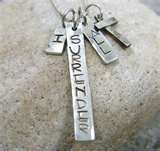
His question sounds so simple and easy when we belt out “I surrender all” in a church service.  Then there’s that moment when God takes you up on your offer and asks you to surrender your plans for the future, your comfort, your life, and you wonder how much “all” actually is.

And then I felt it, the pull of performance and the tug on my heart to just do what God wants so He’ll love me, so I won’t let Him down, so I can live up to what a Bible Study girl should do.  It was a works-based response of duty rather than the bride’s response of affection to the overwhelming passion and love of her Groom.

So I waited to answer God.  I waited until I truly believed that God would love me no matter what.  That the choices I make here may affect God’s plans for me, may affect my impact on others, may affect how I am blessed, but they will never affect His unconditional and unending love.  Only then, in the light of so much grace, knowing that I answered Him out of love and not duty, I bashfully answered, “I do.”  I do want to go with You.  I do want whatever you desire for me.

Why do we obey Him?  Why do we whisper “I do” when He asks us to surrender?  Why do we choose the difficult right over the much easier wrong?

So He will love us?  No—because He loves us.  That’s what we are learning at VBS tonight—-God loves us, no matter what.

We ask Him to “lead me along the path of everlasting life”  because there’s no other place where we can walk next to Him, our tiny palm nestled inside His nail-scarred hand (Psalm 139:24).

Heather King is a wife, mom, Bible Study teacher, writer for www.myfrienddebbie.com and worship leader.  Most importantly, she is a Christ follower with a desire to help others apply the Bible to everyday life with all its mess, noise, and busyness.  To read more devotionals by Heather King, click here.