Weekend Walk, 06/23/2012

Hiding the Word:

Last night, our kids colored their last craft, ran around the gym for the last game, and tasted their last snack of Vacation Bible School.  All week long, we taught the kids to trust God . . . no matter what.

Whoever they are . . .
However they feel . . .
Even when people hurt them . . .
Even when bad things happen . .  .
And anywhere they go . . .
Trust God

Sounds so simple.  Sounds so childlike.  Sounds so easy.

But of course we know the truth.  Most of us need the constant reminder, encouragement and challenge to trust Him.  We need a perpetual bright red string tied around our finger.

So, this week I’m choosing to meditate on a verse that speaks truth about that trust.

It’s not based on anything I do or whatever I muster up in my own strength.  We trust God because of His steadfast, unfailing, loyal, everlasting covenant love for us.

But I have trusted in your steadfast love;
    my heart shall rejoice in your salvation (Psalm 13:5)

Weekend Rerun:

After a week of lessons on Group’s Sky VBS!, I’m reminded of the lessons I wrote last year on the Group PandaMania VBS.  This was one of my favorites that week:

God Loves You, No Matter What
Originally posted June 23, 2011

After a conversation with a friend this week, I recalled the first time I had to turn over my green card on the classroom behavior chart and leave the yellow card on top.  I was in third grade and had forgotten my math homework.  The teacher asked us to hand it in and I quickly zipped open my backpack to grab up my finished paper.

Only it wasn’t there.  So, I pushed things around gently and then more energetically.  I scrambled through the papers and then yanked everything out.  Slowly I realized my paper wasn’t in there.  I had nothing to turn in.

So, I had to shuffle over to the behavior bulletin board and take my punishment.  A yellow card for Heather.  Bright yellow so everyone in the class could see I messed up.  I forgot.  I was careless and irresponsible.

Embarrassed, I slinked back to my desk and slumped down hoping to become invisible in my chair.  My face was burning red hot, the kind of shame that makes your ears sear into the sides of your head.

But, when I sheepishly glanced at the bulletin board the next morning, I saw a green card next to my name again.  It was a new day and with it came a rush of joy that the mistakes of yesterday could be so simply erased and forgotten.

It was the astonishing grace of a fresh start.

That’s what Christ did for us.  Raising us up from the dead.  Taking our place on the cross and erasing the record of our wrongs so that we could stand before the Most Holy God and look . . . holy and pure.

He saw you and me as worth saving even when we were splattered with the mud of sins and caked in the foul dirt of this world. “But God demonstrates his own love for us in this: While we were still sinners, Christ died for us” (Romans 5:8).

So, what should we do with this amazing grace?

I know what I do most of the time—forget it, take it for granted, or, even worse, nullify it by trying to be perfect.  I begin to live in a spiritual world of musts, shoulds, do’s, don’ts, shalls and shall nots.

The Psalmist wrote, “If you, Lord, kept a record of sins, O Lord, who could stand?  But with you there is forgiveness; therefore, You are feared” (Psalm 130:3-4).

Yes, we would be pounded into the ground if we carried the weight of our sins on our wimpy shoulders.  We couldn’t stand in His presence much less crawl face to the ground before His throne.

But.

But with Him there is forgiveness.  Praise God!

The Psalmist ends that thought with, “Therefore, You are feared.”  Not the fright of might, though.  Not the run and hide kind of fear.  Not obeying God to escape His wrath.  Not surrendering to Him in order to earn His love.

The Old Testament Bible Knowledge Commentary says this is the fear of “worship and obedience.  The Scriptures state that many results come from fearing the Lord; the most notable is that the person keeps himself from sin.”

In January of this year, I felt the heavy nudging of the Holy Spirit asking me two questions, one of which was, “Are you ready for where I want to take you next?”  The God who loved me passionately was asking me to walk in worship and obedience—holy fear in response to abundant grace.

“That depends,” I answered.  “Where are we going?  How long will it take?  What is the expense-to-benefit ratio?”

It sounds mercenary, but those are the questions that rumbled around in my head and heart for weeks.  Was it safer to stay where I was?  Was safer necessarily better?

His question sounds so simple and easy when we belt out “I surrender all” in a church service.  Then there’s that moment when God takes you up on your offer and asks you to surrender your plans for the future, your comfort, your life, and you wonder how much “all” actually is.

And then I felt it, the pull of performance and the tug on my heart to just do what God wants so He’ll love me, so I won’t let Him down, so I can live up to what a Bible Study girl should do.  It was a works-based response of duty rather than the bride’s response of affection to the overwhelming passion and love of her Groom.

So I waited to answer God.  I waited until I truly believed that God would love me no matter what.  That the choices I make here may affect God’s plans for me, may affect my impact on others, may affect how I am blessed, but they will never affect His unconditional and unending love.

Only then, in the light of so much grace, knowing that I answered Him out of love and not duty, I bashfully answered, “I do.”  I do want to go with You.  I do want whatever you desire for me.

Why do we obey Him?  Why do we whisper “I do” when He asks us to surrender?  Why do we choose the difficult right over the much easier wrong?

So He will love us?  No—because He loves us. 

We ask Him to “lead me along the path of everlasting life”  because there’s no other place where we can walk next to Him, our tiny palm nestled inside His nail-scarred hand (Psalm 139:24).

Heather King is a wife, mom, Bible Study teacher, writer for www.myfrienddebbie.com and worship leader.  Most importantly, she is a Christ follower with a desire to help others apply the Bible to everyday life with all its mess, noise, and busyness.  To read more devotionals by Heather King, click here.

Father’s Day Surprise . . . or not so much

Last Father’s Day, my daughters and I shopped together for Daddy.  When we arrived home, my middle girl burst into the house, ran over to my husband and announced that we had gotten him a game, but she couldn’t tell him which one it was because it was a gift.

Oh, the suspense.

Then for Christmas, the girls shopped for each other at the church’s Awana store.  At the end of the night before we had even clicked on our seat belts in the minivan, my daughter spilled the news to her big sister:  “I got you a doll!!!!”

“You spoiled the surprise again,” we all complained.

“But I didn’t tell her what color doll,” she explained, as if that was enough to keep her sister on edge until Christmas morning.

We’ve become accustomed to the missing element of surprise on holidays all because my little girl can’t contain her excitement over good news.

A few weeks ago, one of the women in my Bible Study group expressed a similar disappointment in the fact that we can’t surprise God.

And I get that.

There are moments when I wish God would look down and say, “Wow!  Did you see what she just did?” when He sees me serve in a way that brings Him pleasure.

God, all-knowing and all-seeing, though, isn’t surprised by what we do and say.

Yet, even though we can’t surprise Him, we can please Him.  He can delight in us and rejoice over us and even be amazed at the growth in our faith. We can bring him joy.

This is a precious thought to me.  We all know that God loves us because of his character, his faithful commitment to keep his covenant with his people and his unwavering grace that offers salvation to sinners like us.

But there are moments when we may wonder if we can please him as individuals.  Can he delight in us, as Scripture tells us he delighted in David (Psalm 18:19)?  Can we find favor with him, as Mary did (Luke 1:30)?

In her book, Knowing God By Name, Mary Kassian notes that there are two different words for the “love” that God has for us.  The one is “chesed,” which is “firmly rooted in God’s character, loyal, steadfast, unfailing love, kindness and mercy” (p. 38).  This is unfailing covenant love.

Yet there’s another kind of love—“ahab,” which means “to desire, to breathe after, to be inclined toward, to delight in” (p. 38).

We see both kinds of love at work in Jeremiah 31:3:

“I have loved you (ahab) with an everlasting love;
I have drawn you with unfailing kindness (chesed).

Perhaps it’s true that we can’t surprise God, but clearly He can love us personally and passionately—not just because He made a covenant of loyalty long ago.

In fact, I imagine God, grinning ear to ear at times when he looks down with love and affection and sees our hearts motivated by love and our service to others, untainted by pride and self-glorification.

This is what causes our God to “take great delight in you; in his love he will no longer rebuke you, but will rejoice over you with singing.”  (Zephaniah 3:17).

Indeed, it’s not the moments when we’re conscious of our good deeds that make God break out in song over us.  It’s not when we’re in it for accolades or when we are patting ourselves on the back for being such a nice person.

It’s never when we’re thinking, “Wow, I’m such a good Christian.  I’m such a loving person.  I’m so self-sacrificing.”

It’s never, ever about earning salvation or His loyal love by adhering to rules or performing well.  God’s covenant love is constant and dependent on His character, not on our works.

It’s not at all because God needs something from us.

Instead, God is amazed by our faith when we come to Him and admit that He alone can rescue us.  When the centurion, a man of power and authority, petitioned Jesus to heal his servant, Jesus “was amazed at him, and turning to the crowd following him, he said, ‘I tell you, I have not found such great faith even in Israel” (Luke 7:9 NIV).

This is the humility of acknowledging that our own good works or personal strength are not enough; our only hope is in him.

Psalm 147:10-11 similarly tells us that “the Lord delights in those who fear him, who put their hope in his unfailing love”

In The Pleasures of God, John Piper explains that “it is because our fear reflects the greatness of his power and our hope reflects the bounty of his grace.  God delights in those responses which mirror his magnificence… When I cry out, ‘God is my only hope, my rock, my refuge!’ I am turning from myself and calling all attention to the boundless resources of God’ (p. 187).

James said this with all his usual bluntness:

“But he gives us more grace. That is why Scripture says:
‘God opposes the proud
but shows favor to the humble'” (James 4:6).

God becomes a doting Father and rejoices over us when our hearts are truly humble and we are living lives that are intentional about glorifying Him, not ourselves.  This is when we please Him, maybe not surprise Him–but certainly bring Him joy and delight.

Heather King is a wife, mom, Bible Study teacher, writer for www.myfrienddebbie.com and worship leader. Most importantly, she is a Christ follower with a desire to help others apply the Bible to everyday life with all its mess, noise, and busyness. To read more devotionals by Heather King, click here.

Copyright © 2012 Heather King

Remembering: Free to Dance

Free to Dance
Originally posted 09/19/2011

“It is for freedom that Christ has set us free. Stand firm, then, and do not let yourselves be burdened again by a yoke of slavery”
(Galatians 5:1).

My mom will still tell you I was the best little four-year-old ballerina in my class.  I knew every step in our recital routine perfectly.

Performance night arrived and I was decked out in my ballet outfit and felt super fancy with my parasol.

Stepping onto the stage, I glanced to my left and realized my teacher stood in the wings.  She mouthed the words, “Watch me” as our music began.

So, I watched her.  She stepped.  I stepped.  She twirled.  I twirled  She lifted her pretend parasol up.  I lifted up my prop, as well.

I thought it was odd that she was also frantically shaking her head no and making strange motions with her hands in between each move. Then I noticed that all the other girls were one step behind me and the teacher, and I was mortified on their behalf.

They were all doing it wrong! An entire stage full of tiny ballerinas, and I was the only one doing the routine correctly!  Could they not see the teacher shaking her head at them and telling them what to do?

Determined to obey the instructor, I dogmatically refused to match my steps to the other girls in my class.  After all, who was most likely to be right—the teacher or a dozen four-year-old girls?

What I didn’t realize was that the teacher had been one step ahead of the routine the whole time.  She was showing us the move that was coming next, not the step we were actually on.  So I, in all my stubbornness, had been one step ahead of the actual routine for the entire performance.

That, my friends, was the end of my very promising ballet career.

On the other hand, I’ve spent years of my life worrying about what the audience thinks of me and fearing what will happen if I make a mistake and mis-step.  Not that my ballet fiasco is to blame for that, but it’s there nonetheless.

It’s the very real straightjacket of people-pleasing.

In her book, Stumbling Into Grace, Lisa Harper writes, “Jesus provides freedom, regardless of what’s been cramping our stories” (p. 19).

I don’t know what restricts you or binds you or has you so tied up that you miss out on the glorious freedom that Christ brings, but worrying about what other people think of me—well, that’s been my personal prison for a long time.

And even those of you who boldly announce all the time that, “I don’t care what other people think of me,” may deep down in the depths of your tender soul do just that.  Maybe you desperately care about what other people think after all.

You want them to have a high opinion of you.  You want them to agree that the choices you’ve made as a woman, as a wife, as a mom are the right ones.  You want people to see you’re an awesome mom and you’re a great wife.  You want them to be blind to your mistakes. You want them to buy into the persona you’ve created for yourself—that you’ve got it all together, that you’re smart, strong, capable, and surely superwoman in the flesh.

And our great fear, the thing that just rips us to pieces—is what happens if people realize we are . . . . not perfect.

And the thought that even when we’re doing the right thing or doing our best, some people won’t approve . .  that’s devastating.

In Genesis 29, we read about a precious woman who longed with all her being to be good enough and to perform well enough to earn her husband’s love.

There wasn’t ever any doubt about it.  Jacob’s “love for Rachel was greater than his love for Leah” (Genesis 29:30).

My heart just breaks for the unloved Leah.  So did God’s.  “When the LORD saw that Leah was not loved, he enabled her to conceive” (Genesis 29:31) and in quick succession, she gives birth to three sons: Reuben, Simeon and Levi.

When each son was born, Leah revealed what was in her heart:

  • “Surely my husband will love me now” (verse 32)
  • “Because the LORD heard that I am not loved, he gave me this one too” (verse 33)
  • “Now at last my husband will become attached to me, because I have borne him three sons” (verse 34)

She was buying her husband’s affection with babies.  More particularly, the male sons that a man in Jacob’s time and culture prided himself on.  Rachel may have been loved, but she remained barren for many years while Leah delivered son after son.

Still, Leah never once was able to perform well enough to earn Jacob’s love.

Eventually something clicked in Leah’s heart.  After having four sons for a man who still didn’t love her, she finally declared at the birth of her fourth baby, “‘This time I will praise the LORD.‘ So she named him Judah. Then she stopped having children” (Genesis 29:35).

For one brief moment in her life, Leah threw off the crippling chains of trying to please a human being and flung her unhindered arms open wide in worship of God.

Because God cared for her immensely and unconditionally.  God thought she was beautiful.  God thought she was worthy of notice.  God lavished on her the gift of four healthy sons. 

And that, for the moment, was enough.

Is it enough for you to know that God loves you?  Is it enough to know that you are obeying His instructions?

We people-pleasers can’t often escape from the binding fear of what others think about us in one magical moment.  No, it’s a battle.  It’s an active choice we make over and over to make pleasing God our supreme life passion rather than allowing the expectations of others to bind us hand and foot.

Paul wrote, “It is for freedom that Christ has set us free. Stand firm, then, and do not let yourselves be burdened again by a yoke of slavery” (Galatians 5:1).

Christ offers you freedom.  Glorious freedom.  So, stand firm in that.  Stand confidently assured of your calling.  Dance to the song He has given you and perform only for Him.

*****************************************************************************************************

I’m excited to share with you one of my most favorite songs on the freedom that Christ brings.  I hope you are blessed by it.

Hear the song here: http://www.godtube.com/watch/?v=JM2C1MNU

Free by Ginny Owens

Turnin’ molehills into mountains,
Makin’ big deals out of small ones,
Bearing gifts as if they’re burdens,
This is how it’s been.
Fear of coming out of my shell,
Too many things I can’t do too well,
afraid I’ll try real hard, and I’ll fail–
This is how it’s been.
Till the day You pounded on my heart’s door,
And You shouted joyfully,
“You’re not a slave anymore!”

“You’re free to dance-
Forget about your two left feet
And you’re free to sing-even joyful noise is music to Me
You’re free to love,
‘Cause I’ve given you My love
and it’s made you free

My mind finds hard to believe
That You became humanity and changed the course of history,
Because You loved me so.
And my heart cannot understand
Why You’d accept me as I am,
But You say You’ve always had a plan,
And that’s all I need to know.
So when I am consumed by what the world will say,
it’s Then You’re singing to me, as You remove my chains-

Heather King is a wife, mom, Bible Study teacher, writer for www.myfrienddebbie.com and worship leader.  Most importantly, she is a Christ follower with a desire to help others apply the Bible to everyday life with all its mess, noise, and busyness.  To read more devotionals by Heather King, click here.

Copyright © 2012 Heather King

God in Muddy Boots

 Who is like the Lord our God, the One who sits enthroned on high,
  who stoops down to look on the heavens and the earth?
He raises the poor from the dust
and lifts the needy from the ash heap;
  he seats them with princes, with the princes of his people (Psalm 113:5-8).

“Mom, can you tie my shoe?”

I kneel down, slightly off balance, and whip the laces into loops and knots.

“Mom, can you wash my hair?”

Bending over a daughter with her eyes pinched tightly shut, I scrub with shampoo and rinse the suds away carefully.

“Mom, can you show me how to play this on the piano?”

I stoop to press the keys, one hand pointing to the music, the other playing notes, showing melody, showing tempo, showing dynamics.

“Mom, can you hold my hand?”

Tilted to one side, I lean over to entwine our fingers and we swing our arms together to the rhythm of our pace.

“Mom, I’m hurt!”

Dropping to the ground, I clean the wound and press on the miraculous Band-Aid that instantly heals all hurts whether or not blood is involved.

Life with children is a life bent low.  It’s the ministry of kneeling down, stooping over, leaning, and bending to wipe, scrub, heal, hold, read, listen–to love.  So often, it’s the movement down to hug a child and lift her up.

God bends low to reach His children, too.

He could have sat, poised on His righteous throne, holy and unresponsive to our need, drumming His fingers while waiting for us to reach up to Him.

But He didn’t.  Seeing that we could never be righteous enough, He came to us instead, abandoning glory to take up the humble life in human flesh.  Jesus Christ, our Savior, our Sacrifice, is the great Love of God as He bent low in order to raise us up.

And He continued that ministry as He healed and forgave.  Finding Peter’s mother-in-law sick in bed with a fever, Jesus “bent over her and rebuked the fever, and it left her” (Luke 4:39).  Petitioned by a leper for healing, Jesus “reached out his hand and touched the man” (Luke 5:13).  Confronted by an angry mob prepared to stone a woman caught in adultery, Jesus “stooped down and wrote on the ground” (John 8:8).

Jesus could have simply spoken words of healing and forgiveness over anyone.  He had the power to heal with words alone, and sometimes He did.

But other times He chose to make it physical, and it so often required Him to bend low, to stoop, to reach out.  How else can a perfect and holy God touch us who are broken, sick, or dirty from sin?

Jesus didn’t mind the mess.  He touched people even when they were religiously “unclean,” when it was against the rules for them to have contact with other humans because they were so tainted that they’d stain the holiness of others.

This week, at an end-year celebration of a Bible Study group, a woman shared what she learned by studying David’s life.  She described putting on her muddy boots, the sweat pants she doesn’t care about and the raggedy t-shirt that means nothing to her and thinking nothing of getting down into the dirt.

Jesus got down in the dirt with people.  In the same way, this woman said, God didn’t mind getting down into the dirt with King David and He’s willing to do this for us, as well. 

God is not waiting for us to get cleaned up, to overcome, to fix it all up, to climb and clamber to success.   He isn’t put off by our faces smudged with dirt, our hands caked with mud, our fingernails lined with soil from trying to claw our way out of the pit we’re in.

Instead, David tells us:

“He lifted me out of the slimy pit, out of the mud and mire;
he set my feet on a rock and gave me a firm place to stand (Psalm 40:2).

In order to lift David up, God had to reach down low, stretching a hand deep into the darkness to pull the shepherd-king on out to safety and firm ground and light and life.

For those who find themselves in the pit now, remember that God will reach low to you and He will lift you up.  You cannot be so deep in the darkness to be beyond His ability to save you. You cannot be so covered in dirt that He’s scared away or disgusted.

God puts on His muddy boots at times to wade in and rescue us.

Then He calls us to engage in this same ministry of bending low to reach others.  We don’t walk by friends in caverns and potholes and chasms, pretending that everything is all right or hoping for another bystander to reach down and rescue them.

We don’t turn up our noses at the dirt on another’s face,  refusing to stoop down to hold their hand and pull them up.

God wants us to be willing to kneel, stoop, bend, lean, and drop to the ground in all of the humility and love that naturally flows out of people who have been saved themselves.

It’s the ministry of a mom.  It’s the ministry of a child to an aging parent.  It’s the ministry of teachers and a ministry to the wayward and the lonely, the lost and the hurting.  It’s the ministry to the broken and a ministry to the least of these.

It’s the ministry of bending low to love another just as God has done for us.

Heather King is a wife, mom, Bible Study teacher, writer for www.myfrienddebbie.com and worship leader.  Most importantly, she is a Christ follower with a desire to help others apply the Bible to everyday life with all its mess, noise, and busyness.  To read more devotionals by Heather King, click here.

Copyright © 2012 Heather King

Weekend Walk, 04/21/2012

Hiding the Word:

We made it a late night for the sake of theater.  The girls and I, along with Grammy and Grampy, went to see the local community theater group perform Treasure Island.

I was nervous about the night since the show didn’t start until their bedtime, but my daughters were entranced by the sea shanty-singing, sword-slinging, parrot-toting pirates, who scaled the heights of the ship, leapt overboard, and shot at each other in an attempt to capture the treasure.

From the moment Billy Bones dropped his treasure chest onto the floor of the inn, the girls were intent on classifying the pirates into two types:  Good pirates and bad pirates.  I heard my middle girl loudly “whisper” (she doesn’t really know that whispering involves lowering the volume of your voice) several times at the beginning, “Is he good or bad?”

Long John Silver, in particular, puzzled them.  Was he good, the way he was nice to Jim Hawkins and saved his life?  Was he bad, the way he led the mutiny against Captain Smollet?  He killed some and protected others.

This one-legged renegade was a moral enigma to my daughters.  They couldn’t box him up and fit him in a nice ethical category, so we talked about him and life and right and wrong most of the way home from the play.

Sometimes we too are intent on shoving people into ill-fitting categories and assigning them superficial labels.  We think we “know” someone as soon as we decide they are good/bad, smart/dumb, nice/mean, right/wrong, funny/dull . . .

I’m so thankful that God knows us as more than just a number, a nameless face in the crowd, or little more than a resume of good or bad deeds.

I’m choosing to meditate on this for the week, the promise that God knows me truly and deeply—no matter how complicated I may be.  It’s also the assurance that He loves others in the same way and challenges me to take the time to know them and love them without labels, boxes, and categories.

You have searched me, LORD, and you know me.
You know when I sit and when I rise;
   you perceive my thoughts from afar.
You discern my going out and my lying down;
   you are familiar with all my ways.
Before a word is on my tongue
   you, LORD, know it completely.
You hem me in behind and before,
   and you lay your hand upon me (Psalm 139:1-5)

Weekend Rerun:

Where is the Whole World?
Originally posted on 07/22/2011


I sought the LORD, and he answered me; he delivered me from all my fears.
Psalm 34:4

During my second pregnancy, I went happily to my 20-week ultrasound and learned we were having another girl (the joys of pink!) and that she was healthy and developing well.

Except she was small.  They said smaller than she should be and I’d need to go get a 3-D ultrasound at a specialized neonatal center.  But, not to worry, they were sure it was okay.  This was just to be safe.

One 3-D ultrasound later, the technician sent back the report.  She was healthy.  Good heart.  Good blood flow.  Organs just fine.  But she was small.  Too small.  It was probably okay, but just to be safe I had to go for weekly stress tests for the remainder of the pregnancy and some more ultrasounds.

Every stress test was fine.  She was moving (boy was she moving!) and she was growing, but not fast enough.  She was just too small.  But, no need to worry, they said, because she was probably just fine; it’s just that they needed to induce her a week early so they could figure out why she was so small (under 5 pounds they said) and help her grow outside the womb.

We packed a bag for the hospital and let the Pitocin get to work.  Induction was terrible; the worst of my three deliveries.  In the end, though, Lauren was born.  I didn’t have my glasses on.  I couldn’t see her.  Was she okay?  Was she too small?  Was she in danger or sick or worse?

My husband served as my eyes for me.  At first he said nothing; she was purple they told me later from the chord double-wrapped around her neck. But then she cried.  And my husband said, “She’s beautiful.  She’s perfect.”

The NICU pediatrician who had been on call to assist at the delivery of this at-risk baby peeked over the nurses’ shoulders and left the room without a word.  The nurse laid her on the scale.  She weighed 6 pounds 13 ounces, my one-week-early little one, too big for the preemie outfits we’d picked out for her.  God had brought her to us safe, healthy, and gorgeous and we praised Him, so tearfully thankful for His protection over our baby girl.

Between that first announcement that our baby was too small and the moment we saw her, we fought against fear.  My husband and I held hands and prayed for her each night.  We calmed our fears and shrugged off ultrasound results.  Then I’d sit at the next appointment and be told once again that she was just too small. All the anxiety we had kept at bay rushed in with renewed strength.

Someone asked me during that time, “You’re not freaked out about this, are you?”

I didn’t know.  Was I freaked out?  Was I okay?  It wasn’t the same from day to day or minute by minute.  I was fine.  I was scared.  I was trusting.  I was fearful.  I was relying on God.  I was unbelieving.

At that time, Tim Hughes was singing on the radio:
When all around is fading, and nothing seems to last
When each day is filled with sorrow
Still I know with all my heart
He’s got the whole world in His hands
I fear no evil, for You are with me
Strong to deliver, mighty to save

The whole world is nestled in the safety of His hands.  My world that I saw every day.  The world of my unborn baby girl, whose somersaults I could only envision and whose face I couldn’t wait to see.  Yes, her world was in His hands, too, and so I had to trust her to His care.

Isaiah wrote: “So do not fear, for I am with you; do not be dismayed, for I am your God. I will strengthen you and help you; I will uphold you with my righteous right hand” (Isaiah 41:10).

Held in His hands as I am, still there are so many reasons to tremble.

For bills and jobs and relationships, for school, health, my kids’ friendships, safety and their faith, for my daughter not getting lost, for school bus rides and mean girls, for conflict, for things I forgot to do, for the decisions I make as a mom and how often I mess it all up, for the future, for the unseen, for the nosebleed that I’ve blown up into a brain tumor, for what’s happening tomorrow and what’s happening ten years from now, for the divorces I’ve witnessed and how did it all happen anyway, for the things I said and the things I didn’t say.

But when I’ve lost my breath because of worry and fretted over a solution only to find no visible answer, nothing I can do, and no way to fix the problem or avert disaster, then I remember hope.

Oh yes, now I remember hope.

Fear says, “There is no way out of this.”
Hope says, “God is going to make a way.”

Fear tells me “You’ve messed this up so badly there’s nothing that can fix it.”
Hope says, “I have a Redeemer who can heal and restore even what is dead.”

Fear whispers, “What you can see is all there is and that’s not enough.”
Hope shouts, “The Lord created the universe with His words.  He can create something out of nothing.”

Fear argues, “You’ve been abandoned.  God doesn’t even care that you are under attack.”
Hope assures me, “You are held in His hand, carried through hardship by His open palm.”

This world, my life, the daily schedule, the care of my children, the bills and the doctor’s appointments, and all there is remains outside my control.  That’s why there is fear.  It’s ridiculous pride and foolish unbelief that makes me believe God can’t possibly care for me and that I could do better on my own.  So I worry because I’d like to control the uncontrollable.

Fear isn’t an enemy you defeat once and then mount on your wall like a trophy.  It’s a sneaky foe, inching it’s way into your life at the slightest provocation.  It creeps into your thoughts at night and asks to be your companion as 3:00 a.m. and then 4:00 ticks and tocks by on your nightstand alarm clock.

In the night as you rumple the covers with your constant turning, when the bill comes, when your child steps onto the school bus, when you sit in the doctor’s office, when the lawyer calls . . . remember hope.  It’s the ultimate weapon in this battle against fear.  We have hope because we’re in His hands and so is our whole world.  Our kids in His hands.  Our finances in His hands.  Our jobs, our marriages, our friendships, our ministries, our careers, our future—in His hands.

We say with the Psalmist, “Even though I walk through the darkest valley, I will fear no evil, for you are with me” (Psalm 23:4).

Heather King is a wife, mom, Bible Study teacher, writer for www.myfrienddebbie.com and worship leader.  Most importantly, she is a Christ follower with a desire to help others apply the Bible to everyday life with all its mess, noise, and busyness.  To read more devotionals by Heather King, click here.

Copyright © 2012 Heather King

Do I Look Dead To You?

After we’ve packed the cooler, dressed everyone in bathing suits and sandals, double-checked the bag for diapers, towels, tissues, Band-Aids (for blisters), sunscreen, and more, and then loaded every last item and person into the mini-van, we have the same-old chat with our girls as we drive to Busch Gardens, the amusement park near our home.

First we begin with the safety reminders, about strangers, about wandering away from us, and what to do if you get lost.

Then we remind them that we aren’t buying every snack, toy, or novelty item strategically scattered along our path through the park.  And no whining when it’s time to go home.

We finish up with the “friends speech.”   It goes something like this:  You are sisters.  God designed you to be best friends.  Don’t ditch your sister so that you can ride in a boat or car or dragon or whatever with some random stranger who you’ll never see again.  Sisters ride together.

This last speech generally elicits the most protests.  My girls are friendly people.  They like to meet new kids and form what they are certain are life-long bonds of friendship while standing in line at Busch Gardens.

So, it was no surprise that during our spring break trek out to the amusement park, my middle daughter stood in line for a ride and then announced, “Mom, I made two new best friends!”

Not just friends.  Best friends.

And how did she know these two new girls were now her bosom buddies for life?

“They told me their names, Savannah and Julia.”

That was it.  The loyal bond formed simply by exchanging names.

Friends, best friends, nice people you’ve only just met, a stranger whose name you’ve learned, sisters, the person you thought was your close friend but who gossips about you behind your back  . . . it’s a mesh of relationships they haven’t quite figured out yet.

Identifying true friends is a skill only learned over time after experiencing both hurt feelings and faithfulness, betrayal and loyal love.

A mentor once told me that women were designed for deep friendship. Every one of us needs a Ruth and Naomi relationship, not just casual acquaintances whose names we know after a few minutes of standing in lines of life together.

Unfortunately, life is busy, complicated, hectic, and hard, and investing time in those loyal friendships seems an impossible task.

Yet, Scripture tells us this is one investment that’s worth making.

We need a friend who loves sacrificially, and for whom we likewise will sacrifice.  Jesus commanded us to “love one another as I have loved you. Greater love has no one than this, that someone lay down his life for his friends”  (John 15:12).

We need a friend who remains faithful even when we’re at our ugliest, worn-outest, saddest, and yuckiest, just as it says in Proverbs 17:17 “A friend loves at all times, and a brother is born for adversity.”

And we need something else.

We need a friend who is not afraid to get dirty with us as we live this resurrection life.

Jesus stood at the entry to the tomb of his close friend, Lazarus.  He heard the weeping of others around him.  His own tears trailed down his cheek.  The crowd scolded him for not coming earlier and healing his friend while there was still time.  The pragmatic folks complained about the stink of death and decay wafting out of a reopened tomb.  Mary and Martha shot hopeless, hurt-filled glances in Jesus’ direction.

Undeterred, Jesus demanded, “Lazarus, come out!”  (John 11:44).  The shocked crowd watched as the dead man emerged from the grave, living, breathing, and walking—alive.

But he moved slowly, maybe a little like a mummy in a sci-fi horror flick that plays on Saturday afternoon television.  He didn’t leap out from the tomb and dance before the Lord with all the joy of a resurrected fellow.

Instead, “the dead man came out, his hands and feet wrapped with strips of linen, and a cloth around his face.  Jesus said to them, ‘Take off the grave clothes and let him go” (John 11:44 NIV).

Chris Tiegreen reminds us in One Year At His Feet “When Jesus raises us out of our sinful state of death, there is something left to do before we run free.  The grave clothes must go”  (p. 21).

That’s something Lazarus couldn’t do on his own.  Jesus instructed others to come alongside him and unwrap the linen bindings, the remnants of death and the grave that still had him hindered, trapped, and blinded.

That’s the church’s job.  That’s the job of a loyal friend, who patiently strips away all the habitual sins, guilt, shame, false beliefs, hang-ups, terrors from the past, and hurts that trip us up and slow us down.

Sometimes we simply require a love that doesn’t give up on us.

Sometimes it takes someone holding us accountable with truth and lovingly showering us with grace when we struggle with the ugliness of sin.  Proverbs 27:6 tells us: “Faithful are the wounds of a friend; profuse are the kisses of an enemy” (ESV).  Only a true friend skips the flattery and digs past the superficial chicanery of niceness in order to challenge us with a truth and encourage us to change.

Only a friend tells us when they see some of the grave clothes stubbornly stuck to our skin and then lovingly and patiently unbinds us so we can live in the freedom of new life.

We need a friend like that.  We need to be a friend like that, who brings grace and freedom to another.

You can read more devotionals on this topic here:

Heather King is a wife, mom, Bible Study teacher, writer for www.myfrienddebbie.com and worship leader.  Most importantly, she is a Christ follower with a desire to help others apply the Bible to everyday life with all its mess, noise, and busyness.  To read more devotionals by Heather King, click here.

Copyright © 2012 Heather King

Weekend Walk: 01/27/2012

Hiding the Word:

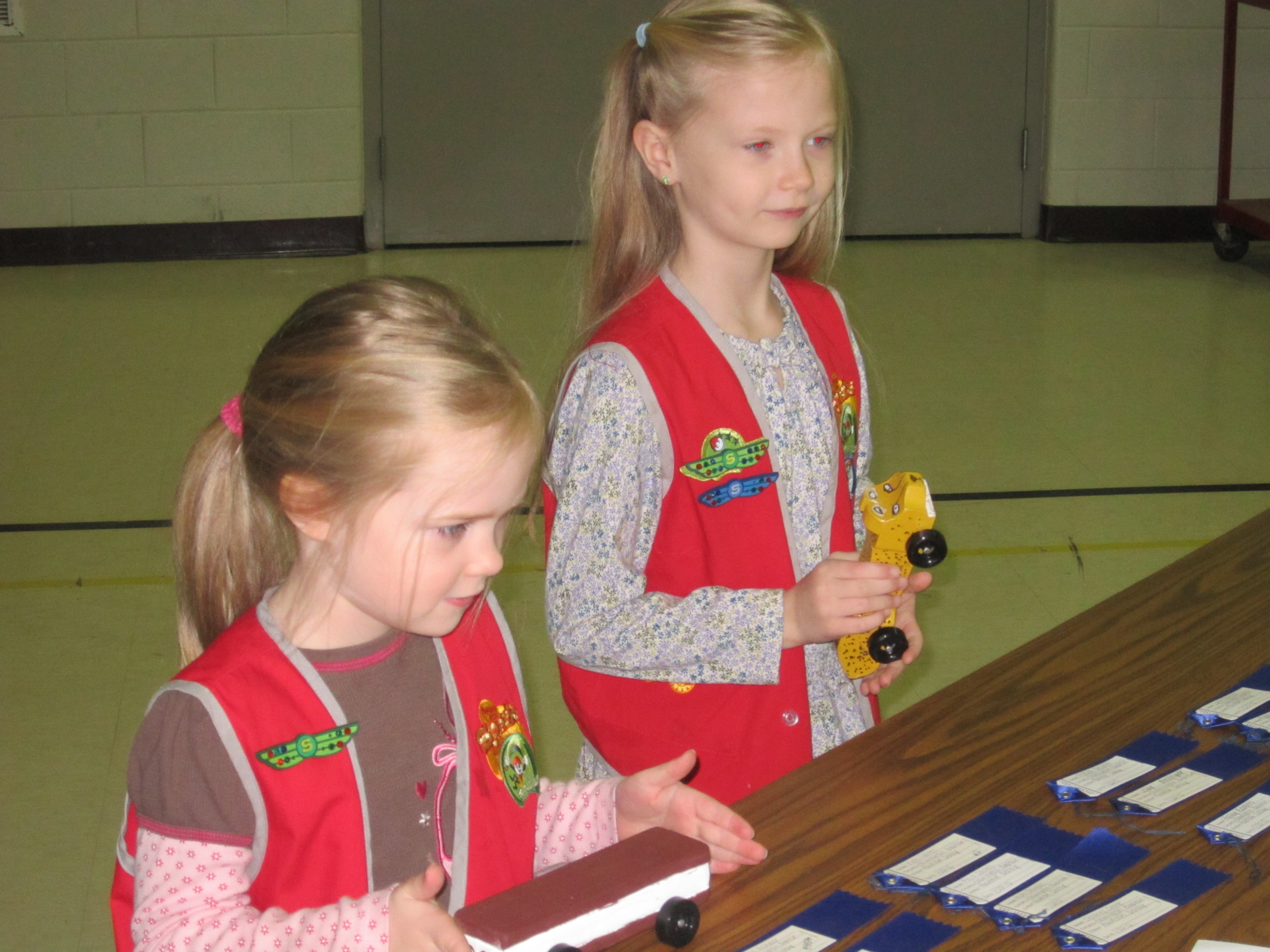
Today is our Awana derby race at church.  The girls announced two weeks ago that they wanted cars shaped like an ice cream sandwich and a cheetah.  My husband cut the shapes into the wood and the girls painted the cars (and much of themselves) and drilled holes.  They are excited and proud of their hard work!

At the race, the girls hope for a trophy of some kind, maybe for speed or for their car’s design.

Me—I mostly hope that our car isn’t the one that hops the track and flies across the gym.  Also I hope that our car makes it all the way down to the finish line without getting stuck along the way.

I kind of stand to the side, squint my eyes and breathlessly plead, “Please stay on the track.  Please make it to the end.”

With racing on the brain, I decided to pick a verse for the week that focuses on perseverance in the race God gives us to run.  No flying off course.  No giving up.  No getting bogged down and stuck halfway through.

I’m hoping for victory.

Do you not know that in a race all the runners run, but only one gets the prize? Run in such a way as to get the prize.  Everyone who competes in the games goes into strict training. They do it to get a crown that will not last, but we do it to get a crown that will last forever” (1 Corinthians 9:24-25).

Weekend Rerun:

Hot Enough For You?
Originally Published 08/12/2011

One night years ago my daughters discovered popcorn.

At first, we did our popping in microwavable bags, but we soon switched to a popcorn popper.  On that first exciting day when I pulled the contraption out of the cabinet and set it on the counter, the girls stood on stools so they could watch what would happen.  The kernels tumbled into the popper and I plugged it in.  One daughter covered her ears with her hands and the other shouted, “What’s going to happen?” over the roar of the machine.

And then that first kernel popped.  They squealed in surprise!  And then more kernels began popping in quick succession until there was a constant stream of fluffy white popcorn pouring down the shoot and into the bowl.

The girls danced, laughed and shouted and kept calling our attention to the popcorn as if we’d never seen such a magic trick.  My husband and I watched the girls more than the popcorn; their excitement was joy-giving.

It does seem like magic.  Dump into an inauspicious machine a hard, dried up tiny little crackle of corn and with heat, it transforms into a new texture, color, shape, consistency and taste.  Who would have ever thought looking at the original kernel that the wonders of popcorn lie within?

Likewise, who would look at us much of the time and fully realize all that God has placed in our hearts and all that He has planned for our lives?  Others might see a brittle surface with no flavor.  We might look useless or dried up.  We might simply look un-fun and plain old ordinary.

Yet, God is the Master of transformations.  Although He sees us and fully knows who we are in this moment, He also always sees what we can become.  And He’s willing to turn up the heat to change us.

Because heat is what it takes to break us down, cracking our exterior and softening our insides so that we’re receptive and usable.

To the untrained popcorn popper, it might seem like waste, like the Master is burning His kernels over the flame and they’ll be ruined and tossed aside.  Or that this process is pointless and no good will come from the heat; nothing will ever change.

God, however, never takes us through the fire without purpose and never leaves us in the flame a moment longer than necessary to achieve transformation.  He isn’t reckless or thoughtless.  He’s not cruel or forgetful, blind or oblivious.

Paul wrote in Romans:

Not only so, but we also glory in our sufferings, because we know that suffering produces perseverance; perseverance, character; and character, hope. And hope does not put us to shame, because God’s love has been poured out into our hearts through the Holy Spirit, who has been given to us (Romans 5:3-5).

Over the years, I’ve read these verses often and just as often shrugged them off as an impossible standard.  “Glory in our suffering?”  Not hardly.  Truth be told, I’m more of a whiner than a perpetual rejoicer.

But as a toughened kernel who’s experienced at least a bit of transformation from my own sessions in the heat, I’m looking at these verses anew.

My commentary says:

This is more than mere Stoic endurance of troubles, even though endurance or steadfastness is the first result in a chain-reaction outgrowth from distress. This is spiritual glorying in afflictions because of having come to know (as in “to know by intuition or perception”) that the end product of this chain reaction (that begins with distress) is hope.

This gives me pause.  Have you really considered how hope fits into this picture?  Perhaps I can begrudgingly endure a trial here or there because some periodic heat produces perseverance and fixes flaws in my character.  But how does that stir up hope?

For the Christian, hope is confident expectation that God will do what He says He will do.  The only way we know that is through experience, the kind of experience that develops perseverance and strengthens our character.  We have hope because we’ve seen God deliver us time and time again and we’re confident that He will never fail.

Paul finishes those verses by telling us “And hope does not put us to shame, because God’s love has been poured out into our hearts through the Holy Spirit, who has been given to us” In other words, we won’t be disappointed or shamed by unfulfilled promises.  The commentary continues:

“The reality of God’s love in a believer’s heart gives the assurance, even the guarantee, that the believer’s hope in God and His promise of glory is not misplaced and will not fail.”

It all comes down to the reality of God’s love for us.  He loves us enough to know that we’re more than a golden kernel with a tough exterior.  He knows that sometimes it takes heat to reveal, refine and transform, but He also knows just how hot it needs to be and just how long it needs to last.  He’s not out to singe us or blacken us with despair.  He’s lovingly and expertly making us new.

I use The Bible Knowledge Comentary, New Testament Edition, by John F. Walvoord and Roy B. Zuck.

Heather King is a wife, mom, Bible Study teacher, writer for www.myfrienddebbie.com and worship leader.  Most importantly, she is a Christ follower with a desire to help others apply the Bible to everyday life with all its mess, noise, and busyness.  To read more devotionals by Heather King, click here.

Kissing Cornelius

For those reading Lisa Harper’s book, Stumbling Into Grace, along with my small group, today’s devotional will match up with her seventh chapter: “Getting Our Squeeze On”

**********************************

Our community theater group chose Hello, Dolly! as the fall musical this year. Over the summer, I rented the movie so we could hear the songs and learn the story.

While I love the play, the movie is terrible.  Still, my daughters loved the film. They specially requested it several times a week until I finally returned the DVD, much to their disappointment. (Other kids may be watching Spongebob and Phineas and Ferb.  My girls watch musicals from the 1960’s.)

They can now sing the songs and know every character’s name, despite the ridiculous sound of each moniker: Cornelius Hackl.  Barnaby Tucker.  Horace Vandergelder.

Not exactly John Smiths, these guys.

My daughters took a particular liking to Cornelius Hackl, the 33-year-old store clerk who wants to head off to New York City, fall in love and kiss a girl.

There’s no question who was the most excited to hear that my husband was chosen to play Cornelius.  He was pleased.  Our daughters were overjoyed.  His two biggest fans jumped all over the living room and cheered.

I reminded them that of all the parts in this play, Cornelius is the only guy who might have to kiss another girl–as in a girl who is not me.

“How would you feel about that?,” I asked them.

“That’s okay,” my oldest daughter assured me, “Daddy kisses you all the time.  Like every single morning and when he comes home from work, too.”

Thanks for the support!

Still, it reminded me that how my husband and I interact is a model for our daughters.   This doesn’t just matter now when they need the assurance of a stable home.

It doesn’t just matter in their future, when their own marriages may depend on what we modeled for them.

It really matters eternally.

God makes it clear in Scripture that marriage is an earthly representation of God’s covenant relationship with His own people.  Paul tells husbands to “love your wives, just as Christ loved the church and gave Himself up for her” (Ephesians 5:25).  Jesus calls Himself the bridegroom and Revelation 19 describes the marriage supper of the Lamb in heaven.

That means that our love for one another should reflect Christ’s love.  People should look at our marriages and see God’s love in action.  My daughters should look at our marriage and see God at the center.  How we treat each other should make them desire a relationship with Jesus.

So, do we look like we’re loving one another?

Not just in marriages, but also in our churches and small groups and family lunches at Wendy’s after church . . . do we act loving?

And beyond that, with those outside our inner circle, people who may seem “less than,” those that our downcast, the hurting, people who annoy us a bit and who wear us out a lot, and the faces we’d prefer not to see in the Wal-Mart . . . do we act loving?

Jesus’ healings were rarely cold, distant, impersonal and non-physical.  When Jesus healed, it was usually with action, with physical touch that dramatically broke the barriers of clean/unclean, spiritual/not spiritual, holy/unholy.

Lisa Harper notes that Jesus:

intentionally used tactile methods—hugging a leper, placing His hands on a crippled woman’s spine—in most of His healing miracles.  When the disciples tried to keep little children from interacting with Jesus  . . . the Lamb of God beckoned them to pile onto His lap (Mark 10:13-16).

When Jesus healed the man who had been blind from birth, He once again demonstrated love in unmistakable, physically apparent ways (John 9:1-11).

The disciples pointed to the begging man and asked a theological trick of a question.  Whose sin caused the man’s blindness—his or his parents’?

These 12 guys saw a doctrinal conundrum.  Jesus saw a sick man.

So, Jesus healed him.  Not just with words, though.  The Savior of the World made it clear that He loved this man enough to touch him, to get down in the dirt with him (literally) and to meet his very real need.

Jesus stooped down, made a mud pack, and put it on the man’s eyes.  Then He sent the man away to wash in the Pool of Siloam.  The man, blind from the moment of his birth, could now see.

You couldn’t ever miss Jesus’ love.  Even if He had to stoop low to love another, He did.  Even if it involved getting dirty or if the crowd thought someone was unlovable, dirty, sinful, or unimportant, still Jesus showed love.

People in the back row of the crowd never wondered, “Does Jesus love that person?”  If you looked His way during a miracle, you saw love in action—all the way to the cross.

So, when people glance our way, do they see the same?  Can our kids look at our marriages and identify love?  Can strangers at the restaurant watch us and see love?  Can a visitor to our church see love from the greeter at the door, to the nursery worker and the Sunday School teacher, the pastor and the pianist?

They shouldn’t see just any love either, certainly not superficial, emotional, feeling-directed fluff, the kind that shakes hands and smiles, but never touches what’s broken or brings healing to the hurting.

Instead, they should see Christ’s action-filled, sacrificial, unconditional, healing, reach-out-and-touch someone love and they should be so amazed by it, that they want to experience it themselves.

Heather King is a wife, mom, Bible Study teacher, writer for www.myfrienddebbie.com and worship leader.  Most importantly, she is a Christ follower with a desire to help others apply the Bible to everyday life with all its mess, noise, and busyness.  To read more devotionals by Heather King, click here.

Copyright © 2011 Heather King

Back to School Lessons, Part Two: Love is in the Lunch Box

Sandwich, fruit, snack, drink, napkin.

Check, check, check, check and check,

Two Hershey kisses and a note saying, “Kisses from me to you.  Love, Mom.”

Check!

It really doesn’t matter whether we packed the lunch bag or sent the money in for the lunch line, whether we wrote a note or didn’t, if we enclosed a fancy napkin or sent in a folded paper towel, still we moms likely thought of lunch.  We made a plan to provide for our child’s nourishment.

Not all kids have a mom or dad who lives out love every day through simple acts of kindness and provision.  That makes it easy to forget that a sandwich for lunch and clean clothes for school are an expression of love.

The people in your life, whether they are your children, or your grandchildren, or your aging parents, or a sick friend, could say you love them because of your words.  When I grab my girls in a surprise hug and whisper, “I love you,” my girls always sigh loudly and say in exasperation, “We know, Mom.  You tell us all the time!”

Maybe you tell your loved ones that you care all the time, too.

But there are depths of love that remain inexpressible in words and are only made clear in our actions.  No one may even recognize the love while it’s ongoing, but they would miss it in a heartbeat if you weren’t there.

It’s the fact that we’ve provided for their lunch.  It’s being there to meet the bus at the end of the day.  It’s sitting at the table and patiently working through math problems.

And so much more.

It’s smoothing back hair and bringing juice to a sick child.
It’s reading a book by a nursing home bed.
It’s holding a hand in a hospital room
It’s toting a meal to a recovering neighbor.
It’s washing bed linens soiled by sickness.
It’s writing a note to a friend.

In our everyday lives, our love doesn’t matter much if it’s expressed in words, but never in deed.

God’s love would be a bunch of meaningless words on a page, too, if He didn’t lavish us with grace every day.

There in His Word, He tells us that He loves us.  We most likely read it or say it or hear it everyday and twice on Sundays.

As adults, though, it’s so easy to become blase and apathetic about God’s love for us.  It’s a children’s concept.  The Sunday School theme.  We define God’s love by nursery songs like “Jesus loves me, this I know for the Bible tells me so.”

And so over time, it seems we picture God as loving us, but not passionately loving us.  It’s more of an unemotional general concern for our well-being and maybe more for the condition of the planet rather than for us personally.

We’ve even confined one of the most powerful Scriptures in the Bible to a kid’s memory verse and little more:  “For God so loved the world that He gave His one and only Son that whoever believes in Him will not perish and have eternal life” (John 3:16).

But did you see that in this verse His love has legs?  He didn’t just say, “Those people I made, they sure are great!  I like them a whole lot and care about them a bunch.”

Oh no.

He put His great love into action.

He loved the world, not just the human population, but you and me and each child on a school bus and each person on your street, individually, uniquely and passionately enough to sacrifice His own Son for our eternal destination.

He wants to spend eternity with you.  Now that’s over-the-top passion.

Why do we sometimes picture God as sitting relaxed on His throne, watching impassively as life bombards us with strife?  Why do we acknowledge that He sacrificed His Son for us and then treat that as “no big deal?”  Or perhaps we fail to recognize the millions of ways He sends gifts of love and grace to us every single day.

In Psalm 136, the worship leader engaged his congregation in responsive praise.  He sang out what God has done for them and the people answer in return, “His love endures forever.”

Twenty-three times they sing back the refrain, declaring that God loves them and always will.

Why?  Just because He said the words, “I love you”?

No, because He “made the heavens” and “set the earth upon the waters.”  He brought Israel out from slavery in Egypt and “divided the Red Sea asunder and brought Israel through the midst of it, but swept Pharaoh and his army into the Red Sea.”  He struck down enemy kings and gave the Hebrew nation the Promised Land.

It’s a litany of God’s love.  “His love endures forever” and we know it because of all He has done for us.

There at the bottom of the long list of reasons to give thanks: “He gives food to every creature” (Psalm 136:25).

Oh, yes, He packs our lunch.

How has God shown you His love today?  How can you give Him thanks?

Heather King is a wife, mom, Bible Study teacher, writer for www.myfrienddebbie.com and worship leader.  Most importantly, she is a Christ follower with a desire to help others apply the Bible to everyday life with all its mess, noise, and busyness.  To read more devotionals by Heather King, click here.
Copyright © 2011 Heather King


Weekend Walk, 08/06/2011

Hiding the Word:

Last week, I started the first half of a set of verses from Psalm 145 and they were a blessing to me.  There were days when it was hard to trust that God would truly keep His promises, and yet Psalm 145:13 says :”The LORD is trustworthy in all he promises
and faithful in all he does.

On days that I felt as if I had tripped and fallen or that the weight of stressors and annoyances and my own faults had pushed me hard to the ground, I recalled Psalm 145:14: “The LORD upholds all who fall and lifts up all who are bowed down.”

And in those moments when I calculated bank balance versus upcoming expenses, I remembered Psalm 145:15-16: “The eyes of all look to you, and you give them their food at the proper time. You open your hand and satisfy the desires of every living thing.”

This was a powerful set of verses for me.  So, on to the second half for this week:

The LORD is righteous in all his ways and faithful in all he does.
The LORD is near to all who call on him, to all who call on him in truth.
He fulfills the desires of those who fear him; he hears their cry and saves them.
Psalm 145:17-19

Those are the verses that will be posted up on my stove and bathroom and in my journal for me to meditate on and memorize throughout the week ahead.

What verse(s) will you be learning?  Please share!

Weekend Rerun:
How He Loves Us, originally published 02/17/2011

If you ever see me driving down the road in my minivan and I’m clearly singing my heart out and maybe even have one hand up in the air (the other hand obviously on the wheel), I’m going to tell you right now what I’m doing because it could only be one thing.  I’m singing How He Loves with David Crowder, probably for the fifth time in a row off my iPod.  (I know this song was originally by John Mark McMillan, but I’m a huge David Crowder fan, so I’m biased to his version.)

Anyway, if you haven’t heard this song, feel free to stop reading for a moment and give it a listen here.  Go ahead, give it a listen.  I am going to stop writing and listen to it again, too.

Now, don’t you love that song?  It’s just not possible for me to write about God’s love without the song How He Loves playing through my thoughts.

I love the reminder in this song of the powerful simplicity in this truth: He loves us.  Sometimes I need to hear that over and over and be reminded of the magnitude and weight of His love.   It’s especially true when my circumstances are difficult and I feel like I’m sinking.  As the song reminds me, “If His grace is an ocean, we’re all sinking”—-not drowning in our circumstances, but enveloped by His grace.

When I take the time to truly meditate on God’s amazing love for me, I am changed.  My focus is shifted off of my failures or fears or what-ifs and fixed instead on His love.  Again, as the song says, “I don’t have time to maintain these regrets, when I think about the way that He loves us.”  It’s pretty difficult to meditate on God’s great love and be afraid or paralyzed by our past mistakes at the same time.

I wonder how my everyday life would change if I walked around fully aware of God’s love all the time.  All my self-condemnation would cease.  My worries would end because I’d know God loves me enough to care for me and not to abandon me.  I would love others more unconditionally because of the grace I myself have received.  I wouldn’t question God’s plans for me because I’d trust His love.

My life would be transformed.

Paul reminds us that our life changes when we live in the knowledge of God’s love for us:

And I pray that you, being rooted and established in love, may have power, together with all the Lord’s holy people, to grasp how wide and long and high and deep is the love of Christ,  and to know this love that surpasses knowledgethat you may be filled to the measure of all the fullness of God. Ephesians 3:17-19

The Message translates verse 19 this way: “Reach out and experience the breadth! Test its length! Plumb the depths! Rise to the heights! Live full lives, full in the fullness of God.”

Amazingly, we’ve done nothing to earn this love and we can do nothing to end it.  Paul writes in Romans 5:8  But God demonstrates his own love for us in this: While we were still sinners, Christ died for us.”  He loved us in our sin, with all of our mistakes and failures, with our lack of trust and our self-focused lives.  He loved us when we didn’t have anything to offer in return.

Life is sometimes exhilarating and sometimes frightening.  I cannot explain why we go through difficult times and why life is so hard.  But I do know that:

God sees you. He hasn’t lost you in the midst of your circumstances.  He knows your hurt and pain, as well as your joy and excitement, and He wants to walk with you at all times.

God is big enough to save you. He is mighty and powerful and has your world in His hands.

God loves you with a lavish, unconditional, and unchanging love. The Psalmist tells us God isn’t just a powerful being who doesn’t care about us.  In Psalm 62:11-12, it says,  “One thing God has spoken, two things have I heard:  that you, O God, are strong, and that you, O Lord, are loving.”

Rest in this today—He loves you.  Oh, how He loves you.

Book Review:

And a bonus for you this weekend!  If you click on the Bookshelf tab on this blog, you’ll see some of the books and studies I’ve been reading this year with some brief comments about each one and a link to more information about them.  There are some great reads on that list!  But, every once in a while I’m going to pop in a quick book review for you to enjoy here on the weekend page.

This past week, I picked up Lisa Harper’s book, Stumbling Into Grace, with no idea what to expect.  She’s one of the new speakers to the Women of Faith team and in just a few weeks, I’ll get to hear her speak.  After reading this book, I’m even more excited about that opportunity.

First off, she’s a riot.  We might type LOL in Facebook all the time, but how often do we actually read something that makes us laugh out loud?  Lisa Harper’s book did that for me.  She’s genuine and authentic with a knack for storytelling and an engaging wit.  Each chapter moved so quickly, I read the book in about a day.

That doesn’t mean what she said had no weight to it.  Lisa adeptly moves from funny to thought-provoking.  It’s a book I’d like to read again more slowly as a daily devotional or as a small group to really consider each of her points.  And she touches on so many big-deal issues for women in this book—things like handling disappointment, feeling loved, loving others, showing grace and receiving grace, and developing a heart of gratitude.  Her small group/personal reflection questions at the end of the chapter are what really could push this book from a basic overview of grace to a deeper consideration of each topic.

The bottom line is that we’re not perfect and we’re all stumbling a little into God’s grace, tripping over one untied shoelace after another.

Disclosure of Material Connection: I received this book free from the publisher through the BookSneeze®.com <http://BookSneeze®.com> book review bloggers program. I was not required to write a positive review. The opinions I have expressed are my own. I am disclosing this in accordance with the Federal Trade Commission’s 16 CFR, Part 255 <http://www.access.gpo.gov/nara/cfr/waisidx_03/16cfr255_03.html> : “Guides Concerning the Use of Endorsements and Testimonials in Advertising.”

Heather King is a wife, mom, Bible Study teacher, writer for www.myfrienddebbie.com and worship leader.  Most importantly, she is a Christ follower with a desire to help others apply the Bible to everyday life with all its mess, noise, and busyness.  To read more devotionals by Heather King, click here.