One Minute Devotional – Devotions From My Garden: Whatever It Takes

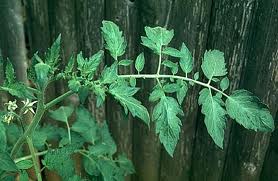
A few summers ago, I tried my gardening hand at tomatoes for the very first time.  I was pushed into it by my tomato-loving daughters who wanted to grow their own food.  Loving mom that I am, I trekked to the store and returned home with soil, two tiny plantlings, and some plant food.

Through the summer months, my tomato plants grew full with abundant leaves.  You couldn’t see any space between the branches, just all green and all beautiful.  I was pretty proud of my gardening prowess.

But my mother-in-law showed me that some leaves weren’t producing any fruit.  They just looked beautiful and diverted nutrients from the shoots that actually had baby tomatoes on them.  So, she encouraged me to trim the plant.

This was hard.  And sad.  I sucked in my breath one day and finally started snipping away with my scissors.  The leaves fell to the ground.  My tomato plant that was once so full and beautiful now looked spindly and bare.

Yet, just as promised, within a week or two it grew bigger and more green.  More flowers appeared to produce fruit.

Drastic measures that seemed so harmful at the time produced a greater harvest.

When I read through the Lord’s Prayer, it strikes me that we are petitioning God for some drastic measures at times.  Do we really mean it?

When we pray, “Hallowed be Thy name,” are we willing to let God trim away the dead, the diseased, the unfruitful, and the wasteful so that He can really be holy in our lives?

“Thy will be done.”  Are we ready for His will to be done–regardless of our desires or expectations?

Max Lucado wrote, “The phrase is a petition, not a proclamation. A request, not an announcement. Hallowed be your name. Do whatever it takes to be holy in my life. Take your rightful place on the throne. Exalt yourself …. You be Lord, and I’ll be quiet.”

We can look beautiful and full, untrimmed by God, allowed to grow as we see fit.

Yet, if we let God cut and prune, painful as it is, as harmful as it first appears, the end result is His holiness, His glory, His lordship in our lives.

More Devotions From My Garden:

Heather King is a wife, mom, Bible Study teacher, writer for www.myfrienddebbie.com and worship leader.  Most importantly, she is a Christ follower with a desire to help others apply the Bible to everyday life with all its mess, noise, and busyness.  To read more devotionals by Heather King, click here.

Copyright © 2012 Heather King

One Minute Devotional – Devotions From My Garden: Underneath the Dirt

I cleaned out my garden last week, clawing at the dirt to extricate the weeds, moving plants around, and spreading mulch.

It turns out that the miniature roses that I thought would stay, well, miniature, grew far larger than I ever expected.  They are dwarfing all of the plants behind them.  After years of watching these rose bushes grow exponentially each season, I’ve finally realized that “miniature” just means the size of the bud—not the size of the bush.

So, I finally broke down and moved one of the rose bushes to the back of the garden where it didn’t look like anything was growing.  But it’s March and many of my perennials and summer bulbs haven’t poked their heads above ground yet.

Sure enough, I pushed my trowel into the dirt only to overturn a bulb.

I guess something was growing there after all.

In the garden and in life, it’s so often the hidden things we can’t see that produce the life we do see.

In his devotional book A Year With Jesus, Eugene Peterson wrote: “Jesus’ work was not always public, out where people could see it.  There were also quiet interludes of retirement and rest.  The quiet asides are as characteristic of his ministry as the glorious signs.”

Jesus not only valued the moments of solitude and quiet, but He also called His disciples away when they were weary from service:

Then, because so many people were coming and going that they did not even have a chance to eat, he said to them, “Come with me by yourselves to a quiet place and get some rest
(Mark 6:31 NIV).

What is “characteristic” of God’s work in you?  Is it just the visible that matters?  Is it the Sunday masquerade or the busyness of church life?  Is it committee meetings, ministry sign-ups, the quantifiable and the identifiable?

Don’t mistake this.  We are to serve God where He has called us to serve.  We shouldn’t linger on the pew when He’s asked us to step out and get busy.  Be assured that He will equip you and strengthen you when you act in obedience.

But don’t scorn the quiet, hidden work of God, either.  Don’t get so wrapped up in doing that you fail at being at the feet of God.  The Master Gardener may be growing something great in you just beneath the soil, something beautiful that you haven’t yet seen.  And it begins with you sitting before an open Bible, with your prayers laid down at His feet, with your songs of praise during the morning commute.  It begins in the hidden places alone with Him.

More Devotions From My Garden:

Heather King is a wife, mom, Bible Study teacher, writer for www.myfrienddebbie.com and worship leader.  Most importantly, she is a Christ follower with a desire to help others apply the Bible to everyday life with all its mess, noise, and busyness.  To read more devotionals by Heather King, click here.

Copyright © 2012 Heather King

One Minute Devotional – Devotions From My Garden: Growing

“He has made everything beautiful in its time”
(Ecclesiastes 3:11a ESV)

I’m a gardener who loves color, soil, blooms, and fullness, all without spending much money.  So, I’m an anti-annual gardener mostly, although I break down and buy some Gerbera daisies every year.  I can’t help myself!!

My modus operandi is usually to buy small, inexpensive perennials or bulbs that barely show up in my garden the first year.  Two years later, though, my $3 plant has now spread across the ground, covering every available space.  The coneflower I first planted several years ago grew over my head last summer.  The Black-Eyed Susans with the original circumference of my hand now span about 3 feet.

But it takes time.

Unfortunately, time is the one thing we don’t often give life—give God.  We want Him to renew us, restore us, change us, perfect us, and use us immediately, when we’re still tiny little plants who haven’t grown into maturity.

In her lessons in James: Mercy Triumphs, Beth Moore said, “We demand a holy SPRINT; He gives us the Holy Spirit.”

When the Israelites finally stepped foot into the promised land after 40 years of wandering, God told them from the beginning that conquering would take time.  He said, “The Lord your God will clear away these nations before you little by little. You may not make an end of them at once, lest the wild beasts grow too numerous for you” (Deuteronomy 7:22).

If they had rushed God, they would have been destroyed and overrun.

In the same way, James writes:

Be patient, therefore, brothers,until the coming of the Lord. See how the farmer waits for the precious fruit of the earth, being patient about it, until it receives the early and the late rains.  You also, be patient. Establish your hearts, for the coming of the Lord is at hand. Do not grumble against one another, brothers, so that you may not be judged; behold, the Judge is standing at the door. As an example of suffering and patience, brothers, take the prophets who spoke in the name of the Lord. Behold, we consider those blessed who remained steadfast. You have heard of the steadfastness of Job, and you have seen the purpose of the Lord, how the Lord is compassionate and merciful (James 5:7-11).

Don’t rush the journey.  Don’t run ahead of God.  Be patient.  Establish your heart.  Remain steadfast.  We don’t always see the reason for the slow pace or the delays, but God is working for our protection and benefit because He is a “compassionate and merciful” Master Gardener.

More Devotions From My Garden:

Heather King is a wife, mom, Bible Study teacher, writer for www.myfrienddebbie.com and worship leader.  Most importantly, she is a Christ follower with a desire to help others apply the Bible to everyday life with all its mess, noise, and busyness.  To read more devotionals by Heather King, click here.

Copyright © 2012 Heather King

Weekend Walk, 03/31/2012

Hiding the Word:

It’s the first full day of Spring Break for us and my kids were up early.  My oldest daughter announced that one of her friends plans to “sleep all day” for spring break.  “How boring!” she said.

My kids plan to pack in as much activity as possible.

So, it wasn’t even 8 a.m. yet when one of my girls was inspired to start singing.  She pulled out a travel CD of Bible songs that Grammy gave them a few Christmases ago and popped it into the CD player in her bedroom.  I started hearing the chorus of “Deep and Wide” emanate through the house . . . loudly.  This daughter of mine always sings with passion.

Inspired, my baby girl ran into the playroom and pulled out the entire plastic drum of instruments.  The harmonica was humming, the cymbals crashing, the sleigh bells jingling, the clackers clacking, the triangle jingling.  Yes, even the kazoo was buzzing.

It was an early morning symphony of praise in my tiny house and it may have sounded like pots and pans at times down here.  To God, though, it’s spontaneity and passion must have sounded beautiful.

We are preparing to enter the Passion Week, the time when we remember Good Friday when Christ died for us and Resurrection Day when He conquered death and the grave.  When Jesus entered Jerusalem for that final week, the people filled the air with waving palm branches and shouted, Hosanna! Blessed is he who comes in the name of the Lord, even the King of Israel!” (John 12:13).

They shouted praise to Him because of false expectations and misplaced excitement.  They didn’t praise Him for being a Savior, for laying down His own life to provide redemption for their sins.

No, they hailed Him as a conqueror, rebel, and over-thrower of the earthly kingdoms.  When they realized that’s not what He was doing, they mostly abandoned Him. The palm branches stopped waving.  The people stopped shouting “Hosanna” and started shouting “Crucify Him.”

My praise can be tainted by misplaced expectations also.

So, this week, I am meditating on a verse that reminds me to praise God when He behaves the way I expect and when He doesn’t.  It’s my hope to sing praise to God with the passionate simplicity of children crooning with their Bible songs CD and clanging together toy instruments.

It seems appropriate to prepare for the Passion Week with praise:

I will bless the Lord at all times;
    his praise shall continually be in my mouth.
My soul makes its boast in the Lord;
    let the humble hear and be glad.
 Oh, magnify the Lord with me,
    and let us exalt his name together!  (Psalm 34:1-3 ESV)

Weekend Rerun:

Am I the One, Lord?
Originally posted on April 5, 2011

“Examine yourselves to see whether you are in the faith; test yourselves.”  2 Cor. 13:15

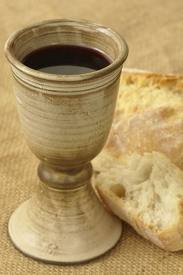
Twelve disciples, one Savior, reclined and relaxed, celebrating Passover together in an Upper Room.  Thirteen share in a meal of remembrance that they would always remember and that we continue to remember.   The Last Supper.  Communion.  “Do this in remembrance of me.”

Together they have eaten and laughed, declared “For His mercy endures forever” and sung hymns in worship.  They are jovial, anticipatory, expecting Christ’s triumph in Jerusalem.

Jesus leans in, “While they were eating, he said, ‘I tell you the truth, one of you will betray me’ (Matthew 26:21, NLT).

Silence.  Stillness.  Seriousness.

If Jesus said this at the end of a church service today and the pianist played the quiet first notes of the closing hymn, many of us would be nudging our neighbor or making concerted efforts NOT to stare at the person across the room.  (Or, perhaps, making lunch plans and quieting the rumbles in our stomachs.)  It’s you, it’s you, it’s you—we might think.  That sermon is for you!  That heaviness of the Holy Spirit—it’s for you!  I’ve seen your sin.   I know your need to repent.

And yet, 12 disciples, “greatly distressed, each one asked in turn, ‘Am I the one, Lord?’” (Matthew 26:22, NLT).

Am I the one, Lord?

This seeking is our salvation.  We ask the dangerous question and we allow the Holy Spirit to turn over our hearts and reveal our own true need to be at the altar and lay it down.  Or the Holy Spirit searches, finds purity of heart, and invites us to pray for those around us still struggling.

It’s our complacency and satisfaction with our spiritual dwelling place that leads to our downfall.  It’s when we stake our claim to land and decide we’ve traveled enough in this road to Christ that we edge our way to danger.  I’m pure enough.  Good enough.  I’m not lukewarm.  I’ve conquered the “big” sins.  I read my Bible.  I pray.  I’m close to God.  I have a strong ministry.

I’m good.  Right here, in this place, I’m good here.

But this journey to Christ is ongoing.  As long as we are alive on this planet, we are imperfect creatures in need of an ever-closer intimacy with our Savior.

This moving to Christ requires moving away from something else.  It’s a necessity of the road.   In order to go forward, we must leave something behind.

That was true for Israel.  God called them to Canaan when He beckoned Abram out of Mesopotamia and its many gods and idols.  God called them back to the Promised Land when He led them out of Egypt and they left slavery for freedom.

They walked towards promise, but it involved rejection—rejecting the old definition of “normal.”  It was “normal” for those in Abram’s home town to pray to statues and worship bits of stone and wood.  It was “normal” in Egypt for male babies to be slaughtered simply for population control.

It’s “normal” for us to be too busy for God, to lose it with our kids, to be selfish, to feel jealousy, to cheat, to lie, to overindulge , to worry, to rebel, to gossip. . .  We think these sins are acceptable because everyone does them and no one can be perfect.

Yet, God calls us out of “normal” and into radical.  He doesn’t ask us the hard questions to shame us or humiliate us.  He does it to draw us close to Him so that we are “being transformed . . .from glory to glory” (2 Corinthians 3:18, NKJV).

Eugene Peterson wrote, “Repentance, the first word in Christian immigration, sets us on the way to traveling in the light.  It is a rejection that is also an acceptance, a leaving that develops into an arriving, a no to the world that is a yes to God.”

Peter sat at that Passover table and asked the dangerous question, “Am I the one, Lord?”  He allowed the searching of his heart.  It wasn’t him.  Eleven of those at the table endured their souls being turned over and could say that they were innocent of this betrayal.

Yet, then they stopped asking.  That’s our weakness, too.   When we stop asking the Holy Spirit to search us, when we become complacent and self-assured, it’s when we will betray.

Like Peter.  Jesus predicted Peter would deny Him.  “Peter answered and said to Him, ‘Even if all are made to stumble because of You, I will never be made to stumble.’  Jesus said to him, ‘Assuredly, I say to you that this night, before the rooster crowd, you will deny Me three times.’  Peter said to Him, ‘Even if I have to die with You, I will not deny You!’  And so said all the disciples” (Matthew 26:33-35, NKJV).

But, he was wrong.  Jesus arrested.  Jesus taken away in chains.  Jesus bullied, beaten, spat on, and mocked.  Peter in the courtyard answering the questioning accusations of others by the fire.  “I never knew the fellow.  I wasn’t one of his disciples.  I didn’t follow Him.”

He stumbled into betrayal because he was complacent.  Peter thought he knew what was in his heart, that he was right with God and strong in his faith.  So, he stopped asking, “Am I the one, Lord?” and started saying, “Not I.”

And so we must ask and keep on asking, “Search my heart, search my soul.  There is nothing else that I want more.  Shine Your light and show Your face.  In my life, Lord, have Your way, have Your way” (Hillsong United).

*******************************************************************************************************

Heather King is a wife, mom, Bible Study teacher, writer for www.myfrienddebbie.com and worship leader.  Most importantly, she is a Christ follower with a desire to help others apply the Bible to everyday life with all its mess, noise, and busyness.  To read more devotionals by Heather King, click here.

Copyright © 2012 Heather King
Devotions From My Garden: Be An Original

 “Let’s just go ahead and be what we were made to be, without enviously or pridefully comparing ourselves with each other, or trying to be something we aren’t”
(Romans 12:6 MSG)

I am a passionate gardener from about March to June every year.  It feels refreshing, good for the soul, full of life, and peaceful to push my trowel into the dirt in the cool morning air or in the breezy moments before twilight.

During those months, I fancy myself a real gardener as I spread the mulch over the newly weeded flower beds and stand back to survey my plot of earth.

Then it gets hot.  All my gardening ambition dies.  When I weigh weeding in the heat with working in the comfort of air conditioning, my inside work wins every time.  So, my gardens transform into jungles as weeds brazenly shove aside my mounds of mulch.  Massive spiders take up residence in undisturbed webs.

Two years ago, I had an epiphany in July when my gardens were just taking on that forlorn abandoned look.

After a quick trip to the Home Depot for a super sale, I toted home some $2 pots of ground covering.  They started small—these tiny plants of phlox and candytuft, but over time I hoped they’d cover the expanse of the garden.  And if it worked, there’d be less space for weeds. (Crosses fingers and digs into the dirt).

Yesterday, I worked in the flower beds with all my usual spring passion.  I fingered the tiny green sprouts just peeking up from the dirt and tried to remember what perennials should reappear in the next few months.

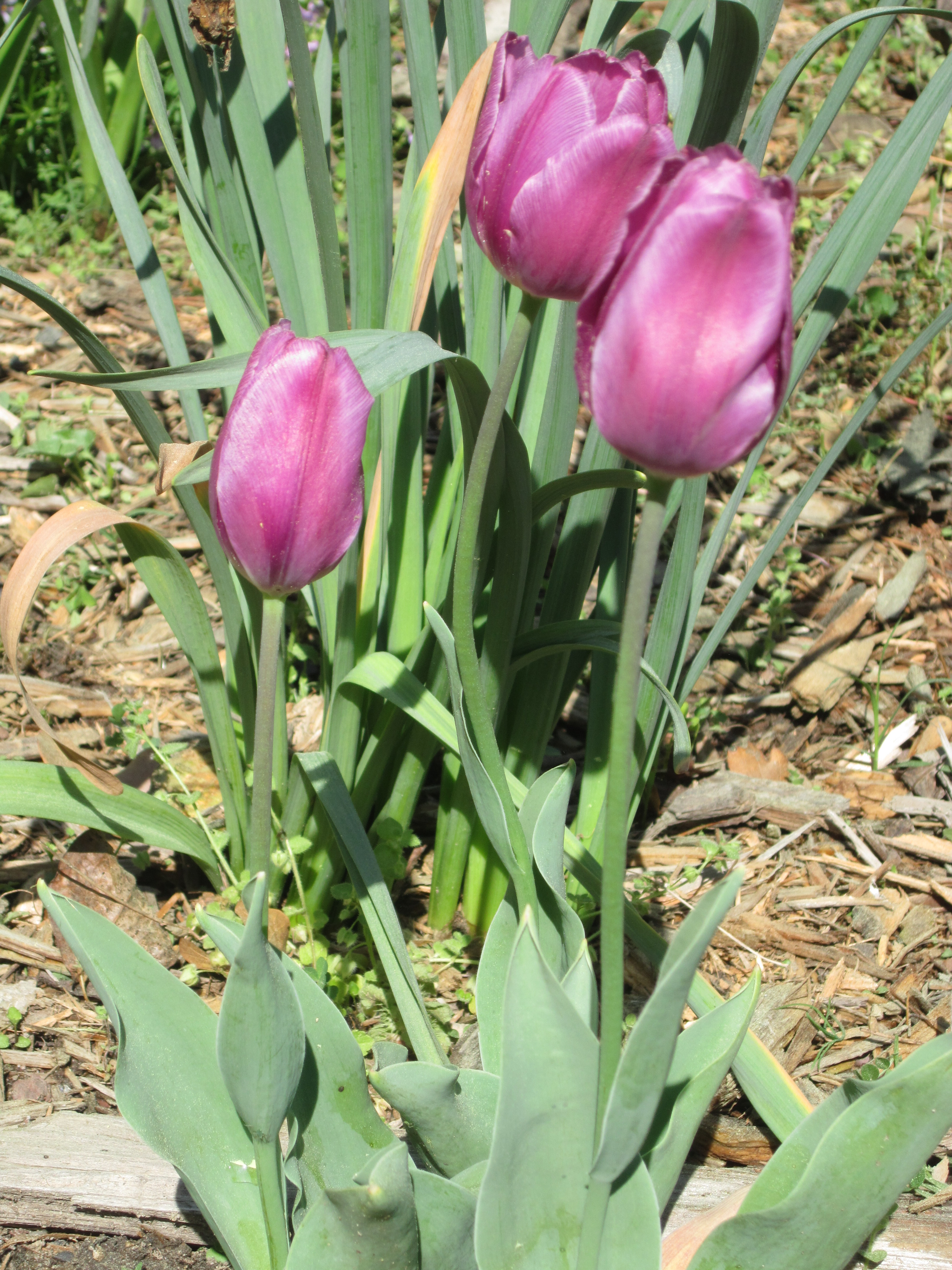
I yanked the viny weeds away from my radiant tulips with their bold colors. In these early spring months, the tulips are the stars of the garden.  They are fabulous.  They are eye-catching.  They are royal show-offs.

Next to them, though, are the bright and cheerful phlox and candytuft, the simple plants that have now quadrupled in size.  No one has ever told them they are just ground covering and I’m not spilling the secret.

Every glance around my garden testified to God’s creativity.  The beauty of this world is so vast and varied.  And I wondered—is it possible to say that this pure white candytuft, all fluffy and bright, is less beautiful than the deep purple tulip blooming next to it?

They are both unique testaments to God’s design.

So are we.

The flowers aren’t bothered by their variety or the specific beauty God’s given them.  The tulip rises high and blooms bright, giving glory to God by being a tulip—as it was designed.

The candytuft spreads across the ground with simple and sweet blossoms stirred slightly by the breeze, giving glory to God by being candytuft—as it was designed.

We, however, so often stunt our growth and destroy our own service by becoming ministry busybodies and nosy talent scouts.  “She’s better than me.  I’m better than him.  I wish I had her gifting.  I wish I could do that.  I’m great.  I’m nothing.”

It’s spiritual gift envy and it’s destructive and dangerous.  It takes something beautiful—the variety of spiritual gifts God has given—and twists it into ugliness and pettiness.  We might as well trample all over the gardens of faith God has created, stomping on the blooms of others and smashing down their leaves.  Meanwhile, others are ramming their big boots down on our own petals.

Paul wrote in Galatians, “Let us not become conceited, provoking one another, envying one another” (Galatians 5:26 ESV).

I love this passage in The Message:

That means we will not compare ourselves with each other as if one of us were better and another worse. We have far more interesting things to do with our lives. Each of us is an original.

Make a careful exploration of who you are and the work you have been given, and then sink yourself into that. Don’t be impressed with yourself. Don’t compare yourself with others. Each of you must take responsibility for doing the creative best you can with your own life (Galatians 5:26, 6:4-5, MSG).

You are an original.  So is the person next to you in Sunday School.  And the lady who cares for the babies in the nursery, rocking them to sleep.  And the guy on the stage singing.  And the artist arranging the flowers in the church windows.  And the couple who houses missionaries during their visits.  And the man who comes early to unlock doors.  And the servant who gives his time to set up the chairs for covered dish meals.

All of them original, all of them part of God’s amazing design.  We can trample all over each other, vying for personal glory, attention, and the best gifts in God’s bag of talents.

Or we can “Make a careful exploration of who you are and the work you have been given, and then sink yourself into that. ”  We can “do the creative best you can with your own life.”

We can also seek out every opportunity of pointing to the beauty of God in others.  Don’t worry if people don’t always see your own beauty.  Whether you feel like groundcover or like a tulip taking center stage in a spring garden, you’re blooming for God’s glory.

More Devotions From My Garden:

Heather King is a wife, mom, Bible Study teacher, writer for www.myfrienddebbie.com and worship leader.  Most importantly, she is a Christ follower with a desire to help others apply the Bible to everyday life with all its mess, noise, and busyness.  To read more devotionals by Heather King, click here.

Take Two: Kaleidoscope Moment: An Eternal Perspective


Friends, tomorrow is the seventh anniversary of my dad’s death, so today I’m going to share with you my post about his passing from last year’s anniversary. I hope it’s a blessing to you!

Kaleidoscope Moment 2: An Eternal Perspective

Posted on March 29, 2011


On this day six years ago, my dad died of malignant melanoma.  I miss him, but I’m okay.

Mostly I miss him in unexpected moments throughout the year.  Like when I hear Mussorgsky’s Pictures at an Exhibition (his favorite) or some jazz music.  Or when I visit the firehouse with my daughter on a field trip (he was a firefighter).  When I see a really good drummer (my dad was the best) or watch the military band concerts on evenings in the summer (he was an Army musician).

I miss him when we look through pictures and my daughters ask me all about him.  I’m sad because the last year of his life, he was so sick and really didn’t look the way I remember him best.  Those pictures are strange distortions of someone I knew and loved.

I miss him, but I’m okay.

His death was one of those kaleidoscope moments for me.  God took my perspective with the patterns I was used to seeing, and shifted it a little.  He showed me something beautiful.

Up until that moment, I had believed in heaven.  I heard the stories in Sunday School and saw the pictures in my Beginner’s Bible as a kid.  We sang songs at church about heaven and I believed what I sang.

But, when my dad died, heaven was suddenly real.  Not some hazy and nebulous concept we teach at church, but a real place where my dad now lived.  The outer shell that we buried in that casket was most definitely not him anymore.  Suddenly, when I envisioned what heaven would be like, I personally knew someone who was there–a face in the crowd that was waiting expectantly for me to join him.

My mom chose this verse for my dad’s funeral bulletin:

Therefore we do not lose heart. Though outwardly we are wasting away, yet inwardly we are being renewed day by day. For our light and momentary troubles are achieving for us an eternal glory that far outweighs them all.  So we fix our eyes not on what is seen, but on what is unseen, since what is seen is temporary, but what is unseen is eternal (2 Corinthians 4:16-18, NIV).

For the first time, God taught me how to have an eternal perspective.

I had a friend in college whose mother had a degenerative disease and was ever so slowly worsening.  It was difficult and devastating, but I have never in my life met anyone whose eyes were more firmly fixed on heaven than my friend.  She saw heaven as the soon-to-be home for her mom—a place where her mom would be healed and whole and hurting no longer.  She would talk about heaven in casual conversation and she didn’t care about earthly possessions, worldly success, or what other people thought of her.  Instead, her eyes were fixed on the unseen and the eternal.

I forget sometimes to keep an eternal perspective and then God nudges my heart and holds the kaleidoscope back up for me to see the pattern of beauty He created in the light of eternal hope.

I get angry about something stupid and forget that little petty annoyances mean nothing in the end.  I worry and fret about the small details of my life and forget that in the grand scheme of things, they really don’t matter. I long for a bigger home or at least new carpeting and forget that this world really isn’t my home and what I have here isn’t going to last.

Chris Tiegreen wrote:

When your feet are planted in heaven, you can quit chasing status in this world.  You can live with a godly sense of abandon because you aren’t attached to possessions or even your own life.  You can take risks, although nothing God calls us to do is really risky by eternal definitions.  You can follow Him without fear.

The other day I took my daughters to a festival we have in our town.  We toured the booths, saw some skits, watched the parade and then headed home.  When she got to the car and realized we weren’t paying $5 per child for a 2-minute pony ride, my daughter bawled.  She cried most of the way home, saying, “You don’t understand me or what I like and what is important to me.  You never ever, ever, ever, ever, ever give me the things I want.  I’m not going to eat or clean my room or do anything at all until you take me back to ride the horses.”

We arrived home and she sat in time-out.  I checked my emails and other messages and found an updated post for the little girl named Kate McRae that I’ve been praying for.  She’s seven years old.  She has metastatic brain cancer.

My daughter climbed into my lap, face still a little red from tears, and asked me about the little girl whose picture was now on my computer screen.  I told her all about Kate.  How she’ll be losing her hair because of the treatments she has to have.  How she has to take medicine that makes her terribly sick so she can’t eat.  How she can’t be with her brother and sister and can’t go to school.  How she has to live far from home and stay in a hospital.  How her body is weakened by the radiation treatments to her brain.

Pony rides didn’t seem so important anymore.  God turned the kaleidoscope and changed my daughter’s heart by revealing a new perspective, an eternal one.

Paul wrote:

Their mind is set on earthly things. But our citizenship is in heaven. And we eagerly await a Savior from there, the Lord Jesus Christ, who, by the power that enables him to bring everything under his control, will transform our lowly bodies so that they will be like his glorious body (Philippians 3:17-21, NIV).

How would your life change if you lived as a citizen of heaven in the here and now of earth?

Would you be more bold in your faith?  Invest more time in worship and prayer?  Build into your relationships more?  Whine less about the things you have or don’t have?  Abandon the pursuit of earthly status in order to gain heavenly reward?  Spend less time worrying about the things you can’t control?  Love people more and be willing to overlook more of their faults?  Be more thankful?  Enjoy the little blessings in life?

So much of my attitude about life, so many of my everyday reactions are tainted because I lose that eternal perspective.  That’s why I need reminders like today.  Reminders that “this world is not my home; I’m just passing through.  My treasures are laid up somewhere beyond the blue.”

*************************************************************************************************************

Heather King is a wife, mom, Bible Study teacher, writer for www.myfrienddebbie.com and worship leader.  Most importantly, she is a Christ follower with a desire to help others apply the Bible to everyday life with all its mess, noise, and busyness.  To read more devotionals by Heather King, click here.

Copyright © 2012 Heather King

It’s A Miracle!

The LORD is good to those whose hope is in him,
to the one who seeks him (Lamentations 3:25)

Years ago, the sweet man who led our choir then leaned back in his stool at the front of the choir room.  He told us in a slow southern drawl what he remembered about his mother. I think about his story often.

On the dark and stormy nights of his childhood, when the thunder raged and lightning struck close enough to illuminate his room, he would awaken to find his mom sitting in a chair at the foot of his bed.  She sat with him through the storms, praying over him, even while he continued to sleep.

That’s what he remembered about her: her presence in the stormy nights.

Last night, I supervised the brushing of teeth and the donning of pajamas, packing lunches and backpacks, and laying out clothes for the new day.  We read bedtime stories.  We prayed as a family.

This morning, I poured cereal and buttered toast.  I placed ice packs in the lunches and zipped up the backpacks, all full for the day.

I helped with shoes and socks, combed hair, and reminded my daughters (too many times) to brush their teeth and to do it well because they don’t want cavities or bad breath and, by the way, we’re going to the dentist next week.

Sticking my head out the door for a moment, I checked the weather.  Then I held jackets open for each girl to slip in her arms.  I broke up a fight and gave a crying daughter a hug, calmed her down, and then placed the two sisters on a school bus.

And the day went on with more little tasks and routine activities.

I don’t remember these moments from my childhood.  Do you?  I don’t remember my mom tying my shoes or helping me put on my jacket.  I don’t remember her supervising bath time or pulling my hair into pigtails.

Even though I don’t remember those things, she did them.  I was clean, fed, dressed, and groomed.  My life must have been filled with years and years of everyday love that I don’t remember.

Usually these acts of love remain unnoticed and undervalued . . . unless they’re missing.  Those children who aren’t fed well, bathed, read to, hugged, kept safe, and tucked into their own cozy beds at night feel the lack.  Only they perhaps really know how important the small things are.

What will my kids remember about this time with me? It’s not likely they’ll remember the moments of jackets and breakfasts and backpacks.  They don’t lack for these things.  They likely take them for granted, just as I did.

But they might remember something unique or big, just like the man who recalls his mom sitting with him through stormy nights.

I wonder, then, what do I remember about God, my Father?  When I tell about His presence in my life, what has become part of my story? Usually, it’s the stormy times when I awaken in fear only to find His presence by my side.  It’s the times He’s kept me safe and delivered me from danger.

Yet, we so often overlook the miracles of everyday grace, the simplest signs of His affection and the fact that He cares for our needs and yes, sometimes even our desires.

When we always look for the glorious miracle, the immediate and the extraordinary, we miss thanking God for the gradual, the expected, and the small.

C.S. Lewis wrote, “A slow miracle is no easier to perform than an instant one.”

Yet, we revel in the answers to prayer that come fast. The ones that don’t require interminable waiting and inconvenient patience.

We pray, “Give us this day our daily bread” and then miss the miracle of everyday provision—until it seems in jeopardy.

In the book of Nehemiah, the exiles who returned to Jerusalem skipped sleep, fended off enemies, prayed, and labored with a sword in one hand and a trowel in the other.  They hefted bricks until the walls of Jerusalem were complete, all in just 52 days.  It was a miracle.  Even their enemies knew that:

When all our enemies heard about this, all the surrounding nations were afraid and lost their self-confidence, because they realized that this work had been done with the help of our God (Nehemiah 6:16).

How easy it would be to forget that, though, because God chose not to build the walls with a word from His lips or destroy their enemies with an earthquake or flood.

As Kelly Minter writes in Nehemiah: A Heart That Can Break:

“It’s worth noting that so far we’ve read nothing of angels, burning bushes, or talking donkeys.  Instead, we’ve seen God use what we might consider ordinary to bring about extraordinary transformation: prayer, repentance, willingness, hard work, sacrifice, humility, faith.  Though miraculous displays of God’s power are to be desired and cherished, I’m equally impressed with God speaking silently to Nehemiah’s heart in the most ‘normal’ of circumstances.  Be encouraged that the common, everyday realities are ideal environments for God to put something in our hearts to do” (Minter 116).

Take time to thank God today for the daily bread, for forgiving our trespasses, for His mercies made new every morning, for His great faithfulness, and because He is good to you (Lamentations 3:23-26).  Thank Him for answered prayers and ministry opportunities.  Thank Him for the quiet ways He speaks to your heart and for the encouragement He brings you day after day.

It may not be spectacular, like fireworks in the night sky.  Still, it’s love.  That’s worth remembering.

Heather King is a wife, mom, Bible Study teacher, writer for www.myfrienddebbie.com and worship leader.  Most importantly, she is a Christ follower with a desire to help others apply the Bible to everyday life with all its mess, noise, and busyness.  To read more devotionals by Heather King, click here.

Copyright © 2012 Heather King

Weekend Walk, 03/24/2012

Hiding the Word:

Last Wednesday night, one of our church’s Awana leaders asked me and another lady from our church choir to listen to a child recite John 3:16.

He did a great job.  He rattled it off with little effort and we each gave him a high-five to celebrate.

Then my fellow verse-listener asked, “Do you know what John 3:17 says?”

I didn’t!  I blanked completely, although I’m pretty sure my girls have learned it before for Awana, but in that moment I couldn’t tell you at all what it said.

So, she recited it for us.  Just as simple as that.  And it was beautiful, absolutely beautiful.

I’ve read several times recently about how early God-followers mostly recited or read aloud God’s Word and twice in one month I have listened to someone doing nothing more than quoting a verse or reading a passage from Scripture.  It’s uniquely powerful.

I still remember the very first time my oldest daughter quoted a Scripture verse she had learned from Awana.  “God loved us . . . and sent His Son.”  I cried when I heard her little voice speaking the Word of God.

So, for the verse of the week, I’m going to meditate on that precious Scripture my choir friend quoted for us on Wednesday night, and, to keep it in context, I’m going to study it together with John 3:16:

For God so loved the world that he gave his one and only Son, that whoever believes in him shall not perish but have eternal life. For God did not send his Son into the world to condemn the world, but to save the world through him (John 3:16-17). 

Weekend Rerun:

A Puzzle of Peace
Originally posted on 04/29/2011

You will keep him in perfect peace, him whose mind is steadfast, because he trusts in you”
Isaiah 26:3

Five days a week at noon I journey to the school and wait in the line of minivans to pick up my daughters from their classes.  By that time each day, my baby girl is tired and ready for lunch and a nap, so the lull of the car bounces her to sleep almost daily.  I have the joy of watching.  Have you ever watched a baby fall asleep?  Her breathing slows down ever so slightly.  My little one folds her blanket over and snuggles it against her cheeks.  Then the eyelids start to linger ever so slightly with each blink—closing for longer, and longer, and longer each time until finally  . . . sleep.

It’s peace demonstrated for me on an almost daily basis.  The quiet rest, the feeling of safety, the calm, the trust.  Doesn’t that sound heavenly?

Somehow over time, though, most of us lose that miraculous peace, the absolute trust that you are loved and cared for so you can rest and leave the driving to someone else.  It’s not present in my heart all of the time.  I may let God do the driving, but I’m usually the passenger holding a map and questioning the navigational choices of my Divine Driver.

Do You really want us to turn there, God?
Do You know where You are going, God?
Do You have a destination in mind for me, a plan, a hope and a future?
Do You know any shortcuts that can get us there faster?

This often-elusive fruit of the spirit—peace—-is not a fairy tale or a figment of our Christian imaginations.  It’s there available to us.  Yet, sometimes I reject the peace that God offers me by failing to discipline my emotions and thoughts.  I pray for peace for myself and others, the “peace of God, which transcends all understanding” (Philippians 4:7) and think that God’s peace is going to enter my heart miraculously and with little effort on my part.  It’s a prayer that we sometimes use as a magical spell instead of allowing God to change our hearts so that peace becomes possible.

The bottom line is some of our behaviors need to change, some of our thought patterns need to be stirred up a little bit and some of our emotions bossed around. 

Right before Paul talks about this incomprehensible peace that God offers, he tells the Philippian church “Do not be anxious about anything, but in every situation, by prayer and petition, with thanksgiving, present your requests to God” (Phil 4:5). Peace starts with a thankful heart.  In all of our anxieties, “in every situation,” begin by giving thanks.  The worries that infect and plague us cannot coexist with the antibiotic of gratitude.

Paul also tells the church that God’s peace will “guard your hearts and your minds in Christ Jesus.”  Peace requires the active discipline of standing guard over our hearts and minds and refusing admittance to whatever thoughts aren’t peace-full.  Paul wrote out a clear test for determining whether a thought should gain entry: “Finally, brothers and sisters, whatever is true, whatever is noble, whatever is right, whatever is pure, whatever is lovely, whatever is admirable—if anything is excellent or praiseworthy—think about such things” (Phil. 4:8).

It’s not that my thoughts are blatantly sinful or wrong, but I do have an internal dialogue of whining that certainly isn’t “lovely or admirable.”  And I have a tendency to dwell not on “whatever is true,” but instead on “whatever might be true.”  It’s when I allow myself to get caught up in “what if’s” that I trade in peace for worry and trust for anxiety.  “What if this happens?  What if that happens?  What would we do in this situation and in that situation?”  I sometimes live in hypotheticals that may never ever become a reality instead of focusing on what is true—-God is faithful; God promises to walk with me through everything; God loves me.  Dwelling on the truths of God’s promises instead of the questionable reality of our circumstances is our responsibility.  This discipline of taking “captive every thought to make it obedient to Christ” is what prepares our hearts to receive His perfect peace.

Paul gives us one final piece of this peace puzzle.  He says, “Whatever you have learned or received or heard from me, or seen in me—put it into practice. And the God of peace will be with you (Philippians 4:9).  Peace occurs when we follow God’s instructions.   We can’t choose to disobey God’s commands, live how we want to live, do what we want to do, and then wonder why our circumstances are difficult.  There are consequences to every choice and it’s by choosing righteousness—-doing what God would have us do—–that we enjoy the peace of God’s blessing.  Isaiah wrote, “The fruit of righteousness will be peace; the effect of righteousness will be quietness and confidence forever” (Isaiah 32:17).

Have you been longing for peace lately?  Maybe you’re in circumstances that have you fretful and anxious.  Maybe you are in the middle of tough decisions and you aren’t sure what to do.  Maybe you have taken a step out in faith and you are waiting in hopeful anticipation of what God is going to do.  Maybe you worry over whether you’re good enough at being a parent; are you making the right decisions, handling things the best way for your child?

I pray peace over you, a supernatural rest for your heart and mind.  Our God is faithful and trustworthy and you can relax knowing that He is the one doing the driving.  But, don’t neglect your responsibility to make yourself a vessel prepared to receive the peace He gives.  Are there some bad habits that you need to break, some misassumptions you need to relinquish?  Do you need to be more disciplined about your thought life and more in control of your emotions?  Do you need to cease the “what if’s” and put an end to planning out hypotheticals?  Do you need to change some of your behaviors and pursue righteousness instead?

It’s not necessarily going to be easy and it certainly won’t be a one-time event.  No, it’s a moment-by-moment choice to trust God or not, to rest in Him or take over from Him, to do it God’s way or to demand our own way, but in the yielding of our hearts, minds and choices there is God-given peace.

*****************************************************************************************************************

Heather King is a wife, mom, Bible Study teacher, writer for www.myfrienddebbie.com and worship leader.  Most importantly, she is a Christ follower with a desire to help others apply the Bible to everyday life with all its mess, noise, and busyness.  To read more devotionals by Heather King, click here.

Copyright © 2012 Heather King

Please Break My Heart . . . Really and Truly

It’s the drill, the sound if it screeching unnaturally close to your face.

Plus there’s the inescapable smell of sterilized tools and latex gloves.

There’s the tooth-shaped clock on the wall and the charts portraying healthy and not-so-healthy gums hanging here and there.

It’s the dentist’s office and I don’t love the place, but I had to be there for a filling—easy and routine, my dentist tells me.  He asks me how I’m doing today.  “Nervous,” I confess with a conversational giggle.

Still, I like him.  He’s pleasant and efficient.  His degrees and certifications adorn the walls, assuring me that he knows what to do.  He’s the kind of doctor I prefer, one who explains to you what’s going on and assumes you’re intelligent enough to understand.

So, he glances at my chart and sees the note written in large letters, “Needs extra anesthetic.”

He asks me about it and I tell him the gruesome story of another dentist starting to drill and me feeling it.  I tried to fake it and pretend like I was numb just for the sake of expediency, but my flinches and the pain in my eyes apparently gave me away.

When you’re numb, you ironically can’t help but feel it.  You feel that your face is heavy and your speech difficult.  They ask you to rinse and it takes effort.  It’s a simple filling and yet here I sit at my computer five hours later, feeling the last remaining bit of numbness around my mouth.  I’m a poster child for the old Bill Cosby standup routine about a dental patient.

Numbness takes time to fade, but thankfully it eventually does.  Truly, I’m grateful for the fact that two shots of medicine helped me not to feel the dentist’s drill.  It’s a comfort of the modern age that I’m happy to enjoy.

Yet, as I sit in the chair waiting for the drilling to start, I wonder if I’ve grown too numb in other areas of my life.  Unfortunately, the numbness of our hearts and minds doesn’t fade away as assuredly as a dentist’s shot.

I’ve been listening to a song by Hillsong called Hosanna and then for the first time today, I actually paid attention to the final lyrics:

Break my heart for what breaks Yours
Everything I am for Your Kingdom’s cause
As I walk from earth into
Eternity

Similarly, the World Vision founder, Bob Pierce, famously prayed, “Let my heart be broken by the things that break the heart of God.”

So I wonder, is my heart too numb?  Has it become an unfeeling organ?  Or, if I feel God’s broken heart, do I just cry for a moment and then resume life as normal, patching up momentary sorrow with practicalities and emotional distance?

What actually breaks the heart of God anyway?

Surely it’s our sin, our breaking faith with God and causing Him disappointment and sadness (Numbers 5:6, Hosea 11:8b).

The Bible tells us King David was a man after God’s own heart. How so?  Was it his faith in God and his bravery against a giant?  Was it his heart of worship?  Or perhaps instead that after devastating sin of adultery and murder, David’s heart broke before God, hating his sin and desiring restoration and forgiveness (Psalm 51).

Are you grieved over your sin and the times you’ve broken faith with God?  Do you shake it off with excuses and acceptance, compromising because it’s “normal” and just “who you are?”  Or do you humbly bow at His feet and ask for His help and His forgiveness?  Do you hate your sin enough to do whatever it takes to change?

Of course it’s the lost, the “sheep not having a shepherd,” who stirred Jesus’ heart to compassion and self-sacrifice (Mark 6:34). 

Are you broken-hearted over those who do not know Jesus and moved to compassion and boldness by their presence in the world and in your community?

Then there are the hurting and needy.  When Israel complained that God didn’t seem overly impressed by their fasting rituals and legalistic religiosity, God told them exactly what kind of fasting He desired: freeing the oppressed, sharing bread with the hungry, caring for the homeless (Isaiah 58:6-7).

James agreed when he wrote, “Religion that is pure and undefiled before God, the Father, is this: to visit orphans and widows in their affliction, and to keep oneself unstained from the world” (James 1:27, ESV).
Is your heart broken by the orphaned, the widowed, the hungry, and the oppressed?  Do you do more than shed a tear at an Internet video and actually advocate for those who need a voice? 
We have a God whose heart is broken over sin, over unbelief, over the hurting, oppressed, defenseless and hungry.

What about our hearts?
It’s a strange thing, this spiritual numbness.  While a shot at the dentist’s office fades over time, our hearts respond in opposite ways to hurt.  We may begin compassionate and then grow numb from forgetfulness.  We may grieve over sin at first and then slowly grow accustomed to it.
Instead of needing extra doses of anesthetic, we must go to God continually and ask for more of His broken heart.
To listen to Hillsong’s Hosanna, you can click the link here or watch the video posted below on the blog:

Heather King is a wife, mom, Bible Study teacher, writer for www.myfrienddebbie.com and worship leader.  Most importantly, she is a Christ follower with a desire to help others apply the Bible to everyday life with all its mess, noise, and busyness.  To read more devotionals by Heather King, click here.

Copyright © 2012 Heather King

Does This Make Me Look Fat?

My middle daughter never ceases to remind me that “it’s not fair” that her oldest sister gets more new clothes than she does.

The truth is, though, that I usually do search the racks for at least one outfit or top or pair of shoes for each of my girls, including the ones whose wardrobe is primarily made up of hand-me-downs.

So, as I hunted about town for bargains on cute warm weather clothes for my seven-year-old, I rejoiced at finding a treasure for my five-year-old, as well.

It was purple, one of her favorite colors.
It was a sweatshirt, and she prefers play-clothes to dresses and fanciness.
It was made by L.L. Bean, so it was fashionable and high quality and something I probably couldn’t afford if I hadn’t found it at a kids’ consignment shop.

We had a winner!

I carried it home with excitement, knowing for certain that she’d love it and feel special because I thought of her and not just her older sister.

At first, her reaction lived up to my expectation.  For me?  Wow, thanks mom!  Purple? I love purple! 

Then she tried it on.  And then she promptly took it off.

“It makes me look fat,” she said.

I’m sorry.  What did she just say?

I took some training once that told me not to be reactionary, to just take anything children say calmly and not respond with hysteria.

I failed.  I reacted.  Big.

What can I say?  My five-year-old just announced that she thought she looked fat in a sweatshirt.

Now, before anyone starts blaming this on me, let me just say that I’m very careful not to complain about my weight, outfits, hatred of diets and exercise, need to look skinny, or discomfort with shorts in front of my daughters.

She didn’t get this from me, but she got it from somewhere.  It simply cannot be innate for a five-year-old child to worry about her weight or how heavy she looks in a sweatshirt.

So, after lecturing her on the fact that she’s beautiful, perfectly healthy, in no way fat, and how that isn’t the most important thing anyway .  . . . and continuing this lecture long after I knew she had stopped listening . . . I still struggled.

It made me wonder how this skinny child who wears pull tabs, safety pins and belts to keep her clothes on could ever think she was fat?

Yet, how have I —how have any of us—twisted and distorted our perspective so much that we see ourselves with equally faulty vision?

We think we are perfect.  We think we are failures.  We think we are better than others.  We think we are the worst at everything.  We think we are ugly.  We think we are unusable.  We think we are tainted, soiled, dirty, unwanted, unlovable, stupid, foolish, embarrassing, hopeless . . .

Unfortunately, we’re confined to a funhouse mirror version of reality on this planet and it’s a fight to see clearly in a world that perpetually distorts truth.

It’s the media, our family, our friends, and our enemies. It’s the twisted definition of success.  It’s the times we were abused.  It’s the hurtful words we never get over.  It’s pride.

Yet, Paul gives us hope when he wrote: “For now we see in a mirror dimly, but then face to face. Now I know in part; then I shall know fully, even as I have been fully known (1 Corinthians 13:12 ESV).

It’s part of the promise of heaven!  We’ll be forever free from the lies and distortions and all of the untruths that clouded our perspective of the world, other people, and ourselves.

We’ll see truth.  We’ll see it perfectly.

Still, as difficult as it might be, Paul challenges us not just to accept the lies this world forces on us with a complacent shrug of the shoulders as we await heaven’s perspective.  He tells us:

Do not conform to the pattern of this world, but be transformed by the renewing of your mind. Then you will be able to test and approve what God’s will is—his good, pleasing and perfect will. For by the grace given me I say to every one of you: Do not think of yourself more highly than you ought, but rather think of yourself with sober judgment, in accordance with the faith God has distributed to each of you (Romans 12:2-3).

This is a call to action.  Fight now against the pattern of this world!  Press in to God and ask Him to renew your mind.  “Think of yourself with sober judgment.”  That means, see the honest truth.  Don’t think you’re better than you are.  And don’t think you’re worst either.  Know how God has made you, gifted you, and designed you and be happy with that.

And what is it that we are?  John tells us exactly:

“See what kind of love the Father has given to us, that we should be called children of God; and so we are. The reason why the world does not know us is that it did not know him. Beloved, we are God’s children now, and what we will be has not yet appeared; but we know that when he appears we shall be like him, because we shall see him as he is (1 John 3:1-3).

We’re not just children of God, we’re also in progress to perfection. You’re beautiful now, created and loved by God, and yet I can’t wait to see you in heaven, when He’s perfected you and you’ve become all that He intended you to be.

You can read more devotionals on this topic here:

Heather King is a wife, mom, Bible Study teacher, writer for www.myfrienddebbie.com and worship leader.  Most importantly, she is a Christ follower with a desire to help others apply the Bible to everyday life with all its mess, noise, and busyness.  To read more devotionals by Heather King, click here.

Copyright © 2012 Heather King