You Want Me To Pray What?

It was my baby’s first articulate prayer request for someone else.

During our nightly family prayer time, she usually doesn’t wait her turn. Whenever the Spirit moves, she just jumps in and starts talking to God, even if someone else is still pouring her heart out.

But that night, she waited for others to finish.  My daughters and I were snuggled up on the couch with our eyes closed while my husband was out for the night at rehearsal.  When my older daughters and I finished praying, we hopped up and headed to their bedroom.

She stopped us.

Holding up her little hands with two Band-Aids on her fingers, my baby girl prayed, “My fingers hurt.  Daddy come home.  Amen.”

Amen.

That night, my two-year-old took the first powerful step in an effective prayer life.  Yes, she prayed for her own little need, her two little scraped fingers that had been on her mind all afternoon.

Maybe she also wanted to show off her Mickey Mouse Band-Aids so God could see them.

But then she prayed on behalf of another—could her Daddy please come home safely and soon?

I’ve written in this space so many times that there is power in the time we spend on our knees for each other.

Yet, I’m still not sure if we truly realize the impact, the great spiritual weaponry that is ours when we intercede for those around us.

It is humblingWe say, “God, I’m overwhelmed here, but I’m not the only one.  She’s hurting also, so I choose to petition You on her behalf.”

It is faithWe say, “God, I’m going to trust my problems into Your care.  I’ve made my request.  I believe You’re going to take care of me, so I don’t need to focus only on myself.  Instead, I’m going to turn my gaze outward and lift others up.”

It is forgiving.

Wait, forgiving?  What does that have to do with anything?

Prayer for others is forgiving when we actually do what Jesus said—pray for our enemies, “pray for those who persecute you” (Matthew 5:44).

I urge you to pause and consider this for more than the half second it took you to read that verse.  I never in my life realized the power of Jesus’ revolutionary call to intercession for our enemies until this year.

And it’s life-changing, I tell you.

In the past, when I was struggling with conflict, I would “pray for my enemy” with something that sounded like this:

Lord, why is he so blind?  Can’t he see that he’s in sin?  Please open his eyes and let Him know that You are God and You don’t tolerate disobedience.  Change his heart, God, and let Your Holy Spirit be heavy on him until he repents.

That seemed to qualify as praying for those who persecuted me.  Let me just check that super-spiritual box.

But Jesus’ prayer on behalf of his enemies didn’t sound anything like mine.  He asked, “Father, forgive them, for they do not know what they are doing” (Luke 23:34).

I prayed for condemnation and Holy Spirit judgement on people who annoyed me.

Christ prayed for the blessing of forgiveness for those standing at the foot of his cross, jeering at him and waiting for him to die.

In the same way, Stephen, the first Christian martyr, prayed, “Lord, do not hold this sin against them” just as the final stones pelted his body and killed him (Acts 7:59).

Have you considered who Stephen was praying for in that moment?  One of the men standing by the coat rack cheering on the crowd was Saul—later the apostle Paul.

Stephen asked for God to forgive his persecutors and shortly afterward this same Saul sat on a roadside blinded by Jesus Christ himself, experiencing repentance and conversion.

Satan fully intends to tangle us up in bitterness and jealousy.  He wants to defeat our ministry and make us thoroughly unusable because we’re so riled up and distracted by dissension and arguments.

He just doesn’t know what to do when we pray shockingly humble prayers on behalf of others, particularly our enemies.  There’s power there.

There’s also blessing.

After Job’s long ordeal ended . . .his children dead  . . . his servants killed . . . his animals gone and his property destroyed . . . his own body covered in painful disease . . . .after all that, God spoke to Job and hushed the mouths of the “friends” who had spewed religious rhetoric and condemnation while Job sat next to them in pain.

In Sunday School class, you probably learned that God blessed Job even more than before.  Yet, the blessing wasn’t immediate.  Something had to happen first.

Scripture tells us, “After Job had prayed for his friends, the LORD restored his fortunes and gave him twice as much as he had before” (Job 42:10).

Job prayed for his so-called friends and then God blessed Job.

I’ve taken this to heart and I won’t lie to you: it is difficult, downright hard, and sometimes truly agonizing.

There are times when my blessings don’t sound like blessings.  The words I’m saying are right, but I’m forcing them out between clenched teeth.

Sometimes I need to start simple.

When I am jealous and full of envy . . .
When someone steps on my toes and hurts my feelings . . .
When someone does something I think is sinful and hurtful . . .
When a driver in the Wal-Mart parking lot drives me totally insane . . .

Then I pray for them—for blessing, for forgiveness, for their future.

I may never see the impact on their lives, but I see it in mine instantly.  God changes my heart as I humble myself, trust Him, and forgive.

You can read more devotionals on this topic here:

Heather King is a wife, mom, Bible Study teacher, writer for www.myfrienddebbie.com and worship leader.  Most importantly, she is a Christ follower with a desire to help others apply the Bible to everyday life with all its mess, noise, and busyness.  To read more devotionals by Heather King, click here.

Copyright © 2012 Heather King

The Writing on the Wall

For those reading Lisa Harper’s book, Stumbling Into Grace, along with my small group, today’s devotional will match up with her sixth chapter: “Johnny Come Lately”

***********************************************************

 “There is no one on earth who does what is right all the time and never makes a mistake”
(Ecclesiastes 7:20, Good News Translation).

My two-year-old created a masterpiece with a purple marker and a piece of paper.

Then she made a masterpiece on my kitchen wall.

I caught her standing back to admire her mural, giggling with pride.

Walking her back to the paper, I reminded her where art belongs without yelling or even raising the volume of my voice a decibel.  She took one look at my stern face, listened to my firm “no” and burst into truly remorseful tears.

I scooped her up to hold her, but she ran out of the room and I found her lying face down on a pillow, pouring out heavy sobs of brokenness.

All because she had made a mistake and done something wrong.  All because she wasn’t perfect and because I had to correct her.

Surely we all can shrug our shoulders and say, “We all make mistakes sometimes.”  Some of us can even get theological about it and quote “For all have sinned and fall short of the glory of God” (Romans 3:23).

But then there is that moment when you need grace because it’s not “all” who sinned or “all” who made a mistake.

It’s you.

It’s me.

Please don’t tell me you missed that part of the blog where you discover I’m not perfect.  The part where I sin.  The part where I have a bad attitude sometimes.  The part where I make silly mistakes and stupid decisions and act like I’m in an I Love Lucy episode.

And every time I’m the one in need of grace, I react like my two-year-old—-run away, bury my face and sob.

Grace sounds so wonderful when you’re explaining it to someone else or extending it to another. But when you are the one who needs grace, oh, how painful it is sometimes

Grace addresses sin.  Forgiveness always requires a wrong.  Erasing always requires a mistake.  Strength always highlights weakness just like perfection always reveals imperfection.

Admitting that we need a Savior requires personalizing the message of redemptive grace.

Ecclesiastes 7:20 says, “There is no one on earth who does what is right all the time and never makes a mistake” (Good News Translation).

So, that means we’re doomed to imperfection sometimes?  Guaranteed to need forgiveness?  Certain of mistakes and assured of being wrong occasionally (or often)?

Yup, that’s us.  That’s you.  That’s me.

So, when we mess up, we can engage in the horrors of self-condemnation.  We can become weighed down by shame and guilt—

that we are a mess
that we’re stupid
that we’re an idiot
that we never do anything right
that we deserve whatever punishment we get
that God can’t ever use someone so broken

Or we can accept the gift extended to us by a God who specializes in forgiveness. As Emerson Eggerichs wrote, “Mistakes can’t be undone, but they can be forgiven.”

But how do we move on after a mistake?  How do we walk humbly, yet not live paralyzed by shame?  How do we serve gratefully rather than withdraw altogether, unworthy as we are? How do we let the past shape us and not destroy us?

David experienced this same struggle.  He was a godly king turned adulterer and murderer.  Faced with the magnitude of his sin, still he continued serving on the throne of Israel, still he wrote Psalms of praise to God.

It wasn’t easy.  In Psalm 51:3, he says, “For I know my transgressions, and my sin is always before me.”

But David acknowledged the need for grace, accepted forgiveness and moved forward in joy.

He brought to God the only acceptable sacrifice: “My sacrifice, O God, is a broken spirit; a broken and contrite heart you, God, will not despise” (Psalm 51:16-17).

God doesn’t desire our brokenness because He rejoices in our shame or needs our degradation.  He wants us to remember that He is God, not us.

We can begin to feel perfect, strong, capable, worthy in our own strength. But if we really are all those things, then who needs grace?  Who needs a savior?  Our worship and ministry can become tainted with self-exaltation. It becomes all about us and not at all about Him.

But when we accept grace, we acknowledge that we’re never worthy, not now, not ever.  Thomas Merton said,

“God is asking me, the unworthy, to forget my unworthiness and that of my brothers, and dare to advance in the love which has redeemed and renewed us all in God’s likeness.  And to laugh, after all, at the preposterous ideas of ‘worthiness.’ ~Thomas Merton~

Yes, we advance in His love.

We don’t need to be shamed by our sin, by our foolishness, by our scattered-brains and accident-prone clumsiness.  We should be humbled.  We are reminded that even though we are not perfect; He is.  Though we are not good enough; He is always sufficient.  Even though we are never worthy, He is worthy of all our praise.

And so we ask Him to forgive us.  We accept His grace.  And then we, like David, ask him to help us move on.

David prayed:

“Create in me a pure heart, O God, and renew a steadfast spirit within me.
Do not cast me from your presence or take your Holy Spirit from me.
Restore to me the joy of your salvation and grant me a willing spirit, to sustain me.   Then I will teach transgressors your ways, so that sinners will turn back to you”
(Psalm 51:10-13).

We pray as well, “Father, forgive us. Wash us clean.  We’re broken people, weak and mistake-prone.  Give us hearts that are confident not in our own strength, but in the power of your grace.  Restore our joy.  And allow us to minister to others even though we are unworthy.  We pray that others will want to know You because of the grace they see in our lives. In Jesus’ name, Amen.”

Heather King is a wife, mom, Bible Study teacher, writer for www.myfrienddebbie.com and worship leader.  Most importantly, she is a Christ follower with a desire to help others apply the Bible to everyday life with all its mess, noise, and busyness.  To read more devotionals by Heather King, click here.

Copyright © 2011 Heather King

VBS Lessons, Day Four: God loves you, no matter what

This week I’m going through the lessons of Group’s PandaMania VBS and considering how they apply to more than just kids!

God Loves You, No Matter What
Lead me along the path of everlasting life
Psalm 139:24

After a conversation with a friend this week, I recalled the first time I had to turn over my green card on the classroom behavior chart and leave the yellow card on top.  I was in third grade and had forgotten my math homework.  The teacher asked us to hand it in and I quickly zipped open my backpack to grab up my finished paper.  Only it wasn’t there.  So, I pushed things around gently and then more energetically.  I scrambled through the papers and then yanked everything out.  Slowly I realized my paper wasn’t in there.  I had nothing to turn in.

So, I had to shuffle over to the behavior bulletin board and take my punishment.  A yellow card for Heather.  Bright yellow so everyone in the class could see I messed up.  I forgot.  I was careless and irresponsible.

Embarrassed, I slinked back to my desk and slumped down hoping to become invisible in my chair.  My face was burning red hot, the kind of shame that makes your ears sear into the sides of your head.

But, when I sheepishly glanced at the bulletin board the next morning, I saw a green card next to my name again.  It was a new day and with it came a rush of joy that the mistakes of yesterday could be so simply erased and forgotten.

It was the astonishing grace of a fresh start.

That’s what Christ did for us.  Raising us up from the dead.  Taking our place on the cross and erasing the record of our wrongs so that we could stand before the Most Holy God and look . . . holy and pure.

He saw you and me as worth saving even when we were splattered with the mud of sins and caked in the foul dirt of this world. “But God demonstrates his own love for us in this: While we were still sinners, Christ died for us” (Romans 5:8).

So, what should we do with this amazing grace?

I know what I do most of the time—forget it, take it for granted, or, even worse, nullify it by trying to be perfect.  I begin to live in a spiritual world of musts, shoulds, do’s, don’ts, shalls and shall nots.

The Psalmist wrote, “If you, Lord, kept a record of sins, O Lord, who could stand?  But with you there is forgiveness; therefore, You are feared” (Psalm 130:3-4).

Yes, we would be pounded into the ground if we carried the weight of our sins on our wimpy shoulders.  We couldn’t stand in His presence much less crawl face to the ground before His throne.

But.

But with Him there is forgiveness.  Praise God!

The Psalmist ends that thought with, “Therefore, You are feared.”  Not the fright of might, though.  Not the run and hide kind of fear.  Not obeying God to escape His wrath.  Not surrendering to Him in order to earn His love.

The Old Testament Bible Knowledge Commentary says this is the fear of “worship and obedience.  The Scriptures state that many results come from fearing the Lord; the most notable is that the person keeps himself from sin.”

In January of this year, I felt the heavy nudging of the Holy Spirit asking me two questions, one of which was, “Are you ready for where I want to take you next?”  The God who loved me passionately was asking me to walk in worship and obedience—holy fear in response to abundant grace.

“That depends,” I answered.  “Where are we going?  How long will it take?  What is the expense-to-benefit ratio?”

It sounds mercenary, but those are the questions that rumbled around in my head and heart for weeks.  Was it safer to stay where I was?  Was safer necessarily better?

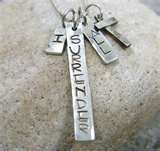
His question sounds so simple and easy when we belt out “I surrender all” in a church service.  Then there’s that moment when God takes you up on your offer and asks you to surrender your plans for the future, your comfort, your life, and you wonder how much “all” actually is.

And then I felt it, the pull of performance and the tug on my heart to just do what God wants so He’ll love me, so I won’t let Him down, so I can live up to what a Bible Study girl should do.  It was a works-based response of duty rather than the bride’s response of affection to the overwhelming passion and love of her Groom.

So I waited to answer God.  I waited until I truly believed that God would love me no matter what.  That the choices I make here may affect God’s plans for me, may affect my impact on others, may affect how I am blessed, but they will never affect His unconditional and unending love.  Only then, in the light of so much grace, knowing that I answered Him out of love and not duty, I bashfully answered, “I do.”  I do want to go with You.  I do want whatever you desire for me.

Why do we obey Him?  Why do we whisper “I do” when He asks us to surrender?  Why do we choose the difficult right over the much easier wrong?

So He will love us?  No—because He loves us.  That’s what we are learning at VBS tonight—-God loves us, no matter what.

We ask Him to “lead me along the path of everlasting life”  because there’s no other place where we can walk next to Him, our tiny palm nestled inside His nail-scarred hand (Psalm 139:24).

Heather King is a wife, mom, Bible Study teacher, writer for www.myfrienddebbie.com and worship leader.  Most importantly, she is a Christ follower with a desire to help others apply the Bible to everyday life with all its mess, noise, and busyness.  To read more devotionals by Heather King, click here.