Following the Leader

 ” Have I not commanded you? Be strong and courageous. Do not be afraid; do not be discouraged, for the LORD your God will be with you wherever you go”
Joshua 1:9

The first time I saw my husband, he was on stage, performing in a college production of Jane Austen’s Emma.  A week later, I walked into a Christian ministry group on our college campus and saw him for the second time, leading worship at the front of the room with his guitar.  One more week after that, I was at the front of the room myself, playing the piano for that very same worship team.  That was over 13 years ago and for all those years, this same man has been my worship leader.  He still is every single Sunday morning at our church.

When you follow one person for all those years and know them so well, it becomes easy to trust their leadership, to anticipate what they are going to do, and to follow their cues.  Some people have commented before that they think it’s so cute how I watch my husband intently while he’s leading the music, eyes full of doting adoration.  Now, surely some of that is from love, but there’s something else, too.  I’m watching his hands to see what chords he’s playing on the guitar and watching to see when he steps close to the microphone to sing.  I’m following the leader.

A few months ago, for one brief day, I had to follow a different leader in a worship program and it stretched me a bit.  Without even practicing together, I had to sit down at the piano and follow the speed of her hand directing me and the sound of her voice leading me.  It took effort and concentration on my part to accompany someone new.

That experience made me wonder how Israel must have felt after following Moses all over the wilderness for 40 years and then waking up one morning to find Joshua in charge.  It must have been more than a minor adjustment to follow the new guy.

And then I wondered how Joshua himself must have felt about receiving the baton from Moses.  What did he think about being the follow-up act to the guy who marched the people out of Egypt, parted the Red Sea, and brought the Ten Commandments down after a mountain meeting with God?  If God asked me to do that job, I honestly might have passed on the offer.

After all, Moses had almost passed on God’s offer of ministry to him.   Years before at the burning bush, when God called Moses to lead the Hebrew nation out of Egypt, Moses actually said, “Pardon your servant, Lord.  Please send someone else” (Exodus 4:13).  He felt ill-equipped for a job so big.  He said he had “never been eloquent” and was “slow of speech and tongue” (Exodus 4:13).

Ultimately, Moses was a powerful leader for the wayward nation and saw God more intimately than almost any other human ever has.  But that weakness of his, that tendency to wonder if God could come through against overwhelming odds caused problems for him later on.

When the Israelites arrived at Canaan about two years after taking that first step out of Egypt, God told him to “send some men to explore the land of Canaan, which I am giving to the Israelites” (Numbers 13:1).  Moses’s instructions to these 12 spies, though, were a little more hesitant than God’s.  He said, “Go up through the Negev and on into the hill country. See what the land is like and whether the people who live there are strong or weak, few or many.  What kind of land do they live in? Is it good or bad? What kind of towns do they live in? Are they unwalled or fortified? (Numbers 13:17-19).  Does it seem like Moses is wondering just how possible the conquest of Canaan would be?  Sure enough, ten of the twelve spies came back announcing that there was no way they could take over that land, no matter what God had promised.

All the spies except Joshua and Caleb.

You see, Joshua believed that if God said it, then it would happen.  He placed his confidence in God’s ability and not in his own. The first time we read about Joshua in Scripture is in Exodus 17:9-10: “Moses said to Joshua, ‘Choose some of our men and go out to fight the Amalekites. Tomorrow I will stand on top of the hill with the staff of God in my hands.’ So Joshua fought the Amalekites as Moses had ordered.”

Notice that Joshua just obeyed.  He didn’t argue about the task, tell Moses why he was incapable of performing it or explain why someone else would be better equipped for the job.  And any of those responses would have made sense.  As far as we can tell, Joshua had no military or leadership training.  One day, Moses just walked up to him and said, “make an army and defeat the enemy”—all in one day’s time.  Talk about impossible expectations!  Yet, Moses told him what to do and Joshua did it.

Maybe that’s why after the Israelites spent another 38 years of running circles in the wilderness, God chose Joshua to lead the people into the Promised Land.  Because this time God told Joshua what to do and Joshua did it—without arguing over insufficiency or asking God to send somebody else.

God gave Joshua one consistent message when he called him to be the new leader for the nation.  Three times in Joshua 1, God says, “Be strong and courageous” and ultimately tells Joshua,  ” Have I not commanded you? Be strong and courageous. Do not be afraid; do not be discouraged, for the LORD your God will be with you wherever you go” (Joshua 1:9).

And Joshua believed God and obeyed Him—no matter how ill-equipped he felt for the task.  Instead of focusing on his own weaknesses and insufficiency, he focused instead on God’s powerful ability and faithfulness to His promises. He believed that God equips those He calls.

Priscilla Shirer in One in a Million writes:

Is there something in your life right now that God has called you to do, but you just don’t have the courage to engage in?  What do your excuses reveal about yourself and how you feel about God?  For each of Moses’s excuses, God had a response.  It took time, but He assured Moses that human inability could never override God’s divine ability to work through him and to accomplish His purposes.  How much different, though, to be a person like Joshua who doesn’t need coddling and explanations?  Look what God can do through someone who receives His instructions not just personally . . . but fearlessly.

If God has given you a child to care for, He will equip you in your ministry to that child.  If God has asked you to teach, He will equip you as a teacher.  If God has asked you to be a caregiver, He will equip you with strength and compassion.  If God has asked you to be a witness for Christ to an unbelieving family, He will equip you with a testimony of grace and give you courage to be a light in a dark place.  If He has given you a vision for a ministry far beyond your ability to produce, He will equip you with the skills and ministry partners you need in every situation.

We simply need to trust in a God whose word is always true.  If He said it, we can believe it.  No, we’re not capable enough to be used or sufficient enough for the circumstances we face.  But He is.  Therefore, we don’t need to be afraid or discouraged because “the Lord your God will be with you wherever you go.”

**********************************************************************************************************

Heather King is a wife, mom, Bible Study teacher, writer for www.myfrienddebbie.com and worship leader.  Most importantly, she is a Christ follower with a desire to help others apply the Bible to everyday life with all its mess, noise, and busyness.  To read more devotionals by Heather King, click here.

Copyright © 2011 Heather King
Shelter in the Storm, Part I

In my small group last week, a beautifully wise lady reminded us that we can’t always see God at work.  He saves us in so many hidden ways, doing things we may never appreciate until we look through our life with a heavenly view.  It’s like the times we were running late and a car accident happened right where we would have been had we been on time.  It’s an invisible hand of grace.

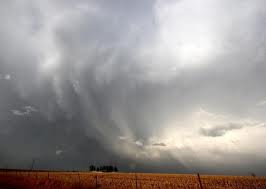
Certainly sometimes God protects us even when we do not know we are in danger.  So it was for many of us in my small town this week.  The day after a tornado hit, a friend posted on her blog, “What tornado?”  Her power had gone out and she hadn’t even known the cause until a friend called to see if she was safe.

It was the same for us.  A split-second loss of power was our only impact from a whirlwind that wreaked havoc on homes, churches and a school just a few miles away.  Others we knew had been watching constant broadcasts on the local news channel and still others huddled under doorways and in bathrooms with laptops and cell phones, trying to stay safe and informed.  We, on the other hand, went about our Saturday night business, eating dinner, giving the girls baths, reading, relaxing and preparing for church the next day.  We were oblivious to even the possibility of a storm, and so we didn’t even know at first that God was keeping us safe.

So often, we miss seeing how God is at work in our lives because we aren’t bothering to look.  The storm demanded our attention, though.  Suddenly, we heard story after story of protection and deliverance.  A car that usually is parked where a tree crashed down, but for some reason people decided at the last minute to drive the car instead of the truck.  A former home totally destroyed down to its foundation.  Trees crashing through the roofs of houses in just the right spot, narrowly missing the people sitting just a few feet away—unharmed and untouched.  A school destroyed on a Saturday night, thankfully empty of the students and teachers there five other days of the week.  Churches similarly empty of people when their roofs were peeled off by the wind, empty because the storm didn’t happen on a Sunday.

We tell the stories and shake our heads as we are astonished by grace and overwhelmed by mercy.

We notice His grace and mercy because of the storm, but God is at work in our lives every day and we’re just generally too busy to stop and see. In her book One in a Million, Prisiclla Shirer reminds us to “practice watchfulness” and to take deliberate pauses in the midst of our daily and our everyday so that we can look for God’s activity.  If we want to see God, really and truly see Him at work, we need to be on the look-out for what He is doing in the quiet and mundane days just as much as in the storm.

God called the Israelites to this stance of watchfulness in Exodus 14:13 in the midst of a storm of their own.  The Hebrews were terrified of the Egyptian chariots barreling through the wilderness in their direction while the Israelites stood trapped–Pharaoh’s army on one side, Red Sea on the other. “Moses spoke to the people: ‘Don’t be afraid. Stand firm and watch God do his work of salvation for you today. Take a good look at the Egyptians today for you’re never going to see them again'” (Exodus 14:13, MSG).  The people were told to watch, just watch.  Be on the lookout for what God is going to do.  Keep your eyes open to how He’s going to save you.  Don’t turn your head or avert your gaze or you’ll miss out on a God-sighting and the chance to see Him at work.

So, I wonder—how can I be watchful for God’s activity not just when I’m trapped at the Red Sea or in the middle of a storm and crying out to God for help?  In her book, One Thousand Gifts, Ann Voskamp determines not to miss out on God in the smallest pieces of her busy days.  She takes on a challenge, to list one thousand things she’s thankful for.  Without paragraphs of description or pages of explanation, she simply writes one-line prayers of gratitude to God.  It changes her life.  Her whole way of viewing the world is now new, passed through a filter that specifically seeks out the invisible hand of God, now made visible simply because she took the time to see it.

A friend and I read this book together.  I gulped it down, reading it in two days.  Most of the time, I found I was holding my breath as I read because I was so focused on the challenge to my heart too often cluttered with whining and complaining.   And then at the end, my friend and I decided we would make a list.  We would go to one thousand, too.

My list sits beside me now. On it, I have written “shelter in the storm even when we didn’t know we needed it.”  It’s thankfulness in the big things of life, in the the evident deliverance—like Israel crossing the Red Sea to safety while the Egyptian army drowned in the waves.

Also on my list, though:

  • Hugs from a baby in footy pajamas.
  • Fresh journals with clean, unwritten pages.
  • Homemade bread with butter all melted on top.
  • Mornings with nowhere to rush off to.

Some days I forget to deliberately pause and be watchful for God.  My list remains untouched on my table or in my bag from morning to night, but I am trying and learning to stop moving for just a brief moment a few times a day and look around, really look.  Because God isn’t just present in the storms—that’s only where we most often search for Him and that’s when His activity is most noticeable.  But He’s also in the mundane and everyday moments in my life and I will see Him there if I only take the time to quiet my heart and open my eyes in watchful anticipation.

******************************************************************************************************

Heather King is a wife, mom, Bible Study teacher, writer for www.myfrienddebbie.com and worship leader.  Most importantly, she is a Christ follower with a desire to help others apply the Bible to everyday life with all its mess, noise, and busyness.  To read more devotionals by Heather King, click here.

Copyright © 2011 Heather King

Kaleidoscope Moment

“Surely, God is my salvation; I will trust and not be afraid.  The Lord, the Lord is my strength and my song; He has become my salvation”
Isaiah 12:2-3, NIV

Imagine you’re on Jeopardy in a close match with your two co-contestants.  You choose your next category and see the Double Jeopardy sign.  This is your chance!  You can “risk it all, Alex” and go for a true Double Jeopardy, thereby leaving your opponents impossibly behind when you answer correctly.   Or, you can play it safe, and risk only a minor amount; you wouldn’t gain much, but you wouldn’t lose much either.

What would you do?  Are you a risk-taker or a play-it-safe kind of person?

I know what I would do.  I’d wager about $200 and pinch myself later if I knew the answer to the question.  That’s one reason you’ll never see me on Jeopardy.  That and the fact I know almost nothing about sports, pop culture,  geography and tons of other things.  Oh, and I freeze up under pressure.  I’m not really Jeopardy champion material.

Since I’m not a risk-taker, it frightens me when God asks me to take bold steps of faith and follow Him in obedience as we travel into the unknown.  It’s too . . . well, risky!  What if I get lost?  What if I don’t survive?  What if I heard God wrong?  What if I get embarrassed?  What if God doesn’t provide?  What if I’m not successful?

This is one of those “kaleidescope moments” in our faith walk.  These classic toys seem almost magical at times.  You hold a simple tube up to the light and the mosaic of colors inside shines and flashes in a beautiful pattern.  With one simple twist, the colors fall into a new pattern—still beautiful, but now so very different.

God sometimes needs to give our perspective a little twist, so that we see from His eyes.   The new pattern will be beautiful and oh so very different from what we’ve seen before.

Even when God calls us out into the unknown, even when He asks us to stop playing it safe, even when He asks us to follow obediently before the plan is revealed, even when He asks us to do something that sounds crazy, even when He asks us to do something different than everyone around us . . . even then, there really isn’t anything risky about following God.  That’s because no matter where God takes us, He walks by our side and His promises remain true.

We don’t have to take a risk.  Instead, we can enjoy what Kay Arthur calls “the rest of faith,” when we unite “the Word of God with faith for a particular situation.”   Psalm 91 promises us that “those who live in the shelter of the Most High will find rest in the shadow of the Almighty” (Psalm 91:1, NIV).   That’s a shift in our perspective; a new way to look at God’s call on our lives.

Paul demonstrated this rest of faith while he was a prisoner on a ship at sea that was caught in a terrible storm.  “The next day, as gale-force winds continued to batter the ship, the crew began throwing the cargo overboard. The following day they even took some of the ship’s gear and threw it overboard.  The terrible storm raged for many days, blotting out the sun and the stars, until at last all hope was gone” (Acts 27:19-20, NIV).

Everyone had lost hope–except Paul.  He rested in faith.  God had told Paul previously that he would travel to Rome and preach Christ there.  No storm could prevent God from fulfilling His promise.  That night on the ship, God reconfirmed His plan by sending an angel who said “‘Don’t be afraid, Paul, for you will surely stand trial before Caesar!  What’s more, God in his goodness has granted safety to everyone sailing with you.”  Paul announced to those on the ship, “So take courage!  For I believe God.  It will be just as he said” (Acts 27: 24-25, NIV).

Even with these assurances from Paul, the sailors were frightened and tried to abandon ship.  Wouldn’t you?

When Paul confronted them and said, “You will all die unless the sailors stay aboard,” they amazingly listened to his assurances and “cut the ropes to the lifeboat and let it drift away.”  Later, Paul told these men who had not eaten for two weeks, to eat and strengthen themselves.   Scripture tells us, “Everyone was encouraged and began to eat” and then, in a true display of faith, “the crew lightened the ship further by throwing the cargo of wheat overboard” (Acts 27:30-37).

Paul’s confident faith was infectious.  The sailors were now without a lifeboat as an escape plan and without any food provisions to count on for the future.   All they had was God’s promise that they would be okay.

The good news is that God’s promises are enough.  Everyone on that ship survived the storm and made it safely to land just as God had said.

Like Paul, we have promises that we can rest in even when life seems risky.  We don’t need lifeboats or cargo to guarantee our safety through a storm.  God promises that He will go with us and never abandon us.  He promises to shelter us and set us high above our enemies.  He promises to provide for our needs and to give us all-sufficient grace.  He promises to strengthen us and renew us day by day.

These promises mean that life for those with faith is never really risky.  Instead, with a simple shift in our kaleidoscope and change in our perspective, God can help us experience the rest of faith by connecting His promises with our situation.  Then, we will “trust and not be afraid” (Isaiah 12:2, NIV).

********************************************************************************************************

Heather King is a wife, mom, Bible Study teacher, writer for www.myfrienddebbie.com and worship leader.  Most importantly, she is a Christ follower with a desire to help others apply the Bible to everyday life with all its mess, noise, and busyness.  To read more devotionals by Heather King, click here.

Copyright © 2011 Heather King

Your Comforts Delight My Soul

Last night I had a terrible dream that I was preparing to lead worship—sitting at the piano all ready to go—when I saw my cell phone bill.  Obviously, in dreams it makes total sense that I’m checking my mail just before the music starts.  Anyway, I looked at that bill and it was $1,717. Then the music started and I couldn’t worship.  I couldn’t figure out what words to sing or what notes to play.  I was playing a different song than the congregation was singing.  It was a disaster.

Obviously, I woke up in a cold sweat from this dream (who wouldn’t be freaked out by a cell phone bill and public disaster like that) and couldn’t get back to sleep for a while.  I was anxious and worried about something that only existed in my dreamworld.

Today, as I was doing my devotions, I was reminded of how so much of my worry is about “fantasy situations”—the what if’s I stress over that never actually come true.  These anxious thoughts also always affect my worship.  It is just not possible to fret and praise at the same time.

In her book, Me, Myself and Lies, Jennifer Rothschild notes that the Old English and Old High German origins of our word “worry” mean “to strangle.”  Indeed, worry strangles us, choking out hope, joy, trust and, as it says in her book, “the life-giving truth that should be filling our thought closets” (p.23).

The Psalmist wrote, “Search me, O God, and know my heart; test me and know my anxious thoughts, See if there is any offensive way in me, and lead me in the way everlasting” (Psalm 139:23-24, NIV). I have always loved that verse and I copy it into my journal every time I read it in my devotional time.  Yet, it’s not something I find easy to do.

It’s difficult sometimes to hand over our thought lives to God.  Even though we know worry harms us and our relationship with God, we don’t want God to search our hearts and test our thoughts.  Somehow worrying makes us feel in control and we feel that handing over our anxieties means truly relinquishing any modicum of control we have in our lives.

Thomas Merton said, “Anxiety comes from strain, and strain is caused by too complete a dependence on ourselves.”  It’s true that when it’s broken down, worry essentially is a lack of trust or dependence on God.  We’re telling Him—“we know that Scripture promises us You will provide, You will comfort, You will bring peace, You will be our Advocate, but I’d rather just depend on my ability to fix my circumstances.  Thanks anyway, God”

Chris Tiegreen in Worship The King goes one step even farther than that.  He calls our fear “anti-worship.”  In his devotional, he writes:

But we who worship God cannot praise him with such insecurities.  Our fears are a form of anti-worship–a clear declaration that our God might not have promised us enough, or might not be able to follow through on what He has promised.  Yes, He will let us go through hard things, but never outside of His timing or beyond His protection. So worship Him.  And don’t worry about it.

Refusing to worry, fret, stress, fear and be anxious doesn’t come to us naturally.  It is a discipline of the heart and mind.  We must reject anxious thoughts, deny our emotions the opportunity to take over our lives, and fill up with the truth of God’s Word and His promises to us.

In Psalm 94:19 it says, “In the multitude of my anxieties within me, Your comforts delight my soul.” Take delight in His comfort today and consciously choose trust over fear.

In Kathryn Scott’s song, At the Foot of the Cross, she sings, “I lay every burden down at the foot of the cross.”  That’s the best place for those burdens to be—not on our back, but at His feet.

***************************************************************************************************

Heather King is a wife, mom, Bible Study teacher, writer for www.myfrienddebbie.com and worship leader.  Most importantly, she is a Christ follower with a desire to help others apply the Bible to everyday life with all its mess, noise, and busyness.  To read more devotionals by Heather King, click here.

Copyright © 2011 Heather King

Be Still and Know that He is God

Continuing the thought from yesterday, when we don’t see God at work and we’re disappointed, our faith struggles often involve three questions:

  • Does God see me?
  • Is He big enough to save me?
  • Does He love me enough to intervene?

Yesterday I was thinking about the first question.  Today, I’m moving on to the next one.

Is God big enough to save me?

Now, for most Christians this is an easy one.  Even as kids, we sing songs like:

“He’s got the whole world in His hands”

and

“Our God is so BIG, so STRONG and so MIGHTY.  There’s nothing my God cannot do!”

As quickly as we sometimes gloss over this question, sometimes deep down in the very depths of our being, we still see our circumstances as too much for our all-mighty God.

That’s one reason it’s so important to keep reminders of the times that God did save us and the miracles we have seen, so that when the circumstances tell us, “Your God isn’t big enough,” we can say—Well, He was big enough to save me from this impossible situation, and this one, and this one, and that one.  I’ve seen His hand.  I’ve experienced His power.  I know—no matter how bleak my reality seems—the true reality is that nothing is impossible with God.

It’s important to remind ourselves that:

The God who created the Universe with the power of His voice can create a future for you (Genesis 1; http://www.answersingenesis.org/)

The God who led the Israelites out of Egypt, through the wilderness and into Canaan can lead you into the Promised Land.

The God who parted the Red Sea and dried up the Jordan River will take you across the raging sea on dry ground.

The God who brought the widow’s son back to life can bring your hopes, your finances, and your relationships back from the grave (2 Kings 4).

The God who calmed the wind and the waves of the tempest will calm the storm that you are in and will not let you drown (Mark 4).

The bottom line is: “With man this is impossible, but with God all things are possible” (Matthew 19:26, NIV).

That doesn’t mean that He always solves our problems the way we expect Him to or works as quickly as we might like.  Isaiah writes:  “‘For my thoughts are not your thoughts, neither are your ways my ways,’ declares the LORD.  ‘As the heavens are higher than the earth, so are my ways higher than your ways and my thoughts than your thoughts.'” (Isaiah 55:8-9, NIV).

We so often quote the verse “Be still, and know that I am God” (Psalm 46:10, NIV) without actually looking at the whole verse or the context of the chapter it is in.  I’ve heard people quote it all the time as an argument against loud worship music.  But, when you take the whole verse and its context, it doesn’t have anything to do with worship at all.  Instead, its real meaning directly addresses God’s might.

The full verse says:  “Be still and know that I am God I will be exalted among the nations, I will be exalted in the earth.”

This Psalm is essentially about war and what it’s like to face impossible conditions.  Despite his circumstances, the Psalmist says:

“Therefore we will not fear, though the earth give way and the mountains fall into the heart of the sea,  though its waters roar and foam and the mountains quake with their surging” (Psalm 46:2)

And why aren’t they afraid?  They have every reason to give up.  All their circumstances tell them there is no hope.

But, they aren’t afraid because God is their “refuge and strength, an ever-present help in trouble” (verse 1).  God tells them—“Be still—-You don’t have to stress about this.  I’ve got this covered.  I am God and I am big enough to save you.   I’m going to be exalted and glorified in this. ”

We can do the same now, no matter what circumstances we face.  We can choose to Be Still.  Be still and know that He is God—mighty and powerful.

Next up: Does God love me enough to intervene?

****************************************************************************************************

Heather King is a wife, mom, Bible Study teacher, writer for www.myfrienddebbie.com and worship leader.  Most importantly, she is a Christ follower with a desire to help others apply the Bible to everyday life with all its mess, noise, and busyness.  To read more devotionals by Heather King, click here.

Copyright © 2011 Heather King

Do I Mean It?

Today, we sang a song at church with these lyrics:

Jesus, lover of my soul
Jesus, I will never let You go
You’ve taken me from the miry clay,
Set my feet upon the Rock, and now I know
I love You; I need You
Though the world may fall I’ll never let You go
My Comfort, My closest Friend
I will worship You until the very end.

I love that song.  Sometimes, I can sing it with my whole heart, unreservedly, because I really mean it.  “I will never let You go.”  “Though the world may fall, I’ll never let You go.”

Recently, I’ve been asking myself if I really mean that.  It’s not something you can just decide one time.  I think it’s a continual growth step.  You surrender “everything” to God, and then He asks you to step closer and you have to choose to surrender again.

Yesterday and today, I’ve been reading 2 Timothy, Paul’s final epistle before his execution.  Unlike his first imprisonment in Rome, where he had his own place and could have visitors and people to care for him, this second imprisonment was lonely, cold, and excruciating.

Not that Paul was a complainer.  If you read 2 Timothy, you have to read closely to glimpse the setting.  He writes:

  • “Therefore do not be ashamed of the testimony of our Lord, nor of me His prisoner, but share with me in the sufferings for the gospel according to the power of God” (1:8)
  • “For this reason also I suffer these things; nevertheless I am not ashamed” (1:12)
  • “This you know, that all those in Asia have turned away from me” (1:15)
  • “but when he (Onesiphorus) arrived in Rome, he sought me out very zealously and found me” (1:17)—Note how hard Onesiphorus had to look for Paul.  No one really even knew where he was being kept!
  • “For which I suffer trouble as an evildoer, even to the point of chains” (2:9)
  • “For I am already being poured out as a drink offering, and the time of my departure is at hand.” (4:6)
  • “Be diligent to come to me quickly, for Demas has forsaken me . . . only Luke is with me. (4:9-11)
  • Bring the cloak that I left” (4:13)—-He must have been so cold!
  • “At my first defense no one stood with me, but all forsook me” (4:16)

Can you imagine?  At his defense hearing, not one person stood up to defend Paul.  Not one. After a life filled with ministry and sacrifice to others, no one came to his defense.  He’s then cast into a prison in an unknown location where his friends have to struggle to find him.

Beth Moore writes in To Live is Christ,

Paul was held under conditions like those of a convicted killer.  He was bound by heavy chains–the type that bruise and lacerate the skin.  He was almost 60 years old and had taken enough beatings to make him quite arthritic.  The lack of mobility greatly intensified any ailments or illnesses.   He most likely was reduced to skin and bones.  The cells where the worst prisoners were chained were usually filthy, wet, and rodent-infested dungeons.  Paul was cold.  He wanted his cloak and begged Timothy to do everything he could to come before winter.

And yet, despite all of this, Paul never questioned his call, never questioned his faith.  He trusted God no matter what.

This year, I’ve felt very much like God is waiting on me.  He’s giving me the chance to decide whether I want to know Him more, walk with Him more closely, and trust Him wholly with my future. Am I willing to take another step?

Honestly, it’s not as easy as you might think to say, “Yes, Lord.  Totally.  Send me, God.”  Sometimes it’s scary.  I think about what Paul endured, and I’m afraid.  I listen to the testimonies of Christian authors and speakers and I’m scared to go through what they’ve lived through–like financial hardships, the death of loved ones–even their children, and physical harm to themselves.

And then there are the not-so-big hardships that still paralyze a people-pleaser like me, like hurtful criticisms and people oh-so-willing to share their opinions on how you’re messing up.

Sometimes, as cowardly as it is, I’m so afraid that I just want to say, “Not me, God.  Don’t ask me.”

But, God is so gracious.  I know He’s being patient with me and He’s been bringing verses and quotes across my path that remind me to trust Him and not fear.

Two of my favorites are:

Deuteronomy 31:8 : “The Lord is the One who will go before you . . . He will not leave you or forsake you.  Do not be afraid or discouraged.”

Joshua 1:9:  Have I not commanded you? Be strong and courageous. Do not be afraid; do not be discouraged, for the LORD your God will be with you wherever you go.”

I’m not saying that I sang the words, “I’ll never let You go” this morning without any fear of the future.  While I was singing those lyrics, though, in my mind I was singing, “I’ll never let You go; thank You for never letting me go.  Thank You that You’ll be with me even if my world may fall.”

***********************************************************************************************************

Heather King is a wife, mom, Bible Study teacher, writer for www.myfrienddebbie.com and worship leader.  Most importantly, she is a Christ follower with a desire to help others apply the Bible to everyday life with all its mess, noise, and busyness.  To read more devotionals by Heather King, click here.

Copyright © 2011 Heather King