Weekend Walk, 04/28/2012

Hiding the Word:

We had plans. Big plans.

It was pirate weekend in Yorktown Virginia and the annual book sale at our public library.  Add in my niece singing the lead role in an opera, church, and a birthday party and you had a full weekend.

It was inevitable, I suppose, that after two of my daughters spent time on the couch this week with fever and vomiting that the third would get sick, as well.  I sent her to bed Friday night with the beginnings of a fever.

This morning, she emerged looking bedraggled and ill and asking, “Do you think I’m better yet?”

Her skin, fire to the touch, clearly said otherwise, but I humored her with a thermometer test.  103 degrees.  “No, babe,” I said, “you’re pretty sick.”

Then there were the tears of disappointment, trading in a weekend of fun for a weekend of ginger ale and napping.

It’s one of those lessons you just can’t learn often enough in this life–that you can plan and schedule and postulate, but God has the prerogative to interrupt your agenda and alter your plotted course at any time.

Even when you know it’s for the best, that His design for you is better than you can imagine and what ultimately comes to pass is for your good, still it’s nonetheless disappointing in the moment.

For us, these interruptions are sometimes minor losses and daily annoyances; sometimes they’re the source of great sorrow and bitter grieving.

Regardless of their magnitude, we can all learn to pray as Jesus did, kneeling in the garden and submitting His will to the Father’s.

“Nevertheless, not my will, but yours, be done” (Luke 22:42b).

It’s the verse for this week, to contemplate and memorize.  Maybe it seems short, but it’s truth is powerful and perhaps a little painful.

Weekend Rerun:

He Rested

Originally Posted on April 26, 2011

“And God blessed the seventh day and made it holy, because on it he rested from all the work of creating that he had done”
(Genesis 2:3 ,NIV).

For months, one week in April glared off my calendar menacingly.  My husband and I focused all of our attention and energy on getting to that week and getting through that week—appointments, birthday parties, wedding, special church services, meetings, and holiday activities piled on top of our normal schedule.

I had the individual events in my calendar circled in different colors multiple times so that I wouldn’t overlook any one of them.   When people asked us about May, our eyes glazed over uncomprehendingly.  May?  What’s May?  As far as we were concerned, finishing April was the goal.

I’m sure you have weeks on your calendar that look like that, too, an overload of busyness, and you hold your breath in anticipation of it, stress when you think about it, and dream about making it through.

But then our week was done.  The last event finished.  We survived.  We drove home.  We rested.

It sounds so easy, really, to say “rest,” and yet for me rest takes great effort.

I’m physically incapable of napping.  Instead of sleeping, I lie awake thinking about all the things I should be doing instead of sleeping.  By the time I finally give up and throw back the covers in defeat, I’m frantic about the wasted time and move faster through my to-do list to make up for it.

I feel guilty for leisure, embarrassed by free time, and apologetic for fun.

Accepting help or taking a break feels like failure and an admission of weakness.

There’s something else at work here beyond just an addiction to adrenaline.  Oh, how I hate for it to be true, and yet digging down deeply enough reveals its ugly presence—-pride.  Truly, it feels good to be needed.  It feels important to be so busy.

When I run around in a breathless pace, doing, doing, doing all the time, I act as if the world depends on me to function, as if me sitting down for 15 minutes would create cosmic meltdown.

And that’s why God, from the very first week of creation, instituted a Sabbath rest.  It wasn’t for His benefit, as if the Almighty God who created a sun, moon, and planet with the power of His words grew weary and needed to sleep.  No, the Sabbath was not for God.  Instead, Jesus “said to them, ‘The Sabbath was made for man” (Mark 2:27).

He created a day of rest for you and me.  It’s a reminder that the universe can exist without our involvement and labor.  It’s a re-ordering of our perspective, so that we remember it is God who is essential and not us.

So often, we forget that our jobs, our families, our ministries, our relationships, our everything depend not on our ability, but on God’s power.
We stress about meetings because we think everything relies on how well we present ourselves.
We plot out conversations because we think the outcome depends on the words we choose.

We think.  We plan.  We do.  We fix.  We busy ourselves.  We worry.  We analyze.  We lose sleep.

God knows the pride that burrows itself into our hearts; the tentacles it wraps around us as we seek fulfillment in accomplishments, in tasks completed, in people depending on us.  I’ve written it before and yet need the reminder of my own words:

I’ve seen many women engage in Busyness Battles with each other.   We ask each other what seems like such a simple question, such as “What have you been up to lately?” or “Have you been busy?”  Then, like a Wild West shootout, we breathlessly list our every activity in an effort to “out-busy” the other woman.  The prize?  The personal pride that we are more stressed than the woman we are talking to.  Don’t be embarrassed to concede defeat and say, “Well, I’ve been focusing on de-stressing. On Sunday, I watched a movie with my family and then read some of my book.” You may have lost the shoot-out, but who wants the title of “Most Stressed Woman” anyway?

I read this week that Craig Groeschel, in his book Weird, recommends a to-don’t list.  It’s a tool for those like me who find inactivity takes effort, to help me choose sitting on the deck while my daughters color with sidewalk chalk over doing laundry or choose pushing my baby girl in her swing and listening to her giggles turn to belly laughs over planning church programs.

This isn’t about rules, regulations and law.  It isn’t about Pharisaical hypocrisy and legalism.  It’s about rest and rest is about a humble stepping aside and the placing and continual re-placing of God in control of our lives.

********************************************************************************************************

For further thoughts, check out:

Heather King is a wife, mom, Bible Study teacher, writer for www.myfrienddebbie.com and worship leader.  Most importantly, she is a Christ follower with a desire to help others apply the Bible to everyday life with all its mess, noise, and busyness.  To read more devotionals by Heather King, click here.

Copyright © 2012 Heather King


Devotions From My Garden: It’s Crowded In Here

My daughters and I reached a compromise.

I announced that I didn’t want to grow a vegetable garden this year.  It was too much work for too little result.  It didn’t save money.  It started out fun in April and ended up a horrible, rotten, ugly chore by the middle of July.  Various ravenous insects destroyed and devoured my plants.

Their response was unanimous.  “But Ma—awm.  We like to grow our own food.”

So we narrowed down the lists of vegetables we would grow and planted a container garden on our deck.

On one of the warmest and sunniest days in April, we filled large wooden crates with garden soil, vegetable food and the tiny plants of tomatoes, cucumbers and peppers we had chosen.  Then we dropped the carrot seeds into the dirt, following exact directions on how far down to push them and how far apart they needed to be spaced.

Mostly we worked together, but after a while my daughters disappeared to work on their own project. They held out the result to me with pride.  It was a small planter with dirt in it.

“We planted radishes,” they announced, “all by ourselves.”

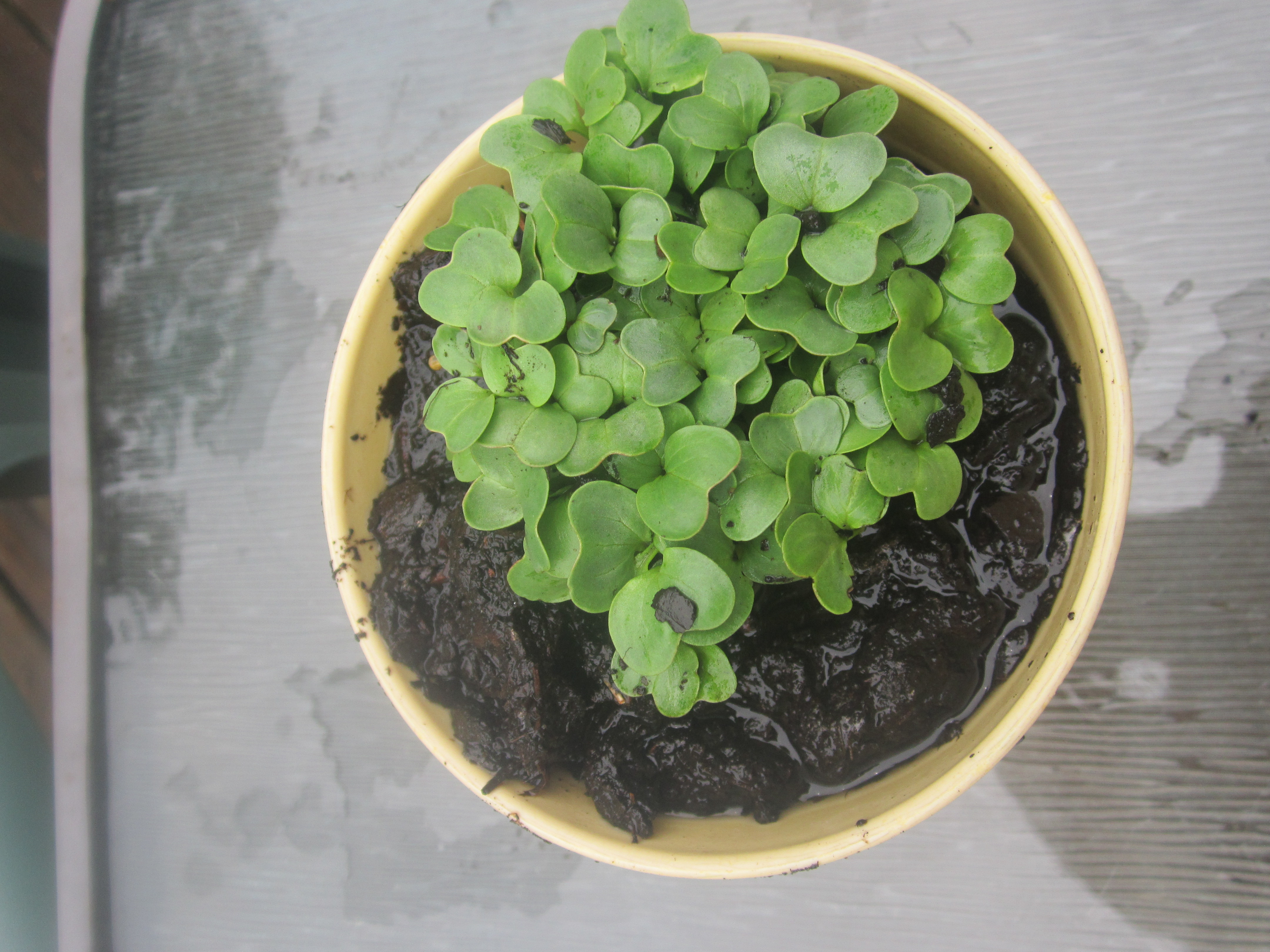
I shrugged.  The radish seeds were leftovers from last year.  It seemed unlikely they’d grow.  Yet, the girls faithfully watered that pot for days and surprisingly they were rewarded by the first hints of green.

A day later, the pot was crowded by infant radishes.  The girls must have dumped 20 seeds all into the same tiny space in the miniature pot.

It was going to be really crowded in there.

Unfortunately, even though it is hard and a little sad, we now have to make some tough choices.  If all the radish plants remain in that pot, none of them will grow correctly.  Some of them have to come on out of there.

Sometimes our lives are just as crowded as that tiny radish pot.  Every single seedling may have potential for beauty, growth, and produce, but nothing can grow when they are all shoved into the small space of one simple life and the restriction of 24-hour days.

Even though it’s hard and a little sad, there are times when some things have got to go so that other areas of your life can grow to their full potential.

It’s not always a mystery when choosing what to toss.

When Jesus walked into the temple and saw the vendors hocking their wares–doves for sacrifices and loans for people needing money for their offering–He responded immediately.  It didn’t take a second’s thought for Jesus to overturn their tables and chase the mercenaries out of the holy space of the temple courtyard.

He threw out sin, contaminated worship, and the profanation of the holy.

As soon as Jesus cleared the place, the blind and the lame came to him at the temple, and he healed them” (Matthew 21:14).

The only reason they could seek healing in the temple, the only reason there was room for the blind and lame to worship, was because Jesus had thrown out the tainted and unholy.

The Message emphasizes this when it says, “Now there was room for the blind and crippled to get in.”

Until Jesus cleaned house, there hadn’t even been room in the temple for those who needed God the most.

Will we allow Jesus to overturn the tables in our heart where sin and the unholy have set up shop?  Will we clear out the trash and the disgusting, so that we have room to come to Jesus—and to bring others along who need Him the most?

Of course, it’s not always so easy to tell what has to go in our lives.  We have a million choices of how to invest our time, energy, talents, and money, and all of them could be good.  We could lead hundreds of crusades against a world of evil.

But if we crowd out our lives with too much that is good, nothing will grow as it should.

Jesus Himself exhibited the kind of focus we need, to hone in on our purpose and refuse to be distracted by every demand and need.

During His ministry, mobs of people sought out Jesus for healing.  He lived in a world of need, need, and more need, and He frequently healed those who sought out His help.

But He didn’t heal everyone.

In fact, when the crowds grew too large and people sought Him out for healing alone, He moved onto another town or He escaped the crowds in order to pray alone on a mountain or by the sea.

Healing was fine.  Miracles were part of His ministry.  But it was not His main purpose for coming and He never wanted that to be the focus of His presence.  Instead, He had come to “seek and to save the lost” (Luke 19:10) and “to save the world” (John 3:17).

Maybe it’s time for you to pull out some of the extra radishes from your pot.  The first ones to go are easy—yank out the sprouts of sin, the unholy habits and the remnants of the flesh life.

Then prayerfully ask God to help you focus.  What seedlings should you tend and invest in until you harvest their potential?  What seedlings need to be set aside so that other areas of your life can grow?

Determine to live an uncrowded life, a flourishing, growing, fruitful life of produce and harvest, made possible by intentional focus and the pursuit of purity in your life and worship.

More Devotions From My Garden:

Heather King is a wife, mom, Bible Study teacher, writer for www.myfrienddebbie.com and worship leader.  Most importantly, she is a Christ follower with a desire to help others apply the Bible to everyday life with all its mess, noise, and busyness.  To read more devotionals by Heather King, click here.

Copyright © 2012 Heather King
That Would Have Been Stupid

I could have done it by myself.

But that would have just been stupid.

Not that I didn’t think about it . . . a lot.

I awoke this morning to the sound of my two-year-old slamming open my bedroom door. Then my oldest daughter emerged from her room wrapped in her fleece blanket and looking for breakfast.

That’s when I heard it: my middle daughter scratching out the first words of her day.  She sounded like a desert travel who has gone too long without drink or shade.  “Mom,” she whispered, grasping at her throat, “water.  I need water.  Can’t . . . talk . . . . can’t . . . swallow.  Water.”

And so it began.  It’s the moment you look at your massive to-do list and the calendar showing all the places you need to be and then you glance at your child’s thermometer and you realize it ain’t happening the way you planned.  And that’s okay because she’s more important than checking off tasks on a piece of paper.

I started mentally moving activities around on my week-long chart of things to do and considering creative menu planning to help me stretch the food we had for four days, my next chance for grocery shopping.  Except we didn’t have bread.  And only a day’s supply of milk.  This could be a problem.

I called the doctor’s office and they kindly gave me the only appointment open that day, which sadly was right in the middle of nap time  Still, I was grateful they squeezed us in at all.

After I called the school, I glanced back at my calendar and remembered that I had to lead worship for a women’s Bible Study group the next day, a commitment I had made over two months ago.

Then I came up with a masterful plan.

I’d just make my two-year-old skip her nap today and drag her to the doctor’s office for my other daughter’s Strep test.  Then I’d cart them both, sick child and no-nap child, through the grocery story because without bread I couldn’t even feed my family sandwiches for dinner.  After that, I’d take them both by the church and clean up and prepare the Bible Study room for my small group.

Then the next day, I’d bring my toddler and my sick daughter, along with a cup of water and a throw-up bucket, to the ladies’ group where she could sit next to the piano while I led worship.

Why not?  I’ve done crazy stuff like that before.  It could work.

Maybe.  But it would be stupid.

So, I emailed a friend and asked her to lead Bible Study for me that night and she even offered to clean up the room after our project from the week before.

Then I called my mother-in-law and asked her to watch my girls while I led worship the next day.  She asked if I needed help with the two-year-old during the doctor’s visit in the afternoon during nap time.  No, of course I don’t need help, no way, I can do it . . . Well, actually, to be honest, help would be really nice.

I can’t be the only one who does this, practically killing myself at times all to avoid asking others for help.  Somehow, requesting help from others is always more difficult than asking God for a hand.

Because I am Woman, hear me roar!
Because I hate to inconvenience others who are also busy.
Because it feels really good when you’ve practically killed yourself doing things on your own to survey the results of the stress and realize “I Did That Myself.”

Stupid pride.

Yet today when I made my calls and emails to ask for help, guess what?  People were happy to help.  Not only that, they even heaped on all kinds of blessing and grace, helping me in ways I hadn’t even thought to ask.

This is what we are supposed to do for each other, loving one another with self-sacrificing, abundant-blessing love. In fact, Paul told us this was part of fulfilling Jesus’ instructions:  “Bear one another’s burdens, and so fulfill the law of Christ” (Galatians 6:2, ESV).

Sometimes that means we’re the ones stooping down to lift the load of another to carry it a while on our own backs.  Sometimes we’re the one others lean on, the person others call in times of need and distress.

And that’s a joy to do.

But then there are those days when our own load is pushing our shoulders low to the ground or we realize that short of cloning ourselves, we just can’t get it all done.

When someone notices our burdened limping and asks to help us, we too often reject them.  We deprive them of the blessing God would give them for pouring themselves out for another.

Instead, we stress ourselves and our families out when we pridefully insist on doing it all ourselves.

This isn’t about taking advantage of friends and family out of laziness or selfishness.  It’s about the mutual bearing the burdens of “one another.”  I’m part of the “one another,” and so are you.  God didn’t design anyone to be the burden-bearer for others all the time.  He designed us to have times to carry and times to rest, times to give help and times to receive it.

After all, even Simon of Cyrene carried the cross for Jesus during the walk to Golgotha (Mark 15:21).

Today, I just needed a little help with my load.  Instead of pretending I didn’t, I needed simply to receive that help and be thankful.

Heather King is a wife, mom, Bible Study teacher, writer for www.myfrienddebbie.com and worship leader.  Most importantly, she is a Christ follower with a desire to help others apply the Bible to everyday life with all its mess, noise, and busyness.  To read more devotionals by Heather King, click here.

Copyright © 2012 Heather King

Weekend Walk, 04/21/2012

Hiding the Word:

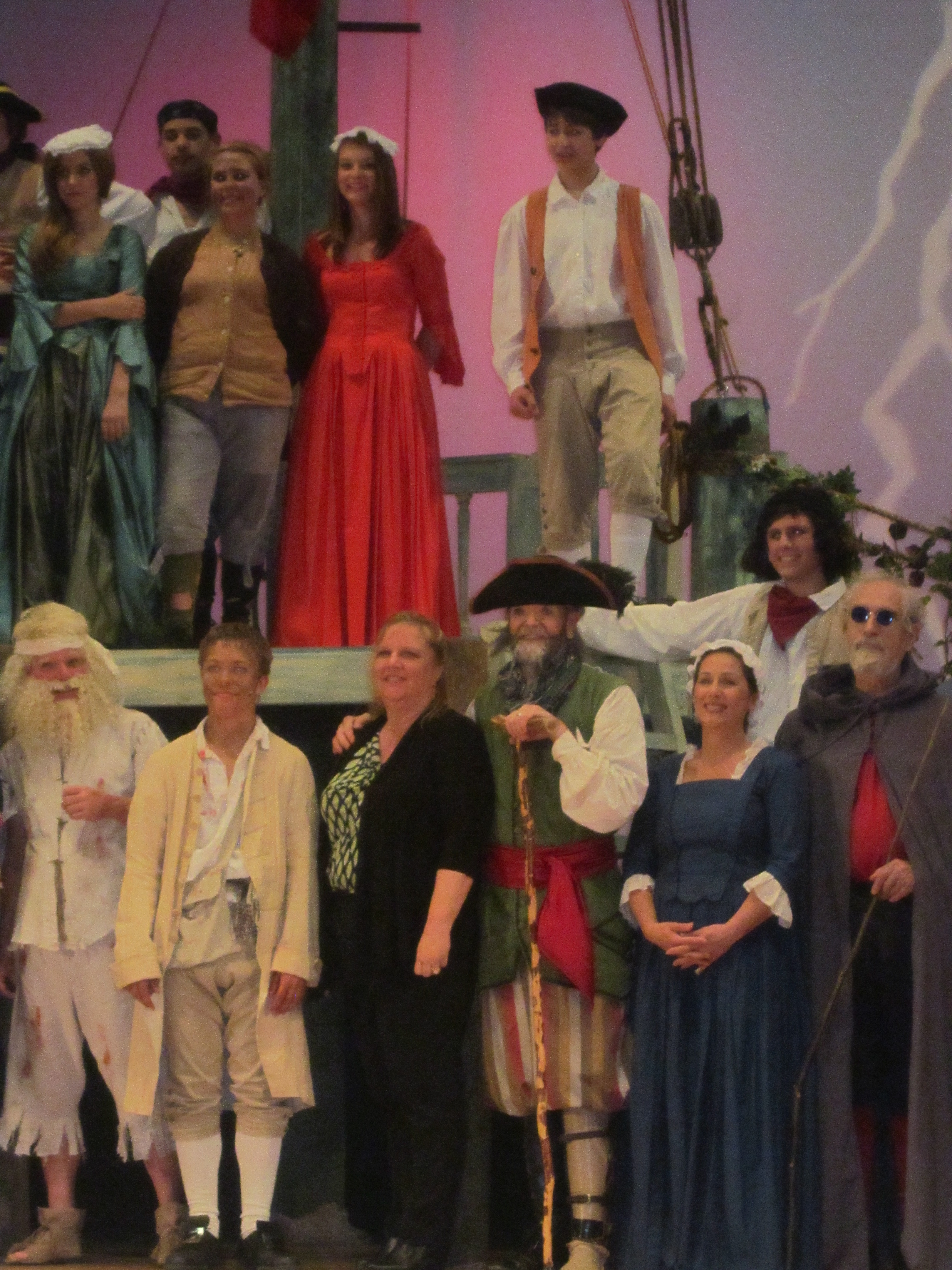
We made it a late night for the sake of theater.  The girls and I, along with Grammy and Grampy, went to see the local community theater group perform Treasure Island.

I was nervous about the night since the show didn’t start until their bedtime, but my daughters were entranced by the sea shanty-singing, sword-slinging, parrot-toting pirates, who scaled the heights of the ship, leapt overboard, and shot at each other in an attempt to capture the treasure.

From the moment Billy Bones dropped his treasure chest onto the floor of the inn, the girls were intent on classifying the pirates into two types:  Good pirates and bad pirates.  I heard my middle girl loudly “whisper” (she doesn’t really know that whispering involves lowering the volume of your voice) several times at the beginning, “Is he good or bad?”

Long John Silver, in particular, puzzled them.  Was he good, the way he was nice to Jim Hawkins and saved his life?  Was he bad, the way he led the mutiny against Captain Smollet?  He killed some and protected others.

This one-legged renegade was a moral enigma to my daughters.  They couldn’t box him up and fit him in a nice ethical category, so we talked about him and life and right and wrong most of the way home from the play.

Sometimes we too are intent on shoving people into ill-fitting categories and assigning them superficial labels.  We think we “know” someone as soon as we decide they are good/bad, smart/dumb, nice/mean, right/wrong, funny/dull . . .

I’m so thankful that God knows us as more than just a number, a nameless face in the crowd, or little more than a resume of good or bad deeds.

I’m choosing to meditate on this for the week, the promise that God knows me truly and deeply—no matter how complicated I may be.  It’s also the assurance that He loves others in the same way and challenges me to take the time to know them and love them without labels, boxes, and categories.

You have searched me, LORD, and you know me.
You know when I sit and when I rise;
   you perceive my thoughts from afar.
You discern my going out and my lying down;
   you are familiar with all my ways.
Before a word is on my tongue
   you, LORD, know it completely.
You hem me in behind and before,
   and you lay your hand upon me (Psalm 139:1-5)

Weekend Rerun:

Where is the Whole World?
Originally posted on 07/22/2011


I sought the LORD, and he answered me; he delivered me from all my fears.
Psalm 34:4

During my second pregnancy, I went happily to my 20-week ultrasound and learned we were having another girl (the joys of pink!) and that she was healthy and developing well.

Except she was small.  They said smaller than she should be and I’d need to go get a 3-D ultrasound at a specialized neonatal center.  But, not to worry, they were sure it was okay.  This was just to be safe.

One 3-D ultrasound later, the technician sent back the report.  She was healthy.  Good heart.  Good blood flow.  Organs just fine.  But she was small.  Too small.  It was probably okay, but just to be safe I had to go for weekly stress tests for the remainder of the pregnancy and some more ultrasounds.

Every stress test was fine.  She was moving (boy was she moving!) and she was growing, but not fast enough.  She was just too small.  But, no need to worry, they said, because she was probably just fine; it’s just that they needed to induce her a week early so they could figure out why she was so small (under 5 pounds they said) and help her grow outside the womb.

We packed a bag for the hospital and let the Pitocin get to work.  Induction was terrible; the worst of my three deliveries.  In the end, though, Lauren was born.  I didn’t have my glasses on.  I couldn’t see her.  Was she okay?  Was she too small?  Was she in danger or sick or worse?

My husband served as my eyes for me.  At first he said nothing; she was purple they told me later from the chord double-wrapped around her neck. But then she cried.  And my husband said, “She’s beautiful.  She’s perfect.”

The NICU pediatrician who had been on call to assist at the delivery of this at-risk baby peeked over the nurses’ shoulders and left the room without a word.  The nurse laid her on the scale.  She weighed 6 pounds 13 ounces, my one-week-early little one, too big for the preemie outfits we’d picked out for her.  God had brought her to us safe, healthy, and gorgeous and we praised Him, so tearfully thankful for His protection over our baby girl.

Between that first announcement that our baby was too small and the moment we saw her, we fought against fear.  My husband and I held hands and prayed for her each night.  We calmed our fears and shrugged off ultrasound results.  Then I’d sit at the next appointment and be told once again that she was just too small. All the anxiety we had kept at bay rushed in with renewed strength.

Someone asked me during that time, “You’re not freaked out about this, are you?”

I didn’t know.  Was I freaked out?  Was I okay?  It wasn’t the same from day to day or minute by minute.  I was fine.  I was scared.  I was trusting.  I was fearful.  I was relying on God.  I was unbelieving.

At that time, Tim Hughes was singing on the radio:
When all around is fading, and nothing seems to last
When each day is filled with sorrow
Still I know with all my heart
He’s got the whole world in His hands
I fear no evil, for You are with me
Strong to deliver, mighty to save

The whole world is nestled in the safety of His hands.  My world that I saw every day.  The world of my unborn baby girl, whose somersaults I could only envision and whose face I couldn’t wait to see.  Yes, her world was in His hands, too, and so I had to trust her to His care.

Isaiah wrote: “So do not fear, for I am with you; do not be dismayed, for I am your God. I will strengthen you and help you; I will uphold you with my righteous right hand” (Isaiah 41:10).

Held in His hands as I am, still there are so many reasons to tremble.

For bills and jobs and relationships, for school, health, my kids’ friendships, safety and their faith, for my daughter not getting lost, for school bus rides and mean girls, for conflict, for things I forgot to do, for the decisions I make as a mom and how often I mess it all up, for the future, for the unseen, for the nosebleed that I’ve blown up into a brain tumor, for what’s happening tomorrow and what’s happening ten years from now, for the divorces I’ve witnessed and how did it all happen anyway, for the things I said and the things I didn’t say.

But when I’ve lost my breath because of worry and fretted over a solution only to find no visible answer, nothing I can do, and no way to fix the problem or avert disaster, then I remember hope.

Oh yes, now I remember hope.

Fear says, “There is no way out of this.”
Hope says, “God is going to make a way.”

Fear tells me “You’ve messed this up so badly there’s nothing that can fix it.”
Hope says, “I have a Redeemer who can heal and restore even what is dead.”

Fear whispers, “What you can see is all there is and that’s not enough.”
Hope shouts, “The Lord created the universe with His words.  He can create something out of nothing.”

Fear argues, “You’ve been abandoned.  God doesn’t even care that you are under attack.”
Hope assures me, “You are held in His hand, carried through hardship by His open palm.”

This world, my life, the daily schedule, the care of my children, the bills and the doctor’s appointments, and all there is remains outside my control.  That’s why there is fear.  It’s ridiculous pride and foolish unbelief that makes me believe God can’t possibly care for me and that I could do better on my own.  So I worry because I’d like to control the uncontrollable.

Fear isn’t an enemy you defeat once and then mount on your wall like a trophy.  It’s a sneaky foe, inching it’s way into your life at the slightest provocation.  It creeps into your thoughts at night and asks to be your companion as 3:00 a.m. and then 4:00 ticks and tocks by on your nightstand alarm clock.

In the night as you rumple the covers with your constant turning, when the bill comes, when your child steps onto the school bus, when you sit in the doctor’s office, when the lawyer calls . . . remember hope.  It’s the ultimate weapon in this battle against fear.  We have hope because we’re in His hands and so is our whole world.  Our kids in His hands.  Our finances in His hands.  Our jobs, our marriages, our friendships, our ministries, our careers, our future—in His hands.

We say with the Psalmist, “Even though I walk through the darkest valley, I will fear no evil, for you are with me” (Psalm 23:4).

Heather King is a wife, mom, Bible Study teacher, writer for www.myfrienddebbie.com and worship leader.  Most importantly, she is a Christ follower with a desire to help others apply the Bible to everyday life with all its mess, noise, and busyness.  To read more devotionals by Heather King, click here.

Copyright © 2012 Heather King

Been There, Done That, Wearing the T-Shirt

Now this I know: The LORD gives victory to his anointed. He answers him from his heavenly sanctuary with the victorious power of his right hand.
Psalm 20:6

One of my indoor cats decided this week to go for an extended stay outside.  He forgot to let me know where he was going and when he would be home.

So inconsiderate of him.

We didn’t see him slip out the back door as we took out the recycling and watered our vegetable garden.  It wasn’t until I returned home from running errands all morning that I realized something was wrong.  Only one cat (my massive black behemoth of a feline) greeted me at the door to see if I had brought home cat food.

After searching the house in all of his favorite hiding spots, I realized the truth—he wasn’t inside, so he must be out.  That’s when I began calling his name and searching along the trees and brush on the edges of our yard.  I peered underneath our deck and rattled some cat food in a dish to get his attention.

My kids and I prayed for him to come home.  Well, most of my kids prayed.  My youngest daughter had been worried about him all day and kept peeking under the beds or tables asking, “Oliver?”  My middle girl declared, “He’s my buddy and I’d be sad if he didn’t come home.”  They prayed.

My older daughter, however, said she thought we should get rid of his cat dish if he was lost forever and, by the way, if we just got rid of our other cat, perhaps we could get a puppy instead.

She’s not a cat person.

At church, I asked my Bible study girls to pray and then my daughters and I prayed again as we drove home.  Once we pulled into my driveway, I drove extra slowly and asked the girls to keep a lookout for him.

That’s when my two-year-old screamed, “There he is.  I find him!!”

I didn’t believe her at first.  She’s the tiniest one of the bunch.  How could she spot him so quickly?  Still, I asked, “Where do you see him?”

“At the house.  There!”

Sure enough, my striking orange cat was sitting up tall on the deck of our house just waiting for us to come home and let him inside.  He was nonchalant about the whole thing, as if his return was never in question.

During our persistent prayers that evening, we didn’t know that God had already delivered the answer we had been seeking.  We were praying for my cat’s return.  He was already hanging out on the deck by our back door.

It was the same for the Israelites, poised on the outskirts of the Promised Land.  Their first major obstacle to possessing the territory they had pursued for 40 years now loomed large in front of them, daunting, impenetrable, impossible.  A walled city.  Jericho.

We’re told, “now the gates of Jericho were securely barred because of the Israelites.  No one went out and no one came in” (Joshua 6:1).

Yet, it was just at this moment, in the shadow of those thick walls with closed gates, that the “Lord said to Joshua, ‘See, I have delivered Jericho into your hands'” (Joshua 6:2, NIV).

The Message says it this way: “Look sharp now. I’ve already given Jericho to you.” (Joshua 6:2 MSG).

It’s the tiniest matter of grammar, the simple fact of the past tense here that draws my attention.  God didn’t say, “I’m going to give Jericho to you” or “In about a week, the walls will fall down and you’ll win the day.”

No, God already declared the victory.  “I have delivered Jericho.”  “I’ve already given Jericho to you.”

It’s a done deal, a finished conquest, a promise, an assertion of fact that the Israelites couldn’t yet see.

They saw the towering walls still standing and blocking their entrance into the Promised Land.
God saw the walls crumbled into pieces and scattered on the ground at the feet of His people.

Then, after declaring that the victory was already theirs, God gave them instructions on how to achieve it.  He described the crazy march, the circumventing of the city for seven days.  He instructed them to shout after that final foolish-looking journey around Jericho.  He declared that the walls would collapse and the Hebrew army would march into the city.

There are some promises we’re waiting to see fulfilled, some prayer requests we’ve brought to God’s feet year after year, and it’s hard to maintain what seems like impossible hope in the light of circumstantial evidence and walls that never seem to fall.

Yet, perhaps God has already declared your victory.  He sees what you do not: The battle finished and the walls toppled over like a block tower sabotaged by a toddler.

This is why we do not lose hope, because God will be faithful to deliver the victories He has promised us.  He has declared it.  The battle is already won.

So we obey the instructions He gives, no matter how foolish-looking, crazy-sounding or wildly imaginative they may seem.  March and shout as He instructs and watch the tiniest gravel start the avalanche that brings down the impenetrable fortress of your circumstances.

If you’re just standing at the walls looking up, don’t lose hope in God’s ability to grant you victory.  Leave the battle in His hands and wait for the rocks to come tumbling down.

Heather King is a wife, mom, Bible Study teacher, writer for www.myfrienddebbie.com and worship leader.  Most importantly, she is a Christ follower with a desire to help others apply the Bible to everyday life with all its mess, noise, and busyness.  To read more devotionals by Heather King, click here.

Broken Crayons And Other Things That Drive Me Crazy

Restore us, O God; let your face shine, that we may be saved!”
(Psalm 80:3, ESV).

Things that drive me crazy:

Procrastination, disorganization, messing with “the plan” and the schedule, slow pokes, Play Doh colors all mixed together, shoes and jackets dropped in the middle of the kitchen floor, crowds, wet towels left on the sink and toothpaste stuck to the bathroom walls, markers with no tops.

Oh, and something else, too: Broken crayons. Even worse, crayons with the paper torn off. I mean, if you rip the paper off, the crayons are more susceptible to breaking. Plus, it’s difficult to tell whether you are holding blue, purple or black in your hand.

It’s enough to give a mom fits.

When my kindergartener told me that Show & Tell this week needed to be something recycled or reused, we started brainstorming.  There was the orange juice carton we turned into a birdfeeder.  The paper towel roll my oldest daughter made into Snow White.  The Popsicle stick my middle girl turned into a pig.  The Mason jar painted over and made into a candle holder.

Or we could find something to do with those pesky broken and naked crayons that drive me so crazy.

Jackpot!

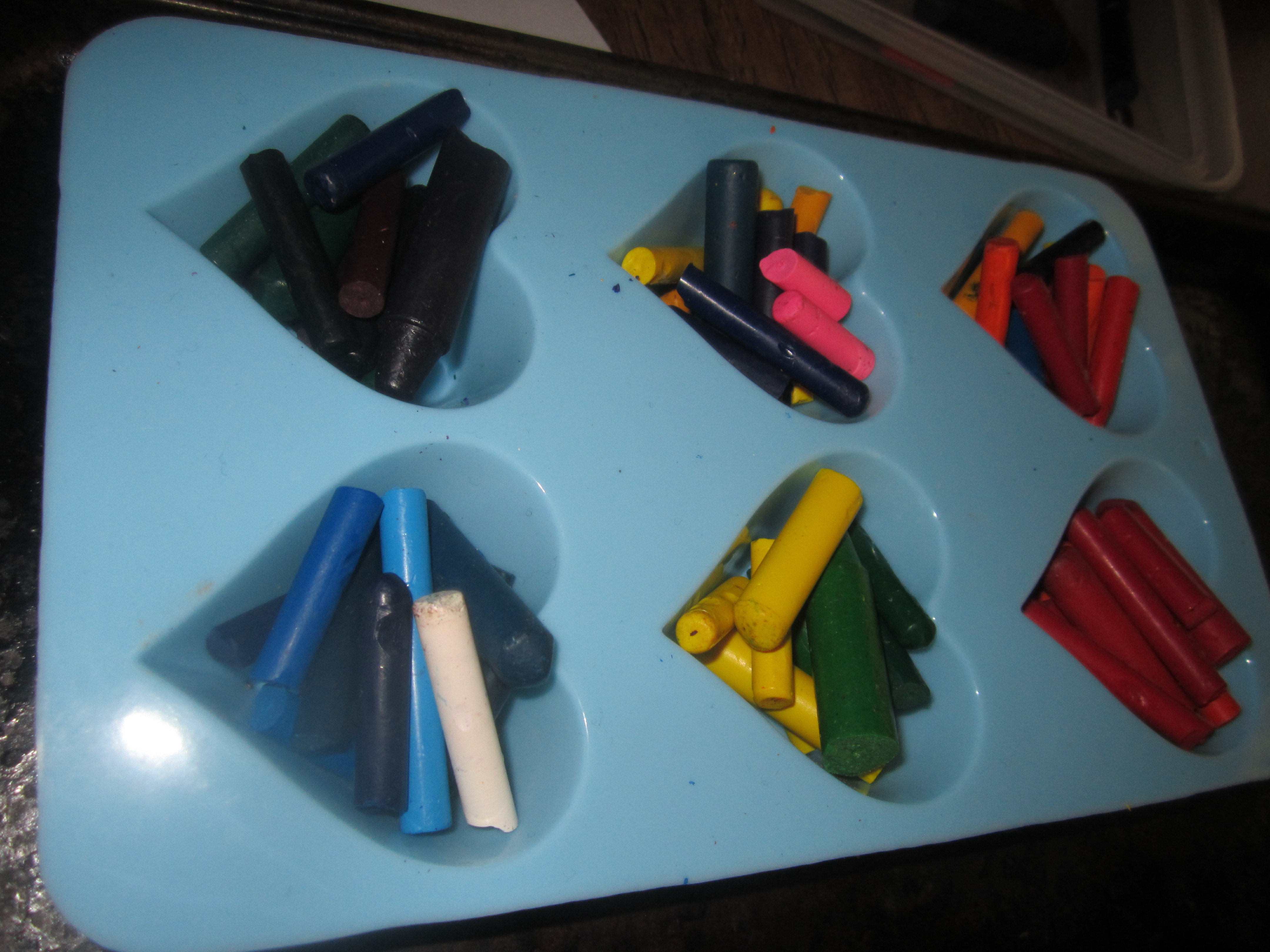
I spent this morning collecting the remnants of Crayola.  Once beautiful, bright, pointy crayons fresh from the box—now broken, bespeckled, faded, and unwrapped.

We filled a tray of heart-shaped silicone with the jumble of brokenness, melted the wax, cooled it and then popped out beautiful new rainbow heart crayons.

We made something fun, colorful, and unique out of the old, broken, and worn out.

God’s plan for restoring us in life is so often like melting down broken wax and transforming it into a uniquely colorful treasure with a beauty all its own.

We pray for restoration, hope for it, long for it with desperate hearts.  We need the fixing, mending, healing power of God in our relationships, in our worship, in our churches, in our sick and hurting bodies, in our grief, in our finances, and more.

David needed it emotionally and knew that the Lord His Shepherd, “restores my soul” (Psalm 23:3).  Later, He needed spiritual restoration after he committed adultery and murderer, as he prayed, “Restore to me the joy of my salvation” (Psalm 51:12).

What we usually long for in the midst of brokenness is full-circle restoration.  We want what we once had, what Satan took from us, or what we’ve lost along our journey.

That’s what Israel prayed for when they were beseiged, starved, and taken captive:  “Restore us to yourself, O Lord, that we may be restored! Renew our days as of old” (Lamentations 5:21 ESV).

Give us back the good old days!

And it seemed like that’s exactly what God did.  When Nehemiah returned to rebuild the ruins of the Jerusalem walls, he began at the Valley Gate (Nehemiah 2:13).  Then, 52 days later, they finished the job and celebrated with choirs, corporate praise, rededication, and a procession that marched out through the gates they had rebuilt, starting with what scholars believe was the Valley Gate.

In Nehemiah: A Heart That Can Break, Kelly Minter writes: “If God began Nehemiah’s journey at the broken Valley Gate and completed it at a restored one, we have reason to hope He will work with the same restorative power in our lives” (p. 151).

They had, after all, come full circle.  This surely renews our hope.

And yet, this wasn’t exactly the same as what they had lost, and that’s also reason to rejoice!  These were rebuilt walls, walls with a testimony.  They showed God’s faithfulness to His people, bringing them back from captivity and helping them rebuild their land.

The rebuilt walls in our lives are also a testimony of God’s faithful lovingkindness and mercy.  They can’t possibly be misunderstood or misinterpreted as walls pounded into place by our own ability and strength.

They are all about how God brought us back and helped us stand.

The best thing about God’s restoration is that He often does more than we expect.  We want the same as the good old days.  Many times, however, He gives us more than we had before or even something better.

He did this for Job, giving him “twice as much as he had before” (Job 42:10).

He does this for us, as Peter tells us:

“And after you have suffered a little while, the God of all grace, who has called you to his eternal glory in Christ, will himself restore, confirm, strengthen, and establish you” (1 Peter 5:10, ESV).

He doesn’t just give us back the pieced-together remnants of our past; He restores us in a way that makes us stronger, and He does it Himself, stitching us back together with His own patient hand.

God doesn’t give up on the broken crayons in our lives or toss away those of us who’ve come unpeeled.  He may melt us down and it may hurt, but He makes us new, beautiful, different, stronger, unique—restored for His glory and with a story to tell of His goodness.

Want to transform your broken crayons into something fun and new?  There are some great “recipes” online, including this one here.

*******************************************************************************************

I don’t just have things that drive me crazy.  Things can make me happy, too!  Like:

Family time, baking with my girls, heartfelt worship, chocolate, hot tea with sugar, time with God at my kitchen table, words that are fun to say, holding my husband’s hand, triple word tiles in Scrabble, honeysuckle candles, free concerts on the beach in the summer time, my daughters giggling, the smell of fireplaces burning in autumn air, pumpkins, my small group, crossword puzzles, the perfect coupon, Masterpiece Classic and Masterpiece Mystery, brand new pointy crayons, fresh Play Doh, the Beatles, comfy white socks, Dickens and Shakespeare, British comedies, when the lights dim and the play starts, listening to my daughters read, a blank computer screen and the clicking of the keys as I fill it up with words.

Heather King is a wife, mom, Bible Study teacher, writer for www.myfrienddebbie.com and worship leader.  Most importantly, she is a Christ follower with a desire to help others apply the Bible to everyday life with all its mess, noise, and busyness.  To read more devotionals by Heather King, click here.

Copyright © 2012 Heather King

Altars of Uncut Stones or the Beauty of Simple Obedience

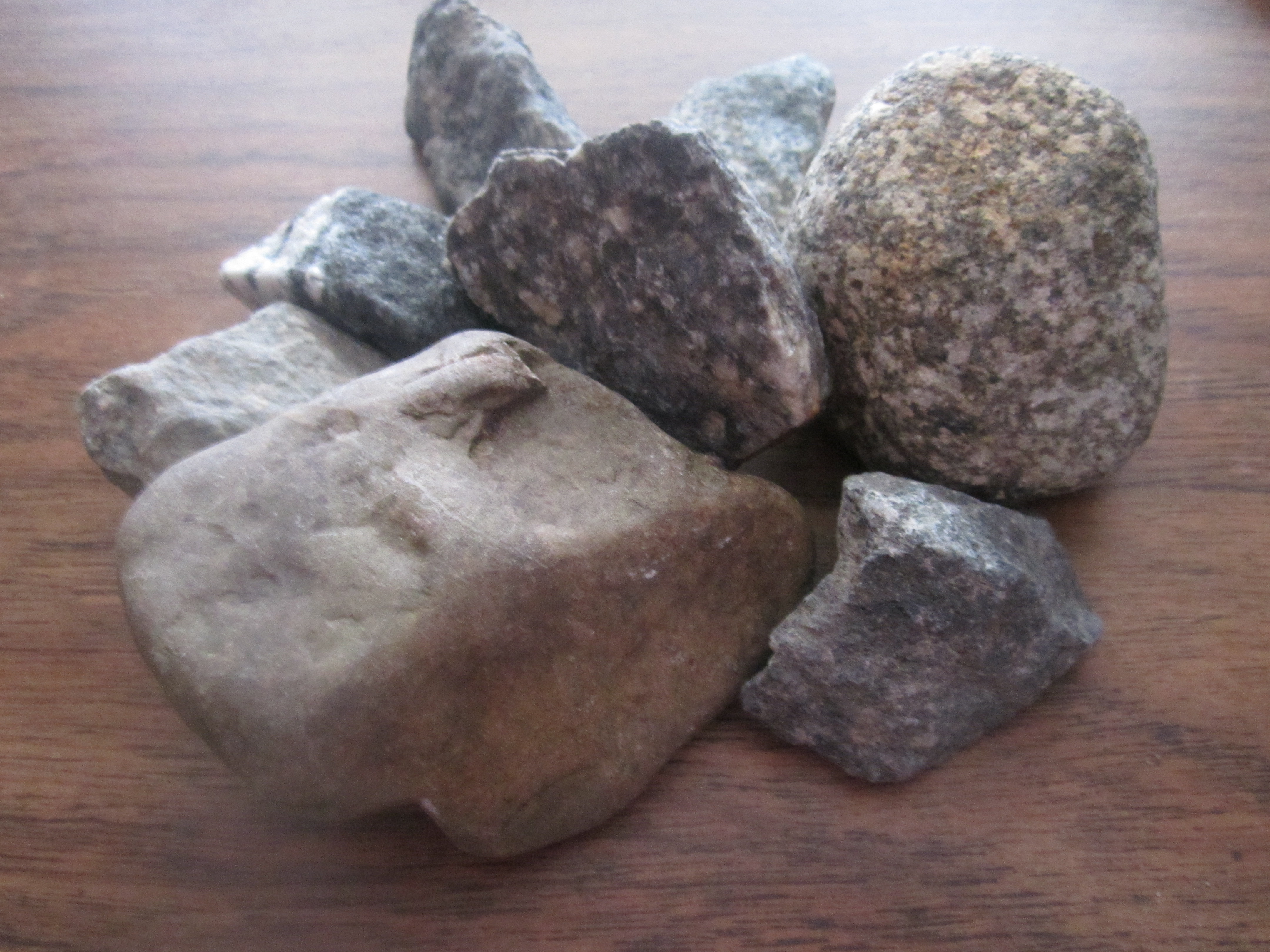
I picked up my daughter’s yellow spring jacket and felt weight, heaviness where it shouldn’t be.  Clearly she had stuffed her pocket at the park with her latest treasure.

Curious about her new discovery, I slipped my hand into her pocket and pulled out . . . a rock.  Two rocks actually, one for each pocket.

They weren’t gems, either.  No sparkles or beauty.  No monetary value.

They were plain ordinary gravel, no different than the layer of rock on my driveway.  In fact, the one crumbled into my fingers with the slightest pressure.

I sighed.  She had been toting home rocks for about two years now.  Everywhere we went, some pebbles, gravel, or smooth stones caught her attention and ended up in her pockets.

She has even tried to remove stones from the paths at Colonial Williamsburg and the zoo and once tried to carry a cement block away from the local museum where its grand function was to hold open the door.

I put my foot down about those.

But if it fits neatly into the pocket of her jacket, she’s likely to tuck it away where I can’t see and add it to her “rock collection.”  Perhaps she’ll even give it a name, which usually ends up being something like “Rocky” or another equally creative moniker.

I made the mistake of tossing “Rocky the First” back into our garden when I discovered it on her dresser.  She cried.  She searched the back garden for a glimpse of him and, finding him, carried Rocky right back inside.

To me, it was an ugly rock.  To her it was a treasured part of her collection, more like a pet than a simple object.

She’s not the only one who finds beauty in simple stones.  God loves them, too.

As they crossed over the Jordan River, the Israelites obeyed God’s instruction, picking up 12 stones from the river bed and lugging them up the embankment onto dry land.  God told them to use those stones to build an altar.

More specifically,

“an altar of stones.  You shall wield no iron tool on them; you shall build an altar to the Lord your God of uncut stones. And you shall offer burnt offerings on it to the Lord your God, and you shall sacrifice peace offerings and shall eat there, and you shall rejoice before the Lord your God” (Deut. 27:5-7 ESV)

Their peace offerings and sacrifices, their worship and rejoicing before the God who had carried them into the Promised Land, may have seemed more fit for an altar of finest gems.

Perhaps their greatest artisans could have finely cut diamonds, emeralds and rubies into an altar fit for worship of the Most High God.

Or, if God insisted on them using river rocks, at the very least they could have chiseled and carved until the altar looked like a marble statue, perhaps of angels or a depiction of the priests carrying the Ark of the Covenant, or of Joshua leading the people.

Yet, God was clear.  Stones, simple stones, uncut by any human tool, formed the altar fit for the offerings of His people.

Why did God even care about a detail so small?  According to Him, “If you make an altar of stone, you shall not build it of hewn stones, for if you wield your tool on it you profane it” (Exodus 20:25).

To God, human construction on the altar stones made them unholy and profane.

That’s because God knew the danger implicit in cut stones and man-made bricks.  The moment we begin to adorn altars with human effort is the moment we shift the focus off of the God we praise.  Instead, we admire the human talent that made the vessel or the human ability that cut the stone.

We become idolaters.  Our worship becomes profane.

This is what God accused the people of doing in Isaiah:

I spread out my hands all the day to a rebellious people, who walk in a way that is not good, following their own devices;a people who provoke me to my face continually, sacrificing in gardens and making offerings on bricks” (Isaiah 65:2-3 ESV).

Israel ignored God’s mandate and chose instead to offer their sacrifice among garden flowers.  They had rejected simple stones in favor of brick altars.

Israel wanted to worship God their own way and on their own terms.  His instructions seemed superfluous and unnecessary.  Their ideas seemed so much nicer, so much better, so superior, so much more religious than God’s request for pure and uncut praise.

In the same way, God sometimes overturns our expectations of adequate offerings and suitable worship.

He desires the simplicity of an obedient heart.

We think He needs more.  

So, we hold back our offerings until they are “fit” for Him.  We hide in the sanctuary pews until we have more to give.  We think other worshipers, who are more talented and more rehearsed, give gifts more worthy.

It isn’t, however, about being the best, most talented, or most qualified; it’s about being called.  Yours is the offering He desires.  It is because of your heart of obedience that He can be glorified in the sacrifices you bring.

There is beauty in the uncut stones of our worship.  It’s never about the show, never about our own talent or training; it’s not about looking good or fitting in, or processing our worship into acceptable forms—all human additions that shift focus off God and onto human ability.

Instead, it’s about responding to God in pure uncut adoration.

Heather King is a wife, mom, Bible Study teacher, writer for www.myfrienddebbie.com and worship leader.  Most importantly, she is a Christ follower with a desire to help others apply the Bible to everyday life with all its mess, noise, and busyness.  To read more devotionals by Heather King, click here.

Copyright © 2012 Heather King

Weekend Walk, 04/14/2012

Hiding the Word:

This morning when I awoke, I didn’t know what verse to choose to meditate on this week or what inspirational and insightful message to share with you all.

I was a blank.

I was blank as I served up breakfast for my children, blank as I washed up the kitchen and switched over laundry, blank as I showered, blank as I drove to and shopped at my church yard sale.

Then, on my second sweep around the gym full of recycled treasures, I discovered a tiny, Christmas-colored box almost hidden on the table amidst china and craft supplies.

This was treasure indeed, Scriptures in a cardboard box to last me a whole year and to remind me to pray for the Operation Christmas Child shoeboxes that we package up and send out to children around the globe each Christmas season.

On the very first card in my box, Franklin Graham has a message that reads:

“As you commit verses to memory your heart becomes like a treasure chest filled with verses that can bring you comfort, strength, inspiration, courage, and refreshment.”

Amen to that, Franklin Graham!

So, in the Spirit of Operation Christmas Child and the Samaritan’s Purse organization, here’s our verse for the week:

Dear children, let us not love with words or speech but with actions and in truth.
1 John 3:18, NIV

Weekend Walk:

In His Time
Originally posted 04/15/2011

Teach us to number our days that we may gain a heart of wisdom”
Psalm 90:12

The day has finally arrived!  I’ve iced cupcakes, wrapped presents, and filled goody bags for my daughter’s fifth birthday party.

She has been asking me when this day would come every single morning for 9 months.  I’d show her on the calendar how far she had to go and she would sigh and whine with frustration.  Her birthday simply would never come.  She would never ever be five years old.  Everyone would always be older than her. Surely she would stay four years old indefinitely.

I’ve held her as she sobbed out tears of disappointment only one week ago because her birthday was just too far away.  Seven days was an impossibly long time to wait.

I, on the other hand, feel as if this day has come so quickly.  How is it possible that my gorgeous, brilliant, quirky little one has been with me for five years?  For these past few months, I’ve been telling her to wait, just wait, it will come and it will arrive sooner than she realizes, but those words felt empty and meaningless to her.

Impatience weighs heavy in this house.  My older girl has been telling every stranger in town, “Hi, my name is Victoria.  I’m almost seven.”  Sometimes, she even pads her age a bit and tells them she’s almost ten or almost 12.  And so I lean down and whisper to her that her birthday just happened; she’s still eight months away from even one more birthday, much less four or six!

“Mommy, I want to be in kindergarten.  Mommy, I want to be in first grade.  Mommy, I want to wear point shoes in ballet.  Mommy, I want to be a teenager.  Mommy, I want to be old enough for a house of my own so I can have a dog.” Even my baby toddles around after older sisters trying to do the same “big girl” things they do.

No matter how old they are, they always want to be older.  I try to tell them truth—that one day they will pay bills, and go to work, and care for sick children, and will long for the preschool days when they worried only about show and tell and their snack choice for the day.

Please enjoy this moment right now, I beg.  Please don’t let it pass by you unnoticed and unvalued because you are too busy looking ahead to the next step.

And I have been there.  I have trekked across a college campus and longed for graduation.  Married and been asked by family when we’d have a baby.  Had a baby and contemplated what it would be like to have older kids, and sleep, and no diapers, and no need for babysitters. Worked a job and longed for retirement.   Always too busy thinking about later to actually enjoy now.

Solomon told us “There is a time for everything, and a season for every activity under the heaven . . . He has made everything beautiful in its time” (Ecclesiastes 3:1, 11, NIV).  No amount of rushing or anticipating or worrying will change God’s appointed seasons in our lives.

I love to visit Colonial Williamsburg and walk the gardens surrounding the palace and I long to stroll through the local botanical gardens and enjoy the color and scents and hovering butterflies in a place of beauty.  But, if I travel there before they are ready, before the flowers have bloomed and while the bulbs still lie dormant beneath cold earth, I would see death, not life, brown dirt instead of the brilliant hues of tulips and daffodils.  “He has made everything beautiful in its time,” and so we must cultivate, plant, and tend as God calls us to so that we can enjoy life in its proper season.

Of course, sometimes we feel as if the season we are in has lasted forever and that surely God will never release us to newness and fulfillment.  We remain dissatisfied with the now He has given us as we dream about the future we imagine.

And what happens, then, if the next season bears no resemblance to the goals and dreams in our heart?  I know a couple who planned retirement with excitement and anticipation, but the reality wasn’t travel, relaxation and golf.  No, it was stroke and poor health and a future not at all what they had envisioned.  They can’t go back and enjoy the time before caregiving and doctor’s appointments.  It is now a season past.

In Psalm 90, Moses challenges us to keep the proper perspective about our life’s circumstances.  He says, “A thousand years in your sight are like a day that has just gone by, or like a watch in the night . . . Our days may come to seventy years, or eighty, if our strength endures . . . Teach us to number our days that we may gain a heart of wisdom” (Psalm 90:4, 10, 12, NIV).

We all feel stuck sometimes and without hope that we’ll ever overcome our difficulties.  My mom’s greatest advice was to remember that “this is only a season and won’t last forever.”

There were struggles and stresses that consumed my thoughts in the day and kept me awake at night, now long since resolved and in the past.  Sleepless nights with a newborn, a teething infant, terrible twos, potty training, juggling college and work, unemployment—all seasons that seemed interminable when I was in them, but now appear so brief as I scan back over my life history.  Even our entire lives, the seventy or eighty years Moses thinks we have on this planet, constitute so little of the human history God has witnessed and walked through.

So then, we ask that God “teach us to number our days that we may gain a heart of wisdom.”  It is wisdom indeed to realize that the circumstances we are in are a passing season and hope can carry us through to victory. A new season will arrive at just the right moment and it will be beautiful in its proper time.

But, it is also wisdom to number our days, making each one count.  Not letting a single calendar square go by without us valuing it for what it is–this is our life in the here and now and God is present in it. What would it look like if we lingered here in this place, finding the beauty God has created in this time rather than straining to see what lies ahead?  It would be a life of glorious contentment and peace, restful and unrushed as we take the time to look, really look, at the beauty all around us in the reality of our now.

Even in the difficult times, we learn to see the beauty in dirt turned over, weeds pulled, seeds planted—the work God is doing in our lives this moment, the beauty of Him active in our lives, cultivating our hearts in this season, knowing that in His own perfect timing He will bring forth growth, shoots of life, and a harvest plentiful.  So much beauty all in His time.

**********************************************************************************************************

Heather King is a wife, mom, Bible Study teacher, writer for www.myfrienddebbie.com and worship leader.  Most importantly, she is a Christ follower with a desire to help others apply the Bible to everyday life with all its mess, noise, and busyness.  To read more devotionals by Heather King, click here.

My Addiction

“So here’s what I want you to do, God helping you: Take your everyday, ordinary life–your sleeping, eating, going-to-work, and walking-around life–and place it before God as an offering” (Romans 12:1, MSG).

I love routine.

I plod around my house each morning with my eyes barely open, doing the same tasks I did the day before. I follow a schedule day by day, week by week with shopping days, volunteering days, writing days, cleaning days, and such.

Each night, I drink a cup of hot tea in one of my favorite mugs before I go to bed.  Every night.  Summer, winter, makes no difference.

So, a few weeks ago when my whole schedule was off and it was far too late for a reasonable cup of tea before I climbed into bed, I felt a little shaky and definitely a little off.  I couldn’t do it.  I couldn’t settle in under the covers and turn out the light without at least a few sips from my teacup.

It’s not that I’m a tea addict.  I’m a routine addict.

It was late.  It was silly and ludicrous. I should have just plopped my head on the pillow and been done with it, but instead I stayed up an extra 15 minutes so I could sip at my tea just like I do every night.  It was wonderful, peaceful, calming, just right.

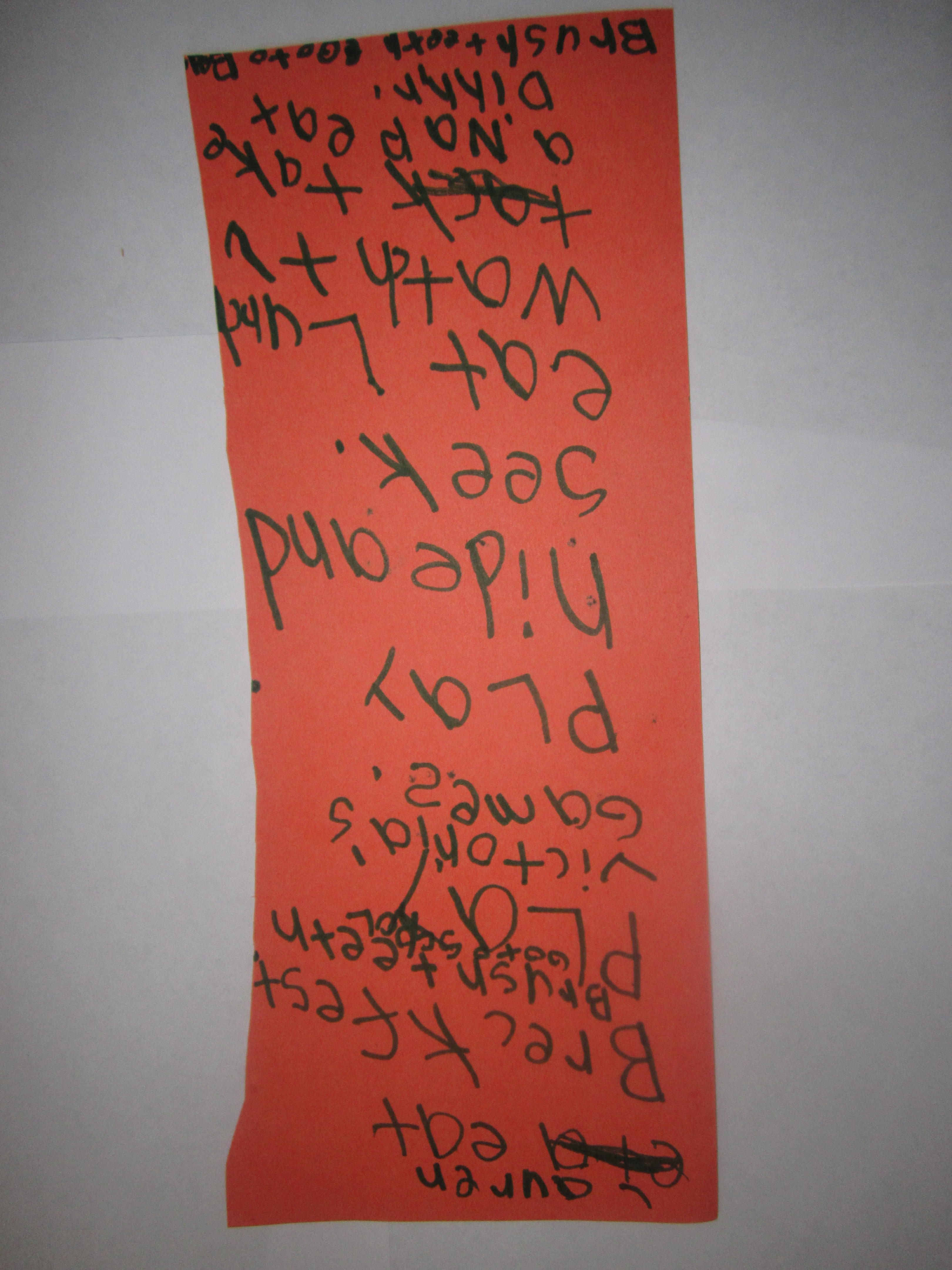
Given my love for the routine of daily life, I was not at all surprised when my six-year-old brought me a neon orange paper that read (and I quote):

Lauren:
eat Breckfest
Brush teeth
Go to school
Play Victoria’s games
Play hide and seek
eat lunch
watch TV
take a Nap
eat Dinnr.
Brush teeth
Go to bed

The basic reality of daily life, of routine, and of the mundane is that we all live it in some way or another—me in my adult world, my daughter in her child world.  We commute to work.  We go to school.  We walk the dog.  We make phone calls.  We volunteer.  We give baths and make dinners.  We run errands.  We clock in; we clock out.

What I love about the resurrection appearances of Jesus is that He surprised the disciples by inviting Himself into their daily routine.  Sure He appeared to them in the upper room, where they were gathered for worship and prayer. That’s to be expected.

But then He did something totally different.  He showed up on the side of the Sea of Galilee and watched them wrestle with fishing nets and bring nothing up from the water.

He went to work with them.

Early in the morning, maybe as the first flickers of sunlight skipped over the Galilean waters, Jesus called out to his tired friends.  They didn’t recognize his voice; he was just some curious bystander sticking his nose into their own personal business, giving them instructions as if He knew more about fishing than they did—a bunch of expert fisherman.

He told them to “‘Throw your net on the right side of the boat and you will find some.’ When they did, they were unable to haul the net in because of the large number of fish” (John 21:6).

That’s when they recognized the Lord.

In A Year With Jesus, Eugene Peterson wrote:

“Work that was futile apart from Christ becomes successful in His presence . .. Your resurrection life, Lord Jesus, is like a sunrise in work that has lost meaning and in routines that have become pointless.  Whatever my work today, I will do it in the recognition of Your presence and under Your command” (p. 594).

and

“The resurrection transforms Monday work as much as Sunday worship” (p. 596).

Jesus made it clear in those 40 days following His resurrection that He wasn’t just looking to be part of our sacred lives and in the religious moments we schedule on the calendar.  He wanted us to live with a curious mesh and entwining of sacred and secular, where He’s with us during every part of our day.

He sets our routine.  He is our routine.  He shakes up our routine.  He designs our routine. He redesigns our routine.

You’d think we fairly intelligent people could get by on our own living out our daily lives.  But, I’ve decided that I can’t and I’m okay with that.

That’s why you’ll find me in the Wal-Mart parking lot once a week with my head bent low in the few minutes before I exit my car.  It’s because I’m a mess on my own—making stupid decisions about what to buy and what not to buy, forgetting what I need, falling for advertising gimmicks and sales tricks, traveling back and forth across the whole store because I forgot something on my list, making a list and then leaving it in my car or at home, trying to use outdated coupons and failing to use perfectly good coupons that I spent perfectly good time cutting out.

Why should God care about my budget and my meal plan for the week and for the items on my list and my own personal sanity?  Because He loves me, that’s why.  Because the grocery store is where I lay out my nets and hope for an abundance of fish.

You have your own Galilean place, where Jesus is trying to invite Himself and where He’s waiting to give you input and advice.   Perhaps it’s the routine that makes you feel so comfortable and that you think you can handle all on your own.  Perhaps it’s the place you feel most capable and expert.  Maybe it’s a place where you experience failure and emptiness.

You haven’t seen abundance until you’ve felt the blessing of His presence in the midst of your routine.  It’s time to invite Him into the boat with you.

You can read more devotionals on this topic here:

Heather King is a wife, mom, Bible Study teacher, writer for www.myfrienddebbie.com and worship leader.  Most importantly, she is a Christ follower with a desire to help others apply the Bible to everyday life with all its mess, noise, and busyness.  To read more devotionals by Heather King, click here.

Do I Look Dead To You?

After we’ve packed the cooler, dressed everyone in bathing suits and sandals, double-checked the bag for diapers, towels, tissues, Band-Aids (for blisters), sunscreen, and more, and then loaded every last item and person into the mini-van, we have the same-old chat with our girls as we drive to Busch Gardens, the amusement park near our home.

First we begin with the safety reminders, about strangers, about wandering away from us, and what to do if you get lost.

Then we remind them that we aren’t buying every snack, toy, or novelty item strategically scattered along our path through the park.  And no whining when it’s time to go home.

We finish up with the “friends speech.”   It goes something like this:  You are sisters.  God designed you to be best friends.  Don’t ditch your sister so that you can ride in a boat or car or dragon or whatever with some random stranger who you’ll never see again.  Sisters ride together.

This last speech generally elicits the most protests.  My girls are friendly people.  They like to meet new kids and form what they are certain are life-long bonds of friendship while standing in line at Busch Gardens.

So, it was no surprise that during our spring break trek out to the amusement park, my middle daughter stood in line for a ride and then announced, “Mom, I made two new best friends!”

Not just friends.  Best friends.

And how did she know these two new girls were now her bosom buddies for life?

“They told me their names, Savannah and Julia.”

That was it.  The loyal bond formed simply by exchanging names.

Friends, best friends, nice people you’ve only just met, a stranger whose name you’ve learned, sisters, the person you thought was your close friend but who gossips about you behind your back  . . . it’s a mesh of relationships they haven’t quite figured out yet.

Identifying true friends is a skill only learned over time after experiencing both hurt feelings and faithfulness, betrayal and loyal love.

A mentor once told me that women were designed for deep friendship. Every one of us needs a Ruth and Naomi relationship, not just casual acquaintances whose names we know after a few minutes of standing in lines of life together.

Unfortunately, life is busy, complicated, hectic, and hard, and investing time in those loyal friendships seems an impossible task.

Yet, Scripture tells us this is one investment that’s worth making.

We need a friend who loves sacrificially, and for whom we likewise will sacrifice.  Jesus commanded us to “love one another as I have loved you. Greater love has no one than this, that someone lay down his life for his friends”  (John 15:12).

We need a friend who remains faithful even when we’re at our ugliest, worn-outest, saddest, and yuckiest, just as it says in Proverbs 17:17 “A friend loves at all times, and a brother is born for adversity.”

And we need something else.

We need a friend who is not afraid to get dirty with us as we live this resurrection life.

Jesus stood at the entry to the tomb of his close friend, Lazarus.  He heard the weeping of others around him.  His own tears trailed down his cheek.  The crowd scolded him for not coming earlier and healing his friend while there was still time.  The pragmatic folks complained about the stink of death and decay wafting out of a reopened tomb.  Mary and Martha shot hopeless, hurt-filled glances in Jesus’ direction.

Undeterred, Jesus demanded, “Lazarus, come out!”  (John 11:44).  The shocked crowd watched as the dead man emerged from the grave, living, breathing, and walking—alive.

But he moved slowly, maybe a little like a mummy in a sci-fi horror flick that plays on Saturday afternoon television.  He didn’t leap out from the tomb and dance before the Lord with all the joy of a resurrected fellow.

Instead, “the dead man came out, his hands and feet wrapped with strips of linen, and a cloth around his face.  Jesus said to them, ‘Take off the grave clothes and let him go” (John 11:44 NIV).

Chris Tiegreen reminds us in One Year At His Feet “When Jesus raises us out of our sinful state of death, there is something left to do before we run free.  The grave clothes must go”  (p. 21).

That’s something Lazarus couldn’t do on his own.  Jesus instructed others to come alongside him and unwrap the linen bindings, the remnants of death and the grave that still had him hindered, trapped, and blinded.

That’s the church’s job.  That’s the job of a loyal friend, who patiently strips away all the habitual sins, guilt, shame, false beliefs, hang-ups, terrors from the past, and hurts that trip us up and slow us down.

Sometimes we simply require a love that doesn’t give up on us.

Sometimes it takes someone holding us accountable with truth and lovingly showering us with grace when we struggle with the ugliness of sin.  Proverbs 27:6 tells us: “Faithful are the wounds of a friend; profuse are the kisses of an enemy” (ESV).  Only a true friend skips the flattery and digs past the superficial chicanery of niceness in order to challenge us with a truth and encourage us to change.

Only a friend tells us when they see some of the grave clothes stubbornly stuck to our skin and then lovingly and patiently unbinds us so we can live in the freedom of new life.

We need a friend like that.  We need to be a friend like that, who brings grace and freedom to another.

You can read more devotionals on this topic here:

Heather King is a wife, mom, Bible Study teacher, writer for www.myfrienddebbie.com and worship leader.  Most importantly, she is a Christ follower with a desire to help others apply the Bible to everyday life with all its mess, noise, and busyness.  To read more devotionals by Heather King, click here.

Copyright © 2012 Heather King