Weekend Walk: A Wayward Cat

We have a wayward cat.

He started dashing out the door for periodic jaunts around the neighborhood long ago.  Whenever we found him crouched in the woods with his bright eyes shining back at us, he’d run into the house and hide for an hour or two under the bed.

Those experiences in the wild scared him to pieces.

Still, he ran away again.  And again.  Today’s adventure is the longest he’s had.  Escaping this afternoon, he’s still not home and it’s long past his bedtime as I write this.

We can never understand why he leaves.  He’s clearly terrified of whatever is out there in the wild.  He’s clearly spoiled here in our home.

And yet he runs.

A man once told me that once a cat experiences the smallest bit of life in the wild, you can never successfully keep him indoors again.

It made me wonder if the prodigal ever thought about running away again after he’d returned to life on the farm and celebrated his homecoming.

When Jesus told the woman, “Go and sin no more,” I wonder if it was as simple as that (John 8:11).  Did her memory of extravagant grace sustain her?  Was it as simple as walking away or did she have to fight for change, falter, repent, and run to Christ again and again?

Paul described exactly this struggle in Romans 7.  He did what he didn’t want to do.  He didn’t do what he knew he should do.  This is the continual battle with our flesh.

Like the hymn writer said, we’re “prone to wander, Lord, I feel it, prone to leave the God I love.”

Why do we wander?  Why do we dash out the door at the slightest opportunity and leave the safety and provision of God’s care?  Why risk treacherous territory rather than rest in His love?

After all, as soon as our cat did return home (at 4:00 a.m.) he ran in from the rain to our dry house and was greeted with a can of tuna fish.  You’d think he would understand that home is a better place to be than gallivanting around the woods in the rain sans tuna.

Paul made our choice clear in this same way and that’s my verse to meditate on this week:

The mind governed by the flesh is death, but the mind governed by the Spirit is life and peace” (Romans 8:6).

You’d think given the choice between death on the one hand and life and peace on the other, this decision would be a no-brainer.  Unfortunately, though, we slip into flesh-thinking so easily—-choosing to dwell on worry and anxiety, jealousy, fear, anger, bitterness, selfishness, greed, and more—everything that leads to death.

This week, let’s focus on having a Spirit-governed mind.  We must choose not to let our thoughts run wild into flesh territory.  We must choose if we want life and peace.

How do you take control of your thought-life?

Heather King is a wife, mom, Bible Study teacher, writer for www.myfrienddebbie.com and worship leader.  Most importantly, she is a Christ follower with a desire to help others apply the Bible to everyday life with all its mess, noise, and busyness.  To read more devotionals by Heather King, click here.

Remembering: I’ve Fallen and I Can’t Get Up

Hi all!  I’m still enjoying time away with my family and am just logging on to share an old post with you about prayer initially and fervently about all things—without worrying and fretting first.  Enjoy!

********************************************************************************************

I’ve Fallen and I Can’t Get Up!

Originally posted on August 19, 2011

“Three times a day he got down on his knees and prayed, giving thanks to his God, just as he had done before” (Daniel 6:10)

Bam!
Waaaaaaaaaaaaaaa!
Thump, thump, thump, thump, thump.
Sniffle, sniffle, sniffle.
Mom!  Mom mom!!

With my genes, my girls didn’t have much of a chance at grace and my baby girl is no different. So these are the sounds heard in my home multiple times any given day.

It’s the immediate reaction of any child to trouble, the crying out to mom and the running to her side to tell her all about the tragedy and pain.

There’s little I can do most of the time to fix the problem.  My baby’s fallen and hurt (maybe even angry) and while I can’t change the fact of her fall and no Band-Aid is going to alleviate the temporary soreness, I can kiss her, cuddle her close and tell her I love her. And so I do.

Then I fall down, tripping over my own sin, or another person who invaded my space, or an obstacle I didn’t foresee, or an unexpected pit in my road.

To whom do I run?  What is my immediate response, my instantaneous reaction to pain?  What is yours?

For some, it’s to hold our bruises close for a while and to snap at any bystanders who offer to help us stand back to our feet.  Maybe even hide our heads in embarrassment for the spectacle of the fall in the first place.

For some, it’s to call out for help from those nearby, asking them to both hoist us up and even bear the burden of our weight for a while as we wobble around on a weakened leg.

For some, it’s to haul out our own first aid kit and apply ice and bandages to our own wounds and refuse the expert care so readily available.

For some, it’s to sit without moving, paralyzed by fear.  What if our leg is broken?  What if we never walk again?  What if . . . what if . . . what if . . . ?

In Beth Moore’s study, Daniel, she notes how his immediate response to the king’s edict prohibiting prayer was to go “to his upstairs room where the windows opened toward Jerusalem. Three times a day he got down on his knees and prayed, giving thanks to his God, just as he had done before” (Daniel 6:10).

He didn’t worry first and then pray.  He didn’t try to fix the situation through his political abilities and then pray. He didn’t even concede defeat and stop his public prayer habits, choosing instead to silently petition God at night while others slept.

Daniel prayed.  It was his initial reaction; it was his only solution.

Then there’s the matter of what he prayed.  Sure, some of us have indeed trained ourselves to “take it to the Lord in prayer” without hesitation.  We run to his side and bury our noses in the hem of His robe, sniffling out our requests to Him.  But are we giving thanks amidst those tears?

Daniel was.  Scripture says he “got down on his knees and prayed, giving thanks to God” (Daniel 6:10).  When I’m smarting from an injury, I’m more likely to complain about the pain than sing hymns of thankful praise.

Not Daniel. Political enemies, a manipulated king, a dangerous edict, his faith attacked, his life on the line—still Daniel gave thanks.

Paul made the same connection when he wrote,

Do not be anxious about anything, but in every situation, by prayer and petition, with thanksgiving, present your requests to God. And the peace of God, which transcends all understanding, will guard your hearts and your minds in Christ Jesus (Philippians 4:6-7).

Peace in the midst of pain is there for the taking sometimes, and yet we choose anxiety instead.  We opt for fear by trying to control our own problems rather than running to God’s side and dumping them at His feet.  We allow worry to reign in our hearts and minds by refusing to pray with thanksgiving at all times and in every situation.

I confess I’m a rebel at times.  Even though I know I should shove aside my grumbling and choose to be thankful—even when it takes struggling and squinting to see that sparkle of light in a dark place– still I decline.

I dusted off my thankfulness journal this morning after two weeks of shoving it aside. I didn’t want to be thankful.  I wanted to feel wronged.  I didn’t want some secret formula to maintaining joy in trials; I wanted no more trials!  I wanted God to feel pity for me and feel sorry for letting me be hurt.  Perhaps what I wanted was an apology from Him.

It’s like emotional manipulation of the Almighty God.  “I’m not going to praise You or worship You or give You thanks or hand over my fears to You until You rescue me in the way I desire.”

It’s handing God a sheet and pillow and pointing to the couch.
It’s ignoring His phone calls and giving Him the silent treatment at the dinner table.
It’s holding my breath until he gives me what I want.

And it’s just about as effective as all those tactics.  So when my tantrum is done, I pray and I give thanks.  Reluctantly at first, perhaps, and yet I try.  Maybe the next time I trip and fall, I pray with thanksgiving immediately because I have learned that gratitude shifts my focus off my need and onto the face of my Deliverer.

Heather King is a wife, mom, Bible Study teacher, writer for www.myfrienddebbie.com and worship leader.  Most importantly, she is a Christ follower with a desire to help others apply the Bible to everyday life with all its mess, noise, and busyness.  To read more devotionals by Heather King, click here.

Copyright © 2012 Heather King

Weekend Walk: Fireplace, Meet My Toe

Last week, I walked into the fireplace.

This usually happens because I am:

a.) Doing too much too quickly.
b.) Distracted.
c.) A general klutz.
d.) All of the above.

The correct answer here is D.

Congratulations to you lucky winners!

At first, my injuries seemed slight, but over time I began to hurt every time I put my left foot to the floor.  It wasn’t my whole foot that was sore, just my pinky toe.

So, I adjusted, putting more and more weight on the other side of my foot.  This made walking look clumsy and more than a little bit ridiculous.

In fact, by the next day I was flat-out limping along, all because of one tiny little tender toe.

That night, I climbed into bed only to find that my big toe now had a blister.  This meant I had two toes out of commission.

It got worse.  The following day my entire leg was sore from limping in an effort to avoid both my pinky toe and my big toe.

The lesson here is simple.

Pay attention and don’t walk into fireplaces.

And value each member of the body, no matter how small and seemingly insignificant.

Just hurting one tiny, seemingly insignificant toe–the smallest toe I have–made life difficult as other parts of me struggled to compensate.

It’s true in the church body, of course, as well.  One small (perhaps seemingly insignificant) member of the body who isn’t obeying God in ministry throws us all off balance, stresses others out, and leaves us limping and ineffective.

Here’s a Scripture verse for the week all about being a healthy, whole, non-limping body of Christ:

 There are different kinds of gifts, but the same Spirit distributes them. There are different kinds of service, but the same Lord. There are different kinds of working, but in all of them and in everyone it is the same God at work
(1 Corinthians 12:4-6).

Heather King is a wife, mom, Bible Study teacher, writer for www.myfrienddebbie.com and worship leader.  Most importantly, she is a Christ follower with a desire to help others apply the Bible to everyday life with all its mess, noise, and busyness.  To read more devotionals by Heather King, click here.

Orange Makeup/White Shirt

“I’m so grateful we never have to stand at a distance from Christ. Not only is He incapable of catching our ‘disease,’ but also He is never reluctant to embrace us”
(Beth Moore, Jesus: the One and Only, p. 242)

I love my kids.  Normally, I’m eager to accept their hugs and I’ll wrap them up in my arms at the slightest whim.

The other night, though, my daughter was fully decked out in her costume as an Oompa Loompa in a production of Willy Wonka, Jr, complete with thick, bright orange makeup all the way to her hairline and down to her neck.

…And she wanted to hug me.

…While I was wearing a white shirt.

…A really, really white shirt.

Did I mention she was orange?  Really, really orange.  In fact, I think Crayola should consider naming a new color “Oompa Loompa Orange” in her honor.

So, I hugged her at first with an intricately choreographed dance, making sure her orange head never made contact with my clothing. She bobbed; I weaved.

Then, I stood still for a moment and tilted her face to the side so that only the top of her head touched me.  (Her hair, thankfully, wasn’t orange!)   I gave her what I’ve decided to call “the sideways head hug.”

My goal here was a kind of sterile affection: Showing love without staining my clothes.

I’ve learned this dance over years of practice as a mom.  Kids, after all, come at me every day with Oreos on their hands and spaghetti sauce oozing from their fingers. More paint makes it onto them than every makes it onto paper and then they reach out and touch me to get my attention.

In fact, most of my clothes bear the marks of their hands on my thighs (where they could reach when standing up as toddlers) and on my shoulders (from the times I picked those little ones up).

When I read through the Gospels, I’m amazed at how Jesus essentially wore a white shirt and yet never failed to hug, squeeze, lift up, and cherish all those who came to him—even when they were covered in stains of sin, death, and all that was unclean.

He never dodged them in attempts to escape the messiness of their lives.

When the woman who had been bleeding for 12 years braved the disapproving crowd in order to reach Jesus, she was unclean.  Continual bleeding meant continually being cut-off from public worship and physical contact with others.

One brush of her skin against your arm and you’d be unclean, as well.

Yet, she touched Jesus and He didn’t flinch or condemn her.  He didn’t sidestep her presence.  He healed her and set her free.

When Jesus saw the coffin of a widow’s only son pass by surrounded by wailing mourners and his mother in despair, Jesus could have slipped away and ignored it all.  Touching a dead body was a guaranteed mess, making you unclean by the law’s religious standards.

Jesus did it anyway, though, telling the dead boy to arise and then watching this only son embrace his mother again.

Jesus ate with the rabble, touched the eyes of the blind, and laid hands on the demon-possessed.  His was a physical affection, the real and true fingerprints of God placed on undeserving lives and unclean situations.

Yet, instead of being tainted or stained Himself, He brought purity to others.

Paul put it this way:

God made him who had no sin to be sin for us, so that in him we might become the righteousness of God (2 Corinthians 5:21).

Too often we miss the significance of this fact: Jesus did what was unclean and yet nothing could penetrate the purity of the Son of God.

He was sinless, blameless, totally righteous before God, but He didn’t use that as an excuse to separate Himself from others.  Instead, it was His joy to absorb their stains of sin, now bleached white when laid at the feet of the Messiah.

It’s what He did on the streets of Galilee and Judea and Samaria.

It’s what He did on the cross.

It’s what He does even now when we let Him get involved in the dirtiest, muckiest, and most sin-plagued aspects of our lives.

That’s what John assures us when he writes: “If we confess our sins, he is faithful and just and will forgive us our sins and purify us from all unrighteousness” (1 John 1:9).

This means we don’t need to hide away or shun his society.  We don’t need to pretend the unclean blots on our lives don’t exist.

It also means that we can follow his example by no longer worrying about our clean white shirts and start doling out affection without restraint, not avoiding the mess of others when it makes us uncomfortable.  Like Jesus, we “walk in the way of love, just as Christ loved us” (Ephesians 5:2).

Sometimes real love means getting messy, maybe even orange.

Heather King is a wife, mom, Bible Study teacher, writer for www.myfrienddebbie.com and worship leader.  Most importantly, she is a Christ follower with a desire to help others apply the Bible to everyday life with all its mess, noise, and busyness.  To read more devotionals by Heather King, click here.

How is a Christian like an Oompa Loompa?

The curtain rose and fell for the last time.  The makeup went on and the makeup came off (mostly–there are still streaks of orange along my daughter’s hairline).  Costumes were handed in and tucked away for future shows. A crew of folks broke down the set and put the pieces into storage.

My kids finished their summer-long project yesterday, an all-youth production of Willy Wonka Jr. sponsored by our local community theater group.  They auditioned the Sunday after school ended, rehearsed every week, and performed this weekend.

Now it’s time to kick back and enjoy a few weeks of rehearsal-free summer before school starts again.

Each night before the show, we arrived two hours early so the kids could climb into costumes and sit still for makeup.  This was a particularly involved process because my middle girl was an Oompa Loompa.

The Oompa Loompas are Willy Wonka’s devoted candy factory workers.  Refugees from a horrible land, they’ve come to live and work in his factory as loyal servants of their eccentric chocolate-making master.

Transforming into an Oompa Loompa is quite a task.  It’s more than just colorful shirts, socks and some overalls with curiously expansive hips.

There’s also a bright green wig covered in curls.

And there’s orange makeup–bright orange.

For these six through nine-year-olds, this was a matter of acting, putting on the outward appearance of another.

In the tradition of Lewis Carroll-like riddles, though, I’ve been wondering: How is a Christian like an Oompa Loompa? (Yes, I know Lewis Carroll wrote Alice in Wonderland, not Charlie and the Chocolate Factory.  What can I say?  I’ve got children’s fantasy on the brain . . . )

Peter wrote this description to the church:

But you are not like that, for you are a chosen people. You are royal priests, a holy nation, God’s very own possession. As a result, you can show others the goodness of God, for he called you out of the darkness into his wonderful light” (1 Peter 2:9 NLT).

The Oompa Loompas are peculiar.  They are “strange creatures,” unmistakably different from the kids and parents who visit Willy Wonka’s factory.

We also are supposed to be “not like that,” not like the world, not able to blend in with the crowd. God has changed us from the inside-out and people should notice the unique qualities of God’s love and righteousness about us.

I never once saw an Oompa Loompa hit the gym for an exercise routine targeted at reducing his hip-size.  They didn’t climb onto stilts to increase their height.  None of them hid in the bathroom for an hour to dye their hair and they didn’t even try to pass their orange skin off as suntan.

They were comfortable being weird.

Sometimes we’re not.  We’re too often trying to hide, transform, pretend, and deny the presence of Christ in us.

There’s freedom, though, in unashamedly being who God called us to be, in raising our hands in worship with abandon, in standing up for what is right with conviction, and not fearing the disapproving looks of those around us.

We’re supposed to be weird, too.

The Oompa Loompas were also refugees.  Willy Wonka had pulled them out of a land of fear and disaster and offered them a place of peace.

We’ve similarly been lifted up out of pits and carried to safety.  We are God’s “chosen people” and His “very own possession,” who no longer inhabit a hopeless world, facing inevitable death without the promise of a future.  He has “called us out of the darkness into his wonderful light.”

So, we respond as the Oompa Loompas did; we cheerfully and faithfully serve our Master.

He has saved us!  We are rescued and redeemed!

It’s a little thing, then, to show gratitude and loyalty and to obey Him in every little thing.  We work, we love, we give, we minister, we sacrifice, we share, we worship because we are refugees brought to safety by a Savior who loves us.

The Oompa Loompas are also message-bearers.  As each Golden Ticket winner inevitably fails, falling to the temptations of  immediate satisfaction, selfishness, and greed, the Oompa Loompas take the stage. They clean up the mess.  They solve the problem.

They sing their song.

We also “show others the goodness of God,” sometimes by fixing problems and tending to needs, silently ministering grace.

Sometimes we “speak the truth in love” (Ephesians 4:15), reminding others that God has a plan, purpose, and design.  We speak truth and wisdom in a world that desperately needs both, but we do it with love, covered over with grace, never out of judgment or pompous self-righteousness.

The Christian life is a call to be different, to be saved, to be devoted, to be messengers of God’s goodness, all without having to wear a green wig or apply orange makeup.

Heather King is a wife, mom, Bible Study teacher, writer for www.myfrienddebbie.com and worship leader.  Most importantly, she is a Christ follower with a desire to help others apply the Bible to everyday life with all its mess, noise, and busyness.  To read more devotionals by Heather King, click here.

Copyright © 2012 Heather King

Weekend Walk, 08/11/2012: Devotions From My Garden: Beautiful Attraction

We enjoyed a special visit with grandparents this week and they brought with them gifts, as is the way of grandparents.  One of our surprise presents were two tiny plants that they grew from seeds.

They are butterfly plants.  I looked them up online and saw into our future.  They bloom with brightly colored purple, pink and blue flowers.

And they attract butterflies.

This, of course, is the most exciting kind of plant we can grow in our garden that blooms right outside my daughters’ bedroom window.

Pink, purple and blue . . . and a butterfly magnet?

That has “King girls” written all over it.

I’ll be transplanting these tiny green plants into the garden this weekend and then we’ll watch and wait for the day that the first butterfly visits our flowers.

Of course, these aren’t the only kinds of plants that have a peculiar attractive quality.  Some flowers catch the eye of hummingbirds and the shoots of dill and parsley in our garden are the diet-of-choice for the Easter black swallowtail.

In the same way, we as Christians are to have an attractive quality about us that draws people to stop a while, turn aside, glance our way and choose to linger in our presence and know our Savior.

But if we’ve let our life plants wither and die, grow scrawny and unattractive, or deprive them of the necessary nutrients for our fruit of the spirit to bloom, then we’ll fail to attract others to Jesus.  Even worse, we might repel them.

So, this week, I’m meditating on a verse that reminds me to be a sweet scent of Christ in the world, a reminder to others who meet me and know me of God’s love:

“By this all people will know that you are my disciples, if you have love for one another” (John 13:35 ESV).

More Devotions From My Garden:

Heather King is a wife, mom, Bible Study teacher, writer for www.myfrienddebbie.com and worship leader.  Most importantly, she is a Christ follower with a desire to help others apply the Bible to everyday life with all its mess, noise, and busyness.  To read more devotionals by Heather King, click here.

Copyright © 2012 Heather King

Once in a Lifetime

“The soul is nurtured by beauty.  What food is to the body . . . pleasing images are to the soul” (Thomas Moore, Care of the Soul)

I grew up not far outside of Washington, DC.  At the time, a $5 Metro fare and a 20 minute train ride opened up a world of free museums and monuments.

I could easily Metro in just to see one exhibit at the Folger Shakespeare Library or spend a day slowly walking the halls of the National Gallery of Art or meandering through the presidential portraits in the National Portrait Gallery.

We could day-trip in for the Cherry Blossom Festival exactly when the cherry trees around the Jefferson Memorial were in full bloom.

And I did all those things.

Everything was simply so accessible, so convenient, so inexpensive, and perfect for someone like me who finds these experiences to be spiritual and a refreshing deep breath for my soul.

Our Creator God designed beauty and placed in human hearts the longing to create beauty ourselves.  So, I worship God amidst art and architecture.

Yes, I had access to a spiritual retreat with little effort or cost and I didn’t even know it.

Then in middle school, we watched an episode of one of our favorite shows, Saved By the Bell.  The show’s heartthrob, Zack, desperately wanted to win a contest with a fabulous grand prize— a week-long trip to Washington, DC.

This was unimpressive to me.

Who chooses a grand prize that is just 20 minutes away from my house?  Why not Disney World?  Hawaii?  London?

Of course, we don’t often appreciate what we have, not until it’s gone anyway.

Now, I live just far enough away for a trip to DC to be inconvenient and easily deterred by a busy life and tired children.  A week-long trip to the city would be fabulous!

When we live close to something, when it’s easy, when it’s inexpensive and effortless, it’s easy to overlook it’s value, becoming complacent and unappreciative.

That’s true about time in God’s presence, too.

For us, being with God is as simple as a one-sentence prayer while driving or singing praise songs while washing dishes.  When I’m worried, I pray about 100 times a day over one particular problem.

But it used to be far more complicated and rare than that.  In Luke 1, a priest named Zechariah was chosen by lottery to burn incense in the temple.

He won the grand prize.

Priests were the only ones who could perform this job, the only ones allowed beyond the outer area into the holy places before God Most High.

Even Zechariah, who God declares was “righteous in the sight of God, observing all the Lord’s commands and decrees blamelessly” (Luke 1:6) would only burn incense before the Lord once in his entire life.

One chance to be in God’s Holy presence.
One opportunity to stand before Almighty.
One moment of intimate communion with Him.

Beth Moore writes:

“The responsibility of the priest on duty was to offer a corporate prayer.  Furthermore, the priest’s intercession for the nation undoubtedly included a petition for the Messiah, Israel’s promised Deliverer and King” (Jesus, the One and Only, p. 4)

Zechariah prayed for the nation, prayed for a Messiah, and maybe, just maybe took his one and only chance before God and prayed for his own family’s brokenness.

He and his wife Elizabeth were childless and “very old” (Luke 1:7).  Their dreams for a family seemed hopeless now.

But an angel appeared in that private moment between God and this aging priest.  The angel said, “Do not be afraid, Zechariah; your prayer has been heard.” (Luke 7:12).

Which prayer?  The one for the nation?  For the Messiah?  For himself?

Yes to all of them.

He and Elizabeth became parents to John the Baptist, the forerunner of the Messiah, the hope of the nation.

One powerful moment in the Lord’s presence brought Zechariah the answer to all he had sought for so long.

If we only had one brief opportunity to be in God’s presence, how would we act and what would we do?  How would we worship and what would we request?

David knew exactly what he desired:

One thing I ask from the Lord,
this only do I seek:
that I may dwell in the house of the Lord
all the days of my life,
to gaze on the beauty of the Lord
and to seek him in his temple (Psalm 27:4).

God’s presence was his “one thing,” the deep longing in his heart.

Praise God that because of Jesus we aren’t limited to one single moment in God’s presence!

We have access to the throne of grace at all times and anywhere we go.  We have the Holy Spirit dwelling in us, communing, comforting, counseling, teaching, convicting and bringing peace.

But let’s not let easy access breed complacency.  Let’s treat our times with God as precious as they really are, remembering that it is only because of Christ that we can come before God at all.  Let’s thank Him for the that.

Heather King is a wife, mom, Bible Study teacher, writer for www.myfrienddebbie.com and worship leader.  Most importantly, she is a Christ follower with a desire to help others apply the Bible to everyday life with all its mess, noise, and busyness.  To read more devotionals by Heather King, click here.

Copyright © 2012 Heather King

Abracadabra: The Magical Mom Trick

He made rabbits appear out of nowhere.  He seemed to read minds.  He pulled colorful bouncy balls out from behind children’s ears.

The magician at our local library amazed my kids, particularly my middle daughter who checked out four books on magic that day and altered her future career plans.

“I want to be a magician who tells jokes,” she declared.

Today, I am feeling a little like a magician without the recognition and the jokes.  No fabulously mysterious cape, no collapsible magic wand hiding a bouquet of flowers, no long flowing sleeves to stash cards and colorful scarves, and no top hat from which bunnies appear.  My Mom-attire is much less impressive.

And yet, every year at about this time, I perform a seemingly magical feat that defies all explanation, a trick that doesn’t necessarily astonish audiences, but probably should.

I set the family calendar for the new school year.

Astonished? Amazed? Flabbergasted? Speechless?

Maybe you should be.

Or maybe you’ve been waving your own Mom magic wand over the calendar and performing your own special trick for years.  You deserve a round of applause, too.

Even those of you without kids or with grown children can easily find your calendar as overstuffed as ours.

Of course, there are things outside of my control, like the school schedule and when ballet classes are offered.  So, I wait for official announcements and postings, hoping God performs the necessary miracle to make it all fit just right.

Then I sit down and scan the mess.

There are non-negotiable activities that instantly earn a place on the weekly agenda.

There are the things I believe God has asked me to do this year, which I choose to obey.

There are requests from my kids like, “Please will you pick us up from school each day so we don’t have to take a 45-minute bus ride to our home, which is only 7 minutes from the school.”

There are the “Oh please, mommy . . . .” activities like gymnastics, soccer, swimming lessons, 4H, Girl Scouts, fencing (yes, fencing), art and sewing classes.  This we carefully narrow down, allowing each child one activity at a time.

Then there are the 50 other possibilities that are wonderful and good: The Bible studies, prayer meetings, committees, volunteering, and classes I’d do.

When we think we’ve made it all fit, unexpected birthday parties and get-togethers, after school activities, and events squeeze into the corners of Saturdays and evenings.

Of course, it’s all good.  And maybe, just maybe, if I don’t let my kids take swim lessons every time they are offered my daughter won’t make it to the 2024 Olympics.  That would obviously be the world’s loss.

But today, as I was reading in 1 Corinthians, I was reminded of the one thing that sometimes gets nudged out of our lives by the incessant activity we magically jam, cram, and squeeze into our calendars until they burst.

Paul wrote:

“If I speak in the tongues of men and of angels, but have not love, I am a noisy gong or a clanging cymbal. And if I have prophetic powers, and understand all mysteries and all knowledge, and if I have all faith, so as to remove mountains, but have not love, I am nothing.  If I give away all I have, and if I deliver up my body to be burned, but have not love, I gain nothing” (1 Corinthians 13:1-3 ESV).

Even if we invest our time in everything good and noble, we might be mis-managing our calendars.

Ultimately, speaking God’s language, knowing God’s Word, giving away to the poor, and sacrificing our very lives are all worthy, but even they are utterly meaningless if we don’t do them in love.

So then, what about committee meetings and weekly groups and gymnastics lessons?

Yes, meaningless without love.

Thus, I’ve been praying this year about leaving room for God’s love in our family calendar.

We’ll do what is necessary, what God has asked us to do, and we’ll love our children by allowing them to (within reason) develop gifts and talents God has given them.

And then I’ll refuse to feel guilty for declining to do every other good thing that comes my way.

I want to leave some breathing room for taking meals to the sick and for hospital visits.   Nights off as a family so I can enjoy my kids’ character, not just their hobbies.  Time in my day for last-minute ministry opportunities and helping a friend.

I want the freedom to love others without it destroying a to-do list or rigid schedule.  I don’t want official “ministry” to prevent me from ministering to those in need.

After all, in the end, Paul tells us that “the greatest of these is love” (1 Cor. 13:13). Love doesn’t require magic, but it does require time.

How do you manage your busy calendar and decide what to do and what not to do?

Heather King is a wife, mom, Bible Study teacher, writer for www.myfrienddebbie.com and worship leader.  Most importantly, she is a Christ follower with a desire to help others apply the Bible to everyday life with all its mess, noise, and busyness.  To read more devotionals by Heather King, click here.

An Origami Failure Learns to Fold

I am a failure at origami.

My oldest daughter, crafty soul that she is, begged me to help her with some origami projects.  Knowing my handicap for all things artsy, crafty, and based on following a pattern, I decided that our best option was to purchase an origami book for kids, complete with simple step-by-step instructions and special papers.

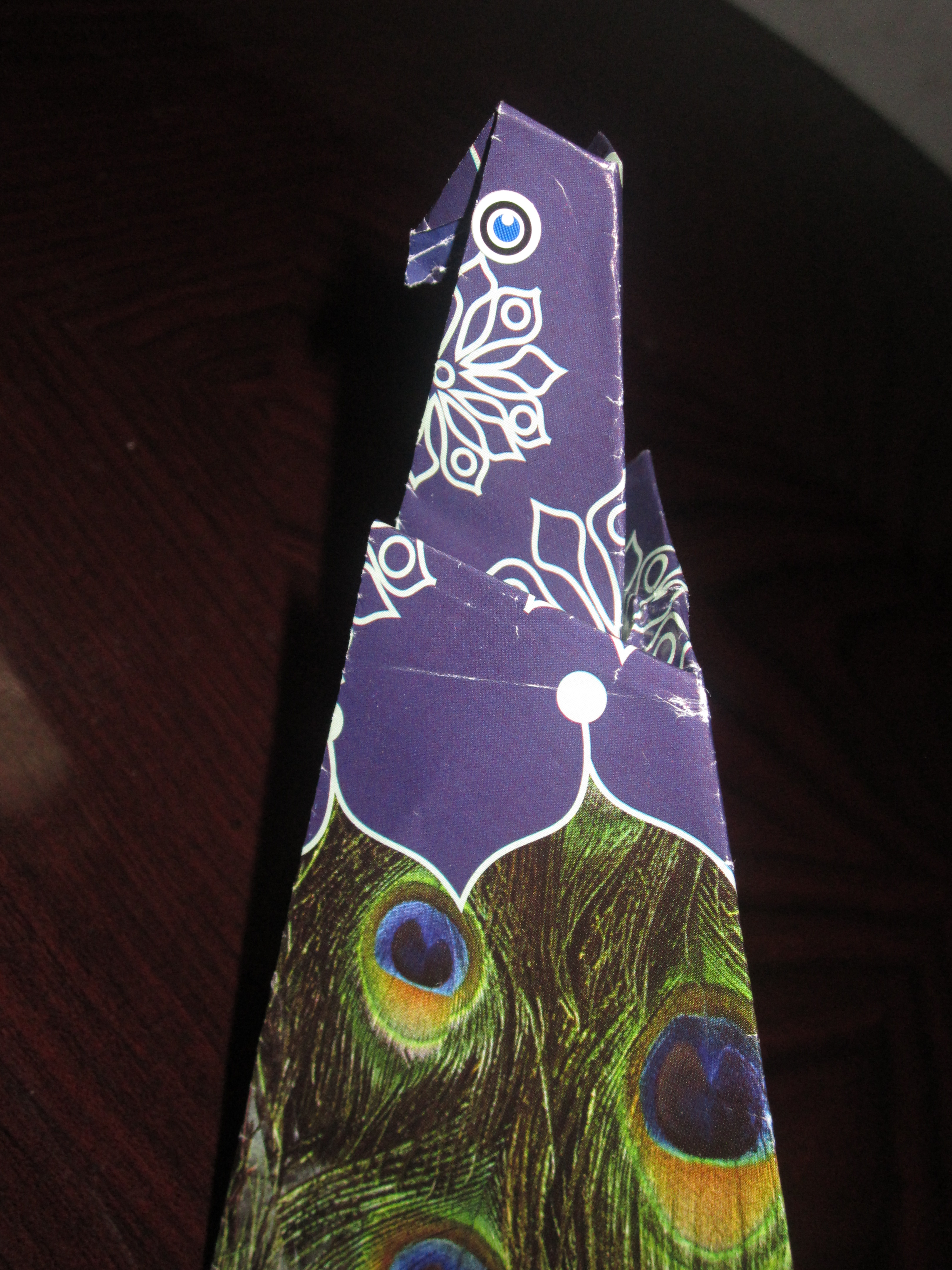
Surely if children can supposedly follow these directions and magically fold panda bears and peacocks, I in all my grown-up wisdom could also understand and succeed in folding a paper zoo.  I can, after all, read, and that seemed to be the minimal requirement here.

I was wrong (of course).

Our origami sessions together typically go like this:

Open book, choose the simplest pattern we can find and then select an appropriate paper.

Fold the paper in half.  Then open it back up.

Fold it in half the other way.  Then open it back up.

Crease here, flip the paper, crease there.

Smile in confidence at one another in the assurance that we have finally mastered this whole origami thing.  Look at us!  Our paper absolutely totally matches the diagram in the book.
We return to the instructions with renewed confidence.

Reverse internal fold, flip, crease, outside reverse fold, open up, fold to center, reverse, flip, spin around, repeat, pull out the flap, push in and squash, inflate, rotate, fold and unfold, mountain fold.

Wait, what?

Pretty soon I’m sputtering in frustration and my daughter is just randomly folding and flipping her paper.  I’m talking to the book as if it could answer me, “What does that mean?  How do you do that?  How come you don’t show a picture of the step in between this and that?  Is this what it is supposed to look like?”

I begin sighing those deep-shoulder heaving sighs that say, “Oh, I should never have bought her this origami book for Christmas.”

Then I declare with supreme Mom-wisdom that what we really need here is a YouTube video with step-by-step instructions.  We Google search.  We find a video.  We pause it after each step and make our paper look like the paper on the computer screen.

We fold.  We create.  We conquer (sort of).

The fact is that I’m not adept at following picture patterns in books and matching my every move to the instructions given, not with origami, sewing, knitting or crafts of any kind.

I have too many questions that the pattern doesn’t answer and too many places where I can go wrong.  I can’t visualize the finished product and the steps needed to get there.

What’s true for me in arts and crafts is sometimes true in life also.  We all can choose the patterns for our lives and then we make continual choices, daily decisions, to yield, bend and fold . . . or not.

Paul tells us:

Do not conform to the pattern of this world, but be transformed by the renewing of your mind. Then you will be able to test and approve what God’s will is—his good, pleasing and perfect will (Romans 12:2 NIV).

The pattern of the world isn’t meant for us.  The world’s priorities, its pursuits, its dialogue and messages, and its destination all fold us into a crazy mess of disorder and frustration.

We can choose instead to “follow the pattern of the sound words . . .in the faith and love that are in Christ Jesus” (2 Timothy 1:3 ESV) and to “obey from your heart the pattern of teaching that has now claimed your allegiance” (Romans 6:17 ESV).

Yes, Scripture is our pattern to follow and Christ is our model: the picture in the book that tells us what we should look like in the end.

Yet, while we may choose which pattern to follow, the world or the Word, God Himself takes a hands-on approach to our lives.  “We are God’s handiwork,” after all—the result of His efforts, the creation He forms and reforms daily (Ephesians 2:10).

So, He is at work folding and unfolding—sometimes moving us forward and then back again.

He creases us now, teaching us and working on us in ways that we won’t understand until years later when He uses those grooves as part of His plans for us and our ministry.

He flips us around.  He pushes us beyond what we thought were our limits.  Sometimes He trims our edges.

Sometimes we complain and balk at the confusing pattern as it unfolds.  We look at the folds He has made in us and think He must be getting it all wrong.  Surely this can’t become that.  It’s confusing and we don’t see and understand.

But He does.  He knows what it takes to transform a piece of paper into a penguin or a peacock.  He knows how to conform us “to the image of His Son” (Romans 8:29).

Heather King is a wife, mom, Bible Study teacher, writer for www.myfrienddebbie.com and worship leader.  Most importantly, she is a Christ follower with a desire to help others apply the Bible to everyday life with all its mess, noise, and busyness.  To read more devotionals by Heather King, click here.

Copyright © 2012 Heather King