Complicating Grace

We had given them instructions.

While I was away all day at a conference in Richmond, Dad was on duty for swim lessons and a friend’s birthday party and everything in between.

So, I prepped my daughters in advance with specific instructions because you have to go through the bathrooms at the gym in order to reach the pool.  One dad…three daughters….suddenly this whole 003job becomes more complicated.

“Now, you can’t change at the pool after swim lessons,” I told them.  “You just need to slip your cover-up on over your swimsuits and quickly move through the bathroom to the other side where Dad will be waiting for you. He’ll take you home where you can change.”

He told them the same thing.

So, 20 minutes after he sent them through the bathroom after swim lessons, they finally emerged.

Fully dressed.

Mostly.

Because we had planned this all out, I hadn’t packed them underwear to change into after swim class.  They were, after all, supposed to wear their swim suits home.

I can only imagine what every other woman in the gym bathroom witnessed as these three girls tried to change into clothes and discovered a lack of undergarments.

Oh my.

Fortunately, a mom we know had pity on my youngest and at least gave her a plastic bag for her wet swimsuit.  This is what my daughter told me as soon as I arrived home that night.

“How were swim lessons?” I asked.

“Good.  Natalie’s mom gave me a plastic bag.”

Okay….

They must have struggled through wet clothes and changing in a public bathroom and searching frantically through the clothes for the things they needed and then had to makeshift a solution when they found their resources were lacking.

But if they had listened to us, yes, if they had just listened and obeyed the simple instructions we’d given, they would have had everything they needed.  It would have been so simple.

And I take this to heart.

Yes, if I just listen to my God—all-knowing, all-powerful, so gracious and loving—then perhaps I wouldn’t struggle with so much insufficiency and lack, perhaps the situations that threaten to drown me in frantic worry and desperate searching would be simplified and peace-filled.

Yet, sometimes I’m just not listening.

And sometimes I’m listening; I’m just not obeying.

Either way, I create havoc.

I’m not alone in this, I know.  God granted Solomon supernatural wisdom, and yet the vast kingdom he inherited from his father, King David, disintegrated when Solomon died.

All because he didn’t listen.

God gave such clear instructions for the kings of Israel:

However, he (the king) must not acquire many horses for himself or send the people back to Egypt to acquire many horses, for the Lord has told you, ‘You are never to go back that way again.’ He must not acquire many wives for himself so that his heart won’t go astray. He must not acquire very large amounts of silver and gold for himself (Deuteronomy 17:16-17).

Three simple commands:

1. Don’t have too many horses (especially ones you get from Egypt, where you were once enslaved).

2. Don’t have many wives (especially those who will lead your heart astray).

3. Don’t build up extreme personal wealth.

Perhaps the rules seemed so arbitrary, even unfair, and certainly not fun.  All the other kings, I’m sure, married for political alliances, acquired wealth and then showed it off, and maintained stables with pride.

Why not Solomon and the kings of Israel?

The Bible Knowledge Commentary notes that “All three prohibitions, then, were designed to reduce the king to the status of a servant totally dependent on His Master, the Lord.”

God planned for his king’s heart to be humbled, for him to remember Who would deliver him in battle and Who would provide for his needs.

Sadly, Solomon doesn’t have a reputation for wisdom alone.  No, he’s known for opulence, and his 700 wives (plus 300 concubines), who led him to worship foreign gods and stone idols.

And his horses.

We’re told: “Solomon had 4,000 stalls for his chariot horses, and he had 12,000 horses” (1 Kings 4:26).  Not only that, but Solomon’s horses came from Egypt (2 Chronicles 1:16).

Lisa Harper writes:

grace can masquerade as difficulty and discipline”(Malachi).

So it was for malachiSolomon.  This was grace in disguise and he missed it, missed seeing through the mask of rules and restrictions to know that God was at work here.

And me, when I’m rushing and not listening, or listening and not heeding, how can I see grace for the grace it is?

Instead, I’m begging, “Mercy,” and this mercy He’s already given.

I still my heart to listen.

I steel my heart to obey.

And grace is what I see.

Heather King is a wife, mom, Bible Study teacher, writer and worship leader.  Most importantly, she is a Christ follower with a desire to help others apply the Bible to everyday life with all its mess, noise, and busyness.  Her upcoming book, Ask Me Anything, Lord: Opening Our Hearts to God’s Questions, will be released in the Fall of 2013!  To read more devotionals by Heather King, click here.

Copyright © 2013 Heather King

It Got Ugly

This is going to get ugly.

That’s what this momma was thinking when my oldest daughter was picked for a Sunday morning sermon illustration…and my middle girl wasn’t.

And it was ugly.  I prayed for most of the Sunday while she hunched in the pew, unresponsive to touch or kisses or comforting words.  And I prayed while she shuffled slowly with slumped shoulders down the hall to Children’s Church.  And I prayed as she stretched out on the floor face down while the other kids sang the songs and listened to the lesson.

What else to do but pray?

We’ve had these discussions relentlessly, trying to love on this girl and pull those roots of bitterness plain old out of her heart’s soil.

Telling her that she’s loved, totally loved, for who she is and how God made her.  How she doesn’t have to be like her sister or compete with her sister, not in any way, not in what she wins or earns or the recognition she receives or the hobbies she pursues.

Sending her out for time alone with her Daddy, giving her that attention and that feeling of special, unique and beloved.

Praising her for moments of triumph and leaning in close to look in those blue eyes so deep and say, “I love you.  I am proud of you.”

But it always comes down to absolutes with her.  She cries that her sister “always” and she “never.”  She keeps tallies and totals, and ongoing score sheets, and how does she remember all this anyway?

How many gift cards Victoria has received: A Million!!!!
How many gift cards I have received: Two.

How Victoria earned first place.
How I failed and lost….(translation: won second place). 

How unfair it is that Victoria got a trophy AND a medal
How I only got a trophy.

We try to reason it out, reminding her of truth and shutting down the lies, and so much of it is just lies Satan is dumping like refuse down on her heart and mind.  Trash load after trash load of lies.

So, we do our best, of course we do, loving, encouraging, speaking truth, building up.

How beautiful, though, that God loves our children with a heart bigger than ours and wisdom much greater.  Despite all I can give even when I am giving my all, still He gives more; He gives exactly right.

A few days after the Sunday morning disaster, it was my middle girl they called up to receive a prize at Awana for best behavior in her club that night–a gift card, of all things, more coveted than any 006trophy or medal.

And she beamed.

And I gasped, absolutely lost my breath sitting there on that wooden bench watching her run up for that prize.  I was all teary-eyed and I could have fallen down right there on that dirty gymnasium floor and lifted hands to God and just cried at His feet in thanks.

Didn’t He know best that she needed a moment to shine?

And didn’t He give her exactly what she needed, something I couldn’t really give on my own, something as a mom I desperately needed Him and only Him to do?

Yes, He worked in her heart that night.  But He also worked in mine.

He reminded me right there that He hears the prayers for my children and they are so safe in His hands.

And so am I.

Because I may not be a middle child, but surely I can act out with all that bitterness and envy and self-pity too much of the time.

Middle-child faith.  That’s what I have sometimes.

We all have things we covet: Someone else’s marriage, ministry, looks, relationships, money, possessions, whatever.  I surely have mine.

And when I’m all wrapped up in what someone else has or does, so focused on keeping some kind of tally or score, then I’m missing out on God’s goodness to me.

That’s what Harold Coffin said:

Envy is the art of counting the other fellow’s blessings instead of your own.

The Psalmist, Asaph, wrote:

No doubt about it! God is good— good to good people, good to the good-hearted.
But I nearly missed it,
missed seeing his goodness.
I was looking the other way,
looking up to the people at the top,
envying the wicked who have it made,
Who have nothing to worry about,
not a care in the whole wide world.  Psalm 73:1-5 MSG

No doubt about it: God is good.  Good to our children.  Good to us.

No doubt about it: I don’t want to miss seeing His goodness by looking the other way, looking at others and not at Him.

No doubt about it: I can trust Him to care for my family and for me.

Heather King is a wife, mom, Bible Study teacher, writer and worship leader.  Most importantly, she is a Christ follower with a desire to help others apply the Bible to everyday life with all its mess, noise, and busyness.  Her upcoming book, Ask Me Anything, Lord: Opening Our Hearts to God’s Questions, will be released in November 2013!  To read more devotionals by Heather King, click here.

Copyright © 2013 Heather King

Her Own Pizza: With Jesus, It’s Personal

My youngest waltzed out of the pizza place carrying her own personal-sized cheese pizza like a treasure.

It started last fall when we mapped out the activity schedule for the year.  One night a week we rush from school, to ballet, to church, leaving exactly 30 minutes to scarf dinner in the car.

I searched for a solution that didn’t break our budget feeding a family of 5 dinner out and discovered the power of pizza.  One large pizza for about $9 feeds all of us.

Problem solved.pizza

But systems like this take some trial and error before they are perfected.  At first, I ordered a pizza with half pepperoni and half cheese, trying to please everyone’s pizza palate.

The trouble was that we then ended up with too many slices of cheese and not enough pepperoni.

Sigh.  Middle class problems.

(Actually, I’d prefer mushroom pizza, but I choose not to push it.)

So, one week I dared to change things up a bit.  I asked for a whole pizza of pepperoni and decided my cheesy daughters would simply have to pick off the meat.

Not long after I ordered the pizza, though, the phone rang.  It was the manager from the pizza place.

“I’m looking at your order here, hon, and I noticed it’s for a whole pepperoni pizza this time.  I just wanted to make sure I made your pizza right and that this wasn’t a mistake.”

Whoa.  She had been paying attention to me.  More than just a cheerful greeting when I walked in each week, she’d actually cared enough to know what I typically order and to notice when it changed.

So, I casually mentioned my predicament.  I only need two slices of cheese pizza.  A whole pepperoni pizza is too much pepperoni.  A half and half pizza is too much cheese.

What’s a mom to do?

“No problem,” she says, “I’ll make a pizza with just two slices without pepperoni.”

And she did.  Every single week from September to April she made us a custom-order pizza without being asked.

Last week, though, I walked in to pick up our pizza and our amazing pizza lady wasn’t there.  People we didn’t recognize were making pizzas and slipping them into cardboard boxes, so I knew we were probably not getting our two special cheese slices that week.

The next day, my phone rang.  It was the pizza manager again.  She was apologizing to me…profusely…that she had been away at a meeting and no one else had remembered about our special pizza order.

Really, I assured her, it’s fine.  I’m amazed by you, truly.

When I picked up the next week’s pizza order, she had it waiting for me on the counter, fresh and hot.  And on top of the large pizza was a small box with a personal cheese pizza just for my daughter as an apology for the lack of cheese slices the week before.

In a world with so many people, so much selfishness, so much demand to fit into labels and boxes, so much pressure to conform, so much mass-marketing and crowd appeal, one personal touch stopped me during my weekly rush from place to place.

I put the pizzas in the minivan and halted at the door, shaking my head.   One incredible pizza manager was digging deep in my soul.

Because ministry and Christianity and Jesus aren’t about statistics, labels, boxes, conformity, arena crowds, generalizations or stereotypes.

With Jesus, it’s always personal.

How often do we forget this?

…Treating ministry like it’s successful only when it’s big ministry, only when the numbers measure up.

…Expecting God to work the same old way for every single person, judging others for making different choices than we do, acting like our way is the only right way.

…Pulling out textbooks instead of listening to people.

…Shoving others into the confines of expectations and labels and never allowing a bit of room for grace or for growth or redemption….

In Deep & Wide, Andy Stanley reminds me that Jesus:

chose twelve apostles from among hundreds of disciples.  He gave preferential treatment to three of the twelve.  He didn’t heal everyone.  He didn’t feed every hungry crowd.  He stopped in the middle of a  virtual parade and invited himself over to Zacchaeus’ house.  Why him?  He ensured that strangers would live and allowed Lazarus to die.

Why didn’t Jesus treat everyone the same?

Because we’re not the same.  We’re uniquely created by Him and He loves us, knows us, cares about us…

…you.

…me.

We can say it, recite it, sing it–echoing Jesus’ words: “Love one another. Just as I have loved you, you must also love one another.” (John 13:34 HCSB).

But we need to mean it.

Love others just as Jesus loved us: sacrificially, humbly, with grace, and yes—personally.

Heather King is a wife, mom, Bible Study teacher, writer and worship leader.  Most importantly, she is a Christ follower with a desire to help others apply the Bible to everyday life with all its mess, noise, and busyness.  Her upcoming book, Ask Me Anything, Lord: Opening Our Hearts to God’s Questions, will be released in the Fall of 2013!  To read more devotionals by Heather King, click here.

Copyright © 2013 Heather King

Captivated

Sometimes you have to fight for the glory and squint your eyes tight to find the wonder.

Like today.

My daughter woke me up early.  She was ready for the day; I wanted to enjoy a little more night, and so the morning began with a headache, fatigue and maybe a not-so-cheerful attitude.

Then, just as I began to settle into the day, I glanced up at the calendar at 7:58 and realized the heating and air conditioning repairman was coming between 8 and 8:30 a.m.  Oops, forgot that one.

He came at 8:20 and normally that time for me is for morning tea and long devotions, starting the week with God and then writing.

But how to be inspired and still with God, how to type out these words on the computer when he’s banging parts and dismantling pieces?  Then he calls out, “Ma’am?” and I flinch because I know it’s not to tell me good news.

My to-do list was long.  The laundry piled high.  The sink stacked with morning dishes.

But I’m fighting for this, so I open to the first day of my new Bible Study, Wonderstruck by Margaret Feinberg:

“God desires to captivate us not just with his handiwork but with Himself–displaying facets of His character, igniting us with His fiery love, awakening us to the intensity of His holiness” (11).

Captivate me, Lord.  Right here, this tiny person in this moment when all the mundane is pressing heavy on my heart and I’m just about suffocated from the stifling weight of it all.

Feinberg tells me that this is what God desires and I wonder: If I’m not feeling it, is it because I’ve shut Him down and crowded Him out?  Is He willing to reignite me and I’m unwilling to notice

I flip through my Bible to Hebrews 12:28-29:

Therefore, since we are receiving a kingdom that cannot be shaken, let us be thankful, and so worship God acceptably with reverence and awe, for our “God is a consuming fire.”

It starts with thanks, gratitude that anything that shakes apart the foundation of my day can’t touch the foundation of His kingdom, my faith, or eternity with Him–Not early mornings, interrupted routines, home repairs, not even the incessant grinding of the daily.

It requires worship grounded in reverence and awe because my God, Savior, Friend, and Lover of my Soul, is a Consuming Fire, and even on days when I’m just seeing the tiniest ember and flicker of that holy flame, He remains the same.

In Scripture, Elisha stood with his prophet-mentor, Elijah, and asked so boldly for a double portion of Elijah’s spirit (2 Kings 2:9).  So, when I read Elisha’s story, I expect the miracles all to be earth-shattering, all fire from heaven with awe and wonder.

It was Elijah, after all, who staged the showdown with the prophets of Baal, who predicted a long and devastating drought over the land and then foretold the rain that started as one tiny cloud as big as a man’s fist.  He went head-to-toe with Ahab and Jezebel until he was whisked away to heaven in a flaming chariot.

The double-portion of that Spirit must be pretty spectacular.

But when I read Elisha’s story, he made foul water fit to drink.  He cursed a group of taunting boys who called him “baldy.”  He gave oil to a poor widow, made some poisonous stew safe for consumption.  And when an ordinary worker dropped his ax in the lake, Elisha made the ax head float on the water.

It was everyday stuff, most of it.  He had a few moments, like raising a boy from the dead.  Overall, though, it seems so mundane.  So everyday.  He helped people eat and drink.  Helped them work and not have to trek to Home Depot for some new tools.

And maybe that’s the reminder here.  Maybe it takes even more faith to look for the power and spirit of God at work in the smallest of needs and the most everyday of circumstances.

Swamp milkweedI look out of the window over my kitchen sink while I wash the last cereal bowl and see the plants we bought the day before, still waiting to be planted in the dirt of our garden.  We went on a hunt for milkweed to attract monarch butterflies and came home with these two green pots.

They look like the smallest and plainest of dead sticks.  My daughter was skeptical.  Could this brown spindly stalk grow anything beautiful?  Is it even alive?

But today I’ve fought for the wonder and the glory.

Today, I’ve determined to plant and nurture the pitiful, the brown, the spindly, the weak, the seeming lifeless–and wait for God to cultivate and grow the glory and the beauty.

Yes, in my garden.  Yes, in my life and heart.

Captivate me.

Heather King is a wife, mom, Bible Study teacher, writer and worship leader.  Most importantly, she is a Christ follower with a desire to help others apply the Bible to everyday life with all its mess, noise, and busyness.  Her upcoming book, Ask Me Anything, Lord: Opening Our Hearts to God’s Questions, will be released in the Fall of 2013!  To read more devotionals by Heather King, click here.

Copyright © 2013 Heather King

Garden Devotions–It’s Crowded In Here

Originally published April 27, 2012

My daughters and I reached a compromise.

I announced that I didn’t want to grow a vegetable garden this year.  It was too much work for too little result.  It didn’t save money.  It started out fun in April and ended up a horrible, rotten, ugly chore by the middle of July.  Various ravenous insects destroyed and devoured my plants.

Their response was unanimous.  “But Ma—awm.  We like to grow our own food.”

So we narrowed down the lists of vegetables we would grow and planted a container garden on our deck.

We filled large wooden crates with garden soil, vegetable food and the tiny plants of tomatoes, cucumbers and peppers we had chosen.  Then we dropped the carrot seeds into the dirt, following exact directions on how far down to push them and how far apart they needed to be spaced.

After a while my daughters disappeared to work on their own project. They held out the result to me with pride.  It was a small planter with dirt in it.

“We planted radishes,” they announced, “all by ourselves.”

I shrugged.  The radish seeds were leftovers from last year.  It seemed unlikely they’d grow.  Yet, the girls faithfully watered that pot for days and surprisingly they were rewarded by the first hints of green.

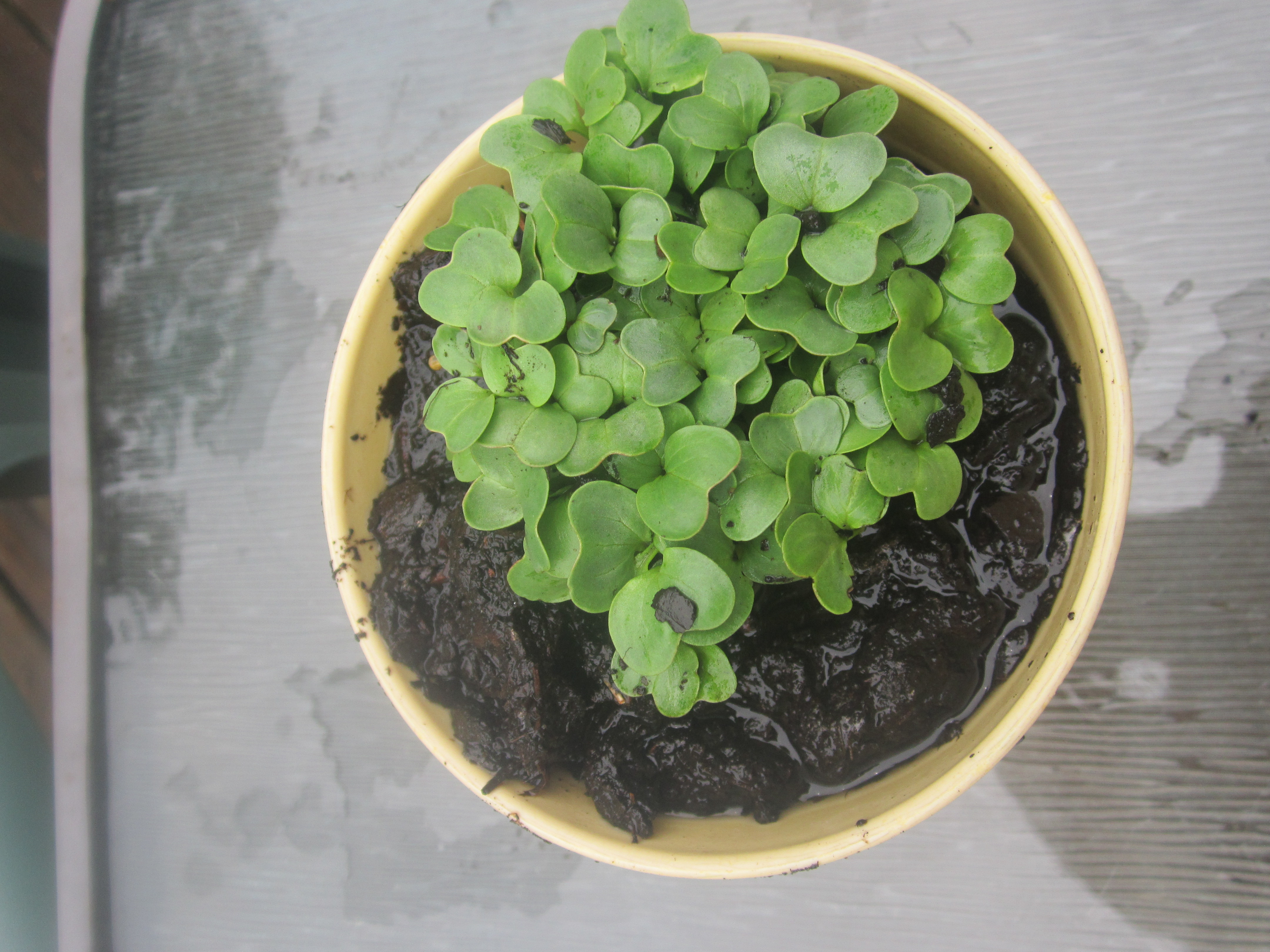
A day later, the pot was crowded by infant radishes.  The girls must have dumped 20 seeds all into the same tiny space in the miniature pot.

It was going to be really crowded in there.

Unfortunately, even though it is hard and a little sad, we now have to make some tough choices.  If all the radish plants remain in that pot, none of them will grow correctly.  Some of them have to come on out of there.

Sometimes our lives are just as crowded as that tiny radish pot.  Every single seedling may have potential for beauty, growth, and produce, but nothing can grow when they are all shoved into the small space of one simple life and the restriction of 24-hour days.

Even though it’s hard and a little sad, there are times when some things have got to go so that other areas of your life can grow to their full potential.

It’s not always a mystery when choosing what to toss.

When Jesus walked into the temple and saw the vendors hocking their wares–doves for sacrifices and loans for people needing money for their offering–He responded immediately.  It didn’t take a second’s thought for Jesus to overturn their tables and chase the mercenaries out of the holy space of the temple courtyard.

He threw out sin, contaminated worship, and the profanation of the holy.

As soon as Jesus cleared the place, the blind and the lame came to him at the temple, and he healed them” (Matthew 21:14).

The only reason they could seek healing in the temple, the only reason there was room for the blind and lame to worship, was because Jesus had thrown out the tainted and unholy.

The Message emphasizes this when it says, “Now there was room for the blind and crippled to get in.”

Until Jesus cleaned house, there hadn’t even been room in the temple for those who needed God the most.

Will we allow Jesus to overturn the tables in our heart where sin and the unholy have set up shop?  Will we clear out the trash and the disgusting, so that we have room to come to Jesus—and to bring others along who need Him the most?

Of course, it’s not always so easy to tell what has to go in our lives.  We have a million choices of how to invest our time, energy, talents, and money, and all of them could be good.  We could lead hundreds of crusades against a world of evil.

But if we crowd out our lives with too much that is good, nothing will grow as it should.

Jesus Himself exhibited the kind of focus we need, to hone in on our purpose and refuse to be distracted by every demand and need.

During His ministry, mobs of people sought out Jesus for healing, and He frequently healed those who sought out His help.

But He didn’t heal everyone.

In fact, when the crowds grew too large and people sought Him out for healing alone, He moved onto another town or escaped the masses to pray alone on a mountain or by the sea.

Healing was fine.  Miracles were part of His ministry.  But it was not His main purpose for coming and He never wanted that to be the focus of His presence.  Instead, He had come to “seek and to save the lost” (Luke 19:10) and “to save the world” (John 3:17).

Maybe it’s time for you to pull out some of the extra radishes from your pot.  The first ones to go are easy—yank out the sprouts of sin, the unholy habits and the remnants of the flesh life.

Then prayerfully ask God to help you focus.  What seedlings should you tend and invest in until you harvest their potential?  What seedlings need to be set aside so that other areas of your life can grow?


Heather King is a wife, mom, Bible Study teacher, writer and worship leader.  Most importantly, she is a Christ follower with a desire to help others apply the Bible to everyday life with all its mess, noise, and busyness.  Her upcoming book, Ask Me Anything, Lord: Opening Our Hearts to God’s Questions, will be released in the Fall of 2013!  To read more devotionals by Heather King, click here.

Copyright © 2013 Heather King

Unsweetened Iced Tea

Therefore, if anyone is in Christ, the new creation has come: The old has gone, the new is here!
2  Corinthians 5:17

Unsweetened iced tea.

That’s what the quiz said my personality resembled.  Not sweet tea or peach tea or even a little wild raspberry tea or health-conscious green tea.

Unsweetened iced tea, as in bitter, plain, strong, and unfriendly.054

During our family trip to Pennsylvania, we spent a morning at the Turkey Hill Experience where my kids learned how to make ice cream, created their own flavors, starred in their own ice cram commercials, sampled some of the delicious treats, and more.  It was a great family day.

Before we left, though, my oldest daughter discovered a touch screen display with a little personality quiz.

What flavor of tea are you?

So, I gave it a little try, just for fun.  After a few questions about what I liked to do in my free time, how I handled conflict and what I was like around my friends, it made its deep psychological assessment of my character:

Unsweetened iced tea.

Underneath that was a paragraph about how I’m blunt and can hurt people’s feelings, but I get the job done no matter what the cost.  I sounded a little like Donald Trump.

I turned to my husband with a questioning look and he shrugged it off.  “Nah, that’s not you.”

Silly machine, I thought.  It’s just a foolish test that probably isn’t ever right about anybody.

So, of course I made my daughter take it just to prove my point.

She read through the questions and gave her own answers, and then it popped up with her flavor personality.

Peach Tea.

The read-out said she is smart, creative and a kind and compassionate friend.  They even recommended she pursue a career in making greeting cards.

That is so her.

If I had to write up my own assessment of this child, that is exactly what I would say about her, and this machine figured her out with only about five questions.

Silly machine?

It seems like it should be so much easier to ignore the accusations and judgments of just-for-fun personality games or even those of other people.

So what if they think we’re unsweetened iced tea?  Does it really matter what they think?  Should I care about what a machine says based on my answers to a few multiple choice questions?

It’s not rational or logical, but it did matter to me a little.  Unsweetened iced tea….that’s who I used to be.

Sixteen years ago, I was bitter and hurtful, strong, unrelenting, and essentially unconcerned about who got knocked over or bruised when I focused on accomplishing tasks and reaching goals.

Maybe I was a miniature Donald Trump without the hair-do or bank account.

But God.

God took that teenage mess of a girl, who seemed so in control and together, and broke her in ways she needed to be broken.  He shattered pride and the hardness I had built in my relationships with people.  He reached in and kneaded my heart until it became soft and pliable in His hands.

He taught me how to receive grace…and then how to give it.

Yes,  He re-formed me.

Maybe in seasons of pressure or stress, I still have that capacity to revert to who I used to be.  Maybe my tongue can still slash through people like the sharpest of weapons.

But today I am thinking as I cut through the butter with the tines of the fork and smash it to the bottom of the bowl, crack open the eggs, and watch the sugar pour in grain upon grain.  I mix with the spoon at first and then finally reach in with my hands to do the work needed.

And as the dough pulls together, I realize—hadn’t God done this to me?

Paul wrote:

 For by the grace given me I say to every one of you: Do not think of yourself more highly than you ought, but rather think of yourself with sober judgment, in accordance with the faith God has distributed to each of you (Romans 12:3 NIV).

That means seeing the truth about me—not who I was, not who others say I am, or how I measure up on personality quizzes.  It means looking deep and seeing “this is how God has made me and this is who I am in Christ”—no better or worse than that.

If God’s grace did this, smashing and breaking me until I could be pulled together again into something He could use, then why still think of myself in that old way?  Why hold myself to labels from the past and an identity formed oh-so-long-ago before grace bruised me and healed me in the way that grace does?

Some machine still saw me as unsweetened iced tea.

But God’s sweet grace had poured into my soul and I’m not the same.

Heather King is a wife, mom, Bible Study teacher, writer and worship leader.  Most importantly, she is a Christ follower with a desire to help others apply the Bible to everyday life with all its mess, noise, and busyness.  Her upcoming book, Ask Me Anything, Lord: Opening Our Hearts to God’s Questions, will be released in the Fall of 2013!  To read more devotionals by Heather King, click here.

Copyright © 2013 Heather King

What I’m Complaining About…

I’ve been trying to teach her just to say, “No, thank you.”

It’s simple.  It’s polite.

Really, I don’t need an Oscar-worthy performance every time I serve mashed potatoes.

“EEEEEWWWWWW.  I HATE potatoes.  They are GROSS.  This is DISGUSTING.  Don’t put ANY on MYYYY plate!”

I’m beginning to wonder if the child has ever even eaten a single potato.  I have this sneaking suspicion that she just screams about hating potatoes because she’s decided to hate potatoes and because the rest of the family happily eats them.

The complaints are always prolonged, noisy, and accompanied by a pantomime of a wrinkled nose and contorted face.  When she’s really inspired, she might even gag a little.  Just for effect.

I’ve gone the spiritual route with her.  “Do everything without complaining and arguing,” I quote (Phil 2:14 NLT).

Everything?

Yes, everything.

Eat potatoes without the side show?

Yes.  Or at the very least, give a simple “no, thank you,” as you pass the potatoes on to the next person.

So far, that has been unsuccessful.

So, I tried the empathy route.

How would it feel if you shared something you made and people publicly whined and complained for at least 5 minutes about how terrible it was?

The empathy route isn’t working either. Lately, she’s taken to shrugging her shoulders and lying to my face: “I wouldn’t care.  My feelings don’t get hurt like that.”

Right.  Whatever.

But the spiritual route and the empathetic route work for me.  Her mealtime complaint festivals make me realize just how grating and ungrateful whining really is.

And unfortunately, I’ve been thinking about how often I’m the one doing the complaining.

We all have our weaknesses, the things that set us off and the people who get stuck listening to us complain.

You can ask my husband to be sure, but I don’t think I’m a complaining wife, per se.  It’s not really like me to nag or pester or pick him apart and I don’t really complain about him.

But it might be to him.

And it’s usually about truly annoying things:

Like the dentist’s office forgetting to send reminder cards out about our appointments so I completely forgot when I had to drop everything else in my insanely busy schedule to get my teeth picked at by sharp metal objects.

Like our house phone and Internet connection constantly cutting out on me at the most inconvenient times.

Or the store not keeping their shelves stocked so week after week after week I go to buy what I need and it’s not there AGAIN and how hard is it anyway to order more of something when the shelf is empty for goodness sake?!

Things like that.

Too often, though, we’re fooled into thinking that as long as our complaints are justified, then they’re allowed.  Or that “venting” is acceptable, even if it involves calling friend after friend not for wisdom or prayer, but so they can fuel our anger and annoyance.

It’s complaining, but it’s justified complaining.  That’s how we explain it.

Yet, when I’m being honest, I have to confess that if I’m continually complaining …then I’m a complainer.

And when we think about the negative and talk about the negative, pretty soon all we can see is the negative…in people, in life, in situations.

God knows that sometimes life is painful.  We’re not always complaining about grocery store shelf-stocking policies or bad drivers.  Sometimes our hearts are filled with deeply painful disappointment, even betrayal.

And He’s not asking us to fake it or shrug it off our shoulders and paste on happy-faced masks.

But he does ask that we bring it to Him.

Like David, we don’t complain about everything and we don’t complain to everyone around us.  Instead, we drag that cumbersome burden of cares and troubles to the feet of the only One who can carry it for us:

I cry aloud to the Lord;prayer
I plead aloud to the Lord for mercy.
I pour out my complaint before Him;
I reveal my trouble to Him.
Psalm 142:1-2

Maybe we need a trusted friend or counselor (or husband) at times to listen well, but “they should not be where we go first” (Linda Dillow, What’s It Like to Be Married to Me?)

We run to God before any other, and even when we bring these needs to Him, C.H. Spurgeon reminds us:

We do not show our trouble to the Lord that He may see it, but that we may see Him.  It is for our relief and not for His information, that we make plain statements concerning our troubles.

When I’m complaining, is it just to be heard?  Or is it so I can see God more clearly in my circumstances?

I can’t truly say that all my complaining is an invitation for God to show me His glory,

But, oh Lord, may it be so today.

Heather King is a wife, mom, Bible Study teacher, writer and worship leader.  Most importantly, she is a Christ follower with a desire to help others apply the Bible to everyday life with all its mess, noise, and busyness.  Her upcoming book, Ask Me Anything, Lord: Opening Our Hearts to God’s Questions, will be released in November 2013!  To read more devotionals by Heather King, click here.

Copyright © 2013 Heather King

Single Mom for a Week

I was a single mom for a week, kind of.  With a husband away on a business trip, I was the parent on-call for all children’s needs, desires, wishes, wants, tantrums, crises, and cuddles.

I was the homework master, the bath overseer and hair washer, the bedtime manager, the school issue overseer, the household servant, head chef and personal shopper, the sole chauffeur, and more.

And really, we did just fine.  All those tasks and mom jobs weren’t so different from my normal mom resume and daily agenda.

Besides, I knew I still had an emergency fallback position: I could threaten children with a phone call to dad for ridiculous misbehavior.  I also had the gift that technology gives, conversations with my husband in between his conference sessions and the ability to spill out, if only for a few minutes, the news and adventures from the home front.

And I had people every day asking how I was doing, making sure I had the help I needed, and reminders that they were just a phone call away.

It was mostly my husband’s presence that I missed.  Just being with him calms me.  I’m a grumpier mom when he’s away and more apt to cry tears over the eventual build-up of tiny annoyances that swarm the day like gnats.

Things like:

Children forgetting homework.
A child having a tantrum in the school library.
Sibling fights.
A dentist appointment I didn’t remember I had scheduled during an insanely inconvenient week.
A preschooler who took an unexpected nap and is therefore unable to fall asleep anywhere close to the vicinity of bedtime.
A package on my doorstep that I didn’t order.
People sending me forms for an event without filling them out correctly.
Extra phone calls to be made.
Unexpected conflict.112339-20130114

And so it was, when the week was over and my husband walked through that door, I felt the burdens ease somewhat.  I was calmer, more cheerful, more relaxed, better able to sleep.

During the earlier days of our marriage, my husband had to be away from me for 3-4 months at a time, living in another state for job training or job transfers or while I was on-site for grad school.  I’ve been there, done that several times.

What it taught me then was that time with this man is precious. 

Taking it for granted or spending it like the quarrelsome, nagging, contentious, vexing wife in Proverbs (Proverbs 21:9, Proverbs 25:24) makes me no better than water torture to live with: “An endless dripping on a rainy day and a nagging wife are alike” (Proverbs 27:15).

These annual one-week stints apart from each other just remind me anew to value my marriage and this man, who is a God-gift to me.  It resets my priorities and readjusts my expectations.  It gives me reason to pray for him with focus and attention and re-establishes the habit of covering my husband’s daily walk, work and ministry in prayer.

This year, though, I was reminded of something else—-that we minister to others out of our own experiences (2 Corinthians 1:4).  Just as others have served me during my short-term single mom moments, so I should take the time to serve another.

And these women who need us are everywhere: Divorced moms, widows, military wives with husbands on deployment and other wives with husbands away.  They may not have the safety net of a call from dad to threaten unruly children.  Their single mom reality might not end with a plane trip home after a week away.

All last week, as I hung up the phone from my final conversation with my husband for the night, I didn’t just think about me.

I thought about these women going it alone and how to love them:

  1. Write them a note and tell them, “you are doing a great job and you are an amazing mom.”  They may never hear those simple words of praise and encouragement.
  2. Pray for them daily.
  3. Send them a gift card for pizza, Chic-Fil-A or some other restaurant so they can take a night off from cooking.
  4. Take them out for coffee, tea, or dinner.  So often what they miss is just adult companionship.
  5. Don’t ask them to let you know if they need anything.  They probably won’t.  Be proactive (without being pushy or invasive) by offering specific help or (if appropriate) surprising them with a helping hand.
  6. Call them on the phone just to chat.
  7. Let them know when you will watch their kids or hire a babysitter for them so they can go out with friends.
  8. Personally invite them to ladies’ nights out at church and don’t let them feel excluded from women’s ministry (which so often focuses only on married women with kids).
  9. Pamper them a little, maybe with a gift card for a manicure or to a hair salon, flowers, or an anonymous present of lotion and bath salts.
  10. Care about their kids.

This one week of missing my husband makes me a better wife and can make me a better friend.

How would you minister to single moms, divorced women, widows, military wives and other women whose spouses are away?

Heather King is a wife, mom, Bible Study teacher, writer and worship leader.  Most importantly, she is a Christ follower with a desire to help others apply the Bible to everyday life with all its mess, noise, and busyness.  Her upcoming book, Ask Me Anything, Lord: Opening Our Hearts to God’s Questions, will be released in the Fall of 2013!  To read more devotionals by Heather King, click here.

Copyright © 2013 Heather King
Tap-Dancing and Life

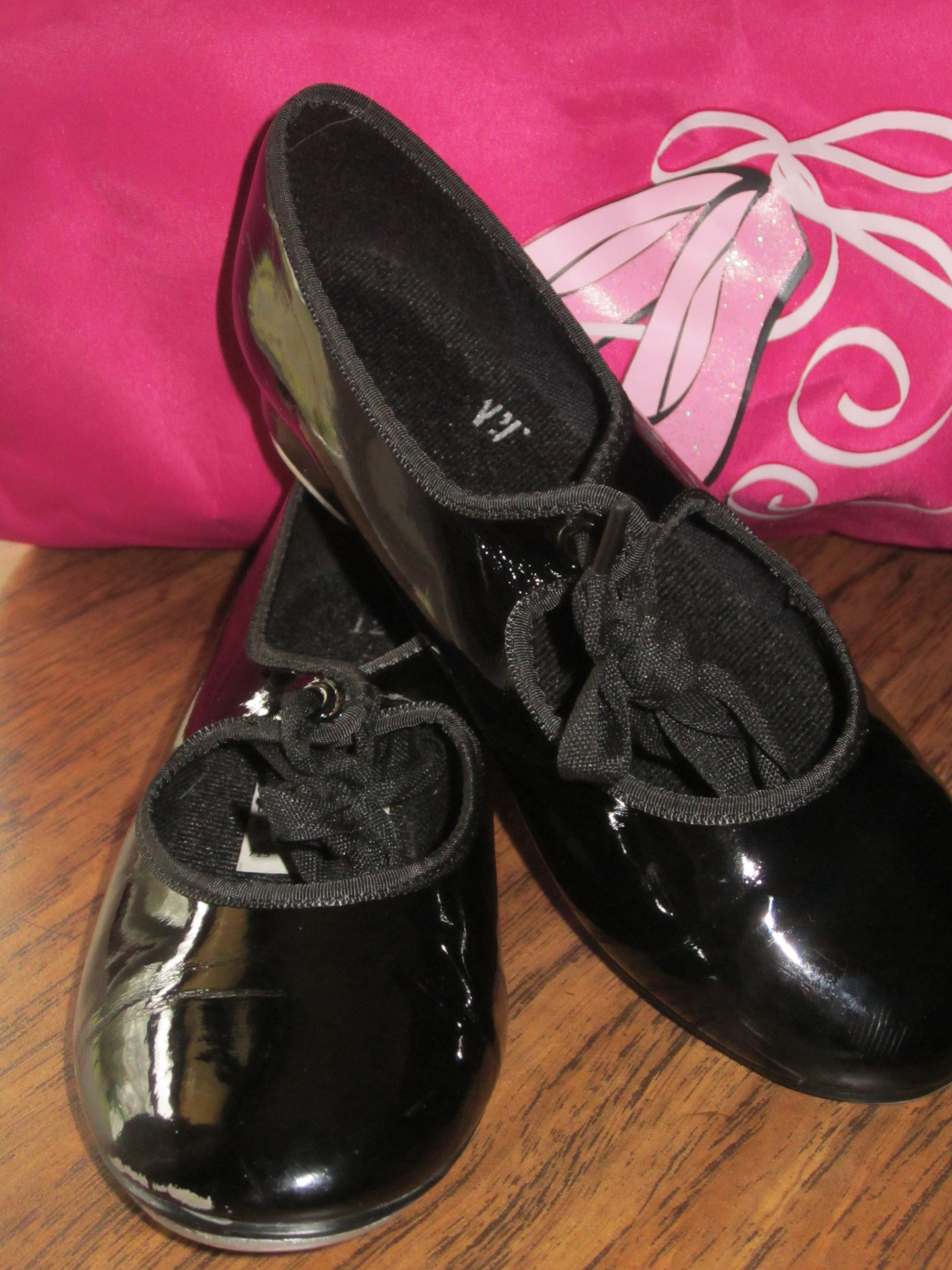
She tossed open the box from Payless and snatched out the two shiny black shoes with metal plates on the bottom.

Tap shoes: Her little six-year-old heart’s great desire! She slipped her feet in and immediately started performing.

Then my eight-year-old crammed her feet into the shoes and put on a grand show.  My three-year-old even stepped into the shoes and shuffled round the kitchen a bit.012

They were like magic shoes, all shiny and loud, and they transformed any girl into a superstar on a grand stage.

On the first day of tap lessons, my girl clip-clopped her way into the dance studio along with the other excited students. I heard them take those first steps onto the wooden floor, hesitant at first, and then heard them break into freestyle tap routines of their own.

How could they resist?  This studio and those magic shoes made them all feel like Gene Kelly or Fred Astaire.  It was inspiration and joy and visions of grandeur accompanied by tip-tapping rhythm.

Then the lessons began, and the order to contain the disorder…the structure, the routine, the method to the madness.

It’s a slow realization for a kid, but eventually it comes: tap dancing doesn’t just mean slamming your feet on the floor in any combination of athletic flailing you choose.

You have to practice.

Bummer.

You have to watch and listen and then move in just the right way.  You have to drill and rehearse and repeat.

For a week, I asked my daughter to “shuffle” and “flap,” and practice, practice, practice.  Then, because I know absolutely nothing at all about tap dancing, I asked her if she was doing it right (because, after all, how was I to know?).

She rolled her eyes at me occasionally and huffed loudly at times, blowing her bangs up off her forehead in exasperation.

Reluctantly or not, though, she practiced.  When she returned to class and shuffled correctly and the teacher announced, “You all must have been practicing,” that was the reward.  My daughter beamed.

She loves tap, she declares.

Life and tap-dancing, they can convince us all at times that inspiration is all we need.  They can woo us into running on spiritual and emotional highs.  We’re at our best.  It’s fun and grand (and noisy perhaps).  And the lessons and the practice come easy.

Quiet times are easy, too, when God is speaking so clearly we can hear His voice ringing in our ears. When that time with Him is overflowing, it’s no great discipline to carry our bucket to the Well.

And we have these seasons with Him, where we’re hearing and learning and it’s thrilling to be used and useful, to see ministry grow and faith deepen, to see prayers answered and miracles happen, to read God’s Word and actually feel it tingling in our souls.

It’s a slow realization for us, perhaps, but eventually it comes: This walk with God isn’t always easy and the emotions and the highs and the results we expect aren’t always immediate or obvious.

Truly, it’s discipline.

It’s waking up, pouring that cup of tea and opening up that Bible not because it feels so good, but because this is how we grow over time.

It’s going to church even when the sermon isn’t about your needs and singing even on days when it’s hard to really mean the words on the screen.

It’s praying even when you don’t sense the connection and it feels like silent heaven and empty air.

It’s committing to Bible study even when you’re busy, tired, distracted, complacent and just downright don’t feel like it.

Yes, it’s practice and rehearsing, repeating, growing slow and steady, committing and then choosing not to give up–not today, not tomorrow, not a week from now.

It’s feeling the desperation of the deer panting after water and heading to the stream even when it’s elusive and difficult to find.

And like, Elijah, it’s listening for God’s voice even in despondency, depression and despair.  He stood on that mountain and listened for God.  Even after the mighty wind passed by, the earthquake ceased shaking, and the fire abated, still Elijah listened.

He could have given up: God’s not speaking.  I couldn’t see Him in the big and the obvious, the glorious and spectacular, the emotional or the ear-shattering.

He could have headed back into the cave and abandoned the effort.

And then he would have missed it.

No, Elijah continued to stand, waiting, listening, still.

And God spoke.

Sometimes it’s there in the quiet that we hear God simply because we haven’t given up.  We’ve continued to stand in His presence beyond the silence, faithfully and determinedly waiting…listening…still.

Beyond the point of inspiration, fun, glory, and ease, we discipline ourselves to listen.  And so we hear.

Heather King is a wife, mom, Bible Study teacher, writer and worship leader.  Most importantly, she is a Christ follower with a desire to help others apply the Bible to everyday life with all its mess, noise, and busyness.  Her upcoming book, Ask Me Anything, Lord: Opening Our Hearts to God’s Questions, will be released in the Fall of 2013!  To read more devotionals by Heather King, click here.

Copyright © 2013 Heather King

Altars of Uncut Stones

Originally published April 16, 2012

I picked up my daughter’s yellow spring jacket and felt weight, heaviness where it shouldn’t be.  Clearly she had stuffed her pocket at the park with her latest treasure.

Curious, I slipped my hand into her pocket and pulled out . . . a rock.  Two rocks actually, one for each pocket.

They weren’t gems, either.  No sparkles or beauty.  No monetary value.020

They were plain ordinary gravel, no different than the layer of rock on my driveway.  In fact, the one crumbled into my fingers with the slightest pressure.

I sighed.  She had been toting home rocks for about two years now.  Everywhere we went, some pebbles, gravel, or smooth stones caught her attention and ended up in her pockets.

She has even tried to remove stones from the paths at Colonial Williamsburg and the zoo and once tried to haul away a cement block from the local museum where its grand function was to hold open the door.

I put my foot down about those.

But if it fits neatly into the pocket of her jacket, she’s likely to tuck it away and add it to her “rock collection.”  Perhaps she’ll even give it a name, which usually ends up being something like “Rocky” or another equally creative moniker.

To me, they are plain, ordinary, maybe even ugly rocks.  To her, they are treasured collectibles.

She’s not the only one who finds beauty in simple stones.  God loves them, too.

As they crossed over the Jordan River, the Israelites obeyed God’s instruction, picking up 12 stones from the river bed and lugging them up the embankment onto dry land.  God told them to use those stones to build an altar.

More specifically,

“an altar of stones.  You shall wield no iron tool on them; you shall build an altar to the Lord your God of uncut stones. And you shall offer burnt offerings on it to the Lord your God, and you shall sacrifice peace offerings and shall eat there, and you shall rejoice before the Lord your God” (Deut. 27:5-7 ESV)

Their peace offerings and sacrifices, their worship and rejoicing before the God who had carried them into the Promised Land, may have seemed more fit for an altar of finest gems.

Perhaps their greatest artisans could have finely cut diamonds, emeralds and rubies into an altar fit for worship of the Most High God.

Or, if they had to use river rocks, at the very least they could have chiseled and carved until the altar looked like a marble statue.

Yet, God was clear.  Stones, simple stones, uncut by any human tool, formed the altar fit for the offerings of His people.

Why did God even care about a detail so small?  According to Him, “If you make an altar of stone, you shall not build it of hewn stones, for if you wield your tool on it you profane it” (Exodus 20:25).

To God, human construction on the altar stones made them unholy and profane.

That’s because God knew the danger implicit in cut stones and man-made bricks.  The moment we begin to adorn altars with human effort is the moment we shift the focus off of the God we praise.

We become idolaters.  Our worship becomes profane, admiring the human talent that made the vessel or cut the stone.

This is what God accused the people of doing in Isaiah:

I spread out my hands all the day to a rebellious people, who walk in a way that is not good, following their own devices;a people who provoke me to my face continually, sacrificing in gardens and making offerings on bricks” (Isaiah 65:2-3 ESV).

Israel ignored God’s mandate and chose instead to offer their sacrifice among garden flowers.  They had rejected simple stones in favor of brick constructions.

Israel wanted to worship God their own way and on their own terms.  His instructions seemed superfluous and unnecessary.

In the same way, God sometimes overturns our expectations of adequate offerings and suitable worship.

He desires the simplicity of an obedient heart.

We think He needs more.  

So, we hold back our offerings until they are “fit” for Him.  We hide in the sanctuary pews until we have more to give.  We think other worshipers, who are more talented and more rehearsed, give gifts more worthy.

It isn’t, however, about being the best, most talented, or most qualified; it’s about being called.  Yours is the offering He desires.

There is beauty in the uncut stones of our worship.  It’s never about the show, never about our own talent or training; it’s not about looking good or fitting in, or processing our worship into acceptable forms—all human additions that shift focus off God and onto human ability.

Instead, it’s about responding to God in pure uncut adoration.

Heather King is a wife, mom, Bible Study teacher, writer and worship leader.  Most importantly, she is a Christ follower with a desire to help others apply the Bible to everyday life with all its mess, noise, and busyness.  Her upcoming book, Ask Me Anything, Lord: Opening Our Hearts to God’s Questions, will be released in the Fall of 2013!  To read more devotionals by Heather King, click here.

Copyright © 2013 Heather King