Weekend Walk, 08/13/2011

Hiding the Word:

Welcome back to my verse memorizing partners!  I’ve been working for two weeks on a block of verses in Psalm 145.  Here’s my text all put together:

The LORD is trustworthy in all he promises and faithful in all he does.
The LORD upholds all who fall and lifts up all who are bowed down.
The eyes of all look to you, and you give them their food at the proper time.
You open your hand and satisfy the desires of every living thing.  
The LORD is righteous in all his ways and faithful in all he does.

The LORD is near to all who call on him, to all who call on him in truth.
He fulfills the desires of those who fear him; he hears their cry and saves them.
Psalm 145:13b-19

What a powerful reminder of God’s faithfulness to keep His promises and to provide for us and deliver us as we have need.  More than that, He is near to us even during the difficult times when He feels far away.
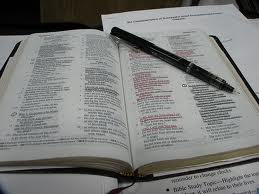
I came across so many powerful verses in my reading this week, but I think the new verse I’m choosing is:

Humble yourselves, therefore, under God’s mighty hand, that he may lift you up in due time. Cast all your anxiety on him because he cares for you.
1 Peter 5:6-7

My commentary says “humble yourselves” could be translated, “allow yourselves to be humbled.”  Humbling hurts and it’s certainly hard to submit to.  But Peter gives us two utterly powerful assurances—God will eventually lift us up and God cares for us.

What verse have you chosen to meditate on and memorize this week?

I use The Bible Knowledge Comentary, New Testament Edition, by John F. Walvoord and Roy B. Zuck.

Weekend Rerun:
You Have Stayed Long Enough, first published February 18, 2011

It’s official.  For the first time, one of my kids has strep throat.  I was sitting with my daughter today, waiting for the results of the strep test and she complained, “It just isn’t getting better, mom.  How long before I get better?”  Now, I know very well that after a few doses of the “pink medicine” her throat won’t be hurting any more.  But, when you’re the sick one, wellness just can’t come quickly enough.

Have you ever asked God—”How long?”  How long before I’m well?  How long before You rescue me?  How long before I see the fruit of my labor? How long before we receive what You have promised?

These aren’t questions unique to our impatient modern culture.

  • Psalm 35:17 How long, Lord, will you look on? Rescue me from their ravages, my precious life from these lions.
  • Habakkuk 1:2  How long, LORD, must I call for help, but you do not listen? Or cry out to you, “Violence!” but you do not save?
  • Psalm 13:1-2  How long, LORD? Will you forget me forever? How long will you hide your face from me?  How long must I wrestle with my thoughts and day after day have sorrow in my heart?  How long will my enemy triumph over me?

Whether it is waiting for God to rescue us or waiting for God to fulfill a promise to us, it’s hard to trust in His timing.  We tend to tap our foot with impatience after a while and begin to think He must have forgotten about us.  I myself have prayed with the Psalmist, “Be pleased to save me, Lord; come quickly, Lord, to help me” (Psalm 40:13).

You can be honest with God and share with Him your desire for a quick intervention.  He created time and knows exactly what pressure time places on us.  Still, after we’ve cried out to Him to “Come quickly, Lord!,” then we need to trust Him to deliver us at exactly the right moment.  He doesn’t always intervene when we expect it or desire it, but ultimately He is always “right on time.”

In the meantime, do not give up hope that your deliverance will come.  As Psalm 27:13-14 says, “I remain confident of this: I will see the goodness of the LORD in the land of the living.  Wait for the LORD; be strong and take heart and wait for the LORD.” Notice that waiting doesn’t necessarily mean we are doing nothing!  Nor does waiting mean asking God for something and then feverishly trying to make it happen on our own.

While we are waiting, we need to “be strong and take heart.” Waiting itself is an active discipline of seeking God and investing more and more in our relationship with Him, making sure we are focusing on His face and not on our need.

About three months into their journey between Egypt and the Promised Land, the Israelites arrived at Horeb, where they camped out for about a year.

Really meditate on this for a moment.

The people who left Egypt eager for no more than a one-month trek across the wilderness to the Promised Land had already been journeying for three months.  Then, they arrive at this mountain and God doesn’t move them again for a year.   They didn’t keep their things in their backpacks or set off in the direction of Canaan on their own.  They set up camp and actively waited for God to move them on.  During their waiting, Moses went up on the mountain and entered into a covenant with God, receiving the Ten Commandments.  It was a time of great spiritual intimacy for the nation as they saw God’s glory displayed on that mountain in powerful ways.

But, they didn’t stay there forever.  In Deuteronomy 1:6-7, Moses says, “The Lord our God spoke to us at Horeb saying, ‘You have stayed long enough at this mountain.  Turn and set your journey and go to the hill country of the Amorites . . .”

Only God knows the answer to your question, “How long?”   Just remember that waiting doesn’t mean doing nothing.  For my sick daughter, waiting means taking her medicine, doing what she is responsible for doing, and letting the medicine work.  If God has you in a season of waiting, be strong, take heart and actively wait for Him, using every moment of this time at the mountain to seek greater intimacy with Him and eagerly await the display of His glory.

And when He says to you, “You have stayed long enough at this mountain.  Turn and set your journey and go,” then go!  Break camp and move on!  Don’t get so comfortable at the mountain that you neglect to continue the journey.

Heather King is a wife, mom, Bible Study teacher, writer for www.myfrienddebbie.com and worship leader.  Most importantly, she is a Christ follower with a desire to help others apply the Bible to everyday life with all its mess, noise, and busyness.  To read more devotionals by Heather King, click here.

Copyright © 2011 Heather King

Where is the Whole World?

I sought the LORD, and he answered me; he delivered me from all my fears.
Psalm 34:4

During my second pregnancy, I went happily to my 20-week ultrasound and learned we were having another girl (the joys of pink!) and that she was healthy and developing well.

Except she was small.  They said smaller than she should be and I’d need to go get a 3-D ultrasound at a specialized neonatal center.  But, not to worry, they were sure it was okay.  This was just to be safe.

One 3-D ultrasound later, the technician sent back the report.  She was healthy.  Good heart.  Good blood flow.  Organs just fine.  But she was small.  Too small.  It was probably okay, but just to be safe I had to go for weekly stress tests for the remainder of the pregnancy and some more ultrasounds.

Every stress test was fine.  She was moving (boy was she moving!) and she was growing, but not fast enough.  She was just too small.  But, no need to worry, they said, because she was probably just fine; it’s just that they needed to induce her a week early so they could figure out why she was so small (under 5 pounds they said) and help her grow outside the womb.

We packed a bag for the hospital and let the Pitocin get to work.  Induction was terrible; the worst of my three deliveries.  In the end, though, Lauren was born.  I didn’t have my glasses on.  I couldn’t see her.  Was she okay?  Was she too small?  Was she in danger or sick or worse?

My husband served as my eyes for me.  At first he said nothing; she was purple they told me later from the chord double-wrapped around her neck. But then she cried.  And my husband said, “She’s beautiful.  She’s perfect.”

The NICU pediatrician who had been on call to assist at the delivery of this at-risk baby peeked over the nurses’ shoulders and left the room without a word.  The nurse laid her on the scale.  She weighed 6 pounds 13 ounces, my one-week-early little one, too big for the preemie outfits we’d picked out for her.  God had brought her to us safe, healthy, and gorgeous and we praised Him, so tearfully thankful for His protection over our baby girl.

Between that first announcement that our baby was too small and the moment we saw her, we fought against fear.  My husband and I held hands and prayed for her each night.  We calmed our fears and shrugged off ultrasound results.  Then I’d sit at the next appointment and be told once again that she was just too small. All the anxiety we had kept at bay rushed in with renewed strength.

Someone asked me during that time, “You’re not freaked out about this, are you?”

I didn’t know.  Was I freaked out?  Was I okay?  It wasn’t the same from day to day or minute by minute.  I was fine.  I was scared.  I was trusting.  I was fearful.  I was relying on God.  I was unbelieving.

At that time, Tim Hughes was singing on the radio:
When all around is fading, and nothing seems to last
When each day is filled with sorrow
Still I know with all my heart
He’s got the whole world in His hands
I fear no evil, for You are with me
Strong to deliver, mighty to save

The whole world is nestled in the safety of His hands.  My world that I saw every day.  The world of my unborn baby girl, whose somersaults I could only envision and whose face I couldn’t wait to see.  Yes, her world was in His hands, too, and so I had to trust her to His care.

Isaiah wrote: “So do not fear, for I am with you; do not be dismayed, for I am your God. I will strengthen you and help you; I will uphold you with my righteous right hand” (Isaiah 41:10).

Held in His hands as I am, still there are so many reasons to tremble.

For bills and jobs and relationships, for school, health, my kids’ friendships, safety and their faith, for my daughter not getting lost, for school bus rides and mean girls, for conflict, for things I forgot to do, for the decisions I make as a mom and how often I mess it all up, for the future, for the unseen, for the nosebleed that I’ve blown up into a brain tumor, for what’s happening tomorrow and what’s happening ten years from now, for the divorces I’ve witnessed and how did it all happen anyway, for the things I said and the things I didn’t say.

But when I’ve lost my breath because of worry and fretted over a solution only to find no visible answer, nothing I can do, and no way to fix the problem or avert disaster, then I remember hope.

Oh yes, now I remember hope.

Fear says, “There is no way out of this.”
Hope says, “God is going to make a way.”

Fear tells me “You’ve messed this up so badly there’s nothing that can fix it.”
Hope says, “I have a Redeemer who can heal and restore even what is dead.”

Fear whispers, “What you can see is all there is and that’s not enough.”
Hope shouts, “The Lord created the universe with His words.  He can create something out of nothing.”

Fear argues, “You’ve been abandoned.  God doesn’t even care that you are under attack.”
Hope assures me, “You are held in His hand, carried through hardship by His open palm.”

This world, my life, the daily schedule, the care of my children, the bills and the doctor’s appointments, and all there is remains outside my control.  That’s why there is fear.  It’s ridiculous pride and foolish unbelief that makes me believe God can’t possibly care for me and that I could do better on my own.  So I worry because I’d like to control the uncontrollable.

Fear isn’t an enemy you defeat once and then mount on your wall like a trophy.  It’s a sneaky foe, inching it’s way into your life at the slightest provocation.  It creeps into your thoughts at night and asks to be your companion as 3:00 a.m. and then 4:00 ticks and tocks by on your nightstand alarm clock.

In the night as you rumple the covers with your constant turning, when the bill comes, when your child steps onto the school bus, when you sit in the doctor’s office, when the lawyer calls . . . remember hope.  It’s the ultimate weapon in this battle against fear.  We have hope because we’re in His hands and so is our whole world.  Our kids in His hands.  Our finances in His hands.  Our jobs, our marriages, our friendships, our ministries, our careers, our future—in His hands.

We say with the Psalmist, “Even though I walk through the darkest valley, I will fear no evil, for you are with me” (Psalm 23:4).

Heather King is a wife, mom, Bible Study teacher, writer for www.myfrienddebbie.com and worship leader.  Most importantly, she is a Christ follower with a desire to help others apply the Bible to everyday life with all its mess, noise, and busyness.  To read more devotionals by Heather King, click here.

Copyright © 2011 Heather King
And Then What Happened? Part II

“Lord, You have heard the desire of the humble; You will strengthen their hearts.  You will listen carefully”
Psalm 10:17

You can read “And Then What Happened? – Part I” here

Part II: Fretting Is Not the Same as Praying

I have some things in my life even now that I find myself pleading with God about.  Some suspense-filled situations, some impossible dreams that I’d like to see God miraculously fulfill, some questions about what will happen next.  Is everything going to work out the way I desire?  Will God take care of this need?  What is it that God has planned for me?

The suspense is killing my suspense-hating heart.

So, my prayers begin to take on some urgency.   More than that, when I pray, my words sound more like a child begging for candy in the checkout line rather than the trusting requests of a content child.  “Please, please, pleeeeeeeease, may I have this?  Please will You answer this request the way I would like?  It would all be so perfect if You would work out all these details so this could happen.”

What I am asking for is not as selfish as a chocolate bar or as petty as a $2 Princess camera that does little more than click when you press a button—the novelty items that my children find oh-so-tempting.  I’m asking out of need and out of a weighty burden for someone else.  It’s not what I’m requesting that’s the problem; it’s how I’m asking.

Then, changing my praying attire from pig-tailed toddler to business-suit lawyer, I present my case to God.  “This is the evidence showing why the verdict should go my way.  I have exhibits A, B and C to back me up here. Please decide in my favor.”

As a backlash to my heart’s desires, my rational side gets involved in this debate.  Attempting to protect myself from disappointment, I say to my heart, “These situations are impossible.  Period.  End of Story.  There is no way that things will work out the way you desire.  The circumstantial evidence against you is just too overwhelming.  You’ll just have to settle for less.”

I accept those highly logical arguments for a time, but knowing that God can do anything, even the impossible, I fall down to my knees, squint my eyes, clasp my hands together and go back to pleading.  “Oh, please, please, please, please . . . ”

Years ago, I found myself “praying” this way most of the night every night.  Begging and arguing and explaining to God.  I talked and talked and talked some more to Him.  When I’d said everything I had to say, I just said it all over again.

Was this truly prayer?  Or was it instead simply fretting in front of God’s throne?

It’s not that God requires us to pretend we’re all right even when we’re not, to hide our disappointment or anger or fear and act like faith-filled super-Christians.  David and Job and Habakkuk all poured out ugly truth in their conversations with Him.  Psalm 51:6 tells us, “Behold, You desire truth in the inward parts” (NKJV).  With God, we can always be honest.   He knows what’s hidden in the dark corners of our heart anyway.  Telling Him how we feel, however, invites Him to do something about it, to speak truth back to our hearts.

I wasn’t just being honest with God, though,  I was begging and pleading.  I was doing all the talking.  As Chris Tiegreen writes, “Don’t confuse pleading with God and believing God.  Both are appropriate, but only one qualifies as faith.

Instead of having faith that God heard my request, that He would work on my behalf, always working things out for my good and for my benefit, that He was not only able to do the impossible, but He was also willing, even desirous, to bless me and shower me with affection—instead of praying with that faith, I was pacing back and forth at His feet, more focused on my request than on my Answer.

That explains why Philippians 4:16 wasn’t working out for me: “Be anxious for nothing, but in everything by prayer and supplication, with thanksgiving, let your requests be made known to God.”  I was making prayer and supplication, I was letting my requests be made known to God, but I prayed out of anxiety and worry rather than with gratitude and worship.  Chris Tiegreen also wrote, “Faith allows us to rest,” and this certainly wasn’t resting.

I had justified my pleading, telling God I was willing to be the persistent widow, presenting my case to the Judge day after day after day until He granted my request.  Yet, somehow persistence for me had become inextricably linked with a lack of faith.

So, I followed a suggestion and created a penny cup.

Needing a physical way to move prayers out of my heart and into God’s hands and then leave them there, I placed an empty mug on my desk.  Every time I found a penny (which happens more often than you might realize!), I placed the penny in the cup and prayed for that one specific request.  I didn’t spend hours repeating my petition every night.  I really only prayed about it when I moved the penny out of my hand and into the pile of other coins.  And I was persistent.  My pile of copper grew as I laid my request at His feet time after time.  Yet, I didn’t pick any of those pennies back up.  I left them there.  I didn’t linger, arguing, explaining or pleading.  I said a simple prayer, “God, please work the miracles necessary in this situation.  I need Your help.  Thank You that You work on my behalf.  Amen.”   Clink went the penny into the cup.  Away I walked, trusting that God could take care of my need.

Somehow, even though what’s going to happen is still unseen, even though the circumstances I’m in still remain unresolved, I feel less plagued by suspense.  Instead, I feel reassured.  I will likely continue to groan at to-be-continued television episodes and I will surely still flip to the back of the book to see how it ends before reading the first page.  I hate cliffhangers and suspense and dramatic tension as much as ever.

About our Christian walk, however, Paul wrote, “So then, just as you received Christ Jesus as Lord, continue to live your lives in him” (Colossians 2:6).  He tells us what will happen next.  It ends the suspense and resolves all cliffhangers.  We will keep living our lives in Christ today, tomorrow, and the day after that.  All of the specifics may be unclear, but the bottom line remains the same.  We live in Emmanuel, God With Us.  And when I pray in faith rather than begging and pleading, I remember that the God who is with me will take care of it.  He’ll walk me through.   It may or may not be what I’ve desired or planned, but it will always be in His capable, trustworthy, compassionate hands.  “The Lord is good to those whose hope is in Him, to the one who seeks Him; It is good to wait quietly for the salvation of the Lord” (Lamentations 3:25-26).

Heather King is a wife, mom, Bible Study teacher, writer for www.myfrienddebbie.com and worship leader.  Most importantly, she is a Christ follower with a desire to help others apply the Bible to everyday life with all its mess, noise, and busyness.  To read more devotionals by Heather King, click here.

Copyright © 2011 Heather King

Your Comforts Delight My Soul

Last night I had a terrible dream that I was preparing to lead worship—sitting at the piano all ready to go—when I saw my cell phone bill.  Obviously, in dreams it makes total sense that I’m checking my mail just before the music starts.  Anyway, I looked at that bill and it was $1,717. Then the music started and I couldn’t worship.  I couldn’t figure out what words to sing or what notes to play.  I was playing a different song than the congregation was singing.  It was a disaster.

Obviously, I woke up in a cold sweat from this dream (who wouldn’t be freaked out by a cell phone bill and public disaster like that) and couldn’t get back to sleep for a while.  I was anxious and worried about something that only existed in my dreamworld.

Today, as I was doing my devotions, I was reminded of how so much of my worry is about “fantasy situations”—the what if’s I stress over that never actually come true.  These anxious thoughts also always affect my worship.  It is just not possible to fret and praise at the same time.

In her book, Me, Myself and Lies, Jennifer Rothschild notes that the Old English and Old High German origins of our word “worry” mean “to strangle.”  Indeed, worry strangles us, choking out hope, joy, trust and, as it says in her book, “the life-giving truth that should be filling our thought closets” (p.23).

The Psalmist wrote, “Search me, O God, and know my heart; test me and know my anxious thoughts, See if there is any offensive way in me, and lead me in the way everlasting” (Psalm 139:23-24, NIV). I have always loved that verse and I copy it into my journal every time I read it in my devotional time.  Yet, it’s not something I find easy to do.

It’s difficult sometimes to hand over our thought lives to God.  Even though we know worry harms us and our relationship with God, we don’t want God to search our hearts and test our thoughts.  Somehow worrying makes us feel in control and we feel that handing over our anxieties means truly relinquishing any modicum of control we have in our lives.

Thomas Merton said, “Anxiety comes from strain, and strain is caused by too complete a dependence on ourselves.”  It’s true that when it’s broken down, worry essentially is a lack of trust or dependence on God.  We’re telling Him—“we know that Scripture promises us You will provide, You will comfort, You will bring peace, You will be our Advocate, but I’d rather just depend on my ability to fix my circumstances.  Thanks anyway, God”

Chris Tiegreen in Worship The King goes one step even farther than that.  He calls our fear “anti-worship.”  In his devotional, he writes:

But we who worship God cannot praise him with such insecurities.  Our fears are a form of anti-worship–a clear declaration that our God might not have promised us enough, or might not be able to follow through on what He has promised.  Yes, He will let us go through hard things, but never outside of His timing or beyond His protection. So worship Him.  And don’t worry about it.

Refusing to worry, fret, stress, fear and be anxious doesn’t come to us naturally.  It is a discipline of the heart and mind.  We must reject anxious thoughts, deny our emotions the opportunity to take over our lives, and fill up with the truth of God’s Word and His promises to us.

In Psalm 94:19 it says, “In the multitude of my anxieties within me, Your comforts delight my soul.” Take delight in His comfort today and consciously choose trust over fear.

In Kathryn Scott’s song, At the Foot of the Cross, she sings, “I lay every burden down at the foot of the cross.”  That’s the best place for those burdens to be—not on our back, but at His feet.

***************************************************************************************************

Heather King is a wife, mom, Bible Study teacher, writer for www.myfrienddebbie.com and worship leader.  Most importantly, she is a Christ follower with a desire to help others apply the Bible to everyday life with all its mess, noise, and busyness.  To read more devotionals by Heather King, click here.

Copyright © 2011 Heather King