Passionate Pursuit

The other night, I poured myself a cup of hot tea, kicked off my shoes, picked up my knitting and settled deep into the sofa to relax with a movie.  Something about fall reminds me of the scenes in Anne of Green Gables as she strolls along the tree-shaded pathways and the leaves reflect the changing seasons.
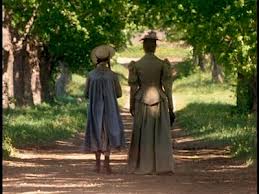
So, I put in the DVD of the Anne of Green Gables sequel and watched one of my favorite stories play out on my television once again.

As I sipped my tea, I realized that what seems so romantically endearing and compelling about her love story with the straight-talking Gilbert Blythe is his willingness to pursue her.  He may have fallen in love with her in grade school when she broke her slate over his head after he called her “Carrots,” yet he waited for her.

And waited.

And waited.

He cheered her on and encouraged her success, asked her to marry him, was rejected, waited some more, got sick and nearly died, and asked again.

Maybe that’s the great romance we’ve all dreamt of or longed for as school girls or teens or even grown women.

And even while part of me wants to scream at Anne through the television to drop all of her “high-faluting’ mumbo jumbo” and just realize already that love is right there in front of her, part of me is entranced.

It’s true in all my favorite stories, every book I own with its cover falling off and the pages worn from me turning down the corners for want of a bookmark: Anne of Green Gables, Pride and Prejudice, Emma . . .

In each story, the theme is the same.  The girl remains comfortably clueless that a man is in love with her, but he is captivated by her beauty and strength of character, her wit, her capacity to change and grow . . . and he pursues her relentlessly until she finally discovers she loves him in return.

In her book Captivating, Stasi Eldredge says:

“We desire to possess a beauty that is worth pursuing, worth fighting for, a beauty that is core to who we truly are. We want beauty that can be seen; beauty that can be felt; beauty that affects others; a beauty all our own to unveil.”

Perhaps many of us do long for a beauty that captivates—-a beauty worth pursuing. Like Anne or Elizabeth or Emma, we want to know that we are worth noticing, worth waiting for, worth sacrificing for, worth fighting for . . . just worthy.

So that when the world beats us down with reminders of standards we can’t meet and the girl next door makes us feel ugly and clumsy with her model-like beauty and when we’re run-down from dishes and laundry and carpools and mess . .  .we still feel that message deep down that we are captivating and we are loved.

Yet, no matter how lovely we may be, with the God-beauty of our character inside where it counts or with sparkling, head-turning physical beauty, we aren’t always pursued.  We don’t, after all, live in a historical romance novel or in Jane Austen’s world of matchmaking and marriages.

It just doesn’t always turn out that way.

And yet pursuit is always part of our Great Romance.

Psalm 45:11 says,

Let the king be enthralled by your beauty;
    honor him, for he is your lord.

God doesn’t have to romance or woo us.  He could remain distant and unmoved.  Surely the beauty He sees in us isn’t really so worthy of His attention and He could toss out a marriage proposal and conclude with, “take it or leave it.”

Yet, He bends low and tenderly calls, He watches as we trample after worldly enticements and then calls us back time after time.

Like Hosea relentlessly chasing after his wife, the wayward Gomer, so God says:

“Therefore I am now going to allure her;
    I will lead her into the wilderness
    and speak tenderly to her.

And more than any of that, God Himself laid aside the glories of heaven to walk among us, to live for us, to die for us, and to make a way for us to spend eternity with Him.

That’s love.  That’s pursuit in the most wildly passionate and extravagant way, more than any bouquet of flowers or poetic marriage proposal.

Stasi Eldredge reminds us that:

“The story of your life is also the story of the long and passionate pursuit of your heart by the One who knows you best and loves you most”

Remember today that, while you may not be perfect or totally worthy, still God loves you and is enthralled with the beauty He created in you.

Heather King is a wife, mom, Bible Study teacher, writer and worship leader.  Most importantly, she is a Christ follower with a desire to help others apply the Bible to everyday life with all its mess, noise, and busyness.  Her upcoming book, Ask Me Anything, Lord: Opening Our Hearts to God’s Questions, will be released in the Fall of 2013!  To read more devotionals by Heather King, click here.

Copyright © 2012 Heather King

When I Fell In Love

I can’t say exactly when I fell in love with this man.

He was on stage the first time I saw him, portraying Mr. Elton in a production of Jane Austen’s Emma (my favorite), and I was an audience member.   He delivered the first line of the whole play while pretending to read from a book:

“It is a truth universally acknowledged that a single man in possession of a good fortune must be in want of a wife.

Immediately, I laughed aloud, until I realized that no one else seemed to get the joke.  More than a little uncomfortable, I slumped down in my chair.

(The first line of Pride and Prejudice was ‘read’ by a character in Emma.  There now, aren’t you laughing?  This is the kind of thing that strikes me as hilariously funny.)

I actually met him a week later after a college worship service.  Someone in the crowd pointed to the guy up front with the guitar.  “See that guy,” he said, “You just saw him on stage last week.”  I think I even confessed to being the girl who laughed at the first line of the play all by my lonesome self.

Unbeknownst to me, this young guy who led worship and the drama ministry and acted on stage in productions based on my favorite literature had just prayed a daring prayer two weeks before.

He told God he wasn’t looking for a relationship any more.  He was content to be single until God hit him over the head with a 2 x 4 and told him “Thou shalt marry this girl.”

There I was two weeks later being introduced to him.

And a week after that, I was the new pianist on his praise team (and he’s still my worship leader nearly 15 years later).

I fell in love with the way he used his gifts and talents for God’s glory.

There was his calmness, too.  I loved my dad, but life with him wasn’t calm; it was loud much of the time and sometimes downright volatile.  This man, though, measured his words with wisdom and careful thoughtfulness.

And the first time he dropped the word “obsequious” into a sentence effortlessly, I think I experienced whiplash. (I’m a sucker for SAT words).

Add to that his quick and witty humor that kept me giggling endlessly in the corner of the praise team section, and I realized that he was smarter than me and that was okay.

We’ve never been an opposites-attract kind of couple.  We’re probably two of the most alike people who God matched together.

Except for the fact that he only cares about doing what’s right and not whether it pleases anyone else while I’m a people-pleaser.

And the fact that he can rest and take time (perhaps . . . dare I say it . . .procrastinate) and I’m neurotically pushed to do and do and do relentlessly, first, fastest, and rest when you die.

I can’t say when it happened, but at some point I fell in love.

I can’t speak for him and say exactly why he fell in love with me.  Nor can I say exactly why God loves any of us either, surely not my awkward, nervous, uptight, worrying self.

Amazingly, though, this isn’t a “fall in love” kind of love at all.  God doesn’t grow to love any of us over time or awaken one morning and realize how much He cares.

He loves us.

It really is the beginning and the end of our story.

Like the first time I saw my daughters, I loved them in an instant.  I didn’t slowly grow to appreciate their character or develop feelings for them over time.

In Jeremiah, God declares, “before I formed you in the womb I knew you”  and David similarly prayed, “you created my inmost being; you knit me together in my mother’s womb” (Jeremiah 1:5, Psalm 139:13).

God loved you before you squinted your eyes at the first burst of light, screamed out and got cleaned off, bundled up and handed to your mom.

He loves you when you feel loved and when you feel overlooked, when you received a blessing and when you endured a trial.  This love of his doesn’t wax or wane, change or alter or depend on us and what we do or say or feel or think.

We’ve never been good enough, pure enough, beautiful enough, or wise enough to earn it.

But even though we’re unworthy, even when we’ve strayed, even when we’ve felt that seemingly incurable distance from Him or poured out in painful honesty what’s troubling us…

Still He loves.

He says, “I have loved you with an everlasting love; I have drawn you with unfailing kindness” (Jeremiah 31:3).

And what can we do with this everlasting and unfailing love, so amazing and confusing because it’s far more than we deserve?

“We love because he first loved us” (1 John 4:19).

How can you respond to God’s love today?

Heather King is a wife, mom, Bible Study teacher, writer and worship leader.  Most importantly, she is a Christ follower with a desire to help others apply the Bible to everyday life with all its mess, noise, and busyness.  Her upcoming book, Ask Me Anything, Lord: Opening Our Hearts to God’s Questions, will be released in the Fall of 2013!  To read more devotionals by Heather King, click here.

Copyright © 2012 Heather King

Weekend Rerun: I’m Not A Boy!

I’m not a boy.
I’m not a good dancer.  I’m not easily offended.  I’m not a blonde or a red-head.
I’m not tall.
I’m not artistic.  I’m not quick to cry.
I’m not usually a fan of “chick flicks.”
I’m not much of a TV watcher.
I’m not from a small family.
I’m not a quick decision maker.
I’m not an extrovert.  I’m not athletic.  I’m not fond of “outside.”

We all define ourselves by lists of “I ams” and “I am nots.”

“Are you a Christian?”
I am.

“Are you fond of sports?”
I am not.

Is it any wonder that God has a list, too?  His “ams” and “am nots” through Scripture establish His character and give us reliable assurances in times of trouble.

We rest in safety because we know He is “I AM.”

It’s the most powerful declaration of God’s identity in Scripture, when He tells Moses His name: “I AM WHO I AM . . .This is my name forever, the name you shall call me from generation to generation” (Exodus 3:14, 15).

My Bible notes that His name could also be read as: “I WILL BE WHAT I WILL BE.”

He is I AM and I WILL BE.  He is eternal.  He has existed before our human history began and He has walked through the entirety of our time on this planet and will still remain forever.

So, we can trust Him.  We can place in His capable hands all that frightens us because He knows where we have come from and where we are headed.

It’s more than that.  He tells us:

  • “I AM with you” (Genesis 26:24).
  • “I AM God Almighty” (Genesis 35:11).
  • “I AM the LORD, who heals you” (Exodus 15:26).
  • “I AM the LORD your God” (Exodus 16:12).
  • “I, the LORD your God, am holy” (Leviticus 19:2).
  • “For I AM the LORD your God, the Holy One of Israel, your Savior” (Isaiah 43:3).
  • “I AM the LORD, and there is no other; apart from me there is no God” (Isaiah 45:5).
  • “I AM the LORD your God, who teaches you what is best for you, who directs you in the way you should go.” (Isaiah 48:17).
  • “I AM the LORD your God, who stirs up the sea so that its waves roar—the Lord Almighty is His name” (Isaiah 51:15).

Can you read through this list of what God says about Himself, His “I ams” and not be in awe, not be filled with the desire to worship, not be comforted?

He is with you, there in the places of hurt and despair.  He heals you.  He is holy.  He is your Savior, pulling you out of the pit and redeeming you through the blood of His Son.  He is the only God.  He directs our steps.  He is Lord Almighty, in control of all creation, including the circumstances you find yourself in.

Praise God!

He doesn’t stop there, though.  He also has “am nots.”  Just as powerful, these are declarations of His dominion over all the fake gods that vie for our worship.

In Daniel 2:11, the magicians and advisers of King Nebuchadnezzar whine that no one can possibly tell the king what he dreamt except the gods, and “they do not live among humans.”

Not our God.  He made His dwelling among His people, directing them to “make a sanctuary for me, and I will dwell among them” (Exodus 25:8).  He abandoned the glories of heaven and “The Word became flesh and made his dwelling among us” (John 1:14).

He can say, “I am not distant from you.”

In Psalm 135:15-18, the Psalmist writes:

The idols of the nations are silver and gold, made by the hands of men.  They have mouths, but cannot speak; eyes, but they cannot see; they have ears, but cannot hear nor is the breath in their mouths.

Not our God.

Our God is the Shepherd who speaks to His sheep (John 10:27).  He is the God who sees us (Genesis 16:13) and hears our voices when we call to Him (Psalm 5:3).

He can say, “I am not ignorant of your need .”

And our God “is not human, that he should lie, not a human being, that he should change his mind. Does he speak and then not act? Does he promise and not fulfill?” (Numbers 23:19).

Colin Urquhart wrote, “God is the God of promise.  He keeps His word even when that seems impossible.”

He can say, “I am not a promise-breaker.”

It may feel difficult at times to believe in God’s nearness, responsiveness, concern, love and faithfulness because we are immersed in a pit of circumstances that blocks our view of Him.  And yet, He tells us all the things He is and all the things He is not and it is that Scriptural assurance of His character to which we cling.

We can rest in safety knowing that He is I AM.  We can rest in safety knowing all that He is not.

Heather King is a wife, mom, Bible Study teacher, writer for www.myfrienddebbie.com and worship leader.  Most importantly, she is a Christ follower with a desire to help others apply the Bible to everyday life with all its mess, noise, and busyness.  Her upcoming book, Ask Me Anything, Lord: Opening Our Hearts to God’s Questions, will be released in the Fall of 2013!  To read more devotionals by Heather King, click here.

Copyright © 2012 Heather King
Weekend Walk: Baking Cookies/Reading the Bible

Bake cookies.

It was on the official to-do list.  Sometimes we pull down the flour and sugar canisters and pull out the measuring cups and spoons because of a sweet tooth or just the fun of baking together.

Today, though, it was a must instead of a can, a have to instead of a get to, a duty and not a pleasure.

Bake sales, after all, require baked goods and cookies were to be our offering.

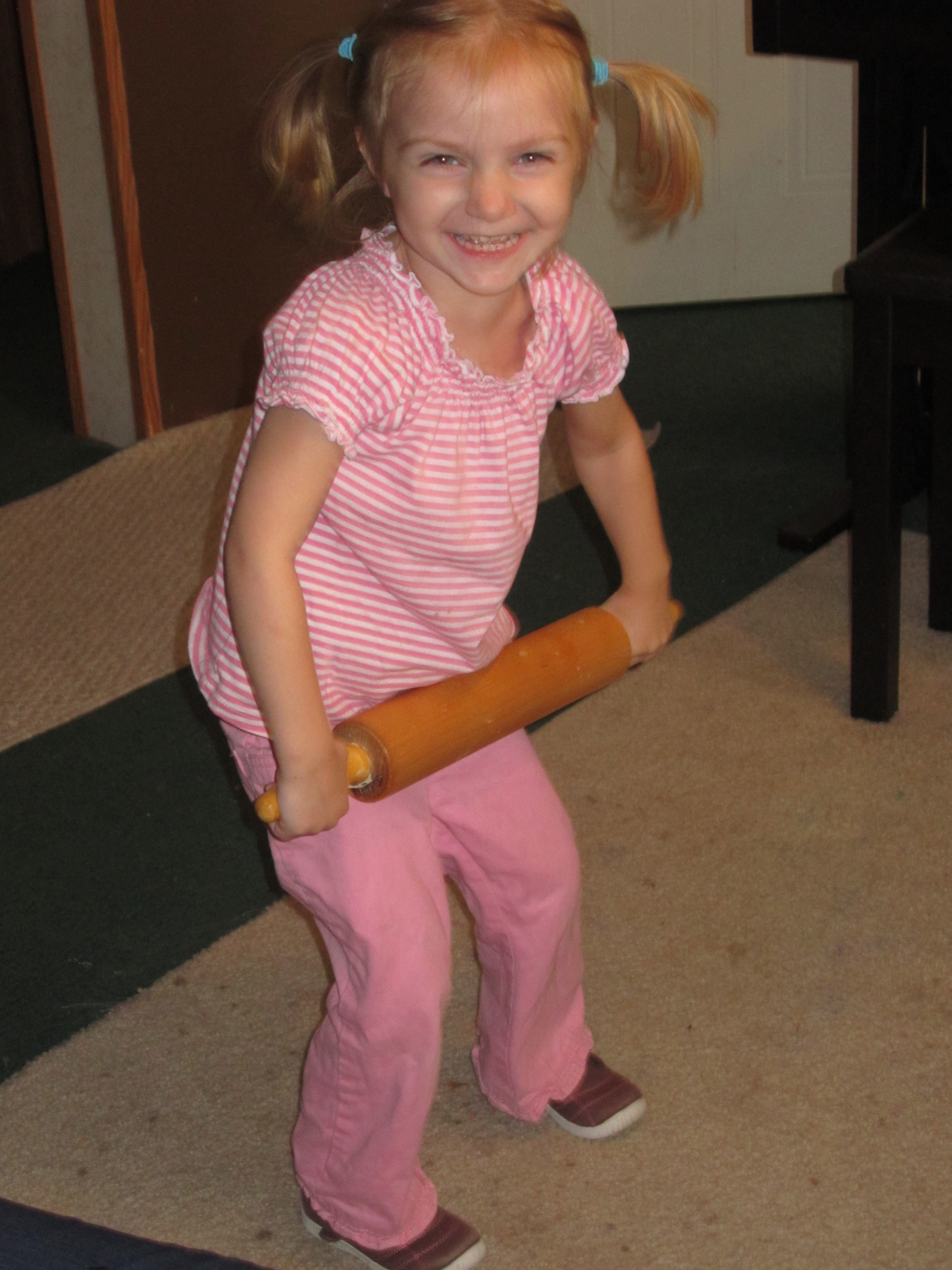
So the mission began, emptying cabinets of cookie cutters and dragging out the flour and rolling pin.  Looking up from the recipe, though, I saw this cutie pie rolling herself out like a cookie and giggling hysterically.

Suddenly, there was joy just in being together, in the pure delight of presence.  We took turns rolling out the dough and cutting out cookie shapes of hearts and flowers, butterflies, pumpkins and fall leaves.

Time in the kitchen so easily becomes a chore, cooking for necessity and baking on a deadline.

But moments together need to be rescued from task lists and enjoyed: Giggling over ourselves covered in flour.  Teaching how to push the rolling pin across the dough.  Recalling shared stories.  Kissing tiny noses dotted in sugar.  Admiring our goodies fresh from the oven and then sampling them as they cool.

So, when I pull down my Bible from the shelf and open my study book onto my kitchen table (still dusted with flour), it’s tempting to read to get it done, to check it off for the day and set it aside again until tomorrow.

“Devotions” is on my to-do list also.

Time in God’s presence, though, should be our joy and delight and the very life-breath to our suffocating souls.  Never just a task on a to-do list waiting for the line crossing it out, time with our Lord should beckon us and fill us with longing for more.

Our verse for the week reminds us to delight in His Word and center our lives around this relationship with our God rather than relegating it to the outskirts of our time and hearts:

 But they delight in the law of the Lord,
    meditating on it day and night.
 They are like trees planted along the riverbank,
    bearing fruit each season.
Their leaves never wither,
    and they prosper in all they do (Psalm 1:2-3 NLT).

Take pleasure in His presence.

Heather King is a wife, mom, Bible Study teacher, writer for www.myfrienddebbie.com and worship leader.  Most importantly, she is a Christ follower with a desire to help others apply the Bible to everyday life with all its mess, noise, and busyness.  Her upcoming book, Ask Me Anything, Lord: Opening Our Hearts to God’s Questions, will be released in the Fall of 2013!  To read more devotionals by Heather King, click here.

Copyright © 2012 Heather King

I Want More

I wanted to walk.

I needed to do other things.

In the 40 minutes between the “Amen” at the end of prayer group and the moment I had to pick up my little one from preschool, I should have been reading, prepping, writing, practicing, answering and completing.

I did, after all, have a to-do list to follow!  Things to check off!  Tasks to accomplish!

Still, I wanted to walk.

It was a warm day, the kind of slightly humid warm of a morning before an afternoon storm.  The clouds hadn’t yet blocked the sun and the cooling wind cut through the sticky heat, carrying scents of fall.

It was lovely.

So, down the Main Street of our town I strolled, wearing ballet flats instead of walking shoes—a reminder of the whimsicality of the moment.

I passed houses with mums dotting the gardens and azaleas in final bloom along the path and business with window displays of colored leaves and pumpkins.

At first, I thought about that dreaded list, the tasks I was leaving undone.  I was problem-solving and planning and mentally re-arranging my day.

But then I noticed the sound of the breeze, how the wind tossing about the leaves in the trees sang a constant hum.

And I saw the acorns scattered along the path and piled into the grass, the wind’s gift to squirrels looking for easy pickings.

And I watched as the clouds didn’t just mosey almost imperceptibly across the sky.  No, they were running and dancing past my eyes, pushed along by the breeze.

My walk was about finding more.

But those times never last forever.  I too quickly returned to the schedule and the to-do list, still wishing for more of something undefinable, indescribable, and impossible to cram into a word from a dictionary.

We talk a lot about what it means to desire more in life.

We say we’ve all been designed with a God-shaped hole.  While we try to fill that void with stuff and with sin, relationships and success, it’s only God who can ever satisfy.  Everything else results in a bottomless pit of emptiness.

That’s true.

And we talk about what it means as Christians to long for more.

How we need to put aside the busyness of religion and pursue relationship with Jesus.  How we must shun the sin that prevents intimacy with God.  And until He’s fully Lord of our lives and we’re walking with Him closely, not just day by day, but moment by moment, we’ll always feel poured out and never filled.

That’s true, too.

We sang it in worship this Sunday morning, “All of You is more than enough for all of me, for every thirst and every need.  You satisfy me with Your love.”

So, what’s wrong with me?  Why, after all of that, can I still feel the longing?

Not for more money or possessions, fame or success, love or attention.

For more Jesus.

So often our typical lessons on this issue follow the same trite pattern.

You want more.
You get rid of sin.
You draw closer to God.
You feel better.
Amen.

Like that’s as far as it goes.

Is God enough for us, enough to fully satisfy the deepest, most cavernous longing of our heart and souls?

Yes, He absolutely is.

Do sin and busyness choke us and keep us from being satisfied in Christ?

Yes, they absolutely do.

But even then, don’t you feel it–the insatiable groaning in your soul for something more than we can ever find in the here and now of life on earth?

C.S. Lewis wrote:

“If we find ourselves with a desire that nothing in this world can satisfy, the most probable explanation is that we were made for another world” (Mere Christianity)

This incessant longing, even in the moments of greatest intimacy with Christ, even on quiet walks with Jesus on lovely fall days, doesn’t mean God isn’t enough.

It just means that we were:

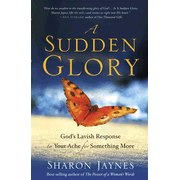
“made for eternity, for glory, and as long as your feet are here on this earth, you will experience a glory ache that only heaven can fully satisfy”  (Sharon Jaynes, A Sudden Glory: God’s Lavish Response to Your Ache for Something More, p. 192).

God designed us not for this life, but for the ever after life with Him.  Ecclesiastes tells us: “He has also set eternity in the human heart” (Ecclesiastes 3:11).

When we see Jesus face to face and the physical realities of this world, the death and sin about us, the crushing grind of the daily, when all that is gone and it’s just our Savior and us and it’s forever . . . then we will be satisfied, fully drenched and totally filled.

Until then, we bring our longing for more to Jesus and let Him whisper to us about heaven and of what awaits us there.

Heather King is a wife, mom, Bible Study teacher, writer for www.myfrienddebbie.com and worship leader.  Most importantly, she is a Christ follower with a desire to help others apply the Bible to everyday life with all its mess, noise, and busyness.  To read more devotionals by Heather King, click here.

Copyright © 2012 Heather King

What’ll You Call Her?

Just about the time that your pregnant belly pops out and people realize you’re going to have a baby, they start asking the big question: “What’ll you name her?”

I’ve had several friends keep their chosen baby names top secret until the birth, not wanting to tell the big news until it’s on the birth certificate.

And I’ve had a few friends who hadn’t actually decided on their baby’s name, even after a day or two of cuddling in the hospital.

We, however, have been a sucker for the name question for years, never keeping our daughters’ names secret once we made the decision.

But when you announce the baby’s name to people, it’s hard to really, fully explain all of the prayer and thought and love that went into that decision.  They just hear a name (that they may or may not like) and not the meaning and story and prayerful thought behind your choice.

And we did all those things.  We prayed over each of the names.  We considered what the names meant and thought about the sound of it and what it stood for or who they would be named after and what their name would say about them as future women of God.  We imagined what awful and ridiculous nicknames kids would use to tease them and whether their initials would spell something horrid or embarrassing.

And my daughters never cease to ask, time after time, even though they could tell the stories themselves, what their names mean and why we chose that special name just for them.

Well, picking the title of a book isn’t all that different.  I sure have prayed over this and I sought your opinions and suggestions.

Thank you so much for all of the voting and comments and private emails you sent me with thoughts about a book title!  I appreciated all of your great input.

I sent along the suggestions to the publisher and even included some of your commentary.  Then the email came in on Monday afternoon with the official name of my upcoming book:

Ask Me Anything, Lord: Opening Our Lives to God’s Questions

I’m in love!

The book is about letting God search our hearts and draw us closer to Him using the questions He asks in Scripture. 

Other titles might have been more aggressively eye-catching, but the publishing team felt this one was the most accessible and descriptive—fitting both the theme and style of the book.

My favorite part is the subtitle.  Is that the same as liking your child’s middle name more than her first name? There’s just an openness and clarity about it that’s just right.

Next up is cover design.  I can’t wait to see what the artists envision for the book cover!

Please keep this book in your prayers and pray for the teams that are working on each part of this process!  Thank you for those very prayers, for your thoughtful encouragement and for your insight all along this exciting journey.

I’ve been reminded once again this week of the promise in Ephesians:

Now to him who is able to do immeasurably more than all we ask or imagine, according to his power that is at work within us, to him be glory in the church and in Christ Jesus throughout all generations, for ever and ever! Amen  (Ephesians 3:20-21)

God can’t do great things because of our strength or ability or power.  It’s never really about what we can do at all.  It’s always because of “His power that is at work within us” and that is why He receives all the glory when He goes above and beyond.

I love the Message paraphrase of verse 21:

God can do anything, you know—far more than you could ever imagine or guess or request in your wildest dreams! He does it not by pushing us around but by working within us, his Spirit deeply and gently within us.

Hopefully, this will all be an encouragement and reminder to you to yield wholeheartedly to God’s work in your life. Listen intently for the Spirit’s gentle voice and step out in wild obedience when He calls you to move.  Watch in anticipation to see what God will do.

You can read more about the amazing story of my book here:

Heather King is a wife, mom, Bible Study teacher, writer for www.myfrienddebbie.com and worship leader.  Most importantly, she is a Christ follower with a desire to help others apply the Bible to everyday life with all its mess, noise, and busyness.  Her upcoming book, Ask Me Anything, Lord: Opening Our Hearts to God’s Questions, will be released in the Fall of 2013!  To read more devotionals by Heather King, click here.

Copyright © 2012 Heather King

Did Jesus Get Splinters?

“Mom, did Jesus get splinters from the cross?”

My daughter doesn’t really know how to whisper.  She somehow manages to make her voice breathy and full of air, but still push the words out with a great deal of volume.

I mentally apologized to the audience members in front of us and behind us, who had come that night to see the Ballet Magnificat dance in worship and to tell the Exodus story.

But then the dancers surprised us.  They fast-forwarded in time to our ultimate Deliverer, Jesus Christ, who sacrificed Himself to give us freedom from slavery to sin.

There He was mocked and scorned by the crowd.
There He was beaten and nailed.
There He was hoisted onto the weathered wood and left to die.
There He cried out in pain.
There He died.

You never know what might make an impression on a child. I had already answered  whispered questions about slavery in Egypt earlier in the program.

Because, as many times as we had talked about the story and read the account in the children’s Bible . . . . and as often as my daughter had heard it in Sunday School and Children’s Church and Awana . . . somehow she had missed the part of slavery where it’s horrible and evil and frightening and relentless and hard and unfair and cruel.

So, the sound of the whip cracking and the way the slaves dropped to the ground in fatigue and despair shocked her.

You mean “slavery” is this?  It’s not just a happy little Jewish community living in tiny houses on the outskirts of Egyptian cities?

No, my baby girl.  Slavery is a pharaoh ordering that every male baby be killed at birth.  It’s waking up every morning to labor hard and long for someone else, no freedom to worship or rise above or choose for yourself or provide for your family.  It’s whips and rods and beatings and shame and being less than.

Why are the slaves working so hard, Mom?  Why is he beating them, Mom?  Why do they look so tired, Mom?

All whispered in my ear and what to say in that moment of hushed conversation other than, “That’s what slavery is, honey.  Didn’t you know?”

But how could she know?  We have a way as humans of protecting ourselves from knowledge that hurts.  And we have a way as parents and teachers of watering down the truth so we don’t frighten kids (or ourselves).  And we have a way as adults of sanitizing reality so we don’t have to face the ugly horror of it.

But when Jesus told the crowd that the truth would make them free, they didn’t understand: “We are Abraham’s descendants and have never been slaves of anyone. How can you say that we shall be set free?” (John 8:34).

They had forgotten their people’s four-century-long history, of slavery in Egypt, and how God sent them the deliverer Moses.

Jesus reminded them: You, yourself, have a lifelong history of slavery to sin and “a slave has no permanent place in the family, but a son belongs to it forever.  So if the Son sets you free, you will be free indeed” (John 8:35-36).

I explain this later to my daughters, when whispering is no longer mandatory, and we have the time and space to talk.

Did you see how terrible slavery was for the Israelites?  Jesus says we were slaves to sin in the same way.

And did you see what Moses had to give up in order to deliver the people out of Egypt?  He couldn’t keep his fancy room in the palace, his princely clothes, his royal position, his delectable foods.  He sacrificed all that to lead his people out of slavery.

But Jesus gave up more.  Paul tells us that Jesus “made himself nothing by taking the very nature of a servant, being made in human likeness.  And being found in appearance as a man, he humbled himself by becoming obedient to death—even death on a cross” (Philippians 2:7-8).

My daughter knew about the nails and the crown of thorns.  She knew about the cross.  But the scornful cries of the crowd, that she couldn’t understand.

Then, while watching the dancers portray Jesus’ crucifixion, she thought of the most horrible thing she could imagine, the thing that terrifies her into wearing shoes on our deck and the thing that has sent her into fits of screaming on our couch when we pull out the tweezers.

Did Jesus get splinters from the cross?

Why yes, baby girl, he probably did.  But he did it for you and for me.  He hung bare-skinned on a rough wooden cross so He could deliver us and set us free.

That’s the truth of costly grace and the Savior who paid the ultimate price: splinters, whips, mockery, the weight of sin, separation from God, and death and all.

How can you keep from forgetting what Christ has done for you?

Heather King is a wife, mom, Bible Study teacher, writer for www.myfrienddebbie.com and worship leader.  Most importantly, she is a Christ follower with a desire to help others apply the Bible to everyday life with all its mess, noise, and busyness.  To read more devotionals by Heather King, click here.

Copyright © 2012 Heather King

Weekend Rerun: How to Handle a Mean Girl

Originally posted on September 26, 2011

Mean girls strike fear into the hearts of moms everywhere.  They certainly make this momma drop to her knees.

So when my daughter announced that she was choosing not to play with a girl at her school table, I pounced with mom questions.

“Well,” my daughter said, “when other people don’t do things the way she wants, she always says, ‘You can’t be my friend anymore.’  So, I told her that’s okay if she doesn’t want to be friends with me.”

Wow!  I was afraid of permanent devastation wrought at the hands of other children, and yet my daughter handled herself with quiet confidence.  It was the kind of answer I’ve been praying my daughter is able to give.

Praise God that He answers our prayers for our children.

But, it’s not just our kids who need to make decisions about friends, nay-sayers, judgers, and mockers.

In her book, Stumbling Into Grace, Lisa Harper writes:

“I want to recognize the dangerous, potentially biting characters in my story; the people who create constant emotional debris with their destructive personalities or who refuse to shed the skin of deception, the ones who threaten the God-with-me peace in my life.  I’m learning to keep my distance and to  pray for snakes, but not make a habit of getting down in the dirt to play with them” (p. 47).

In our lives, we’ll face some biting personalities and snakes in the grass ourselves–even when we are simply pursuing righteousness, just like Hannah in 1 Samuel.

Hannah was a Godly woman.  Religious law dictated that men must travel to the tabernacle three times a year to worship and sacrifice, but we see in 1 Samuel 1:7 that “year by year, she went up to the house of the Lord.”  She committed to going above and beyond the minimum requirements in order to worship God with her whole heart.

But his Godly woman had a personal pain that cut deep: She was childless while her husband’s second wife, Peninnah, was a bunny rabbit of a breeder.  Scripture doesn’t even count all her kids; it just says, “Peninnah . . and  . . . all her sons and daughters” (1 Samuel 1:4).  Sounds like quite a brood.

The worst part of it is that Peninnah gloated.  She boasted and preened.  She set herself up as Hannah’s rival and “provoked her severely, to make her miserable”  (1 Samuel 1:6).

Peninnah was a mean girl.

Sure, Hannah’s husband, Elkanah, loved her and was sad about her distress.  Still, there’s something kind of clueless about his compassion.

He said, “Hannah, why do you weep?  Why do you not eat?  And why is your heart grieved?  Am I not better to you than ten sons?” (1 Samuel 1:8).

Seriously?  He didn’t tell Peninnah to knock off the nastiness.  Instead, he told Hannah just to get over it. Be happy with the fact that she shared a home and husband with a woman who had annual baby showers.  Just shrug off Peninnah’s provoking ways and be content with her husband’s love.

Elkanah was an unhelpful friend.  He didn’t stand up for Hannah, didn’t have her back, and didn’t understand her pain.

Then there was Eli, the priest who watched Hannah’s impassioned prayer at the altar.  He pounced on her in a second, saying, “How long will you be drunk? Put your wine away from you!” (1 Samuel 1:14).

Eli was the judgmental onlooker.  The one with all the opinions who doesn’t even take time to fully understand the situation, just makes accusations and spews forth a diatribe of assumptions and personal attacks.

Beset on every side by those close to her and those in spiritual authority over her, Hannah nevertheless responded with grace.

She spoke “the truth in love” (Ephesians 4:15). She didn’t rebel against Eli, speak badly about him behind his back, or cause a ruckus in the spiritual community, despite the fact that he hurt her.  Instead, she answered calmly, “No, my lord.  I am a woman of sorrowful spirit.  I have drunk neither wine nor intoxicating drink, but have poured out my soul before the Lord” (1 Samuel 1:15).

She trusted God to take care of her.  Hannah “was in bitterness of soul, and prayed to the Lord and wept in anguish” (1 Samuel 1:10).  She took all of her pain to the altar and poured her soul out before God and left it in His hands.

After she held the baby boy God gave her, after she nursed him and weaned him and presented him to the tabernacle, she declared, “For the Lord is the God of knowledge; And by Him actions are weighed” (1 Samuel 1:3).

By Him actions are weighed.  God saw the mocking cruelty of Peninnah, the cluelessness of Elkanah, and the pompousness of Eli.  And he saw Hannah’s brokenness and blessed her.

We likewise can trust God to help us when we face mean girls, unhelpful friends, and those who judge us.  He will show us how to love our enemies and pray for those who hurt us and He will tell us how to avoid the venomous bites of the snakes in the grass.

Heather King is a wife, mom, Bible Study teacher, writer for www.myfrienddebbie.com and worship leader.  Most importantly, she is a Christ follower with a desire to help others apply the Bible to everyday life with all its mess, noise, and busyness.  To read more devotionals by Heather King, click here.

Copyright © 2012 Heather King

Filling Out The Form

“I’m your servant—help me understand what that means, the inner meaning of your instruction”  (Psalm 119:125 MSG).

“What do you want to see your child learn during this school year?”

I tapped the eraser end of my pencil on the table.

It’s not a new question.  I’ve been answering it for years.  The first time I registered my oldest daughter for preschool, I sat in a child-sized chair and hunched over a child-sized table and completed the “Help Me Get to Know Your Child” form.

Some questions were easy.  What does she like?  What are her strengths? I scribbled away for a while, trying to sum up my precious daughter in a few sentences on blank lines.

But when it came to that one question—What do you want her to learn?—-tap, tap, tap went the top of the pen on the preschool table.

Tap, tap, tap goes my pencil after Open House for second grade.  Some things never change.

What am I supposed to put on this form?  Multiplication?  Cursive?  Powerful writing skills? 

Truly, I want her to know in a deep-down, unquestioning way that God loves her.

This was Paul’s prayer for the church in Ephesus:

And I pray that you, being rooted and established in love, may have power, together with all the Lord’s holy people, to grasp how wide and long and high and deep is the love of Christ, and to know this love that surpasses knowledge—that you may be filled to the measure of all the fullness of God.  Ephesians 3:17-19

I’m not talking about being able to rattle off John 3:16 or sing Jesus Loves Me.

In her book A Sudden Glory, Sharon Jaynes notes that the first word for know here is gnosis or ginosko:  “This word is not simply a head knowledge but an intimate heart knowledge,” like the “relationship between a husband and a wife.” (p. 173).

Yes! I want her to love God with that passion and to be filled up with all that God has for her because she trusts and fully knows His love.

And I want her to understand that growing in Christ takes time, a lifetime of time.  There are no shortcuts to faith. 

Rick Warren wrote:

Becoming like Christ is a long, slow process of growth. Spiritual maturity is neither
instant nor automatic; it is a gradual, progressive development that will take the
rest of your life.

I don’t want her to settle for a safe amount of faith, a reasonable amount of Bible knowledge, a decent prayer life, an appropriate amount of service to God.  I don’t want her to declare, “I’m finished.  This much is enough.  No need for more of God.”

After all, He always leads us forward, perpetually changing us, incessantly maturing us.  His passion is transformation.

It takes hard work.  It takes discipline.  It takes yielding.  It takes willingness to be taught and to change.  As it says in Romans:

… fix your attention on God. You’ll be changed from the inside out.  Readily recognize what he wants from you, and quickly respond to it. Unlike the culture around you, always dragging you down to its level of immaturity, God brings the best out of you, develops well-formed maturity in you (Romans 12:2)

This is my prayer for her.

Not head knowledge or wisdom gained through book study and our teacher in these matters has to be more than human.  Paul assures us that, “these are the things God has revealed to us by his Spirit.  The Spirit searches all things, even the deep things of God”  (vs.10).

The deep things of God.  Is that what I’m asking?

Or as Paul puts it later, “We have the mind of Christ.

He says it with such confidence.  Not we want to have, we will have, someday we’ll have, or if we work hard enough we’ll have.  God has given us His Spirit and with that, “we have the mind of Christ” (vs. 16).

This is what I want my daughters to learn.  This is what I want to learn.  I want every day to know Him more, to be filled by His Spirit, responsive to His promptings, and for my mind not to be filled with self and with world, but with Christ.

I look at the form from her teacher.  How to answer this question?  I decide that being vague is the way to go.  “I want her to fulfill her potential, growing in her strengths even more and improving any weaknesses.”

That’s what I write.  But I pray for so much more.

I pray for the deep things of God.  I pray for the mind of Christ.

How would you answer this question?

Heather King is a wife, mom, Bible Study teacher, writer for www.myfrienddebbie.com and worship leader.  Most importantly, she is a Christ follower with a desire to help others apply the Bible to everyday life with all its mess, noise, and busyness.  To read more devotionals by Heather King, click here.

Copyright © 2012 Heather King

Packing a Bag for the Homeless

He shuffled over to the line of women waiting to enter the arena for the first night of Women of Faith in Washington, DC.

He asked us for food.  I rifled through my bag because I had fully intended to pack snacks for just such an occasion.

I had nothing.

He asked for money.  I had none to give.homelessbag

He walked away.

I was angry at myself, frustrated that I had failed to prepare for compassion and service.  I had good intentions and no follow-through.

Hadn’t I just read a book I had discovered on the shelves of our church library called Under the Overpass: A Journey of Faith on the Streets of America?

A young college student chronicled the six months he and a friend lived as homeless men on the streets of America’s cities.  They played their guitars to earn money for food and went days without a single meal and weeks without a shower.  They had no access to running water or even a bathroom at night.  People avoided them and glared at them and they felt shame and knew they were unwanted.

Hadn’t I just finished Kelly Minter’s study, Nehemiah: A Heart That Can Break and been reminded continually that “the Lord always has the poor on His mind, often paired with the widow, alien, and fatherless in Scripture’s pages”?  She wrote that “tangibly involving ourselves for the sake of justice is a biblical command” (p. 69).

After all, Isaiah 1:17 says:

Learn to do right; seek justice.
    Defend the oppressed.
Take up the cause of the fatherless;
    plead the case of the widow.

It can’t get much clearer than that.

And before I studied Nehemiah, hadn’t I completed Beth Moore’s study: James: Mercy Triumphs? If ever there was a Biblical writer who echoed Christ’s heart for the poor and oppressed it was his half-brother James.

James asked:

Suppose a brother or a sister is without clothes and daily food. If one of you says to them, “Go in peace; keep warm and well fed,” but does nothing about their physical needs, what good is it? (James 2:15-16).

James summed our faith up this way:

Religion that God our Father accepts as pure and faultless is this: to look after orphans and widows in their distress and to keep oneself from being polluted by the world (James 1:27).

God cares passionately about the poor, the homeless, the oppressed, the overlooked, the widow, the orphan, the lost and the lonely.

He expects us to do the same.

I knew it.  I had read about it in book after book, study after study all year long.  I meant to bring food for the homeless to the streets of Washington, DC .

I forgot.

So the homeless man in faded clothes and a dusty face shuffled past me to another woman in line and another.

The day after I arrived home, I took my oldest daughter to the dollar store and we tossed soap and wash cloths into the cart.  We grabbed a box of small bottled waters, two packs of peanut butter crackers, and some canned peaches.

We packed our bags for a family vacation.  Then I packed some bags for the homeless.  I didn’t know if anyone else would shuffle over to me and ask for food, but I wanted to be ready.

I carried those Ziplock bags in a backpack all through our family vacation and it seemed like unnecessary weight.  We didn’t hand out a single one.

Until we were driving home, that is.  We stopped at a traffic light and I was busy thinking about the end of our vacation and the drive home and what happens next.  My husband saw the man with the sign:  “Homeless.  Please help.”

He grabbed one of our bags, motioned the man over and handed it out through the window.

The best part is that I now have a tangible reminder to pray for one particular man in need.

I have a lot to learn still.  My prayer is that God will open my eyes (clearly I need His vision) and prod my heart to prepare for ministry to “the least of these.”

Do you have ideas on how to minister to the poor and needy?

What I Want to Do Differently Next Time:

I had this brainstorm for the bags for the homeless and put it together based on ideas we picked up at the dollar store.  Then, I read a book that week called Cleaning House about a mom who lives in Dallas and encounters the homeless regularly while driving her kids around town.  She makes up bags of care items for the homeless, too!  I felt so excited that we had the same idea.

I loved some of the other items she adds, though.  Based on her thoughts and some of the ideas in the book Under the Overpass, my new care packages would look like this:

  • Wash cloth
  • Bar of Soap
  • Peanut Butter Crackers
  • Bottled Water
  • Other nonperishable food item
  • $5 gift card to a place like Subway, Wendy’s, McDonald’s or even an area grocery store
  • Pocket Bible or maybe a personal note with a Scripture verse
  • Information on a local homeless ministry

Heather King is a wife, mom, Bible Study teacher, writer for www.myfrienddebbie.com and worship leader.  Most importantly, she is a Christ follower with a desire to help others apply the Bible to everyday life with all its mess, noise, and busyness.  To read more devotionals by Heather King, click here.

Copyright © 2012 Heather King