More Than Snapshot Faith

Originally published 10/21/2012

“Instead, it should be that of your inner self, the unfading beauty of a gentle and quiet spirit, which is of great worth in God’s sight”
(1 Peter 3:4)

Today is picture day at school and I may need a vacation to recover.

The aftermath of this morning’s preparation is like an explosion in a boutique.  I returned to the house after waving goodbye to my daughters on the school bus and surveyed the damage.

Headbands, combs, clips and ribbon left a trail from the bedroom to the kitchen and the living room.

Pajama bottoms and tops and rejected dresses were strewn across every piece of furniture in sight.

A pile of not-good-enough shoes sat beside one dresser and a stack of pink and white stockings next to the other.

The morning’s activities had tired me out.  Even though we had planned their outfits for a week and carefully laid out their chosen wardrobe the night before, the morning had still been crazy with changed minds, fresh inspiration, and forgotten items.

And then there was the meltdown over the headband.  It involved many tears, angst, stubbornness, threats of punishment and varying opinions about the definition of “matching.”

I imagine my house this morning looks a little like King Xerxes’ court appeared as he searched for a second wife.  It was the biggest beauty pageant of all time and after 12 months of preparation (“six months with oil of myrrh, and six months with perfumes and preparations for beautifying women”), it all came down to one night (Esther 2:12).  One chance to knock the socks off the king and be chosen as his bride.

Yet, Esther was not dependent on beauty treatments, over-the-top jewelry, and exotic perfumes.  Hers was the beauty of consistent character and long-term loveliness of the heart and so she found favor with the king and became queen of the Persian empire.

Like the other women in this great Persian beauty pageant, we Christians sometimes focus too much on dressing up and dousing ourselves with perfume.  Our emphasis is often on the “picture days” of the Christian walk, on the posing, the practiced smile, the activity, the special occasions.

But our faith isn’t about snapshots.

We don’t prep ourselves for five minutes in front of a camera.  Did we greet everyone with joy on Sunday morning?  Did we say the right things in Sunday school?  Did we wear the right clothes?  Did we know the words to the songs and nod our heads at appropriate points in the sermon?

Our heavenly king isn’t making judgments about our beauty based on one night’s impression. That means mistakes don’t determine the rest of our lives.  If you’ve blown it this morning with your kids, made some bad choices, or messed up how you handled that situation, God’s grace provides you with restoration, renewed mercy and the fresh start of a new day. 

That’s why Moses is about more than his disobedience when bringing water from a rock (Numbers 20).  It’s why David’s ministry didn’t end with adultery and murder or why Peter wasn’t cast off forever after denying Christ.

It also means the moments of triumph don’t set us up on permanent religious pedestals.  God isn’t deceived by the external beauty treatments we apply.  Peter wrote, “Instead, it should be that of your inner self, the unfading beauty of a gentle and quiet spirit, which is of great worth in God’s sight” (1 Peter 3:4).

The beauty of our faith isn’t determined by those extraordinary seasons of spiritual victory, crisis or sin.  God is far more interested in the daily wardrobe of our soul and what happens when the cameras aren’t turned in our direction.

Oswald Chambers wrote:

“it does require the supernatural grace of God to live twenty-four house of every day as a saint, going through drudgery, and living an ordinary, unnoticed, and ignored existence as a disciple of Jesus.  It is ingrained in us that we have to do exceptional things for God—but we do not.  We have to be exceptional in the ordinary things of life, and holy on the ordinary streets, among ordinary people.”

My oldest daughter’s goal for picture day was to look just like a real princess.  My middle girl wanted to be “as cute as can be.”  And they succeeded. This one picture, though, won’t make them beautiful or ugly, cute or goofy.  They are always lovely and always loved.

It’s the same with us.  What’s far more important than how we look in a posed portrait is the ordinary, unnoticed, unexceptional holiness that we live out day after daily day. 

It’s the praying in the prayer closet, the doing dishes and washing clothes for your family.  It’s the ministry to a friend and your faithful, hard work at your job.  It’s responding with kindness and having patience with your spouse.  It’s putting the mistakes of the past behind you and it’s obeying God today with a cheerful heart.

Heather King is a wife, mom, Bible Study teacher, writer for www.myfrienddebbie.com and worship leader.  Most importantly, she is a Christ follower with a desire to help others apply the Bible to everyday life with all its mess, noise, and busyness.  Her upcoming book, Ask Me Anything, Lord: Opening Our Hearts to God’s Questions, will be released in the Fall of 2013!  To read more devotionals by Heather King, click here.

Copyright © 2012 Heather King

Guest Post and Giveaway!

We’re throwing a little party here today in honor of Pastor Appreciation Month.  So, grab a slice of cake and enjoy this post by John P. King over at Smoking Newspaper.  He’s a former pastor who has written a funny and insightful book about lessons learned in ministry.

And what would a party be without a present?

So, I’m going to give away a signed copy of his book.  All this week, I’d love to hear from you just one thing that you have prayed or will be praying for your pastor.  One word or a quick sentence is fine.  Let’s encourage and inspire one another to pray for our pastors this month. It’s okay to duplicate others’ ideas.  If it’s what’s on your heart, just share it!

Leave a comment here or on Facebook.  Each comment gets you an entry and I’ll draw the winner using random.org and announce it in Saturday’s post.

And by all means stop by John’s blog and check out his devotionals. He’s even posted the first chapter for you!  If you don’t win the book, you can find it on Amazon.com here: Don’t Smoke the Newspaper and Other Lessons Learned by a Pastor.

*********************************************************************************************

When I was pastoring in Oregon, a young man approached me and told me that he believed the Lord wanted him to be a pastor.  As we talked, the first question he asked me as he wrestled with what God wanted him to do was, “What is pastoring like?”  I have to admit that I wasn’t ready for that question.  That one was a little different from the normal question, “What does a pastor do?”  I had heard that question a hundred times.  It’s a whole lot easier to answer about what one does than what something is like.  However, a job description complete with responsibilities of both the spiritual and mundane, and a list of daily, monthly, and yearly activities was not what he was after.  He wanted to know what he would be experiencing, not doing, if he followed the Lord’s call.

I thought for a moment and searched for a description of what my work, what my life, was like.  I took this young man to the pulpit of the church and had him look out over the seats.  I said, “Imagine all of the people of our church sitting in the pews.  Now understand that on any given week, half of them will be experiencing some kind of victory.  Life will be good for them.  Imagine that all the people on the left side of the sanctuary are standing up because they are handling life.  On the other hand, all the people on the right side are sitting down because life is handling them.  They are going through some kind of struggle; a temptation, or trial, or tragedy.  And as they go through, they will come to you looking for help commensurate to their need.”

“Next week, they will all switch places.  The people on the right will be standing in victory, and the people on the left will be down, slogging through the difficulties of life.  And the next week, they will switch back.  And then switch back. And back again.  And again.”

I explained to him that when dealing with the Christian life and the daily ministry we all should be engaged in, the apostle Paul wrote in Romans 12:15, “Rejoice with those who rejoice, and weep with those who weep.”  That is what the pastorate was like; rejoicing and weeping.  Only the problem was, as I had mentioned earlier, the people who are toughing things out will always come to you. Unfortunately, the people in victory rarely do.  So you are always tilting to the ones who are “weeping,” whichever side of the aisle they are on.  The pastorate is a see-saw ride of moving from one hurting group to the next from one week to the next.

The look on his face said he was neither amused nor enthused.  Of course, I didn’t want to leave him like that, so I proceeded to tell him what a pastor does.  No, not the proverbial, full job description as mentioned earlier, but the one-line biblical definition.  Most people think that the pastor’s job is to minister.  You hire them to do the “ministry.”  However, Ephesians 4 makes it plain that the five-fold ministry, including pastors, was given to the church by Jesus Christ “…for the equipping of the saints for the work of service, to the building up of the body of Christ.”  (Ephesians 4:12).  As a pastor, he would need to train the people to do the ministry; to rejoice with those that rejoice, and weep with those that weep.”  If he didn’t, then he would carry the load of “ministry” all by himself, and believe me, if he did, he would either be miserable or he wouldn’t be in the ministry for long.

With an understanding of what it’s like to be a pastor, what are my encouragements through all of this?  They are two-fold.

  1. Get engaged in the “ministry.”  It is not the pastor’s job to do it all.  It’s their job to   train us to do the ministry.  It’s not their job to build up the body of Christ.  It’s their job to equip us for the building up of the body of Christ.  If we aren’t doing our part, the body won’t grow and it will make their job exponentially more difficult.  However, if we are doing our part, then the church will grow and it will make the pastor’s job a delight.
  2. Rejoice!  Remember, the pastor has their own life and family problems to deal with too.  If the only things they ever hear from us are the hardships, it will only make them want to quit.  Pastors take great delight in their people’s triumphs and victories.  Trust  me, as a former pastor, I LOVED hearing about what God was doing in the lives of my congregation.  There was never any jealousy.  It didn’t matter if it was something “ministry” oriented or some kind of encounter with God in their daily lives.  Rejoicing  with my people always made my day.

So as God moves in your life, tell your shepherd.  They really do want to hear about it.  And don’t forget to take your place in the ministry.  Your pastor needs you.

Joy in Christ,
Rev. John P. King, M.A.
Copyright © 2012 John P. King, Used with permission
Verses from the NASB

Heather King is a wife, mom, Bible Study teacher, writer for www.myfrienddebbie.com and worship leader.  Most importantly, she is a Christ follower with a desire to help others apply the Bible to everyday life with all its mess, noise, and busyness.  Her upcoming book, Ask Me Anything, Lord: Opening Our Hearts to God’s Questions, will be released in the Fall of 2013!  To read more devotionals by Heather King, click here.

Weekend Walk: Cracking Eggs, Learning Faith

It began with the sugar cookies we made a few weeks ago.

Fall is prime baking season at our house, time to pull out our favorite recipes, now dotted with batter and splattered with sugar and flour, vanilla, and spice.

Of course, baking at our house always involves one Master Baker and three assistants, who all want to crack the eggs.

For years, I’ve declined, confining my helpers to stirring and pouring in the already measured flour.  Finally, though, I relented when we crowded around the table to make sugar cookies.  Thus I began the risky job of teaching children how to crack eggs into a bowl of ingredients without also dumping in egg shells.

One daughter daintily tapped the egg on the table, barely making the tiniest crack in the shell.  Another practically slammed her egg down on the side of the bowl.  My preschooler tried to mimic the other girls, tapping and then slamming.

Eventually, I exhaled.  I had survived the initial egg cracking and only had to dip my hand in to snatch a few shells from the batter.

Since then, we’ve baked another batch of sugar cookies, some cinnamon bread, ginger spice cookies, and a pumpkin pie and every time there is improvement and growing confidence.

I may never crack another egg open again.

As a mom, it’s so difficult at times to teach and let go, instruct and then take my hands off and let my daughters try, maybe fail, maybe succeed, but always try and try again.

But if I’m always the one cracking the eggs into the bowl, how will they ever learn?

Spiritual growth happens the same way.  God may teach us truths from His Word, but eventually we have to live them out and apply them in the dailyness of life.

“Trust Him” we read and so we must eventually trust.  “Rest in Him” we learn and so eventually we must ease our white-knuckled grip off the steering wheel and relax under His guidance.

Anything else isn’t spiritual growth at all; it’s stunted dependence and shallow faith, quickly dried up into cracked and dusty death at the slightest drought.

So, this week I’m thinking about the many ways I need to teach and let go and I’ll be meditating on a verse that reminds me how I myself am growing, little by little, sometimes via mistakes and occasionally in triumph.  But always God is patient when He has to pull out the eggshells when I’ve made a mess of things.  And gently He allows me to try again.

But grow in the grace and knowledge of our Lord and Savior Jesus Christ.
To him be glory both now and forever! Amen.
(2 Peter 3:18 NIV)

You can check out some of my recipes here!  Or, you can visit the links below for some of my favorite fall baking:

Heather King is a wife, mom, Bible Study teacher, writer and worship leader.  Most importantly, she is a Christ follower with a desire to help others apply the Bible to everyday life with all its mess, noise, and busyness.  Her upcoming book, Ask Me Anything, Lord: Opening Our Hearts to God’s Questions, will be released in the Fall of 2013!  To read more devotionals by Heather King, click here.

Copyright © 2012 Heather King

Pocket Discovery

It’s an annual surprise.

Some afternoon, usually in March, I hang up my gray winter coat for the last time.  I never know which day will be the very last of the cold season. We’ve even had freak winter snowstorms in April. There’s no official ceremony or anything and the groundhog’s shadow predictions never prove perfectly accurate.

It’s just a simple thing.  One day I casually drape my coat across the hook in my closet and there it stays through spring, summer and fall.

Then on a morning usually in November I stop deceiving myself into thinking that sweaters are enough to keep my teeth from chattering.  I reach past my fall jacket in the closet, pull down that same wool coat from its trusty hook, slip my hands into the sleeves and dip my hand into the pocket.

Whatever I left there eight months before is what I’ll discover on that first pocket search of the winter season.

I’ve pulled out Mom-things, like pacifiers and baby socks (don’t all moms pop baby socks into pockets)?  Grocery store receipts unfold like magician’s handkerchiefs—always one more emerges from hidden corners.  There are pens and paper clips, ticket stubs, rocks for my daughter’s collection, hair clips and ponytail holders, cough drops, and maybe even tissues (unused, thankfully).

There’s generally little treasure among the trash.  Mostly my life out and about with my kids consists of guiding them, protecting them, and holding their stuff, periodically dumping the overflow into my pockets when my hands are full.

Occasionally, though, I reach into that winter coat for the first time in November and pull out coins.  Better yet, a dollar or two or three….or even ten.

That’s enough to make this girl happy dance in the middle of my closet.

Then, pulling myself together, I announce the news to my kids, post a happy-face announcement on Facebook and tell my husband the story later that night.

Discoveries, after all, are meant for sharing.  They’re the kind of spill-all-over joy that we can’t keep quiet about.

Maybe that’s how the Shepherds felt standing on that darkened hillside with snoring sheep.  Perhaps it even explains what the angels were doing, singing their praise songs in the night sky to an audience of somnolent herdsman about a Savior being born.

All of heaven exploded with the “good news that will cause great joy for all the people!” (Luke 2:9), the Messiah, the Lord.  They couldn’t contain the excitement!

One angel made the announcement, but others crowded the sky and joined in the chorus: “Suddenly a great company of the heavenly host appeared with the angel, praise God” (Luke 2:13).

The angel’s joyful news sent the shepherds tumbling all over themselves to see “this thing that has happened, which the Lord had told us about” (Luke 2:15).

When we hear good news, don’t we long to see with our own eyes, to experience this joy ourselves? 

Won’t you, after hearing my story, dip your hand into your winter coat with a little more anticipation this year?

That’s what sharing our testimony of discovery does, it ignites passion, it incites curiosity, it encourages a searching and finding of the truth, the Savior, of salvation.

Then, when the shepherds found the manger and peered over the corners at the baby-King, “they spread the word concerning what had been told them about this child and all who heard it were amazed at what the shepherds said to them” (Luke 2:17-18).

They had discovered Jesus and no way could they keep that quiet.

No matter how many times Jesus asked those he healed in his ministry to keep quiet about it, still they rushed home and called up the local newspaper to tell their story.  The blind can see, the lame can walk—how to hold that in?

Jesus himself finally told one man to, “Go home to your friends and tell them how much the Lord has done for you, and how he has had mercy on you”  Mark 5:19.

Isn’t that the story for all of us?

Our testimonies of what God has done, the discoveries of how He’s been so good to us, those moments of amazing grace and unexpected mercy in the middle of the daily grind, are all meant to be shared with others.

That’s part of the joy, extending the celebration and encouraging others to go seek our God themselves, dig in His Word, trust in His promises.  What they discover there will be worth shouting about and more cause for a happy dance than whatever treasures I pull from my coat pocket this November.

Christian Writers Blog Chain

Today’s post is part of the October topic ‘Discovery’ by the ChristianWriters.com Blog Chain. You can click on the links on the right side of this page to read more articles in this series.

Heather King is a wife, mom, Bible Study teacher, writer for www.myfrienddebbie.com and worship leader.  Most importantly, she is a Christ follower with a desire to help others apply the Bible to everyday life with all its mess, noise, and busyness.  Her upcoming book, Ask Me Anything, Lord: Opening Our Hearts to God’s Questions, will be released in the Fall of 2013!  To read more devotionals by Heather King, click here.

Copyright © 2012 Heather King

Praying for them and praying with them

My girl clambered into the minivan after school, heavy backpack on her shoulders, heavy thoughts in her heart.

She waited for my daily question, “How was your day?”

And then she spilled the news about “this boy in my class.”

“This boy” was loud and disruptive and didn’t follow the rules.  He cost them rewards in art class and never obeyed the teacher.  He did inappropriate things and wouldn’t stay in line.

She finished her story, pronounced a loud “harumph” and slammed her arms criss-cross around her chest to demonstrate her anger.

So many of our conversations take place this way, me angling the rear-view mirror to see faces, shouting back Mom-ly words of wisdom from the driver’s seat.  “You know what we need to do,” I hollered to the back seat.  “We need to pray for him and for your teacher.”

I expected her to shrug off my advice as impractical and unhelpful, no immediate solution and no personal satisfaction guaranteed.

But she didn’t.  I watched as a look of epiphany brightened her eyes and she lifted her face so her eyes met mine in the mirror.  She nodded in wholehearted agreement.

Later, snuggled together on our overstuffed blue couch, I prayed for “this boy” and for their teacher and when I was through, this child of mine–who finds kisses too embarrassing and 1timothy2declines to even hug much of the time–tossed her arms around me freely and tightly.

We parents, grandparents, teachers and leaders show our children how to pray over time, beginning with bowed heads over scraped needs and boo-boos on fingers.  We seek forgiveness for wrongs and take difficult situations to God.  And then we begin to pray for others, their hearts turning outward in ministry and compassion (and maybe sometimes frustration).

But it all begins with us, modeling the habit and discipline of “take it to the Lord in prayer.”  It’s bringing Jesus right there into the center of our everyday.

As Paul wrote, “The first thing I want you to do is pray.  Pray every way you know how for everyone you know” (1 Timothy 2:1 MSG).

The first thing we do is drop to our knees, not after consultations, Google-searches, strategies, all-night worrying sessions, and Facebook posts.  Pray first.

Perhaps God had been preparing me for that moment in the car because I’d been on my knees consistently for weeks over my girl.

Please God show me how to be the Mom she needs me to be, how to encourage her, love her, shepherd her heart, discipline her, and protect her.

I hadn’t just prayed, of course.  I’d tried the usual sources, asking for advice. Looking up some behavior issues on reliable Christian family resources.  Scrolling through resources from online sites, hoping to find that perfect book that would explain it all to me and box up my child into an understandable psychological package.

Nothing seemed quite right for my girl.  No formula or strategy was “it.”

What else to do BUT pray?  What else was truly needed but prayer?

Maybe God draws us to pray for our kids so that they’ll see us and learn how to bring His presence into the midst of all situations.  They’ll see our faith practiced in the everyday situations and learn to talk about life and God—-not life or God and never the twain shall meet.

Yes, this is more than Sunday morning belief or pew-sitting faith.  This is down and dirty life with God at our side, available to help us in every situation, to give us wisdom, strengthen our hearts, teach us to obey and discipline our desires.

We pray for children because we love them, still believing that God loves them so much more than we do.  We know them, but He knows them more.  He formed their hearts and personalities, gave them those gifts and talents that amaze us.  He knows the plans He’s laid out for them and how to guide them along “paths of righteousness for His name’s sake” (Psalm 23).

And we also pray for them so that they learn to pray.  So that when they encounter “this boy,” they know they can carry his case to God.  And when their friend is hurt by teasing, they’ll give a hug, say a kind word, and petition God on her behalf.  When they don’t know what to do, they whisper to God a request for help and follow His lead.

Letting our children see us on our knees and hear our prayers for them teaches them how to pray—pray first, pray about everything, pray every way they can, pray for every one they meet.

You can read other devotionals on this topic here:

Heather King is a wife, mom, Bible Study teacher, writer for www.myfrienddebbie.com and worship leader.  Most importantly, she is a Christ follower with a desire to help others apply the Bible to everyday life with all its mess, noise, and busyness.  Her upcoming book, Ask Me Anything, Lord: Opening Our Hearts to God’s Questions, will be released in the Fall of 2013!  To read more devotionals by Heather King, click here.

Copyright © 2012 Heather King

A Message for Monday

My resolution for today:

To breathe in and breathe out, deep taking in of peace and pushing out of contentment.  No catching my breath in anxiety, hyperventilating stress, and rushing to the point of breathless exhaustion.

Just breathe.  Move through the day without giving into the push, push, push of “faster, more, do, accomplish, check off the list, get it done.”  Walk as I vacuum, walk as I put away the clothes.  Make that phone call without simultaneously folding underwear and t-shirts.

And spend time with Jesus for relationship not for task-completion.

The temptation is there, of course.  It’s the curse of Monday.  All of the spillover from last week, the messages to read through and answer after taking a Sabbath from all of that “connection” over the weekend, and the new tasks ahead clamor at me for attention.

What was that email I needed to send?
Wasn’t there someone I needed to call?
What did my kids need for school today?
Was I behind on my reading, my commitments?
Didn’t I need to print this for the week and pack that for tonight and fill out that form and mail back that letter?

It’s a million tiny things nipping at the heels of my Jesus-focused life, yipping and yapping until I turn my attention from Him.matt11

And then when I do sit down to rest at His feet, dear Father, oh my Father, I am so thankful to be in Your presence ….

Still I fail.  Still I pop up every few minutes for the ding of the laundry and the starting of the meal in the Crock-Pot (must give it 6 to 8 hours to cook!), and the reminder of something else needing to be done.

My time with Him becomes stilted, becomes stale, becomes necessary without being the fresh oxygen in my soul I need for very survival and beyond that, the abundant life He promises.  Necessary only because it’s an assignment, like homework for school.

It’s more like: Read the assigned Bible reading.  Check.  Read the passage in the study for this week’s group discussion.  Check.  Complete the other Bible study . . . while interrupted and racing against the clock:

Must…..finish…..so…..I…..can….check….this….off…..my…..list….and……do…..other…..things.

I wonder if He’d prefer if I just skipped it all rather than flop down at this kitchen table half-hearted and thinking about 50 things clearly more important than He is to me in that moment.

This isn’t relationship.  This is business.


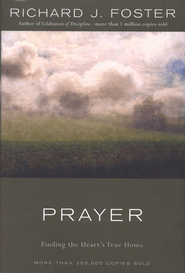
In his book, Prayer, Richard J. Foster wrote:

“Today the heart of God is an open wound of love.  He aches over our distance and preoccupation.  He mourns that we do not draw near to him.  He grieves that we have forgotten him.  He weeps over our obsession with muchness and manyness.  He longs for our presence…

We do not need to be shy.  He invites us into the living room of his heart, where we can put on old slippers and share freely.  he invites us into the kitchen of his friendship, where chatter and batter mix in good fun.  He invites us into the dining room of his strength, where we can feast to our heart’s delight….” (p. 1)

Maybe that’s my problem.  I’ve been barely acknowledging His presence at times at my kitchen table.  Perhaps I should take up His invitation to hang out in His kitchen.  To eat in His presence and share in good company and the intimacy of friendship, not on my terms, but at His offering.

In a similar way, Joni Eareckson Tada writes:

 “God always uses such intimate language when He relates to us.  He paints warm images of sheltering us under His wings, holding us in the palm of His hand, or drawing us close to His breast.  He’s so personal with us, why shouldn’t we be with Him?” (Diamonds in the Dust, p. 288).

At the Last Supper, the apostle John leaned against Jesus, drew in close and rested against the Savior, even while realizing that Jesus was about to be betrayed (John 13:25).

Why be more like Peter, who in shame and frustration, perhaps even anger at the destruction of his plans and agenda, certainly in fear…”followed him (Jesus) at a distance” (Matthew 26:58) after Christ’s arrest.

Sure, I’m always following, I’m a faithful kind of girl, trailing after God always.  But sometimes I’m just stepping into the imprint of His footsteps rather than walking by His side, following out of obedience only, mostly out of distracted busyness and duty.

Today I resolve to breathe in and breathe out, to linger here at the table with Jesus and lean into His presence.  No rushing up from the meal to pursue my own agenda.  No skimming through the page of Scripture to get to the end of the assigned reading.

Leaning into Jesus.  Breathing in and breathing out.  Then walking side by side with Him into my day, not tripping along behind: holding His hand and chatting along the journey.

Heather King is a wife, mom, Bible Study teacher, writer and worship leader.  Most importantly, she is a Christ follower with a desire to help others apply the Bible to everyday life with all its mess, noise, and busyness.  Her upcoming book, Ask Me Anything, Lord: Opening Our Hearts to God’s Questions, was released in November 2013!  To read more devotionals by Heather King, click here.

Copyright © 2012 Heather King

Weekend Walk: It’s Better With a Friend

It’s 61 degrees outside right now and the sun shines down on the girls playing in the backyard. Folks along the street are raking and leaf-blowing.  Last night, I stepped out of my car into the chill and breathed in deep the smell of chimney smoke from fireplaces being lit the first time this fall.

Perfect weather for the pumpkin patch.

We go every year and have taken pictures of my oldest out in the pumpkin field way back when we could barely gather her hair into a ponytail.

This year, though, I surprised the girls by secretly inviting a friend to join us on our family field trip.  We stopped by to pick her up and when I opened the minivan door to present her to my daughters, the squeals of joy were fit for any celebrity popstar or princess.

Today we did all of the normal fall faire.  We climbed on tractors and scaled hay mountains, ran through a corn maze, oohed and aahed over fluffy ducklings, laughed at the rooster’s rockstar hair-do, sat still for face painting, and searched an entire pumpkin field for the one perfect prize—for painting, carving, or pumpkin pie baking.

This year, though, we did it all with a friend and, while we’ve always enjoyed our trips, that made it even better.

About a year ago, a good friend of mine pointed out the tiniest passage in Scripture to me.  Following a long litany of King David’s advisors and assistants, including men in charge of the vineyards and the treasury, his sheep and goats, donkeys, camels, olives, grapes and olive oil, as well as men appointed as his wise counselors and as tutors for his sons . . . one name stands out:

Hushai the Arkite was the king’s friend (1 Chronicles 27:33).

He must have been a special and trustworthy friend indeed to be named among all those who were valued for their position, knowledge, and responsibility.  He was valued for relationship.

Shouldn’t we all build into a friendship like that?

Thus, my verse for the week reminds us that in a world that pushes and races us through to-do lists and accomplishments and an ever-hectic dash from here to there and from this to that, sometimes what God really wants us to be is a friend.

Two are better than one because they have a good reward for their efforts. For if either falls, his companion can lift him up; but pity the one who falls without another to lift him up (Ecclesiastes 4:9-10 HCSB)

Heather King is a wife, mom, Bible Study teacher, writer for www.myfrienddebbie.com and worship leader.  Most importantly, she is a Christ follower with a desire to help others apply the Bible to everyday life with all its mess, noise, and busyness.  Her upcoming book, Ask Me Anything, Lord: Opening Our Hearts to God’s Questions, will be released in the Fall of 2013!  To read more devotionals by Heather King, click here.

Copyright © 2012 Heather King

Soul-Suffocating: When Good Things Become Bad Things

Most of the children in our town don’t watch the Christmas parade from the sidewalk.  They are proud participants in the parade itself.  Almost every child ends up on a float of some kind, for church or school, daycare, ballet, karate, Scouts, band, or chorus.

It’s the moms, dads and grandparents who wave from the sidelines.

Two years ago, my oldest daughter rode all the way down the Main Street of our town, pulled behind Cinderella’s carriage.  Mostly her view of the parade itself was limited to either the folks lining the street or the few floats before and behind her in the line that she could see.

It was enough.

After we had climbed into the car and turned the heat on full blast to thaw the chill we felt deep in our spines and down through our toes, she asked a question that had apparently been on her mind during the whole parade route.

“Mom, there were Boy Scouts in the parade, right?”

“Yup.”

“So….does that mean there are GIRL Scouts.”

I sucked in my breath.  “Yes, absolutely there are Girl Scouts and yes, they are totally wonderful and great and fun.  But you can’t do everything, my love.  Some things we have to let go.”

Even good things can become bad things.  Like when your five-year-old child wants to do ballet, piano, Awana, theater, Girl Scouts, gymnastics, horse-riding and anything and everything else represented by a float in our town’s Christmas parade.

We’re soul-suffocators, too, cramming so much into our lives we don’t have room to breathe.

And it’s not just time.  It’s things, and media, and noise, and friendships and just about everything that’s not necessarily bad, but which ultimately crowds out room for Jesus in the heart that’s supposedly His cozy and welcoming home.

I’ve grown sadly familiar with the phrase, “Everybody else ….” or “My friend has…” and “The other girls at school watch this TV show…”

Sometimes, I’m not just listening to this mantra, I’m the one delivering the whiny sermon to God.

“If others can have this, couldn’t I?”  “If she can do this, it’s okay for me, too, right?”

We’re sold by the advertisers and the infomercials and wooed by the parade of life that incessantly marches past good causes and activities and projects and the latest and greatest in home kitchen gadgetry.

And sometimes God asks us to lay it down.

These aren’t “Issacs,” we’re talking about, the areas of radical obedience that require us to trust and exercise extreme faith.

As Kelly Minter writes in her book, No Other gods: Confronting Our Modern Day Idols, “before Abraham could ever offer up the child born of the miraculous, he first had to offer up the child born of his flesh” (p. 128).

Obedience to God begins with Ishmael.

Long before Abraham’s heart-wrenching journey to the mountain where he lifted his knife over his beloved son Isaac, Abraham had to let his other son go: Ishmael—the baby boy of Abraham and the maidservant Hagar.  For 13 years, Ishmael had been Abraham’s only child and while it turned out that he wasn’t the heir of promise, still he was loved.

And when Sarah demanded that her maidservant Hagar and the teenage boy, Ishmael, be thrown out into the wilderness, Abraham begged God, “If only Ishmael might live under your blessing!” (Genesis 17:20).

Our prayers echo his at times.  “If only you’d bless this, God!”  “If only this would be okay with you.  Isn’t this great and good and wonderful and won’t you bless it?”

We ask God to bless or at least tolerate our “Ishmaels,” those good things that aren’t holy things or the extras and objects of our affection that have never been part of God’s plan or design for us, but that we love and hold on to so very tightly.

Or maybe our Ishmael is the way we’ve tried to force God’s promises into being, impatiently rushing ahead of God’s timing and doing things our own way.

Kelly Minter reminds us, “He has grace on our Ishmaels, and yet he is unwilling to allow them to ever take the place of Isaac.  No, what is born of flesh can never substitute for what is born of the Spirit” (p. 127).

That’s no less a step of obedience than the radical sacrifice of Isaac.  It’s the letting go of Ishmael.

It’s submitting to Him our habits, our committees, our involvement, our activities, our parenting, our expectations for our kids, our relationships, our spending, our eating, our five-year-plan for our lives, our ministry, and the way we are pursuing His call.  Even if it’s good or right for others, even if it seems necessary or like it will help us reach his promises faster, even if we love it…we let it go if He asks.

We’re holding out for God’s best here; not missing out on the promise because we’re distracted and satiated, tired out, filled up, and content with everything else–everything less.

Heather King is a wife, mom, Bible Study teacher, writer and worship leader.  Most importantly, she is a Christ follower with a desire to help others apply the Bible to everyday life with all its mess, noise, and busyness.  Her upcoming book, Ask Me Anything, Lord: Opening Our Hearts to God’s Questions, will be released in the Fall of 2013!  To read more devotionals by Heather King, click here.

Copyright © 2012 Heather King
When the Wax Melts

Betty Ramsey won the first prize for her tulips year after frustrating year.

Lucy Ricardo decided this was the year to change that tradition.  She tended her garden carefully and begged her husband to mow the lawn before the judges came by to evaluate her flower-bed.

He promised to do it, but quit halfway through, playing hookie so he could go to a baseball game instead.

Inevitably, Lucy cranked the lawnmower up with her friend Ethel’s help.  Then she hopped on and zoomed across the yard, totally unable to stop, and ultimately mowing most of the state of Connecticut (it seemed).  The worst part is that she also mowed over Betty Ramsey’s prize flowers.

Of course Lucy wanted to win that blue ribbon for her garden, but not by knocking off the heads of Betty’s tulips. What would Betty Ramsey think?

So, in a classic “Lucy” brainstorm, she planted wax flowers in Betty’s garden, hoping to fool Betty and the judges.

Then when her husband Ricky sauntered in after the baseball game, Lucy sent him outside to finish mowing the lawn.  Since it was so dark, though, he couldn’t see well enough to avoid Lucy’s own precious flower bed.

His solution?  Plant wax tulips to replace Lucy’s ruined flowers!

It’s one of my favorite I Love Lucy episodes and the ending is unsurprising.  The problem with wax flowers in the heat of the day is that they melt into a messy puddle of mush.  That’s what the judges found in Betty and Lucy’s gardens, earning them both a disqualification instead of a blue ribbon.

Wax fruit has the same weakness as wax flowers.  It may be deceptively shiny, catching the light and gleaming in an appetizing way.  The apples may be deeply red and the oranges the color of the sun.  They may be shaped to perfection, each grape a perfect juicy-looking sphere.

But in the end, it’s still fake. It can’t hold together in heat and one mouthful would send you spitting and gagging to the nearest glass of water.

Fake flowers for Lucy, fake fruit for us—it’s the appeal of the moment and the sacrificing of what’s genuine for what’s currently convenient.

Paul tells us exactly what real fruit looks like, the kind that grows when we’re abiding in the One True Vine:

 But the fruit of the Spirit is love, joy, peace, forbearance, kindness, goodness, faithfulness, gentleness and self-control (Galatians 5:22-23b).

Everywhere I turn, I learn about this fruit.  I started a new Bible study–on the fruit of the Spirit.  I picked up a book from the church library on this same fruit. It’s in the devotionals I read and the lessons that I hear.

It’s tempting then, since this fruit matters so much, to skip to growth and maturity without the process.  How can I have the fruit without the tending and pruning and remaining in the vine?

Can I discipline myself into patience?  Can I watch my tongue closely enough to constitute gentleness?

Is this fruit that I can fake with my own personal strength and resources or because I’m generally a nice person?

In her devotional, Diamonds in the Dust, Joni Eareckson Tada writes:

It’s impossible to manufacture the fruit of the Spirit …you can paint a veneer of joy and put up a facade of self-control, but invariably you will be found out.  You can only deceive yourself and others for so long with false love and plastic peace (p. 257).

Yes, eventually the heat of life melts the fake fruit you’ve tried to attach to the Vine with super-glue and wire.

The problem, as the devotional notes, is that when we try to fake our own life fruit, we do it by skipping to the end result.  God, however, “grows genuine fruit in the opposite order” (Joni Eareckson Tada 257).  His emphasis is on planting His Word in us and growing our relationship with Him.

This fruit of the Spirit must be supernatural makeup in order to be genuine.  No amount of “nice girl” qualities can fake the love, kindness, goodness and gentleness of God’s Spirit within us.

And we might try to mosey along on our own good manners and general likeability for a while, passing off our own character traits as holy fruit.  But we’ll ultimately melt into a puddle of wax mush.

Scripture tells us, “No branch can bear fruit by itself; it must remain in the vine.  Neither can you bear fruit unless you remain in me” (John 15:4).  So, don’t pursue blue-ribbon fruit; focus on abiding in Him.

It’s not patience we seek, it’s Jesus.  It’s not faithfulness we ask for; it’s the Holy Spirit alive and real in our lives.  As we feed on the Vine and refuse to disconnect regardless of life, busyness, circumstances and other temptations, God will grow the fruit in us, genuine Spirit fruit, lasting and beautiful, a testimony not to us, but to the Vine itself.

Heather King is a wife, mom, Bible Study teacher, writer for www.myfrienddebbie.com and worship leader.  Most importantly, she is a Christ follower with a desire to help others apply the Bible to everyday life with all its mess, noise, and busyness.  Her upcoming book, Ask Me Anything, Lord: Opening Our Hearts to God’s Questions, will be released in the Fall of 2013!  To read more devotionals by Heather King, click here.

Copyright © 2012 Heather King

What I Said and What I Was Thinking

“Do not judge, or you too will be judged. For in the same way you judge others, you will be judged, and with the measure you use, it will be measured to you (Matthew 7:1-2)

She was crying and telling me she felt like a total flake.  Life had been crazy, filled with mistakes and missed appointments, misplaced papers, forgotten promises, everything lost and mixed up and wrong.

I remember being partially sympathetic and somewhat compassionate, outwardly consoling her and sharing words of encouragement as other shoppers pushed their way past our carts.

But inside, in the secret places of my mind and heart, that compassion wasn’t genuine.  It was hollow pat-her-on-the-back kind of friendship–the kind that is sorry she had a bad week, but fell short of true understanding or free-flowing grace.

in fact, the all-business side of me was passing unspoken judgment.

Forgetting, missing, losing, making mistakes? It didn’t sound like an attack from Satan to me.  It sounded more like a too-busy schedule and an absent organizational system.  Somehow I thought a few files and a day planner could save the day.

Two weeks later, I was crying at my kitchen table.  It had been a week of misplaced papers and missing items—not little insignificant things—BIG things, like legal documents and Department of Motor Vehicle paperwork.

For someone generally in control and on top of things, the week had been a devastatingly humbling reminder of just how flaky I can be.

An attack from Satan?  Suddenly it seemed possible.  Or even a tool God was using to challenge my heart and burn away the hidden places of self-condemnation and then smother the flames with His unconditional love and grace.

We so quickly stumble into a world of silent judgment, assessing, evaluating, and categorizing the people around us.

The frazzled-looking momma with the crying baby in Wal-Mart.
The parents whose teenager disappeared from church.
The couple who met with the divorce lawyers last week.
The husband and wife holding the bankruptcy paperwork.
The family with the nice new car and large house.
Those who homeschool (or don’t).
Those who have large families (or small).
The mom who commutes every day to work (and the one who doesn’t.)
The highly fashionable woman next to you in church, with perfectly polished nails, a size 4 waist, and a wardrobe that looks like it costs more than your house (or the one in jeans and a t-shirt).

And maybe we think we’re justified, that our own success in these areas qualifies us for positions of authority.  Or maybe we’ve memorized a list of Bible verses that prove our position.  As long as we’re quiet about it, after all, there seems little harm.  It’s only in our heart, only our own private thoughts of criticism.

Sure it might spill over occasionally into snarky remarks and private jibes among our like-minded friends, but mostly we control the collateral damage.

Yet, isn’t that the picture of the pharisees in Luke 5, solemnly and silently sitting off on their own, overlooking Jesus’ ministry and remaining stoically untouched by His compassionate healing?

Scripture tells us: “One day Jesus was teaching and Pharisees and teachers of the law were sitting there” (Luke 5:17).

They had front row seats, a privileged view of the hurting crowd and the four friends carrying a man on a mat and lowering him down through the ceiling.  Jesus saw the faith of the friends, their determination and selflessness.  He saw the paralyzed man, so dependent on others even to carry him to the feet of the Savior.

And Jesus healed him by saying, “Friend, your sins are forgiven” (Luke 5:20).

Maybe the crowd marveled at the miracle.  Perhaps the man who had been confined to a mat danced a jig and hugged his faithful friends.

Others remained unmoved:

The Pharisees and the teachers of the law began thinking to themselves, “Who is this fellow who speaks blasphemy? Who can forgive sins but God alone?” (Luke 5:21).

It likely seemed safe, passing silent thoughts of judgment.  They were, after all, just “thinking to themselves.”  They didn’t hop up on a soapbox or try to steal the show.  They didn’t argue with the crowd or publicly condemn the healed or the Healer.

It was just an internal dialogue, a private moment of judgment and condemnation.

But, “Jesus knew what they were thinking and asked, ‘Why are you thinking these things in your hearts?‘” (Luke 5:22).

Even our most secretive judgments of others have an audience—Jesus Himself.   That’s why Beth Moore, in her book, Jesus, the One and Only, asks: “How do I silently judge?”  Because judgment that doesn’t appear on protest signs or Facebook posts or Twitter feeds or in pulpits is still judgment.

The truth is I’m desperately in need of the grace Christ has poured out on me, and if I need that kind of grace, then I need to show that kind of grace: unhindered, unqualified, unmarred by an undercurrent of criticism and condescension.  Just grace.  Beautiful, pure, deep down honest grace.

Heather King is a wife, mom, Bible Study teacher, writer and worship leader.  Most importantly, she is a Christ follower with a desire to help others apply the Bible to everyday life with all its mess, noise, and busyness.  Her upcoming book, Ask Me Anything, Lord: Opening Our Hearts to God’s Questions, will be released in the Fall of 2013!  To read more devotionals by Heather King, click here.

Copyright © 2012 Heather King