Why I Need Shoulder Pads

I’m thinking about bringing back shoulder pads.

That’s right, a return to a true 80’s style, massive well-defined shoulder pads to broaden even the leanest frame into a walking house.

This may help me, you see, because I’m discovering that my shoulders just aren’t big enough to carry it all.

During the Christmas break with my daughters, we played games, made cookies, went on trips and visited friends.  We relaxed.  We read.  We created art projects.

We also worked on character.

That wasn’t intentional, surely, and yet somehow when several of you are sick and you’re spending a quiet day at home, all day, all together in the same little space, some of the weaknesses in your soul start sticking out all over the place.

Someone was liable to be hurt.

So, we worked on some things.  How to show kindness to one another.  What the Golden Rule really means.  How people don’t always do what you want them to do and manipulation and threats aren’t really the answer.

Then we started back to school and suddenly we were cramming in homework, devotions, after-school activities and church programs back into the schedule.  We went a whole week with only one daughter practicing the piano one time and the math flash cards collected dust on the shelf.

My shoulders were bearing the heavy burden of caring for these girls and “training them up in the way they should go” and knowing that I was too weak for the job.

I had to be the perfect mom for them.  I had to catch every character weakness and fix it.  I had to identify every gift and develop it.  I had to promote every spiritual discipline and keep up with every concern of their heart.

And if I got it wrong or if I fell short, they wouldn’t be Christian enough, wouldn’t be equipped for life, wouldn’t be successful, wouldn’t serve the Lord with their gifts, wouldn’t have strong marriages . .

Suddenly, my shoulders were feeling pretty wimpy.

This isn’t just about moms and the responsibility we bear when God gives us these children.

It’s about feeling like your marriage depends entirely on you saying the right words and showing the right kindness, but if you mess up, adultery is inevitable and divorce a sure thing.

It’s feeling that the ministry can only work if you’re smart enough, creative enough, work hard enough and somehow have a super-connection with God that grants you favor, but if you fall short then no one will come or be blessed.

It’s thinking that if you just say the right magic combo of words, your friend will accept Christ, but if you forget a verse or stutter, they’re doomed for eternity.

We begin to feel like everything depends on us.

It doesn’t.  Praise God!

This doesn’t mean I go on a Mom Strike and cease all cleaning, homework-helping, and dinner-cooking.  As Oswald Chambers frequently wrote, we always give God “My Utmost for His Highest—my best for His glory.”

That’s our job, really, to offer our best sacrifice of service to God in every arena of our lives. We faithfully serve Him in all that we do.

But we leave the results up to Him.  That’s His job.

Moses did his part well.  We are told that he “was educated in all the wisdom of the Egyptians and was powerful in speech and action” (Acts 7:22). Still Pharaoh hardened his heart and refused to allow the Israelites to leave Egypt.

It was the same for Stephen, the first martyr of the church. As the enemies of the early church prepared to stone him, Stephen delivered a brilliant and articulate sermon, filled with knowledge and insight that was directed by the Holy Spirit.

Still, the members of the Sanhedrin “covered their ears and, yelling at the top of their voices, they all rushed at him, dragged him out of the city and began to stone him (Acts 7:57-58).

Had his speech fallen short?  Did he need a few more semesters of Public Speaking at the local community college before trying another sermon?

Of course not.  He gave his best.  He did all that God asked of him.  The note in my Bible says: “He had the gifts, the boldness, and the brilliance to be a powerful witness; yet even His witness would be rejected by the religious leaders.  Hearts are opened only by God, not by our gifts, boldness, or brilliance.”

This means that our best efforts are enough and that the offerings of obedience we bring to God are acceptable to Him.

We heed Paul’s encouragement that “whatever you do, do it heartily, as to the Lord and not to men (Colossians 3:23).  Then we leave the rest up to God.

We stop trying to carry burdens of responsibility and guilt on our own shoulders.  We trust God to use us according to His plan, to help us in in our weaknesses, to strengthen us for each new day and to shower us with grace when we need it.  After all, this never depends completely on us or rests fully on our shoulders; it’s always about Him.

Heather King is a wife, mom, Bible Study teacher, writer for www.myfrienddebbie.com and worship leader.  Most importantly, she is a Christ follower with a desire to help others apply the Bible to everyday life with all its mess, noise, and busyness.  To read more devotionals by Heather King, click here.

Copyright © 2011 Heather King

Am I Glowing Yet?

When they saw the courage of Peter and John and realized that they were unschooled, ordinary men, they were astonished and they took note that these men had been with Jesus” (Acts 4:13)

I think I must have a sign on me when I shop at Wal-Mart.  It says, “I don’t work here, but I can help you.”

I don’t mind really.  There’s something satisfying about knowing the aisle for laundry soap and the one for body soap and that they are about a mile walk away from one another.  Or that there’s tape in hardware and different tape in stationery.

Perhaps it’s that I usually shop with at least one of my kids.  Strangers probably see me and think, “She has children. I bet she’s in here ALL the time.  I’ll ask her where to find stuff.”

It seemed natural enough until I realized just how familiar I was with the Wal-Mart after trekking there more times than I’d like to admit every week for almost eight years.

I glanced down at my shopping list one day and discovered I had automatically organized it by quadrants of the store.  Every item was listed in the order I would find it on my usual route.

Now that’s a lot of time in Wal-Mart.

The time we spend anywhere shows up in our lives.  We can’t hide our influences or interests or the habits and relationships that take up the most space on our calendar. Our conversation is flavored, our mannerisms influenced, our choices altered by the way we spend our days.

It was the same for the disciples.

After Jesus’s death, resurrection and ascension to heaven, these Christ-followers became quite the trouble-makers.  They preached sermons and performed miracles all in the name of Jesus, to the dismay of the Sanhedrin or religious leaders, who thought that a dead Jesus was a problem solved.

When Peter and John were arrested and stood before the Sanhedrin, Peter—the guy arrested for giving sermons about Jesus— decided to give another sermon about Jesus.

Bold, huh?

He spoke the bottom line truth: “Salvation is found in no one else, for there is no other name under heaven given to mankind by which we must be saved” (Acts 4:12).

Was this a fisherman talking?  Was this the guy who had denied Jesus three times, now preaching salvation through the crucified Jesus to a group of men who could crucify him, too?

The Sanhedrin wondered the same thing: “When they saw the courage of Peter and John and realized that they were unschooled, ordinary men, they were astonished and they took note that these men had been with Jesus” (Acts 4:13)

You couldn’t miss the miraculous change in them. “These men had been with Jesus.”  And it showed.

It should be that evident in our lives also.  Our time praying and meditating on His Word should cause a life-revolution.  People should see us and think, “I bet she knows where to find hope, joy and peace.”  They should witness the changes in us over time and think, “Clearly she’s been with the Lord.”

For Peter and John, this brought life change—spiritual insight and boldness.

For Moses, time with God impacted Him physically.  All those days in the presence of God’s glory on the mountain made his face glow–literally.  And he couldn’t cover it up with some Covergirl face powder.  Even Mary Kay couldn’t do the trick.

It was so distracting to see this glow-in-the-dark face and how it faded over time, that Moses began wearing a veil to hide it.

Paul tells us that we glow like that, too, when we’ve been with God.

Yet, he also tells us that unlike Moses, there’s no reason for us to hide the glow of glory that comes from God’s presence.  In 2 Corinthians Paul writes:

And we all, who with unveiled faces contemplate the Lord’s glory, are being transformed into His image with ever-increasing glory, which comes from the Lord, who is the Spirit (2 Corinthians 3:18).

Unlike Moses, our faces are unveiled so that all can see the transformation God works in us over time, making us ever more like His Son.  This change only happens, though, when we’ve been with Jesus.

People will be able to tell where we’re spending our time, what’s occupying our thoughts, and what our priorities are.  If it’s not God, that will show up on our faces and in our lives, too.

But I want my face to glow with God’s glory.  I want my life to be a like a sign that says, “This girl has been with Jesus.”

Just like Peter and John.   Just like Moses.  Just like Paul.  When we spend time with Christ our life will glow as we reflect Him.

Heather King is a wife, mom, Bible Study teacher, writer for www.myfrienddebbie.com and worship leader.  Most importantly, she is a Christ follower with a desire to help others apply the Bible to everyday life with all its mess, noise, and busyness.  To read more devotionals by Heather King, click here.

Copyright © 2011 Heather King

Mom, This is Embarrassing

It was my oldest daughter’s first big school project and she was nervous about it.

After reading a book about a character named Flat Stanley, she had to color a picture of him, cut him out, take him all around town on some adventures and then write about all the things that Flat Stanley did.

“Mom,” she whined, “I don’t want everyone to see me playing with a paper doll!”

“What paper doll?  This isn’t a doll.  It’s Flat Stanley!  He’s a prop, maybe a puppet, perhaps your best friend. C’mon; it’ll be fun!”

I wasn’t persuasive enough for her.

So, we started out by posing in front of the statue in the center of our town square.  We waited until all the other sight-seers passed by and then whipped out Flat Stanley for a picture.  My daughter scanned the area to make sure nothing embarrassing happened.

He shared a picnic lunch with us, sat in the town supervisor’s chair, and then toured the  museum.  By this time, my daughter had overcome the embarrassment and discovered the crazy fun of the day.At our local park, he see-sawed, climbed, investigated a hollowed-out tree and swung on the rings.  Flat Stanley even completed the exercise trail!Tired from all of his adventures, Flat Stanley finished off the day with some frozen yogurt.The next day, we made sure Flat Stanley came to church, where he danced on the piano keys, of course!

As we toted this little guy around town, it was a clear reminder to me that God is our Emmanuel; He is God With Us.

This is our great assurance and comfort, so we can stop being all embarrassed about it.  No more whipping out God when only other Christians are around and posing for the necessary spiritual photos.  Like Paul, we can proclaim, “For I am not ashamed of the gospel, because it is the power of God that brings salvation to everyone who believes: first to the Jew, then to the Gentile” (Romans 1:16).

Why be embarrassed when we have such a promise and hope?  This was God’s design from the beginning–to be with His people in everything they faced.  He shared perfect fellowship and communion with Adam and Eve as they strolled in a paradise garden together and chatted about their day.

Even when sin sundered their relationship, God designed ways to be with His people.  He gave instructions to Moses for the tabernacle, which was a portable worship center.  Everywhere the people traveled, they could worship and sacrifice to God.

God’s design for the tabernacle was specific.  He gave every detail of dimension and material.  It’s not because He’s a micromanager of a deity or because He’s dull and boring and liable to put people to sleep when you spend time with Him.

It’s for this one incredible and amazing reason—the tabernacle God designed for the earth is a reminder of what’s to come in heaven.  In Hebrews we read: “They serve at a sanctuary that is a copy and shadow of what is in heaven. This is why Moses was warned when he was about to build the tabernacle: ‘See to it that you make everything according to the pattern shown you on the mountain'” (Hebrews 8:5).

Here’s the point.  The Tabernacle was God’s idea.  He created a way to be with His people wherever they went.

The temple, the set in stone, unmoveable center of worship in Jerusalem wasn’t God’s initial idea.  It was King David’s.

David wanted to make a permanent dwelling place for God on earth.  Even Nathan the prophet thought this sounded like a great idea and gave God’s blessing on the building project.

But God had something to say about this.  That night, He told Nathan the prophet, “I have not dwelt in a house from the day I brought Israel up out of Egypt to this day. I have moved from one tent site to another, from one dwelling place to another” (1 Chronicles 17:5).

Ultimately, after David’s adultery with Bathsheba and murder of Uriah (her husband), God prohibited David from building the temple at all, allowing his son, Solomon, to construct it instead.

But, all along God had another plan.  He sent Jesus—-God in human flesh.  He sent the Holy Spirit—the indwelling presence of God in our lives everyday and everywhere we go.

We don’t have to wait until heaven to feel His presence.

We don’t have to trek across the world on a spiritual pilgrimage to find the only place where God lives.

We don’t live with segregated lives for the times and places we meet with the God and the times and places we leave Him home.

We don’t face anything in this life alone.  Not one single trial.  Not one hurt.  Not any temptation or sadness.  No fear.

It is God’s presence in our lives at all times and in all places that brings us joy, hope, comfort and courage. As God said to Joshua, “Have I not commanded you? Be strong and courageous. Do not be afraid; do not be discouraged, for the LORD your God will be with you wherever you go” (Joshua 1:9).

Heather King is a wife, mom, Bible Study teacher, writer for www.myfrienddebbie.com and worship leader.  Most importantly, she is a Christ follower with a desire to help others apply the Bible to everyday life with all its mess, noise, and busyness.  To read more devotionals by Heather King, click here.

Copyright © 2011 Heather King

Weekend Walk, 01/07/2012: One Last Decoration

Hiding the Word

It was a sweet and thoughtful gift.  I loved it the moment I unwrapped it and hung it on my wall for the Christmas season. When I packed away every light, garland, ornament and stocking with the Christmas decorations, I made an important decision.

I’m not taking this one down.

So, I have a little bit of Christmas in my kitchen all year long.  It’s an angel hanging sweetly over a sign that says, “Rejoice.”

Rejoicing shouldn’t just be a Christmas past-time, but it’s easy to forget the command to rejoice when the new year begins and regular life pounds away at your joy.

In fact, it’s just too simple in general to focus on the negatives.  Within days of the new year, we had handled a broken dishwasher and I experienced my painting fiasco (you can read all about that here).  We had bills.  We had a full calendar.  We had annoyances.  We had hurts.

And I began to think, “Is this the new year, Lord?  Will 2012 just be miserable all the time?”

But He stopped me.

He reminded me that we’ve also had a great re-start for the girls back to school, answered prayers, unexpected gifts, dates with friends and family to look forward to, thoughtful notes of encouragement, bursts of warm weather, and more.

We had reason to rejoice.

Thus, my verse for this week is actually the beginning to a passage in Philippians 4 that I love:

Rejoice in the Lord always. I will say it again: Rejoice!  Let your gentleness be evident to all. The Lord is near.  Do not be anxious about anything, but in every situation, by prayer and petition, with thanksgiving, present your requests to God.  And the peace of God, which transcends all understanding, will guard your hearts and your minds in Christ Jesus (Philippians 4:4-7).

Weekend Rerun

Bad Dreams
Originally Published 03/02/2011

” The LORD will command His lovingkindness in the daytime, And in the night His song shall be with me—
A prayer to the God of my life.”
Psalm 42:8

The other night I was startled awake at 3 a.m. by a child’s nose touching my nose and two eyes staring intently into my sleeping face.  Then, in the loudest whisper possible, my daughter announced, “Mom, I had a bad dream!”

We can write nightmares off as a “kid thing,” but in the darkness, when we don’t have the busyness of the day to distract us, our fears can overpower us and our thoughts run wild.

In the daytime, I’m fairly good at “taking captive every thought to make it obedient to Christ” (2 Corinthians 10:5, NIV).  I know the Scriptures and God’s promises to provide for me, to care for me, to help me, to be with me.

But at night, my defenses are down.  So, it’s easy to lie awake pursuing “what if’s,” prepare speeches, imagine conversations, and make plans.

That’s why it’s not surprising to me that when Nicodemus came to Jesus to ask questions about his faith, “he came to Jesus at night” (John 3:2, NIV).  I know Nicodemus wanted to hide his interest in Jesus from the other Pharisees, but I also wonder if something else was at work.

Could it be that Nicodemus tossed and turned at night, wondering who this Jesus was?  Could it be that he couldn’t stop the questions and just wanted some answers?

I’ve been meditating this week on Mark 6:45-52.  In that passage, Jesus had sent the disciples away on a boat while he went off by Himself to pray.  It says: “Now when evening came, the boat was in the middle of the sea; and He was alone on the land.  Then He saw them straining at rowing, for the wind was against them.”

This is the second of two occasions where Jesus calmed the wind and waves for the disciples.  This time, the event is miraculous even before the storm is calmed—-because Jesus “saw them.” He saw them in the middle of the night, from the other side of the shore, even with the wind and waves at their worst.

He saw them in the darkness.

Not only did he see where they were on the sea, but he saw the horrible storm they were facing and he saw their every effort to overcome it.  “He saw them straining at rowing for the wind was against them.”

When things are dark for us—either literally at night when we’re tossing in bed unable to sleep or just in times when we can’t sense the Lord’s presence or light in our circumstances—He sees us.  He knows everything we are facing and all of our efforts to overcome.  He knows what thoughts steal our sleep.

For the disciples in that storm, Jesus’s presence alone brought them peace.  He walked to them on the water and comforted them, saying: “Do not be afraid.’  Then He went up into the boat to them, and the wind ceased” (verses 50 and 51).  It didn’t take magical formulas or even speaking to the storm.  Jesus was present with them, and the tempest ended.

It is the same with us.  No matter our storm or the darkness we face, we can have peace in His presence.  As the Psalmist wrote, “In peace I will lie down and sleep, for you alone, LORD, make me dwell in safety” (Psalm 4:8, NIV).

************************************************************************************************************

Heather King is a wife, mom, Bible Study teacher, writer for www.myfrienddebbie.com and worship leader.  Most importantly, she is a Christ follower with a desire to help others apply the Bible to everyday life with all its mess, noise, and busyness.  To read more devotionals by Heather King, click here.

Copyright © 2011 Heather King

The Paint Saga (or why my dining room is now chocolate)

Some women have a remarkably ability to scan through the hundreds of swatches on the paint displays at Wal-Mart or Home Depot and spot the perfect color for a room makeover.

Not me.  God chose not to give me that talent.

Knowing my handicap, when I decided to repaint the dining room (to cover over years of food stains from various children), I scanned the rainbow of choices every time I shopped at Wal-Mart for two months.

I grabbed up potential color samples and set them on my counter at home  As I walked by periodically, I’d hold a color up to the light, a wall, or the curtains and narrow the contenders down bit by bit.

I had a winner.  I bought the paint and began swathing it onto the walls.  My two-year-old “helped.”  Then I stepped back to survey my masterpiece.

It was okay.  Not quite what I hoped. More grey than brown.  But okay.

Finishing the whole first coat, I cleaned the house waiting for it to dry and glanced at the room from different angles and in different lights until I finally realized the truth.

This was a disastrous, horrible, ugly mess of a color.

In some lights it was a light brown like my morning tea. But in other lights, it was a hodgepodge of purpleish-greyish-brownish blah.

It took a second look, but now I knew this was a home decorating disaster.

Standing at the paint counter again, I told the poor guy assigned to work that day, “I don’t want grey-brown, orange-brown, red-brown or green-brown.  I want brown.  You know, brown.”

He motioned to the display of 1000 color choices and I shook my head at him.  “That’s too many choices,” I said.  “Show me the brown.”  He handed me one little strip of colors to limit my options.

I liked “Western Buffalo.”  My daughter liked “Mid-Autumn Acorn. ” Given my track-record of rotten taste in paint, I let my five-year old pick the color.

At home, I started painting again and I knew that this was another bad choice.  It looked splotchy and shiny and drab and dark all at the same time.  Not at all the rich chocolatey brown I wanted.

Yet, this was the color I had and I was sticking with it.  No way was I going back to the paint guy again.  He’d probably run away if he saw me.

Then the paint dried.  I replaced the clock and the pictures, hung the chimes and moved my books back onto the bookshelves.

I took a second look and realized . . . .I loved it.  It wasn’t what I planned or expected; it was a surprise of joy.

My daughter declared it was “yummy” and that it looked just like a chocolate bar.  I agree.  And who, more than me, could love a room that looks like chocolate?!

Second looks are sometimes what we need to discover the truth about situations.  We so often make snap judgments about people and life.  We think we know what’s going on.  We think we know what’s a disaster and what’s a blessing.

Baalam thought he knew what was happening to him, also.

In Numbers 22, we read that Baalam was a prophet-for-hire, a mercenary spiritualist whom you could pay to bless or curse others.  So, when an enemy king offered him money to curse the nation of Israel, Baalam hopped on his donkey and traveled to the job site.  It was all in a day’s work for him.

Then the donkey stopped and stubbornly refused to go any farther.  Baalam beat the animal with a stick and forced it back onto the road where it happened again and again.  Finally, the donkey laid down on the ground and refused to budge, no matter how much Baalam hit him.

Baalam thought he knew what was going on.  His donkey was being difficult, disobedient, stubborn and unruly.

Finally, “the LORD opened the donkey’s mouth, and it said to Balaam, ‘What have I done to you to make you beat me these three times?'” (Numbers 22:28).

It wasn’t the talking donkey that got his attention.  It was God.

It was then that “the LORD opened Balaam’s eyes, and he saw the angel of the LORD standing in the road with his sword drawn. So he bowed low and fell facedown” (Numbers 22:31). 

This wasn’t an arbitrary donkey.  This was the presence of God blocking Baalam’s way so that he would not curse Israel.

The Message says it this way:  Then God helped Balaam see what was going on” (Numbers 22:31).

We need God to help us see what is going on, too.

What looks like disaster may be for our benefit.  The person we judge may be the one to show us mercy.  We think we’re alone, and yet God is with us.  The darkest times may simply be the moments when we’re in the shadow of His wings (Psalm 63).

James wrote: “If any of you lacks wisdom, you should ask God, who gives generously to all without finding fault, and it will be given to you” (James 1:5).

We need to ask God for His perspective on all we face.  We need Him to give us a second look, this time with eyes open to all that God is doing, even if it isn’t what we expect or plan.

Heather King is a wife, mom, Bible Study teacher, writer for www.myfrienddebbie.com and worship leader.  Most importantly, she is a Christ follower with a desire to help others apply the Bible to everyday life with all its mess, noise, and busyness.  To read more devotionals by Heather King, click here.

Copyright © 2011 Heather King

A Plan to Be Better

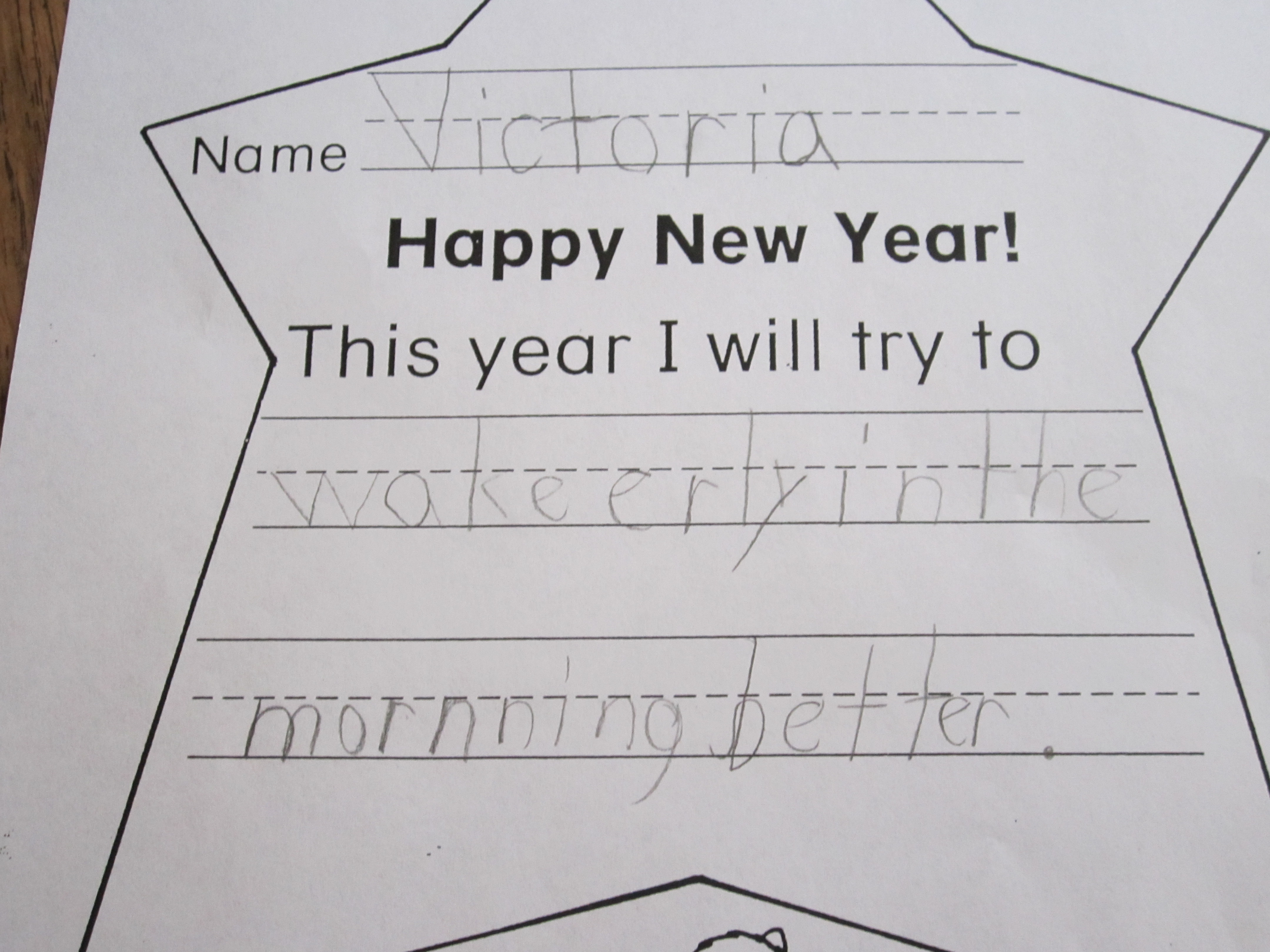
I tucked my oldest girl into bed last night and she told me, “Today at school, Mrs. Davidson explained all about how people make plans to be better.  So I made a plan for the new year.”

I expected her to announce a strategy to get a dog or be a princess or learn pointe in ballet or be a famous artist–the true aspirations of her little heart.

Instead, she said, “I’m planning to get up in the morning early and get ready for school easier every day.  Did you make a plan to be better this year, mom?”

“I haven’t chosen a resolution,” I said.  “Do you have any suggestions?”

Without any hesitation or even time to take a breath, she said, “I think you should play more video games!”

Perhaps that translates to “Be a more fun mom and play with my kids more often.”  That’s certainly a resolution worth making!

David lived long before the time of New Year’s resolutions, fad diets, gym memberships, and self-help books.  Still, he wrote a psalm of “I wills” that translates into some worthy goals for all of us in 2012.

I will praise God more.

David began with this promise to God, “I will sing of your love and justice; to you, Lord, I will sing praise” (Psalm 101:1).  It’s a reminder to be grateful and to give testimony to others of God at work in your life.  Give thanks everyday.

I will strive for the blameless life.

David continued, “I will be careful to lead a blameless life .  . . I will conduct the affairs of my house with a blameless heart” (Psalm 101:2).

We can’t be perfect.  Every mom will lose it occasionally.  Every wife will mess up.  Every friend will forget. We all sin.

Yet, still we can “be careful,” as David says.  We can allow God to work on our hearts and clean out the dark and dusty places.  We can ask for His help controlling our tongue and our tempers.  We can pray that He will guide us as moms, wives, sisters and friends and help us become more godly every day.

I will guard my heart and mind.

We used to sing as kids, “Oh be careful little eyes what you see  . . .  be careful little ears what you hear . . . be careful little feet where you go”

David said it this way, “I will not look with approval on anything that is vile. I hate what faithless people do; I will have no part in it.  The perverse of heart shall be far from me;
I will have nothing to do with what is evil.” (Psalm 101:3-4).

Sometimes we excuse a little sin or shrug off feelings of discomfort about that show, or song, or movie, or book or relationship.

When God looked out on the sin-laden world during the time of Noah, He “regretted that he had made human beings on the earth, and his heart was deeply troubled” (Genesis 6:6, NIV).

The Message says it this way: “God was sorry that he had made the human race in the first place; it broke his heart.”

This year, consider making that your standard for what you see, what you hear, where you go and what you do.  Will this break the heart of God?

I will watch my words.

In his epistle, James wrote: “Brothers and sisters, do not slander one another” (James 4:11).

‘Slander’ sounds so harsh.  Perhaps we feel it’s okay to speak our minds or criticize when it’s the truth.

Not according to James.  Beth Moore notes in James: Mercy Triumphs: “the Greek word translated ‘slander’ in NIV also means ‘criticize’ (HCSB) and ‘speak against’ (NASB).

So, if it was said critically about another person, it was sin.  We need to be women with gracious tongues, not judgmental or critical ones.

David goes a step farther:  ” Whoever slanders their neighbor in secret, I will put to silence; whoever has haughty eyes and a proud heart, I will not tolerate” (Psalm 101:5).   Not only was he not going to speak slander, he wouldn’t even listen to it from others.

I will invest in Godly friendships

David finished off the Psalm with these words:

“My eyes will be on the faithful in the land, that they may dwell with me; the one whose walk is blameless will minister to me. No one who practices deceit will dwell in my house; no one who speaks falsely will stand in my presence. Every morning I will put to silence all the wicked in the land; I will cut off every evildoer from the city of the LORD” (Psalm 101:6-8).

This year, find ways to build into relationships with others who love God.  Join a small group.  Find a Christian mentor.  Choose someone to befriend who you can mentor in turn.  God never intended for us to walk this Christian life alone.

There you have it.  David’s “I will” list.

What has God placed on your heart for the new year?

Heather King is a wife, mom, Bible Study teacher, writer for www.myfrienddebbie.com and worship leader.  Most importantly, she is a Christ follower with a desire to help others apply the Bible to everyday life with all its mess, noise, and busyness.  To read more devotionals by Heather King, click here.

Copyright © 2011 Heather King

What’s Important

We sat at her kitchen table and listened as she told us about the old days. She talked about life on their farm as an immigrant family from Germany.  She explained how they trekked for miles to go to Sunday service at their church and then stayed in town, visiting with others, making it an all-day affair before traveling back home again.  She told us what it was like as a German-American during World War II and walked us through the family tree.

My mom had said we should listen to my great-grandmother’s stories now, while she was still there to tell them.  So, we did.  Then she died when I was a teenager and the opportunity to listen was gone.

If you read this blog even on the weekends, you’ll know I finished up 2011 by reading Billy Graham’s book, Nearing Home: Life, Faith and Finishing Well.  It was a little like the day that we sat and listened to my great-grandmother tell stories.  That day, we had really listened to her talk about life.  By reading his book, I did the same for Billy Graham.

I’m not really a resolution-lover or a diet-plan designer or a prediction-maker.  But I am thinking this new year of restating priorities.  Of taking some of what Billy Graham had to say and letting it influence and guide me right from the start of this year.

It’s about making people the priority.

Billy Graham was thinking of connecting with grandkids.  But really, these principles could guide all our relationships: with our kids, our spouses, our parents, our siblings, our friends and Bible study cohorts, the folks in our Sunday School class, our neighbors, and more.

He said:

Pray consistently

We pray specifically and routinely for those we see every day and those who live too far way for frequent visits.

He said, “Don’t pray only in general terms (the kind of prayer that vaguely asks God to bless them.)  Make your prayers specific, and make them daily” (p. 98).

This is why I love my Thursday mornings with my Moms in Prayer group.  We pray for the math tests and the homework, the activities and playground witness of each of our kids.  Every week, we thank God for the very specific and identifiable ways He has answered our prayer and every week we are amazed at how He once again faithfully took care of these little ones we love.

So, what to pray?  I like to pray through Stormie O’Martian’s Power of a Praying Parent (or Power of a Praying Wife when I pray for my husband).  Yet, you can simply pray not just for physical safety, but for good decisions, for a strong Christian witness, for the growth of their faith, for their ability to withstand temptation and peer pressure, for their friendships, and for whatever specific difficulties they are facing.

Encourage Them

Billy Graham wrote, “Don’t major in the negatives!  They need to know we love them and most of all that God loves them (p. 100).  This year, I want to choose my words carefully and thoughtfully so that I can “encourage one another and build each other up” (1 Thessalonians 5:11).

Be an Example

Avoid “do what I say, not what I do!”  If I want my daughters to learn to have personal devotions, then I let them see me sit at the kitchen table with my Bible and cup of tea.  If I want them to be kind, I practice kindness.

Billy Graham said “Remember, your children and grandchildren learn more about you through observing your actions and attitudes.  Do they see Christ in you?  Will they remember you as someone who was a living example of His compassion and love? (p. 100).

All in all, his book reminded me to make people the priority of my new year.  They certainly were for Christ.

We tend to give when it’s convenient.  We often make decisions based on what’s practical.  We give what we can afford.  We get together when we’re “free.”

But Jesus served others when it was inconvenient and impractical.  He skipped meals, changed plans, took the long way around, gave up time away for those who needed Him and died to save them.  He didn’t stay up on the cross for the sake of a theology or a plan.  He did it for love of people.

My husband said, “often what is important isn’t what’s practical” in our relationships with others.

So, this year I want to major on the important, even if it’s impractical, hard, or downright crazy.

Heather King is a wife, mom, Bible Study teacher, writer for www.myfrienddebbie.com and worship leader.  Most importantly, she is a Christ follower with a desire to help others apply the Bible to everyday life with all its mess, noise, and busyness.  To read more devotionals by Heather King, click here.

First Things First

A new year means excitement, fireworks and confetti, predictions and optimistic resolutions.  It’s people declaring, “It’s going to be a great year” and others just hoping that “2012 is better than 2011.”

If there’s anyone out there who is a little like me and perhaps just a little honest, maybe a new year also brings pangs of fear.

Just a bit.

I’m not generally comfortable with the unknown so when you survey a fresh calendar with 12 pages left to go and when you start penciling in dates and activities and you consider how many squares will be filled in later, it can be a little overwhelming.

What if something goes wrong?  What if 2012 isn’t so great?

On New Year’s Day, I picked up my Bible and read these words:

“First this: God created the Heavens and the Earth—all you see, all you don’t see.  Earth was a soup of nothingness, a bottomless emptiness, an inky blackness. God’s Spirit brooded like a bird above the watery abyss” (Genesis 1:1-2 MSG).

“First this.”  For years, I’ve read this verse in other translations and they all begin this way: “In the beginning.”

So, right here at the start of our year, let’s pause and consider what’s first.  What is God doing in our beginning?

Like a blank calendar, the world began “formless and empty” and that’s where fear can reside: in the inky blackness of uncertainty.  It’s not so much in “all you see,” but lurking much more definitely in “all you don’t see.”

But God saw.  He wasn’t surprised by the light, the waters, the land, the creatures or Adam and Eve.  He is the God who designs, plans, forms and creates “all you see, all you don’t see.”  When He said, “Let there be light,” surely He expected light!

Indeed, “the Spirit of God was hovering over the waters” (Genesis 1:1, NIV).  In the past, I considered this mystical perhaps, a hazy and heavy apparition hovering like a fog just above the unformed mass of earth.

But The Message says “God’s Spirit brooded like a bird above the watery abyss” and this is much more the picture here.

John Snyder wrote: “the Hebrew writer portrayed the Spirit of God as ‘hovering over’ the unformed and unruly mass, much like a mother bird fluttering over her brood.  The picture here is the very careful and loving attention God gives to His creation–protecting, shaping, and guiding its development.  In other words, there’s no room for chance or randomness.  Everything is under His control.”

God is in charge.  That’s the reminder here in the very first words of the Bible.  And He’s not an arbitrary ruler or a mysterious mystical force.  He’s loving and attentive.  He brings order out of chaos and light forth from darkness.

That’s what we can look forward to in 2012.  In all of the hectic chaos of our lives, in the disorder of our finances or relationships or jobs, in the shaky ground of ministry or health, in the shadowy uncertainty of all that lies ahead—God is in control, designing a plan for us that isn’t just okay or acceptable.

It’s good.

When God finished off His week of creating, “God saw all that he had made, and it was very good” (Genesis 1:31, NIV).

We should expect nothing less from a Good God who is present and active in our lives, just as He was from the first moments of our world.  Rest in that and dare to enjoy a new year.

Heather King is a wife, mom, Bible Study teacher, writer for www.myfrienddebbie.com and worship leader.  Most importantly, she is a Christ follower with a desire to help others apply the Bible to everyday life with all its mess, noise, and busyness.  To read more devotionals by Heather King, click here.

Copyright © 2011 Heather King

Watcha Reading?

It’s time for all things New Years: resolutions and diet plans and Spiritual re-commitments.  I’m wondering–what are you reading in the new year?  Are you following a Bible reading plan?  A devotional?  Picking up a study or tackling a good book?

Here’s what’s on my kitchen table right now as I plunge into the start of my 2012 reading year.  What’s on your reading list?

The Bible:
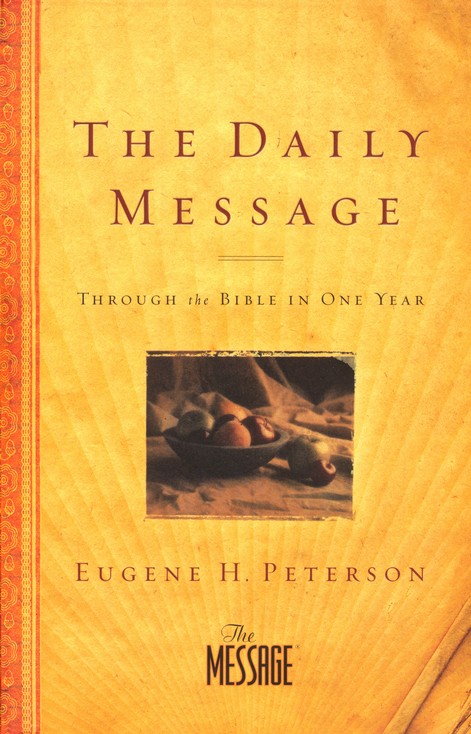
The Daily Message
In his introduction to this one-year Bible reading program, Eugene Peterson writes, “Reading is the first thing, just reading the Bible.”  Few things thrill me more than jumping into another year of reading God’s Word and I’ve already crinkled the first few pages and written my thoughts in the margins for today’s reading.

Scripture Memory:
100 Bible Verses Everyone Should Know By Heart by Robert J. Morgan
I’m excited to read Morgan’s book because it encourages Scripture Memory not just by listing off the verses Christians should know, but explaining a little bit about them and why they matter.  He’s categorized them also, making this Scripture Memory program thematic.

The Study:
James: Mercy Triumphs by Beth Moore
I started this study just a few weeks ago and it’s a dig deep kind of book.  I love it.  James didn’t mince words or pull punches when he wrote his epistle in the Bible, so this is a study that challenges at every turn.  But, James also wrote, that God “gives more grace” (James 4:6) and “draw near to God and He will draw near to you” (James 4:8).  That’s reason enough to step up to the challenge of serious Bible study in 2012.

The Devotionals:
Your 100 Day Prayer by John I. Snyder
I had the chance to review this devotional and prayer guide this past year and decided I’d read through it more carefully and deliberately in 2012.  It’s a commitment to 100 days of focused prayer on a specific prayer need along with a great devotional for each day.  (You can read my full review here.)

A Year with Jesus by Eugene Peterson
This is a daily devotional I started partway through 2011, so I’m still reading through as I begin 2012.  I love it.  Really, really love it.  It’s a handful of verses in either the gospel of Matthew or John, a few sentences with thoughts from Eugene Peterson and then a brief prayer.  I thought it was too short to say anything valuable.  Boy, was I wrong!  Some of the deepest and most Revelation moments I’ve had with God this year have emerged from a page’s worth of reading in this book before I go to sleep each night.

The Book:

The Shelter of God’s Promises by Sheila Walsh

Sheila Walsh writes, “God not only keeps His promises but He longs to keep us in them.”  Studying the promises of God seems like a great way to begin the new year, knowing that He will be true to His Word and faithful to do all that He has said.

It’s a reading list I’m so excited about for the new year!  I hope you’ve found a way to read the Bible, study it and pray through it in 2012 also!