Weekend Walk: 09/10/2011

Hiding the Word:

Last Sunday, my oldest girl graduated to an older Sunday School class.  She burst out of there so excited about how great it was because they “did great crafts!”  They do something else, too . . .  memorize a verse each week.

This week, her verse is one of my favorites:

“Trust in the LORD with all your heart and lean not on your own understanding;
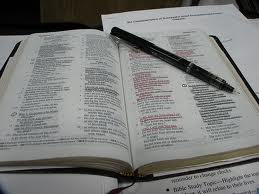
in all your ways submit to him, and he will make your paths straight”
Proverbs 3:5-6

I’m posting that around my home in the NIV translation this week to memorize and meditate on.  But, I also want to share with you the translation in the Message, which I also came across this week in my reading.

Trust God from the bottom of your heart;
   don’t try to figure out everything on your own.
Listen for God’s voice in everything you do, everywhere you go;
   he’s the one who will keep you on track.

Those are freeing thoughts—we don’t have to figure everything out on our own and that it’s God who keeps us on track.  We just need to listen at all times to the prompting of His Spirit.

It’s also a challenging thought because, well, I like to figure everything out on my own. But that involves very little faith and trust in my God.

Have you picked a verse to learn this week?  Will you share it with us?

Weekend Rerun:

God’s Love Letter, Originally published 03/09/2011

Yet the LORD longs to be gracious to you; therefore he will rise up to show you compassion (Isaiah 30:18, NIV)

The other night I was fluffing my pillows before I turned out my light and I felt paper where pillow should be.  A card!  And inside, a love letter from my husband.  I cried as I read it and cried more the next day when I read it again. (No one reads love letters just once, right?!)

Everyone receives love in different ways, but words are precious to me.  Whether they are written or said, words are the most powerful way to show me love and the most potent weapons used to hurt me.  That’s because they rumble around in my head and heart and echo back to me over time.

Still, spoken words and written words aren’t equal.  Yesterday, I wrote that humans are forgetful creatures.  We so easily forget what people say to us and sometimes we mis-remember and distort conversations.  Written down, though, the words became more concrete and able to withstand time, changing circumstances, and shifting emotions.

Unfortunately, I do sometimes forget.  The other day I had a breakdown while doing my hair.  I was getting ready to go out with my husband, so I thought, “I’ll try to look nice.”  So, I painted my nails.  I’m the worst ever at painting my nails.  I’m never patient enough and always touch something before they’re dry.  In fact, it’s pretty impossible to meet the needs of three little people without touching my children, so I had to re-paint this one fingernail FOUR times!!!  At that point, when my daughter asked me, “Mommy, can you . . . .” I gave in and just took the nail polish off completely.  Then, I decided to work on curling my hair.  I love curly hair.  But, alas, I was the kind of girl who read books as a child and not a little girl who played with hair.  That means that I am now a totally clueless grown woman when it comes to curls and blow drying and styling.  After just a few attempts at curls resulting in frizz and disaster, I washed it all out and just left my hair the way it normally is.  So much for dressing up.

At that point, I forgot.  I forgot my husband loves me the way I am and he thinks I’m beautiful.  Inside, I heard the lies—“You aren’t pretty enough.  You’re a plain Jane and always will be.  You’re surrounded by women with better hair, skin, nails and clothes and you just don’t measure up.”

I need the reminders that I am loved.  Imagine if a married couple said, “I love you,” on their wedding day and then never again expressed love for each other.   Years later, the wife complains, “You never tell me you love me” and the husband answers, “I showed you I loved you when I married you.”

God showed us His love clearly and completely through the cross.  Romans 5:8 says, “But God demonstrates his own love for us in this: While we were still sinners, Christ died for us” (NIV).  That sacrifice should serve as concrete evidence of love.

The world tells us, “Look at these bad circumstances in your life.  God doesn’t love you.”   We sin and we think, “No way can God forgive me or use me or love me.  I’m too messed up.”   We feel distant from Him, and we think, “God’s left me.  He’s no longer here by my side.”  But, we look to the cross and we remember, God loved me enough to die for me even when I was still rejecting Him.

Christ’s death on the cross was the most perfect expression of love, but God knows us.  He knows our fickle and forgetful hearts.  He knows that—like a wife in a marriage—we need reminders and expressions of love over time.   So He gives us the Bible, His love letter to us.  We don’t need to seek affirmation and fulfillment from other people or accomplishments.  At any time in a day, we can meet with God and be reminded of His great love.

I tell my two daughters at least once a week, “No matter what anybody says and no matter what happens, remember that you are loved, you are beautiful and you are smart.”   Then, they roll their little eyes at me and sigh, “I know, Mom.  You tell us all the time.”  And I do.  I tell them all the time because the media, culture, mean girls, and Satan will fight hard to tell my girls lies, to convince them that they are ugly, fat, unloved, and not good enough.  I give my daughters truth over and over again, hoping that they can identify and reject the lies.

It is in Scripture, that God expresses His love over and over again, so that we don’t forget it.  In Hosea 2:19, we read:

And then I’ll marry you for good—forever!
I’ll marry you true and proper, in love and tenderness.
Yes, I’ll marry you and neither leave you nor let you go.
You’ll know me, God, for who I really am (MSG).

Stressed out about work?  Read God’s Word and be refreshed.  Feeling like a failure as a parent?   Let God’s Word encourage and strengthen you.  Not sure that God can take care of you?  Dig deep into the Bible and remember His promises.  Struggling with feeling like you aren’t beautiful or loved?  Take down God’s love letter from the shelf and be reminded of how He cares for you and longs to lavish you with affection and blessing.

Sitting on the shelf unread, God’s love letter to us might look nice and serve as a memento.  But, it’s only when we take God’s Word down and read and re-read it that the words regain their power and become an effective arsenal against the lies we face every day.

****************************************************************************************************

Heather King is a wife, mom, Bible Study teacher, writer for www.myfrienddebbie.com and worship leader.  Most importantly, she is a Christ follower with a desire to help others apply the Bible to everyday life with all its mess, noise, and busyness.  To read more devotionals by Heather King, click here.

Copyright © 2011 Heather King

Back to School Lessons, Part Three: Silly Mom, School Buses are for Kids

“With your help I can advance against a troop; with my God I can scale a wall”
(Psalm 18:29).

We went out early on the first day of school, so full of excitement about the big day that we couldn’t stand in the house a moment longer.  My girls had been wearing their backpacks for a full five minutes before I finally opened the door and we stepped outside.

And there we stood, dad, mom, and three girls waiting, waiting, and waiting for the big yellow bus.

Then it came, and the older girls climbed up the steps, the doors shut, and the bus pulled away.  And I wasn’t on it with them.

Because school buses aren’t for moms.

At the end of the day, my baby and I walked down to the end of our driveway and watched for the bus to return.  After it was five minutes late, I gripped my cell phone tightly in case the school called with horrible news.

After ten minutes of being late, I just knew that my daughters had gotten lost and placed on the wrong bus.  Surely they had been shipped to some other route across the county all because I hadn’t been there to guide them.

After fifteen minutes of being late, I thought they must have gotten lost in the school hallways and they would be so terrified they wouldn’t be able to tell their name much less their teacher’s name or room number or my name or their address or phone number.  No one would ever find them.  My girls would simply be missing in the halls of the school forever  . . . all because I wasn’t there to speak for them!

But eighteen minutes after the bus was supposed to arrive, it finally stopped in front of our home.  And guess what?

The girls were on it.  They were safe and cheerful.  They hadn’t gotten lost for a moment

What’s more . . . they knew their room numbers and their teacher’s names and yes, even how to use the school bathroom.

I guess they survived without my hovering presence today.

Maybe there will be times when they struggle and feel a little lost and I will need to navigate the difficult waters of “Mom-dom,” deciding when to step in and rescue them and when to trust that we’ve trained them well enough to manage on their own.

Even God, the Perfect Father, navigates this fine parental balance between deliverance and training.

In Psalm 18, the writer declares that God:

“reached down from on high and took hold of me;
he drew me out of deep waters.
He rescued me from my powerful enemy,
from my foes, who were too strong for me.

(Psalm 18:16-17).

God yanked the Psalmist out of the drowning waves and rescued him from overwhelming foes.

Not only that, the poet tells God, “You provide a broad path for my feet,
so that my ankles do not give way” (Psalm 18:36).

Sometimes God knows we can’t handle this foe and we need rescue.  On other days, He gives us easy circumstances, a broad path, a relaxing walk, rather than a treacherous mountain climb up a narrow rock-filled pathway because He knows our feet are tender and uncertain.

But life isn’t always easy and our journey isn’t always a Sunday stroll on a bright and cheerful day.  God doesn’t always carry us out of tough times; sometimes He asks us to rely on all the training He has poured into our hearts and minds so that we will overcome.

Thus, in that same Psalm, we see: “With your help I can advance against a troop; with my God I can scale a wall” (Psalm 18:29).

And why can we perform these feats of wonder with God’s help?  Because He has trained us in times of peace so that we can battle through times of war.

The Psalmist says:

It is God who arms me with strength and keeps my way secure.
He makes my feet like the feet of a deer;
he causes me to stand on the heights.
He trains my hands for battle;
my arms can bend a bow of bronze (Psalm 18:32-34).

God has exercised our limbs of faith and traveled with us in paths both broad and narrow.  Our feet have grown accustomed to the journey, becoming sure-footed like a deer’s and able to scale great mountainous heights.

And while God is always with us, never abandoning us for a moment, sometimes He chooses to walk alongside us through difficult circumstances rather than lifting us up and carrying us through them.

My baby likes to be carried and sometimes she stands at me feet, waving her arms at me and jumping up and down so I’ll lift her up onto my hip and hold her close.  Sometimes I scoop her up.  Other times I reach my hand for hers and tell her, “You can walk.”

Maybe God is saying that to you today. Perhaps you’ve tapped your feet impatiently at God, waiting for Him to place you on His shoulders and make all of these hard times just disappear.

Maybe you feel like it’s all just too much for you and you can’t travel a step further, not even one more moment down this path.

But instead of offering you an escape route, maybe your Father God, knowing full well what is best for you, is asking you to walk through the difficult road, at least a little farther.  He will provide all that you need, the training, the strength, the energy, the patience and perseverance.  And when He sees that your “foot is slipping,” like the Psalmist, you can say, “your unfailing love, Lord, supported me” (Psalm 94:18).

Heather King is a wife, mom, Bible Study teacher, writer for www.myfrienddebbie.com and worship leader.  Most importantly, she is a Christ follower with a desire to help others apply the Bible to everyday life with all its mess, noise, and busyness.  To read more devotionals by Heather King, click here.

Copyright © 2011 Heather King

Back to School Lessons, Part Two: Love is in the Lunch Box

Sandwich, fruit, snack, drink, napkin.

Check, check, check, check and check,

Two Hershey kisses and a note saying, “Kisses from me to you.  Love, Mom.”

Check!

It really doesn’t matter whether we packed the lunch bag or sent the money in for the lunch line, whether we wrote a note or didn’t, if we enclosed a fancy napkin or sent in a folded paper towel, still we moms likely thought of lunch.  We made a plan to provide for our child’s nourishment.

Not all kids have a mom or dad who lives out love every day through simple acts of kindness and provision.  That makes it easy to forget that a sandwich for lunch and clean clothes for school are an expression of love.

The people in your life, whether they are your children, or your grandchildren, or your aging parents, or a sick friend, could say you love them because of your words.  When I grab my girls in a surprise hug and whisper, “I love you,” my girls always sigh loudly and say in exasperation, “We know, Mom.  You tell us all the time!”

Maybe you tell your loved ones that you care all the time, too.

But there are depths of love that remain inexpressible in words and are only made clear in our actions.  No one may even recognize the love while it’s ongoing, but they would miss it in a heartbeat if you weren’t there.

It’s the fact that we’ve provided for their lunch.  It’s being there to meet the bus at the end of the day.  It’s sitting at the table and patiently working through math problems.

And so much more.

It’s smoothing back hair and bringing juice to a sick child.
It’s reading a book by a nursing home bed.
It’s holding a hand in a hospital room
It’s toting a meal to a recovering neighbor.
It’s washing bed linens soiled by sickness.
It’s writing a note to a friend.

In our everyday lives, our love doesn’t matter much if it’s expressed in words, but never in deed.

God’s love would be a bunch of meaningless words on a page, too, if He didn’t lavish us with grace every day.

There in His Word, He tells us that He loves us.  We most likely read it or say it or hear it everyday and twice on Sundays.

As adults, though, it’s so easy to become blase and apathetic about God’s love for us.  It’s a children’s concept.  The Sunday School theme.  We define God’s love by nursery songs like “Jesus loves me, this I know for the Bible tells me so.”

And so over time, it seems we picture God as loving us, but not passionately loving us.  It’s more of an unemotional general concern for our well-being and maybe more for the condition of the planet rather than for us personally.

We’ve even confined one of the most powerful Scriptures in the Bible to a kid’s memory verse and little more:  “For God so loved the world that He gave His one and only Son that whoever believes in Him will not perish and have eternal life” (John 3:16).

But did you see that in this verse His love has legs?  He didn’t just say, “Those people I made, they sure are great!  I like them a whole lot and care about them a bunch.”

Oh no.

He put His great love into action.

He loved the world, not just the human population, but you and me and each child on a school bus and each person on your street, individually, uniquely and passionately enough to sacrifice His own Son for our eternal destination.

He wants to spend eternity with you.  Now that’s over-the-top passion.

Why do we sometimes picture God as sitting relaxed on His throne, watching impassively as life bombards us with strife?  Why do we acknowledge that He sacrificed His Son for us and then treat that as “no big deal?”  Or perhaps we fail to recognize the millions of ways He sends gifts of love and grace to us every single day.

In Psalm 136, the worship leader engaged his congregation in responsive praise.  He sang out what God has done for them and the people answer in return, “His love endures forever.”

Twenty-three times they sing back the refrain, declaring that God loves them and always will.

Why?  Just because He said the words, “I love you”?

No, because He “made the heavens” and “set the earth upon the waters.”  He brought Israel out from slavery in Egypt and “divided the Red Sea asunder and brought Israel through the midst of it, but swept Pharaoh and his army into the Red Sea.”  He struck down enemy kings and gave the Hebrew nation the Promised Land.

It’s a litany of God’s love.  “His love endures forever” and we know it because of all He has done for us.

There at the bottom of the long list of reasons to give thanks: “He gives food to every creature” (Psalm 136:25).

Oh, yes, He packs our lunch.

How has God shown you His love today?  How can you give Him thanks?

Heather King is a wife, mom, Bible Study teacher, writer for www.myfrienddebbie.com and worship leader.  Most importantly, she is a Christ follower with a desire to help others apply the Bible to everyday life with all its mess, noise, and busyness.  To read more devotionals by Heather King, click here.

Copyright © 2011 Heather King



Back to School Lessons, Part One: How to Use the Bathroom

On the first day of preschool for my oldest daughter three years ago, I drove up to the doorway.  The teacher leaned in to open the car door and greeted my beaming girl, who had her hair done up sweetly and her clothes picked out special.

Other children had been lifted out of the car by the expert educator, as they screamed for mom and hung their heads low in sorrow at the separation.

Not my daughter.  She bounced out the door and practically sprinted down the hallway to the classroom.  So much for separation anxiety.

I, on the other hand, wiped away tears.  For two hours, I would not know what she was doing or whether she needed me.

At the end of the day, I wanted a full report on all her activities.  Instead, the teacher helped her back into the car and said, “She had a good day!”

A whole two hours of her life spent without me there even to watch.

Truly, it’s the difficult goal of parenthood—to train our children so they function independently.  Teach them what they need to know now so that they succeed tomorrow.

While God never trains us for independence, He is forever building into our lives, hearts and minds today what we will need the next day and the day after that. 

And sometimes we miss it.

So often recently, I have heard people denounce the study of God’s Word in favor of what is “practical” and “relevant,” what’s meaningful to them right now rather than digging in deep to the Scripture.  We want to learn “how to” rather than learn who God is.  We shrug off discipleship in favor of temporary spiritual programs built around a single verse or two.

Now, personal application matters.  The holy words on these pages aren’t there for amusement, or intellectual stimulation, or comfort alone.  If we read without change, we are missing it.  We are missing all that Scripture was intended to be for us.

But, how are we to know now what will matter in our lives tomorrow?  If we seek only that which has immediate application to our lives today, here, now, in this situation, the Bible becomes nothing more than a Band-Aid for life’s boo-boos or a pocket map for our life’s journey.

To celebrate the last day of summer vacation, I sat down with my girls today and had a heart-to-heart about the beginning of school.  (I know some of you have already started the school year, but for us it begins tomorrow).

I looked them in the eyes in all their bright-eyed excitement about school and making new friends and opening new crayons and learning new ideas . . . and I gave them the most important instructions I could think of for the year:

  1. Do not wait to go to the bathroom until it’s an emergency.
  2. Go to the bathroom before you go to the playground for recess and before you get on the bus at the end of the day.
  3. Raise your hand and ask your teacher permission to go to the restroom.
  4. Close the door behind you.
  5. Flush when you are done.
  6. Wash your hands.

To me, these seemed like essential words of wisdom.  To them, they seemed banal and unimaginative.

Just wait until they have to go to the bathroom tomorrow . . .

God so often is giving us the training we need for the future, and we in similar fashion, roll our eyes, shrug our shoulders, and avert our gaze at anything so boring, so unnecessary, so impractical.

How could David know that days spent in the fields watching boring, stinky sheep would train him to be a warrior king?

How could Moses know that a childhood in an Egyptian palace and 40 years in the wilderness moving sheep around would prepare him to be the deliverer of the Hebrew nation from 400 years of slavery and then the leader of that nomadic people for another 40 years?

How could Joseph know how years spent managing Potiphar’s house as a slave and another season managing his fellow convicts while wrongfully imprisoned would prepare him to save the entire Egyptian nation and the surrounding countries from a 7-year famine?

How could they know?  How do you know as you sit with your Bible before you what verse you will need to whisper in the night a year from now or the passage you’ll need to cling to even a decade later?

We don’t know.  But God does.

So, we open up His Word and we dig deep.  We search passionately—not just for the solution to our current problem or the manual for our present situation—but we search for Him, God Himself, and who He is.  We sit attentive in His classroom and become the student of God’s character through the study of His Word.

The Psalmist wrote:

I seek you with all my heart; do not let me stray from your commands.  I have hidden your word in my heart that I might not sin against you.  Praise be to you, Lord; teach me your decrees.  With my lips I recount all the laws that come from your mouth.  I rejoice in following your statutes as one rejoices in great riches.  I meditate on your precepts and consider your ways.  I delight in your decrees; I will not neglect your word (Psalm 119:10-16).

The Psalmist was a dedicated student of Scripture and he tells us how to be the same in this passage.  He tells us:

  • Seek God—not what He can do for you, but God Himself, with all your heart.
  • Memorize Scripture and call it to mind during moments of temptation.
  • Give God praise.
  • Ask Him to teach you.
  • Talk to others about what you’re learning from time spent in His Word.
  • Treat God’s Word like it’s a treasure chest filled to the brim with the most magnificent jewels imaginable.
  • Spend time meditating, contemplating, and praying through the Bible and what it reveals about Him.

And more than anything else, do not neglect His word.  You’re guaranteed to need it, if not today then tomorrow.

Heather King is a wife, mom, Bible Study teacher, writer for www.myfrienddebbie.com and worship leader.  Most importantly, she is a Christ follower with a desire to help others apply the Bible to everyday life with all its mess, noise, and busyness.  To read more devotionals by Heather King, click here.

Weekend Walk, 09/03/2011

I hated missing out on last week’s Weekend Walk and the opportunity to choose a verse to meditate on all week.  I hope you blazed ahead without me and chose a verse of your own.  If not, I’ll get us back on track today!

Hiding the Word:

At Women of Faith, my friend leaned over and pointed to a verse in her prayer journal that she had underlined.  It was perfect as we contemplated the imminent arrival of Hurricane Irene.  The day after the storm, I opened my devotional and found the exact same verse.  When God repeats Himself, I have learned to listen.  So, my verse for this week is simple and sweet:

Surely I am with you always, to the very end of the age.
Matthew 28:20

This week, I’m committed to contemplating the ever-constant presence of Christ in my life.  I want to be aware of Him rather than distant from Him.  I want to rely on Him rather than be independent.

Weekend Rerun:

Your Comforts Delight My Soul, Originally Posted 02/21/2011

Last night I had a terrible dream that I was preparing to lead worship—sitting at the piano all ready to go—when I saw my cell phone bill.  Obviously, in dreams it makes total sense that I’m checking my mail just before the music starts.  Anyway, I looked at that bill and it was $1,717. Then the music started and I couldn’t worship.  I couldn’t figure out what words to sing or what notes to play.  I was playing a different song than the congregation was singing.  It was a disaster.

Obviously, I woke up in a cold sweat from this dream (who wouldn’t be freaked out by a cell phone bill and public disaster like that) and couldn’t get back to sleep for a while.  I was anxious and worried about something that only existed in my dreamworld.

Today, as I was doing my devotions, I was reminded of how so much of my worry is about “fantasy situations”—the what if’s I stress over that never actually come true.  These anxious thoughts also always affect my worship.  It is just not possible to fret and praise at the same time.

In her book, Me, Myself and Lies, Jennifer Rothschild notes that the Old English and Old High German origins of our word “worry” mean “to strangle.”  Indeed, worry strangles us, choking out hope, joy, trust and, as it says in her book, “the life-giving truth that should be filling our thought closets” (p.23).

The Psalmist wrote, “Search me, O God, and know my heart; test me and know my anxious thoughts, See if there is any offensive way in me, and lead me in the way everlasting” (Psalm 139:23-24, NIV). I have always loved that verse and I copy it into my journal every time I read it in my devotional time.  Yet, it’s not something I find easy to do.

It’s difficult sometimes to hand over our thought lives to God.  Even though we know worry harms us and our relationship with God, we don’t want God to search our hearts and test our thoughts.  Somehow worrying makes us feel in control and we feel that handing over our anxieties means truly relinquishing any modicum of control we have in our lives.

Thomas Merton said, “Anxiety comes from strain, and strain is caused by too complete a dependence on ourselves.”  It’s true that when it’s broken down, worry essentially is a lack of trust or dependence on God.  We’re telling Him—“we know that Scripture promises us You will provide, You will comfort, You will bring peace, You will be our Advocate, but I’d rather just depend on my ability to fix my circumstances.  Thanks anyway, God”

Chris Tiegreen in Worship The King goes one step even farther than that.  He calls our fear “anti-worship.”  In his devotional, he writes:

But we who worship God cannot praise him with such insecurities.  Our fears are a form of anti-worship–a clear declaration that our God might not have promised us enough, or might not be able to follow through on what He has promised.  Yes, He will let us go through hard things, but never outside of His timing or beyond His protection. So worship Him.  And don’t worry about it.

Refusing to worry, fret, stress, fear and be anxious doesn’t come to us naturally.  It is a discipline of the heart and mind.  We must reject anxious thoughts, deny our emotions the opportunity to take over our lives, and fill up with the truth of God’s Word and His promises to us.

In Psalm 94:19 it says, “In the multitude of my anxieties within me, Your comforts delight my soul.” Take delight in His comfort today and consciously choose trust over fear.

In Kathryn Scott’s song, At the Foot of the Cross, she sings, “I lay every burden down at the foot of the cross.”  That’s the best place for those burdens to be—not on our back, but at His feet.

***************************************************************************************************

Heather King is a wife, mom, Bible Study teacher, writer for www.myfrienddebbie.com and worship leader.  Most importantly, she is a Christ follower with a desire to help others apply the Bible to everyday life with all its mess, noise, and busyness.  To read more devotionals by Heather King, click here.

Copyright © 2011 Heather King

The Holy Act of Doing Dishes

You will seek me and find me when you seek me with all your heart.
Jeremiah 29:13

A week ago to the day, I was escaping the mundane and the daily to retreat to Women of Faith.  Even with the interruption and distraction of a hurricane, I managed to get away for one of the intended two days and it was uplifting, encouraging, and challenging.

I walked away from that trip with some verses and thoughts that I’m deeply weighing, considering and praying through.  It’s trite to say that a conference or speaker or book “changed my life.”  Yet, it happens all the time.  I read a new perspective and alter my behavior.  I listen to a speaker and adjust my thinking.

Life-changing events can happen more often than we realize.  Shouldn’t we be transforming daily into the image of God’s Son? Life changes don’t necessarily require “bigness.”  It’s not just choosing whom to marry or deciding to change careers that qualifies.  Instead, it means trimming this, discarding that, washing away this, and adding that so every day we’re making the changes that bring us one step closer to Jesus.

So, I can truly say that the speakers at Women of Faith this year changed my life.  And so did being without power for 5-1/2 days following Hurricane Irene.  And so has having the power restored last night. I’m different today than I was a week ago.

You see, last Thursday I was longing to escape from the repetitiveness of my everyday—the dishes, the laundry, the sweeping and mopping, the cleaning up and vacuuming and more.

Today, I was thanking God all morning.  For what?

For safety in the storm, surely.  But also that today I can wash my dishes with running water and a dishwasher.  And I scrubbed my counters with a rag dumped in soapy water instead of a Clorox wipe.  I vacuumed instead of picking up large pieces of child-debris by hand.  Praise God for the chance to vacuum!  All morning I have listened to the humming and spinning of the washer and dryer.  I’m thankful that I can use these machines to give my family clean clothes.

If only they had a machine to fold the clothes and put them away.  But, that’s another story . . . and probably heaven.

I truly believe in the value of spiritual retreating.  Christ Himself called His disciples away from the crowds and busyness of their lives to spend time with him alone.  Often, Jesus would send His disciples on ahead of Him while He remained to pray alone long into the night.

Sometimes we need to go away, to escape all that distracts us here so we can fix our attention on Him there.

And then the real work begins. Meeting God when we have set aside time for Him is expected.  We listen to speakers, we pray, we worship, or maybe we even head for a private retreat into the mountains where we pour out our hearts to Him and then sit in silence as He speaks to us.

We anticipate seeing God in the specifically designated portions of our lives we call “Spiritual” and the times we have set aside as “Holy.”

Then we must return to the daily life in all its mundane activity and we must carry into that everyday behavior all that we learned in the holy moments we had set aside.

Can mopping the floor be spiritual?  Can folding clothes be a God-moment? Can doing dishes be part of my quiet time?

If we deny Him a place in the mundane day-to-day life, confining Him instead to a corner of our hearts designated “God stuff,”  then we miss Him and what He’s doing in us and through us.

It’s what the prophet Jeremiah wrote: “You will seek me and find me when you seek me with all your heart.”  Not spiritual heart pieces and holy corners, but all that is in our heart searches after God.

Naaman almost missed finding God.  He was a big-shot, who commanded the army of the king of Aram.  “He was a great man in the sight of his master and highly regarded, because through him the Lord had given victory to Aram. He was a valiant soldier, but he had leprosy” (2 Kings 5:1).

Hearing about Elisha the prophet, Naaman traveled to him to receive healing.  Elisha didn’t even come out of his house to meet with the big, important army commander.  Instead, Elisha sent out a messenger with some simple instructions: “Go, wash yourself seven times in the Jordan, and your flesh will be restored and you will be cleansed.”

This was so . . . .basic.  So unimpressive.  So nonspiritual.  So, “Naaman went away angry and said, ‘I thought that he would surely come out to me and stand and call on the name of Lord his God, wave his hand over the spot and cure me of my leprosy” (2 Kings 5:11).

Naaman wanted a magic show with special effects rather than an order to take seven baths in the Jordan.  But, his servants challenged him: “My father, if the prophet had told you to do some great thing, would you not have done it? How much more, then, when he tells you, ‘Wash and be cleansed!'” (2 Kings 5:13).

A few dips in the Jordan later, Naaman’s leprosy was totally healed.  All because he obeyed God in something simple and unimpressive.

If we have our eyes set only on the spectacular, we will miss God’s healing and cleansing work in our everyday lives.

Will I manage to keep this perspective over time?  Probably not.  I will likely grow weary and burdened with the stresses of daily busyness.  I’ll need to retreat again, stepping away from it all to focus solely on God.

But then I’ll come back home where dishes and laundry and homework is what happens here and that, yes even that dailyness, changes my life bit by little bit.

Heather King is a wife, mom, Bible Study teacher, writer for www.myfrienddebbie.com and worship leader.  Most importantly, she is a Christ follower with a desire to help others apply the Bible to everyday life with all its mess, noise, and busyness.  To read more devotionals by Heather King, click here.

Copyright © 2011 Heather King

The Best Laid Plans of Mice and Moms

“Father, if you are willing, take this cup from me; yet not my will, but yours be done.”
Luke 22:42

I’m a mom who likes to think she knows best for her kids.  I love them.  I want them to be successful, healthy, happy.  I want to shepherd their hearts and minds and invest in the development of their gifts and talents.  I want to “train them up in the way they should go.”

With all my “Mom-Knows-Best” skills, I signed up my middle girl for our church’s private kindergarten the week that registration opened.

For months I prayed the kindergarten class would reach the necessary enrollment.  I stressed and worried and spilled over all my freaked out mother concern to anyone with a listening ear about how her life would be destroyed at five years old if they cancelled the class.

Slowly, I transformed my prayers.  I whispered what started as an uncertain and half-hearted, “Not my will, but yours be done.”  Over time, I began to actually mean what I prayed.  It was a radical shift for me and not a holy place I often reach in this always-in-control life of mine.

And then I picked up the ringing phone and heard the official news. No kindergarten due to low enrollment.

Off I sped to the local public school and registered my little girl in a building and system that seemed too big and unknown.

And I prayed, “Not my will, but yours be done.”

Then began the stress over her teacher.

I prayed for that one special teacher who would connect with my daughter and make her first year of elementary school as exciting and engaging as possible and who would expertly work with her strengths and weaknesses.

We walked into the classroom on open house.  I didn’t love the teacher.  The room seemed busy and confusing.  My child did what I had feared all along—she fell back into herself and shut down in an instant.  Truly frozen in place, I couldn’t convince her to sit at her desk or walk across the room to meet her teacher.

In that moment, I was ready to do anything—unregister her, ask for a move to a different class.  Right away, I prepared to step in and assume control from a God who seemed to be messing this all up.

Then I asked myself–-Had I not prayed all along for the best possible teacher and environment for my daughter?  Could I trust my God to know what is best for my precious girl? Could I place her in His hands?

I whispered in my daughter’s ear as we sat in that kindergarten classroom, “Lauren, I have prayed for you, every day I have prayed, that God would give you the right school and the right teacher.  He has brought you here so we will trust it’s going to be perfect and wonderful.”

And I silently prayed, “Not my will, but yours be done.”

We so often model our prayers on The Lord’s Prayer, the “our Father who art in heaven” that Jesus taught to the disciples.  And so we should.

That prayer with its “Thy will be done on earth as it is in heaven” echoes Jesus’ own words.  We can thus imitate the very prayer of our Savior Himself as He bowed low in Gethsemane, submitting His own desires to the perfect plan of the Father.  “Not my will, but yours be done,” He prayed that night.

It’s unlikely that you are struggling with the same issue as me.  Maybe your kids are grown and married.  Maybe you’re single.  Maybe you’re still rocking an infant at night.

Even so, perhaps you and I are in the same place.  We, with all our knowledge and expertise, think we have formed a perfect plan and then God intervenes.  He declines to give us what we want.

He tells us “no.”

Maybe you, like me, are less likely to react with the submission of Jesus and instead throw temper tantrums like Jonah.

The prophet Jonah had a plan, too.  He had a successful prophetic ministry to the Hebrew people.

In 2 Kings 14:25, we’re told:

He was the one who restored the boundaries of Israel from Lebo Hamath to the Dead Sea, in accordance with the word of the LORD, the God of Israel, spoken through his servant Jonah son of Amittai, the prophet from Gath Hepher.

Jonah had such a good thing going and his plans for his life probably included retiring after a fulfilling career as the voice of good news to his own nation.

Then God commissioned him to be an evangelist to a pagan nation that had long been the brutal enemy of the Hebrews.

You likely know the story.  He ran away from God, spent three days in a fish’s belly, and then after being vomited up on shore, finally obeyed God.

To a pagan nation, he preached coming judgment and they repented.  Even the king donned sackcloth and ashes.  It was one of the largest revivals in history—a whole nation turning to God in the course of one day.

Did Jonah rejoice?  Did he give praise?

Jonah 4:1 says, “but it displeased Jonah exceedingly, and he became angry.”

We could get angry, you and I, when things don’t go our way.  We could stomp away from God’s plan and cross our arms in defiance.  We could run, fast and hard, jumping onto the first ship out of this place.  We could obey, but with an attitude.

Or we could pray, “Not my will, but yours be done,” and trust that our Heavenly Father knows best and remember His promise to work “for the good of those who love him, who have been called according to his purpose” (Romans 8:28).

*************

Live in my area and want to pray for your kids’ school year?  Moms and Grandmas are invited to Newington Baptist Church on Tuesday, September 6th at 9:30 a.m. for First Pray–a time of encouragement and prayer for our kids, their teachers, principals, and school staff.  Won’t you join us? 

For working moms, you can email me your child’s name, grade, school and homeroom teacher and we’ll pray for them, as well: heatherking@cox.net

Heather King is a wife, mom, Bible Study teacher, writer for www.myfrienddebbie.com and worship leader.  Most importantly, she is a Christ follower with a desire to help others apply the Bible to everyday life with all its mess, noise, and busyness.  To read more devotionals by Heather King, click here.

Copyright © 2011 Heather King