In His Time

Teach us to number our days that we may gain a heart of wisdom”
Psalm 90:12

The day has finally arrived!  I’ve iced cupcakes, wrapped presents, and filled goody bags for my daughter’s fifth birthday party.  She has been asking me when this day would come every single morning for 9 months.  I’d show her on the calendar how far she had to go and she would sigh and whine with frustration.  Her birthday simply would never come.  She would never ever be five years old.  Everyone would always be older than her. Surely she would stay four years old indefinitely.  I’ve held her as she sobbed out tears of disappointment only one week ago because her birthday was just too far away.  Seven days was an impossibly long time to wait.

I, on the other hand, feel as if this day has come so quickly.  How is it possible that my gorgeous, brilliant, quirky little one has been with me for five years?  For these past few months, I’ve been telling her to wait, just wait, it will come and it will arrive sooner than she realizes, but those words felt empty and meaningless to her.

Impatience weighs heavy in this house.  My older girl has been telling every stranger in town, “Hi, my name is Victoria.  I’m almost seven.”  Sometimes, she even pads her age a bit and tells them she’s almost ten or almost 12.  And so I lean down and whisper to her that her birthday just happened; she’s still eight months away from even one more birthday, much less four or six!

“Mommy, I want to be in kindergarten.  Mommy, I want to be in first grade.  Mommy, I want to wear point shoes in ballet.  Mommy, I want to be a teenager.  Mommy, I want to be old enough for a house of my own so I can have a dog.” Even my baby toddles around after older sisters trying to do the same “big girl” things they do.

No matter how old they are, they always want to be older.  I try to tell them truth—that one day they will pay bills, and go to work, and care for sick children, and will long for the preschool days when they worried only about show and tell and their snack choice for the day.  Please enjoy this moment right now, I beg.  Please don’t let it pass by you unnoticed and unvalued because you are too busy looking ahead to the next step.

And I have been there.  I have trekked across a college campus and longed for graduation.  Married and been asked by family when we’d have a baby.  Had a baby and contemplated what it would be like to have older kids, and sleep, and no diapers, and no need for babysitters. Worked a job and longed for retirement.   Always too busy thinking about later to actually enjoy now.

Solomon told us “There is a time for everything, and a season for every activity under the heaven . . . He has made everything beautiful in its time” (Ecclesiastes 3:1, 11, NIV).  No amount of rushing or anticipating or worrying will change God’s appointed seasons in our lives.

I love to visit Colonial Williamsburg and walk the gardens surrounding the palace and I long to stroll through the local botanical gardens and enjoy the color and scents and hovering butterflies in a place of beauty.  But, if I travel there before they are ready, before the flowers have bloomed and while the bulbs still lie dormant beneath cold earth, I would see death, not life, brown dirt instead of the brilliant hues of tulips and daffodils.  “He has made everything beautiful in its time,” and so we must cultivate, plant, and tend as God calls us to so that we can enjoy life in its proper season.

Of course, sometimes we feel as if the season we are in has lasted forever and that surely God will never release us to newness and fulfillment.  We remain dissatisfied with the now He has given us as we dream about the future we imagine. And what happens, then, if the next season bears no resemblance to the goals and dreams in our heart?  I know a couple who planned retirement with excitement and anticipation, but the reality wasn’t travel, relaxation and golf.  No, it was stroke and poor health and a future not at all what they had envisioned.  They can’t go back and enjoy the time before caregiving and doctor’s appointments.  It is now a season past.

In Psalm 90, Moses challenges us to keep the proper perspective about our life’s circumstances.  He says, “A thousand years in your sight are like a day that has just gone by, or like a watch in the night . . . Our days may come to seventy years, or eighty, if our strength endures . . . Teach us to number our days that we may gain a heart of wisdom” (Psalm 90:4, 10, 12, NIV).

We all feel stuck sometimes and without hope that we’ll ever overcome our difficulties.  My mom’s greatest advice was to remember that “this is only a season and won’t last forever.”  There were struggles and stresses that consumed my thoughts in the day and kept me awake at night, now long since resolved and in the past.  Sleepless nights with a newborn, a teething infant, terrible twos, potty training, juggling college and work, unemployment—all seasons that seemed interminable when I was in them, but now appear so brief as I scan back over my life history.  Even our entire lives, the seventy or eighty years Moses thinks we have on this planet, constitute so little of the human history God has witnessed and walked through.

So then, we ask that God “teach us to number our days that we may gain a heart of wisdom.”  It is wisdom indeed to realize that the circumstances we are in are a passing season and hope can carry us through to victory. A new season will arrive at just the right moment and it will be beautiful in its proper time.

But, it is also wisdom to number our days, making each one count.  Not letting a single calendar square go by without us valuing it for what it is–this is our life in the here and now and God is present in it. What would it look like if we lingered here in this place, finding the beauty God has created in this time rather than straining to see what lies ahead?  It would be a life of glorious contentment and peace, restful and unrushed as we take the time to look, really look, at the beauty all around us in the reality of our now. Even in the difficult times, we learn to see the beauty in dirt turned over, weeds pulled, seeds planted—the work God is doing in our lives this moment, the beauty of Him active in our lives, cultivating our hearts in this season, knowing that in His own perfect timing He will bring forth growth, shoots of life, and a harvest plentiful.  So much beauty all in His time.

**********************************************************************************************************

Heather King is a wife, mom, Bible Study teacher, writer for www.myfrienddebbie.com and worship leader.  Most importantly, she is a Christ follower with a desire to help others apply the Bible to everyday life with all its mess, noise, and busyness.  To read more devotionals by Heather King, click here.

Copyright © 2011 Heather King

Nothing Too Difficult

“Now the Lord was gracious to Sarah as He had said, and the Lord did for Sarah what He had promised
Genesis 21: 1 (NIV)

Last week, I stood in the checkout line at the grocery store with a week’s worth of food for my family all lined up on the conveyor belt.  I assured the cashier that I didn’t need my milk in a bag; it seemed like putting her through extra effort just to take the plastic bag home and recycle it.  “Not really,” she said, “What is a really big pain is people who bring 15 or more of those reusable bags and make me put cold stuff in one, cleaning stuff in another, bread and eggs separate.  Now, that takes forever.”

I nodded my head with understanding and sympathy.  Meanwhile, I was praying under my breath that she wouldn’t notice how my groceries were carefully categorized and organized as they headed to her scanner.

  • Heavy things first.
  • Nonperishables.
  • Cold items with meat and poultry separate.
  • Non-food items like cleaning supplies and personal care products.
  • Produce.
  • Bread and eggs.

What can I say?  I like my groceries bagged a certain way.  But, I don’t leave this to chance or pester the tired Wal-Mart cashier to organize my purchases for me.   No, I like to help things along.  Truly, I am trying to be considerate of the girl getting paid so little money to incessantly scan and bag during her entire work shift.  Organizing all my items saves her some time and effort.

But, there’s also something else.  I don’t believe that she would do it correctly if I didn’t categorize the items for her.  I don’t trust that she knows not to put my cereal with the yogurt or that my laundry detergent shouldn’t sit next to my chicken.

I don’t believe.  I don’t trust.

Ultimately, it doesn’t matter whether I fully trust and believe in the professional skill of the girl checking out my groceries.  But, my unbelief and lack of trust seep into other areas of my life that should be in the hands of our thoroughly trustworthy God.  It’s a slow drip, drip, drip of anti-faith that I ignore until suddenly I’m drowning in a sea of uncertainty and gasping for air in a flood of my own making.

I pray for things and then make plans and decisions based on God NOT answering my prayers.

I lay at His feet my anxiety and concerns about situations and then snatch them back up later when His answer doesn’t come quickly enough.

I hover over His shoulder and share my opinion on the kind of job He is doing in my life.  Are you sure you want to put the pasta in that bag, God?  Don’t you think the cheese would be better next to the butter, God?   I think you could provide a bit better for me if you changed this about my job.  Don’t you think I’ve waited long enough, God?  Surely there’s a more efficient way of doing things.

I pester and nag and “help” and act like a know-it-all back seat driver.  Abraham’s wife, Sarah, had her moments of grasping for control just like I do.   She helped things along a little bit, made “suggestions” (demands), and pressed ahead with plans without considering consequences.

To be fair, Sarah waited years for God to fulfill His promises and patiently trusted that God would give Abraham a “son who is your own flesh and blood” (Genesis 16:16, NIV).  It may have even been thrilling and easy to believe at first.  A promise from God, a child, the deepest desire of her heart seen by Almighty God and assuredly in her future!  Surely she headed to the wilderness version of Babies ‘R Us and set up a registry just days after Abraham came home and told her what God had promised. Faith is easy when the promises are fresh.

But then nothing.  No pregnancy.  No baby.  Promises faded away.  Questions arose.  Cultural expectations weighed heavy on her.  Just about a decade after the original promise, Sarah’s faith finally buckled under the heavy weight of circumstantial evidence mounting up against God.  He hadn’t done what He had promised.  No baby was coming.  Sarah’s biological clock had ticked and tocked out and she clearly needed to step in and help God out a little bit.

And so the trouble begins.  A second wife for Abraham.  Conflict and abuse between Sarah and Hagar.  Runaway maidservant.  Ishmael born, son to Abraham, but not the child God had promised.

Thirteen years after Ishmael’s birth and about 24 years after the original promise, none of Sarah’s involvement, ideas, or attempts to help (or control) the situation had yielded results.

Yet, in all this time, God’s plans never changed.  His intent from the beginning was to birth an entire nation through Abraham and Sarah and He was willing to let Sarah reach the point of impossibility, of clear human failure, before fulfilling His promises.  She was past menopause, now 90 years old.  There was simply no possible earthly way for Sarah to bring forth the promised heir.

That’s what unbelief would say.  That’s what lack of trust would claim.

God is so gracious to us in our weakness, though.  He certainly was with Sarah.  He visited with Abraham again and reiterated the promise, this time with an added clarification—I believe it could only have been for Sarah’s benefit.  He told Abraham, “I will bless her (Sarah) and will surely give you a son by her.  I will bless her so that she will be the mother of nations; kings of peoples will come from her . . . your wife Sarah will bear you a son, and you will call him Isaac.”

Did you notice that subtle new bit of information in the promise?  The first time, God said that Abraham would have a son and heir.  This time, He clearly said to Abraham, “You know Sarah, as in your wife Sarah?  She will have a son by you.  Together.  Nobody else needs to be involved in this.  Just you and her.  Got it?”

And there was a promise for Sarah in this, too, a special notice by God, who called a childless woman in her 90s to be the Mother of Nations.  As kids we sang the silly song, “Father Abraham, had many sons, and many sons had father Abraham.”  Why don’t we ever sing about Sarah?  After all, the poor woman had to give birth to the promised child at 90 years of age with no epidural.  I think she deserves her own song!

Abraham and Sarah were nothing without God’s miraculous involvement in their lives.  “Look to Abraham, your father, and to Sarah, who gave you birth.  When I called him, he was but one, and I blessed him and made him many” (Isaiah 52:2, NIV).    Like Abraham, it is God’s blessing on us that multiples our lives into bounty and fulfillment.

Therefore our testimonies are not that we have accomplished much or attained great things in our own strength and ability. If Sarah had produced the promised heir through surrogate motherhood, fertility treatments or even naturally while her body was still ripe for childbearing, then there would have been no need for God’s personal touch.

As Beth Moore wrote, “If Isaac’s birth says anything at all, surely it says that nothing is too difficult for the Lord.”  That’s the question God asked Abraham while Sarah stood laughing in her tent over the promise of pregnancy in her old age.  “Is anything too hard for the LORD?” (Genesis 18:14, NIV).  Isaac’s birth proves God’s possibilities even in impossible situations.

In Genesis 21:1, it beautifully says, “Now the Lord was gracious to Sarah as He had said, and the Lord did for Sarah what He had promised (NIV).  And so He will for you.  God will do what He has promised.  And when He does, when He so graciously delivers you, He will receive all the glory and give you a testimony of miraculous provision so that others may believe and trust in a God for whom nothing is too difficult.

***********************************************************************************************************

Heather King is a wife, mom, Bible Study teacher, writer for www.myfrienddebbie.com and worship leader.  Most importantly, she is a Christ follower with a desire to help others apply the Bible to everyday life with all its mess, noise, and busyness.  To read more devotionals by Heather King, click here.

Copyright © 2011 Heather King

What’s in a Name, Part II

In college, I took a class called “Family Studies,” which mostly focused on identifying and resolving family conflicts through counseling.  One of our assignments was to create a family tree, but not a typical family tree that confines itself to names, important dates and marriages.  Using different colors and symbols, we had to mark on this family tree all divorces, infidelity, prejudice, abuse, illegitimate children, addictions and other “isms” (alcoholism, workaholism, etc.).

Talk about depressing.  My family tree was a colorful display of what I would call “generational sins.”  There were recurring problems, hitting generation after generation and tracing back to every branch of my broken and pitiful familial oak.  Even the innocent people like my mom, who made decisions to break the hold of these sins on our family, were impacted anyway by the actions of others, wrapped up, entangled and choked through sins by association.

Then I read the statistics in the book about these hand-me-down burdens.  The numbers were clear.  My life should have been marred by abuse, alcoholism, marital infidelity, and divorce.  My marriage doomed.  My kids hurt.

Yet, God’s grace has a way of showing up in statistical anomalies.

Have you ever surveyed your past, maybe your own sins or maybe the baggage you carry from the family’s closet skeletons?  Have you looked back and thought, “God can’t use someone like me, not with what I’ve done or where I’ve come from?”

Or, have you been breathlessly in awe of God’s blessing and asked like King David,”Who am I, Sovereign Lord, and what is my family, that you have brought me thus far?” (2 Samuel 7:18, NIV).  That’s my whispered prayer sometimes as I thank God for a husband so faithful, kids so healthy, life filled to the brink and overflowing with God’s goodness.  “Who am I and what is my family?”

Some women are loathe to abandon their maiden names when they marry.  They hyphenate or simply decline to visit the Social Security office for a name change, wanting instead to preserve their own family heritage or identity.  That wasn’t me.  When I married, I was eager to take on a new name, to be grafted into a new heritage and allowed to flourish as a branch on a new family tree, so simple and beautiful in its unbroken state.

One of the first things I did as a newlywed was carry my marriage license and birth certificate to the Social Security office and wait in an unending line for one man in a little window to process my paperwork.  Finally, they called my number.  I hopped up and smiled as I pushed across my papers.  This balding little man glanced up at me and said, “Got married, eh?  What did you do a stupid thing like that for?”  Ignoring his jibe, I waited patiently for him to finish and then triumphantly walked away from his desk with a new name (and saying a few prayers for his wife!).

Here I sit today at my kitchen table, Bible open once again to Matthew 1 and it strikes me that Jesus’s family tree was no impressive oak, stately, strong and unharmed by conflict and sins.  Instead, like mine, his genealogy is the story of redemption poured out one generation after another.

I survey the names, their stories so familiar.

  • Tamar, who dressed up like a prostitute and tricked her father-in-law into sleeping with her (Genesis 38).
  • Rahab the prostitute (Joshua 2:1).
  • King David himself, adulterer and murder (2 Samuel 11) and Uriah’s wife, Bathsheba, the adulteress.
  • Manasseh, son of Hezekiah, who “did evil in the eyes of the LORD, following the detestable practices of the nations the LORD had driven out before the Israelites . . . He sacrificed his own son in the fire, practiced divination, sought omens, and consulted mediums and spiritists. He did much evil in the eyes of the LORD, arousing his anger” (2 Kings 21:2, 6).

That’s not exactly a family tree to tack up over the mantle piece with pride.  Unless . . .

Unless you’re God, who wants to remind us:

  • That He has “called you out of darkness and into His wonderful light” (2 Peter 2:9).
  • That “if anyone is in Christ, the new creation has come.  The old has gone, the new is here!” (2 Corinthians 5:17, NIV).
  • That it is a “great love the Father has lavished on us, that we should be called children of God!” (1 John 3:1, NIV).

God does not define us by statistics or confine us because of our sins. He is forever making us new, redeeming and restoring what has been broken and destroyed.  Through our salvation we are removed from heritages of sin and brought into a new family.  Slaves no longer, we have been adopted as sons and daughters into the family of Christ.  The genealogy that Matthew ended with 42 generations connecting Abraham to the Messiah, now continues on with us.  Our names now listed in the line of Jesus, our stories now entwined in the heritage of grace.

So, we struggle against sin, taking a stand for holiness and refusing to allow shame from our past or brokenness from our family tree to impact our children and continue unhindered through the generations.  By this struggle and through His grace, we overcome and we are promised in Revelation 2:17, “To him who overcomes, to him I will give  . . . a new name” (NASB).  This time, it’s a name we don’t have to stand in line for or receive from a crabby man at the Social Security office made tired by government bureaucracy.  No, this new name will be bestowed on us by God, marking us as His own special and beloved children.

***********************************************************************************************************************

Heather King is a wife, mom, Bible Study teacher, writer for www.myfrienddebbie.com and worship leader.  Most importantly, she is a Christ follower with a desire to help others apply the Bible to everyday life with all its mess, noise, and busyness.  To read more devotionals by Heather King, click here.

Copyright © 2011 Heather King

What’s in a Name, Part I

“For we are God’s workmanship, created in Christ Jesus to do good works, which God prepared in advance for us to do.
Ephesians 2:10

It’s been years since I’ve seen the movie, Fried Green Tomatoes, but there’s one scene I’ll never forget.  Overweight, middle-aged, unhappy housewife Evelyn Couch finally has had enough of letting people walk all over her.  Two young and sassy women zoom their sports car into the Winn Dixie parking space for which Evelyn was so patiently waiting.  Laughing to themselves, they yell back at her, “Face it, lady, we’re younger and faster.”   At first, Evelyn looks like she’s just going to drive away and allow herself to be beaten down once again.

But, then she remembers that she didn’t want to be Evelyn anymore.  She wanted to become “Towanda.”  A new name for a new boldness about life.  Exotic and exciting, the name Towanda empowers Evelyn.  Instead of driving away and letting the girls have the parking space without a fight, Evelyn smashes into their car over and over and over again.  When they come out screaming, she says, “Face it girls, I’m older and I have more insurance.”

Now, it’s no doubt that she went a bit overboard with the “Towanda power” and for the sake of your car insurance rates, I don’t recommend enacting vengeance on any parking space thieves you encounter.  Yet, one thing is certain–there’s power in a name.

That’s why instead of glossing over Jesus’s genealogy in Matthew 1 (like I usually do), I recently took the time to read it and ponder each of the names listed there.  Essentially, the Bible is the story of God’s activity among humanity, but it is told in the individual stories of people—broken, messed up, sinning people just like you and me.  As we learn about these people, we ultimately learn about God.  Eugene Peterson wrote:

“The biblical fondness for genealogical lists is not dull obscurantism, it is an insistence on the primacy and continuity of people.  Each name is a burnished link connecting God’s promises to his fulfillments in the chain of people who are the story of God’s mercy

As I read through the list of Jesus’s earthly ancestors, there are names I readily recognize, such as Abraham, King David, and Solomon.  These are the flannel board characters that made it into the Sunday School curriculum in my churches growing up.  The famous ones with stories we’ve heard hundreds of times.

Then, there are a few names I only remember because I recently read through the books of 1 Kings, 2 Kings and the Chronicles.  Not-quite-so-famous guys, their stories are in the Bible, but they don’t typically get covered by preachers or teachers in the Biggest Hits method we often use to teach Scripture.  These are guys like Asa, Hezekiah, and Josiah.

Finally, there are the names on this family tree that I simply don’t know anything about at all.  Who are Azor, Zadok and Achim anyway?  How do these men fit into Scripture and into the heritage of Christ?  What part do they have to play in the greatest ministry of all—the bringing forth of our Savior and Messiah?  Maybe the scholars know and have written commentaries and heavy academic books about these mystery men.  But, a simple Jesus-girl like me, sitting at the kitchen table with my Bible?  No, they are empty names to me.

But, they are not empty names to God.  God values the famous platform ministries that reach thousands of people seated in arenas and the millions of people who read the Christian books on the New York Times Bestseller lists.  He blesses their service and receives glory through their efforts.  They are the well-known ones, who might have ended up on a flannel board had the Bible been written during our lifetime.

Yet, in our small churches across the country, whether urban or rural, there are people serving every day who may never achieve the worldly definition of ministry success.  Nevertheless, their every act of self-sacrifice and the pouring out of themselves for the sake of others is witnessed by God and is valued by Him.

I recently saw a well-known speaker at a women’s conference.  Her speaking and teaching that weekend blessed me and assuredly ministered grace and encouragement to the sanctuary full of women who had gathered to hear her.  During the question and answer time at the end of the weekend, someone asked her, “Do you ever meet one-on-one with women, especially to mentor them?”  With so much grace, she said no.  Between her precious family and the already pressing demands on her time, meeting one-on-one wasn’t possible.  But, she shared with them her website and her blog and newsletter and encouraged them to connect with her that way.

God calls some people to minister from afar to the masses.  Others he calls to meet face to face with family, friends, community and church members because God loves individual people with unique needs that can sometimes only be met by personal contact.  Someone needs to actually cuddle the babies in the church nursery.  No bestselling book can replace a nursing home visit.  The Christian rock bands at music festivals cannot have lunch at the high school with some teenagers who need a positive role model.

No ministry is too small to matter to God.

Hidden away in another genealogy in 1 Chronicles 9:31, we read that “a Levite named Mattithiah, the firstborn son of Shallum the Korahite, was entrusted with the responsibility for baking the offering bread” (NIV).  A one-liner in Scripture.  His chief job was baking bread to be used as an offering in the temple.  Others in this long genealogy were gatekeepers, guards, officials in the house of God, and caretakers of all the holy instruments used in worship.  But, Mattithiah was a simple baker who was “entrusted with a responsibility.”  And what he did mattered.  Without Mattithiah, the offering table would be empty of an element of worship.  His ministry, however small, was essential to his faith community.

God has entrusted all of us with gifts, talents and passions that He’s called us to use for His glory and as a blessing to others.  He has uniquely designed us for these jobs and placed at our feet opportunities to serve, whether in our own homes, our churches, or neighborhoods.  “For we are God’s workmanship, created in Christ Jesus to do good works, which God prepared in advance for us to do” (Ephesians 2:10).

And so we must “serve the Lord with gladness” (Psalm 100:2) and remember that “Whatever you do, do your work heartily as for the Lord rather than for men, knowing that from the Lord you will receive the reward of the inheritance.  It is Christ whom you serve” (Colossians 3:23).  We might never make it onto a flannel board, but God’s definition of success isn’t how famous we were or how many people we touched.  Instead, He simply desires for us to obey and serve Him where He has placed us with the gifts and passions He has given us.

******************************************************************************************************

Heather King is a wife, mom, Bible Study teacher, writer for www.myfrienddebbie.com and worship leader.  Most importantly, she is a Christ follower with a desire to help others apply the Bible to everyday life with all its mess, noise, and busyness.  To read more devotionals by Heather King, click here.

Copyright © 2011 Heather King

I Want to See

“I pray that the eyes of your heart may be enlightened in order that you may know the hope to which he has called you, the riches of his glorious inheritance in his holy people”
Ephesians 1:18, NIV

I grew up with a brother who had an eagle eye.  On car trips, he always spotted the deer far off in the fields that lined the road or saw the eagle soaring overhead.  He’d tell us all, “Look over there!  Do you see it? ” and I’d crane my neck and twist my body, quickly searching to catch a glimpse.

I always saw absolutely . . . nothing.  Ultimately, everyone else in my family would point along with him and shout, “There it is!  I see it!”  Not me.   I saw empty fields and cloud-filled skies.

That’s partly because my vision is so poor, but even with glasses I never could see what any of them saw.   Mostly it’s because I’m unobservant.  I am usually far too focused on whatever I’m thinking about to notice my surroundings.  My husband can shave off a beard he’s had for months and I won’t realize it until he physically moves my hand to his now-smooth face.  I’m the one who asks her friends, “Did you get a haircut?  or Did you get new glasses?”  And they say, “Yeah, about two months ago.”  Oops!  It’s not that I didn’t care, but I just didn’t see.

I’m unobservant sometimes with God, too.  Last week, I was writing about His amazing, abundant grace and I prayed, “Lord, I don’t feel this.  I know about Your grace and I know the verses that tell me about Your grace, but today I just want to feel it and know it personally.  Would you open my eyes and reveal this to me once again?  Help me to be fully aware of Your unfailing love and mercies made new every day.”

From prayer to productivity, off I went about the business and busyness of my day, distracted and hyper-focused on the needs at hand.  Night came.  No grace-revelation.  My feelings didn’t change.  Nothing seemed made new.

Then the phone rang, my mom, her voice serious.  She tells me—just so I know—-that a man often-welcomed in our home when I was growing up had just been arrested for hurting teenage girls.  “Rape of a Minor,” in the cold, official way the courts put it.

And there was grace, overwhelming, astonishing, and unmistakable.

God opened my eyes to see His powerful work in my life, even as a child, preserving me from harm.  He had protected me and I hadn’t even known I had tread on dangerous ground.   Nothing in my circumstances changed that night, but God opened my eyes to see the grace already at work.

In Genesis 21, Hagar ran off into the wilderness with her son for a second time.   During her first misadventure years earlier, she had run away from Sarah, her mistress, because of the abuse and mistreatment borne out of Sarah’s jealousy.  God met Hagar on her way to her native Egypt and sent her back to Abraham and Sarah.

Now, here she was again, this time wandering in the Desert of Beersheba.  She didn’t even attempt to travel to Egypt this time.  With all the years she had spent away from her homeland, it probably didn’t even seem like home anymore.  Sarah had demanded that Abraham, “Get rid of that slave woman and her son” (Genesis 21:10, NIV), and so he did.  He arose early the next day, packed Hagar a picnic lunch of “some food and a skin of water,” loaded the supplies onto her shoulders and sent her away with her son, Abraham’s son.

Now, here was Hagar.—-Homeless, single mother, without friends, caring for her boy in unfamiliar desert and running out of supplies.

Her circumstances were desperate.  Placing Ishmael under a bush, she walked away so she wouldn’t have to watch him die.  “And as she sat there, she began to sob” (Genesis 21:18).

It’s in the impossible situations where God is often most visible. So it was with Hagar.  God visited once again with Hagar and asked:

“What is the matter, Hagar?  Do not be afraid;  God has heard the boy crying as he lies there.  Lift the boy up and take him by the hand, for I will make him into a great nation.”  Then God opened her eyes and she saw a well of water. So she went and filled the skin with water and gave the boy a drink”  (Genesis 21:17-19).

Nothing about Hagar’s circumstances changed.  Still a homeless single mother.  Still without friends or direction.  Although it is possible that God miraculously placed a new well nearby, Scripture says “God opened her eyes and she saw a well of water.” It seems to me that the only thing that changed was Hagar’s vision.  Blinded by impossibilities and overwhelmed with despair, Hagar had given up when a well was so close.  God revealed to her grace and provision that she simply hadn’t seen before.

In the same way, God miraculously gave supernatural sight to Elisha’s servant in 2 Kings 6:15-17.  Surrounded by an impossibly large enemy army with horses and chariots, the servant cried out in despair, “Oh no, my lord!  What shall we do?”  Clearly, they were doomed to defeat.  Yet, Elisha assured his anxious friend:

“‘Don’t be afraid . . . those who are with us are more than those who are with them.’  And Elisha prayed, “Open his eyes, Lord, so that he may see.’ Then the Lord opened the servant’s eyes, and he looked and saw the hills full of horses and chariots of fire all around Elisha” (2 Kings 6:15-17).

Suddenly their odds of winning didn’t seem so impossible anymore, yet their reality was unchanged.  Those heavenly defenders had been there all along; the servant simply hadn’t seen them.

Last night, I sat next to a woman at dinner and she shared with me her past so drenched in pain, hurt and betrayal, and her life marred by abuse, murder, suicide.  Now, though, God had opened her eyes to His love and healing, drawing her close so He could redeem and restore her.  I cannot say why God preserved me from harm and yet this woman, still so precious to God, had been hurt.  Yet, everyone’s story is a story of grace.  Mine the grace of preservation.   Hers the grace of perseverance.  Our eyes, previously so blind, were now opened to God’s presence and activity.

In Mark 10:51, Jesus asks the blind man, “What do you want me to do for you?” and he answers, “Rabbi, I want to see.”  I echo that.  “Lord, I want to see your grace and your activity in my life.  Show me  your miraculous wells of provision and your plan for me.  Reveal to me your might and your ability to deliver me from the seemingly impossible situations.”  So often we pray for provision, deliverance and healing, but what we are really lacking is vision–the ability to see grace already present in the midst of our circumstances.

****************************************************************************************************

Heather King is a wife, mom, Bible Study teacher, writer for www.myfrienddebbie.com and worship leader.  Most importantly, she is a Christ follower with a desire to help others apply the Bible to everyday life with all its mess, noise, and busyness.  To read more devotionals by Heather King, click here.

Copyright © 2011 Heather King

Forget Not

“I will remember the deeds of the Lord; yes, I will remember your miracles of long ago.  I will consider all Your works and meditate on all Your mighty deeds.”
Psalm 77:11-12

Today, a dear friend of mine is celebrating with her husband, a job after a period of unemployment.  She is rejoicing in God’s faithful provision, His heart so full to pour out blessings and to meet needs as we look to Him for help.

Today, I remember that same celebration happening in this home.  God brought water forth from rock, something out of nothing, during months of unemployment.  Then, the phone rang on a busy spring day and I stood motionless in the kitchen, keeping all children quiet, as my husband accepted a job—provision so perfect, timing just right.  In that moment, a spotlight shone on God’s activity in our lives and we saw with unmistakable and rare clarity God at work.

Now, years later, I sometimes still remember to thank God for this job wrapped up in paper decorated with God’s handprints and topped with a bow showing off God’s grace.

I remember wanting so desperately to see God in the midst of our need, waking up in the still-dark hours of a frigid morning, leaving children and husband asleep, and driving to church in silence on Resurrection Day, when God forever declared His ability to bring life from death.  Then, with fellow Christ-seekers, crowding around a rough wooden cross stuck into ground, singing a hymn, reading Scripture, watching the sun rise over the river.  Hearing the pastor: “God knows why you have come here and what it is you are looking for. ” I caught my breath.  God met me in the sunrise at a cross.

I remember.

I flip through the pages of my journal from that time, each covered margin-to-margin with God’s promises, encouragements, and challenges—to trust Him, to stop whining and complaining, to be grateful, to know He is in control.  It’s a record of my spiritual growth, tracked on paper like marks on a wall showing how tall I was then, and then, and then—a growth spurt caused by required dependence on a God so dependable.

I remember.

I pull out my favorite pair of shoes, white and covered in colorful flowers, shoes I bought after my husband’s first paycheck at his new job.  Bought on clearance at Target, they were inexpensive and yet totally precious to me.  My “James-got-a-job shoes.”  Every time I wear them . . . I remember.

Jennifer Rothschild wrote, “Remembering is a discipline that takes effort and focus.”

After all, I’m a forgetful creature.  I walk into a room with an agenda, quickly get distracted by toys and books.  Mess, mess–always mess.  How do we make so much mess?  So, I tidy and busy myself (while whining and complaining) and then leave the room empty handed.  My original purpose long forgotten. What did I come in here for again?

I trek to the grocery store with one item I really and truly need and walk back out with ten items in my cart, none of them the one vital ingredient for tonight’s dinner.

I start sentences and then somewhere in the middle lose track of thoughts and words and trail off into silence.

Worrying at night over bills and forgetting past provision.  Fretting over children and forgetting His past activity.  Stressing over a decision and forgetting how He led me through dark and shadowy places before.

It’s an enigma really.  Words spoken and things seen that I long to forget replay in my mind with troubling regularity.  Life necessities and God’s promises that I simply must remember, I forget with ease and . . . troubling regularity.

I’m not alone.  Over and over, in broken record style, God told the Israelites to remember what He had done, to recollect the miracles of their past, and over and over they forgot.   He tells them, “You have forgotten God your Savior.  You have not remembered the Rock, your fortress” (Isaiah 17:10, NIV).

They tried, really tried.  Joshua commanded 12 men from 12 tribes to hoist 12 stones from the dry bed of the Jordan River onto their shoulders, carrying reminders of a miracle as the nation crossed through.   Stone memorials to

“be a sign among you when your children ask in time to come, saying, ‘What do these stones mean to you?’  Then you shall answer them that the waters of the Jordan were cut off before the ark of the covenant of the Lord; when it crossed over the Jordan, the waters of the Jordan were cut off.  And these stones shall be for a memorial to the children of Israel forever” (Joshua 4:5-7, NIV).

My special shoes are the same (I prefer my shoes to large river rocks!).  Physical reminders of a God-intervention.  A sign on my life-road saying, “God at Work!”

Ann Voskamp wrote this week about this world breaking us apart.  Chips, broken pieces and cracks in our soul made by the daily and the difficult.  Kids fighting.  Bills due.  Sick husband.  Dying mother.  Lost mail.  No job.  Shattered relationship.  Wandering child.  Missed appointment.   Trust destroyed.  Marriage dead.  Dinner ruined.

The world chips and chips away at us.  “It never stops dis-membering” (Voskamp).

In the Psalms, David sometimes talked to himself.  He bossed his emotions around a bit and told his mind and soul what to do.  He said, “Bless the LORD, O my soul; And all that is within me, bless His holy name!  Bless the LORD, O my soul, And forget not all His benefits” (Psalm 103:1-2, NIV).

And so today, I am commanding my soul to remember.  Not just the broken and chipped me, made less by the world’s incessant bullying.

No, “all that is within me,” altogether me, every bit of brokenness restored and made whole.  As Ann Voskamp said, I am re-membered and re-collected through forgetting not.  It’s a discipline and a choice to live the here and now in view of past blessings and provision.

********************************************************************************************************

Heather King is a wife, mom, Bible Study teacher, writer for www.myfrienddebbie.com and worship leader.  Most importantly, she is a Christ follower with a desire to help others apply the Bible to everyday life with all its mess, noise, and busyness.  To read more devotionals by Heather King, click here.

Copyright © 2011 Heather King

Don’t Forget Peter

The other day, I celebrated the start of spring break and miraculously warm and sunny weather with a trip to the zoo.  My daughters and I piled into the van, stopped at a park for a picnic lunch and played on the playground of all playgrounds.  Then, we meandered around the zoo, my baby pointing excitedly even at empty cages, my older girls leading the way, each with a map in hand.

With the zoo finished, we flopped into our seats in the minivan, tired, content, hot and thirsty.  We stopped at the first McDonald’s on the way home.  A cold drink for everyone and a special treat—hot fudge sundaes.

As I handed each older girl her ice cream, I looked directly into her eyes and imparted great words of wisdom with heavy emphasis so she would know I was serious.  “Don’t,” I said slowly, “spill…this…on…your…clothes.”

Moments later, my older daughter had finished her treat.  She was neat and tidy.  No one would suspect she had licked every drop of chocolate out of her ice cream cup.

And then I dared to peek at my other young girl—not a full look, just a slow corner-of-the-eye glance.  The horror!  She had turned into a monster of chocolate.  It covered every inch of her visible skin and she had not one, not two—-but five (five!!!) massive splotches of chocolate on her clothes.  I whined.  I liked that outfit.  It was a hand-me-down that had survived all last year with her older sister and now, after just one ice cream sundae, it was bound for the trashcan.

I stripped her down as soon as we got home an hour later, sprayed on my laundry stain remover for set-in stains and put the washing machine to work.  It hummed, whizzed, rinsed, spun and stopped.  Without much hope, I pulled the clothes out one by one and then un-crumpled the “ruined” outfit.

Those clothes were totally spotless.
I did a happy dance in the laundry room.  I thanked God for all-powerful stain removers.
I paused.  I stood quiet.  I thanked God for all-powerful grace.
It’s a grace I struggle at times to comprehend and feel.
I fall into works-based living, expecting perfection and achieving failure.
I see the stains of sin on my heart and even when they are washed away, I still feel dirty, unusable and bound for the trashcan sometimes.
I struggle with a prison of self-condemnation.   Long after I’ve repented and sought forgiveness, I feel the heaviness of guilt—no, shame really.   It’s a prison of thoughts—You’re unworthy.  God can’t use you.  You fail, all the time you fail, same sins all the time.

That is what I feel.  But, this is what I know.

“If we confess our sins, He is faithful and just to forgive us our sins and to cleanse us from all unrighteousness” (1 John 1:9, NKJV).

” Purge me with hyssop, and I shall be clean; Wash me, and I shall be whiter than snow” (Psalm 51:7, NIV).

“He has not dealt with us according to our sins, Nor punished us according to our iniquities.  For as the heavens are high above the earth, So great is His mercy toward those who fear Him; As far as the east is from the west, So far has He removed our transgressions from us” (Psalm 103:10-12, NKJV)

“There is therefore now no condemnation to those who are in Christ Jesus, who do not walk according to the flesh, but according to the Spirit” (Romans 8:1, NKJV).

God’s purpose in sending His Son Jesus to die for our sins was so that we could be cleansed, thoroughly washed clean, all sin stains removed. Why?  So that our relationship with Him could be restored.  He ” reconciled us to Himself through Jesus Christ, and has given us the ministry of reconciliation” (2 Corinthians 5:18, NKJV).

God’s grace produces reconciliation.  Satan’s accusations—even long after we’ve repented—bow us low to the ground with shame.  We become burdened with sins already forgiven and are unable to look up into God’s face any longer.  We can’t walk in relationship with our Savior when we are too ashamed to match His gaze.

During His travels, Jesus met “a woman who had a spirit of infirmity eighteen years, and was bent over and could in no way raise herself up.  But when Jesus saw her, He called her to Him and said to her, ‘Woman, you are loosed from your infirmity.’ And He laid His hands on her, and immediately she was made straight, and glorified God” (Luke 13:10-13, NKJV).

Christ never intends for us to stare at the dirt and shuffle around crippled by accusations and the burdens of guilt.  Like the crippled woman, in my own strength, I can in no way raise myself up.  Yet, He is “the One who lifts up my head” (Psalm 3:3, NKJV).  He reaches down a holy hand, extending grace, His touch on my chin as He lifts up my head so I can see forgiveness in His eyes and feel the reconciliation He offers.

So many of those Jesus healed cried out to Him, asking for His help and His mercy.  But this woman didn’t even yell for Jesus’s attention.  He “saw her, He called her to him.”  A woman bent low.  A woman whose face was forever hidden.  A woman with no voice.

And when He had healed her, she lifted up her new-found voice and gave Him praise.

Grace calls us to Him, calls us out of shame and Satan’s accusations of past sin.  He provides the healing our hearts need so that we’re no longer bending low.   We are straightened up through His strength, and then, with a testimony of thanks, we glorify God.

Don’t you love that God never convicts us of sin only to leave us crippled under its weight?  He always offers grace and restoration.

He did it for Peter, the one who betrayed Jesus three times on the night He was arrested.  Peter, who had sworn that even if he had to die, he would never deny Christ–now the betrayer.  How Peter’s heart must have been weighed down by shame and guilt.

Yet, God extended grace to Peter.

Three women traveled to Jesus’s tomb early in the morning on the first day of the week. They had remembered the spices, but had forgotten something else entirely.  Along the way, they realized they had no way to move that massive stone away from the tomb so they could even get in.

(Forgetting about things on your way somewhere—yeah, happens to me all the time.)

So, they arrived at the tomb and the door was open, the stone rolled away.  The tomb empty.  They stood in shock and confusion and then an angel told them, “Do not be alarmed. You seek Jesus of Nazareth, who was crucified. He is risen! He is not here. See the place where they laid Him. But go, tell His disciples—and Peter—that He is going before you into Galilee; there you will see Him, as He said to you” (Mark 16:6-7).

“Go, tell His disciples—and Peter.

He said to them, “Don’t forget Peter.   Don’t let his shame prevent his relationship with me and impede his future ministry.  I have forgiven him.  I’ve restored him.  I’ve called him and I want him specifically to know that he is invited.”

This grace, this mysterious, incomprehensible grace, means I am fully forgiven and washed clean.  Jesus doesn’t bring up my past in conversations years from now.  “Remember that time when you lost your temper . . . remember that time you were jealous.”  Oh no, Christ doesn’t shame me with my past mistakes.  Instead, He says, “Don’t forget Peter, “Don’t forget Heather,”  “Don’t forget my forgiven ones.”  We’ve been redeemed and made new and while we might want to hide our heads in shame, He is the lifter of our heads and the healer of our hearts.

********************************************************************************************************************

Heather King is a wife, mom, Bible Study teacher, writer for www.myfrienddebbie.com and worship leader.  Most importantly, she is a Christ follower with a desire to help others apply the Bible to everyday life with all its mess, noise, and busyness.  To read more devotionals by Heather King, click here.

Copyright © 2011 Heather King

Am I the One, Lord?

“Examine yourselves to see whether you are in the faith; test yourselves.”  2 Cor. 13:15

Twelve disciples, one Savior, reclined and relaxed, celebrating Passover together in an Upper Room.  Thirteen share in a meal of remembrance that they would always remember and that we continue to remember.   The Last Supper.  Communion.  “Do this in remembrance of me.”

Together they have eaten and laughed, declared “For His mercy endures forever” and sung hymns in worship.  They are jovial, anticipatory, expecting Christ’s triumph in Jerusalem.

Jesus leans in, “While they were eating, he said, ‘I tell you the truth, one of you will betray me’ (Matthew 26:21, NLT).

Silence.  Stillness.  Seriousness.

If Jesus said this at the end of a church service today and the pianist played the quiet first notes of the closing hymn, many of us would be nudging our neighbor or making concerted efforts NOT to stare at the person across the room.  (Or, perhaps, making lunch plans and quieting the rumbles in our stomachs. )  It’s you, it’s you, it’s you—we might think.  That sermon is for you!  That heaviness of the Holy Spirit—it’s for you!  I’ve seen your sin.   I know your need to repent.

And yet, 12 disciples, “greatly distressed, each one asked in turn, ‘Am I the one, Lord?'” (Matthew 26:22, NLT).

Am I the one, Lord?

This seeking is our salvation.  We ask the dangerous question and we allow the Holy Spirit to turn over our hearts and reveal our own true need to be at the altar and lay it down.  Or the Holy Spirit searches, finds purity of heart, and invites us to pray for those around us still struggling.

It’s our complacency and satisfaction with our spiritual dwelling place that leads to our downfall.  It’s when we stake our claim to land and decide we’ve traveled enough in this road to Christ that we edge our way to danger.  I’m pure enough.  Good enough.  I’m not lukewarm.  I’ve conquered the “big” sins.  I read my Bible.  I pray.  I’m close to God.  I have a strong ministry.

I’m good.  Right here, in this place, I’m good here.

But this journey to Christ is ongoing.  As long as we are alive on this planet, we are imperfect creatures in need of an ever-closer intimacy with our Savior.

This moving to Christ requires moving away from something else.  It’s a necessity of the road.   In order to go forward, we must leave something behind.

That was true for Israel.  God called them to Canaan when He beckoned Abram out of Mesopotamia and its many gods and idols.  God called them back to the Promised Land when He led them out of Egypt and they left slavery for freedom.

They walked towards promise, but it involved rejection—rejecting the old definition of “normal.”  It was “normal” for those in Abram’s home town to pray to statues and worship bits of stone and wood.  It was “normal” in Egypt for male babies to be slaughtered simply for population control.

It’s “normal” for us to be too busy for God, to lose it with our kids, to be selfish, to feel jealousy, to cheat, to lie, to overindulge , to worry, to rebel, to gossip. . .  We think these sins are acceptable because everyone does them and no one can be perfect.

Yet, God calls us out of “normal” and into radical.  He doesn’t ask us the hard questions to shame us or humiliate us.  He does it to draw us close to Him so that we are “being transformed . . .from glory to glory” (2 Corinthians 3:18, NKJV).

Eugene Peterson wrote, “Repentance, the first word in Christian immigration, sets us on the way to traveling in the light.  It is a rejection that is also an acceptance, a leaving that develops into an arriving, a no to the world that is a yes to God.”

Peter sat at that Passover table and asked the dangerous question, “Am I the one, Lord?”  He allowed the searching of his heart.  It wasn’t him.  Eleven of those at the table endured their souls being turned over and could say that they were innocent of this betrayal.

Yet, then they stopped asking.  That’s our weakness, too.   When we stop asking the Holy Spirit to search us, when we become complacent and self-assured, it’s when we will betray.

Like Peter.  Jesus predicted Peter would deny Him.  “Peter answered and said to Him, ‘Even if all are made to stumble because of You, I will never be made to stumble.’  Jesus said to him, ‘Assuredly, I say to you that this night, before the rooster crowd, you will deny Me three times.’  Peter said to Him, ‘Even if I have to die with You, I will not deny You!’  And so said all the disciples” (Matthew 26:33-35, NKJV).

But, he was wrong.  Jesus arrested.  Jesus taken away in chains.  Jesus bullied, beaten, spat on, and mocked.  Peter in the courtyard answering the questioning accusations of others by the fire.  “I never knew the fellow.  I wasn’t one of his disciples.  I didn’t follow Him.”

He stumbled into betrayal because he was complacent.  Peter thought he knew what was in his heart, that he was right with God and strong in his faith.  So, he stopped asking, “Am I the one, Lord?” and started saying, “Not I.”

And so we must ask and keep on asking, “Search my heart, search my soul.  There is nothing else that I want more.  Shine Your light and show Your face.  In my life, Lord, have Your way, have Your way” (Hillsong United).

*******************************************************************************************************

Heather King is a wife, mom, Bible Study teacher, writer for www.myfrienddebbie.com and worship leader.  Most importantly, she is a Christ follower with a desire to help others apply the Bible to everyday life with all its mess, noise, and busyness.  To read more devotionals by Heather King, click here.

Copyright © 2011 Heather King

Traveling Companions

On Tuesday nights, I sit at a table with other women, Bibles open.  We ask—What’s going on in your life?  What does the Bible say?  Where are you headed?  Where have you been?  What do you need?  How can I pray for you?

It’s a safe place, an encouraging place, a challenging place, a growing place, a grace place, a truth place.

I love these women, each so uniquely designed by God with pasts so different, but hope in Christ the same.  They are my traveling companions.

And this is what we need, really.  Community.  Strength from relationships.  Just how far would Naomi have made it in her travels if Ruth hadn’t insisted on packing a bag for the journey, too?  Naomi —A hurt woman, weighed by age and life, far from her homeland, changing her name to Mara—“Bitterness”— and trekking back to her people, her nation, her God.  Widow Naomi.   Now childless Naomi.  Without Ruth, Naomi would probably have been buried along the pathway, lost and alone.  With Ruth, came strength, companionship, blessing.  A new home.  Food from Ruth’s work gleaning in the fields.  Redemption by Kinsman-Redeemer Boaz through Ruth’s marriage.  And a place in the lineage of King David, of Jesus, through Ruth and Boaz’s son.

All because of tenacious friendship, of shared pain and faith, of the self-sacrifice of one friend to another.

Then there’s Elijah.  The bold and courageous prophet who, in the showdown of all showdowns against 450 prophets of Baal, had demonstrated God’s glory before all the people of Israel.  Fire from heaven consumed a sacrifice soaked and an altar pouring over with water.   The people “fell prostrate and cried, ‘The LORD—he is God! The LORD—he is God!'” (1 Kings 18:39, NIV).

Immediately after this victory, Queen Jezebel threatens to kill him and “Elijah was afraid and ran for his life.  When he came to Beersheba in Judah, he left his servant there, while he himself went a day’s journey into the wilderness” (1 Kings 19:3-4, NIV).

Elijah’s mistake was in the traveling alone.  He ran to Beersheba—the southernmost portion of the land—and then he left his servant and ran for another whole day by himself.  Alone.  No companion to speak truth into his heart.  No friend to share his burden and pray with him and point him back to God.  No accountability.  No encouragement.  No truth-speaking.  No love.

It’s what happens when we journey without a traveling companion.

And so Elijah sat on a mountain, dejected, depressed, overcome with fear and grief and bitterness.  God met him in that place, talked him out of the cave and down off the precipice.  The very next thing God did was give him a friend.

So Elijah went from there and found Elisha son of Shaphat . . . Elijah went up to him and threw his cloak around him…Then he set out to follow Elijah and became his servant (1 Kings 19:19-21, NIV).

Elijah needed Elisha.  Partner, friend, servant, apprentice.

Not just any traveling companion will do, though.  Who we walk with determines where we go.  Some make the journey harder or full of obstacles or lead us astray to shortcuts and paths unknown.

Just ask Abraham.

Abram and Sarah didn’t set out for Canaan alone.

Terah took his son Abram, his grandson Lot son of Haran, and his daughter-in-law Sarai, the wife of his son Abram, and together they set out from Ur of the Chaldeans to go to Canaan. But when they came to Harran, they settled there.   Terah lived 205 years, and he died in Harran (Genesis 11:31-32, NIV).

God called Abram out of Ur, told him to pack his bags and get going on a journey at God’s direction.  And Abram obeyed, taking his father, Terah, and his nephew, Lot.  But, something happened along the way.  It’s a mysterious blank.  We can’t peek into the windows of the family tent and overhear the discussion.  Something happened and they stopped before reaching their destination. 

They didn’t just check in for an overnight rest in the Motel 8.  They settled there.  And when Abram’s dad passed away, that’s when the journey began again.  That’s when God called Abram once more and told him to keep moving forward on the path that had so mysteriously been interrupted.

Sometimes our traveling companions convince us to settle with less than God’s promises.  They look around at what the world has to offer and find fertile land and a good place to dwell. Pitching their tents, they urge us to make this our home.  Not God’s best, perhaps, not all that God has planned for us, but surely good enough.

The Apostle Paul, though, knew how to choose a traveling buddy.  Paul with Silas, singing praises in the prison in the night.  Paul with Barnabus–the Encourager—set aside for ministry to the Gentiles.  Paul and Timothy–building a church, building church leadership.

And Paul and Titus.  In 2 Corinthians 7:5-6, Paul wrote to the church, “For when we came into Macedonia, this body of ours had no rest, but we were harassed at every turn–conflicts on the outside, fears within.   But God, who comforts the downcast, comforted us by the coming of Titus” (NIV).

Paul was the apostle who told us all things work for the good, to rejoice always and again rejoice, to be content in all circumstances, that God can supply all our needs, and do abundantly and immeasurably more than our wildest dreams.

Still, Paul was frightened at times, too.   Just like you and me, he had his moments.  God didn’t punish Paul for lack of faith or chastise his weakness.  Instead, God provided for a need.  Paul needed a traveling companion to bring comfort and encouragement in dark days.  Titus was God’s answer to Paul’s fear.

Paul knew this truly.  He usually traveled in partnership.  He had written: “Carry each other’s burdens, and in this way you will fulfill the law of Christ… for each one should carry their own load” (Galatians 6:2, 5, NIV).

It seems contradictory at first.  Carry each other’s burdens.  Each one carry their own load.  But there’s a difference here.  Paul says each one of us should do our own daily load of life, the everyday, the things we can handle.  Do it yourself.  Don’t lay your everyday over the back of someone else and kick back and relax while they struggle.

Burdens, though, are meant to be borne in partnership.  In community with each other, we lift up onto four shoulders what is far too heavy for just two.

That’s the way God designed us—to travel together.  Ruth with Naomi.  Elijah with Elisha.  Paul with Titus, with Silas, with Barnabas, with Timothy.  You and me, heading to Canaan, to Christ-likeness, to abundant life, shifting burdens onto backs along the way and laying them down at the cross together.  Alone we will not make it.   Together, though, we journey past obstacles, depression, fear, and discouragement, to our hoped-for destination, our Promised Land.

************************************************************************************************************

Heather King is a wife, mom, Bible Study teacher, writer for www.myfrienddebbie.com and worship leader.  Most importantly, she is a Christ follower with a desire to help others apply the Bible to everyday life with all its mess, noise, and busyness.  To read more devotionals by Heather King, click here.

Copyright © 2011 Heather King
God’s Indescribable Gift

“He satisfies the thirsty and fills the hungry with good things”
Psalm 107:9, NIV

There’s that moment on every Antiques Roadshow when the appraiser pushes his glasses back on his nose and leans in with excitement.  “So, as to value . . .” he starts.  And the item’s owner looks up with humble and cautious anticipation.  This expert, who has spent all day telling people their precious items aren’t really rare or one-of-a-kind, that their genuine treasures are copies and fakes, that grandmother’s fascinating brush with fame never really happened—this expert places a breathtaking value on an object.  A thing.  A material substance made a treasure because it is unique, somehow special because of the famous person who owned it, or so wrapped up in story and history that the ordinary, everyday is transformed into a retirement fund.

I’ve seen rugs on that show worth more than my house.

At times, I watch that “thing” now deemed priceless and I wonder—what is hidden in my garage and stuffed in my closets?  What bookshelf conceals my children’s college education?  In what closet could I discover my dream home?

But, I’ve been through all my stuff and it is actually just stuff, perhaps priceless to me and valuable in my life for its utility or the way it connects me to the past, but nothing an appraiser would lose his breath over or call his buddies about.

So then I wonder, how is it that we human creatures can look at tangible objects formed of wood or stone or cloth and so arbitrarily place on them a price tag?  This one picture costs as much as feeding a village of people in Africa.  The cost of this antique toy could build a well in a village with no clean water.

Seems like something’s wrong here.  Seems like the way we assign value is a little off.

That’s one of our problems, really.  We don’t really know value when we see it most of the time.

And so when God pours Himself out for us and blesses us with good gifts, we sometimes mistake them for not enough and seek out everything that is “other” to fill us up instead.  We keep telling Him we are empty and hold our hands out to Him for more, more, more.  He offers us all that is good and true wrapped up in His presence, but it seems so simple and plain.  Not enough.  Meanwhile, we gorge ourselves on everything we believe will satisfy the deep yearnings and cravings in our hearts.

We pour into our hearts:
success
possessions
romance
position
friendships
successful kids
knowledge
food
entertainment

And it just seeps out of our souls, flowing out as quickly as we can dump it in.  We don’t value what God offers as much as this worldly buffet of good eats around us.  It’s ingratitude.  It’s sin.

Ann Voskamp writes in One Thousand Gifts:

Satan, he wanted more.  More power, more glory.  Ultimately, in essence, Satan is an ingrate.  And he sinks his venom into the heart of Eden.  Satan’s sin becomes the first sin of all humanity – the sin of ingratitude.  Adam and Eve are, simply, painfully, ungrateful for what God gave . . . Our fall was, has always been, and always will  be, that we aren’t satisfied in God and what He gives.  We hunger for something more, something other.

It’s like the Israelites trekking through the desert.  God rains down on them wafers of honey they named manna,  miraculously, faithfully and abundantly every night as they sleep.  It’s tasty and satisfying, nutritionally able to sustain them through long desert marches for 40 years.  He graciously provides all they need and more and all while they rest.  No toil involved.  No effort on their part.  All part of God’s generous provision for His people.

And yet, they complained.  “We remember the fish we used to eat for free in Egypt. And we had all the cucumbers, melons, leeks, onions, and garlic we wanted” (Numbers 11:5, NIV).

Nothing they owned, used or ate in Egypt was free.  Everything came at high cost to them–they exchanged hard labor and 370+ years of bondage in slavery for fish and a salad bar.

Seems like something’s wrong here.  Seems like the way they assigned value was a little off.

Adam and Eve were not satisfied with the fruit God had given them for food.  The Israelites were not satisfied with the manna God miraculously laid at their feet every day.  We aren’t always satisfied with God’s Word, with His promises to us, with His provision, with His direction.

Yet, Scripture assures us that God is fully satisfying.

“And God is able to bless you abundantly, so that in all things at all times, having all that you need, you will abound in every good work”  (2 Corinthians 9:8, NIV).

“These all look to you to give them their food at the proper time.  When you give it to them, they gather it up; when you open your hand, they are satisfied with good things” (Psalm 104:27-28, NIV).

He “satisfies your desires with good things so that your youth is renewed like the eagle’s” (Psalm 103:5, NIV).

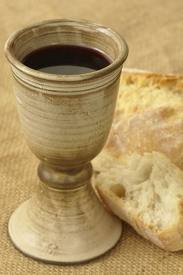
Have you felt empty, thirsty, hungry, plagued with holes that never allow you to be filled—not with joy, not with peace, not with hope?  We are offered the Bread of Life and buckets of Living Water drawn up from a well that will quench our thirst eternally.  We are offered Christ.  Christ abundantly sufficient for our needs.  Christ the once-for-all sacrifice to cover all our sins.  Christ our Peace.   “Thanks be to God for His indescribable gift!” (2 Corinthians 9:15, NIV).

************************************************************************************************************

Heather King is a wife, mom, Bible Study teacher, writer for www.myfrienddebbie.com and worship leader.  Most importantly, she is a Christ follower with a desire to help others apply the Bible to everyday life with all its mess, noise, and busyness.  To read more devotionals by Heather King, click here.

Copyright © 2011 Heather King